Robert Rauch was an 18-year-old freshman at Williams College in Massachusetts when he began playing Ultimate Frisbee. Ultimate was just a decade old at the time, and a classmate had discovered the sport at nearby Hampshire.
Rauch, a Chappaqua resident known in the disc community by the nickname ‘Nob,’ spent the next two decades on the Ultimate field and the last three decades advancing the sport on the administrative side. He’s played in the first Ultimate world championship, met his wife on the field, and twice served as president of the World Flying Disc Federation, the position he holds today. His current mission–which he has made a focus of his current term as WFDF president–is to get the sport into the summer Olympics. “That would be a milestone that I could rest my laurels on,” Rauch tells Inside Press.
Rauch began his career on the Ultimate field in 1976. He had played high school soccer in Connecticut and was looking for a new field sport to try out. With Ultimate, everything clicked; it involved even more running than his former pastime with the added intensity of non-stop action. At the same time, the sport retained a measure of mellow “zaniness,” with referees unnecessary and players making their own calls.
“It is not ‘win at all costs,’” he explains. “You need to respect your opponent. You need to excel within the rules of the game.”
Rauch spent the rest of his college years playing for a club team. After graduating from college, he moved to Chicago for work and played for Windy City, a local team there. In 1982, he played in his first U.S. National Championship.
And then, this: Rauch helped bring Windy City back to the National Championship the following year, this time winning the title. The win qualified the team for the first WFDF World Ultimate Championship Tournaments, held in Gothenburg, Sweden, where Windy City became the tournament’s inaugural world champions.
Rauch went on to win four more world championships and five more national titles, also playing for teams in Boston and New York. In 1994, he won the title as a member of the U.S. All-Star team.
Rauch’s contributions on the administrative side have left a mark on the sport–and in 2006, they earned him induction into the Ultimate Hall of Fame. By the mid-1980s, Rauch believed Ultimate and other disc sports were growing rapidly but the bodies governing the sport had failed to keep up. Rauch, who earned his Master’s degree in finance and international business from Northwestern University and is now partner at $6 billion investment firm Gramercy Financial Group, felt a “sense of duty.”
“The people who were involved were very well-meaning but really didn’t have any business acumen,” Rauch recalls. “I felt that if the organization was going to keep up with the level of competition, it really needed to up its game.”
Rauch was elected as the national director of the Ultimate Players Association in 1987, serving in that position until 1990. He also took over as chair of the Ultimate committee for the World Flying Disc Federation, then as the federation’s president in 1992.
Rauch focused on beefing up the sport’s organizational makeup.
He raised dues at the UPA (now called USA Ultimate), leading revenues to nearly triple. He took a number of additional steps to increase the sport’s legitimacy–he set up an 800 number, for example, and established an insurance program.
“It was was bringing in more enthusiastic people within the infrastructure of the organization,” Rauch says. “It was getting financial resources.”
Already working long hours for his day job, Rauch’s disc-related activities–done without pay–amounted nearly to having a second full-time commitment. After his first of three children was born in 1994, Rauch–whose playing days were largely behind him due to a knee injury–took a break from the sport to focus on his career and his family. In 1995 he moved with his wife–Katie Shields Rauch, whom he first met at the 1989 World Championships–and 1-year-old daughter to Chappaqua.
All In The Family
All three of Rauch’s children graduated from Horace Greeley High School. His oldest daughter, Kristen, graduated from Greeley in 2012 and played Ultimate at the University of Delaware, where she graduated in 2016. Her sister, Gwen, is now the captain of her club team at Penn State after graduating from Greeley in 2015. Rauch’s son and youngest child, Erik, graduated from Greeley last fall and is considering taking up Ultimate at Northeastern.
Olympic Dreams
During his first term as WFDF president, Rauch submitted disc sports as candidates to the International World Games Association. Rauch calls IWGA the ‘minor leagues’ of the Olympics–sports that are popular across the globe but not featured in the Olympics take part in their own quadrennial exhibition. World Games sports range from billiards to lacrosse and sport climbing. In 2001, flying disc was introduced as a World Games sport.
Rauch ran again for president of WFDF in 2011 and has served in the position since. In his current term, he has focused largely on paving the way for disc to become an Olympic sport. In May 2013, the International Olympic Committee provisionally recognized disc as a sport, with the full recognition coming two years later. Disc is now one of 37 sports recognized by the IOC but not featured in the Olympic games.
Until recently, the path to the Olympics was significantly more difficult.
Every summer games featured 28 sports, so in order for a new sport to make it, an established pastime had to get the ax. But starting in 2020, the games will include several “floating” sports, in which new sports will be eligible each year based in part on the host city. “Our view is that our best path is probably through this host city designation,” says Rauch.
With disc sports popular in more than 100 countries from Canada to the Middle East, and Ultimate now featured on ESPN networks, Rauch believes inclusion in the Olympics would be a natural final step in his decades-long quest to bring the sport to the world stage.
“I’m trying to finish the job I started,” he acknowledges.
 Walking into Millwood resident Jodi Baretz’ office is like walking into a sanctuary. The atmosphere is hushed, shoes are left at the door, voices are kept to a whisper. The effect is immediately relaxing.
 Mindfulness can also help with all aspects and relationships in your life, Baretz notes. “Mindfulness increases your capacity to deal with stress and overwhelming situations because you are learning how to calm your body and your mind,” she said. “It’s not shutting off your thoughts; rather, it’s pressing a ‘stop’ button on them so you can change your relationship toward them.” After all, we all face adversity in one way or another, and there are many things in life that are beyond our control. While we can’t control the challenges we face, mindfulness and meditation help us “struggle well,” she said. “By taming our minds and focusing on the present, we can decrease our anxiety.”
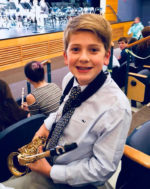 1. Seven Bridges Middle School opens, 2003. It seems like a long time ago now, and many town residents didn’t even live here yet when it happened – but what a big deal it was when Seven Bridges opened! Built at a cost of $32.5 million, Seven Bridges has since housed half of the district’s fifth-through-eighth graders and all of the children who attended those first years are now post-college age. Prior to the opening of Seven Bridges, fifth graders attended the elementary schools.
 3. Chappaqua resident Hillary Clinton is re-elected to the Senate, 2006. Senator, Secretary of State, neighbor and valued community member; and so many in Chappaqua fervently wish her upward trajectory hadn’t stopped there. But who knows what the future holds? More from both Clintons, no doubt, and many in town were gratified when the pair solidified their roots by purchasing the property next door in 2016. Photo by Marianne Campolongo
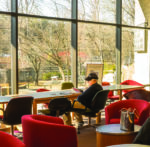 4. Glass wall added to front of library, entrance re-configured, 2006-7. A bond vote to fund this project went down in the 90s so the library took the long view and started saving, library director Pamela Thornton said. Those who enjoy the bright and airy periodicals section in particular look back with gratitude.
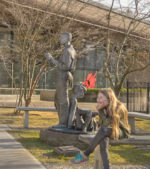 5. Our Family of Readers statue comes to Chappaqua Library, 2010. It’s a terrific addition to a public space and perfect at sending a favored message of libraries: reading is for everyone. Created by sculptor Penelope Jencks, the sculpture was installed at Reader’s Digest headquarters in 1993 and presented to the library when the company left Chappaqua for Manhattan, Thornton said.
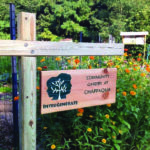 7. Chappaqua Community Garden opens, 2012. A space to grow at 233 N. Greeley Ave., this garden has “about 20 plots in the middle of town,” according to the website of Intergenerate, the organization that manages it. This year, expect to see black-eyed Susans, cosmos and more blooming in the pollinator garden outside the gate, Suzi Novak, the garden’s coordinator and Intergenerate board member, said. While there’s a short waiting list for spots in the Chappaqua garden, at press time there was plenty of room at the new community garden slated to open this spring on the site of the old Millwood Swim Club on Route 100, Novak said
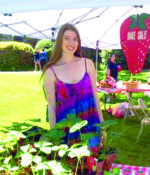 8. Strawberry Festival reaches 75th year, 2012. And it made it to the 80th too–with no end in sight, this beloved event is low-key and lovely. Strawberry shortcake is never outdated.
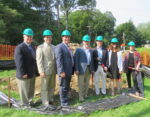 The construction project, called Streetscape, will improve roads, sidewalks, public spaces and infrastructure as well as beautify with new street lamps and plants, as reported by The Inside Press last August. Downtown shoppers will be glad when the project’s completed which is scheduled for October of this year.
 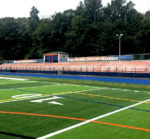 14. New turf field and renovated track opens at Horace Greeley High School with a community celebration including obstacle courses, face painting, and a varsity football game on Sept. 8, 2017. Schools superintendent Christine Ackerman told the crowd at the celebration, “We are so fortunate to live in a community that supports our students in so many ways.” These were some of the projects funded by the bond approved in 2016.
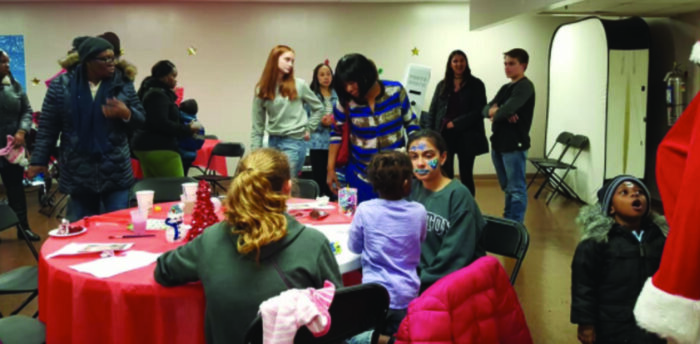
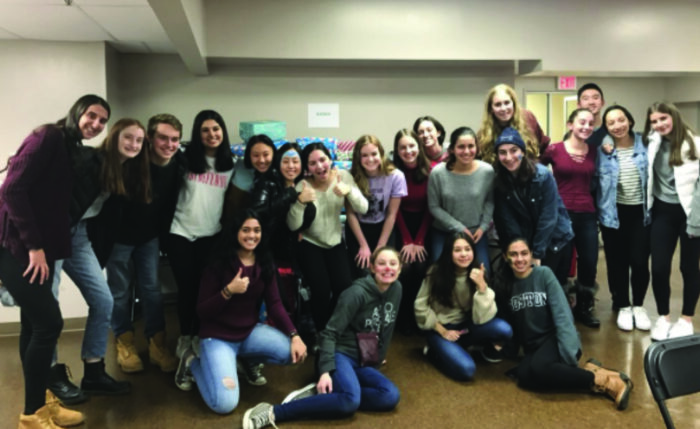 On a frigid December day, 28 Greeley students and three chaperones loaded onto a bright yellow school bus en route to HeartShare St. Vincent’s Services (HSVS) in Brooklyn. The high-spirited group was going to help spread holiday cheer to foster children. These students were part of a club called Friends of Foster Care (FFC) that launched this past fall at Greeley. It is a club that undertakes various forms of volunteer work for the Foster Children of New York, partnered with HSVS, a foster care organization in Brooklyn, New York.