• Skip to primary navigation
  • Skip to main content
  • Skip to primary sidebar
  • Skip to footer

The Inside Press

Magazines serving the communities of Northern Westchester

  • Home
  • Cover Stories
  • Features
    • Portraits and Profiles
  • Advertorials
    • Lifestyles with our Sponsors
    • Sponsor News!
  • Wellness
  • Happenings
  • Advertise
    • Advertise in One or All of our Magazines–And/Or Subscribe
    • Advertising Payment Form
  • Contact Us
  • Search

Cover Stories

Dive In: The Pool Clubs of Chappaqua

April 21, 2018 by Amy Kelley

There are four swim and tennis clubs in Chappaqua. The cost to join doesn’t vary too radically–there’s a bond and an annual fee–and all offer rental memberships so prospective members can try them out.

Each one welcomes visitors to come and see and consider joining. They’re all located pretty close together. Yet, with all their similarities, each club is different enough to inspire a loyal allegiance in many of its members.
Birchwood Swim & Tennis

681 Quaker Road

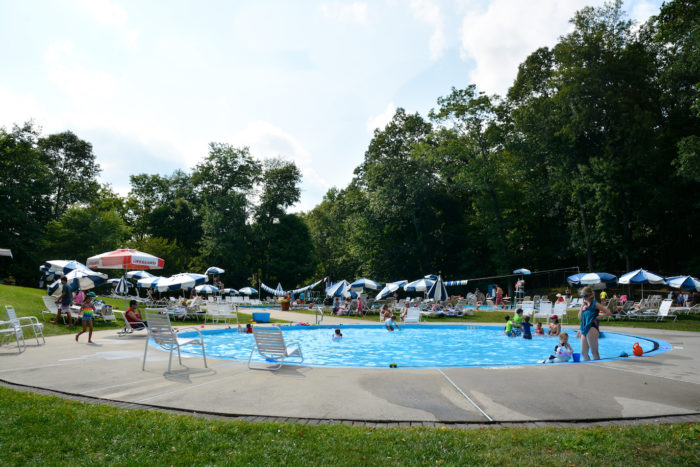
Ron Jendzejec, president of Birchwood, said he thinks the club has a particularly beautiful layout. On a recent snowy Sunday, Jendzejec pointed through a fence to show a reporter just where a family could sit to have a great view of both the wading pool and the playground.

Others must agree, because membership sales are ahead of schedule this year and “last year we had to turn people away for the first time in eight years,” Jendzejec said. The club borders Audubon land and features paddle tennis as well.

“I love the club,” Jendzejec, who has been president for 11 years, said. “I joke with board members that I’m like the Franklin Delano Roosevelt of board presidents–there are no term limits, I enjoy doing it and seeing the changes at the club and we have a great board.” His kids used to spend all day at the club, swimming and playing tennis. There’s also basketball and an outdoor ping-pong table.

Birchwood also offers special Golden Guest memberships to older members who no longer need family memberships.

Chappaqua Swim & Tennis Club

1019 Hardscrabble Road

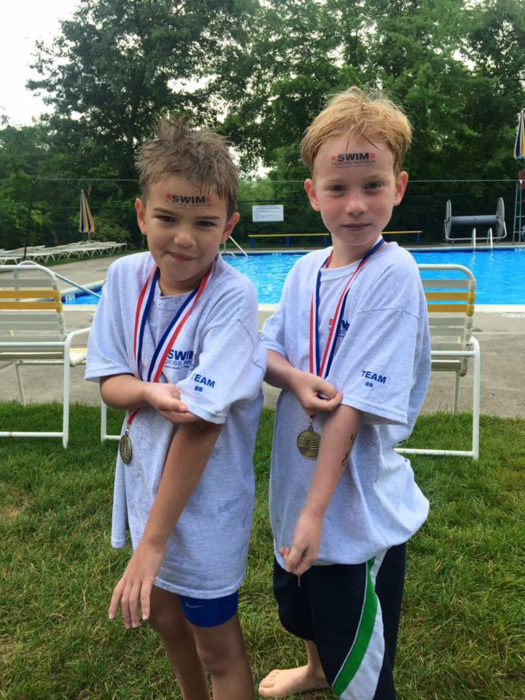
Amanda Weinstein, membership chair for the pool’s board, said that at CST, nannies and caregivers come free with a family’s membership. The club, which features a sunny yellow and blue color scheme, has a cafe catered by Villarina’s. There’s regular tennis and platform tennis, a T-shaped pool, a basketball court and a putting green.

“My kids don’t go to camp–they spend the summer at the club,” Weinstein said. “People ask me, ‘aren’t they missing out on the camp experience?’ and I always say no. There’s a real mixing of the ages at the club. I’ll see Harry playing tetherball with a 16-year-old and so on. It’s really beautiful.”

CST’s swim coach, Dan Levy, is a teacher who is great with kids; “he really makes the swim team accessible for all levels of swimmers,” she said. The tennis pro also works at Club Fit. CST also holds the Swim Across America event annually which is open to the public and is a top site raising funds for the American Cancer Society.

Seven Bridges Field Club

160 Seven Bridges Road

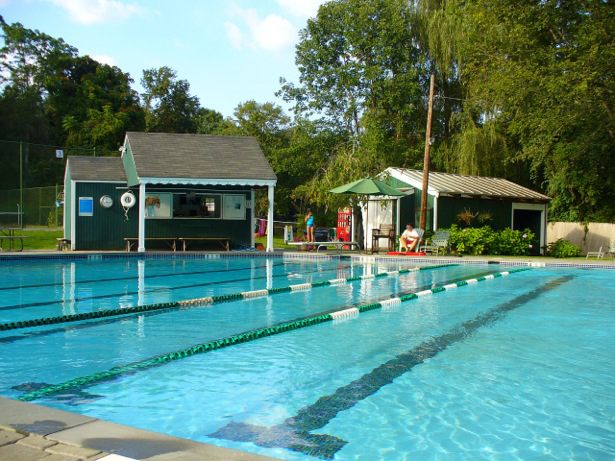
Marianne Dorner, membership chairperson for the club, said her family has belonged to the club for about 15 or 16 years. “It’s one of the oldest clubs in the area,” Dorner said. “It was established in 1936.” The pool was actually hand-poured by members in the 50’s–prior to that, swimming was in the club’s pond. Dorner said that’s probably why the swim team name is the Swamp Rats. “We have many old-time members who stop by and say they were a Swamp Rat way back when.”

In the beginning, Dorner said, the club only admitted members from the Seven Bridges area. “That was many, many years ago. We now accept members from all over, including Yorktown, Mount Kisco and Ossining. We’ve diversified and we love to have people come visit.” Seven Bridges, besides offering trial memberships, also allows trial weekends.

There is paddle tennis open all year, and special paddle tennis memberships. And at Seven Bridges, Dorner said, they “get their tennis courts open before anyone in town. We call it the best-kept secret in Chappaqua because people don’t realize how beautiful it is until they come visit,” Dorner said, adding that the club does not charge guest fees.

Willowbrook Swim & Tennis Club

586 Millwood Road

“We have been members since we moved into town 13 years ago and we just never looked back,” Harriet Engel, the board marketing chair for Willowbrook Swim & Tennis, said. “It’s such a warm and welcoming club.”

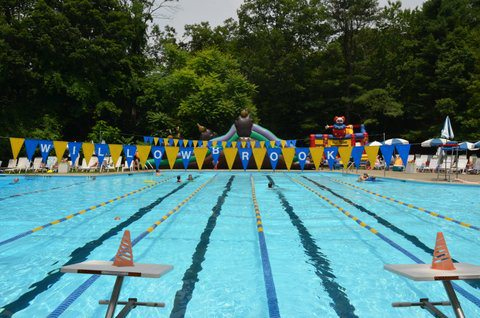
Engel’s children started swimming at Willowbrook, then began swimming year-round; her eldest son now swims at Greeley. Willowbrook reports that it has the most competitive swim team of the four clubs. But to Engel, besides the swimming, what stands out about Willowbrook is head coach Kelly Blacker’s focus on water safety. “She considers it her most important task to get every child to learn to swim,” Engel said. “Between swim team and tennis camp, my kids and many kids spend all day there.”

Willowbrook has also made arrangements for members to play golf twice per month at Anglebrook Golf Club in nearby Lincolndale at a special rate – two visits per month per membership.

Blacker said she values the family-oriented nature of the club, and considers the setting lovely. “It’s in the woods and it’s so peaceful; it’s very beautiful in the evening.”
Filed Under: Cover Stories Tagged With: kids, outside, pool, pool clubs, Spring, summer

Living Proof: An Evening of Hope & Healing to Raise Awareness About Suicide Prevention

April 21, 2018 by Kelly Leonard

The Living Proof Performers
PHOTO BY DAVID WHOLE

In early March at the Chappaqua Performing Arts Center, The Mental Health Association of Westchester (MHA), The Lagond Music School, and Music & Miles: Changing Minds joined forces to present a new multi-arts evening of energizing performances that shined a light on mental health issues and the power of the arts as a vehicle in sharing individual stories of healing in the face of adversity.

The evening of expressive arts benefitted the Miles Applebaum Music Scholarship Fund at The Lagond Music School and The Mental Health Association of Westchester. Performances included nine musical and dance presentations along with three “Voices of Recovery” monologues. Radio DJs Coach and Bruce Figler of 107.1 The Peak, a media partner of the event, emceed the evening.

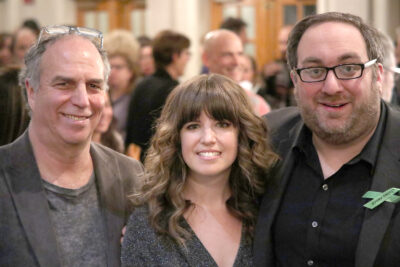
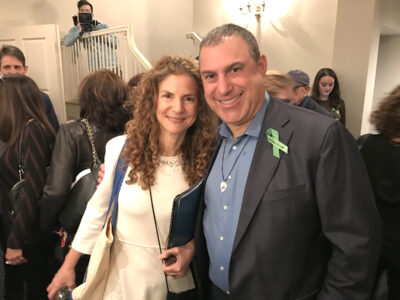
Shari and Ed Applebaum of Armonk, Miles’ parents, were the event co-chairs. When asked what she wanted attendees to take away from the evening’s performances, Shari, who is also a Suicide Bereavement Specialist at MHA said, “A sense of hope and healing. No one goes through life unscathed. Everyone has something that they’re dealing with whether it’s a mental or physical health issue.”

The Miles Applebaum Music Scholarship Fund was established to honor and remember Miles Applebaum, a guitar student who studied at The Lagond Music School and later the Boyer School of Music and Dance at Temple University. Miles died by suicide at the age of 21 in 2014, and the Scholarship Fund was created to carry on his dream by providing aspiring musicians the opportunity to ignite their passion and study music at The Lagond Music School, a nonprofit musical haven for students of all ages.

Shari and Ed Applebaum
PHOTO BY KELLY LEONARD

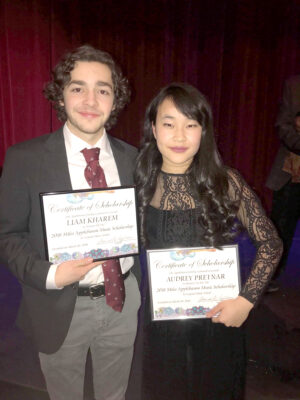
The 2018 scholarship winners were runner-up Audrey Pretnar, a guitarist from Mohegan Lake and winner Liam Kharem, a drummer and bass clarinetist from Sleepy Hollow.

Close friends of Miles who performed at the event hoped attendees would come away with a new awareness and understanding for those dealing with mental health issues. Annabelle Hiller in her onstage monologue said, “We live in a world where sensitivity is defined as weakness. Emotions are amazing, even the sh*tty ones.”

A unique element of the evening’s performances was each of the musicians, singers, performers, and speakers had been touched in some way by a suicide or an attempted suicide. They shared their experience, strength and hope from the stage through their words and artistry with the audience.

Roseanne Lanna, Lagond Music School Co-Founder and Executive Director, who also served along with Charlie Lagond as Show Director, said she hoped the evening would offer a “sense of awareness, of noticing when family, friends, or neighbors are not acting themselves or acting out of the ordinary and to especially watch out for neighbors. We’re all connected.”

In her remarks from the stage, Shari Applebaum encouraged the audience in “taking the time to notice [others] and ask, ‘Are you OK?’”

The Miles Applebaum Music Scholarship Fund was established to honor and remember Miles Applebaum, a guitar student at The Lagond Music School and later the Boyer School of Music and Dance at Temple University.

To learn more, visit the websites of The Mental Health Association of Westchester https://www.mhawestchester.org, The Lagond Music School http://lagondmusic.org, and Music & Miles: Changing Minds https://www.musicandmiles.org.

 Bruce Williams
(L-R): Bruce Figler,
Rebecca Haviland, Chris Rodriguez AKA Coach
Living Proof Scholarship Winners
Liam Kharem, Audrey Pretnar

Filed Under: Cover Stories Tagged With: Chappaqua Performing Arts Center, fund, Lagond School of Music, Living Proof, Mental Health Association of Westchester, Miles Applebaum, music, Music & Miles, Scholarship, suicide prevention, Winner

Extraordinary Ventures Doing Extraordinary Work

April 21, 2018 by Lindsay Hand

How one local organization provides employment opportunities for adults on the autism spectrum

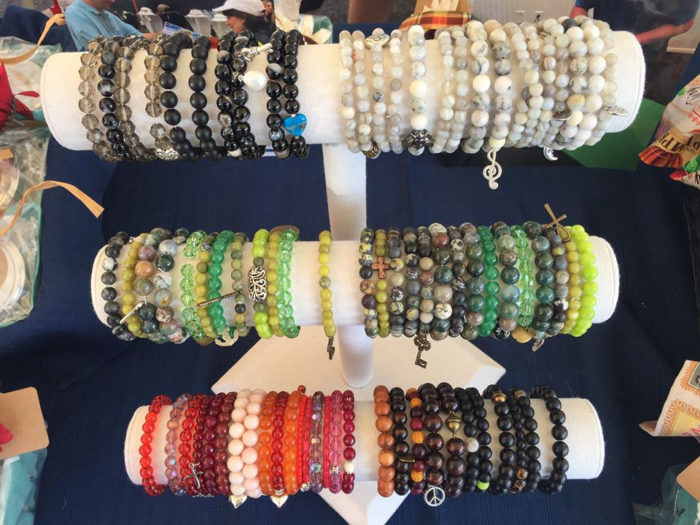
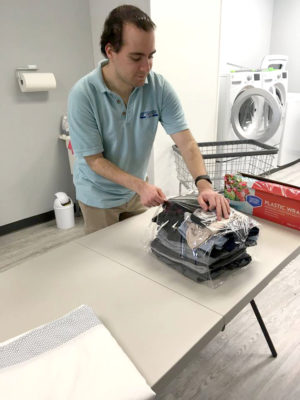
EVNY employee earning laundry service skills and bracelets made by EVNY employees (Above)
For parents of children on the autism spectrum, figuring out what comes next after their children age out of school is difficult and stressful. Enter Extraordinary Ventures, a nonprofit organization that provides jobs and a comfortable working environment to adults on the autism spectrum. After visiting Extraordinary Ventures in North Carolina, Chappaqua resident Elise Orlando, whose son is on the autism spectrum, saw an incredible opportunity to bring a similar setting to Westchester as many students at Devereux, a school for children with autism in Millwood, were on the verge of graduating. Extraordinary Ventures offered to open a New York establishment, and now two years later Extraordinary Ventures New York (EVNY) has approximately thirty employees, a number of different businesses and a space in Mount Kisco.

The four board members along with the rest of the staff work tirelessly to support the employees, and have built this organization into something truly amazing. The employees work two to four hours a week, get paid, and even pay taxes, just as they would in any other job. Orlando, a board member, said, “We have worked hard over the years to ensure our children get cutting edge education to meet their needs. They are ready to contribute to society, but in their own way.”

Working Hard & Gaining Confidence

EVNY began with making, packaging and selling candles and bracelets, all of which are broken down into steps to follow. “We look at our population and figure out what skills they have and develop businesses around it,” explained Orlando. The candles and bracelets are often themed seasonally or around holidays, and they can also be customized for gifts or favors for showers, weddings, Bar and Bat Mitzvahs, and more. The employees are very proud of the merchandise they make, and some of them additionally work as salesmen at the various places the products are showcased, including farmer’s markets, craft fairs, and holiday boutiques. According to EVNY Director Liz Oliveto, “our guys feel much more confident…seeing that they can do things.” This confidence leads to saying yes to trying new things and even volunteering to do tasks, in addition to extending to home life. Both Oliveto and Orlando described how thrilled parents are to hear their children talk so excitedly about work and even change their behavior at home by doing things like baking brownies.

EVNY is also about to launch a commercial laundry service, with an additional specialty service for items like sleeping bags and pet beds. “You can bring your laundry anywhere, but by allowing EVNY to handle it you provide employment for adults with autism and support a mission,” said Orlando. With businesses like this and the candles and bracelets, EVNY is providing these individuals with a variety of opportunities and an environment in which they can interact and learn new skills. “Far too often they are told ‘you can’t do that,’” explained Oliveto, who worked with many of the employees at Devereux. “And that’s the great thing about Extraordinary Ventures…here, they have choices.”

Looking Toward the Future

Moving forward, EVNY is also launching a Vocational Training Program. This 12-session course will teach students the skills necessary to prepare for a job, perform job tasks, and interact properly while at work. Students will learn things like writing a resume, dressing for and participating in an interview, and completing forms. A regular volunteer cohort is also in the cards as the organization continues to grow. Oliveto is hoping to get volunteers of all ages, from 13-year-olds and high schoolers to retirees and senior citizens, to come to EVNY and spend time with the employees. With new partnerships with local groups like the Lutheran Church of the Resurrection in Mount Kisco, many people will have the opportunity to work closely with EVNY and help them in their mission.

Orlando discussed how the incidence of autism spectrum disorder has increased since her son was diagnosed in 1994, and how education and employment opportunities need to keep up with that. There is no doubt that EVNY is starting to bridge that gap by providing this wonderful opportunity for these employees. In her words, “There’s nothing better than seeing the satisfaction and sense of accomplishment among our employees when they complete a job. And they always seem surprised when they get paid for it!”

The love and passion of Oliveto and her staff is incredible and will only help the organization continue to grow and be more successful in the years to come. With the amazing community interest and support, EVNY will no doubt keep growing its businesses and helping more adults on the autism spectrum. As Oliveto explains, “I genuinely like my employees…they’re fun to work with and fun to be around. I’m glad we made a place where they are happy, productive and comfortable.”

To learn more about Extraordinary Ventures New York, visit www.EVNY.org.

Filed Under: Cover Stories Tagged With: Adults with Autism, autism, Extraordinary Ventures, help, nonprofit, venture

At Greeley, a Plant Garden Goes Native

April 21, 2018 by The Inside Press

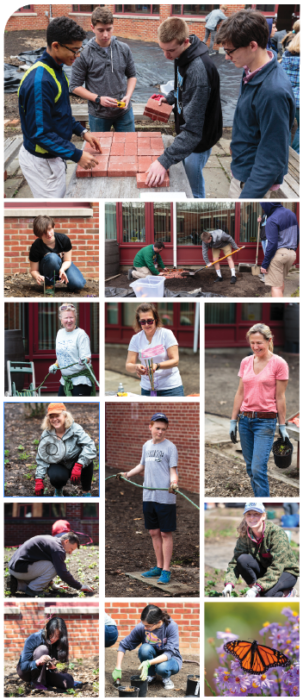
Last spring, the main office courtyard of Horace Greeley High School was transformed into the new Greeley Native Plant Learning Garden (GNPLG). More than a dozen students, faculty and PTA parent volunteers planted more than 3,000 native plants in what used to be a neglected area of turf grass surrounded by a hedge of burning bush, a non-native invasive species.

PHOTOS BY HIDENAO ABE, STUDIOABE

Native plants are those that occur naturally in a region, having co-evolved over a period of time with other plants, insects and animal species, developing complex interdependent relationships. They instill a sense of place and emotional connection to our environment. Here in the temperate deciduous forests of the Northeast, native species include trees such as sugar maples and oaks, grasses such as little bluestem and purple love grass and herbaceous perennials such as violets, goldenrods and asters.

Unfortunately, many native woodland species, particularly flowers, have been eradicated because of the accidental introduction of non-native invasive species. Traditionally chosen for ornamental planting on our suburban landscape, these species, such as barberry and pachysandra have escaped cultivation, taking over our woodlands and right-of-ways. Oriental bittersweet is just one of the many invasive vines you see along the Saw Mill River Parkway that has over run native trees and shrubs. Ornamental species were chosen precisely because they did not have any natural insect predators or diseases and this has allowed them to outcompete our native plants, upon which a whole host of pollinators and wildlife depend. Non-native plants in general support far fewer native insects and birds than our native ones do. Add an overabundant deer population, which browse on saplings and early spring bloomers, and the situation seems dire.

The good news, however, is that if you plant it, they will come and come indeed they did to GNPLG. By the fall, GNPLG was abuzz with hundreds of pollinators, our native bees, flies and butterflies.  Pollinators move pollen from one flower to another flower of the same species, helping plants to produce fertile seeds and fruit and are responsible for one out of every three bites of food we eat. The pervasive use of pesticide coupled with habitat loss has led to the decline of many pollinators, including our native bumblebees, which are considered threatened in North America. Monarch butterfly populations have been steadily declining and are down for a second year in a row, according to a report by Monarch Joint Venture, an organization of more than 70 academic, business and NGO partners dedicated to conservation of monarch migration. But both were present in abundance at GNPLG, happily nectaring and foraging on orange butterfly weed, smooth aster and goldenrod.

Migrating birds also stopped by GNPLG to feast on the berries of the mature dogwood planted in the courtyard in the late 70’s. When nesting in the spring, these birds rely on caterpillars and insect larvae (think soft, yummy protein) to feed their young. The majority of insect larvae and caterpillars are specialists dependent on native plant species for food. A few holes in your leaves? Not to worry, the birds will find the culprit. According to Doug Tallamy, entomologist and author of Bringing Nature Home, it takes an incredible 6,000-9,000 caterpillars to make just one clutch of chickadees, which is just a tiny bird, weighing less than three pennies in your pocket. No native plants, no caterpillars. No caterpillars, no chickadees. And who doesn’t love a chickadee?

“The garden at Greeley is an important tool in helping students learn about the many benefits of native plants,” says Carol Capobianco, director of The Native Plant Center at Westchester Community College. “Native plants provide valuable sources of food and shelter for wildlife and define a local sense of place. And because they are adapted to the local weather conditions, soils, and predators, they require less maintenance and no pesticides or fertilizers. Plus, they are beautiful.”

Not only is the GNPLG a beautiful place for students and faculty to relax on a break, it also offers a wide range of place-based and project-based learning from botany and ecology to photography and art. Students from Greeley’s Students and Teachers for Our Planet (STOP) Committee along with members of the Greeley Garden PTA and the Chappaqua Garden Club plan to manage the garden ensuring its success going forward.

Join STOP, Chappaqua Garden Club and the Greeley Garden PTA for an open house of the GNPLG on May 17, 2018 (rain date May 22) from 12 p.m. – 4 p.m. Native plant experts and students will be on hand to answer questions and students from the Greeley Chamber Orchestra will be performing. Come check it out!

Top 5 Things To Consider When Adding Natives to Your Landscape

Reduce Your Lawn: A reduced lawn saves both time and money. Lawns require a tremendous amount of resources including water, pesticides and fertilizers, not to mention weekly mowing. Expand existing garden beds and shrub areas by adding or encouraging low maintenance native groundcovers, such as violets, ferns, goldenrod and asters.

Leave Leaves Alone: Leaves provide a natural source of soil nutrients as they break down, as well as habitat for overwintering beneficial insects and other pollinators. Use a mulching mower to mulch leaves directly in your lawn and let them overwinter in garden beds and under shrubs to build healthy soil. Instruct your landscaper not to use a leaf blower in those areas. Wait until late winter to cut back perennials, allowing birds and insects to take advantage of seed heads and cover.

Green Mulch: Let the plants work for you! Add native groundcovers under shrubs and in perennial beds to act as a living mulch, suppressing weeds and moderating soil temperature. Great deer resistant choices include golden groundsel (Packera aurea) which is evergreen, produces yellow flowers in early spring and grows well in both sun and shade and native grasses such as sedges (Carex spp.) and ferns. Hay-scented fern even grows in full sun!

Oh Deer!: There are many choices of native trees and shrubs that deer typically do not browse that can be substituted for non-native ornamental plants. American holly (Ilex opaca), Blackhaw viburnum (Viburnum prunifolium) and Viburnum nudum ‘Brandywine’ and ‘Winterthur’ are just a few that provide berries for birds and cover in winter.

Succession of Bloom: Choose hardy, deer resistant plants that bloom all season long and plant them in groups of 3s and 5s. Columbine flowers (Aquilegia canadensis) open just as the ruby-throated hummingbird returns in early spring. In summer, orange butterfly weed (Asclepias tuberosa) and swamp milkweed (Asclepias incarnata) host monarch caterpillars.  Mountain mint (Pycnanthemum spp.) is a pollinator magnet and blue mistflower (Conoclinium coelestinum) is covered with bright purple flowers (and butterflies!) in late fall.

Filed Under: Cover Stories Tagged With: garden, GNPLG, Greeley Native Plant Learning, Green, Horace Greeley High School, Native Plant Learning Garden, Plant Garden, PTA, rehab

10 Things to Know About Youth Soccer in Chappaqua

April 21, 2018 by Amy Kelley

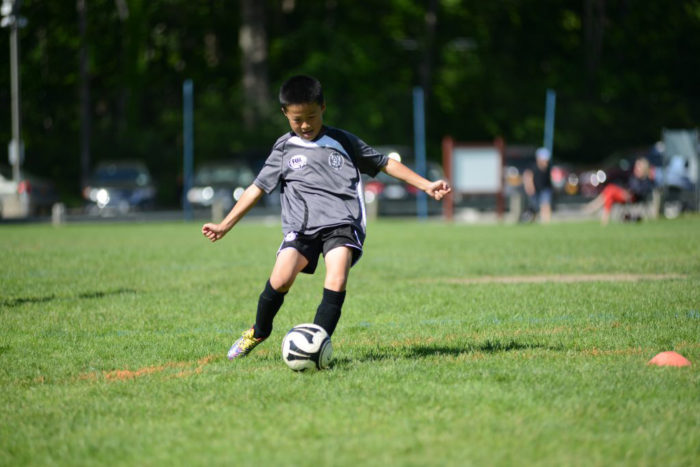
PHOTO COURTESY OF CHAPPAQUA AYSO

1. Chappaqua offers a lot of soccer … there’s a Chappaqua branch of the American Youth Soccer Organization (AYSO) which plays locally until fifth grade and then competes against nearby communities, and also the Chappaqua Youth Soccer Club (CYSC), which plays in the Westchester Youth Soccer League (WYSL) and so teams travel farther – when people say ‘travel soccer’ in Chappaqua they generally mean CYSC. (There are teams at Horace Greeley High School, of course, and modified programs at the middle schools, too.) Everyone from super-athletic soccer enthusiasts to those who play soccer as a second sport or in a more relaxed fashion to children and teens with special needs–all these and more can find a way in Chappaqua to kick the black-and-white ball around with some peers while improving their skills and getting some fresh air.

2.… for kids of all ages. CYSC offers teams this year for children born in 2010 and afterwards; AYSO offers soccer to kids as young as pre-K. Both programs go all the way through high school. Copies of birth certificates are required for proof of age. Because AYSO has programs for younger players, many children start out playing for AYSO, Jonathan Taub, longtime commissioner of Chappaqua AYSO, said. Some continue with AYSO, which takes all children. There are no tryouts and no children are cut. Others switch to CYSC, which has annual tryouts in May.

3. Both programs are stand-outs. What’s the difference between AYSO and CYSC? Well, Taub said, “everyone knows all about AYSO.” It’s a national program that offers soccer to a wide range of ages and abilities, and is known for the slogan “Everyone plays.” AYSO unabashedly takes all comers. CYSC offers a more competitive, time-intensive experience; prospective players must try out annually. Lisa McGowan, co-president of CYSC with David Schreiber, said the “very large majority” of youngsters who try out are ultimately offered a spot on a CYSC team. After U9, players are assigned to a team based on ability and skill level, which is different than AYSO’s ‘balanced teams’ model. The AYSO U19 high school co-ed team is, Taub said, the largest program of its kind in the county. CYSC was given WYSL’s Club of the Year award in 2016, and the club was recognized for its commitment to a “player first” philosophy and commended for providing a “fun, safe and challenging environment” with “excellent leadership.” It was the first time WYSL gave out these awards.

4.… and have the support of many local volunteers. According to McGowan, close to 100 volunteers pitch in to make the program work, alongside 15 professional trainers (professional soccer coaches with many years of experience and many certifications). Chappaqua’s AYSO depends on many dozens of vounteers as well. Some volunteers, McGowan, Schrieber and Taub among them, don’t even have offspring currently playing soccer in the programs to which they devote their efforts. “We’re doing it because we love it,” Schreiber said.

Young AYSO players
PHOTO COURTESY OF CHAPPAQUA AYSO
5. The players do need to be from Chappaqua/New Castle… CYSC teams are open to kids who reside in New Castle or attend the Chappaqua Schools. Chappaqua AYSO requires that players be residents of the Chappaqua school district, Taub said.

6.… which is a place with a lot of enthusiasm for the sport–the numbers are amazing. More than 700 kids play in AYSO’s program, Taub said, and according to McGowan, well over 400 players fill the ranks of CYSC’s teams. (The only overlap is with the U9 kids who play for CYSC: those players are required to also play for AYSO.) This enthusiasm is fostered by cooperation between the various programs and also the schools. Fields must be shared and schedules worked out. “The relationship in town between CYSC and Chappaqua AYSO is really excellent,” Schreiber said. “We work with them on field availability and many other issues.” While according to Schrieber there’s no formal relationship between the club’s efforts and the soccer program at Horace Greeley, “there are three coaches who also coach at the high school,” he said, stressing that there’s no sharing of information between the programs and totally separate tryouts. AYSO offers high school players both fall and spring seasons. CYSC only has spring seasons for high school players–at school, soccer is a fall sport.

7. Kids can play sometimes, or all year … AYSO offers spring and fall seasons and CYSC offers a 10-month program, except for high school teams.  “All of our teams practice in the winter including the high school teams,” McGowan said. Winter practices start shortly after the fall soccer season ends at the high school and are held indoors at Armonk Indoor Sports Center. In the summer, there’s a CYSC camp at the end of August that boasts an 85-percent participation rate. “It’s a five-day camp and each team has three hours of practice during the (camp) day,” Schrieber said. “During that one week, they’re getting in a lot of practice.”

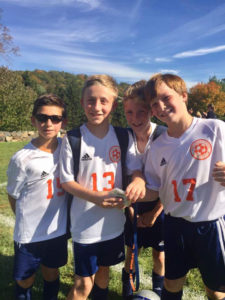
(L-R): CYSC players, Wylie Glantz, Jacob Fragin, Zach Boyriven, Ryder Goodman
PHOTO COURTESY OF JARED FRAGIN
8.… and switch between programs. Many of Chappaqua’s soccer-playing youngsters start with AYSO and segue into CYSC, then to school soccer, while playing AYSO or CYSC in the club season. Some players leave soccer to devote more time to another sport, then come back. “The beauty of AYSO is that if you leave you can come back three years later. We’ll always have a place for every child to play soccer at AYSO,” Taub said. Schreiber and McGowan also said that players who have left CYSC for other athletic opportunities do return.

9. Sportsmanship is highly prized In fact, good sportsmanship is front and center on AYSO’s national website. “We pride ourselves on sportsmanship, focusing on development versus number of wins,” Schreiber said of CYSC. “I one-hundred percent agree,” McGowan said, adding that learning to be part of a team is very important.

10. and so is inclusion. AYSO has offered a VIP team for a few years now which serves kids with special needs. Josh Lurie founded the program several years ago, Taub said. Volunteers including Spencer McGowan and other high school students help children and teens on the team. “We’re happy to have everyone play,” Taub said. In addition, financial assistance is available for those who can not afford to pay team fees.

Filed Under: Cover Stories Tagged With: AYSO, Chappaqua Youth Soccer, Chappaqua Youth Soccer Club, kids, soccer, teams, Youth Soccer

  • « Go to Previous Page
  • Page 1
  • Interim pages omitted …
  • Page 89
  • Page 90
  • Page 91
  • Page 92
  • Page 93
  • Interim pages omitted …
  • Page 149
  • Go to Next Page »

Primary Sidebar

Please Visit

White Plains Hospital
William Raveis – Armonk
William Raveis – Chappaqua
Northwell Hospital
Houlihan Lawrence – Chappaqua
Houlihan Lawrence – Armonk
Houlihan Lawrence – Briarcliff
NYOMIS – Dr. Andrew Horowitz
Westchester Table Tennis Center
Spavia
Compass: Miller Goldenberg Harris Team
Lipari & Mangiameli Dentistry
Raveis: Lisa Koh and Allison Coviello
Bristal Assisted Living
Maid Brigade
Kevin Roberts Painting & Design
Zwilling J. A. Henckels
Meagher & Meagher Attorneys at Law
Compass: Aurora Banaszek
Dr. Briones Medical Weight Loss Center
Beecher Flooks Funeral Home
Whitaker’s Garage Door Store
Decicco and Sons
CPW Vein & Aesthetic Center
Gleason Plumbing and Heating
Houlihan: Tara Siegel
New Castle Physical Therapy
Pinsky Studio

Follow our Social Media

The Inside Press

Our Latest Issues

For a full reading of our current edition, or to obtain a copy or subscription, please contact us.

Inside Pleasantville and Briarcliff Manor Inside Chappaqua and Millwood Inside Armonk

Join Our Mailing List


Search Inside Press

Links

  • Advertise
  • Contact Us
  • Digital Subscription
  • Print Subscription

Publisher’s Note Regarding Our Valued Sponsors

Inside Press is not responsible for and does not necessarily endorse or not endorse any advertisers, products or resources referenced in either sponsor-driven stories or in advertisements appearing in this publication. The Inside Press shall not be liable to any party as a result of any information, services or resources made available through this publication.The Inside Press is published in good faith and cannot be held responsible for any inaccuracies in advertising or sponsor driven stories that appear in this publication. The views of advertisers and contributors are not necessarily those of the publisher’s.

Opinions and information presented in all Inside Press articles, such as in the arena of health and medicine, strictly reflect the experiences, expertise and/or views of those interviewed, and are not necessarily recommended or endorsed by the Inside Press. Please consult your own doctor for diagnosis and/or treatment.

Footer

Support The Inside Press

Advertising

Print Subscription

Digital Subscription

Categories

Archives

Subscribe

Did you know you can subscribe anytime to our print editions?

Voluntary subscriptions are most welcome, if you've moved outside the area, or a subscription is a great present idea for an elderly parent, for a neighbor who is moving or for your graduating high school student or any college student who may enjoy keeping up with hometown stories.

Subscribe Today

Copyright © 2026 The Inside Press, Inc. · Log in