• Skip to primary navigation
  • Skip to main content
  • Skip to primary sidebar
  • Skip to footer

The Inside Press

Magazines serving the communities of Northern Westchester

  • Home
  • Cover Stories
  • Features
    • Portraits and Profiles
  • Advertorials
    • Lifestyles with our Sponsors
    • Sponsor News!
  • Wellness
  • Happenings
  • Advertise
    • Advertise in One or All of our Magazines–And/Or Subscribe
    • Advertising Payment Form
  • Contact Us
  • Search

Cover Stories

Survival of the Fittest: Two Programs Offer Lifelong Skills

March 8, 2018 by Pamela Brown

If you ever found yourself lost in the wilderness, would you know what to do? The natural environment is a complex place and it takes knowledge, confidence, and first-hand experience to survive.

The popular television show Survivor puts the spotlight on contestants who use their instincts to survive in a remote location. Since then, similar reality shows have gained in popularity, including Running Wild with Bear Grylls where the Irish adventurer takes celebrities into the wilderness for 48 hours and teaches them survival techniques. Also, The Weather Channel’s SOS: How to Survive features true stories of people battling severe weather elements and provides tips from a survival expert on how to overcome dangerous situations.
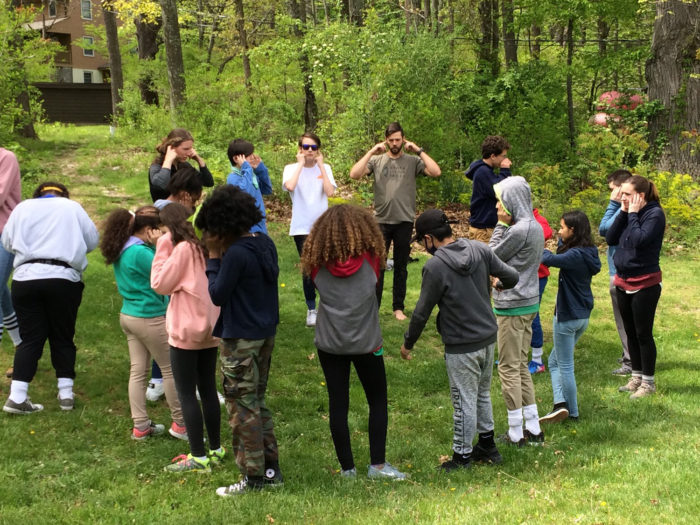
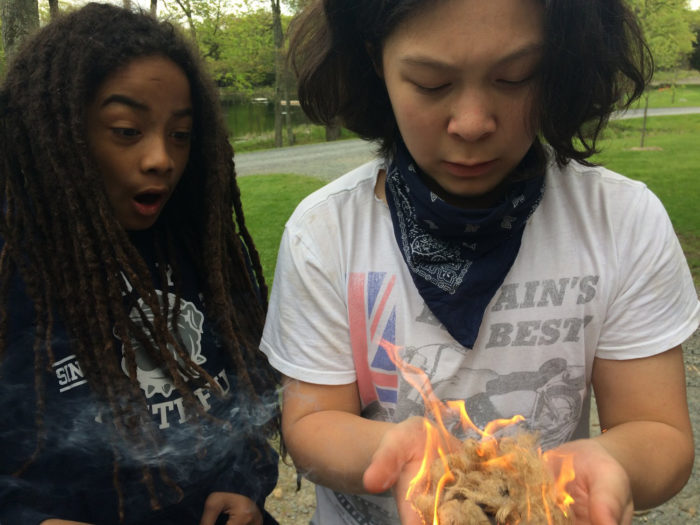
PHOTOS BY ZACH FISHER

7th graders making fire

You don’t have to be on these shows to challenge your skills against the natural world. To learn what it’s like to survive in nature, the town of New Castle Recreation & Parks is offering two wilderness survival programs, Primitive Survival Skills and the First 24. They will take place in Gedney Park in April. “I’m always looking for out-of-the-box programming. These classes are hands-on learning and get kids outside. The kids really like that,” said Bill Garrison, Assistant Superintendent of the Town of New Castle.

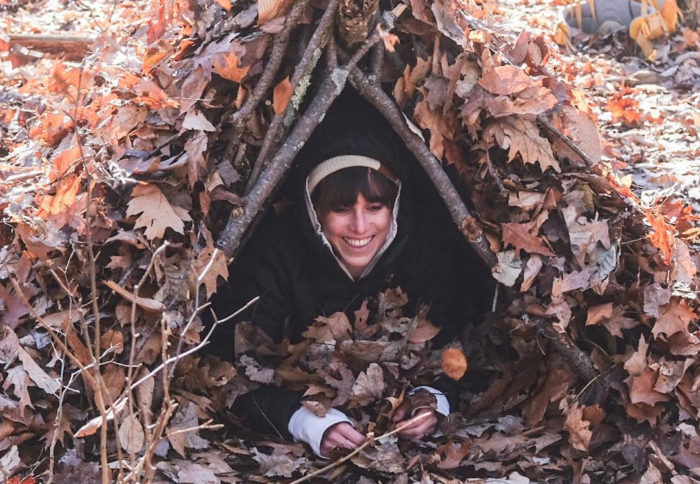
Oliver Jacobs, 10, of Chappaqua, attended both classes. “I’m interested in survival and read a lot of books on it. I thought it was really fun to learn survival skills. We played games and they all had something to do with nature and sometimes animals,” said Jacobs who learned how to make a waterproof shelter using sticks and leaves. “All the kids built it together. I felt kind of proud of myself and the people in my group,” he said. Other benefits were making new friends and learning from the instructor. “I would recommend anyone to take the class because it’s a lot of fun, you learn important survival skills, and you learn things you can do to respect nature.”

The programs were created and led by Zach Fisher of Patterson, who is a primitive skills educator and licensed N.Y. State Guide, and also Wilderness First Responder Certified. His experiences have given him a greater understanding of himself, others, and man’s relationship with the natural world. “I think this is an invaluable experience to go along with skills that can potentially be life-saving. In addition, there’s a direct correlation between someone’s understanding of nature and their desire to conserve it, so this is also part of my duty toward the preservation of our valuable wild resources,” said Fisher.
Primitive Survival Skills

Primitive Survival Skills, an after-school program for children in grades 5-8, offers practical instruction and hands-on activities on wilderness survival that involve survival skills, sense awareness, team projects, motor skills and more. Some of the fun, educational activities include making foraged tea, playing games, talking about plants and trees and tracking animals. “It’s tons of fun and we laugh a lot. We do a lot of game playing and joking around, but I make sure to include a lot of useful content at the same time,” said Fisher. “I also include at least one lecture on an essential skill, like shelter building or fire-making. Depending on the program, I might include a long-term project, like making a bow, a basket, or a bone knife.”

Rose Kory, 11, and her sister Natasha, 10, also took Primitive Skills. “If you want to learn about using your senses and getting more in touch with nature, you’ll enjoy this class,” said Rose. She learned skills such as starting a fire and making a bow and arrow. Her sister Natasha said, “I liked that you do team work plus I made a friend.” Marcus Arnold, 10, of Chappaqua, decided to take Primitive Skills because he was interested in learning about survival too. “I made a house in the wild using sticks, leaves and moss. We all did it together. It was a very fun experience to work with other people,” said Marcus.

At the end of the program, the children come away with useful information. “They leave with a foundational knowledge of what it takes to survive in a wilderness setting, a bunch of new games, and a heightened awareness and respect for the world around them,” explained Fisher, referencing the important bond between man and nature. “I think we are all experiencing a bit of separation anxiety in regards to our relationship with nature. People want to feel safe in the natural world and these classes help them feel a little more prepared.” The program ends with a skills-based competition and awards ceremony.
First 24

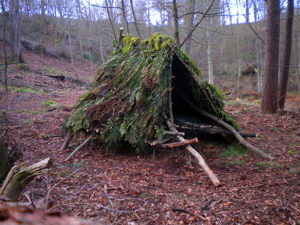
The First 24 is a one-day program featuring primitive and modern skills to help you survive within the first 24 hours of being lost in a wilderness situation. The hands-on program is geared to adults and youths (minimum age 10). “This course is designed for people who spend some time in nature, whether it be hiking, backpacking or for work,” said Fisher. Families who are outdoor enthusiasts are encouraged to attend. Some of the games and demonstrations include map, trail and compass reading; making a survival kit; building a debris shelter and fire structures; lighting techniques; how to communicate if lost; and water filtration and disinfection. 

As an adult attending the program, Milton Roman, of Yonkers, appreciated Fisher’s knowledge and experience. “He’s compassionate and willing to let you express yourself. What was nice was it was generations working together to divide the skills. It was a group experiential activity and more exciting. It has a process and an end result,” said Roman. “With the guidance of Zach, your view becomes wider and this gives them [kids] an opportunity to see what nature is like. You see the world in a different perspective.” At the conclusion, participants have many take-aways. “They’ll have an advanced understanding of what to do if they get lost in the woods, a new set of skills, and hopefully a respect and reverence for the natural world,” said Fisher.
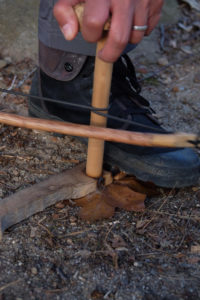
Overall the classes encourage participants to expand their world. “I try my best to get people to go outside of their comfort zone, to get dirty, hands-on, to ask lots of questions and be involved in the process,” he said. “I try to create the feeling of community, which I think is one the most essential parts of life.”

Registration begins March 12. For more information and to register online, visit mynewcastle.org or call the Town of New Castle Recreation & Parks at (914) 238-3909.
Filed Under: Cover Stories Tagged With: Learning, Lifelong skills, rugged, skills, survivor, Town of New Castle, Wilderness skills

‘Local Faces’ Campaign Unites Community and Merchants

December 1, 2017 by Kelly Leonard

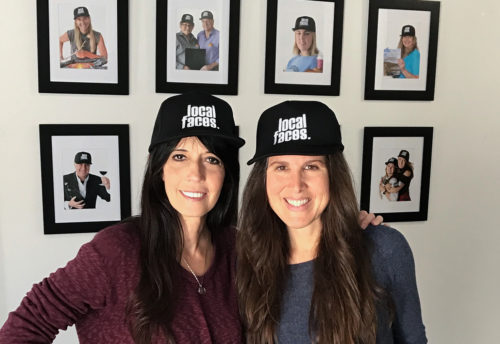
Trish Kallman (Left) and Carolyn Simpson   PHOTO BY LORI LAZARUS

Last summer, studio portraits of local Chappaqua business owners and merchants started popping up on Facebook and Instagram with the caption: CONNECT THE FACE TO THE PLACE! Post your guess as to who it is and where they work. Write what you love about the place, share your favorite story! Help us spread positivity, loyalty and shopping local in our community!

The only clues in the photos were the merchants posed with items from their trade like flowers, bottles of wine, or cups of coffee. The one common factor in every portrait was a ball cap each merchant wore that read “Local Faces.”

The mysterious campaign was the brainchild of two local business owners, Trish Kallman of hip-kid and Carolyn Simpson of Doublevision Photographers. Their idea for Local Faces was to connect Chappaqua and Millwood residents with the faces and personalities behind local stores and businesses. The idea was born during a photo shoot with local kids who wore a cap that said “Local” on it to be featured in the hip-kid shop window instead of using vendor supplied photos of child models.

Kallman also recounts a customer who asked: ‘I’m looking for a gift and so-and-so told me that you had it. We were at the Mall, and they had the gift, but they said, no don’t get the gift here, Trish has it.’ “Oh, that’s so sweet,” Kallman says she thought. “The customer didn’t even call to see if I had the gift or that it was at hip-kid but that Trish had it. I thought that’s so cool they think of me by name instead of the shop name; it’s like a personal relationship with the customers.
“So then I started thinking of all the stores in town and how many of the owners and managers that I knew by name. I wondered if others had a similar experience. So Carolyn and I sat down to talk. I suggested, ‘How about doing something that doesn’t have anything to do with hip-kid, what about something that just features the different business owners in town, connecting the name to the face?’”

Originally Kallman and Simpson were just thinking about doing a gallery showing event, but then as they got started, the idea evolved and as Kallman notes, “We thought, wait, this could be a really fun kind of interactive Facebook campaign. So each day we posted a picture.”

“When we first started,” Kallman recalls, “we were concerned about how do we get everybody in this? We basically went door to door to the merchants with flyers. We did a sample shoot so merchants could visualize and see what it was going to look like. So we created a prototype to put on the flyer and said this is our idea. Some people got it and some people were like, ‘No, I’m camera-shy’ and some people needed a little more prodding. Then we worried about other businesses that weren’t right on the street so we tried to get as many mailing lists as we could pull to find them. This was a Chamber of Commerce sponsored event, and they sent out an email to their list.”
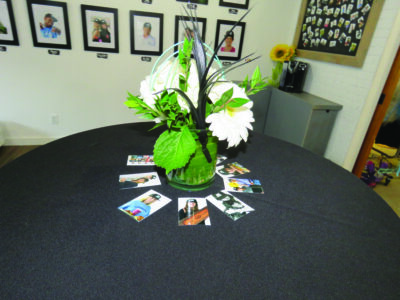
Simpson adds, “Trish and I came up with the name Local Faces because we wanted the name to brand what we were doing so people would connect the faces to the places. As we went door-to-door to businesses in Chappaqua and Millwood, merchants initially thought we were trying to sell something. We donated our time to do this because, especially with the construction in town, we wanted people to feel a connection and to help draw customers in. The photo sessions got really fun as we got to know so many of the merchants in town. The photos allowed people to see a whole other side of local business owners.”

“The campaign was more of a community event than a sales endeavor. We asked the participating merchants to invite their customers and clients to the Gallery Opening where we all could relax. It was all about building relationships…”

Kallman shared that they used the lounge space at hip-kid as a studio for the shoots. “It was really fun for us to work together and collaborate on this and bring our different interests to it. This really made it evolve and grow,” she says. “The Facebook and Instagram campaigns helped it take off and merchants started calling us asking, ‘Can we be a part of this?’ We realized this was really going to be something when people started reaching out to us. When we started posting the photos on Facebook and Instagram, we’d ask, ‘If you know of anybody that you want to be Local Faces please let us know.’”

Simpson adds, “For the Facebook campaign, we started posting every day and then we did a countdown leading up to the September gallery event. We also did some outtakes to post during the countdown. Part of the social media campaign was that people would comment about what they liked about the featured merchants and other people would see those comments, this helped build momentum throughout the campaign.”

After the Gallery Opening & Exhibition event at hip-kid lounge in September, Kallman and Simpson gave the merchants their framed photos. “Hopefully,” Simpson notes, “they’ll have it in their stores and it’s something they can look at with good memories. The campaign was more of a community event than a sales endeavor. We asked the participating merchants to invite their customers and clients to the Gallery Opening where we all could relax. It was all about building relationships and not about the transactions per se.”
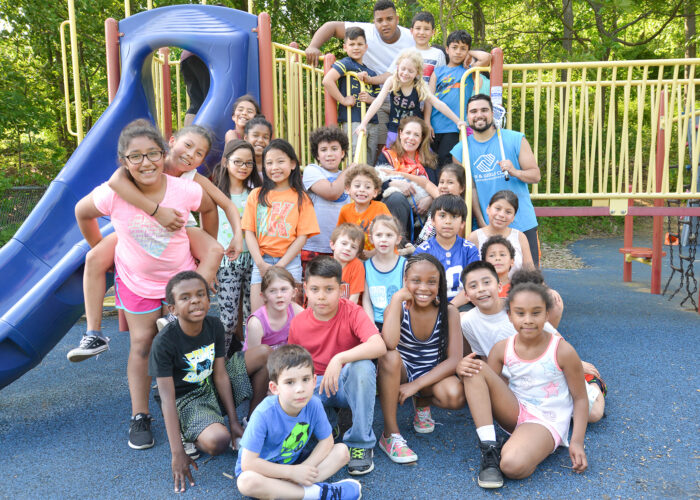
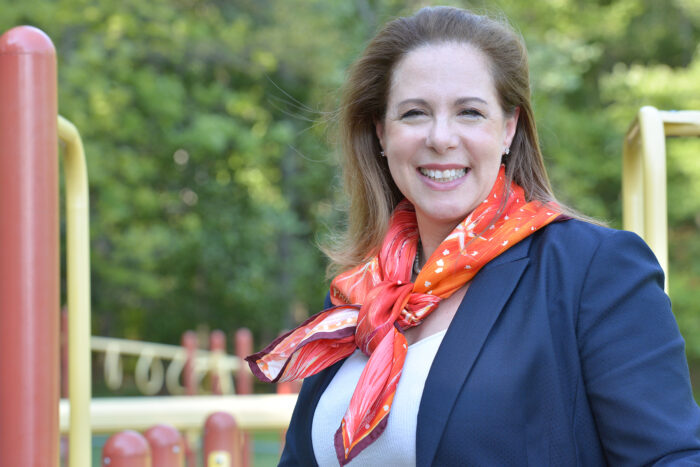
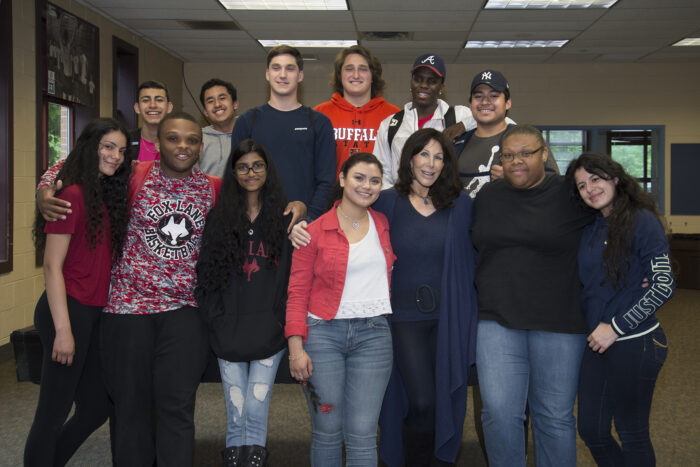
As for what’s next for Local Faces, Kallman says, “We’re talking with the Town about it and the Chamber of Commerce to see if they want to do it again. Or if it’s something we want to bring to other towns…”

Simpson adds that it’s “just something to bring everyone together.”

To view and follow the Local Faces virtual galleries, visit: facebook.com/localfaceschappaquamillwood instagram.com/


Filed Under: Cover Stories Tagged With: Businesses, Digital Marketing Campaign, Local Faces, merchants, photography, Shop Local

Boys & Girls Club CEO Alyzza Ozer Looks Forward, Gives Back

December 1, 2017 by Amy Kelley

On a recent school day afternoon, the lobby of the Boys & Girls Club of Northern Westchester in Mount Kisco contained a bustle of activity. Cheerful-looking teens and adults wearing staff T-shirts greeted kids coming in and said goodbyes to kids leaving; an enthusiastic game of ping-pong was partially visible through the game-room window. Nearby, a young boy with special needs thoughtfully drove his toy yellow car along a table on his way out. A young woman in a pink headscarf walked down the hall past a complex, brightly-colored paper schedule affixed to the wall, toward a mother paying for swimming lessons at the front desk.

“Miguel, you’re matching all over today!” CEO Alyzza Ozer said to a boy whose sneakers, sweatshirt and backpack displayed the same green and blue. Down the hall, she asked another boy why he didn’t eat his mashed potatoes. “They’re so good!” she assured him.

Shantae Artis, director of volunteer programs at the club, was gathering signatures on several cards. “Yes, we write real thank-you notes,” she said, explaining that several local pizzerias had donated pizzas for a taste test and the Boys & Girls Club youngsters were expressing their gratitude the old-fashioned way. Artis was able to get everyone’s attention pretty easily, perhaps partially because the club has had a no-cell-phones policy for two years now. The only cell phones you’ll see in the halls are in the hands of parents coming to pick up their kids.

BGCNW’s Alyzza Ozer

Ozer, a Chappaqua resident who grew up in Armonk, said at first, the teens resisted the policy –but now many express gratitude for it. “When we first instituted it, there was resistance,” she said. “But now the teens say, ‘thank you. Now there’s a part of the day when I can just enjoy myself and not be distracted.’” Technology is available, though, to groups of youngsters in the room where Power Hour is held, right across from the game room and around the corner from a busy kitchen and dining room where more than 80,000 meals are served every year. Homework is done, studying takes place, all assisted by adults, many of whom are bilingual. Some are staff members and some are part of the large volunteer contingent that is essential to the club’s operation.

According to Chappaqua resident Solveig McShea, director of community partnerships and fundraising at the club, “The club is a vibrant, welcoming and impactful place, where kids can just be kids. We need, however, the community’s help via financial and volunteer support to keep our programming running and to continue to help kids have the brightest possible futures.”

New Castle resident Dan Harrison volunteers to help with homework three afternoons a week. “I like to see the light bulb go off when a kid understands something they didn’t understand before,” he said. “We want the volunteers to have an equally valuable experience to the kids,” Ozer said. Then the experience becomes a partnership and the volunteers learn from the kids as well as vice versa. “There’s another world out there than what we see immediately around us.” Ozer is currently seeking, particularly, volunteers with expertise in the college application process.

The club serves kids ages 3-18 and their families, offering more than 40 programs including preschool, camp, swimming lessons, after-school care, volunteer opportunities and more.

The swimming program is, by any measure, stellar. Aquatic Director Dennis Munson, a club alumnus himself, has been with the club since 1969 and coaches the Marlins, a high-level swim team that’s consistently well-ranked nationally and has won the national Boys & Girls Club National Championships every year since since 2000. Marlins swimmers have been recruited to top colleges and make the pool atmosphere one where excellence is encouraged. Swimming instructors at the club employ innovative techniques.

More than 500 kids are served by the club every day. The children come from all over Westchester, primarily northern. Kids start trickling in at 7 a.m. and the last bus leaves just before the 9 p.m. close.  Some of the kids from families below the poverty level, and others come very affluent homes.

All the youngsters who come learn there’s a wide world out there with all kinds of families in it, and are taught to value their community. “It’s not just a place,” Ozer said, explaining that many club kids spend many hours there for many years. In the process, many come to love the club, which is why so many staff and volunteers were ‘club kids’ themselves.

Tatiana Restrepo, 2017’s Youth of the Year at the club and now a freshman at Pace University, said, “This was my second home, my community.” “We have advocacy and leadership throughout the curriculum starting with 3-year-olds,” Ozer said. “What makes someone a great leader, able to advocate for their community? They need to be able to recognize their community and be grateful for it.”

Recently, younger children at the club made capes for children in the hospital. “They’re learning about empathy and gratitude and that not every kid is lucky enough not to be in the hospital,” Ozer said, and then the children act in response to that information. “All people, especially youth, learn leadership skills and empathy from giving back to the community.”

Older club kids have made trips to Albany and Washington D.C. to advocate for funding and legislation for various issues, and the club hosts various politicians to come talk to the kids, “so they know what a leader looks like and does.”

This training pays off into adulthood: Ozer said eighty-seven percent of kids who regularly attend Boys & Girls Club after-school programs are committed to giving back to their communities as adults. The club boasts other impressive statistics: Last year, 11 of the high-school seniors from the club were the first in their families to graduate high school in the US and go on to college. One hundred percent of the seniors continue on after high school to college or technical school, Ozer said.

Ozer had a career as an attorney in commercial real estate before turning her energies full-time toward her passion: the non-profit sector. “That was my passion,” Ozer said. “My extracurricular activity was always philanthropy.” For years, she served on the boards of various organizations while continuing to work in commercial real estate. “You get to a certain point in your life and you ask yourself, what am I doing and do I love it?” she said. “This is what I love doing and I’ve been extremely fortunate” to be able to make the transition, she said. Ozer also credits her mother for her interest in community service–she was a teacher who always stressed the importance of giving back.

The Boys & Girls Club of Northern Westchester depends on private donors and volunteers to do its work, Ozer explained. “There are a lot of extraordinarily worthy agencies, but the youth is really our future. Our work is essential,” she said. “That’s why I’m always excited to get out of bed in the morning.”

For more information, visit: http://www.bgcnw.com/

Filed Under: Cover Stories Tagged With: Alyzza Ozer, BGCNW, Boys and Girls Club, mentor, Swimming Program, training, Volunteer Programs

The Baha’i Faith: Focusing on What Unites Us

December 1, 2017 by Shauna Levy

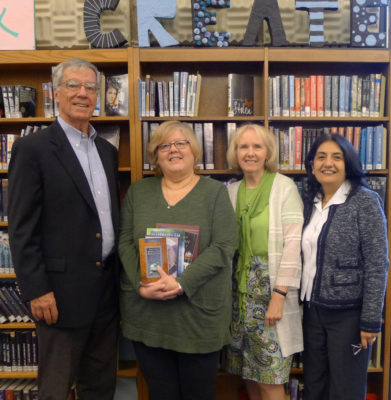
Pictured (L-R): Jerry Watson, Pamela Thornton (Director of the Chappaqua Library) Mary Watson and Shohreh Anand.

According to theology researchers, there are 4,200 religions around the world. Of those, eight are represented on the Chappaqua Interfaith Council. The small, but dedicated group of Baha’is, which counts eight to 10 member families on average is an avid member of the Council and has enjoyed being part of the Chappaqua community for almost 50 and years.

The Chappaqua group recently made a book donation to the local library to commemorate the 200th bicentenary of the birth of Baha’u’llah, its founder. It’s not surprising though that this group has embedded itself within the fabric of its communities despite its small numbers. The central message of the Baha’i teachings, after all, is unity and inclusivity.

A Spiritual Paradigm Shift

Mary Watson, a Chappaqua resident for 30 years, has been a practicing Baha’i since the age of 20. Raised Methodist in “a small town” on the shore of Lake Michigan, her family, like most, never considered questioning their religion. As Mary articulates, “We are typically dedicated to the faith we were born into and to reassess that is a major paradigm shift as one inevitably becomes attached to what one already intrinsically knows.”

Watson’s “small town” also happened to be the Whirlpool Corporation’s headquarters and with that came a population who put an emphasis on education. Several families decided to organize a theological study group to inform their youth on the world’s major religions. They identified a professor, Dr. Albert Vail, a Harvard Divinity School Ph.D., and embarked upon their journey.

The group studied religions in chronological order every few weeks.  Almost one-and-a-half years into their studies, they were introduced to the Baha’i Faith. These lessons resonated with Mary’s family as no other and ultimately had a life-changing impact. The basis of its teachings is unity and the concept that every person is created noble by God and therefore should be treated with love and respect.

“The Baha’i teachings appealed to us for many reasons,” recalled Mary. Her clear, blue eyes alight as she recounts, “The teachings are very logical and sensible, yet deeply spiritual. The most important virtues are honesty, trustworthiness, forbearance and generosity. Baha’is are committed to promoting unity, the equality of men and women, and standing up for justice. We look for the good in people and promote what draws us together. For example, if a person has 10 characteristics and nine are good and one is bad, we focus on the nine. Similarly, if a person has one good characteristic and nine bad ones, we empower the one.”

The Baha’i Era

Baha’u’llah, the founder of the Baha’i Faith, was born into a wealthy Persian family in 1817. He gave up his position and possessions to serve humanity and became known as the “father of the poor.” He taught the oneness of humanity and had a vision of a future united in justice, peace and prosperity. The other central figure to the faith is “the Bab,” meaning gate, who foresaw a time of spiritual reform and heralded the coming of Baha’u’llah in 1844, which is considered to be the commencement of the Baha’i Era. As the direct result of their beliefs, the Bab was executed, and Baha’u’llah was forced into exile. He remained a prisoner until his death, 40 years after founding the Baha’i Faith.

Baha’i believe that each great religious messenger such as Krishna, Moses, Buddha, Christ and Muhammed has taught us about God and how to live our lives. Each Messenger builds upon the messages of the past. Mary explains, “We see religion as similar to going through grades in school. Each faith builds upon the last in a sort of spiritual evolution.” The teachings of Baha’u’llah are meant for the modern age we live in. In about a thousand years another Messenger will appear and the cycle will continue.

A Modern Message

“The timing of Baha’u’llah’s writings is a major unifying factor as they came during the printing era,” Mary points out. “While most faiths are divided into various denominations, there is one version of our scriptures and no splintered groups.

To be a Baha’i and meet another Baha’i is an indescribable feeling because we immediately understand that we share a unified belief system.”

Reflective of the modern era in which it was formed, the Baha’i Faith is relatively revolutionary. It is differentiated from most religions by the embrace and love of equality and diversity. According to Mary, “Baha’is represent the most diverse range of cultures and races. Not only do we accept intermarriage, but it is actually encouraged.”

The Baha’is are also unique in their emphasis on education–it’s compulsory for both men and women. In fact, Mary says, “if a family only has the means to educate either their son or daughter, we believe it is more important for the daughter to go through schooling. Women are considered the mothers of the next generation.” Furthermore, Baha’is accept and promote the understanding of scientific principles. “We believe in a balance between science and religion. Having religion without science, we become too superstitious and without faith, the world is a breeding ground for injustice and hate,” says Mary.

Fittingly, Baha’is are led in a non-traditional manner. There is no designated leader or priesthood. Volunteers serve as “facilitators” of weekly study groups. “In this age of literacy,” Mary adds, “we don’t require a leader to teach us what to believe. Through a consultative process, all members discuss their thoughts and everyone’s comments are equally valuable.” In line with this democratic philosophy, every year Baha’is elect a National Spiritual Assembly, and every five years the members meet in Israel, to elect the Universal House of Justice, whose guidance, based on Baha’i Writings, provides direction for action.

Finding Strength in Our Differences

Mary credits the Faith for her family’s strong sense of identity and for helping them make good decisions. Their Faith empowers them to see the beauty in all people. In a world full of challenges and opportunities, they hold on to their beliefs, while celebrating our differences and focusing on what unites us as a human race.

Filed Under: Cover Stories Tagged With: Baha’i, Baha’i Faith, Chappaqua library, Faith, religion

Getting to Know Gray Williams: Town Historian Extraordinaire

December 1, 2017 by Dana Y. Wu

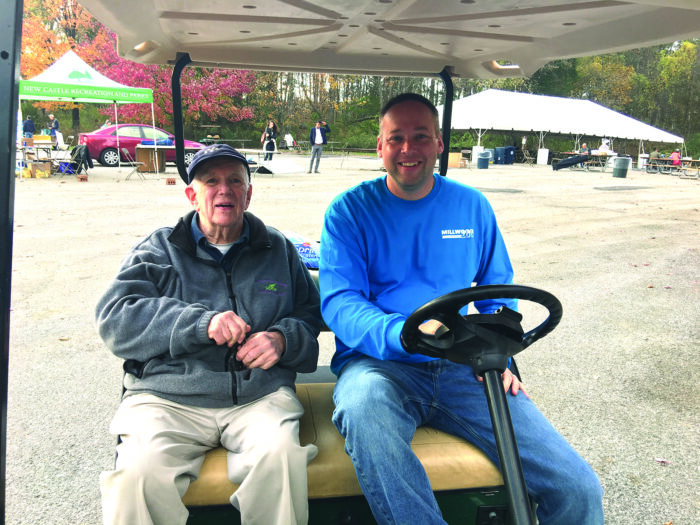
Gray and Ike Kuzio, Town Superintdendent of Recreation & Parks at Millwood’s 200 Year Anniversary celebration PHOTO BY ROB GREENSTEIN
Town Historian Gray Williams is a master at painting a vivid picture of history. Quaker, Haight, Sarles, Kipp, Pines Bridge, Greeley, Commodore–the names of these local roads impart a legacy of almost three centuries of history. Other names around town–Stone Road, Hardscrabble Road, Stony Hills, Turner Swamp, Roaring Brook–suggest that the countryside, while perhaps full of natural beauty, was not entirely ideal for agriculture.

Gray’s principal duty as town historian is to serve as chair of the town’s Landmarks Advisory Committee, established in 1990. Jill Shapiro, Town Administrator, says his presentations on properties recommended for landmark status are legendary. “They are so well researched but not dry. He always finds a spark–something interesting and unique–about a property or its former residents that makes it special.”

The Town Historian and the committee, all unpaid volunteers, also makes recommendations whenever an application for significant alteration of a landmark comes before the Architectural Review Board, Planning Board, Zoning Board of Appeals, or the Building Department so that the historical significance of the site will be taken into account. Some New Castle landmarks are also listed inside the National Register of Historic Places.

Much of Gray’s work as an historian is devoted to writing. His most recent publication is a short illustrated history, Horace Greeley and the Greeley Family in Chappaqua. In addition to research reports, histories of landmarks and exhibitions at the Horace Greeley House and Museum, Gray has a special interest in the eight graveyards in New Castle–the Quaker graveyard, Fair Ridge Cemetery, and six abandoned family burying grounds. While preparing for the recent 150th Anniversary Tour of Fair Ridge Cemetery, Ken White, Jr. a former New Castle Historical Society (NCHS) trustee and current docent, recalls, “In the true spirit of Tom Sawyer, Gray presented me with my own scrub brush and spray bottle to start on a row of headstones and also convinced me that this endeavor was really great fun.”

Gray, an ex-officio trustee of the NCHS and a trustee of the Westchester County Historical Society, states, “The monuments in these graveyards embody the history of Chappaqua from the time it was first settled.” Ken adds, “Almost all of the town’s abandoned cemeteries now lie within private property and have long been neglected. Gray is the consummate statesman in negotiating for access and managing care. Some of the graveyards are on steep hillsides and are badly overgrown, but Gray also is undaunted by bees, brambles or a challenging climb.”

Gray grew up in Chappaqua and, with his wife, Marian, raised a family here. His neighbors have enjoyed the pleasure of Gray’s sense of humor and his intellectual spark. Jamie Comstock, a current NCHS trustee, says “When I moved to Marcourt Drive in the early 90s, Gray and Marian threw a wonderful party to introduce me to my other neighbors. I have valued his warmth and kindness over the years more than I can say. Running into him around town always gives me the same kind of feeling as suddenly remembering there is ice cream in my freezer – such a pleasure!”

Until the 20th century, New Castle was primarily an agricultural town, with grist and saw mills, cider and vinegar works, a shoe factory, and a pickle factory supplementing its dairy farms and apple orchards. Given our town’s origins, Town Supervisor Rob Greenstein says, “It is beyond dispute that in order to know where we are going, we must know where we’ve been. Gray’s endeavors in searching for and memorializing our Town’s history benefits us all.”

Kids love to probe Gray’s vast knowledge of the homes and neighborhoods of New Castle and learn about their own houses. And Gray never disappoints with his stories during the Q &A following the middle school presentations, when kids ask about where they live.

For example, Pierce Drive (right on the border of Chappaqua and Pleasantville) is named for the farm of a Quaker farmer, Moses Pierce, who operated a station on the Underground Railroad before the Civil War. Gray says of Pierce’s farm, “Perhaps this stop was right before the Jay Homestead in Bedford, which is also believed to have sheltered escaping slaves. The Jay family, from John Jay on, steadfastly opposed slavery.” The Pierces were members of the Quaker Meeting, whose meetinghouse was built in 1754, making it the oldest recorded building in Chappaqua. The Quakers who settled here embraced not only non-violence but also the equality of all human beings, regardless of race or sex. From as early as 1775, the Quakers denounced slavery though few went so far as Moses Pierce in defying the law for their beliefs. He and his wife, Esther, together with several others of their family, are buried in the Quaker graveyard.

Along with all of the other NCHS volunteers and the Landmarks Advisory Committee, Gray has preserved and interpreted local historic artifacts, documents, and stories to truly serve broad cultural and heritage goals in our community and beyond. Gray’s professional life as a writer and editor comes through in quality and details of the captions he writes for the rooms and objects at the Horace Greeley House. Suzanne Keay, a current trustee of the NCHS says, “At a recent lecture at the Horace Greeley House about runaway slaves in the mid-Hudson Valley, Gray seemed to know the names of almost every family mentioned by the lecturer. I don’t know what we’d do without Gray and his deep knowledge and dedication.”

NCHS is dependent on volunteers and membership to support its programming and activities, such as the annual Tree Lighting and Carols and the Victorian Valentine Tea Party. Georgia Frasch, NCHS Trustee, thoroughly enjoys going to scout potential old homes with Gray for the annual “Castles of New Castles” house tours. “I learn so much. Gray has spent countless hours looking at foundations and crawl spaces, all to preserve the rich history that has made this town so special. The names–Haight, Taylor, Washburn, Bristol, Quinby–are people who lived here and gave their properties a distinct sense of time and place. We love showing homes that demonstrate how our present is rooted in our past.”

It may be hard to imagine that our suburban homes were once heavily forested hills and valleys occupied by local Wappinger tribes whose totem was the Enchanted Wolf. Gray’s publications, stories and anecdotes keep us remembering and respecting our unique hamlet’s 300 years of significant events, persons, businesses and buildings.

Filed Under: Cover Stories Tagged With: Gray Williams, history, Landmarks, Millwood's 200 Year Anniversary, New Castle, Recreation & Parks, Town Historian, Town of New Castle

  • « Go to Previous Page
  • Page 1
  • Interim pages omitted …
  • Page 92
  • Page 93
  • Page 94
  • Page 95
  • Page 96
  • Interim pages omitted …
  • Page 149
  • Go to Next Page »

Primary Sidebar

Please Visit

White Plains Hospital
William Raveis – Armonk
William Raveis – Chappaqua
Northwell Hospital
Houlihan Lawrence – Chappaqua
Houlihan Lawrence – Armonk
Houlihan Lawrence – Briarcliff
NYOMIS – Dr. Andrew Horowitz
Westchester Table Tennis Center
Spavia
Compass: Miller Goldenberg Harris Team
Lipari & Mangiameli Dentistry
Raveis: Lisa Koh and Allison Coviello
Bristal Assisted Living
Maid Brigade
Kevin Roberts Painting & Design
Zwilling J. A. Henckels
Meagher & Meagher Attorneys at Law
Compass: Aurora Banaszek
Dr. Briones Medical Weight Loss Center
Play Nice Together
Decicco and Sons
Whitaker’s Garage Door Store
EyeGallery
Joseph Richard Florals
Beascakes Bakery
Donna Mueller
Pinsky Studio

Follow our Social Media

The Inside Press

Our Latest Issues

For a full reading of our current edition, or to obtain a copy or subscription, please contact us.

Inside Pleasantville and Briarcliff Manor Inside Chappaqua and Millwood Inside Armonk

Join Our Mailing List


Search Inside Press

Links

  • Advertise
  • Contact Us
  • Digital Subscription
  • Print Subscription

Publisher’s Note Regarding Our Valued Sponsors

Inside Press is not responsible for and does not necessarily endorse or not endorse any advertisers, products or resources referenced in either sponsor-driven stories or in advertisements appearing in this publication. The Inside Press shall not be liable to any party as a result of any information, services or resources made available through this publication.The Inside Press is published in good faith and cannot be held responsible for any inaccuracies in advertising or sponsor driven stories that appear in this publication. The views of advertisers and contributors are not necessarily those of the publisher’s.

Opinions and information presented in all Inside Press articles, such as in the arena of health and medicine, strictly reflect the experiences, expertise and/or views of those interviewed, and are not necessarily recommended or endorsed by the Inside Press. Please consult your own doctor for diagnosis and/or treatment.

Footer

Support The Inside Press

Advertising

Print Subscription

Digital Subscription

Categories

Archives

Subscribe

Did you know you can subscribe anytime to our print editions?

Voluntary subscriptions are most welcome, if you've moved outside the area, or a subscription is a great present idea for an elderly parent, for a neighbor who is moving or for your graduating high school student or any college student who may enjoy keeping up with hometown stories.

Subscribe Today

Copyright © 2026 The Inside Press, Inc. · Log in