• Skip to primary navigation
  • Skip to main content
  • Skip to primary sidebar
  • Skip to footer

The Inside Press

Magazines serving the communities of Northern Westchester

  • Home
  • Cover Stories
  • Features
    • Portraits and Profiles
  • Advertorials
    • Lifestyles with our Sponsors
    • Sponsor News!
  • Wellness
  • Happenings
  • Advertise
    • Advertise in One or All of our Magazines–And/Or Subscribe
    • Advertising Payment Form
  • Contact Us
  • Search

Shauna Levy

Revitalizing the Glamour of Old Cinema: The Bedford Playhouse Reopens its Doors

March 8, 2019 by Shauna Levy

Passing under the iconic arches flanking the entrance of the Bedford Playhouse, Home of the Clive Davis Arts Center, one is instantly transported to the era of old Hollywood glamour. From the old fashioned box office that greets guests to Paul Shaffer’s grand piano from the set of “The Late Show” with David Letterman gracing the foyer, it’s evident that the Playhouse boasts a rich history. The meticulous detail, however, beguiles the fact that it’s been mere months since the grand reopening of this cultural hub that’s now emerging as a bright star after a questionable future.

A Grassroots Movement

The Bedford Playhouse first opened its doors in April 1947 to much fanfare. In 1983, the theater was acquired by Bow Tie Cinemas and divided into two smaller theaters, losing much of its historic nature. In early 2015, when Bow Tie opted not to renew its lease, the beloved theater closed. That’s when the community unified to take action. Lindsay Hearon, director of marketing of the Playhouse recounts, “The community banded together in a ‘Save the Playhouse’ grassroots movement of sorts and reached out to local resident, John Farr, who was instrumental in resurrecting the Avon Theater in Stamford. The landlord gave us 120 days to raise $2M to prove there was significant interest in the project. That goal was accomplished in six weeks. That’s when they began taking us seriously.”

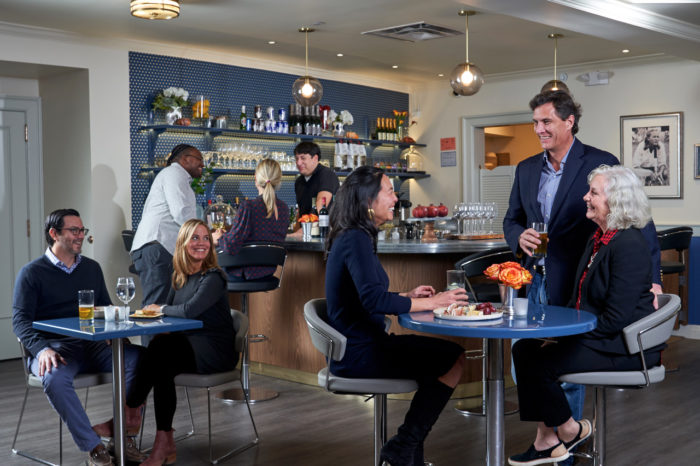
If the first phase of revitalizing the Playhouse was about generating support, then the second phase can be characterized by reimagining, rebuilding and redesigning the structure. According to Hearon, “Since a movie theater didn’t work, we needed to redefine the Playhouse’s role in this phase of its evolution. The local communities were craving a cultural hub. To tap into that void, we conceived of a space anchored by films, but with the capability to function as so much more. The introduction of a wine tasting room and café, where people grab a smoothie or meet friends for a drink was instrumental in the transformation.” Armonk resident and founding donor, Robert Greenfield concurs, saying, “My wife and I absolutely fell in love with the renovation and the overall experience. It’s this intimate, luxurious cultural destination that’s right in our backyard. It’s different from a movie theater or a concert hall. It’s about bringing the community together to have a dialogue, listen to directors speak about films, attend family programming or just have a drink with friends. You simply can’t beat this.”

To make this vision a reality, the team began working fervently, assembling a group of advisors.  “We consulted with the absolute best,” according to Hearon, “from designers to architects to state-of-the-art technology teams to ensure that no detail was overlooked.” Amongst this exclusive team of advisors is local resident and music industry legend, Clive Davis. Hearon explains the icon’s role, “When Mr. Davis learned about what we were doing, he wanted to get involved both personally and philanthropically. He identified with the need to bring arts and culture back to the community. His decades of incredible experience and connections have been instrumental.” Davis’ contributions were so impactful that the Playhouse thanked him by designating the Clive Davis Art Center as its partner entity, an honor prominently reflected on the building’s façade.

“It’s different from a movie theater or a concert hall. It’s about bringing the community together to have a dialogue, listen to directors speak about films, attend family programming or just have a drink with friends. You simply can’t beat this.” – Robert Greenfield

A Marriage of Old and New

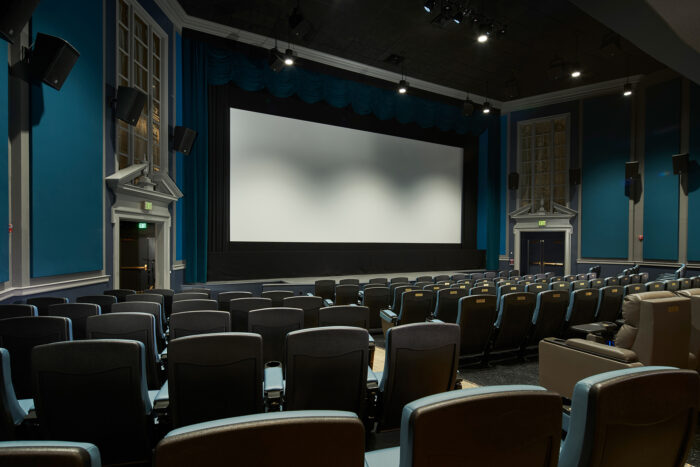
The grand opening of the Bedford Playhouse revealed an opulent interior depicting the perfect marriage of old and new. The theaters feature sumptuous, buttery-soft leather seating with trays for food and drink, vintage film posters and waterfall curtains, complemented by state-of-the art Dolby Atmos surround sound technology. “Our doors opened on September 30th, featured three days of fun-filled programming and culminated in a party with guests including Clive Davis and Paul Shaffer. We’ve been chugging along ever since,” Hearon proudly announces.

“Our programming incorporates a hybrid strategy of arts and film that touch topics that are captivating the community’s interest like the “Me Too” movement or politics–we’re not going to shy away from controversial issues,” says Hearon, further explaining, “We have a really exciting footprint where we take a movie and add a unique component to it.” One space in particular has been designed with flexible furniture to accommodate everything from a themed cocktail event to author reading event discussion to a children’s birthday party.

A series of unique events have already taken place. The Playhouse screened Always at the Carlyle, accompanied by a Q&A with the film’s directors complete with a cocktail event that recreated the hotel’s legendary Bemelmans Bar. Mary Poppins Returns featured a “Supercalifragilisticexpialidocious” Spelling Bee and costumed Mary Poppins offering spoons full of sugar up and down the aisles. Martha Stewart hosted a private event in the wine tasting room, while Glenn Close headlined a sneak preview screening of the Oscar-nominated film, The Wife, complete with a Q&A event and cocktail party; former head writer of SNL Alan Zwibel held a Q&A and a screening of Love Gilda. And, there’s no sign of the momentum slowing. In the coming months, the Playhouse is set to offer a special screening of 2001: A Space Odyssey, a Q&A with the David Boies, the subject of the documentary, The Case Against 8, and a comedy show starring comedian Robert Klein.

All of the excitement is evidence that the Bedford Playhouse has tapped into the community’s collective yearning for culture. “We’ve even seen the naysayers come out,” Hearon says, continuing, “People really want to join together in a cultural experience. The community has been hungry for this.”
Filed Under: Armonk Cover Stories Tagged With: Arts, Bedford Playhouse, classic, Clive Davis Arts Center, culture, New, Old Hollywood Glamour, performing arts, Playhouse, theater

Helping Children in their Hour of Need

December 2, 2018 by Shauna Levy

An oftentimes overlooked portion of the population exists mere miles away from the borders of Armonk. The Bedford Hills Correctional Facility is a maximum security prison that houses approximately 1,000 adult females. Armonk resident Joscelyn Read is working alongside organizations such as Hour Children to enhance the quality of life for the mothers within these walls and the children they’ve left beyond the bars.

Building Bridges Through Bars

Hour Children works to nurture relationships between incarcerated mothers and their children with the belief that a strong family connection maximizes a child’s stability and a woman’s chances of success upon reentry. The organization’s mission immediately resonated with Read, who acknowledges that it doesn’t always elicit that reaction, saying, “It’s a population that people don’t want to think about. They assume the prisoners did something bad and should be there. But, in truth, having met these women, many are lovely. They are human beings who often feel terrible about their actions. With a twist of fate, anyone could be in their position. I believe in second chances.”

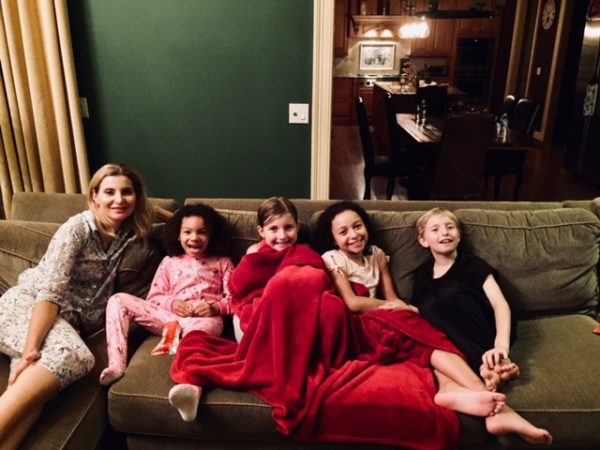
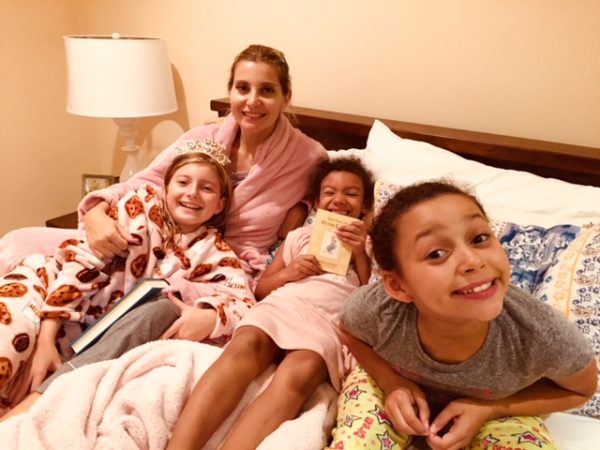
Describing herself as someone who “likes to get in the thick of things,” Read makes good on those words by regularly opening the doors of her home to the children of women within the confines of Bedford Correctional. “I can’t imagine anything more difficult than having a parent in prison. For the past year and a half, I host two sisters four times a year for three to four nights while they visit their mom in prison from 9 a.m. to 3 p.m.,” she explains. “It’s the only way for them to keep the connection with their mother alive. Beyond that, I get the opportunity to be a positive influence in their lives and it gives their guardian, in this case the maternal grandmother, a break during which they know the children are in a safe place.”

The Innocence of Children

Of her role, Read says, “The biggest question I get is whether I feel nervous about having these kids in my house. People would be surprised that despite the stark socioeconomic differences, these girls are just like every other kid. They love playing with Legos, watching Nickelodeon and going to the movies. They’re innocents. What sets them apart is their strength. To travel by van six hours or more to see your mom while staying at a stranger’s home is the definition of bravery.”

The sisters aren’t the only children benefitting from the experience. “My children, ages seven and eight, see the girls as friends and love when they visit,” Read says. “They’ve also learned that there are children who don’t have the material possessions and support system that they have. This past summer, we even picked the girls up for their visit early so that they could join us at Hershey Park.  We are teaching that kindness is not the exception –it’s the expectation.”

“The biggest question I get is whether I feel nervous about having these kids in my house. People would be surprised that despite the stark socioeconomic differences, these girls are just like every other kid. They love playing with Legos, watching Nickelodeon and going to the movies. They’re innocents. What sets them apart is their strength. To travel by van six hours or more to see your mom while staying at a stranger’s home is the definition of bravery.” – Joscelyn Read

Though the Read family strives to fill these visits with fun and laughter, the true purpose is never far from the peripheral. “There’s excitement to see their mother, but also a sadness as reality hits that they haven’t seen her in three to four months. They cry thinking about continuing this pattern for another four years as she serves her sentence. The last day is always the most emotional. They want to keep seeing their mom and they like staying at my house where they not only have their own beds, but their own rooms as well–luxuries they don’t have at home,” Read states.

Paying It Forward

The statistics for the children of Hour Children are grim. Read reports that children whose mothers are in prison have a much lower college rate versus those whose fathers are in prison. She hopes to crack a dent in that rate, saying, “These girls have to go to college. I love to mentor because I know firsthand how strong an impact it can have on a child’s future. Growing up, I was a little sister in the Big Brothers, Big Sisters program. My mom wasn’t stable and my “big sister” was so important. We would do little activities like make dinner or go bowling. Just having someone show interest in my life was huge and formative. I will absolutely stay in touch with these girls beyond their time in the program. I will be there to make sure they keep their lives on track. I’m paying it forward.”

To find out more about the organization, visit www.hourchildren.org.

Filed Under: Armonk Cover Stories Tagged With: Bedford Hills Correctional, help, Hour Children, Incarcerated mothers, kids, Mothers in Prison, prison, Prison life

A Table to be Thankful For

October 24, 2018 by Shauna Levy

PHOTO COURTESY Georgia Frasch

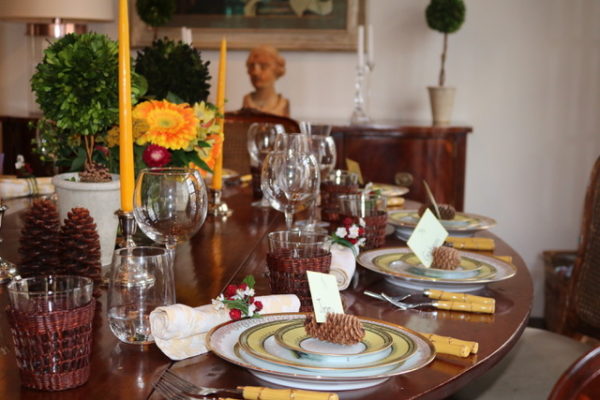
The art of arranging stunning tablescapes has risen to new levels with the advent of social media. It’s only natural that America’s most celebrated holiday, Thanksgiving, raises the bar in the table setting game. This holiday stands apart as the tales of each family are woven within the artful arrangements of flowers, candles, found objects and china. Customs and nostalgia become infused within the beauty of the decor, serving up family traditions as the centerpiece.

A Flavorful Welcome

Notoriously the busiest travel time of the year, Thanksgiving officially commences with the arrival of road-weary travelers. Georgia Frasch of Chappaqua hosts approximately 25-30 people who journey from New England each year for what the family affectionately refers to as “Frasch-giving.” Though dinner is not served until the evening, Frasch’s home is decorated by noon with the fireplaces lit and the football game on. Champagne, shrimp cocktail and a three-foot custom-built charcuterie board awaits guests. Sharing her welcome strategy she says, “I put a lot of thought into the charcuterie board, which features a very well-curated selection of fresh, hand-cut vegetables, cheese and crackers, dips and more. The provisions are displayed in a very architectural, symmetrical way and have offerings for each of my guests’ unique palates.”

Amy Krafft / Smith Noble
ADVERTISEMENT

For Smeeta Khetarpaul of Armonk, hospitality is also a major focus. “My husband and I grew up in India,” she says, “so Thanksgiving was very new to us, yet similar to Diwali, a festival that takes place in India at a similar time of year and also focuses on celebrating thankfulness. Thanksgiving quickly became important to us and each year it becomes bigger and more special.” The family and friends that sit around Khetarpaul’s holiday table represents a melting pot of cultures as she explains, “My guest list is very diverse, so my Thanksgiving table represents a diversity of flavors. I do make traditional turkey and sides, but I add my own special twist to each dish and depending on who’s joining us, I try to prepare meals with a nod to their preferences. Everything is fresh, flavorful and personally made in my home.”

Thanksgiving isn’t necessarily glamorous. It’s more about being together. My kids are now older, but we still use the turkey hands they made in preschool as seating cards, which prompts conversation. We share old family traditions and make new ones. – Leslie Gustafson

An Organic Approach to Decorating

The typical Thanksgiving scene, which evokes images of Pilgrims and Native Americans sharing their bounty amidst a forest, inspires the décor scheme of many. Chappaqua resident, Leslie Gustafson, explains, “Thanksgiving just feels more earthy and nature-inspired than any other holiday. We love to bring nature inside to take the place of the typical centerpiece. My kids collect the greenery, which we intersperse with pumpkins, gourds and fresh flowers.” Frasch has a similar sensibility, adding, “Here in Chappaqua, we have no shortage of trees. My tablescapes are always very natural and organic incorporating the beauty of the greenery from outside, which I wash thoroughly, like boxwood, pine tree boughs and red berries. Tucked within those branches are leaves and acorns that my children gather.” Khetarpaul also looks to her own backyard for inspiration, gathering leaves and acorns to create handmaid wreaths that adorn her door and staircase. Of her creations, she says, “I may stain the acorns with food coloring or pick leaves from the garden and tie them together for placement on the tables.”

Each of these hosts passionately agree that Thanksgiving décor should set a blank canvas to accentuate the intoxicating smells and colors of the meal. Frasch emphatically describes her strategy, “I use a lot of white from the serving ware and napkins to the white candles of varying sizes that dot the tables. I believe in a monochromatic color scheme.” Gustafson shares that philosophy saying, “I use a white tablecloth so that everything on the table pops and white unscented candles that don’t take overpower the delicious smells of the food.” Khetarpaul sensibly adds, “White will always match everything and I’ll never have to stress about whether I have the right colors.”

Focusing on Family

A lens into each window on Thanksgiving will reveal variations in rituals, décor and menu, but the commonality is a focus on family. As Gustafson says, “Thanksgiving isn’t necessarily glamorous. It’s more about being together. My kids are now older, but we still use the turkey hands they made in preschool as seating cards, which prompts conversation. We share old family traditions and make new ones.” The Fraschs traditionally play the card game, “Hearts,” a ritual begun by the family’s matriarch who recently passed away at the age of 96. Frasch laughingly explains, “They play two ways–Hearts or ‘Hearts with Cheating.’ More often than not they choose with cheating!” For Khetarpaul, it’s about beginning new traditions for a holiday they are learning to love. She says, “I’ve made a conscious effort to write handwritten notes to people telling them why I’m thankful for them. It’s a tradition I’ll begin doing with my children as well.”

Filed Under: Armonk Cover Stories Tagged With: decorating, decorations, holiday decor, table decor, thanksgiving, Thanksgiving decor, Thanksgiving Table

Untold Stories from the Border: Local Couple Helps Migrant Families in McAllen, Texas

August 29, 2018 by Shauna Levy

Chappaqua residents Larry and Debbie Rose are not self-proclaimed humanitarians. Their actions, however tell a different story. As news of families in crisis at the U.S.-Mexico border reached a crescendo, the couple reconsidered their summer vacation plans. Instead, they booked tickets to McAllen, Texas, the town that’s gained notoriety for being home to the migrant detention center that has been separating families.

The decision to choose volunteerism was a simple one. Debbie explains, “We’ve had many passionate conversations about this topic and realized that while our children were at sleepaway camp, we have an opportunity. It sounds cliché, but we just wanted to make a difference. We went for it.” They identified the Catholic Charities Humanitarian Respite Center, located a few miles from the detention center in McAllen as a place where they could help migrant families. “It was one of the few places accepting volunteers who were not attorneys or fluent in Spanish,” according to Larry.

Families in Crisis

The couple touched down in Texas and got acquainted with the respite center immediately after checking into their hotel. They were astounded by the scene that met them. Debbie recalls their first impressions, “We opened the door and found ourselves in the midst of a large, hot room, reminiscent of the DMV brimming with families. Within only ten minutes, a little boy about four years old took my hand and began rapidly speaking Spanish. I made out the word ‘agua’ and offered him water. In that moment it became real.”

With a tour of the facility, the Roses gained clarity over what they were witnessing. The respite center is pivotal to asylum seekers, providing each individual with a set of clothes including shoes, food, a shower and shelter to sleep as they await their futures. Larry elaborates, “We learned that these families had crossed the border, arrived at the detention center, and gained access to the respite center because they had a sponsor in this country. A volunteer would attempt contact with the sponsor. If contact was made and that sponsor could provide bus fare, that family could leave that afternoon.”

Gathering Provisions

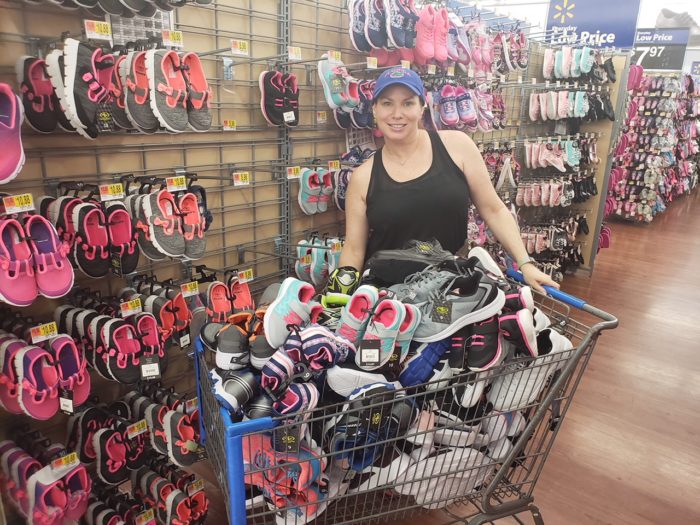
The Roses wasted no time assessing how they could add the most value, mingling and conversing with families and volunteers alike. “They desperately needed sneakers,” reports Debbie, explaining, “Everyone gets a new pair because they have literally walked from their starting point to the border.” Fortuitously, the Roses encountered a volunteer who pointed out the many teenage boys slumped over around the room. It was an eye-opening moment as Debbie says, “It was a situation that never crossed our minds and it was then that we decided to target teenagers in our efforts.”

With this knowledge, Debbie and Larry began the first of four visits to various supermarkets where they purchased items in bulk including toys, sneakers, pants and at least 100 loaves of bread. In the meantime, on Facebook, a grassroots movement was evolving at home. Of the phenomenon Debbie says, “Our goal was to directly help families at the border through our own volunteer efforts and monetary donations. This was not a fundraising effort, but many of our friends who couldn’t join us wanted to get involved. Then, their friends wanted to help and suddenly it was a domino effect. I ultimately posted my Venmo ID and we raised $6,300 in just a few days.”

While providing basic necessities was fulfilling, the Roses were most impacted by the children they met as they handed out the supplies they purchased. Debbie describes one young girl crying on her father’s shoulder, saying, “I simply gave her an Etch A Sketch and she didn’t shed a tear for the rest of her time there. Not only was this wonderful for the child, but it also provided relief for the parents who had just gone through this ordeal.” Similarly, Larry engaged with teenage boys by playing Jenga. He recounts the experience, “It started with one boy, but soon we had a serious Jenga tournament with several teams that lasted hours. During this time, one well-dressed boy reported, in perfect English, that his favorite toy at home was a remote control helicopter. It hit me that while these kids have nothing now, it wasn’t always that way. These are all families who had enough means to get out of their country. For them to have abandoned their lives with only the clothes on their back, things had to have been really bad.”

The American Spirit

In only four days, the Roses were able to reorganize the center’s food storage system, upgrade toys in the playroom and touch the lives of families in dire straits. Debbie says, “With the reputation of this country being unwelcoming, I wanted to be welcoming.” And, they weren’t alone as Larry explains, “Part of the untold story is the American spirit. It was truly a nationwide effort, with people from all over the country pitching in.”

Filed Under: Cover Stories Tagged With: donations, food storage, help, humanitarians, Migrant detention centers, Migrant Families, refugee, sneakers

A Music-Ability Minded Program: Rock On Music School

August 29, 2018 by Shauna Levy

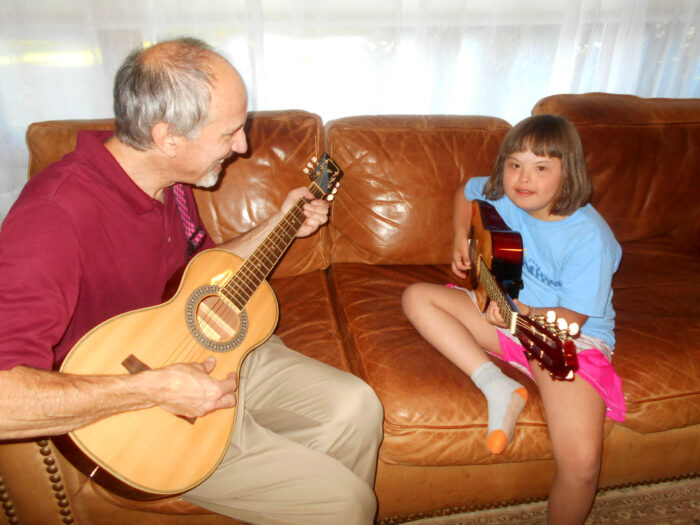
(L-R) David Meyers and Sophia Tuohy, a music student from Armonk
PHOTO COURTESY OF DAVID MEYERS

David Meyers found his passion for teaching music to children with disabilities quite accidentally. Having spent most of his career in real estate, music was relegated to a side pursuit that he relished when afforded the time. In 2008, however, that all changed when he began teaching a youth music program at New York’s Patterson Recreation Center. Playing and writing music moved to the forefront of his focus as his career took an unanticipated turn.

A New Beat

As Meyers became acquainted with the learning style of today’s children, he saw that to resonate with his audience, he would need to devise his own curriculum. He explains, “I quickly found that kids no longer absorb music in the same way as when I was a student. Modern music is heavily electronic and lyrics are oftentimes not age appropriate.” As a result, Meyer’s unique “RockOnMusicSchool” technique was born. He created original music and developed a learning method that began with simple lyrics, accompanied by the most basic guitar string work that gradually advanced to intricate songs with chords requiring increasingly complex finger work.

Serving the Underserved

In teaching, Meyers found a renewed sense of gratification, saying, “It’s the first job I’ve had that isn’t just about the dollar and that is so personally fulfilling.” The role soon became even more meaningful when a friend approached him to give lessons to his son who has autism. Meyers adapted his mainstream curriculum and within a few months saw his new student develop confidence through music. That experience shaped Meyers’ music school. He says, “I made a personal commitment to cater to this audience. These children have a tremendous need for recreational opportunities and are such an underserved community. Music provides them with a creative and social outlet, while building self-esteem, fine motor and language skills.”

Meyers now teaches music lessons through organizations such as SPARC (Special Programs and Resources Connections) of Westchester County as well as through his RockOnMusicSchool, providing one-on-one sessions at students’ homes. “Conducting lessons in a child’s home is so beneficial to those with physical disabilities that may make it challenging to get out or those who thrive within the comforts of their own environment,” Meyers says. Lessons are fine-tuned based on each child’s unique abilities. As Meyers points out, “Depending on the child’s circumstances, we might select strings, drums or keyboard.”  He also modifies lessons by focusing on specific skills such as developing eye contact, sounds or social cues. To engage the kids, he often writes “silly, personalized songs” to get them excited and motivated for playing music.

Marilyn Tuohy of Armonk has become accustomed to hearing Meyers’ fun lyrics throughout the hallways of her home. “My daughter Sophia has Down Syndrome and loves music, which led a friend to recommend David to us. He really knows how to interact with her and gets her engaged no matter what her mood. He brings all instruments including drums, shakes, the keyboard and guitar and always comes up with new songs that are so alive and appealing to kids. They learn the lyrics right away. After David leaves, Sophia as well as my two sons and even my husband are still singing! I’ve seen my daughter’s speech and fine motor skills develop as a result. She speaks slower and clearer and is always singing in the house.”

Music is known to have therapeutic qualities and Meyers agrees, explaining, “Music has a natural timing and rhythm that serves to encourage children to use their voice in response to appropriate cues. Songs have a built-in conversational script that is valuable for children who have social challenges. Students learn to manage frustration, gaining the understanding that it’s okay to mess up and that they will eventually advance. It’s all in their control. These are skills they will take with them into adulthood.”

A Satisfying Crescendo

Today, that first client that inspired RockOnMusicSchool’s mission is now proficient in keyboards, bass, drums and guitar and has developed a love of The Beatles. Meyers proudly reports that this student has also integrated into a mainstream music class. “Each child already feels the music inside of them–some just need guidance to get it out,” he adds as we wrap up our conversation. And, it seems that Meyers has mapped the path as he continues to encourage all children to find a love of music in their own unique way.

Filed Under: Armonk Cover Stories Tagged With: music, Music Therapy, school, Special Needs, The Beatles, therapy

  • « Go to Previous Page
  • Page 1
  • Page 2
  • Page 3
  • Page 4
  • Page 5
  • Go to Next Page »

Primary Sidebar

Please Visit

White Plains Hospital
William Raveis – Armonk
William Raveis – Chappaqua
Northwell Hospital
Houlihan Lawrence – Chappaqua
Houlihan Lawrence – Armonk
Houlihan Lawrence – Briarcliff
NYOMIS – Dr. Andrew Horowitz
Westchester Table Tennis Center
Spavia
Compass: Miller Goldenberg Harris Team
Lipari & Mangiameli Dentistry
Raveis: Lisa Koh and Allison Coviello
Bristal Assisted Living
Maid Brigade
Kevin Roberts Painting & Design
Zwilling J. A. Henckels
Meagher & Meagher Attorneys at Law
Compass: Aurora Banaszek
Dr. Briones Medical Weight Loss Center
Decicco and Sons
Elliman: Team Ad
Terra Tile & Marble
Caramoor
Joseph Richard Florals
New Castle Physical Therapy
Pinsky Studio
King Street Creatives

Follow our Social Media

The Inside Press

Our Latest Issues

For a full reading of our current edition, or to obtain a copy or subscription, please contact us.

Inside Pleasantville and Briarcliff Manor Inside Chappaqua and Millwood Inside Armonk

Join Our Mailing List


Search Inside Press

Links

  • Advertise
  • Contact Us
  • Digital Subscription
  • Print Subscription

Publisher’s Note Regarding Our Valued Sponsors

Inside Press is not responsible for and does not necessarily endorse or not endorse any advertisers, products or resources referenced in either sponsor-driven stories or in advertisements appearing in this publication. The Inside Press shall not be liable to any party as a result of any information, services or resources made available through this publication.The Inside Press is published in good faith and cannot be held responsible for any inaccuracies in advertising or sponsor driven stories that appear in this publication. The views of advertisers and contributors are not necessarily those of the publisher’s.

Opinions and information presented in all Inside Press articles, such as in the arena of health and medicine, strictly reflect the experiences, expertise and/or views of those interviewed, and are not necessarily recommended or endorsed by the Inside Press. Please consult your own doctor for diagnosis and/or treatment.

Footer

Support The Inside Press

Advertising

Print Subscription

Digital Subscription

Categories

Archives

Subscribe

Did you know you can subscribe anytime to our print editions?

Voluntary subscriptions are most welcome, if you've moved outside the area, or a subscription is a great present idea for an elderly parent, for a neighbor who is moving or for your graduating high school student or any college student who may enjoy keeping up with hometown stories.

Subscribe Today

Copyright © 2026 The Inside Press, Inc. · Log in