• Skip to primary navigation
  • Skip to main content
  • Skip to primary sidebar
  • Skip to footer

The Inside Press

Magazines serving the communities of Northern Westchester

  • Home
  • Cover Stories
  • Features
    • Portraits and Profiles
  • Advertorials
    • Lifestyles with our Sponsors
    • Sponsor News!
  • Wellness
  • Happenings
  • Advertise
    • Advertise in One or All of our Magazines–And/Or Subscribe
    • Advertising Payment Form
  • Contact Us
  • Search

Shauna Levy

Reporting Worldwide from Armonk: An Animated Conversation with CNN’s John Berman

June 1, 2018 by Shauna Levy

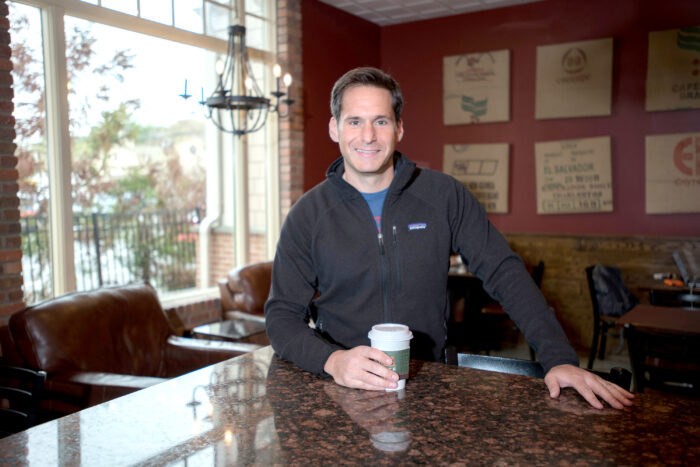
PHOTO BY CATHY PINSKY

The American media has found itself in the intriguing position of not only reporting the news, but making news themselves. Unofficially known as the fourth branch of government, their role of adding another layer to the system of checks and balances, holding the powers that be accountable and protecting free speech is more crucial than ever. At the center of it all, Armonk’s own, CNN “New Day” co-anchor John Berman gives a compelling snapshot of what it’s like living in the spotlight of the news camera.

Berman and his wife relocated from New York City to Armonk in the fall of 2011 as their identical twin boys, now fifth graders, prepared to enter kindergarten. He recalls the process, “We ended up in Armonk by chance. I’m from outside Boston and my wife’s from Vermont, so Westchester was in the right direction. Armonk was what we could afford, has great schools and is reminiscent of the small, woodsy towns we grew up in.” Berman has embraced the juxtaposition of city and country living as the assistant coach of his boys’ baseball team and an explorer of the local parks, even becoming an avid hawk watcher at the Audubon Greenwich.

A Protégé of Peter Jennings

Berman began his career in 1995 at ABC, eventually landing the head writer role for “World News Tonight with Peter Jennings.” Describing Peter as a mentor, he says, “Peter was the most inquisitive person I ever met. He was inherently skeptical and had the best follow-up question in journalism, which was ‘really?’” The experience prepared Berman for his current role as anchor, where he must be prepared to cover the unpredictable, breaking news CNN is characterized for. He explains, “I don’t think I realized until I became an anchor myself, five years ago, just how much I witnessed, observed and learned at World News.”

The self-described “political junkie” is enjoying covering the current political environment, saying, “There’s really one story. It’s the White House and everything associated with it whether it’s the investigations, booming economy or the changing role of the U.S. in the world.”

Discussing today’s reporters and some of their seemingly polarizing political stances, Berman says, “I think there’s an impression that the anchors of the past generation were more detached from the stories, but I don’t know that that’s true. If you look at Walter Cronkite and his coverage of Vietnam, he was very passionate. He tested the notions on Vietnam in the same way that the media is now testing some of the assertions coming out of the White House. And, I don’t think there’s a reporter today who badgers a White House the way Sam Donaldson did. So, I think there aren’t as many differences as one may think. Perfect impartiality is impossible. What you need to be is fair. But truth is truth and fact is fact.”
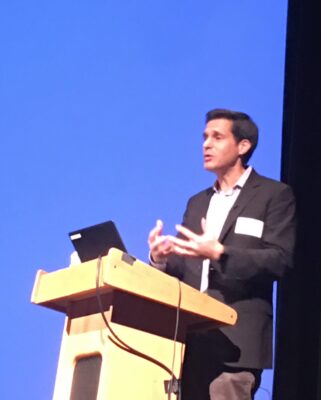
Berman spoke to aspiring journalism students at Byram Hills High School last year.

Responding to ‘Fake News’

That’s not to say that the media is immune to operating under today’s microscope as Berman explains, “The true difference is that the spotlight is on us more than it’s ever been. It makes what we do even more important, which is to always ask questions and to test power. It motivates us to keep getting better and working harder. And to not back off–at all.”

In response to the current administration’s coinage of the term “fake news” and it being directed, in many cases, at CNN, Berman responds, “I think hurling the words ‘fake news’ is unfortunate and damaging. There’s nothing wrong with criticizing stories or even a news organization that you don’t like, but when you start calling a profession fake, when you start calling something that is protected in the Constitution fake, then you’re playing a very dangerous game and you have to ask why. What do the people making those charges get out of discrediting journalists? Why is it to their advantage? Why are they afraid? The media is not infallible. There are things we get wrong, but we’ll admit it. We issue corrections. In similar circumstances, I’m not sure that some of our leaders do that when it’s been proven that things they’ve said are false.”

One topic the Boston native refuses to remain impartial to, however, is sports, unabashedly saying, “It’s been easy to raise Boston fans in New York because we’ve been winning a lot.” Berman recounts a tale from 1995, when he was thrown out of Yankee Stadium for defending the rights of a Red Sox player who was “brutally attacked” by the Yankee pitcher. His assertion was met with shouting from the crowd and he was ultimately removed from the game.

While initially “mortified,” he soon realized it made for a good story and wears the experience as a badge of honor. This incident extends to all aspects of his life as he continues to remain steadfast in his commitment to report on the story and ask the questions. Peter Jennings shared an adage that Berman returns to regularly, “If your mother says she loves you, test it. Don’t trust it unless you have a second source.” And, he does that every single day, whether it’s at the Audubon, Yankee Stadium or anchoring the news desk at CNN’s “New Day.”
 

Filed Under: Armonk Cover Stories Tagged With: Armonk, CNN, Fake News, John Berman, news, report

Chappaqua School Foundation: Inspiring a Generation through Innovation

April 21, 2018 by Shauna Levy

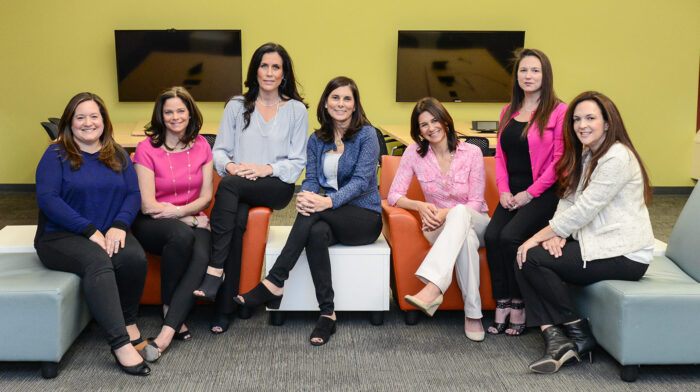
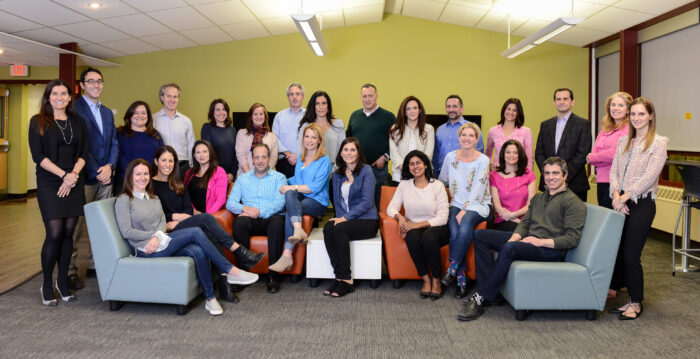
CSF Board Members
PHOTO BY CAROLYN SIMPSON, DOUBLEVISION PHOTOGRAPHERS

In a town known for its top-notch school district, excellence in education is the expectation amongst Chappaqua residents. Any variations in school rankings are analyzed, dissected and actively discussed. The Chappaqua Central School District (CCSD) is characterized by its challenging curriculum, a committed faculty and an impressive array of innovative programming at every level.

It’s the common perception that Chappaqua’s high property taxes are responsible for such programming. In fact, over 75% of the school district’s budget is allocated to fixed costs, with little leftover to support programs that do not fit into the category of core academics. Therefore, funding is supplemented privately by organizations such as the Chappaqua School Foundation (CSF). CSF fills the void, enhancing the students’ education by fostering innovation and funding meaningful initiatives beyond the scope of the school budget.

Making the Grade

Marjorie Troob, President of CSF, was unfamiliar with the foundation’s significant role in the district until she attended the CSF Spring Benefit eight years ago. “During the president’s speech, my ears perked up,” Troob recalls. “She was discussing a district-wide initiative to raise $75k for SMART boards for incoming 3rd graders, the grade my son was entering. It immediately impressed upon me how enriching this addition would be to the classroom. I thought that by reaching out to my network within the community, together, we could make this happen quickly.” Her efforts were fruitful and Troob, realizing the influence of CSF, joined the board two years later and became a fixture in the organization.

Since its inception in 1993, CSF has raised over $3.8 million, funding over 300 educational grants and innovative projects. The Board of Directors is comprised of approximately 30 parent volunteers. “Our Board members represent each of Chappaqua’s schools and come with diverse backgrounds and skill-sets, providing us with broad insight into the heartbeat of the community. They are highly collaborative, committed and dynamic, not to mention that we have some of the nicest people you will ever meet.”

Fundraising efforts are conducted throughout the year with events including Mom’s Night Out, the Harlem Wizards basketball game, a Beginning of School event for preschoolers and their largest fundraiser, the Annual Spring Benefit. “It truly never gets boring,” Troob adds. CSF also hosts the Janet L. Wells Faculty Innovator of the Year Award and CSF Grant Recipient Ceremony that recognizes faculty who have demonstrated an exceptional commitment to delivering educational innovation to their students.

Soundview Prep
ADVERTISEMENT

Granting Wishes

The foundation works alongside CCSD, teachers, parents and students to identify significant strategic initiatives for the schools that are innovative and meaningful. “The school budget is so tight and set six months in advance. CSF funds projects that wouldn’t otherwise be covered,” explains Troob. CSF ensures that teachers can realize their educational aspirations by applying for two types of grants known as Instagrants and traditional grants. Instagrants are smaller grants that are under $2,500 and experience a quicker approval process. These are ideal for teachers who require grants for projects they wish to implement during the school year. Traditional grants are awarded through a more vetted process for programs that tie into the curriculum and take longer to develop.

When discussing just some of the recent grants, Troob enthusiastically lists a wide range of projects including an indoor hydroponic garden, LEGO robots, 3D printers, coding blocks, digital telescopes, kindergarten book-packs and robotics equipment saying, “Many are innovative, while some are more functional, yet all make a meaningful impact on the students who are the recipients. The ideas truly get better every year.”

The Horace Greeley High School iLab is an example of a grant that left a monumental impression on the entire district. CSF was instrumental in developing this space approximately six years ago. Reminiscent of a sleek, startup office, the lab was designed using the latest technology and features furniture that encourages collaboration and project-based learning. This installation ultimately transformed the district’s curriculum.

Troob explains, “This project went beyond simply upgrading furniture. The concept of taking a fresh look at how we can integrate innovations into a learning space was cutting-edge.  Since then, CSF has partnered with the district to create innovative learning spaces and classrooms in all six schools. This is not the case in many neighboring districts.”

Giving Students a Voice

CSF encourages students to weigh in through the Student Advisory Council (SAC), a student-run, CSF Board-supported, advisory group at Horace Greeley High School. Formed in 2015, the council began with only eight members and has evolved into a major branch of the foundation, boasting 65 members. Nona Ullman, Vice President of Innovation, describes just how valuable the students’ contributions are saying, “They play the role of management consultants, interviewing teachers and analyzing data on how our grants are improving education.

This year, they piloted a new concept, ‘Grant Sharktanks,’ where students brainstormed ideas with the goal of increasing student-written grants. As a result, three new student-written grants have been funded including Yogibos, a rainy-day activity cart and an outdoor classroom at Bell.” She adds, “Through the SAC, we are providing students with an authentic learning experience that empowers them to make a major contribution to their school community.”

New Beginnings

As Troob begins wrapping up her term as president, she reflects upon the previous year, saying, “Its been a time of new beginnings as we welcomed new administrators including a new superintendent and identified a magnificent new venue for the Spring Benefit at the Sleepy Hollow Country Club featuring a host of new auction items. As we look to the future, it continues to be an exciting time as we begin collaborating with the district to launch a targeted grant that seeks to provide a digital one-to-one learning environment in our schools.”

Throughout changing budgets, administrators and even weather, it is certain that CSF is committed to harnessing the power of the Chappaqua community to maintain the highest standard of excellence for all of its students

Filed Under: Cover Stories Tagged With: Board, Chappaqua Central School District, Chappaqua School Foundation, CSF Committee, Ideas, innovation, Instagrants, school, School Initiatives, Student Advisory Council

Breeding the Next Generation of Young Scientists

April 21, 2018 by Shauna Levy

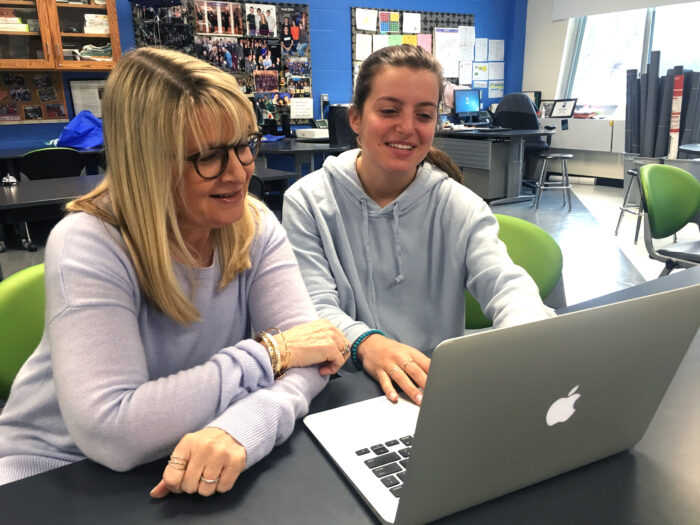
The students of the Dr. Robert Pavlica Authentic Science Program at Byram Hills High School have been consistently racking up an impressive roster of scientific accolades in recent years. In 2017 alone, they earned coveted top awards from the Westchester-Rockland Junior Science and Humanities Symposium, Regeneron Science Talent Search, the American Academy of Neurology’s Neuroscience Research Prizes and the Siemens competition to name a few. All of this recognition, however, is not what’s most extraordinary, according to program director, Stephanie Greenwald. “The best part is the community Dr. Pavlica created. He felt strongly that any student who wanted to be here could. We have honored that legacy and cultivated an environment that empowers students to be their absolute best.”

When Greenwald began her career as a school administrator and science teacher almost 25 years ago, science research wasn’t necessarily a “thing.” What she did know, was that she loved teaching and inspiring children. With 14 years at Byram Hills H.S. under her belt, when the previous director retired last year, she was offered her current position and fell into “the absolute best job I ever had.” There is no question about Greenwald’s passion as she rapidly speaks, “There is nothing more exciting than watching a student who enters this room timidly, find what they love and see that moment when it all clicks. That is my favorite thing in the whole world.”

Developing a Broad Skill Set

Celebrating its 30th anniversary next year, this three-year research program was designed for students who wish to pursue excellence in advanced areas of original research. Students develop skills in bibliographic research, research methodology, and modes of communicating research. Though the workload is described as “very high,” students don’t appear scared off with approximately 80 students enrolled. They participate in group classes with BH faculty and individual meetings with mentors.

The focus is on quantifiable science, yet there is a sense that something magical is at play in this classroom where students’ greatest capabilities make themselves apparent. Greenwald describes the staff’s philosophy, “We pride ourselves on guiding students to find what they are truly passionate about.  Almost any topic can be researched. If it can be measured with a numeric value, it’s science.” This is the key to the program’s continued success. Greenwald, explains, “The students who self-select into the program have such a high level of enthusiasm because they are studying what they love. That without a doubt is the major intrinsic motivator.” Study topics have included everything from fashion, football and dogs to vectors, biodiesel fuel and prostate cancer microbiology.

Combating Science Illiteracy with Communication

Once students select their subject matter, the focus is on reading as much material as possible including everything from layman material to professional literature. This research prepares them for the ultimate task of producing a 40-50 page publication. Greenwald describes the process, “They become experts, getting to know ‘the movers and shakers’ in their field. It is imperative that students are able to communicate in everyday terminology.” Communications are integral to the program and an English teacher is on staff to strengthen these skills. According to Greenwald, “There is a vast amount of science illiteracy in this country. Scientists must become better communicators. It is a pet peeve of mine that we have a plethora of incredible experts, yet only a small list of people who understand them. The public must be able to understand that science is not something you can refute. It is simply fact.”

Working with Professional Mentors

A pivotal point in the program is when students identify a professional mentor from a university, medical center or research institute with an expertise in their area of study. “There are so many glorious people who see themselves in the students and wish they had a program like ours when they were younger. We truly wouldn’t exist without their time and generosity.”  Mentors may be local, but many span the world and have been as far as England and Israel. They communicate via email, telephone, video conference or in person. Oftentimes, students are invited to spend time working at their laboratories.

The program has very clear benchmarks, during which students receive a high level of critiquing that they learn to accept in order to produce their best work product. “Our grading system is set-up to empower students to be able to take risks and fail. They are not penalized for giving the wrong answer,” says Greenwald. When students hit roadblocks, they are encouraged to ask questions and seek solutions. “I always tell them that all that stands in our way are words and time. If you can’t understand it, research it,” Greenwald guides.

Breeding Young Scientists

At its core, the program aims to support an initiative to create a greater number of PhD and advanced degree candidates in the sciences in this country. Fostering scientific literacy is further supported by engaging in programs at the elementary school level. Greenwald described a common sense approach to breeding young scientists: “Teach them to wonder and problem solve. Encourage them to always ask questions,” she said. “Experiment with trial and error.”

Of the future, Greenwald is optimistic. She disagrees with the stereotypical view of millennials saying, “Every day, I watch students suddenly see above and beyond what they expected their capabilities to be. That’s the moment they learn they are in control of their destiny. It happens here all the time and that’s what makes this place so special. I tell the students, I have faith in my future as long as you take care of it for me.” And, her work is contributing to their ability to do just that.

Filed Under: Armonk Cover Stories Tagged With: Authentic Science, Byram Hills High School, class, school, Science

ROCKS by Jolie B. Ray: A Unique Shopping Experience

March 8, 2018 by Shauna Levy

Upon entering ROCKS by Jolie B. Ray in Armonk on a late winter day, the snow is lightly falling outside, giving the shop the appearance of a literal jewel box in a snow globe. The cozy, well curated space dazzles with eye candy from the glittering jewels in the shelves to the art on the walls.

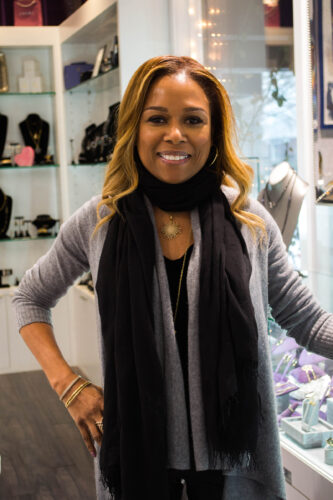
Tanya Tochner, the polished owner, greets customers as she artfully arranges jewelry in amethyst toned displays.

In a town that’s experiencing its own renaissance of sorts, ROCKS is a mainstay, offering consistently on-trend, yet unique jewelry to a loyal customer base for almost seven years. For Tochner, who’s designed jewelry with partner Marjorie Troob for over ten years, opening the shop was a natural progression in providing a higher level of service to her clients. She recounts the shop’s inception, saying, “My design partner and I shared a passion for fine jewelry and left successful corporate careers to pursue our creative interests. Our line, Jolie B. Ray, named for our children, Joshua, Lindsay, Ben and Rachel, was born. Recognizable for its contemporary, timeless designs that incorporate hammered looks, intricate mixed metal work with 18k gold and beautiful gemstones, Jolie B. Ray quickly grew a cult-like following. ROCKS was the logical next step and is now the exclusive provider of our collections.”

Tanya Tochner
PHOTO BY CHELSEA COOK
ROCKS is renowned for its concierge style approach and carrying uncommon, contemporary, artistic jewelry. Tochner painstakingly scouts couture shows around the country to handpick the designers that will be displayed alongside the Jolie B. Ray designs. Though there are some staples, approximately 20 new lines are added each season at all price points. “We seldom carry the same items twice and work with clients to carefully select just the right piece. If that perfect piece is not in the shop, we will source it and follow-up to ensure satisfaction,” she asserts.

As a jewelry designer, Tochner is adept at forecasting the trends her discerning clientele will crave. In 2018 she predicts, “Younger customers are becoming quite sophisticated, gravitating towards dainty rings and necklaces and little hoop earrings. Similarly, women are layering contemporary jewelry and long necklaces with their more traditional pieces.” Customization is also fashionable with women favoring a more modern take on name plates, while tweens and teens are incorporating monograms within their designs. “Women are now buying multi-functional jewelry,” Tochner adds, “We are veering away from pieces that are solely for special occasions.”

Seeing jewelry as an expression of art, the shop also functions as a gallery.  Tochner uses the same discerning eye to select contemporary artists that are in synchrony with ROCKS aesthetic to grace the walls. “The high ceilings of the space simply lent themselves to functioning as a gallery. Jewelry is a form of wearable art and follows similar sensibilities. Curating the gallery is a natural extension of our product offerings and appeal to our customers’ creative expressions.”

It is this holistic approach to servicing the community that also extends to Tochner’s commitment to making the shop accessible for philanthropic endeavors. ROCKS regularly hosts events benefitting local organizations close to her clients’ hearts such as Kids Kloset, a Westchester Jewish Community Services program and the Pleasantville Cottage School, a residential treatment center for young people.

And that community is expanding.  Tochner clarifies, “Armonk has become a destination town, boasting many new shops and restaurants. We are enjoying traffic from our neighbors in Bedford, Katonah, Greenwich and Chappaqua.” With the advantages of its setting, also come the challenges of operating a business in a suburban environment. “Business in the suburbs is cyclical,” Tochner says. “Summers, when many children are away in camp, can be slow. Similarly, snow days are quiet. These are issues that NYC retailers don’t experience.”

To combat the challenges inherent in any retail business, Tochner is continuously evolving the shop’s business model. The website, for example, was recently revamped to optimize clients’ virtual shopping experience on those slow summer and snow days. In response to demand, Tochner also now provides liaison services to coordinate the sale of customers’ estate jewelry and is providing jewelry rental for special occasions. These services join ROCKS’ existing menu of offerings including wish lists, heirloom jewelry redesign, repairs for both costume and fine jewelry and personal shopping.

Visit ROCKS by Jolie B. Ray to enjoy an unparalleled shopping experience. For the latest product offerings and jewelry trends, follow them on Instagram, Facebook or visit www.rocksbyjoliebray.com.

Filed Under: Lifestyles with our Sponsors Tagged With: Armonk shopping, fashion jewelry, jewelry, rocks, ROCKS by Jolie B. Ray, Tanya Tochner

After the Camp Fair too… A Vital Check List!

March 8, 2018 by Shauna Levy

Despite the low temperatures, many parents’ minds are on the summer months that lay beyond the snow. Much consideration goes into the camp selection process. As the American Camp Association notes, “camp presents a tremendous opportunity for your child to widen horizons, make new and lasting friends, and discover new strengths.” But, with all the options ranging from day camps to sleep away camps in addition to specialties such as dance, art and sports, pinpointing the right one can be downright daunting.

The Li Family of Greenwich checks out various camp options at a recent camp fair
PHOTO BY ROBERT FLEISHER


Local camp fairs feature an array of highly curated prospects that parents can become acquainted with in just one afternoon. Since many attend these events with a laundry list of questions and children in tow, arriving with a strategy is instrumental to reaping the benefits.

Why A Camp Fair?

There is a plethora of information about each camp online and in glossy brochures, but camp fairs give parents the unique occasion to meet the individuals who set the tone of a camp in person. Tables are typically manned by two representatives including the camp director or high ranking camp personnel. “Many camps offer similar activities and amenities, but it is the director and staff who infuse their distinct philosophy into the program that sets them apart,” according to Renee Flax, director of camper placement at the American Camp Association of NY and NJ. “These face-to-face opportunities give families the chance to see if there is a true connection between them and a camp,” she says.

Jean Sheff, editor and co-publisher of Westchester Family, says, “This is your chance to read between the lines and get to know a camp’s nuances.” Sheff knows more than a thing or two about the topic as the publication recently hosted two “Westchester Family Camp Fairs” in both southern and northern Westchester. She enthusiastically describes the events as “not massive, noisy functions, but intimate, personal gatherings of approximately 30 thoroughly vetted camps.”

Financial Asset Management Corporation
ADVERTISEMENT

“Camp fairs are ideal for those who are truly starting from scratch,” according to Flax. “These events offer a wide array of camps spanning all philosophies and price ranges.” For all of those multi-tasking loving parents, Sheff also points out that camp fairs offer efficiencies, for example “visiting with a sleep away camp for one child and a day camp for another.”

Not all camp fairs, however, are created equally. Flax recommends looking at the list of camps that will be exhibiting and advises “if the programs do not stand out to you, don’t waste your time!” An added benefit of these events is that they are often attended by impartial experts in the camp arena such as representatives from the American Camp Association or the organization hosting the event. Therefore, it’s important to identify who the organizer is and whether they are legitimate and responsive. Sheff counsels, “Camp fairs should be free to the public as the camps pay to attend. Any fair charging an admission fee is a red flag!”

Set yourself up for success. Attend a camp fair on a convenient day that’s close to home, particularly if you are visiting with day camps as they tend to promote at local events. Consider whether it makes sense to bring your children as some may be bored or present as distractions, while others enjoy the fun activities exhibitors offer. For older children especially, it presents a chance to be involved in the decision making process and get them excited for what the summer has in store. “The beauty of a camp fair,” Renee explains, “is that it can be eye-opening to see what excites your child. Their enthusiasm can be instrumental in guiding your final selection.”

Mission Possible

“Investing a little bit of time to narrow your options in advance can be so helpful,” Flax points out, saying, “Identify factors important to your family. Don’t simply think of your children as they exist today, but look at camps that could work for them in the long-term.” Sheff adds to that, “Know what you are looking for, know your family, know your child. There are camps for everyone.” She advises against, “becoming dazzled by a camp’s vast offerings if they are not right for your child.”

Visit the camp fair website in advance and familiarize yourself with the exhibitors if the information is available. Assess your family’s needs and narrow down the options by identifying some of these differentiating factors:

  • ages the camp serves
  • day camp vs. overnight camp
  • availability/location of busing
  • session camps vs. full summer camps
  • availability of early hours/aftercare
  • food offerings, i.e., allergies
  • indoor vs. outdoor focused programming
  • special needs services

Seek a map of the event space upon your arrival to locate the camps you found appealing. Flax warns against roaming aimlessly and highly recommends arriving with time to spare before the event closes. Additionally, be patient if the camp representatives are engaged for a short time upon your arrival.

What Matters Most

Prepare your questions in advance and bring a notebook. “It’s not about the right number of questions, but more importantly, the specific issues that are your family’s top priorities,” says Sheff. Curate your questions using the sample list below. Good questions will result in a strong sense of the camp’s culture and enable you to learn which simply do not work for your family.

1. Does a camp provide your child with your definition of safety, i.e., lifeguards, supervision, during field trips, etc.?

2. What does the camp strive to achieve, i.e., what’s considered a successful summer?

3. What activities does the camp focus on, i.e., frequency of swimming program, etc.

4. How is staff selected and trained?

5. What is the counselor-to-camper ratio and is it higher for younger campers?

6. What is the staff retention rate?

7. How are disciplinary problems handled?

8. How do you deal with child specific issues including homesickness, bedwetting, food allergies?

9. Do you offer busing and if so, who provides the service, where does it pick your child up and who is monitoring the children?

10. What do the children do on rainy days?

For overnight camps, how is bunk placement determined and how do they incorporate new children into existing bunks?

Follow-Up

While undeniably informative, camp fairs can result in information overload. Review your notes, taking into account the intrinsic connection you may have had with camp personnel. Following this exercise, one to three camps should emerge. Contact those camps to schedule off-season tours and use that opportunity to meet with the director and ask any questions you didn’t ask during the fair. Flax recommends requesting references from parents who have children in the same group that your child would be placed in to get an insider’s perspective on the camp experience.

Once you make your selection, feel confident that you have truly done your research and prepare your children for a wonderful experience. Flax provides peace of mind, asserting, “People who do their homework thoroughly and make a decision based on their family’s needs don’t tend to make mistakes.”

VISIT OUR CAMP SPONSORS!

Breezemont Day Camp
BreezemontDayCamp.com
914-367-1936

Club Fit Summer Camp
www.ClubFit.com
914-250-2768

Future Stars Summer Camp
FScamps.com
914-273-8500

Harvey Cavalier Camp
HarveyCavalierCamp.org
914-232-0581

Jodi’s Gym Camp
www.JodisGym.com
914-244-8811

World Cup Camp
WorldCupNurserySchool.com
914-238-9267
WorldCupGymnastics.com
914-238-4967

Filed Under: Armonk Cover Stories Tagged With: advice, Camp Fairs, camps, fair, Preparing for Camp, summer, Westchester Family

  • « Go to Previous Page
  • Page 1
  • Page 2
  • Page 3
  • Page 4
  • Page 5
  • Go to Next Page »

Primary Sidebar

Please Visit

White Plains Hospital
William Raveis – Armonk
William Raveis – Chappaqua
Northwell Hospital
Houlihan Lawrence – Chappaqua
Houlihan Lawrence – Armonk
Houlihan Lawrence – Briarcliff
NYOMIS – Dr. Andrew Horowitz
Westchester Table Tennis Center
Spavia
Compass: Miller Goldenberg Harris Team
Lipari & Mangiameli Dentistry
Raveis: Lisa Koh and Allison Coviello
Bristal Assisted Living
Maid Brigade
Kevin Roberts Painting & Design
Zwilling J. A. Henckels
Meagher & Meagher Attorneys at Law
Compass: Aurora Banaszek
Dr. Briones Medical Weight Loss Center
Beecher Flooks Funeral Home
Elliman: Pam Akin
Whitaker’s Garage Door Store
OuterBoundaries travel
Joseph Richard Florals
Home Grown Gardens
Beascakes Bakery
Breathe Pilates and Yoga

Follow our Social Media

The Inside Press

Our Latest Issues

For a full reading of our current edition, or to obtain a copy or subscription, please contact us.

Inside Pleasantville and Briarcliff Manor Inside Chappaqua and Millwood Inside Armonk

Join Our Mailing List


Search Inside Press

Links

  • Advertise
  • Contact Us
  • Digital Subscription
  • Print Subscription

Publisher’s Note Regarding Our Valued Sponsors

Inside Press is not responsible for and does not necessarily endorse or not endorse any advertisers, products or resources referenced in either sponsor-driven stories or in advertisements appearing in this publication. The Inside Press shall not be liable to any party as a result of any information, services or resources made available through this publication.The Inside Press is published in good faith and cannot be held responsible for any inaccuracies in advertising or sponsor driven stories that appear in this publication. The views of advertisers and contributors are not necessarily those of the publisher’s.

Opinions and information presented in all Inside Press articles, such as in the arena of health and medicine, strictly reflect the experiences, expertise and/or views of those interviewed, and are not necessarily recommended or endorsed by the Inside Press. Please consult your own doctor for diagnosis and/or treatment.

Footer

Support The Inside Press

Advertising

Print Subscription

Digital Subscription

Categories

Archives

Subscribe

Did you know you can subscribe anytime to our print editions?

Voluntary subscriptions are most welcome, if you've moved outside the area, or a subscription is a great present idea for an elderly parent, for a neighbor who is moving or for your graduating high school student or any college student who may enjoy keeping up with hometown stories.

Subscribe Today

Copyright © 2026 The Inside Press, Inc. · Log in