• Skip to primary navigation
  • Skip to main content
  • Skip to primary sidebar
  • Skip to footer

The Inside Press

Magazines serving the communities of Northern Westchester

  • Home
  • Cover Stories
  • Features
    • Portraits and Profiles
  • Advertorials
    • Lifestyles with our Sponsors
    • Sponsor News!
  • Wellness
  • Happenings
  • Advertise
    • Advertise in One or All of our Magazines–And/Or Subscribe
    • Advertising Payment Form
  • Contact Us
  • Search

Inside Press

Becoming Mindful Through the Challenges of COVID-19

April 20, 2020 by Inside Press

By Sabra Staudenmaier

 “The mind is its own place, and in itself can make a heaven of hell, and a hell of heaven.” –John Milton
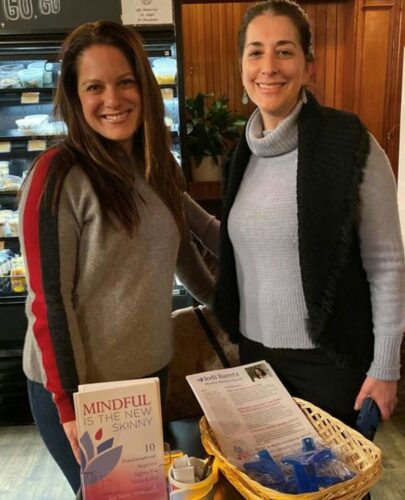
Jodi Baretz (right) & Sabra Staudenmaier (left) representing the Mindful Moms at a local event this past winter.

 So, what is mindfulness, anyway?

Mindfulness starts with slowing down, and paying attention to the present moment. The goal is to calmly acknowledge and accept one’s feelings, thoughts and body sensations. They say if your thoughts are stuck in the past you will suffer from depression. If they are racing around in the future, you will have anxiety. It’s all about bringing your brain into the now. Yes, COVID-19 has turned our world upside down, but mindfulness can help us regulate our thoughts and ease our racing mind. Peace, my friends, can be found in the here and now. If we are able to remind ourselves “I am safe today. I am ok today.” We can get through this with more serenity.

Sounds good…but how exactly do I practice mindfulness?

Come into the present moment on purpose. Find a nice, quiet and calm place to sit. Start noticing your breath. Yay! You’ve started meditating! During meditation, we strengthen the “muscle” of the mind. When we focus on something in the present, like our breath, our mind will inevitably start to wonder to the thoughts that we cannot control. This is normal. Once we realize that our mind has drifted, we can bring our attention back to the present. In doing this we have completed a “rep” of building the muscle of the mind. If we do this often enough, just as if we lift a weight often enough then the muscle in our body will strengthen, the muscle of our mind also strengthens. When we fortify the muscle of the mind, we can direct attention purposefully and use conscious awareness with more competency. This is what it means to be “mindful’. We can be attentive to and aware of our mind rather than living unconsciously in patterns that don’t serve us. This is a skill, like riding a bicycle, which improves with practice.

“Mindfulness means paying attention in a particular way, on purpose, in the present moment non-judgmentally to the unfolding of experience moment to moment.” – Jon Kabat-Zinn

 I’m struggling to make sense of current circumstances

Mindfulness advocates acceptance of what is happening in the moment without trying to change it. It is tempting to try to avoid unpleasant feelings but we are human beings and as such are meant to experience the full range of human emotions -happiness, sadness, joy, loss, ease and suffering. The human experience is not meant to be easy or perfect and it’s ok if it’s not pretty. Arguing with what is creates unnecessary stress.

We cannot change the fact that this pandemic happened. Instead of resisting it, lean into it. What can we learn from this as a country? What can we learn from this personally? What will we take with us when this is done? Can this be part of our personal evolution? Mindfulness is about perception. It’s about how you choose to look at things.

“Rather than being disheartened by the uncertainty of life, what if we accepted it and relaxed into it? What if we said Yes, this is the way it is: this is what it means to be human, and decided to sit down and enjoy the ride?” – Pema Chodron

Embracing the less-than-perfect

One of my favorite parts of mindfulness is the notion of embracing imperfection. After all, to be human is to be imperfect. This doctrine is coming in very handy these days as my laundry piles up, dessert becomes breakfast and makeup fades into a luxury of the past. Using boxed hair dye is not the same as going to a professional salon, but, in the grand scheme of things, it’s good enough.

“Imperfections are not inadequacies; they are reminders that we’re all in this together.” – Brene Brown

The Beginner’s Mind

The beginner’s mind is the Buddhist concept of approaching something without preconceived notions. When we get back to our old way of life, we will be much more adept at doing this (for a time anyway). We will eat at a restaurant, go to the gym, spend time with groups of friends as if it was for the first time. We will have a renewed sense of appreciation, a comforting and hopeful prospect from a “beginner’s mind” perspective.

“In the beginner’s mind there are many possibilities, in the expert’s mind there are few” – Shunryu Suzuki

My Journey to Mindfulness

We can’t change our circumstances, but we can change our thoughts about them. Every so often something happens that shakes us and can wake us up. Ten years ago, my oldest son was diagnosed with Celiac Disease. I struggled to wrap my head around the changes needed to live with this diagnosis. My son’s doctor referred me to Jodi Baretz, a local psychotherapist with a specialty in mindfulness and health coaching. Not only did I learn how to mindfully manage my son’s new diet, but I was introduced to a whole new world. I realized that I had been living unconsciously, thinking by default and using old coping mechanisms that were no longer serving me. When I learned about mindfulness, everything changed. It was an awakening. This new way of thinking made future challenges easier to deal with, and gave me a joy and appreciation for life I had previously only imagined.

“When we are no longer able to change a situation, we are challenged to change ourselves” – Viktor Frankl

The Mindful Moms

Jodi continues to be my life coach; having her support has proven invaluable. A few years ago, we began collaborating. We wanted to help others improve their quality of life through mindfulness. The result has been the development of a community of “Mindful Moms.” Individually, and through groups, we work together to support others on their personal mindfulness journeys (www.mindfulmomsgroup.com). Free zoom support calls, such as “Namaste in Bed” and “Meditation and Cocktails or Tea”, are being offered to support the community in this time of need and can be accessed via the Mindful Moms Facebook page.

When I asked Jodi what her advice was on dealing with this quarantine, she said, “Do what you can to stay safe, be there for others and be kind to yourself but let go of what you cannot control. It’s normal to have good and bad days, try and ride the wave and remember these experiences, just like your emotions, are temporary.” 

Covid-19 has shaken the world on a macro level. When circumstances shift, where do we go to find stability? Perhaps the answers lie in an unexpected place; conceivably navigating this new reality lies not in the world around us but rather within.  If ever there was a time to take charge of one’s mind and thoughts, that time has arrived.

Just like we can decide how to attend to our body with food and exercise – we can also manage our minds. With a managed mind, when circumstances change and stress arises, like the tsunami of stress Covid-19 has brought – we have tools to help make sense of it. We can think consciously and use deliberate thoughts to act with awareness. We live in the physical world, but we also live in our heads. It’s worthwhile to make both a pleasant place to be.

Sabra Staudenmaier became interested in thought management while majoring in Philosophy at Tufts University. She is the program director for the Mindful Moms Inner Circle Group and helps facilitate two Facebook Groups: @Mindful Moms www.facebook.com/groups/mindfulmoms and @Mindful Parents of New York www.facebook.com/groups/MindfulParentsofNY. She is currently training to become a life coach.

This article is a sponsored feature of The Mindful Moms Group. 

Filed Under: Surviving COVID-19 Tagged With: Breath, Circumstances, coaching, Feelngs, Human Emotions, Jodi Baretz, Life Coach, Mindful, Mindful Moms, Mindfulness, Normal, Practice, Present, Sabra Staudenmaier, Safe, Thought Management, thoughts, Uncertainty

College Planning in a Time of Coronavirus

April 18, 2020 by Inside Press

Alan Sheptin at his 1979 graduation from Midwood High School in Brooklyn, New York.

By Alan Sheptin, MBA, CEP

 We’re all stuck indoors, save the occasional trip to the supermarket, bike ride or walk. The malls are closed. The museums are shuttered. Vacations are a memory for now.

For those of you whose children are sophomores and juniors, college planning is taking on a whole new meaning. Those Spring Break college road trips are now couch surfing. The College Board has cancelled all exams through July 2020. Will the ACT will follow suit? AP exams will be open book and 45 minutes long. Regents and final exams are cancelled.

So, now what? Topic by topic, let’s explore what’s going on and what your students should be doing during this newfound reality.

College Visits

What’s going on: Almost every college and university in the United States (and abroad, too!) have shifted to e-learning. For the foreseeable future, colleges have suspended campus visits and information sessions.

What you can do: For schools that are of interest, go to the college’s admissions page to see when virtual admission talks and tours take place. Connect socially with the school using any (or all) of the media offered. Feel free to reach out to the admissions officer for your region and ask any questions you have. If you have a specific academic interest, send an email to the department chair. The silver lining to all this is that all the college students are home. Find an alum of your local high school that attends a school you want to learn about and make your own informal, personalized information session! Bottom line: continue to do research and make yourself known to the admission folks.

A great website: Youvisit.com has virtual tours of hundreds of colleges and universities worldwide.

SATs, ACTs, Subject Tests:

What’s going on  – SAT and Subject Tests: The College Board has cancelled all its testing through July 2020. It does plan to resume live testing in August with additional testing dates in the Fall, should that be possible. If not, the SAT will be offered digitally. There has been no word on Subject Tests, but I would expect them to start in August, too.

What’s going on – ACT: As of this writing, the ACT still plans to offer the exam in June. However, I think that will change soon.  The ACT will be offering single subject online testing starting in September; however, I think that it will migrate to offering the full test online at that time as well, also with expanded live testing, if possible.

What’s going on – colleges’ responses: We have seen many colleges and universities become temporarily test optional. This may last for only one year or indefinitely. Time will tell.

What you should know: Test optional means that: test optional. Since schools evaluate students holistically (they look at the “whole student,” not just a single parameter), strong scores can only help. Some schools, such as the Ivies and some large state universities have not yet forsaken testing.

What you can do: If your child has been preparing for the SAT or ACT, stay the course. Your child should avoid backpedaling. Remember – a good score can only help your case.

Community Service, Research, Summer Study and Extracurriculars

What’s Going On: Since schools are closed, some clubs are running virtually. Some research may be doable, but more on the humanities or non-lab sciences. On-campus college programs have migrated to virtual media.

What you can do: We predict that the colleges will be asking the classes of 2021 and 2022 what they did, outside of academics, during this pandemic. Students can still stand out! If your child likes languages, duolingo is an inexpensive, fun way to try a new language (I’m working on Hungarian. It’s the most challenging thing I’ve ever undertaken!). Outlier.org enables students to take Calculus 1 or Psych 1 through the University of Pittsburgh and coursera offers many free or low-cost courses. Athletes can find daily workout videos. And volunteering can take on a whole new realm: teensgive, UN online volunteering and translators without borders are some interesting ways of giving back. The more creative your child can get, so much the better.

Being cooped up is not fun. It’s trying on everyone’s nerves. What’s most challenging is that we have no idea where the light is at the end of the tunnel. However, it need not be a deterrent. By thinking outside the box and being clever, your child can make this COVID-19 nightmare into a growing, learning experience.

Do you want to know more? Please feel free to reach out to us at 914-232-3743, or via email at alan@sheptin.com.

Alan Sheptin, MBA, CEP, founder of the Sheptin Tutoring Group in Chappaqua, is a professional member of the Independent Educational Consultants Association.

Sheptin Tutoring, in partnership with Athena College Advisors, is offering a meeting on Tuesday April 21 from 8 – 9 PM: “College planning in a time of COVID-19.” Please call Sheptin Tutoring Group at 914-232-3743 if you wish to join the meeting.


Filed Under: Health and Wellness with our Sponsors Tagged With: ACTs, College planning, College Visits, SATs, Sheptin Tutoring Group

Why We Must Work Together to Save Journalism and the Press

April 13, 2020 by Inside Press

Plus, Busting the Myth that Kids Don’t Care About the News

By Maddie Stone

Pleasantville, NY — My name is Maddie Stone, and I’m 13 years old. I’ve found some people form an assumption about kids that just isn’t true. They automatically infer kids don’t follow the news. Why? Because we’re an inch or two shorter? Because we haven’t yet studied trigonometry? I intend to shoot down this myth and explain the importance of following the news.

It seems the day people turn 18, they immediately begin to believe anyone younger is completely clueless about what’s happening in the world. Don’t they recall the previous day, when they knew as much?

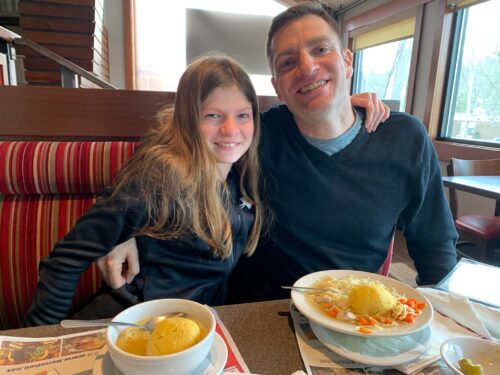
Our author with her publisher dad–long time editor and journalist, Adam Stone.

While kids almost always understand more about what’s going on than adults realize, including the importance of local news, I have a slight advantage. My dad (people other than my sister and I call him Adam Stone) is publisher of The Examiner, our local weekly print and online community newspaper. Having a publisher as a dad, I grew up learning all kinds of lessons about the press and why it’s important. But don’t let that make you think I’m one of the rare few. Just listen to what my friend Max Rubinstein has to say:

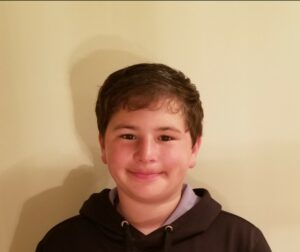
Max Rubinstein

“The idea of children being dismissive to the media is simply preposterous and is most likely a result of modern stereotyping,” Max said.

Max, like me, is a 13-year-old seventh grader at Fox Lane Middle School in Bedford and we often talk about current events. How are we informed? By reading, watching, and listening to quality journalism.

“I watch the news to gain insight into the international community and to learn about the status and structure of American politics,” Max added.

My friends, my teammates and I are keenly aware of the world around us; we’re not naive and ignorant. For the most part, we listen to our local news broadcasts, read our community newspapers, just as much as the average person. Keeping up with the times is important for people of all ages.

The press informs the people of important issues and events, from a local carnival to a global pandemic. Especially in times like the present, when faced with a crisis, it is even more urgent to stay updated on the data, or, in this case, the spreading and containing of the coronavirus. Even on a local level, when a mayor, town supervisor, or school board reveals a proposal, it is critical for the public to be alerted of the news.

In addition to keeping citizens informed, journalists provide coverage that allows people to remain up-to-date, and, therefore, safe and free from harm. Once again circling back to the coronavirus, newscasters and print journalists are frequently encouraging self-quarantine, hand washing, and remaining six feet apart if you must leave home. This does not just apply to the epidemic that has swept the nation. Most news outlets will showcase topics such as poverty, equality, environmental contamination, and, locally, clean drinking water, jobs, and crime. News supplies citizens with knowledge they can use to make decisions about their safety and general well-being.

“An informed society is an educated society, and you cannot have a well-functioning democracy unless a country’s citizens are informed,” observed Martin Wilbur, editor-in-chief of The Examiner. His insight led me to my next point: It’s essential for every country, every state, every county, every city, to remain educated. If the general public is educated, the people are empowered.

However, people can only be educated if the news sources they’re using are reliable. It’s like dominos; if you’re educated, you’re informed. If you follow reliable news sources, you’re educated. But even if you read the news, and you read a biased, untrustworthy source, the whole thing comes crashing down. That’s what makes becoming a knowledgeable citizen so challenging.

Furthermore, journalists keep the government in check. They expose fraud and unethical behavior in our leaders. An invisible fourth estate that monitors authority figures. This includes local government. Former Speaker of the House of Representatives, Tip O’Neill, was perhaps most famous for saying, “all politics is local.” This certainly applies here. Most controversies that arise in local government and are exposed by local reporters can’t be compared to controversies as grand in scope as, say, the Watergate affair. But those stories are often the ones most impactful to people’s everyday lives.

Also, keeping the government in check does not just involve reporting on controversy and scandal. Keeping the government in check means keeping elected leaders honest, so when a government official says or does anything, and a journalist reports on it, that’s a perfectly valid example of keeping the government in check.

Speaking of keeping an eye on local government, whether my dad is talking about his work day at the dinner table or running away from the dinner table to write about a breaking political story, the news is definitely a large part of our life at home. I’m aware of what’s happening locally, so I know journalists are always attending school board meetings, writing about statements from politicians, and scrambling to meet deadlines. Either way, they are constantly busy with elected officials. But never too busy to watch their awesome, fleet-footed, line-drive hitting, 13-year-old daughter’s softball games, of course.

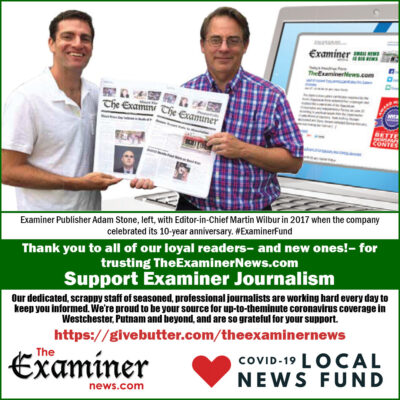
While I usually like to just make fun of my dad, I figured I would quickly take this unique opportunity to suggest you read his column on how The Examiner has been trying to survive these turbulent times: https://www.theexaminernews.com/want-to-save-journalism-start-local-support-the-examiner/

And as much as I love Inside Press, The Examiner, and local news in general, let’s take a moment to step away from our neck of the woods. Journalism also allows us to understand places beyond our backyard. Without journalists to report on places far away, how would we know what’s happening in India? What about Canada? What about upstate New York? What about anywhere outside our little bubble?
As important as it is to study journalism, it is equally as important to support it. The adult consumers of today were once kids and the kids of today are the adults of the future. In the words of Thomas Jefferson, “Our liberty depends on the freedom of the press, and that cannot be limited without being lost.”

In order to preserve this liberty, the youth of today must value and support well-sourced, quality journalism. We must be thankful for the news outlets we have but also think back on how much we’ve lost. Just a few years ago, the country enjoyed so many more journalists, especially print journalists. In case you didn’t know, over the past 15 years, one in five newspapers have gone out of business, and the number of journalists employed at newspapers have been cut in half. These numbers are only getting worse. My dad taught me most of what I know about journalism, but the following I can infer on my own: save the press now while there’s still time.

Maddie Stone is a 13-year-old, seventh grader at Fox Lane Middle School in Bedford. This article is also appearing in next week’s print editions of Examiner Media’s four community newspapers and is also live now at www.theexaminernews.com


Filed Under: Stay Connected Tagged With: Community Newspaper, journalism, Media, news, news outlets, press, The Examiner, The Inside Press

Chalk Art Brings Joy to PopPop and to Many

April 7, 2020 by Inside Press

A Pleasantville Grandfather with Parkinson’s Disease found reasons to smile–thanks to #Chalk4Joy.

By Maddie Stone

PHOTOS by/courtesy of Kim Wildey

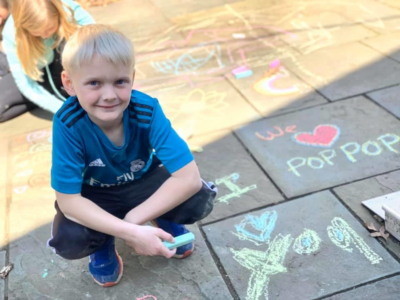
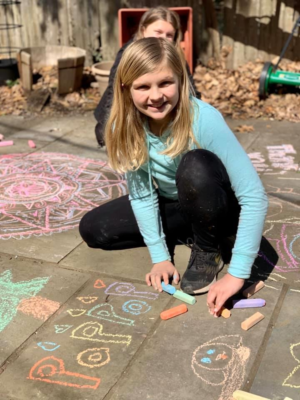
April 5, 2020, Pleasantville, NY– Bill Casey watches from the deck as his three grandchildren, Katie, 13, Abigail, 10, and Michael, 7, turn his patio into a canvas of uplifting messages. Currently in his 70s, Bill suffers from Parkinson’s Disease, making it exceedingly difficult for him to move. Heartbreakingly, Bill cannot be near his grandkids right now.

“It’s hard to be away from the ones we love,” remarked Kim Wildey, daughter of Bill and mother of the three grandkids. “My father always says that his grandchildren keep him young and we knew he was missing all of us and our visits.”

The kids decided to rally their grandfather’s spirits by decorating his patio with sidewalk chalk as he smiled from six feet away.

“The chalk drawing meant a lot to both us and our PopPop,” Katie reflected. “It made us feel happy and we loved seeing him smile. We are trying to keep him safe from COVID-19 so this was a nice way to surprise him.”

It seems people are craving togetherness, as we’re encouraged to be apart, and possess a desire to bring beauty and inspiration into what is an unsettling time. One way of achieving this is through outdoor chalk art creations.

Social media sites exemplify this trend as people post pictures of their driveway and sidewalk creations. The phrases “Chalk the Walk” and “Chalk4Joy” have sprung up on Facebook, Twitter, Instagram, and across social media. This viral sensation has exploded and found its way to Westchester, as locals have been “chalking their walks” with colorful murals and inspirational quotes to try and make the world a slightly better place.

By the way, my name is Maddie Stone, and I’m in 7th grade. I’m a kid. Shocking, right? I may be only 13, but I know we are going through a pretty rough time right now, so taking a moment to spread a little bit of joy using bright colors and intricate designs is exactly what we need.

I loved seeing the creations other kids made and the imaginative ideas they developed. It was nice, with all the stress and worry, to see beautiful masterpieces instead of dispiriting facts and figures.

Even more fun than seeing the drawings was making a drawing. My family and I worked very hard on it, using a variety of colors and patterns. We made a heart, a peace sign, and a drawing of Earth with people holding hands. We also included several phrases such as #togetherapart, don’t stop us now, and, in a flourish of patriotism, spelled out the letters U.S.A. We were definitely pleased with our final product, and were filled with a sense of pride and accomplishment.

There were four main reasons why making a chalk creation was fun. First, it was nice to venture outdoors and enjoy some fresh air. Going outside in a period where it is so easy to stay indoors and sit on the couch is even more important. Second, it felt good to know other people would see my drawing and maybe what I was doing would brighten someone’s day. Third, I got to spend time with my family. I find even though we are stuck in our house together all day, we rarely get together, all four of us, and do something fun. Finally, fourth, it provided a sense of accomplishment during a mostly powerless time.

We are pretty helpless in times like these, when everything relies on medical professionals and we’re forced to wait for the outcome. Right now, the only viable option is to try and do something that may impact someone else in a positive way, even if just slightly.

This was a great experience. We created something pretty, enjoyed time as a family, and completed our afternoon knowing we had developed something inspiring that might affect someone, somewhere, somehow. Many cars passed by that day. All I can do is hope someone looked out the window.

Filed Under: Stay Connected Tagged With: Chalk4Joy, Chalking, COVID-19, grandfater, patio, PopPop, Sidewalk art, togetherness

District Parents Weigh in About iLearning

April 1, 2020 by Inside Press

Feedback from Chappaqua Central School District parents about their experiences with iLearning during what may be a much longer stretch of cyber-schooling than anyone could ever have predicted. 

Comments received April 1 – April 2, 2020

“I am an educator and parent of a student in the first grade at Grafflin. I am so pleased with the lessons that his teachers provide including all core subjects and specials such as gym, music, and art. The platform is easy to use and very interactive. You feel as if your teachers are there with you as they have video recorded the lessons and clear directions. The directions and lessons can easily be played multiple times if a student needs extra support.  The lessons are multi-sensory, not just all online and the child can submit answers through a chosen method.  For example, they are asked to build things and take pictures of what they have built, engage in scavenger hunts; they record themselves singing, and dancing.  As my son needs a lot of writing practice, rather than typing, during his writers’ workshop projects, he can use a drawing tool to write his paragraph and illustrate it all on paper. He can choose to just take a picture of his work and submit it or he can even do a video showing his story and reading it to the teacher.  It’s very easy. Having options for “type of response” is a very useful tool in supporting all types of learners. Additionally, the supplemental activities provided are websites and passwords set up on very worthwhile educational sites. Lastly, his teacher has started Zoom hang outs where the kids are just so excited to see their wonderful teacher Ms. Schassler and each other. She gives each student a time to share and read a story to them. Lastly, the teacher is available all the time through email and allows students to pace themselves through the work.  I could go on and on, actually. I’m very pleased and feel very grateful to live in such a wonderful community.  We are very fortunate as it is not like this throughout the country and the world. Thank goodness kids are resilient!” — Karalyne Sperling

“I have two boys – a sophomore and a 8th grader. They both have positive feedback regarding it. According to my sophomore (his words): “With all the things that are happening, a few glitches in iLearning is insignificant.” It has been a learning curve for both the students and the teacher and the experience has been really good for both my kids.”  — Madhumita Guha Thakurta

“My son has been doing iLearning and I couldn’t be more impressed.  He and I both have been able to independently communicate with his teacher whenever we need to,  and he is currently working on a group project online that looks like it’s done by middle school kids (he’s in the third grade).  I think this particular teacher has incorporated technology throughout the year, so the transition was much more seamless than I would have expected.” — Jessica Postrygacz

Comments received between March 30th and April 1, 2020:

“The first few days of iLearning  were by far the most stressful. We were in a transition and my kids, mainly my spunky 7 year old, highly resisted it. There was a lot of fighting with her in the beginning.  The older kids complied with the process more easily but quickly became frustrated when several assignments they thought they had submitted didn’t go through. There were misunderstandings about this and the two of them (separately as they are in different grades) became very stressed about having grades penalized because of misunderstood technical difficulties.  Meanwhile, my priority as a parent has been to keep the “vibe” in the house as calm and positive as possible during these strange and stressful days. The way I see it, these kids just had their entire world turned upside down; suddenly they weren’t allowed to see their friends (only virtually), their activities had come to an abrupt halt and they could most definitely sense the stress my husband was feeling about the state of the economy and everything else going on out there.I wanted to shield my kids from any further stress. I was trying to look at the bigger picture and prioritize their mental wellness over grades. At the end of the first week of iLearning I emailed several teachers asking them to be mindful that the kids were going through a lot of changes and might not be able to get all assignments in on time. I told them that my kids were experiencing a lot of stress around being penalized for late assignments. The teachers and administration responded reasonably to my email. I also have had the “pass/fail or grades” discussion with many people; this seems to be a big question out there right now. I personally prefer the pass/fail grading for the rest of this school year because I am prioritizing my family’s mental health and stress management, but I realize there are many opinions on this. As of last week grades were still being given out by some (not all) of my kids teachers. From my perspective full compliance with the official policy* (below) would smooth things out. I am hoping the issues we have had are because we have all been in a transition and the big bumps in the road are now behind us. iLearning does seem to get better day-by-day.”— Sabra Staudenmaier

“The curriculum for middle school is great- it’s just the right amount of work. My first grader who needs the most has over 90 assignments this week;  granted they don’t take too long but I do have to sit with her to do them, and then,  my 4th grader who is less motivated, requires me to also be on top of her. While the iLearning initiative is great, it still can’t replace the talented teachers we have in the district.”  — Stacey Pfeffer

“I have two kids – a 5th grader at Seven Bridges (7B) and a 9th grader at Greeley. I think it’s going okay for them. They’re occupied pretty much all day with work they’ve been assigned. I think the teachers have been working hard to follow their curriculums, although I’ve been disappointed at the lack of live instructional time for my 7B student. So far, only one teacher is using Zoom daily to meet with the students as a group, and it has worked very well to keep the class connected, engaged, and learning in a classroom-like setting. I think more teachers will need to do group face to face instruction if they’re doing remote learning the rest of the school year. My high schooler seems to be having an easier time engaging on a regular basis with her teachers and classmates. Canvas is a fine LMS, but it’s a horrible remote learning system, and it’s made worse by how the teachers use it inconsistently. The notices posted in different areas, the assignments that don’t show up on the calendars, Zoom for conferences, flip grid for videos, YouTube for other videos, etc. It’s a nightmare, and I would be happy to blow Canvas up entirely. LMS software in general is a really user-unfriendly landscape for which many schools pay significant sums though, so I don’t fault the district on this one. There aren’t significantly better platforms yet. I know from previous experience that remote/iLearning/online learning is a very difficult environment for students to feel engaged. It’s also an incredible amount of work for instructors, so I feel for these teachers and appreciate their effort. Overall, I’m impressed with how quickly the District was able to move to this model. Moving forward, I’d like to see the District put in place a week of remote learning every year to keep this emergency plan tuned up and ready to roll out at any time.”  — Kate Brady

“This is a challenging and isolating situation for our teachers and children. I think that greatest gift the teachers could give their students is to make sure that the kids are connecting with them and each other. I think this program will be considered a success if the teachers do everything in their power to continue to make learning interactive every class day.”  — Deb Notis, co-owner of GAMECHANGER

“I have a son in Freshman year and honestly iLearning for us has been great. Before i get into my opinion I do want to say these are crazy times…we are in unchartered territory here…no one prepared for this. Given this, I think the teachers are doing as good of a job as they can. My son is decently busy, is learning and most importantly, he is busy. The school work is also making him interact with his friends which is predominantly on video calls. This has helped deal with isolation so he doesn’t miss his friends as much. The teachers for most part have been great. I know there have been zoom calls with teachers to talk through any issues/ concerns. The funniest is the PE (physical education) homework…I almost didn’t believe it that the PE teachers are also taking this so seriously. My son has to send in every Friday what he did. I am truly grateful to the teachers and the district.” –– Swati Bhargava


In case you missed it, our interview too with Chappaqua’s School Superinendent, Christine Ackerman:  https://www.theinsidepress.com/learning-how-the-kids-are-doing-with-ilearning/


Filed Under: Stay Connected Tagged With: Activities, bumps, changes, Curriculum, cyber-schooling, cyberlearning, grades, ILearning, misunderstandings, official policy, pass/fail, wellness

  • « Go to Previous Page
  • Page 1
  • Interim pages omitted …
  • Page 43
  • Page 44
  • Page 45
  • Page 46
  • Page 47
  • Interim pages omitted …
  • Page 175
  • Go to Next Page »

Primary Sidebar

Please Visit

White Plains Hospital
William Raveis – Armonk
William Raveis – Chappaqua
Northwell Hospital
Houlihan Lawrence – Chappaqua
Houlihan Lawrence – Armonk
Houlihan Lawrence – Briarcliff
NYOMIS – Dr. Andrew Horowitz
Westchester Table Tennis Center
Spavia
Compass: Miller Goldenberg Harris Team
Lipari & Mangiameli Dentistry
Raveis: Lisa Koh and Allison Coviello
Bristal Assisted Living
Maid Brigade
Kevin Roberts Painting & Design
Zwilling J. A. Henckels
Meagher & Meagher Attorneys at Law
Compass: Aurora Banaszek
Dr. Briones Medical Weight Loss Center
Chocolate Chalet
EyeGallery
Caramoor
OuterBoundaries travel
Gleason Plumbing and Heating
Breathe Pilates and Yoga
Temple Beth El
New Castle Physical Therapy

Follow our Social Media

The Inside Press

Our Latest Issues

For a full reading of our current edition, or to obtain a copy or subscription, please contact us.

Inside Pleasantville and Briarcliff Manor Inside Chappaqua and Millwood Inside Armonk

Join Our Mailing List


Search Inside Press

Links

  • Advertise
  • Contact Us
  • Digital Subscription
  • Print Subscription

Publisher’s Note Regarding Our Valued Sponsors

Inside Press is not responsible for and does not necessarily endorse or not endorse any advertisers, products or resources referenced in either sponsor-driven stories or in advertisements appearing in this publication. The Inside Press shall not be liable to any party as a result of any information, services or resources made available through this publication.The Inside Press is published in good faith and cannot be held responsible for any inaccuracies in advertising or sponsor driven stories that appear in this publication. The views of advertisers and contributors are not necessarily those of the publisher’s.

Opinions and information presented in all Inside Press articles, such as in the arena of health and medicine, strictly reflect the experiences, expertise and/or views of those interviewed, and are not necessarily recommended or endorsed by the Inside Press. Please consult your own doctor for diagnosis and/or treatment.

Footer

Support The Inside Press

Advertising

Print Subscription

Digital Subscription

Categories

Archives

Subscribe

Did you know you can subscribe anytime to our print editions?

Voluntary subscriptions are most welcome, if you've moved outside the area, or a subscription is a great present idea for an elderly parent, for a neighbor who is moving or for your graduating high school student or any college student who may enjoy keeping up with hometown stories.

Subscribe Today

Copyright © 2026 The Inside Press, Inc. · Log in