
• Skip to primary navigation
  • Skip to main content
  • Skip to primary sidebar
  • Skip to footer

The Inside Press

Magazines serving the communities of Northern Westchester

  • Home
  • Cover Stories
  • Features
    • Portraits and Profiles
  • Advertorials
    • Lifestyles with our Sponsors
    • Sponsor News!
  • Wellness
  • Happenings
  • Advertise
    • Advertise in One or All of our Magazines–And/Or Subscribe
    • Advertising Payment Form
  • Contact Us
  • Search

Cover Stories

Making Sense of the New Recycling Rules

March 8, 2019 by Ari Silver

On January 1st, the Town of New Castle released new regulations regarding standards for recycling. Previously the United States used to export much of its recycling waste to China. Unfortunately, China recently stopped taking this foreign recycling waste. The new “Dual Stream Recycling” policy supports the town of New Castle’s goal of recycling as much as possible, while reducing recycling fees. Inside Press asked Town Supervisor Robert Greenstein to help clarify the new regulations. He offered the following tips:

1. Separate recycling into cardboards and papers or plastics and glass.This way, the materials are easier and cheaper to process once received.

2. Clean plastics and glass recyclables of food residue, or the entire load can become contaminated and therefore will be treated as trash.

3. Throw out pizza boxes, as most have food residue and grease that contaminate the paper and cardboard.

4. Don’t put recyclables in plastic bags because the bags jam the processing machinery. Reuse plastic bags and take them to stores that recycle.

These changes help make the entire recycling process more efficient and less costly, he said.

Michael Cicale, New Castle’s Recycling Center Foreman, explained that recycling is a “for-profit” business and the new rules were implemented to help ease the process of receiving recyclables. He further stated that many recyclable items end up being thrown out due to a high contamination rate.

Residents on ‘Chappaqua Moms,’ an online forum for community members, discussed the new regulations. Diane Bernstein said she has found ways to donate and reuse goods that cannot be recycled and would otherwise have to be thrown away. For example, Bernstein collects empty and clean medicine bottles for an organization that distributes them in Africa to people who cannot afford these containers, which are needed to keep pills safe from moisture and away from small children.

The Problem with ‘Wishful Recycling’

In a joint statement, Sustainability Advisory Board (SAB) members Kathy Schreiber and Jennifer Mebes Flagg told the Inside Press: “The SAB is working with the Town on continued education efforts to help residents understand the new rules and curtail “wishful recycling” which is when people put things in recycling bins they hope are recyclable or think should be recyclable.

Unfortunately, wishful recycling contaminates recycling collections, turning the entire load into garbage while increasing processing costs.” The new regulations, they insist, increase people’s awareness about how recycling works, and reduce the town’s costs.

Ongoing efforts to reduce waste town-wide include the Town’s Food Scrap Recycling Program. Residents bring all their food waste to the recycling center, even bones, shells, and meat that are not good for backyard composting. Participants pay $25 for a kit which includes collection bins and compostable bags. According to the SAB, the pilot program already has 200 participants. The food scraps are taken to a commercial composting facility in Ulster County, but with more towns starting food waste collection programs, the hope is that Westchester County will open its own municipal compost facility.

Take it Or Leave It Shed

Locals can donate usable household items for others to take and reuse at the volunteer-run shed. Residents also frequent Facebook as a way to post and advertise donated or on-sale items.

Despite the efforts, various residents expressed confusion. Susan Oliver told the Inside Press,“I spend way too much time figuring out the new regulations which are posted on my refrigerator.”

Yet Diane Langham Bernstein noted that “for the first time in years, I had a full trash container and my recycling ones were half of what they used to be.” The criticism seems to revolve around specifics that can be hard to understand or confusing. Take wax paper boxes. “Is that considered “coated cardboard” and therefore trash?” wondered local resident Susan Oliver.

As we approach Earth Day on April 22nd, the town wishes to continue raising awareness about these new recycling policies, making New Castle an example for other communities to follow.

Be a Recycling Champ …

1. Separate bottles, cans, glass and plastics #1-#6 from cardboard and paper.

2. Make sure all recycled goods are separated and ready for curbside pickup.

3. Refer to the town’s recycling schedule.

4. Consider joining the food-scrap recycling program.

5. Put extra reusable bags in your car, for when you go to the store.

6. Many supermarkets have machines, in which patrons can dispose bottles in return for a small payment.

7. Bring reusable water bottles, hot beverage and food containers to school or work to avoid the need to recycle.
Filed Under: Cover Stories Tagged With: china, environmental safety, New Castle, new rules, plastic, Recycle, recycling rules

ChappPAC Destined to be a Center For the Arts and Family Entertainment

December 2, 2018 by Ella Ilan

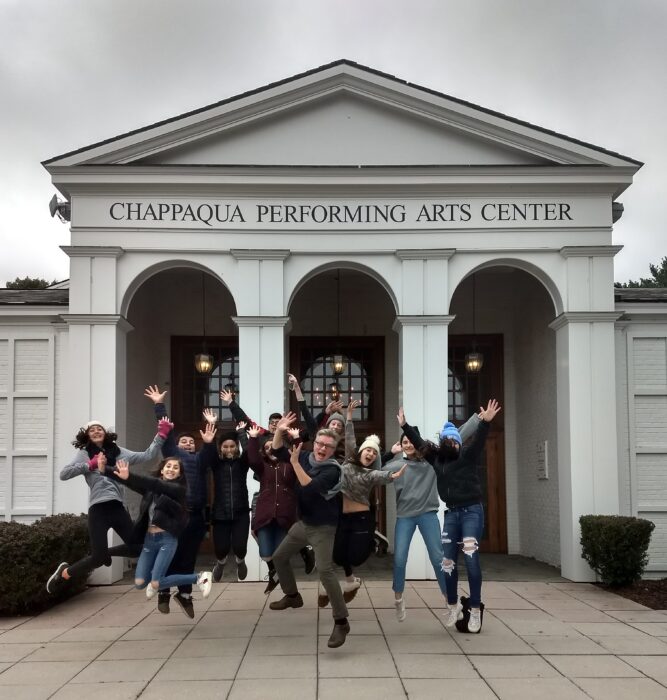
Tucked away beyond the construction crews and heavy equipment that have been plowing away for the last two years at Chappaqua Crossing lies the recently transformed Chappaqua Performing Arts Center (ChappPAC). Once named the Wallace Auditorium and used primarily for Readers Digest meetings and conferences, the intimate playhouse has been reincarnated as a performing arts center, cultural destination and mecca for educational children’s theatre.

Initially slated for demolition when Summit Development and Greenfield Partners designed Chappaqua Crossing’s retail and residential community, the small theatre was saved through negotiations with Deputy Town Supervisor Lisa Katz and the help of the New Castle Arts and Culture Committee. Summit Greenfield offered to donate the theatre to the Town of New Castle for one dollar.

When the town asked experienced theatre professional and educator John Fanelli’s opinion about saving the theatre, he said, “You don’t find 425 seat theatres in your backyard every day. You couldn’t build this. It would cost way too much money. It’s like a beautiful country playhouse and it’s pretty awesome that it’s still here.”

After issuing a request for proposal for a theatre manager, the town chose Fanelli as the theatre manager. Scott Campbell of Soup’s On Entertainment was also chosen as a promoter. Fanelli was well acquainted with the facility and well aware of its potential as he had already been renting it for productions of his own Armonk-based educational children’s theatre company, Lighthouse Youth Theatre and Standing Ovations Studio, where he serves as artistic director. His responsibilities at ChappPAC include managing bookings, rentals of the space, volunteers, vendors and maintaining the integrity of the structure. Clearly the right man for the job, Fanelli, whose passion is educational theatre, has been directing, teaching and creating programs for children and teens in theatre for almost 25 years.

“If you ask me,” Fanelli professes, “the most important education you can give your child is a performing arts education because it teaches them so much about who they are as people and gives them such great confidence. If they can stand up in front of 400 people and do a show, then they certainly can do a book report or run for class president…they can do pretty much anything they want. We are teaching life skills.”

The theatre has ushered in its second year of children’s theatre programming with a collection of fall children’s workshops presented by the Town of New Castle, Standing Ovation Studios, and Soup’s On Entertainment. Most recently this November, Tony Award winner Lindsay Mendez (Carousel, Wicked, Godspell, Grease) and Broadway star Derek Klena (Anastasia, Wicked, Bridges of Madison County) led a workshop about musical theatre technique and audition preparation. The session ended with the students performing on stage for parents and friends and a “talkback session” with the actors about their own Broadway experiences. Earlier this fall, Broadway actors and former cast members of Wicked, Arielle Jacobs and Alicia Albright, led a children’s Wicked workshop which also culminated in an on-stage performance and an informative Q & A session with the actors.

The season kicked off with a free musical theatre workshop open house where students learned to perform songs and dances from Peter Pan and Hamilton.

Three additional free workshops are planned for the new year to help get people in the door and get them excited about the programs offered.

As part of these workshops, students are split up according to age and then further divided into three small groups that rotate among a musical director, choreographer, and acting teacher. Students are then able to focus on all three disciplines.

Bringing theatre education to our youngest citizens, ChappPAC also hosts Drama Bee, an educational weekly theatre program for preschoolers, in partnership with New Castle Recreation. “My goal is to educate kids and teach them things about themselves using musical theatre,” says Fanelli. “When a parent calls and asks me how to get their child on Broadway, I always tell them to call someone else because that’s not my goal. I think the way to get to Broadway is to go to college and then be a professional and go as an adult. Being a child actor on Broadway doesn’t necessarily translate to becoming a professional actor.”

While many of the children’s programs have been made possible through a generous private grant, the reinvention of this hidden gem has been facilitated through a combined effort of the town, dedicated theatre professionals like Fanelli and private citizens. 

Deputy Town Supervisor Katz spearheaded the acquisition of this theatre for the town.  “Personally, making this theatre a reality has been very fulfilling for me. It’s really just an exciting opportunity for the town to be able to utilize it and do something incredible for not just our residents, but all of the surrounding communities as well,” she says.  “The goal is to eventually make it a preeminent destination for theatre, dance, music and visual arts in Northern Westchester,” she adds.

A foundation comprised of volunteers, The Friends of Chappaqua Performing Arts Center, has been formed to provide funding for capital improvements, programming, special projects and sponsorship opportunities to support ChappPAC. At the time of writing this article, the group was seeking and awaiting 501(c)(3) status so they can begin fundraising. Michele Gregson and Tracy Stein, Chairs of the Friends group, have been instrumental in engaging volunteers and potential donors, developing marketing strategies, and planning for the theatre’s future as a premier performing arts center.

“We have a great model in the Jacob Burns Film Center in Pleasantville, a highly regarded cinematic destination, where the surrounding merchants have benefited. We hope to do the same here where you can see a show, make an evening out of it, and go to one of our local restaurants downtown,” suggests Gregson.

Some of the exciting ideas that Gregson says have been discussed for the theatre are to organize a lecture series with prominent speakers along the lines of the offerings at the 92nd Street Y in Manhattan, to use the theatre as a developmental space for prospective Broadway shows, and to host art exhibits.

Gregson, who also serves as Chair of Westchester Women at UJA-Federation of New York, has helped secure a grant from UJA to produce three Jewish-related programs at the theatre, which will likely be presented in the spring.

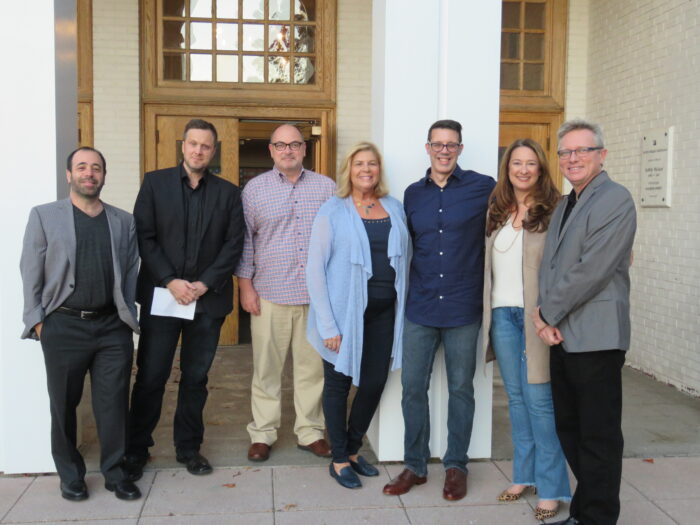
(L-R): At a ChappPac celebration following its opening: Jonathan Leibner, David Restivo,
Jeff Kuduk, Michele Gregson, Scott Campbell, Lisa Katz and John Fanelli.

The leaders behind this theatre are also open to suggestions. Their goal is to provide programming that the community craves. As they move forward, they will continually assess what is successful and optimize programming to bring in audiences.

Besides producing shows, maintaining the space is also at the top of the agenda for the town and the volunteers. Luckily the building was in good shape and already beautifully laid out as a theater when the town acquired it. Fanelli put in new LED lighting, upgraded the lighting board and the acoustic equipment, and renovated the stage. With the help of the Friends group, he hopes to continue improving the space. “Within three years it will be just like the Ridgefield Playhouse. That’s the goal,” he says, referring to the 500-seat venue in Connecticut. 

As the front of the building is in need of repairs, Gregson hopes to undertake a fundraising initiative where donors can purchase bricks engraved with their names on them to adorn the building. She also anticipates planning a fundraising gala in the near future. Additional plans for the theatre include adding a box office and a concession stand. Organizers hope to hire and train workers with special needs to work at the concession stand.

With various improvements yet to be made, exciting ideas yet to bear fruit, and despite the surrounding construction, the theatre has been open for business and successfully putting on programming.

Recent performances in November have run the gamut from family fun with Tim Kubart and the Space Cadets, an indie pop dance party for all ages, to fodder for adult audiences like folk/rock singer-songwriter and former Chappaqua resident Dar Williams. On December 1st, comedians and co-hosts of the popular parenting podcast What Fresh Hell: Laughing in the Face of Motherhood performed.

“The funny thing is that nobody really knew this place was sitting here for 30 years,” remarks Fanelli. “I hope that we can establish ourselves as the number one place for family entertainment and for educational theatre programming in the area.  If you want to go see a great show for the whole family, Chappaqua Performing Arts Center is your place,” he says.

RESERVE YOUR TICKETS:

An interactive screening of the Christmas film Elf will take place on Saturday, December 8.

Junie B. Jones will be performed by Theatreworks USA on Saturday, February 9.

On March 9, the Chappaqua Orchestra will perform an interactive, inclusive family concert spotlighting the special needs community playing with the orchestra.

For program information, visit www.chappaquapac.org. For fundraising inquires, email the Friends of Chappaqua Performing Arts Center at friendsofchapppac@gmail.com.

Filed Under: Cover Stories Tagged With: Arts, Chappaqua Performing Arts Center, ChappPac, Entertainment, John Fanelli, Lighthouse Youth Theater, Local, performing arts, shows, Theatre

#TaubStrong Movement Keeps Casey Taub’s Memory Alive & Raises Funds for Pediatric Brain Cancer

December 2, 2018 by Deborah Raider Notis

Casey Taub was one of a kind. He was a funny, often opinionated, old soul with a love of Marvel movies and sports. He was the kid who could engage adults as easily as he could rally his friends. But in January 2016, Casey needed his friends and loved ones to rally around him. Diagnosed with a brain tumor, he put up the fight of his life until he passed away in July 2017.

Throughout Casey’s 17-month battle with brain cancer, the Matthew Larson Foundation for Pediatric Brain Tumors was a consistent, reliable source of support for the Taub family. Founded in 2007 in memory of seven-year-old Matthew Larson, the Foundation has funded almost $3 million in grants for pediatric brain tumor research and has helped families cope with the emotional and financial struggles of caring for a child with brain cancer.

After Casey’s death, his father, who dedicated himself to finding a positive way to cope with this devastating tragedy, joined the board of the Matthew Larson Foundation. “I wanted to help the foundation that helped us,” states Taub. “Everything I’m doing is to try to eradicate pediatric brain cancer, and I want Casey’s name to be associated with eliminating the disease that did him in.”

To that end, Taub established the #taubstrong Movement as a component of the Matthew Larson Foundation.

#TaubStrong was a slogan created by Casey’s closest sleep away camp friends at Chipinaw, who designed and sold t-shirts to support Casey while he was sick. When Casey came up to visit camp, everyone was wearing the t-shirt. “It was extremely meaningful to him,” says his father.

Taub credits the Chappaqua and Greeley community, “especially Casey’s closest friends, who have been unbelievable,” with helping to keep Casey’s memory alive. “The fact that Casey will always be part of this community is extremely important to me,” stresses Taub.

Casey was an avid soccer fan and player; he was a valued member of the Greeley soccer team. On August 22nd, Greeley Boys’ Varsity Soccer hosted its first annual Casey Taub Memorial 22:22 Soccer Jamboree benefiting the #taubstrong Movement for the Matthew Larson Foundation for Pediatric Brain Tumors.

The event, organized by Casey’s friends and teammates on Greeley Boys’ Varsity Soccer, as well as Camp Shropshire, Casey’s beloved soccer coach, began with a dedication ceremony. His father, Jonathan Taub spoke, and Casey’s number 22 jersey was retired. The Byram Hills Boys’ Varsity Soccer Team retired Casey’s number for what would have been his final high school soccer season. Soccer boosters sold CT22 merchandise and food, all of the participating teams made donations, and the event raised over $2300 to the #taubstrong Movement at the Matthew Larson Foundation. Taub hopes that this event will grow and become an annual kickoff to the soccer season in Casey’s memory.

Casey’s classmates in the 2019 Greeley Senior Class also donated proceeds from the Senior Carwash to the #taubstrong Movement. Greeley juniors, Emma Rosh and Charlotte Templeton, contacted Taub to start a club in Casey’s name. With Casey’s treasured Spanish teacher, Senor Warren, as the faculty advisor, they launched the CT22 Club. This year, the CT22 Club raised over $2000 from CT22 merchandise at Chappaqua’s Community Day.
Looking ahead, Taub hopes to extend the #TaubStrong movement beyond Chappaqua. “It would be great to get CT22 clubs in all Westchester high schools,” notes Taub, who plans to develop a full line of #taubstrong CT22 merchandise. Most importantly, Taub, who recently spoke at the Matthew Larson Foundation’s annual fundraising dinner, said that he is looking forward to the day that fundraising dinners are replaced by “celebratory dinners because there is no longer any cancers killing kids.” One day, he hopes, “Casey’s name will be associated with a cure for this horrible disease.”

For more information about the Matthew Larson Foundation, please visit www.ironmatt.org. To donate to this foundation in memory of Casey, please use #TaubStrong when you make your donation.

Filed Under: Cover Stories Tagged With: cancer, Casey Taub, donate, foundation, Greeley Boys' Varsity Soccer, Matthew Larson Foundation, pediatric brain tumours, soccer, TaubStrong

Now, Can You Spell … Perspicacious?

December 2, 2018 by Sabra Staudenmaier

The 9th Annual Spelling Bee Raises over $22,000 to Benefit the Horace Greeley Scholarship Fund

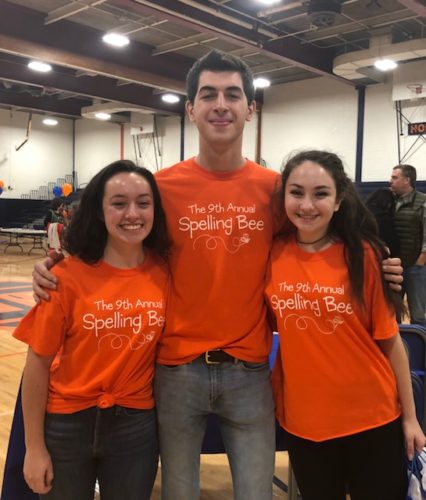
Senior Scholarship SHARE Members (L-R): Niamh O’Connor, Jordan Ratner and Olivia Ruggiero PHOTO BY SABRA STAUDENMAIER

The eve of Election Day in Chappaqua was quiet, dark and rainy. Students were still acclimating to losing light early in the night, since time had fallen behind by an hour the day before. Schools would be closed the following day for voting that had been anticipated for two long years. The streets were calm, yet the Horace Greeley High School gymnasium was alive with eagerness and anticipation.

Students, faculty, parents and community members were gathered together in a united purpose. It wasn’t for a basketball game or a wrestling match. The words that best suit this event were not Lay-Up or Pinfall. They were words like “crustacean”, “tinnitus”, “chrysanthemum”, “pharaoh” and “perspicacious”.

The mascot of the night was not a Quaker; it was a Bumble Bee. The event taking place was the 9th Annual Spelling Bee. The excitement in the gym was palpable.

The “Bee” is an upbeat and lively event enjoyed by participants and spectators alike. It is organized and run by Horace Greeley High School’s SHARE (Students Have a Responsibility Everywhere) student community service volunteer group. The proceeds raised benefit the Horace Greeley Scholarship Fund (HGSF), which is an organization that helps Greeley graduates fund their post-secondary education. Competing teams were comprised of families, students, members of the community and faculty. There are no restrictions on who can participate, all are welcome.
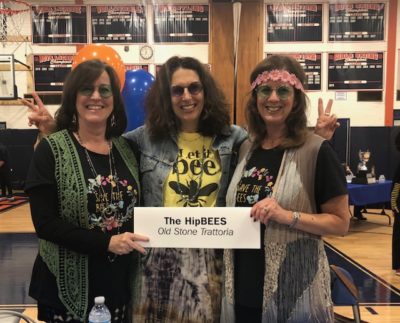
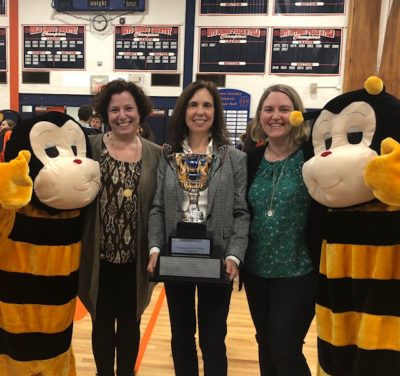
There were two energized and playful four-feet-tall bumble bees buzzing around, generating enthusiasm. There were balloons, refreshments and prizes. A row of tables crossed the middle of the gymnasium floor displaying white boards, markers and bumble bee-shaped erasers for each team. Two feet in front of these tables were chairs facing the contestants; they were seats for the judges. Behind the contestants was a single microphone for the word pronouncer and a projection screen for the words to be displayed. Along the back wall was an animated crowd cheering in the stands.

The Horace Greeley Spelling Bee showcased students working together to create a fun and inclusive event with the goal of helping their fellow students pay for college.

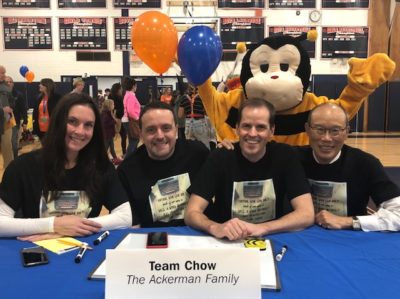
The Hip Bees (L-R): Beth Reilly, Annalise Curtin & Lisa Bisceglia
PHOTOS BY SABRA STAUDENMAIER

The over 60 teams were distinguished and recognizable in their cleverly themed costumes such as The Bee Gees, The Hip Bees, The Vocabulary Vampires and many more. The building excitement suddenly gave way to silence as a pause for the national anthem marked the official start of the competition.  Finally, the 9th annual HGSF Spelling Bee was underway.

The event was divided into rounds. Representatives from the School Faculty competed first, followed by competitors from the Middle School level, the High School level and then the Community.  Lastly, there was a championship round between the winners from all competing levels to determine who would earn the ultimate prize of the trophy and winning title.

Hmm (L-R): Helen Harrison, Maria Sanderleaf & Michelle Ramahlo

Words were called out by the pronouncer, then written on white boards by the contestants. Judges held up green or red cards to indicate if the word was spelled correctly or not. At the end of each round the judges would display a number to show how many words each team spelled right. Ties moved onto a sudden death elimination. Prizes, such as bee themed water bottles and stuffed animals, were given to the winners of each section and awarded to teams with the best costumes.

As the closing round drew to completion, the tension in the gym heightened. The pronouncer’s voice called over the microphone with a final “Boards Up!” The two remaining contestants raised their white boards, but only one showed the word “CATARRH” spelled correctly. The 9th Annual Horace Greeley Scholarship Fund Spelling Bee was over. Team Hmm, a trio of Chappaqua teachers and previous winners Helen Harrison, Michelle Ramahlo and Maria Sanderleaf, was awarded the coveted trophy and the title of Queen Bees.

The Spelling Bee requires skill to win; “effervescent”, “bourgeoisie” and “cayenne” are not easy words. But this event is about so much more than determining who is the best speller. The competition was ultimately created in support of a cause close to our town’s heart: education. Seth Berk, a second-year competitor who doesn’t consider himself a particularly skilled speller, remarked that he was “very happy to humble himself in support of the Horace Greeley Scholarship Fund; a great cause.” In total, over $22,000 was raised, making it the most successful Bee to date.

Ironically, the HGSF Annual Spelling Bee can be summarized with a word that is not difficult to spell: “Community”.

Congratulations to the participants and the winners and especially to the SHARE students who did an un“bee”lievable job organizing this very special event.

Filed Under: Cover Stories Tagged With: College, Horace Greeley High School, Horace Greeley Scholarship Fund, SHARE students, spelling bee

Spotlight on Lila and DeWitt Wallace: Chappaqua’s 20th Century Powerhouse Couple of Modern Media

December 2, 2018 by Dana Y. Wu

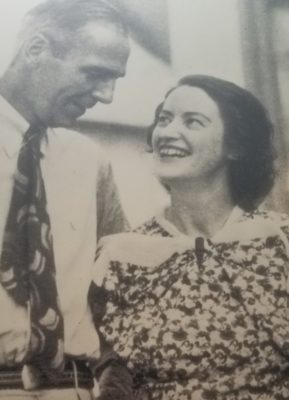
2019 marks the 80th anniversary of the Reader’s Digest headquarters in Chappaqua. Lila Bell Acheson Wallace and her husband, Dewitt Wallace were co-founders, co-editors and true partners in their powerhouse media business enterprises for generations, which included the enormously successful magazine, condensed books, direct mail-order books, trade/retail books, children’s books, music and international editions.


They started Reader’s Digest in 1922 with borrowed money and no subscriptions. Within a year of the Digest’s launch from their apartment in Greenwich Village, the Wallaces moved the company office to a garage in Pleasantville but quickly spread to 14 different overflowing offices throughout the village as circulation surpassed one million by 1935. In the late 1930s, they acquired 80 rolling acres of woodlands in Chappaqua to establish the headquarters’ campus but retained “Pleasantville” for its postal address as they liked the name of the town. Visible for miles around when it opened in 1939, the original three-story red-brick structure, had a white cupola featuring a carillon and four flying Pegasus sculptures, symbolizing writers’ inspiration.

Lila Wallace oversaw every aspect of the interior and exterior construction of the headquarters, which was modeled after buildings in Colonial Williamsburg, with the intention of creating a beautiful campus for their growing workforce and rapidly expanding publishing business. She felt that a positive and stimulating environment was important for employees. With her patrician style and love of culture and arts, Lila chose to display her valuable collection of Impressionist art in the headquarters’ hallways, offices, conference rooms and cafeteria.

“Lila Wallace was a huge supporter of the natural world. The property had its own apple orchard, and employees could take home as many apples as they wanted. We were also able to rent, for $10 a year, a fenced-in garden plot up at the top of the property, with free water. Many of us spent our lunch hours up there tending our gardens.” – Mara van Fleet, Former Readers Digest employee

“Rather than just surrounding themselves with all this great art in their Bedford home, High Winds, they shared it with employees by lining the halls and principal rooms on the first floor of the office building accessible to all every day,” remembers Ellis Cousens, a Bedford resident who was a Finance Director at the headquarters in the 1990s.

Former Reader’s Digest senior editor and Chappaqua resident, Suzanne Chazin, recalls, “Lila’s office had French glass doors and a Modigliani right outside. It felt amazing to work in the office that had been hers. And Dewitt’s office was the editor in chief’s office when I was there so I was in it all the time for editorial meetings. I remember the Chagall on the wall.” Chazin continues, “For the people who were there, it was daily life. Now, it seems sort of amazing but we were around this decor every day, with all this art on the walls that you could just walk up to.”

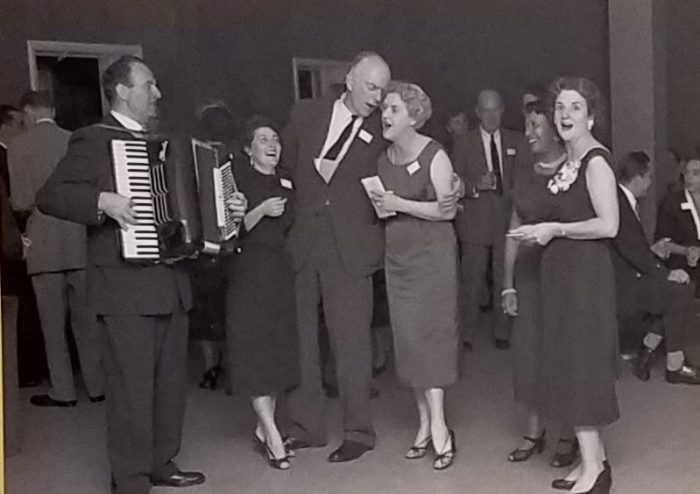
The photos were displayed on panels at the New Castle Historical Society.

Creating charming “outside rooms” with clipped hedges, neat lawns and flower beds was as important to Lila as the antiques and art collection within the buildings and as the back-cover artwork that she selected for each issue. Chappaqua author and illustrator Mara van Fleet, who joined the Reader’s Digest art department in 1999, remembers. ” Cousens adds, “During my time there, many employees maintained vegetable gardens, designated by Lila, behind the auditorium towards Cowdin Lane. She instituted early Friday closure during spring and summer with the explicit intent to give employees several hours of paid time off to tend their gardens, either at the Digest or at home.

While Reader’s Digest publications may be looked upon as a conservative repository of American values, the company had progressive employee policies, including five day work weeks and vacation days, liberal pension plans, life-insurance policies, profit-sharing plans and even a program to encourage employees to volunteer in community organizations. Although the Wallaces did not have children, they ran their internationally successful media company with a family feel that included free trips to Williamsburg, VA (which the Wallaces helped to restore) and free turkeys at Thanksgiving.

Long after they retired in 1973, employees still felt the couple’s nurturing touch. Jennifer Bancroft Payne, a Chappaqua resident, remembers how her father, Norman Bancroft, said that “he always felt like family rather than an employee” at Reader’s Digest. As van Fleet attests, “It was really one of the last old-fashioned companies where you felt you like you like working with your large extended family. Everyone walked down the halls with smiles on their faces and genuine warmth.”

Today, along Reader’s Digest Road, Chappaqua Crossing’s transformation of the former headquarters’ grounds has been stark. However, the new development’s “incomparable array of amenities designed to create a work environment that is both enjoyable and efficient” fittingly continues the Wallace’s original idea of providing many perks for employees on the campus. “Employees of the publication were treated to a large dining hall, gym facilities, a laundry room, a garage onsite for repairs, and even a small medical office where they had MKMG dermatologists come in for free skin screenings.” says van Fleet.  “There was even a subsidized company store with different vendors who came every day.”

In our age of 24/7 news and media, podcasts, Netflix and Youtube, it may be hard to imagine the expansive influence that DeWitt Wallace’s original idea of a magazine with diverse content aimed “to interest and at the same time to widen one’s outlook, to increase one’s appreciation of things and people in the world” had on our global, popular culture. Golda Meir praised Reader’s Digest as “A publication which helps its huge public understand the complex issues of our time.” Pushing for legislation and social reform, Reader’s Digest had a way of presenting complex medical issues in an understandable form and its top articles were on drinking and driving, tobacco/smoking, sex education, drugs and on taboo subjects such as sexually transmitted diseases (1930s), birth control (1960s), pornography (1970s) and AIDS (1980s).

With a worldwide readership with over a 100 million subscribers in 163 countries, 48 editions and 19 languages at its height, the Wallaces sent their optimism around the world through Reader’s Digest’s humorous articles, innovative features and inspiring stories. Chazin recalls how Reader’s Digest was content-driven when she wanted to write about Dr. Barry Marshall who had “discovered a potential cure for ulcers back when ulcers were considered incurable. He was a very controversial figure but Reader’s Digest ran the the piece. When Dr. Marshall won the Nobel Prize for Medicine in 2005, he thanked Reader’s Digest as being one of the very first publications to spread his ideas far and wide.”

The philanthropic programs that Wallaces started have brought benefits to our community, the nation and the world. Much of their fortune went to establishing four private foundations, which then merged into the DeWitt Wallace-Reader’s Digest Fund and the Lila Wallace-Reader’s Digest Fund. Early in the 2000s, the funds sold the last of their Reader’s Digest stock and merged into a single national philanthropy with a name reflecting its roots: The Wallace Foundation. With assets of about $1.5 billion in 2015, The Wallace Foundation still stays true to Lila and DeWitt Wallace’s passions for education, youth development and the arts.

Filed Under: Cover Stories Tagged With: DeWitt, Direct Mail, Lila, Lila Bell Wallace, magazine, Mail-order Books, New Castle Historical Society, Pleasantville, Publisher, publishing, Reader's Digest, Readers Digetst History, Wallace

  • « Go to Previous Page
  • Page 1
  • Interim pages omitted …
  • Page 84
  • Page 85
  • Page 86
  • Page 87
  • Page 88
  • Interim pages omitted …
  • Page 149
  • Go to Next Page »

Primary Sidebar

Please Visit

White Plains Hospital
William Raveis – Armonk
William Raveis – Chappaqua
Northwell Hospital
Houlihan Lawrence – Chappaqua
Houlihan Lawrence – Armonk
Houlihan Lawrence – Briarcliff
NYOMIS – Dr. Andrew Horowitz
Westchester Table Tennis Center
Spavia
Compass: Miller Goldenberg Harris Team
Lipari & Mangiameli Dentistry
Raveis: Lisa Koh and Allison Coviello
Bristal Assisted Living
Maid Brigade
Kevin Roberts Painting & Design
Zwilling J. A. Henckels
Meagher & Meagher Attorneys at Law
Compass: Aurora Banaszek
Dr. Briones Medical Weight Loss Center
Elliman: Team Ad
Caramoor
OuterBoundaries travel
Roamfurther Athletics
Gleason Plumbing and Heating
King Street Creatives
Pinsky Studio
Donna Mueller

Follow our Social Media

The Inside Press

Our Latest Issues

For a full reading of our current edition, or to obtain a copy or subscription, please contact us.

Inside Pleasantville and Briarcliff Manor Inside Chappaqua and Millwood Inside Armonk

Join Our Mailing List


Search Inside Press

Links

  • Advertise
  • Contact Us
  • Digital Subscription
  • Print Subscription

Publisher’s Note Regarding Our Valued Sponsors

Inside Press is not responsible for and does not necessarily endorse or not endorse any advertisers, products or resources referenced in either sponsor-driven stories or in advertisements appearing in this publication. The Inside Press shall not be liable to any party as a result of any information, services or resources made available through this publication.The Inside Press is published in good faith and cannot be held responsible for any inaccuracies in advertising or sponsor driven stories that appear in this publication. The views of advertisers and contributors are not necessarily those of the publisher’s.

Opinions and information presented in all Inside Press articles, such as in the arena of health and medicine, strictly reflect the experiences, expertise and/or views of those interviewed, and are not necessarily recommended or endorsed by the Inside Press. Please consult your own doctor for diagnosis and/or treatment.

Footer

Support The Inside Press

Advertising

Print Subscription

Digital Subscription

Categories

Archives

Subscribe

Did you know you can subscribe anytime to our print editions?

Voluntary subscriptions are most welcome, if you've moved outside the area, or a subscription is a great present idea for an elderly parent, for a neighbor who is moving or for your graduating high school student or any college student who may enjoy keeping up with hometown stories.

Subscribe Today

Copyright © 2026 The Inside Press, Inc. · Log in