• Skip to primary navigation
  • Skip to main content
  • Skip to primary sidebar
  • Skip to footer

The Inside Press

Magazines serving the communities of Northern Westchester

  • Home
  • Cover Stories
  • Features
    • Portraits and Profiles
  • Advertorials
    • Lifestyles with our Sponsors
    • Sponsor News!
  • Wellness
  • Happenings
  • Advertise
    • Advertise in One or All of our Magazines–And/Or Subscribe
    • Advertising Payment Form
  • Contact Us
  • Search

Armonk Cover Stories

Helping Children in their Hour of Need

December 2, 2018 by Shauna Levy

An oftentimes overlooked portion of the population exists mere miles away from the borders of Armonk. The Bedford Hills Correctional Facility is a maximum security prison that houses approximately 1,000 adult females. Armonk resident Joscelyn Read is working alongside organizations such as Hour Children to enhance the quality of life for the mothers within these walls and the children they’ve left beyond the bars.

Building Bridges Through Bars

Hour Children works to nurture relationships between incarcerated mothers and their children with the belief that a strong family connection maximizes a child’s stability and a woman’s chances of success upon reentry. The organization’s mission immediately resonated with Read, who acknowledges that it doesn’t always elicit that reaction, saying, “It’s a population that people don’t want to think about. They assume the prisoners did something bad and should be there. But, in truth, having met these women, many are lovely. They are human beings who often feel terrible about their actions. With a twist of fate, anyone could be in their position. I believe in second chances.”

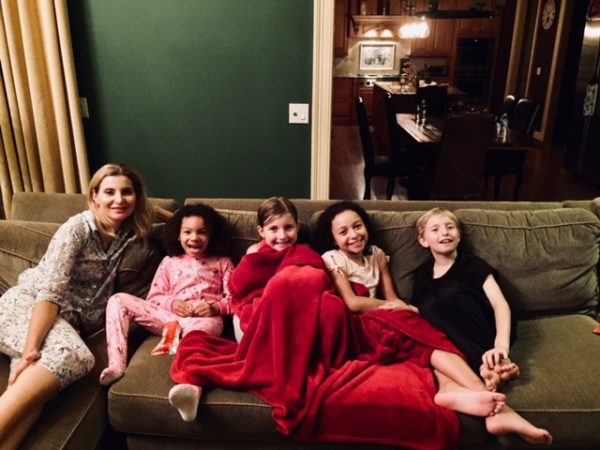
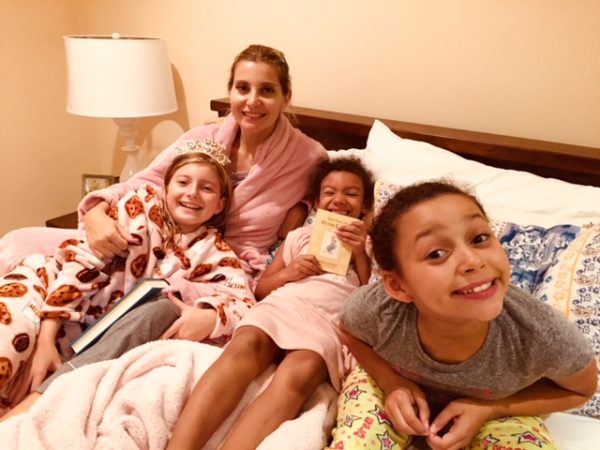
Describing herself as someone who “likes to get in the thick of things,” Read makes good on those words by regularly opening the doors of her home to the children of women within the confines of Bedford Correctional. “I can’t imagine anything more difficult than having a parent in prison. For the past year and a half, I host two sisters four times a year for three to four nights while they visit their mom in prison from 9 a.m. to 3 p.m.,” she explains. “It’s the only way for them to keep the connection with their mother alive. Beyond that, I get the opportunity to be a positive influence in their lives and it gives their guardian, in this case the maternal grandmother, a break during which they know the children are in a safe place.”

The Innocence of Children

Of her role, Read says, “The biggest question I get is whether I feel nervous about having these kids in my house. People would be surprised that despite the stark socioeconomic differences, these girls are just like every other kid. They love playing with Legos, watching Nickelodeon and going to the movies. They’re innocents. What sets them apart is their strength. To travel by van six hours or more to see your mom while staying at a stranger’s home is the definition of bravery.”

The sisters aren’t the only children benefitting from the experience. “My children, ages seven and eight, see the girls as friends and love when they visit,” Read says. “They’ve also learned that there are children who don’t have the material possessions and support system that they have. This past summer, we even picked the girls up for their visit early so that they could join us at Hershey Park.  We are teaching that kindness is not the exception –it’s the expectation.”

“The biggest question I get is whether I feel nervous about having these kids in my house. People would be surprised that despite the stark socioeconomic differences, these girls are just like every other kid. They love playing with Legos, watching Nickelodeon and going to the movies. They’re innocents. What sets them apart is their strength. To travel by van six hours or more to see your mom while staying at a stranger’s home is the definition of bravery.” – Joscelyn Read

Though the Read family strives to fill these visits with fun and laughter, the true purpose is never far from the peripheral. “There’s excitement to see their mother, but also a sadness as reality hits that they haven’t seen her in three to four months. They cry thinking about continuing this pattern for another four years as she serves her sentence. The last day is always the most emotional. They want to keep seeing their mom and they like staying at my house where they not only have their own beds, but their own rooms as well–luxuries they don’t have at home,” Read states.

Paying It Forward
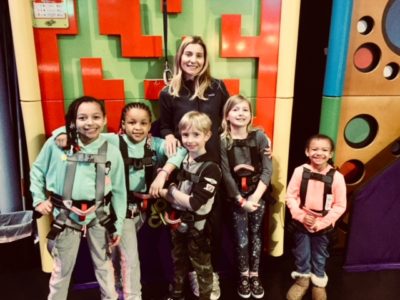
The statistics for the children of Hour Children are grim. Read reports that children whose mothers are in prison have a much lower college rate versus those whose fathers are in prison. She hopes to crack a dent in that rate, saying, “These girls have to go to college. I love to mentor because I know firsthand how strong an impact it can have on a child’s future. Growing up, I was a little sister in the Big Brothers, Big Sisters program. My mom wasn’t stable and my “big sister” was so important. We would do little activities like make dinner or go bowling. Just having someone show interest in my life was huge and formative. I will absolutely stay in touch with these girls beyond their time in the program. I will be there to make sure they keep their lives on track. I’m paying it forward.”

To find out more about the organization, visit www.hourchildren.org.
Filed Under: Armonk Cover Stories Tagged With: Bedford Hills Correctional, help, Hour Children, Incarcerated mothers, kids, Mothers in Prison, prison, Prison life

14 Resident Veterans Honored at the Bristal

December 2, 2018 by Grace Bennett


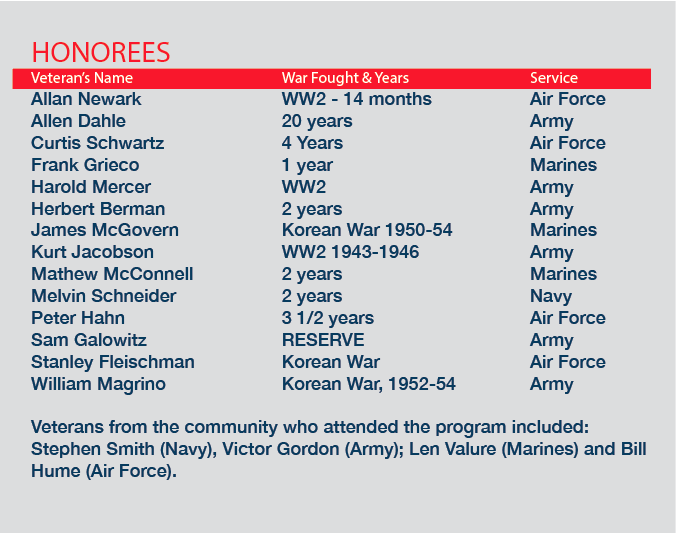
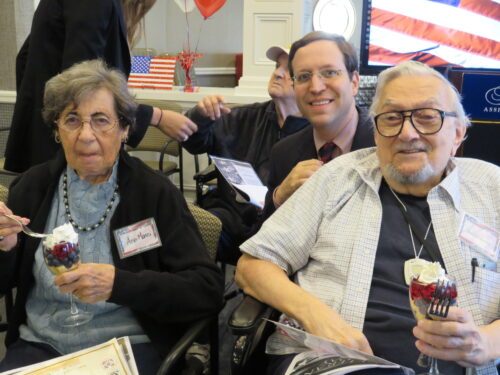
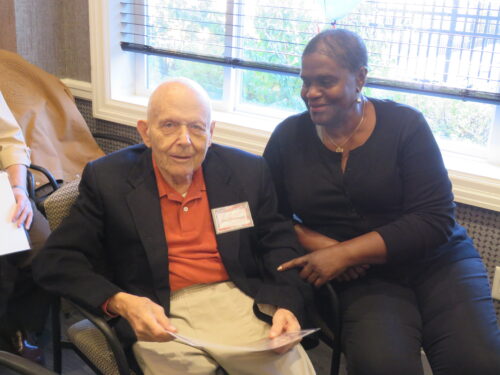
Bristal Assisted Living at Armonk, an assisted and independent living community, celebrated Veterans Day honoring a group of 14 residents who served in the military. State, county and town officials joined the ceremony, commending the veterans for their courage and service.

North Castle Town Supervisor Michael Schiliro, on behalf of the North Castle town board stated:  “Your bravery is like that recently witnessed by first responders going into the wildfires of California. It’s no different than what all of you did for all of us so many years ago, and we just can’t thank you enough.”

Honoring veterans at the Bristal (L-R) North Castle Supervisor Michael Schiliro; State Assemblyman David Buchwald; North Castle Councilwoman Barbara DiGiacinto; North Castle Councilman Jose Berra; North Castle Councilman Steve D’Angelo;The Bristal at Armonk Executive Director Samantha Krieger; County Legislator Margaret Cunzio; and U.S. Navy Veteran Stephen Smith representing the Byram Veterans Association.  Photos By Grace Bennett

State Assemblyman David Buchwald noted, “Your service is inspiring to the entire community. This day is about each of you and the men and women you served with. I wouldn’t miss this opportunity for anything.”

County Legislator Margaret Cunzio presented an American flag that had been flown in a search and rescue helicopter. It was given to her by a cousin, a Major in the Air Force who had recently returned from service in Afghanistan. A second cousin, she also noted proudly, is a lieutenant colonel who served five tours of duty.

“He (the Major) was in Syria last year, and had just returned home to his nine month old baby girl and three- year- old son. There’s a video of him coming home and his son saying:  “That’s my daddy. My daddy’s home. My daddy’s safe.”

“I am honored and proud to display this flag,” she said. 

Photos by Grace Bennett

Filed Under: Armonk Cover Stories Tagged With: Armonk, military, North Castle Town Board, Resident Veterans, Veterans, Veterans Day

Feeding Westchester Celebrates 30th Anniversary

December 2, 2018 by Stacey Pfeffer

& Launches Mobile Food Pantry in Partnership with Pace University This Fall

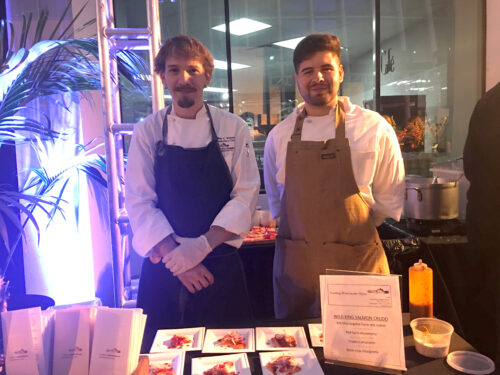
It’s been a busy fall for Elmsford-based nonprofit Feeding Westchester (formerly known as the Food Bank for Westchester). The non-profit just celebrated 30 years with their fundraiser “An Evening in Good Taste” this past October. The event featured cocktails and cuisine from more than 30 Westchester-based chefs including local favorite Beau Widener, the Executive Chef at Crabtree’s Kittle House Restaurant & Inn.

Beau Widener Executive Chef at Crabtree Kittle House Restaurant and Inn and staff delight fundraiser attendees with their delicacies at “An Evening In Good Taste” Photo by Stacey Pfeffer

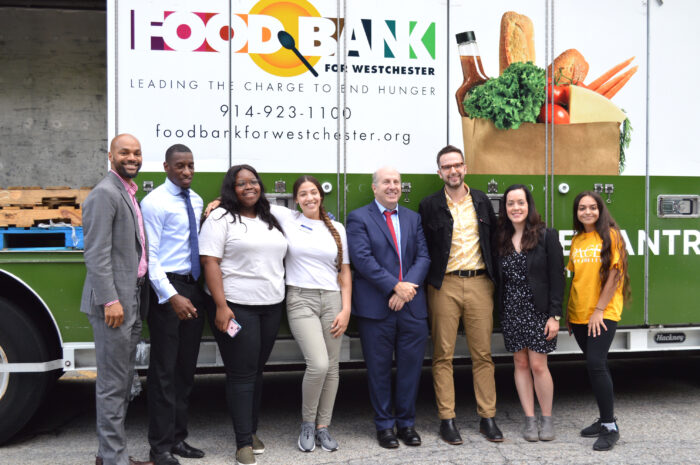
This fall also saw the introduction of a new Mobile Food Pantry in partnership with Pace University. Pace President Marvin Krislov attended the first mobile food pantry event on September 27 and spoke with student volunteers who participated by passing out produce to students and local residents.

Noelani Rivera, a first-year student at Pace said, “It was a really great experience to be able to help others, especially people so closely tied to our community.”

Tyler Kalahar, program coordinator at Pace’s Center for Community Action and Research in the Dyson College of Arts and Sciences, said the new mobile food pantry was in keeping with Pace University ‘s position as a leader in economic mobility in higher education. “Addressing hunger with the mobile food pantry program is simply another way to give students, particularly our first generation and students from low-income families, the resources they need to succeed in college,” Kalaher explained.

The mobile pantry visited the Pace campus on Halloween and November 27th. The next visit is scheduled for December 13th from 12:30-2:30 p.m. The program hopes to provide nourishing, stigma-free food in a location that is accessible to both students and the wider Westchester community.

The mobile food pantry is located at Pace University, 861 Bedford Road, Pleasantville, entrance 3, North Hall parking lot.

(L-R): Cornell Craig (Assistant Dean and Director, Multicultural Affairs and Diversity Programs at Pace), Zikomo Barr (Coordinator, Leadership Programs at Pace), Olivia Wint (Pace student volunteer), Natalie Holguin (Pace student volunteer), Marvin Krislov (Pace President), Tyler Kalahar (Program Coordinator, Center for Community Action and Research at Pace), Nicole Dobson (Feeding Westchester), Noelani Rivera (Pace student volunteer)
PHOTO COURTESY OF FEEDING WESTCHESTER

The Power of Feeding Westchester

1 in 5 Westchester residents do not know where their next meal is from.

Feeding Westchester provided:

  • 8.4 million lbs of food = 7 million meals
  • 2.2 million lbs of food provided to nearly 200,000 people through mobile food programs
  • Distributed over 432,000 lbs of food to over 3,000 seniors through their Senior Grocery Program
  • Grew local produce at 13 farm sites through their Food Growing Program
  • Partnered with more than 290 agencies across Westchester to feed the hungry

Source: Feeding Westchester 2017 Annual Report

Filed Under: Armonk Cover Stories Tagged With: community, Feeding Westchester, Food, Food Bank, fundraiser, help, hungry, Mobile Food Pantry, Pace University

In The Aftermath of the Tree of Life Synagogue Shooting

December 2, 2018 by Stacey Pfeffer

My Perspective on Elisha Wiesel’s Speech at the Holocaust & Human Rights Education Center Annual Benefit and a Community-wide Interfaith Candelight Vigil at Temple Beth El

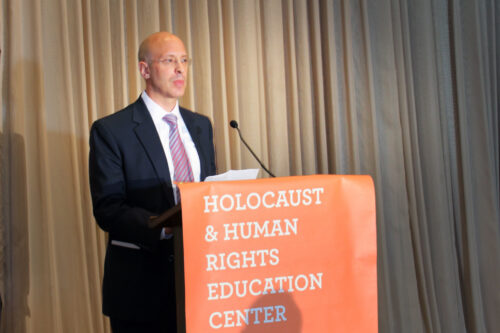
HHREC Keynote Speaker Elisha Wiesel
PHOTO COURTESY OF HHREC

On Thursday evening October 25th, Elisha Wiesel, the only child of the deceased Nobel Prize winning author, humanitarian and Holocaust educator Elie Wiesel was the keynote speaker at the Holocaust & Human Rights Education Center’s (HHREC’s) annual benefit. It was a packed house of more than 250 attendees including 16 Holocaust survivors and one liberator. Honorees for the evening included Joseph E. Nyre, Ph.D., the President of Iona College and Mitchell Wm. Ostrove, the CEO of The Ostrove Group, a comprehensive planning organization for businesses, families and high net worth individuals. Additionally Valerie O’Keeffe received a special award recognizing her years of volunteer work as a former chairperson at the HHREC.

Elisha Wiesel currently serves as the Chief Information Officer at Goldman Sachs and occasionally speaks about human rights issues and his upbringing. Wiesel described his father as a “relentless optimist” despite all he experienced as a Holocaust survivor. He questioned the audience and asked what his father would think of this country today and lamented the state of extremism on both the left and alt-right and how these perspectives contribute to anti-Semitism.

Less than 48 hours later on Saturday morning October 27th, 11 Jews at the Tree of Life Congregation in Pittsburgh, PA, were murdered by an anti-Semitic gunman and several others were injured including first responders during the massacre. It was one of the deadliest attacks on American Jewry in recent decades. To think that this event took place during services when joyous life cycle events such as Bar Mitzvahs and baby namings were taking place in the synagogue should make everyone of us shudder, no matter what faith one practices.

When this magazine’s publisher Grace Bennett asked if I would cover the HHREC event this year, I unequivocally said yes. Bennett is deeply involved with the organization. As many of our readers know, her father is a Holocaust survivor and she is passionate about Holocaust education.

I have been fortunate enough to cover the HHREC and attend their Human Rights Institute event in which local high students are encouraged to become “upstanders” when they see hate or bigotry. From time to time, Grace and I have discussed whether or not our magazine is too saturated with Holocaust news. As a third-generation survivor of the Holocaust (my maternal grandparents were survivors), I am admittedly biased when it comes to Holocaust news as well. I always believe we should cover topics about the Holocaust so that future generations can learn the lessons that history has taught us.

Little did I know when I covered October’s HHREC event that the tragedy in Pittsburgh would unfold in less than two days. I know that anti-Semitism is on the rise (the Anti-Defamation League reported the largest single-year increase–a 57 percent increase) in anti-Semitic incidents last year) and that xenophobia is plaguing this nation but I didn’t realize that these feelings of hate could actually propel someone to commit such a heinous crime on American soil in the year 2018.

Perhaps I was in denial. One of the organizations that the murderer vilified in his hateful rhetoric on www.gab.com was the Hebrew Immigrant Aid Society (HIAS), an organization that assists refugees of all faiths and backgrounds. My grandparents and mother came to America in 1950 with the help of HIAS who was resettling Holocaust survivors from the deportation (DP) camps in Germany. To be honest, I had never really given much thought about how crucial this organization was and still is for so many refugees seeking a new life in America.

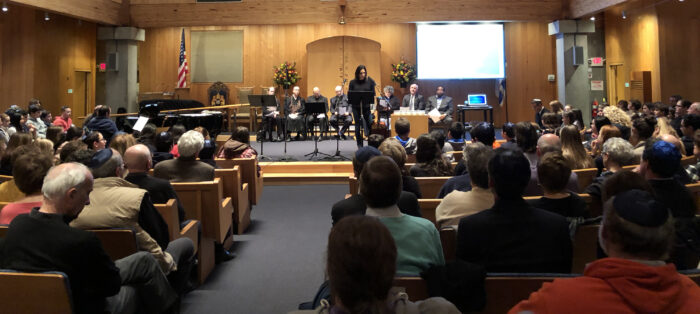
Interfaith candlelight vigil at Temple Beth El
PHOTO COURTESY OF TEMPLE BETH EL

Wiesel also participated in a Q&A session following his speech at the HHREC event and one audience member asked him what he thought his father would say if he had the opportunity to meet the President today. Wiesel first asked “Do you think my father could have gotten a word in?” resulting in several laughs from the audience. He then continued to tell a story about his father who was hit by a taxi in New York City during the 1950s while on a journalist visa and was forced to wear a full body cast for several months. When he nervously went to the Customs Office to renew his expired visa, the officer said to him “You know you can become a citizen.” Wiesel paused and asked the audience, “Imagine that.” Growing up he said his father would always get misty eyed whenever they landed at JFK and were welcomed by US Customs.

Wiesel described his father as “patriotic and someone who loved this country deeply.” When Elisha was a liberal arts student in college he recalls there was a large debate underway about burning the American flag. His father told him, “If you knew what the flag meant to me when we saw it when we were liberated by the US army, you would never burn it.” Wiesel said he believes that his father would want to talk to President Trump about “how we treat people coming to our shores because it is something he felt so personally as a beneficiary. My father could never forgive FDR for closing the doors to Jews in the 1930s and he would very much take up this issue with our President if he met him today.”

Within five days of hearing Wiesel speak, I found myself in the crowded pews at Temple Beth El in Chappaqua with my ten-year-old son for an interfaith candlelight vigil for the victims of the Tree of Life shooting. In attendance were: Reverend Martha Jacobs, First Congregational Church of Chappaqua; Reverend Tenku Ruff, Soto Zen Buddhist Association; Friar Hugh Burns, Holy Innocents Catholic Church; Reverend Merle McJunkin, Antioch Baptist Church; Reverend Alan Dennis, Saint Mary the Virgin Episcopal Church; Kristina Szibinga, Chappaqua Friends Society; Dilkash Ashraf, Upper Westchester Muslim Society; and Robert Greenstein, Town Supervisor of New Castle. The service led by Temple Beth El’s Rabbi Jonathan Jaffe included communal singing led by Cantor Elizabeth Sternlieb and a speech from Rabbi Maura Linzer, who has strong ties to the Squirrel Hill tightknit Jewish community having grown up in Pittsburgh not that far from a Tree of Life synagogue.

Admittedly I was a bit wary of attending the service with my ten-year-old son but I am not one to shy away from tough topics with my kids especially as they relate to anti-Semitism and/or the Holocaust. My five-year old daughter knows who Hitler is and that he hated Jews. I don’t go into vivid details yet but I use it as a discussion point with my kids to talk about bigotry. I see the world through a Jewish lens as a third-generation survivor so I see it as my obligation to start telling my children about their family’s legacy in basic terms they can understand.

Wiesel concluded his HHREC speech with a question he posed to the audience. “My father lived with despair and managed to see the light. What of us who live in the light like few generations ever have in this country in this time of plenty? Can we squint in the light and can we see the darkness among us? Can we see the saddest among us and once we see that darkness, can we look past it and see the good in everyone’s soul to champion them in their time of need?”

I’d like to say that we are living in the light, as Wiesel suggests. My grandmother’s favorite saying was “this too shall pass” whenever I encountered a difficult circumstance. Now I’m not so sure.

Filed Under: Armonk Cover Stories Tagged With: community, Elie Wiesel, Elisha Wisel, gun violence, HHREC Annual Benefit, Holocaust and Human Rights Education Center, Holocaust education, Interfaith Service, service, Tree of Life Synagogue

Sad Outcome Follows Bet Torah’s Rally To Bring Home Armando Rojas

November 24, 2018 by Debra Hand

Photos by Joanna Segal

For over 20 years, a smiling face, a helping hand, a high-five for preschoolers. Kind, sweet, friendly, and unassuming. And then, simply for being in the wrong place at the wrong time, he was gone.

On November 16, the Bet Torah community received the heartbreaking and devastating news that their longtime and beloved custodian Armando Rojas lost his final appeal for asylum with his case returned to the Department of Homeland Security “for removal of the alien.” As Rabbi Aaron Brusso stated in his email to the congregation, “Armando Rojas is father of Ulises and Armando Jr. He is husband to Silvia. He is a member of our synagogue family. He is a human being with hopes, dreams, loves and a track record of gentleness and kindness. What he isn’t is an ‘alien.’”

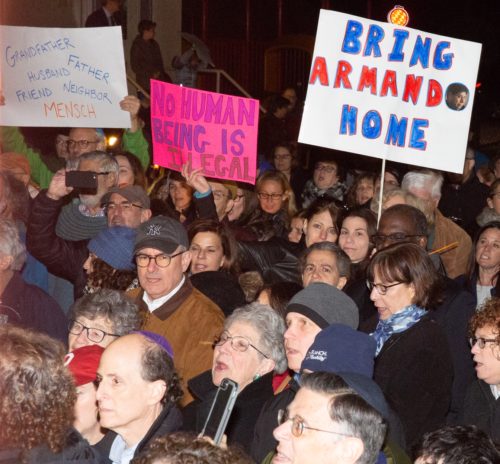
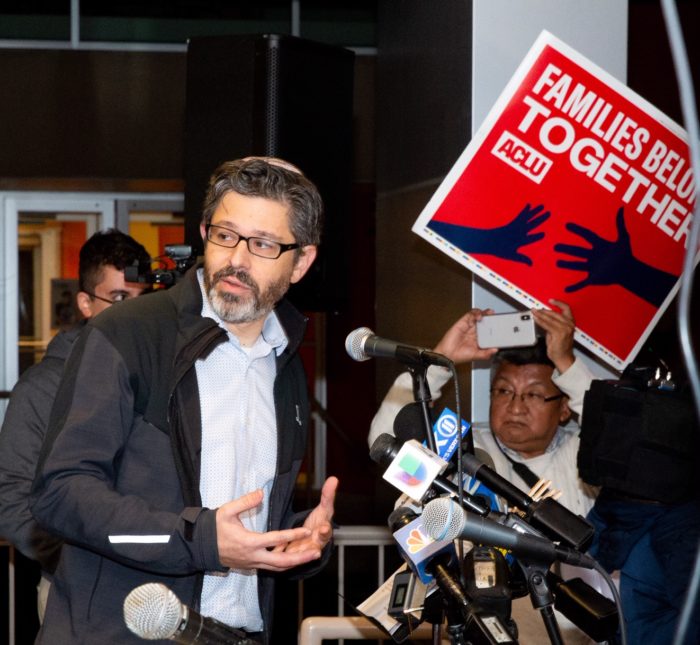
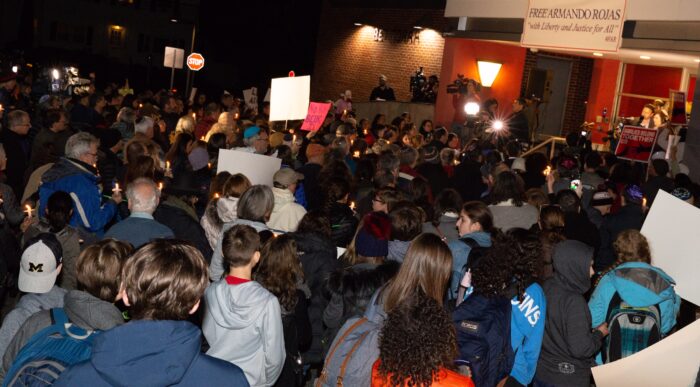
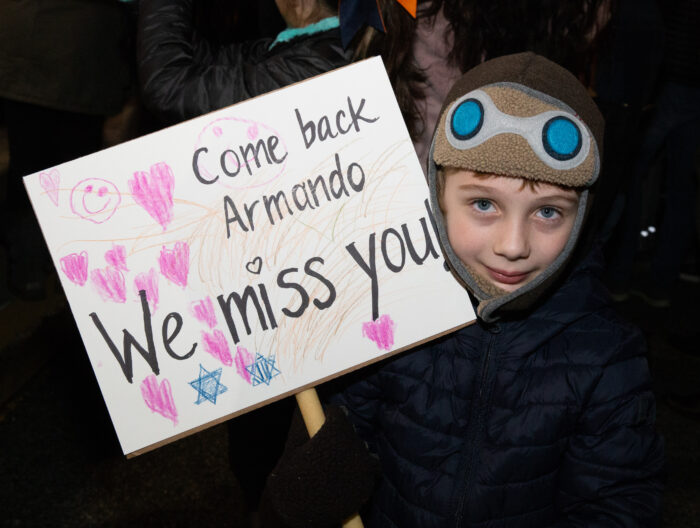
On the evening of October 16, in advance of his final asylum hearing, the Bet Torah and local communities gathered on the synagogue steps in Mount Kisco to rally in support of Armando, suddenly deported earlier this year following a mistaken arrest. Preschoolers to retirees, as well as local clergy, community leaders,  and Armando’s sons Armando Jr. (26) and Ulises (15), spoke of Armando’s contributions, presence and being part of the Bet Torah family, which sang, with love, “Bring Armando Home.”
A New Home, A New Life

Armando entered the United States from Mexico over 30 years ago at the age of 18, crossing without inspection, to escape dangerous circumstances and gang violence and seek a better, safer life, according to Rabbi Brusso. With little Immigration and Naturalization Service interior enforcement at that time, he was permitted to apply for and receive a social security number. Armando was hired as a custodian by Bet Torah, where he worked for over two decades, becoming more than a valued employee; he was a member of the synagogue family, knowing almost every member–certainly every child–by name.

Armando had also married an American citizen and had two sons, creating a life in the New York suburbs, reporting to work–sometimes seemingly seven days a week – and dutifully paying taxes and social security. In other words, a model “citizen” and role model for not only his own sons, but for the young children of Bet Torah whose paths he crossed daily.

In February 2018, Armando was celebrating with family at a Westchester restaurant when a fight broke out nearby and the police called. Likely because of his ethnicity, he was arrested along with others; Armando was quickly exonerated and released, but the arrest record was forwarded to Immigration and Customs Enforcement (“ICE”), which identified him as a fugitive for not appearing at an immigration hearing over 25 years ago. Armando was detained without notice and promptly dropped over the Mexican border without identification, money or a cell phone, despite a superseding stay of deportation. He made his way to family in Mexico City, but once there received threatening phone calls from groups responsible for murdering family members long ago.

A Roller Coaster of Emotion

The Bet Torah staff and congregation quickly sprung into action to facilitate Armando’s return. Qualified immigration counsel was retained, a GoFundMe has raised over $40,000 to date, and his wife, sons and new grandson were assured that they would be supported throughout the efforts to have Armando granted asylum on the basis of “credible fear” upon deportation and brought home.

In June, Rabbi Brusso, together with Armando Jr. and congregants Linda Dishner and Mike Kraus, flew to Mexico and escorted Armando to the U.S. border to request asylum; a video (see link below) of the walk to the checkpoint, along with interviews of Armando, his son and the rabbi, was shared widely on social media and via Rabbi Brusso’s moving article in The Forward. Armando was accepted into ICE custody after a second attempt, first placed in detention in Arizona and then moved to an Albany County Prison wing for asylum seekers.

In early October, in discussions with Armando’s attorney, the hearing officer seemed to indicate that Armando had a strong “credible fear” claim for asylum, even under recently narrowed definitions promulgated by the U.S. Attorney General’s office, because of “participation of government actors – in the form of local law enforcement–with gang violence,” according to Rabbi Brusso; Armando had told ICE that local authorities allowed gangs to freely function. However, his claim for asylum was rejected without explanation, with one remaining appeal before an immigration judge before re-deportation.

Community Efforts Strived to “Bring Armando Home”

After consultation with Armando’s attorney and family, the decision was made to further publicize his plight to appeal to someone in the administration (beyond the many local and state politicians already involved) who might be able to help. Congregants and members of the wider community were urged to write directly to and petition the immigration judges, and almost 250 people attended the evening rally, covered by numerous New York area media outlets alerted to the event by congregants with public relations backgrounds and contacts.

Rabbi Brusso described the effort as a way to “come together to create a positive space, for positive, constructive actions around these issues without the rhetoric of ‘you’re wrong and I’m right,’” he added. “We can talk about the issues, and our values, from there. It’s important to show people that there’s a caring, nurturing place as real as the destructive place.” He said the rally offered an opportunity for the congregation and others to come together communally to express its loss, much as it does to celebrate happy events and mourn sad ones. “When Ulises said ‘I didn’t realize how many people loved my dad,’ it made it all worth it,” he said.

Bet Torah’s Rabbi Brusso addressing hundreds at the rally.

A Lesson in Compassion

“Bring Armando Home” also became a teaching opportunity for Bet Torah children, many too young to understand issues surrounding legal citizenship and immigration but able to develop compassion for someone they know. An email to the synagogue nursery and religious school communities, shared on Facebook, reminded them that “we are here for each other no matter what we are going through.” Rabbi Brusso addressed children directly at the rally, gently urging them not to be scared that their own parents would be taken away, but suggesting that “this imaginary fear teaches you to be sensitive to the real fears faced by others” and this “moral fear” teaches you how to be compassionate.

“I wanted to create a moral space that doesn’t exist elsewhere,” Rabbi Brusso explained, “to take it out of the political and make it focus on the personal.” He added that houses of worship are really the last places where people with diverse points of view, outside of their social media echo chambers, can gather and come together for a larger purpose without using the language built for argumentation often used in public discourse.

Rabbi Brusso is unsure of what the next steps may be, but spoke for all present on October 16: “Some of us are lucky enough to be born into wonderful homes, others have to search for them. Armando went on a journey to find his home. He found it here. And he is a blessing to his wife and his sons and to our entire community. We ask one thing: bring Armando home so that he can continue be a blessing to all of us again. Let’s bring Armando home.”

Filed Under: Armonk Cover Stories Tagged With: armando, custodian, help, immigration

  • « Go to Previous Page
  • Page 1
  • Interim pages omitted …
  • Page 6
  • Page 7
  • Page 8
  • Page 9
  • Page 10
  • Interim pages omitted …
  • Page 41
  • Go to Next Page »

Primary Sidebar

Please Visit

White Plains Hospital
William Raveis – Armonk
William Raveis – Chappaqua
Northwell Hospital
Houlihan Lawrence – Chappaqua
Houlihan Lawrence – Armonk
Houlihan Lawrence – Briarcliff
NYOMIS – Dr. Andrew Horowitz
Westchester Table Tennis Center
Spavia
Compass: Miller Goldenberg Harris Team
Lipari & Mangiameli Dentistry
Raveis: Lisa Koh and Allison Coviello
Bristal Assisted Living
Maid Brigade
Kevin Roberts Painting & Design
Zwilling J. A. Henckels
Meagher & Meagher Attorneys at Law
Compass: Aurora Banaszek
Dr. Briones Medical Weight Loss Center
Elliman: Team Ad
OuterBoundaries travel
Armonk Tennis Club
Fleetwood Pastry Shop
Joseph Richard Florals
Home Grown Gardens
Breathe Pilates and Yoga
Gleason Plumbing and Heating

Follow our Social Media

The Inside Press

Our Latest Issues

For a full reading of our current edition, or to obtain a copy or subscription, please contact us.

Inside Pleasantville and Briarcliff Manor Inside Chappaqua and Millwood Inside Armonk

Join Our Mailing List


Search Inside Press

Links

  • Advertise
  • Contact Us
  • Digital Subscription
  • Print Subscription

Publisher’s Note Regarding Our Valued Sponsors

Inside Press is not responsible for and does not necessarily endorse or not endorse any advertisers, products or resources referenced in either sponsor-driven stories or in advertisements appearing in this publication. The Inside Press shall not be liable to any party as a result of any information, services or resources made available through this publication.The Inside Press is published in good faith and cannot be held responsible for any inaccuracies in advertising or sponsor driven stories that appear in this publication. The views of advertisers and contributors are not necessarily those of the publisher’s.

Opinions and information presented in all Inside Press articles, such as in the arena of health and medicine, strictly reflect the experiences, expertise and/or views of those interviewed, and are not necessarily recommended or endorsed by the Inside Press. Please consult your own doctor for diagnosis and/or treatment.

Footer

Support The Inside Press

Advertising

Print Subscription

Digital Subscription

Categories

Archives

Subscribe

Did you know you can subscribe anytime to our print editions?

Voluntary subscriptions are most welcome, if you've moved outside the area, or a subscription is a great present idea for an elderly parent, for a neighbor who is moving or for your graduating high school student or any college student who may enjoy keeping up with hometown stories.

Subscribe Today

Copyright © 2026 The Inside Press, Inc. · Log in