• Skip to primary navigation
  • Skip to main content
  • Skip to primary sidebar
  • Skip to footer

The Inside Press

Magazines serving the communities of Northern Westchester

  • Home
  • Cover Stories
  • Features
    • Portraits and Profiles
  • Advertorials
    • Lifestyles with our Sponsors
    • Sponsor News!
  • Wellness
  • Happenings
  • Advertise
    • Advertise in One or All of our Magazines–And/Or Subscribe
    • Advertising Payment Form
  • Contact Us
  • Search

Armonk Cover Stories

It’s a…Yummy’s Jessica Meyrowitz Takes Knitting to the Extreme

April 21, 2018 by Bettina Prober

Photos Courtesy of Jessica Meyrowitz
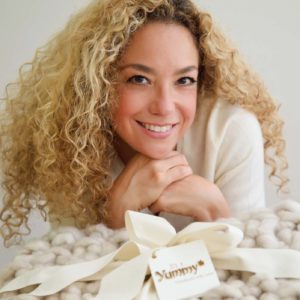
The first thing you notice when you walk into Chappaqua resident Jessica Meyrowitz’ home office are the plastic bins. Big bins, stacked high, lining almost every inch of wall space. And all of them are filled to the rim with colorful handmade knits that call out to be held and touched. They look cozy. They look warm. They look delicious. They look, well, yummy.

Meyrowitz is the founder of It’s a…Yummy, a company devoted to the creation of handmade throws, pillows, baby blankets, hats, scarves, wraps and belts. But these are not your ordinary knit products. They are made with a specially sourced, 100 percent merino wool yarn called core spun yarn, and they are knit using a technique called extreme knitting. The result is a product that not only looks and feels good, but is durable too.

“I wanted the yarn to feel like a cloud,” she said. “When people feel (the products) I want them to say it’s so yummy … so soft.”

Meyrowitz’ path to launching It’s a …Yummy is as interesting as her products. After graduating from Boston University, she pursued acting in New York City, landing roles in Off-Broadway productions, commercials and television. Though she achieved enough success to support herself, she decided to switch gears when her husband was transferred to Maryland. While there, she worked in radio sales and advertising, eventually opening her own ad agency, called JSM Media, in Washington, D.C. In 2011, her husband Eric accepted a New York City-based job, and her family, which now included sons Jake and Alec, moved to Chappaqua.

“The agency was very successful, but it became more and more of a challenge to go back and forth to D.C. with young kids,” she said. As such, in 2016, she closed the agency and decided to take a break from the working world. To fill her time, she signed up for two classes: a pottery class at the Chappaqua Arts Center and a knitting class at Katonah Yoga.

“I wanted to expand my horizons and do something creative,” she remembered. During class, her pottery teacher encouraged all of the students to look online for project ideas. Deciding to search for knitting projects too, Meyrowitz came across a blanket she wanted to make for her family room. The only catch was the blanket was made with extreme knitting, a method Meyrowitz was not familiar with.

As Meyrowitz discovered, extreme knitting is knitting with very large yarn and large needles. The result is chunkier stitches that are looser than conventional knitting stitches, giving the pieces a distinctive look. Most extreme knitting projects use roving, which is basically what yarn is before it is spun. Though roving is very soft, it is not as durable as traditional spun yarn.

“I wanted to make my blanket with yarn that wouldn’t fall apart,” she said. After calling several yarn stores, she realized that the type of yarn she wanted to use for her blanket was not readily available. She then began calling mills directly to find what she wanted. As she searched, she realized she had happened upon a business opportunity.

“I didn’t start this to make a business,” she laughed. “I started it to make a blanket. But I said to myself, there must be other people who want this big, soft durable yarn.” After doing more research, including visiting local farms to learn more about sheep, shearing and yarn creation, she had developed a plan to source her specialized yarn.

Soon, It’s a…Yummy was off and running. Meyrowitz launched the company in October 2016 on Facebook with three products in 13 different colors. The response was immediately positive.

“The outpouring of support from the Chappaqua and Armonk communities was really special,” Meyrowitz said. By February 2017, Meyrowitz had added several more products and colors to the line.  Currently, It’s a…Yummy offers more than 25 products in 38 colors, as well as limitless amounts of custom options.

Once the orders started coming in, Meyrowitz hired a knitting team to keep up with the demand. The knitting force, as she refers to it, is composed of eight moms, all from Chappaqua and Armonk. Though some already knew knitting basics, she taught all of them the extreme knitting technique. This sparked another idea: offering do-it-yourself knitting kits and knitting parties. Both have been extremely successful; the kits were featured on the Today show’s holiday gift episode, and the parties have morphed into knitting workshops and seminars held all over the tristate area and beyond.

“Knitting is so mindful and meditative; it really gives me joy to teach people because it is so relaxing and easy,” she said. “After an hour knitting workshop or party, you leave with a skill and a scarf. And you will have both forever.”
 

Filed Under: Armonk Cover Stories Tagged With: Armonk, Chappaqua, extreme knitting, knit, knitting, Store, Yummy

My Sisters’ Place: A Haven for Hope and Help

April 21, 2018 by Stacey Pfeffer

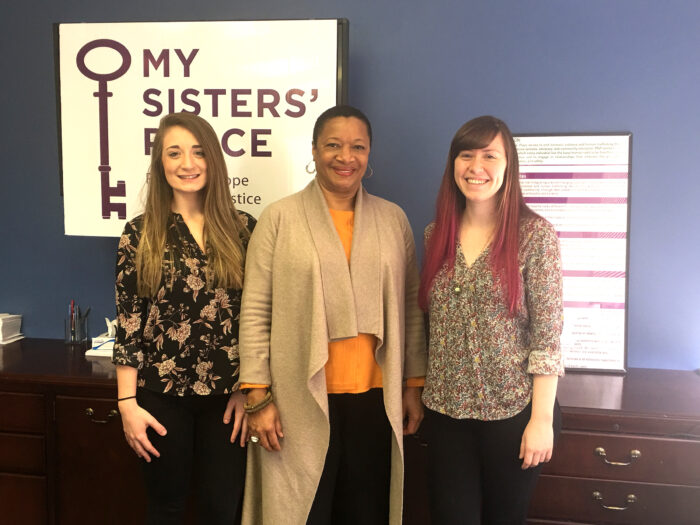
(L-R): Danielle DiNapoli, Karen Cheeks-Lomax and Gabriella Ibacache

A Not for Profit Providing Local Support to Victims of Domestic Violence & Human Trafficking

It’s a non-descript building in downtown White Plains steps from the Metro-North station but for people served by the non-profit My Sisters’ Place (MSP), it is a beacon of hope. It is a safe haven where victims of domestic violence (DV) and human trafficking can finally begin to change their lives.

Founded more than 40 years ago, MSP offers residential, support and legal services for victims of abuse and trafficking. The non-profit also offers educational and preventative programs for students in middle school and high school. In addition, MSP advocates for legislation protecting victims and provides training for healthcare professionals and law enforcement personnel. In short, MSP is a comprehensive agency that provides direct services, legislative advocacy, and prevention education to 15,000 people a year in Westchester County.

Domestic violence is the leading cause of injury to women in the US and up to 10 million children witness some form of domestic violence annually.1 Although 84% of the victims of abuse and human trafficking that MSP helped last year were female, they also provide services to a small percentage of men or transgender individuals. Last year MSP provided counseling to 130 children and emergency housing for more than 175 adults and children at two confidential full-service shelters located in Westchester.

Battling Misconceptions

There is a misconception that both domestic violence and human trafficking don’t happen in affluent communities but these problems cut across socioeconomic levels, notes Karen Cheeks-Lomax, the CEO of MSP. When they do happen in affluent communities, they are widely sensationalized in the media such as the brutal stabbing of Scarsdale pediatrician, Dr. Robin Goldman, by her husband Jules Reich, a well-respected tax attorney, and a human trafficking and sex slave ring discovered in Pound Ridge-based author Joseph Yannai’s basement.

Judy Dobles, a Chappaqua-based volunteer for the past six years with MSP, knows all too well that domestic violence doesn’t discriminate. As a volunteer in the ‘Sisters in Law’ program, she has accompanied MSP clients to court, solely for the purpose of supporting the victim as much as possible.

“Whether that’s talking or just sitting quietly by their side, if they don’t want to talk, shielding them from having to see their abuser before going in to the courtroom, and basically just trying to keep them as calm as possible before they have to go in before the judge,” explains Dobles. She recalls one of her first “accompaniments” with a very educated, successful client who had had a lucrative career and came from an affluent background.  “It was difficult to connect that information with the broken person I saw before me.”

Still Dobles finds this type of volunteerism rewarding. “It’s rewarding when a client walks into a courtroom or magistrate’s room and can answer questions calmly and succinctly.  It’s really rewarding when they exit the room with a smile because they feel like they are being heard and they’re not alone. Also, as a huggy/feely person myself, I would say that 99% of the time, my clients and I hug goodbye–and I feel truly honored to get those hugs.”

Expanding the Definition of Domestic Violence

“Domestic violence doesn’t fit in a box,” notes Cheeks-Lomax. Danielle DiNapoli, a community educator in MSP’s Domestic Violence Education and Prevention (DVEP) program which educates more than 5,000 middle and high school students a year. She explains that it is “not just physical abuse. It is an intentional pattern of behaviors where one person is gaining and maintaining control over another. It can be financial, mental, cyber or spiritual/cultural abuse.”

DiNapoli also teaches the students about warning signs in a relationship that may lead to abuse further down the road. Extreme possessiveness, jealousy, isolating the victim from family/friends or checking in at the person’s place of work or showing up at social outings to which they are not invited are all potential warning signs. It can also be verbal abuse such as putting a partner down or controlling what they eat or wear.

For high school students, DiNapoli states that 1 in 3 have been involved in an abusive relationship.2 They may feel particularly afraid to discuss it with an adult because their parents, she points out, might not even know about the relationship or forbid dating. Gabriella Ibacache, a children’s counselor at MVP points out that the abuse may start off as very small or subtle and the abuser may manipulate their partner by apologizing or buying them gifts.

DiNapoli wants students to understand that the power and control that we see in society can trickle down into our relationships. “By the time I’m seeing them [the kids may be 11 or 12 years old], and this is the first time that they are talking about these issues, and that’s a real problem. We need to be teaching kids how they should be treated and treat one another at a much earlier age,” explained DiNapoli.

Safety Planning

When DiNapoli talks to high school students, MSP provides survivor stories and they discuss warning signs, what type of abuse the survivor endured and reasons why the survivor did not leave. “A lot of the kids ask, ‘why didn’t the victim just leave?’ People tend to shame and blame the victim for not leaving,” said DiNapoli. But on average, DiNapoli says it takes the victim seven attempts before she leaves permanently. And when the victim does decide to leave for good, it is the most dangerous time for that person. They could be seriously harmed or killed. “So much of what we do at MSP is “safety plan” –figuring out the safest way to leave, and that’s not the same for every person, and can change daily due to new salient factors,” explains Cheeks-Lomax.

Ibacache notes that the barriers to leaving can still be just as hard even when the victim is affluent. When children are in the mix, the danger increases significantly warns Ibacache.

Human Trafficking: It Does Happen Here

For more than a decade, MSP has been helping victims of human trafficking and last year helped 85 survivors of human trafficking. In New York State, there were 942 victims identified by social service providers and law enforcement in 2016. Of the victims, 82% were for sex trafficking purposes and 18% were for labor trafficking with 27% of the victims being minors. 43% are citizens from other countries and 57% are residents of New York from outside the five boroughs.3

Housing, Public Transportation & Immigration Status: A Trifecta of Issues for Many MSP Clients

Although MSP has 60 employees and is a $6 million agency (with $1.6 million from private donors), Cheeks-Lomax notes that they are working in a sector that is very challenging.  There are challenges that are unique to Westchester County such as a lack of affordable or low-income housing and public transportation for clients.

Imagine if you need to push a baby carriage to get here, notes Cheeks-Lomax. “If you don’t have safe housing, you can’t do much,” laments Cheeks-Lomax. MSP recently won a conditional award to work with Westhab, the largest developer of affordable and low-income housing in the county, and hopes to partner with them to create 17 two-bedroom apartments for MSP clients in the near future.

“Immigration status is also a huge issue. In 2009, Westchester County was not reimbursing immigrant populations at MSP. We briefed the issue as to who should be served by these federal dollars. We took it all the way up to the governor. If people couldn’t come to us, we argued that they would end up at a hospital or a drug rehab. Every single county now in New York State provides services to immigrant victims of DV and human trafficking,” Cheeks-Lomax explains triumphantly.

Looking Ahead

Cheeks-Lomax is hopeful that the #metoo movement will highlight the power dynamic that is present in domestic violence cases and raise awareness about it. “There are the same fundamentals of fear and intimidation intersecting. For us, it proves a point. It is always about power and control and the abuser does it because he/she can.” She is also looking forward to working with County Executive George Latimer, and believes MSP will make some good headway with his administration.

1. Source: dvrc-or.org
2. Source: loverespect.org
3. Source: NYS Office of Temporary and Disability Assistance Refugee Services


6 Critical Life Messages to Help a Friend

If you believe a friend is in an abusive situation, these are the ‘messages’ that the staff at My Sisters’ Place say she or he needs to hear. “It is important not to “revictimize” the person who has been abused,” notes Cheeks-Lomax. All of these messages validate the person’s experience instead of shaming or blaming the victim.

  1. I believe in you.
  2. I trust you.
  3. I know you can handle it.
  4. You are listened to.
  5. You are cared for.
  6. You are very important to me.

Source: My Sisters’ Place Domestic Violence Education and Prevention Program

Filed Under: Armonk Cover Stories Tagged With: domestic violence, Full Service Shelter, haven, help, Human Trafficking, Injury to Women, My Sister's Place, revictimizing, Safe house, safe housing, shaming, women

Community Comes Together to Support Danny McManus, a Wampus Student & Leukemia Patient

April 21, 2018 by Julie Eskay Eagle

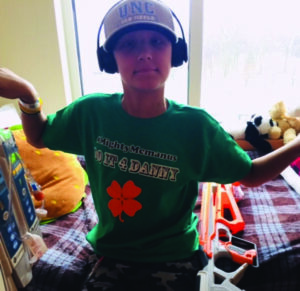
Usually ten-year old Danny McManus, a fifth-grader at Wampus Elementary School, is outside with a ball and lacrosse stick.  Standing 5’4” tall, he towers over most of his friends, and is a tireless force of nature.   This past October, while Danny was competing in the Tri-State 91 Lacrosse tournament, he wasn’t keeping up the way he normally would.  Danny’s parents sensed something was wrong, took him to the pediatrician, and within 24 hours was admitted into the hospital and diagnosed with leukemia–a form of blood cancer.  When I see people in town now, Deidre McManus, Danny’s mother says, “I realize we have changed people by sharing what we are going through.” The subsequent outpouring of support from family and friends, neighbors, doctors, teachers and clergy tells a heartwarming story about the generosity of Armonk’s community.
When Mrs. McManus and her husband Francis were told that they needed to bring Danny to the hospital, they had to find someone to take care of their older son, Colin, who is in 7th grade. Their neighbors Drs. Erik Cohen and Maude Lemercier were already friends, but have become like extended family, giving Colin an extra set of adults to rely on, and helping the McManuses to interpret the constant stream of medical information.

That first night, while Danny was being evaluated in the hospital, Deirdre thought of her lifelong friend, Karen Wolownik, a Nurse Practitioner and Nurse Leader in the Pediatric Blood & Marrow Stem Cell Transplantation Unit of Maria Fareri Children’s Hospital at Westchester Medical Center.  Within a few hours, Karen received an alert from the hospital about Danny. She called Deirdre right away–Karen’s expertise was precisely what they needed. Karen was confident that Danny was in the right place to deal with this horrible disease.

It’s taught us a lot about cancer–how it can affect anyone, even kids… and that even with cancer Danny is still just Danny—my friend.  He has shown us that having a strong growth mind-set helps get you through the things in life. —Shane Gordon, Danny’s friend

Danny’s AML Treatment

The first line of treatment for Danny’s acute myeloid leukemia which is commonly called AML is potent chemotherapy, often followed by a stem cell transplant. The Children and Adolescent Cancer and Blood Disease Center at Maria Fareri Children’s Hospital has become a center of excellence for such therapies. The center was established in 2011 when Westchester Medical Center hired Dr. Mitchell Cairo from Columbia University to lead it. Dr. Cairo is a world renowned specialist in stem cell biology, molecular oncology and experimental immunology and a long-time Armonk resident.

In addition to the expertise provided by Dr. Cairo and his team, the McManuses have been overwhelmed by the competence and compassion of the staff at Maria Fareri Children’s Hospital. “They’ve worked with Danny every step of the way to always make sure he understood what to expect during every procedure.” For example, before Danny had a port connected to deliver chemotherapy, the Child Life Specialist explained the procedure by letting Danny feel the port and see how it would be used with the help of a doll.  Then, during the chemo, Danny needed an NG tube (a nasogastric tube) to deliver nutrition directly to his stomach. The physician working with Dr. Cairo, Jordan Watson, MD, asked one of the residents to demonstrate for Danny what it would be like and, right in front of Danny, inserted a tube down Jordan’s nose and throat! She said, “I’ve always wanted to know what it felt like!”

Community “Shavees” Support Danny

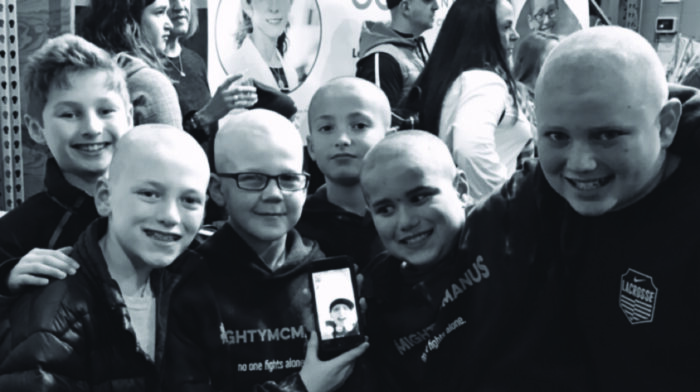
As if that wasn’t enough, last month Dr. Watson asked the McManuses if Danny would be part of her team, raising funds to support the St. Baldrick’s Foundation, which is dedicated to funding research for childhood cancers. Danny’s family and friends created The Mighty McManus Team, Dr. Watson and her fiancée shaved their heads alongside nine of Danny’s friends, and together they raised nearly $30,000.  Danny’s friends, Shane Gordon and Michael Bellantoni, are two of the “shavees.”  Gordon says, “The reason we all shaved our heads was because he really likes his hair, so we thought it would be good if we let ours all grow back together.”  In addition to funding research, the McManus’s relatives created a GoFundMe campaign to lend a hand while Deirdre and Francis take time from work and manage the costs of Danny’s care.

Danny’s friends, before and after shaving their heads at the St. Baldrick’s Fundraising Event

A Turn for the Better

The next step in Danny’s treatment was a stem cell transplant. Statistically, 1 in 4 siblings have markers indicating they are a good match and won’t be rejected by the recipient. In Danny’s case, they were thrilled to discover that his brother, Colin, is a 100% donor match for Danny, making a stem cell transplant an ideal option. On January 4th Colin underwent a 3-hour operation–drawing bone marrow from both hips to obtain stem cells to populate Danny’s bone marrow. Since then, Danny has been improving every day, and although he has no immune system of his own yet, he was able to come home from the hospital after 133 days when they celebrated Danny’s 11th birthday on March 13th.

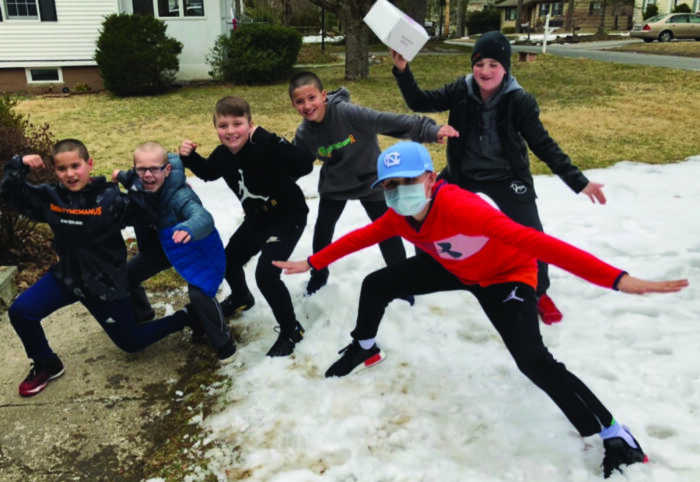
Danny’s friends paid a visit in honor of his birthday.

The McManuses are touched by the efforts made by every church and synagogue in the community. Melissa Gordon, who attends St. Patrick’s with the McManuses, says that since Danny’s diagnosis, a remarkable number of children and adults have filled the church on First Fridays, when the Church holds special services for adoration and prayer. At school, Danny’s teacher, Mrs. Marchesini, has kept Danny as involved as possible, and in the meantime made t-shirts, videos with messages from his classmates, and a video of the whole class singing Happy Birthday to Danny.

Shane Gordon and Danny look forward to getting on their bikes again and exploring the outdoors.  When I asked Shane how Danny’s illness has affected him and his friends he said, “It’s taught us a lot about cancer–how it can affect anyone, even kids… and that even with cancer Danny is still just Danny–my friend. He has shown us that having a strong growth mind-set helps get you through the things in life”.

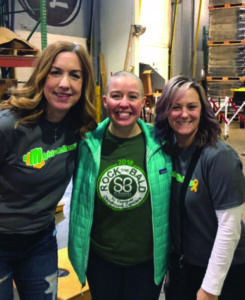
(L-R): Deirdre McManus, Dr. Jordan Watson and Karen Wolownik
For those who would like to help, both the Maria Fareri Children’s Hospital and The St. Baldrick’s Foundation accept donations.  In addition, the McManuses recommend registering with BeTheMatch.org to help someone in need of stem cells.

When a person develops leukemia, the body makes more white cells than it needs, crowding out the normal cells and affecting the way major organs work. Eventually, there aren’t enough red blood cells to supply oxygen, enough platelets to clot the blood, or enough normal white blood cells to fight infection.

Filed Under: Armonk Cover Stories Tagged With: AML Treatment, Byram Hills School District, Danny McManus, leukemia, Maria Fareri Children’s Hospital, Pediatric Cancer, pediatric leukemia, support, Wampus School

Breeding the Next Generation of Young Scientists

April 21, 2018 by Shauna Levy

The students of the Dr. Robert Pavlica Authentic Science Program at Byram Hills High School have been consistently racking up an impressive roster of scientific accolades in recent years. In 2017 alone, they earned coveted top awards from the Westchester-Rockland Junior Science and Humanities Symposium, Regeneron Science Talent Search, the American Academy of Neurology’s Neuroscience Research Prizes and the Siemens competition to name a few. All of this recognition, however, is not what’s most extraordinary, according to program director, Stephanie Greenwald. “The best part is the community Dr. Pavlica created. He felt strongly that any student who wanted to be here could. We have honored that legacy and cultivated an environment that empowers students to be their absolute best.”

When Greenwald began her career as a school administrator and science teacher almost 25 years ago, science research wasn’t necessarily a “thing.” What she did know, was that she loved teaching and inspiring children. With 14 years at Byram Hills H.S. under her belt, when the previous director retired last year, she was offered her current position and fell into “the absolute best job I ever had.” There is no question about Greenwald’s passion as she rapidly speaks, “There is nothing more exciting than watching a student who enters this room timidly, find what they love and see that moment when it all clicks. That is my favorite thing in the whole world.”

Developing a Broad Skill Set

Celebrating its 30th anniversary next year, this three-year research program was designed for students who wish to pursue excellence in advanced areas of original research. Students develop skills in bibliographic research, research methodology, and modes of communicating research. Though the workload is described as “very high,” students don’t appear scared off with approximately 80 students enrolled. They participate in group classes with BH faculty and individual meetings with mentors.

The focus is on quantifiable science, yet there is a sense that something magical is at play in this classroom where students’ greatest capabilities make themselves apparent. Greenwald describes the staff’s philosophy, “We pride ourselves on guiding students to find what they are truly passionate about.  Almost any topic can be researched. If it can be measured with a numeric value, it’s science.” This is the key to the program’s continued success. Greenwald, explains, “The students who self-select into the program have such a high level of enthusiasm because they are studying what they love. That without a doubt is the major intrinsic motivator.” Study topics have included everything from fashion, football and dogs to vectors, biodiesel fuel and prostate cancer microbiology.

Combating Science Illiteracy with Communication

Once students select their subject matter, the focus is on reading as much material as possible including everything from layman material to professional literature. This research prepares them for the ultimate task of producing a 40-50 page publication. Greenwald describes the process, “They become experts, getting to know ‘the movers and shakers’ in their field. It is imperative that students are able to communicate in everyday terminology.” Communications are integral to the program and an English teacher is on staff to strengthen these skills. According to Greenwald, “There is a vast amount of science illiteracy in this country. Scientists must become better communicators. It is a pet peeve of mine that we have a plethora of incredible experts, yet only a small list of people who understand them. The public must be able to understand that science is not something you can refute. It is simply fact.”

Working with Professional Mentors

A pivotal point in the program is when students identify a professional mentor from a university, medical center or research institute with an expertise in their area of study. “There are so many glorious people who see themselves in the students and wish they had a program like ours when they were younger. We truly wouldn’t exist without their time and generosity.”  Mentors may be local, but many span the world and have been as far as England and Israel. They communicate via email, telephone, video conference or in person. Oftentimes, students are invited to spend time working at their laboratories.

The program has very clear benchmarks, during which students receive a high level of critiquing that they learn to accept in order to produce their best work product. “Our grading system is set-up to empower students to be able to take risks and fail. They are not penalized for giving the wrong answer,” says Greenwald. When students hit roadblocks, they are encouraged to ask questions and seek solutions. “I always tell them that all that stands in our way are words and time. If you can’t understand it, research it,” Greenwald guides.

Breeding Young Scientists

At its core, the program aims to support an initiative to create a greater number of PhD and advanced degree candidates in the sciences in this country. Fostering scientific literacy is further supported by engaging in programs at the elementary school level. Greenwald described a common sense approach to breeding young scientists: “Teach them to wonder and problem solve. Encourage them to always ask questions,” she said. “Experiment with trial and error.”

Of the future, Greenwald is optimistic. She disagrees with the stereotypical view of millennials saying, “Every day, I watch students suddenly see above and beyond what they expected their capabilities to be. That’s the moment they learn they are in control of their destiny. It happens here all the time and that’s what makes this place so special. I tell the students, I have faith in my future as long as you take care of it for me.” And, her work is contributing to their ability to do just that.

Filed Under: Armonk Cover Stories Tagged With: Authentic Science, Byram Hills High School, class, school, Science

The Expat Experience: Local Residents Share their Stories About Moving to the ‘Castles’

March 8, 2018 by Stacey Pfeffer

PHOTO BY CAROLYN ANGELINA PHOTOGRAPHY

Next time you are at the library or your local coffee shop, take a close listen and perhaps you’ll hear a British or Brazilian accent. No these aren’t tourists visiting New or North Castle but instead they are expatriates (also commonly referred to as expats) who have chosen to make our lovely slice of Northern Westchester their home. While some plan to remain long-term others have defined job assignments and a specified duration of time here. The Inside Press wanted to spotlight some recent expats to our community and hear their unique perspective about what makes living in the ‘Castles’ so special….

Meet the Mansfields

Meike Mansfield, originally from Germany and her British husband, Luke and two children, Heidi and Robin most recently hail from Kent, United Kingdom. A place that she describes as “picturesque with fields and horse paddocks.” Their life was hectic though with both Meike working for a multinational food company and Luke working for Samsung and having an arduous daily commute to London. When Luke received a call from a headhunter for a job for another multinational company in innovation based in Purchase, she was initially hesitant. But she also knew that she was frazzled and stressed in the U.K. working a job with two young kids, and no sitter or support system. After watching a close friend’s battle with cancer and ultimate death, she reevaluated. “It made me think life is so short. We have this amazing opportunity and you only live once, so let’s do it.”

After accepting his position, the Mansfields moved here in 2015. Her husband was on a local work contract with an “O” visa. This type of visa is for workers that have a unique skill set or expertise. The visas that expats receive to work in the U.S. vary from individual to individual. As an expert in the field of innovation, Luke was well-qualified for an “O” visa but it meant that Meike and her two children were “just attachments. We were allowed to be here but I could not work here.”

Pinpointing a Town to Call Home

Relocating is a difficult process but luckily Luke’s employer has housing and school consultants at the ready for expats. The Mansfields looked at many towns all over Westchester including Scarsdale, Larchmont, Dobbs Ferry, Irvington, Pleasantville, Briarcliff, Armonk and Chappaqua. Towns in Lower Westchester including Scarsdale, Larchmont and Rye are expat hubs, according to Expat Exchange, an online resource for expats but as more businesses expand or open in Northern Westchester such as Regeneron, Pernod Ricard and IBM, expats are slowly starting to discover that the towns of Northern Westchester offer ample space and great schools. The Mansfields also considered Greenwich and seriously considered Ridgefield, CT which has an easy commute to Purchase. But when Luke learned that he’d have regular travel to New York City, Ridgefield was knocked off the list and Chappaqua rose to the top. “It was the perfect compromise where we would get land and still have that feeling of being surrounded by nature. Plus it’s beautiful with reasonable proximity to NYC and great schools, so it ticked all the boxes for us.”

The Harvey School
ADVERTISEMENT

A Rough Start

Like many expats, they had to live in temporary housing in White Plains upon arrival to the U.S. because their house wasn’t ready. It was the winter of 2015 and the snowy weather was relentless. Meike had to drive her daughter Heidi to Westorchard Elementary and her son Robin to World Cup Nursery School in a rental car without four-wheel drive. “I wasn’t used to driving in the snow and I got the flu too. Plus it was my daughter’s birthday and we knew no one here. I had to somehow make her a party and I definitely doubted if we had done the right thing by moving here.”

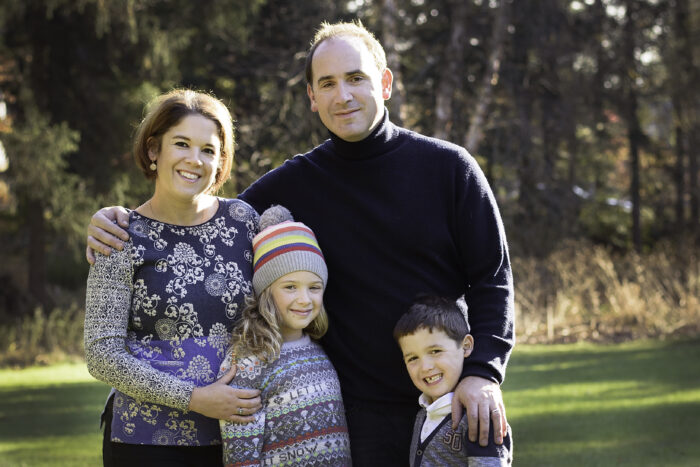
The Gilvar Family
PHOTO BY JESSICA PASCHKES,
PRETTY PICTURES MARKETING

Settling In

But those feelings of doubt quickly dissipated once she moved to Chappaqua. Meike’s outgoing personality was key to helping her and her family settle in. “I emailed all the parents in Robin’s class and said we just moved here. I don’t have any friends. Want to come out for a drink? What’s funny is a lot of people got back to me and said they were in the same boat and home with young kids all day. Many of those ladies who I met that night are still my friends to this day.”

Meike is currently a stay-at-home mom and an active member of the Junior League of Northern Westchester. She chairs the human trafficking committee, which supports minors who have been trafficked for commercial sexual exploitation. She is also a Girl Scout troop leader. In order to preserve their German heritage, her children attend German school in White Plains on the weekend.

The family enjoys living on Hilltop Drive, which has neighborhood barbeques and dinner parties. “We have no plans to go back to the U.K. We have a great quality of life,” she notes. The family also recently received their green cards and Meike is now able to accept freelance projects and legally work here.

From Au Pair Days to Homeownership

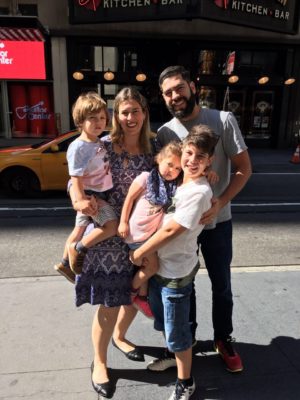
Claire Fletcher Gilvar, a British citizen and founder of Booked Parties, a children’s birthday party resource website and booking platform has fond memories of Chappaqua after spending four summers here working as an au pair for a family on Garey Drive while studying at Oxford University through a British Royal Navy program. Fast forward to almost two decades later when Claire and her husband Adam were living with their two young children in Long Island City, Queens, they knew they needed ample space for their growing family. They decided to come full circle back to New Castle. “Chappaqua hasn’t changed much since 1992. My time as an au pair here was definitely part of the pull back to this area.”

The Iyengar Family
PHOTO BY CATHY PINSKY, PINKSY STUDIO

Introducing the Iyengars

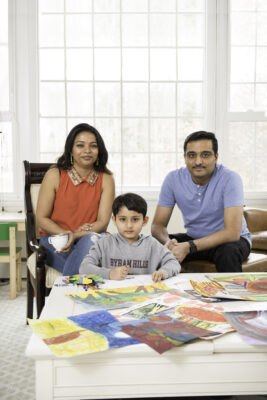
Mrinalini (Mili) Iyengar and her husband Chaithra first came here from Bangalore, India with their now 5-year-old son Naman in the spring of 2016. Mili works in IT sales for Capgemini and her husband is in sales at IBM. Mili wanted to work in the U.S. since it leads the way in IT innovation. Initially, Austin was on their radar and friends suggested that they move to Texas for the lower cost of living but Northern Westchester was very attractive to Mili. Almost three months before moving here, she signed up for town e-newsletters for both Austin and New Castle. She loved that the New Castle one listed activities for adults and children. “I saw various avenues where I could integrate into the community. Something as simple as when the Farmers Market begins and ends and the fact that there was a kid’s hockey team was a real draw for me. The Austin newsletter put me in a black hole,” she commented.

Initially they moved to New Castle but now live in North Castle. “Good schools have always been priority number one for us” and when their lease ran out on their rental in New Castle they were happy to find another town nearby with great schools and accessible to Westchester County Airport, which they both use regularly for domestic travel.

Raising A Global Citizen

The Iyengars appreciate the educational system here. “We want to raise Naman as a global citizen.” While Mili feels that India has a strong academic system, she doesn’t like the fact that on the flipside you make career choices very early. “If you are training to be an engineer, there is no option to take any humanities classes.” She also appreciates the fact that Naman is now more “culturally aware. He now knows that there is a menorah and you light it on Chanukkah.”

Challenges for Expats: From Mortgages to the More Mundane

Mili is on an L1A visa, which allows her to work in the U.S. for up to seven years. They hope to buy a home here. “Beyond a three year horizon, it doesn’t keep sense for us to keep renting.” But getting a mortgage or making any large purchase has been challenging for her family. “Every time we have to bring money from India, we lose out on the exchange rate.” When they wanted to purchase a car, they only got a $600 credit limit from their bank. “It doesn’t matter that our combined salaries might be close to the upper 1 percenters in terms of income. Credit history here is just so important.”

While financial concerns are a big focus for many expats, more mundane problems can also be taxing for newcomers. “Last year a tree fell in my backyard and I had no idea what to do.” Harnessing the power of technology, Mili who is a member of Chappaqua Moms and Armonk Parents Facebook pages was able to find reputable tree removal providers. “I literally feel like these groups are watching my back all the time. These groups have been instrumental in helping me and my family get ingrained into the local culture.”

Moving from Isolation to Inclusion

Like most expats, there have been moments when Mili has felt homesick. The first year that they moved here during the Indian festival of Diwali she saw her relatives all celebrating on social media. Chaithra was traveling at the time and it was the first time that she realized that she was all alone in the U.S. That experience jolted her to maintain a connection with the Indian community here and propelled her to actively seek out other Indian families in the area. Again, technology came to the rescue and helped her connect with Indian families nearby. Mili is now part of a kitty party, a group of approximately 16 Indian women from nearby towns who meet monthly and socialize in each other’s homes. There is a very set social framework for these gatherings and no men or children are allowed. The group has helped her find Indian ingredients for cooking or advice on music teachers for Naman to learn to play Indian instruments. She now meets and celebrates Indian festivals and holidays with these families.

Just as she’s made inroads within the Indian community, Mili loves the fact that half of Naman’s class at Coman Hill Elementary are new to the area. She’s met many families through school activities and she also has used technology to help her build an extended network of local friends that helped her recreate a family environment for her son. In Bangalore, they lived in a gated community and Naman would go to the park daily and interact with children and adults of all ages, so that he never felt like he was an only child. Robin and Gary Murphy who are Chappaqua residents hold badminton parties at their house and the Iyengars are frequent participants. “I love the fact that it helped us to recreate a family environment for our son with other kids from all age groups.”

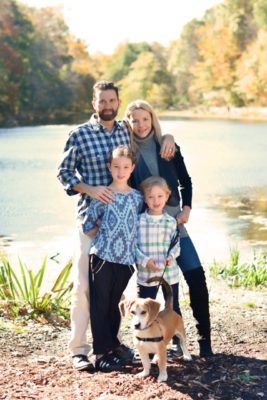
The Roversi Family
PHOTO COURTESY OF MAIRA ROVERSI

It Takes a Village

Mili has a long laundry list of local folks who have helped her family with a warm welcome. In addition to the Murphys and Georgia Hobaica Frasch who was one of the creators of the Chappaqua Moms Facebook page, Kathy Boyle, a member of the Chappaqua Recipes with Friends Facebook page has been especially supportive. “Kathy posted that she needed an Indian recipe and I replied and then we began communicating. She doesn’t even live in Chappaqua or Armonk but she was enthusiastic and wanted to meet me. She helped me connect with the Murphys.” Mili also jokes around that she wants to provide a good citizen’s award to Roberta Offenhutter Lasky for having advice on everything from tree removal companies to restaurants. Chandana and Madhu Hugehalli and Jagruti and Neeru Patel also served as liaisons to the wider Indian community. “All of these people had nothing to gain by helping us. They just had a lot of goodness in their hearts.”

Taking Advantage of Living in Armonk

The family is very integrated in the community with Chaithra volunteering as an AYSO soccer coach and Mili volunteering at the Armonk Outdoor Art Show and Naman attending Breezemont Camp during the summers. With a very different climate than Bangalore, the family has been mesmerized by the wintry weather here. “When the blizzard was coming, we stayed up until midnight to watch it.” They’ve also taken Naman for ski lessons at Thunder Ridge. When they have free time, they also like to visit art museums in the city. One of the highlights of living here for Naman has been trick or treating for Halloween on Wampus Street. “Everyone in this town has been so forthcoming and helpful. We’ve really had a very warm welcome,” concludes Mili.

Like the Iyengars, Maira Roversi, an expat from Brazil, loves living in Armonk with her husband Ricardo and her three children, Caio (10) and her 4-year old twins Rafael and Beatriz. The family also brought their dogs Lion, a golden retriever and Minnie, a maltese with them for their Armonk adventure.

Roversi is working for IBM on an L1A visa like Mili and has a two year international assignment with the company. She has worked for IBM for the past two decades in various locations in Brazil. Her first stint in the U.S. was in Raleigh and she loved living in the U.S. so decided to make the move to Armonk in 2016. Ultimately, she hopes to return to Brazil after this assignment is completed but is used to the expat peripatetic lifestyle and is accepting of moving to another location if IBM needs her to transfer.

Roversi loves the fact that her twins saw snow here for the first time. Besides the snowy weather though, the Roversis are outdoor enthusiasts and take full advantage of biking nearby, the parks and playgrounds in town and playing soccer and tennis. Caio is enjoying playing music here and has even performed on the upper level at the local DeCicco’s supermarket while Maira and Ricardo enjoy a beer.

They also love the proximity to the city for family outings and have been to the Natural History Museum, Times Square, basketball games at Madison Square Garden and ice skating at Bryant Park. Like the Iyengars, Halloween happens to be a favorite holiday for her children too who also loved seeing the pumpkins on display at the Great Jack O’Lantern Blaze at Van Cortland Manor.

Facing a Medical Issue as an Expat

Each expat faces different challenges and for Maira she faced a medical issue upon arrival to Armonk. “Even with a very good insurance plan, things here are really different than Brazil and it took a while until the doctors realized that I had kidney stones. It was tough to find some support knowing no one in the area: no referral, no previous experience in terms of hospitals but luckily we figured out how to deal with that and everything is calm again now!”

Maira still considers her family in the discovery mode and is eagerly awaiting the warmer weather. Ricardo practices down hill bike riding and Maira enjoys running outdoors. “With these freezing temperatures, I am not brave enough to go out on the street!” quips Maira. With spring just around the corner, feel free to give a warm welcome to Maira or any one of the expat families featured in this story.

Filed Under: Armonk Cover Stories Tagged With: community, expat, expat experience, good neighbors, life change, local residents, moving, moving challenges, moving here from abroad, New Castle, North Castle, relocation challenges, Settling into a community, welcome, Westchester

  • « Go to Previous Page
  • Page 1
  • Interim pages omitted …
  • Page 11
  • Page 12
  • Page 13
  • Page 14
  • Page 15
  • Interim pages omitted …
  • Page 41
  • Go to Next Page »

Primary Sidebar

Please Visit

White Plains Hospital
William Raveis – Armonk
William Raveis – Chappaqua
Northwell Hospital
Houlihan Lawrence – Chappaqua
Houlihan Lawrence – Armonk
Houlihan Lawrence – Briarcliff
NYOMIS – Dr. Andrew Horowitz
Westchester Table Tennis Center
Spavia
Compass: Miller Goldenberg Harris Team
Lipari & Mangiameli Dentistry
Raveis: Lisa Koh and Allison Coviello
Bristal Assisted Living
Maid Brigade
Kevin Roberts Painting & Design
Zwilling J. A. Henckels
Meagher & Meagher Attorneys at Law
Compass: Aurora Banaszek
Dr. Briones Medical Weight Loss Center
Beecher Flooks Funeral Home
EyeGallery
Elliman: Pam Akin
CPW Vein & Aesthetic Center
Beascakes Bakery
Temple Beth El
Home Grown Gardens
Joseph Richard Florals

Follow our Social Media

The Inside Press

Our Latest Issues

For a full reading of our current edition, or to obtain a copy or subscription, please contact us.

Inside Pleasantville and Briarcliff Manor Inside Chappaqua and Millwood Inside Armonk

Join Our Mailing List


Search Inside Press

Links

  • Advertise
  • Contact Us
  • Digital Subscription
  • Print Subscription

Publisher’s Note Regarding Our Valued Sponsors

Inside Press is not responsible for and does not necessarily endorse or not endorse any advertisers, products or resources referenced in either sponsor-driven stories or in advertisements appearing in this publication. The Inside Press shall not be liable to any party as a result of any information, services or resources made available through this publication.The Inside Press is published in good faith and cannot be held responsible for any inaccuracies in advertising or sponsor driven stories that appear in this publication. The views of advertisers and contributors are not necessarily those of the publisher’s.

Opinions and information presented in all Inside Press articles, such as in the arena of health and medicine, strictly reflect the experiences, expertise and/or views of those interviewed, and are not necessarily recommended or endorsed by the Inside Press. Please consult your own doctor for diagnosis and/or treatment.

Footer

Support The Inside Press

Advertising

Print Subscription

Digital Subscription

Categories

Archives

Subscribe

Did you know you can subscribe anytime to our print editions?

Voluntary subscriptions are most welcome, if you've moved outside the area, or a subscription is a great present idea for an elderly parent, for a neighbor who is moving or for your graduating high school student or any college student who may enjoy keeping up with hometown stories.

Subscribe Today

Copyright © 2026 The Inside Press, Inc. · Log in