• Skip to primary navigation
  • Skip to main content
  • Skip to primary sidebar
  • Skip to footer

The Inside Press

Magazines serving the communities of Northern Westchester

  • Home
  • Cover Stories
  • Features
    • Portraits and Profiles
  • Advertorials
    • Lifestyles with our Sponsors
    • Sponsor News!
  • Wellness
  • Happenings
  • Advertise
    • Advertise in One or All of our Magazines–And/Or Subscribe
    • Advertising Payment Form
  • Contact Us
  • Search

Stacey Pfeffer

Local Poet Scott Mason’s New Haiku Book Celebrates the Wonder of the World

March 8, 2019 by Stacey Pfeffer

PHOTO COURTESY OF SCOTT MASON

Listening to Scott Mason wax poetic (pun intended!) about haiku, a traditional form of Japanese poetry, it is clear that he has a true passion for the subject having published close to 400 haiku in edited literary journals or anthologies. And that passion has helped him earn more than 150 awards, including more than 20 first place finishes in international competitions– more than any other North American, in the genre. To coincide with National Poetry Month coming in April and the launch of his latest book, The Wonder Code, Inside Press had the opportunity to sit down with this prolific poet and learn more about this art form.

Mason claims writing and also reading haiku (it is the same in both singular and plural form) has changed his outlook on life. Admitting that it sounds grandiose, Mason claims that haiku has made him “more attentive and more appreciative.” The Chappaqua resident though never intended to become a haiku poet. “If you told me twenty years ago that I would be doing this, I would have looked at you like you have three heads,” he chuckles.

As an undergraduate at Dartmouth College, Mason majored in art and did a minor in math and physics. He obtained his MBA at Harvard Business School and worked in advertising at Prudential. Following that he consulted for advertising agencies to help them strategize and win new business opportunities. “My background isn’t what people typically think of when they think about poets.”

Always an avid traveler, Mason and his wife Carla Gambescia (the former owners of the now defunct Via Vanti in the Mount Kisco train station) took a hiking trip to Japan in the early 1990s with a company called Wilderness Travel. The tour guide challenged the group to write their own haiku over dinner one evening in the traditional Japanese format of three lines with, five syllables in the first line, seven syllables in the second and five again in the last line. Mason wrote one but didn’t think much about it at the time.

Fast forward a decade later and Mason found himself wanting to express himself poetically. As he took his first attempts at writing, he noticed that his poems were short and resembled haiku.

He later learned that haiku poems in English do not need to conform to a 5-7-5 structure since English and Japanese word sounds are not comparable in duration. On a whim, he sent some of his poems to Modern Haiku magazine and they accepted one of his haiku for publication.

Since then he has become the co-editor of The Heron’s Nest, an online and print haiku journal with an international readership. Having an analytical mind, Mason sought to figure out why this form of poetry resonated with him so deeply and what characteristics the best haiku have in common. He poured through 9,000 haiku that had been published over the years in The Heron’s Nest and eventually chose his favorites writing each one on index cards. He sorted through them and found to his surprise that the poems wound up naturally being organized into five piles. “Each poem had one common denominator and that is wonder. Now wonder is both a verb and a noun and they operated on me in both ways. These poems brought me to wonder in some ways but also caused me to wonder in a verb sense,” explained Mason.

The five groups also had some imperative that eventually formed the five chapters of The Wonder Code. So for example, think small was an imperative and the haiku in that particular pile all focused on things like small animals or bugs. It struck Mason that this was the “diametric opposite of our culture and our times. Each haiku seemed to offset some aspect of our Western culture that tend to estrange us from wonder. Americans want big cars, big restaurant portions. Bigger is better is our credo but there is so much wonder and beauty in small things.”

Mason is gratified that this book has been so well-received in the haiku community but hopes to expand its readership to a wider audience. Kirkus Reviews magazine noted that is “ a superb haiku collection for readers who thought they didn’t like poetry, richly expressive and very accessible.” The first five chapters feature haiku written by various authors and the last chapter features haiku written by Mason. The book also received a Kirkus Star which signifies a book of exceptional merit.

As we wrap up the interview, Mason reminds us that “haiku is the people’s poetry. It is the opposite of elitist and truly treasures the everyday.” Mason will be giving a presentation on “Looking at Nature the Haiku Way” on March 27 from 7-8:30 pm at Teatown in Ossining–a place where he enjoys hiking and of course has inspired many of his haiku. Tickets are available at teatown.org/events/haiku-way where his book will be available for purchase at the event.

Haikus

By Scott Mason

how deer
materialize
twilight

Venetian canal –
lifting fog reveals
another mask shop

summer moonglow
the crescent
of toe prints on sand
Filed Under: Cover Stories Tagged With: authors, book, Chappaqua library, Haiku, National Poetry Month, poet, Scott Mason, The Wonder Code, writer

Preventing & Recognizing Concussions: Keeping Your Young Athlete Safe

March 8, 2019 by Stacey Pfeffer

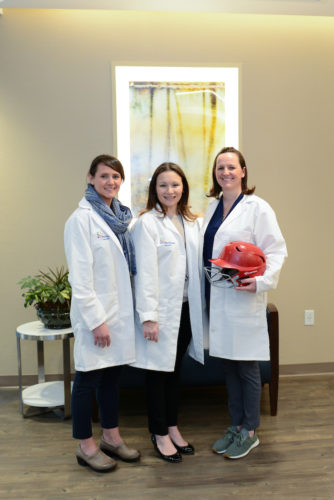
(L-R): Lisa Rusch, PT, DPT, GCS, Chari Hirshson, PhD and Sarah Todd, PT, DPT, CLT
PHOTO BY CAROLYN SIMPSON, DOUBLEVSION PHOTOGRAPHERS

With the 53rd Super Bowl behind us and a spike in media coverage on NFL players and concussions, the 2017 season saw the highest rate of diagnosed concussions (291) in NFL players in a six-year period, according to the NFL and Quintiles, an independent third-party company. Although 2018 figures showed a 29 percent decrease in the number of concussions, it still remains a serious health problem for players.

Although NFL players may be at a higher risk for sustaining a concussion, which medical researchers refer to as a type of traumatic brain injury (TBI), they are not the only athletes experiencing concussions. Many high school athletes and younger ones are also suffering from concussions in our towns and the problem seems to be county-wide. In fact, in 2016 the former County Executive Rob Astorino formed the Westchester County Concussion Task Force to address the problem.

In observance of Brain Injury Awareness Month in March coinciding with the spring sports season kicking into high gear, Inside Press spoke with leading medical practitioners at Northern Westchester Hospital (NWH) to separate fact from fiction when it comes to concussion prevention, treatment and management.

Changing Perceptions About Concussions

When many people think of concussions, they think of an athlete on a football field who perhaps has lost consciousness. While losing consciousness can certainly be a symptom of concussion, there are a host of other concussion symptoms and they don’t necessarily present themselves at the time of injury. Concussions are a type of brain injury that results from a bump, blow or jolt to the head or by a hit to the body that causes the head and brain to move back and forth. This back and forth movement can cause the brain to bounce around in the skull which can result in stretching or damaging brain cells. Many health professionals classify concussion as a mild TBI (traumatic brain injury) because the injury is usually not life-threatening and in most cases, symptoms resolve on their own. However, some patients have lingering symptoms that require treatment from a specialist trained in concussion management.

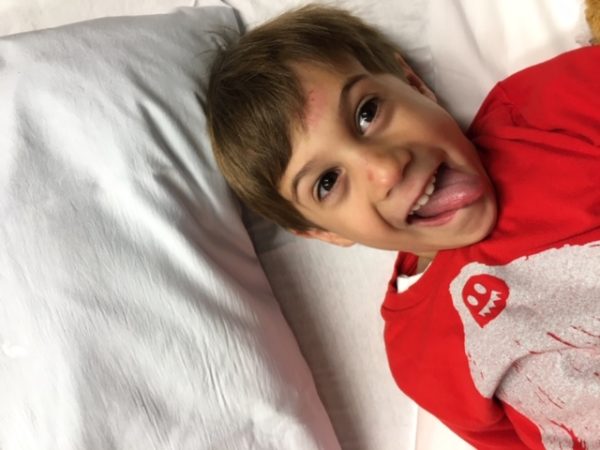
Ryan Esposito sustained a concussion falling off his scooter without a helmet

Chari Hirshson, PhD is a neuropsychologist with NWH who specializes in brain injury and treats both adults and children (ages 8 and up) who have sustained a concussion. According to Dr. Hirshson, who sees her patients at the hospital’s Ambulatory Care Center at Chappaqua Crossing, “concussion symptoms vary from patient to patient,” she explains. “It is important to take a multi-disciplinary approach with patients that have lingering symptoms because their symptoms can be multifaceted, encompassing physical, emotional and cognitive realms,” adds Lisa Rusch, PT, DPT, GCS, a Supervisor in the Concussion Rehab Program at NWH.

Acknowledging that concussions can be diagnosed by urgent care specialists, pediatricians or in the ER, an MRI or CT scan rarely shows signs of concussion. “Most of the time, these tests come back normal. It is not like with an X-ray that shows a broken bone. This can make it difficult to gauge the severity of the injury,” says Dr. Hirshson.

Varying Symptoms

Patients with a concussion can experience observable signs such as:

  • Appearing dazed and confused
  • Forgetting instructions
  • Moving clumsily
  • Answering questions slowly
  • Losing consciousness (even briefly)
  • Showing mood, behavior or personality changes
Ryan recovering from his concussion. PHOTOS COURTESY OF FAINE ESPOSITO

Patients with a concussion may also report these symptoms:

  • Headache or “pressure” in the head
  • Nausea or vomiting
  • Balance problems or dizziness/blurred vision
  • Bothered by light or noise
  • Feeling sluggish, hazy, foggy or groggy
  • Confusion, concentration or memory problems
  • “Feeling down,” irritable or anxious
  • Changes in sleep patterns

Some patients do not exhibit any symptoms until a few hours or even a few days after the injury. That was the case with Ryan Esposito, an Armonk child who decided to take his scooter down the porch and ride it without a helmet and unsupervised when he was five years old. He fell down the stairs by his driveway and while his head was bruised and bloody, he did not exhibit any concussion symptoms that afternoon upon examination by a pediatrician. “The doctor did not want to give him an MRI because he was so young but told us to take him to the ER if he starts vomiting,” recalls his mother Faine Esposito. Sure enough, at midnight Ryan started vomiting and was taken to NWH and diagnosed with a concussion.

Falls: A Leading Cause of Concussion

Despite many people believing that contact sports are a leading cause of concussion in children, more than 55 percent, in children up to 14 years old, are actually due to falls like Ryan’s. Hirshson adds, many of her adult patients sustain their concussion as a result of falls which could have been easily prevented. “I’ve seen falls resulting in concussion from women wearing jeans that are too long, or men who are carrying messenger bags with a strap that is too long and they trip. These injuries are not related to football, or skiing. These are things that can happen in everyday life,” she says.

Nevertheless, sports-related concussions due to being struck by an object or person is the second-leading cause of concussion in youth, accounting for 24 percent of cases in children up to 14 years old. In addition, 71 percent of sports and recreation-related TBI emergency department visits are among patients 10-19 years old. According to 2017 statistics from the US Centers for Disease Control and Prevention (CDC), 15 percent of high school students have had one or more concussions and 6 percent experienced two or more as a result of either playing a sport or being physically active. The rates were higher among males and the more sports a child played the higher the prevalence of concussion. Even more troubling was the fact that 40 percent of high school athletes reported that their coach was unaware of their symptoms. The researchers also found that some high school athletes tried to hide their symptoms from their coaches so that they would not get reduced playing time.

“I’ve seen falls resulting in concussion from women wearing jeans that are too long, or men who are carrying messenger bags with a strap that is too long and they trip. These are things that can happen in everyday life,” Hirshson says. PHOTO BY RAWPIXEL ON UNSPLASH

Gender Disparities in High School Athletes and Concussion Prevalence

There also appears to be a gender disparity in terms of the prevalence of concussion when high school athletes of both genders are playing the same sport. Females are more likely to suffer from concussion when playing soccer, basketball and lacrosse. Some of the reasons may be due to proper safety equipment. Boys are required to wear helmets in lacrosse while girls are not. Lauren Dinhofer, a senior who plays varsity lacrosse at Horace Greeley High School feels that helmets for her teammates should not be mandatory. “The use of helmets for me gives off the idea that girls are more protected, so you can be more aggressive on the field. However, helmets for girls don’t really have adequate materials for protection. Unlike boy helmets, girl helmets are soft and won’t make a difference against a check to the head. They invite more contact instead of offering protection.” But Melissa Mykytiuk, an Armonk mother of three boys who played lacrosse and ice hockey fervently disagrees. “Why don’t girls who play lacrosse wear helmets? Those sticks and balls are hard. It’s crazy to me.”

The Road to Recovery: Part 1: Return to School

Many of the patients who visit Dr. Hirshson or Rusch have been referred by a physician or a pediatrician. With a comprehensive approach tailored so that each patient can return to school and/or play, the team in the Concussion Management Program at NWH offers physical therapy, speech therapy, occupational therapy and neuropsychology. A coordinated team with their colleague Sarah Todd, PT, DPT, CLT who is the manager of Outpatient Rehabilitation Program at the hospital’s Chappaqua Crossing site, demonstrates why specific training in concussion management and a multi-disciplinary approach to care is critical to successful treatment. They often find a patient will seek treatment for one symptom, for example balance disturbance, and upon evaluation and assessment, additional effects of the concussion, such as memory issues, are uncovered and able to be treated.

Dr. Hirshson specializes in neuropsychology. The neuropsychological tests she performs can last from 4-8 hours and are designed to assess a patient’s cognitive strengths and weaknesses. “Typically, we don’t do neuropsychological testing until three months post-injury if cognitive symptoms have lingered,” explains Dr. Hirshson. If necessary, Dr. Hirshson will help young students manage their symptoms post-concussion before that 3-month period and help them transition back to school. The rigorous demands of high school, college applications and entrance exams can be very taxing on a student with lingering concussion symptoms. In certain cases and upon Dr. Hirshson’s clinical observations, some students may require support from the school, and she will work with the district to advocate for this, if necessary.

It is really important for a student suffering from concussion to get what medical professionals call adequate “cognitive rest” because this helps the brain recover. For example, if a student has an important test coming up, studying for it uses a lot of brain power and instead of using that energy for the brain to recover, it gets depleted which can ultimately delay recovery. Dr. Hirshson assesses each student and makes recommendations for returning to school on an individual basis “Take your cues from your kids,” advises Mytkiuk. Each of her three sons had a different recovery time from their concussion. “It’s frustrating because you don’t have control over when your kid’s brain gets better.”

Dr. Hirshson always tells her patients, “Don’t do something that doesn’t feel good. Don’t look at a screen if it hurts your head. Slowly build up tolerance. If you got a concussion over the weekend skiing, then don’t play soccer on Tuesday. Allow yourself the proper time to recover.”

Road to Recovery: Part 2: Return to Play

While the priority for all students recovering from concussion is to get them to return to school, for high school athletes returning to the field is often a main goal of recovery. With more than 4,000 New York based students under 19 treated at hospitals for sports-related traumatic brain injuries, following a return to play protocol is very important. In 2013, all states were mandated to pass laws to address concussion management in school athletics.

NY state school nurses, certified athletic trainers, coaches, and physical education teachers are mandated to complete sports concussion management training every two years. In addition, in both the Byram Hills School District and the Chappaqua Central School District, high school athletes undergo IMPACT (Immediate Post Concussion Assessment & Cognitive Testing) pre-season for a baseline assessment and upon returning to the field. Not all New York State school districts conduct IMPACT testing. Before a student returns to play, they must have medical clearance from a physician permitting it.

While Dr. Hirshson helps students return to the classroom, Rusch and Todd help students return to athletic endeavors. They help students suffering from symptoms such as neck pain, vestibular (inner ear) dizziness or disorientation and provide therapy to help them strengthen their eyes or restore equilibrium in addition to several other modalities. Todd often works on improving the vestibular system which can affect balance. “We retrain and recalibrate the vestibular system with dynamic exercises such as hopping on one foot on a foam board,” explains Todd. “We are part of that return to play conversation with the athletic trainers. We ensure that the athlete takes on exercises with increasing intensity in a controlled setting and then we make recommendations regarding return to play,” notes Rusch. “Interestingly, the research is indicating that patients who sustain a concussion are three times more likely to sustain a lower extremity injury of the knee or lower leg,” adds Todd.

“Each specific discipline that is part of the Concussion Management Program uses measurement tools to identify symptoms, measure their severity and develop a plan to progress so that patients return back to school and/or the field,” sums up Todd. “Because each concussion and its symptoms are unique, see a medical professional with credentials in concussion management who understands all the nuances,” advises Dr. Hirshson.

Ryan like most concussion patients had his symptoms resolve quickly and is now a happy six-year old back to playing on scooters and riding bikes. “But he remembers the injury and tells all his friends to be careful and of course wear a helmet,” his mother adds.


Helpful Helmet Tips

While there is no such thing as a “concussion-proof helmet,” the CDC notes that a proper fitting helmet can protect from a serious brain injury. Todd, who herself is a triathlete says that “helmet manufacturers are studying the dynamics of concussion and improving their designs based on the research.” As the biking season gears up, the CDC recommends the following tips when purchasing a helmet. The CDC also offers sports-specific guidelines for helmets available on www.cdc.gov/headsup.

Start with the Right Size

  • Bring the bike rider with you to assess fit.
  • Measure the child’s head size.
  • Sizes vary from brand to brand, so look at the helmet’s fit and sizing chart.

Get a Good Fit

  • The helmet should fit snugly all around with no spaces between the foam and bike rider’s head.
  • Ask your child how the helmet feels. A too tight helmet can cause headaches.
  • Have your child wear the hairstyle they will be wearing to ride the bike. If a long-haired child cuts their hair short, adjust the helmet accordingly.
  • The helmet should not rest too high or too low on the rider’s head.
  • Make sure your child can see straight forward and side to side.
  • The side straps should make a “V” shape under and slightly in front of the bike rider’s ears.
  • Chin straps should be centered under the bike rider’s chin and fit snugly so that no more than one or two fingers fit between the chin and strap.

Take Care of the Helmet

  • Check for damage. Do not use a cracked or broken helmet or one that is missing parts.
  • Clean it only with warm water and mild detergent.
  • Keep the helmet away from direct sunlight and do not store in a car.
  • Do not decorate with stickers or paint as this could affect the helmets safety.

Look for Labels

    • Have the date of the manufacture in case of a recall.
    • Purchase a helmet that is US Consumer Product Safety Commission (CPSC) certified.


Replace the helmet if it is damaged and has been involved in a crash!

Source: CDC Heads Up campaign

Filed Under: Armonk Cover Stories Tagged With: advice, Athletic fields, Bicycle Helmet, Brain, CDC Heads Up Campaign, Concussion Management, Concussion Symptoms, Concussions, falls, head injury, High School Athletes, kids, Neuropsychology, Northern Westchester Hospital, Physical Therapy, Precautions, Preventing Concussions, Recognizing Head Injuries, Risks, Traumatic Brain Injury, Westchester County Concussion Task Force

Taking a Break to ‘Just Breathe’

March 8, 2019 by Stacey Pfeffer

As I write this column during winter break, my family is about to embark on our annual pilgrimage to South Florida. We can’t wait for the airplane to depart from Westchester County Airport. We need sunshine, long afternoons by the pool and the gentle breeze of the palm trees.

There is some predictability about these trips. We will use the hotel’s waffle maker for breakfast. One of us will inevitably get sunburnt. I can pretty much guarantee what restaurants we will eat at with the grandparents. My kids not true gourmands yet, relish a dinner at Cheesecake Factory in Delray Beach.

And I will delight in knowing that I don’t have to load and unload the dishwasher. I won’t have to nag my kids to put on their shoes so they can make the bus. I don’t have to concoct a dinner in 20 minutes because everyone is starving and I can abandon my after-school chauffeur duties. In short, I will breathe.

After reading Connie Whitehouse’s essay about high school students exploring gap year options, I completely get it and secretly wish that we were traveling to South Africa instead of South Florida. Although I never went on a gap year or studied abroad, I did live in the UK for two years in my young adulthood with my husband and we can both unequivocally say it was a formative experience. Pushing me out of my comfort zone truly broadened my horizons and changed my perspective on so many things.

With the rigor of high school in a highly competitive yet award-winning school district, I fully understand one parent who commented “I just want my daughter to take a year to breathe and just be.”

As I was discussing the piece with the writer, I said to her “Wow, I wish they had gap year options when I was a high school student.” She said that she overheard many of the parents in attendance at the fair saying they wish they too had gone on a gap year.

So with spring approaching and warmer weather coming, I hope you will get a chance to step outside your comfort zone and

just breathe.

Here’s to a sweet and beautiful spring for all of you.

Enjoy,


P.S. I am so proud of our publisher Grace Bennett celebrating a 16th year of publishing Inside Armonk and Inside Chappaqua Magazines. I am also embracing our new slogan: Sharing the Heart of your Community. In more news, the Inside Press also launched its latest hyperlocal magazine this month, Inside Pleasantville. 

Filed Under: In the Know Tagged With: Editor's Letter, gap year, in the know, relax, school, Spring

First Ever Halloween Doggie Costume Contest a Hit at the Chappaqua Farmers Market

December 2, 2018 by Stacey Pfeffer

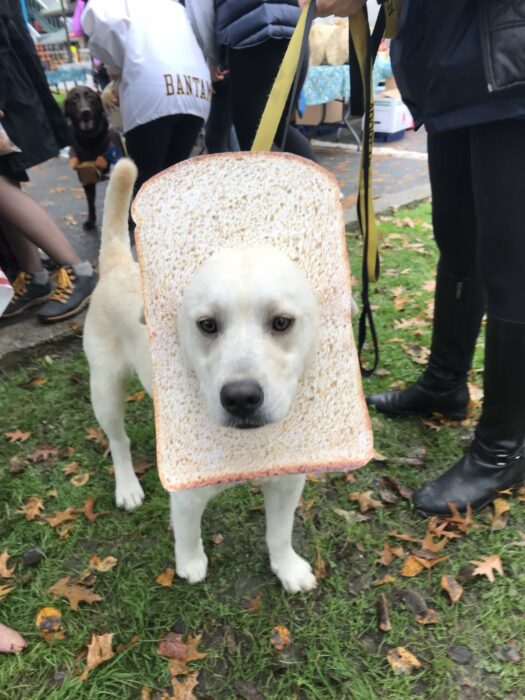
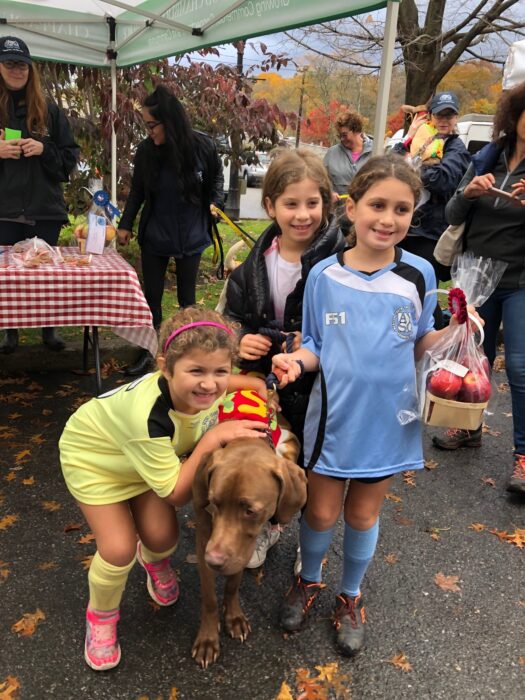
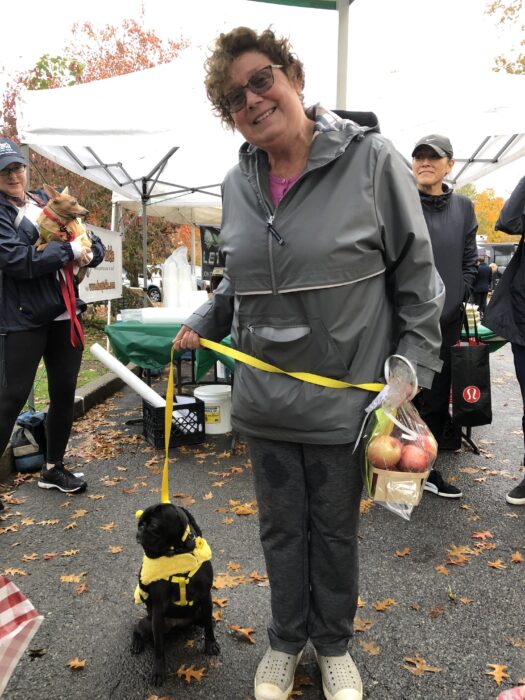
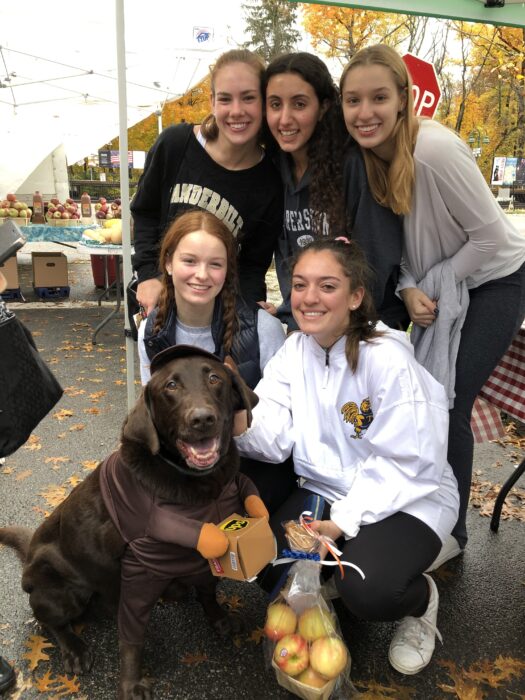
Wet weather didn’t put a damper on the first ever Halloween dog costume contest at the Chappaqua Farmers Market on Saturday, November 3rd. The event was originally scheduled for the Saturday prior to Halloween but it was raining cats and dogs (ha!) that day so it was rescheduled. The event was sponsored by A New Chance Animal Rescue. The Bedford Hills-based non-profit operates on a foster home model, with the strong belief that boarding and shelters are not replacements for experiencing home life that prepares a dog for successful adoption. A New Chance Animal Rescue relies solely on approved foster homes to house and care for all dogs.

The costumed contestants and their owners marched along the booths of the Farmers Market much to the delight of the vendors and shoppers. Lou, the UPS Dog won 1st Place, Arlo the Hot Dog came in 2nd and the adorable Bumble Bee, Gracie took 3rd Place! Each contestant got yummy doggie treats and the lucky winners received gifts from Wags and Whiskers, Aardvark Pet Supplies and Pets A Go Go, plus of course bragging rights! Proceeds from the event were donated to A New Chance Animal Rescue.

Filed Under: Happenings Tagged With: Chappaqua, Chappaqua Farmers Market, costume, costume contest, Dog, doggie costume, halloween

Feeding Westchester Celebrates 30th Anniversary

December 2, 2018 by Stacey Pfeffer

& Launches Mobile Food Pantry in Partnership with Pace University This Fall

It’s been a busy fall for Elmsford-based nonprofit Feeding Westchester (formerly known as the Food Bank for Westchester). The non-profit just celebrated 30 years with their fundraiser “An Evening in Good Taste” this past October. The event featured cocktails and cuisine from more than 30 Westchester-based chefs including local favorite Beau Widener, the Executive Chef at Crabtree’s Kittle House Restaurant & Inn.

Beau Widener Executive Chef at Crabtree Kittle House Restaurant and Inn and staff delight fundraiser attendees with their delicacies at “An Evening In Good Taste” Photo by Stacey Pfeffer

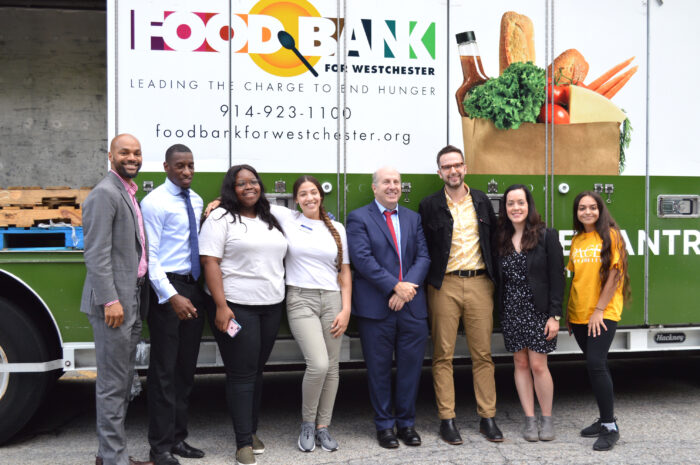
This fall also saw the introduction of a new Mobile Food Pantry in partnership with Pace University. Pace President Marvin Krislov attended the first mobile food pantry event on September 27 and spoke with student volunteers who participated by passing out produce to students and local residents.

Noelani Rivera, a first-year student at Pace said, “It was a really great experience to be able to help others, especially people so closely tied to our community.”

Tyler Kalahar, program coordinator at Pace’s Center for Community Action and Research in the Dyson College of Arts and Sciences, said the new mobile food pantry was in keeping with Pace University ‘s position as a leader in economic mobility in higher education. “Addressing hunger with the mobile food pantry program is simply another way to give students, particularly our first generation and students from low-income families, the resources they need to succeed in college,” Kalaher explained.

The mobile pantry visited the Pace campus on Halloween and November 27th. The next visit is scheduled for December 13th from 12:30-2:30 p.m. The program hopes to provide nourishing, stigma-free food in a location that is accessible to both students and the wider Westchester community.

The mobile food pantry is located at Pace University, 861 Bedford Road, Pleasantville, entrance 3, North Hall parking lot.

(L-R): Cornell Craig (Assistant Dean and Director, Multicultural Affairs and Diversity Programs at Pace), Zikomo Barr (Coordinator, Leadership Programs at Pace), Olivia Wint (Pace student volunteer), Natalie Holguin (Pace student volunteer), Marvin Krislov (Pace President), Tyler Kalahar (Program Coordinator, Center for Community Action and Research at Pace), Nicole Dobson (Feeding Westchester), Noelani Rivera (Pace student volunteer)
PHOTO COURTESY OF FEEDING WESTCHESTER

The Power of Feeding Westchester

1 in 5 Westchester residents do not know where their next meal is from.

Feeding Westchester provided:

  • 8.4 million lbs of food = 7 million meals
  • 2.2 million lbs of food provided to nearly 200,000 people through mobile food programs
  • Distributed over 432,000 lbs of food to over 3,000 seniors through their Senior Grocery Program
  • Grew local produce at 13 farm sites through their Food Growing Program
  • Partnered with more than 290 agencies across Westchester to feed the hungry

Source: Feeding Westchester 2017 Annual Report

Filed Under: Armonk Cover Stories Tagged With: community, Feeding Westchester, Food, Food Bank, fundraiser, help, hungry, Mobile Food Pantry, Pace University

  • « Go to Previous Page
  • Page 1
  • Interim pages omitted …
  • Page 11
  • Page 12
  • Page 13
  • Page 14
  • Page 15
  • Interim pages omitted …
  • Page 24
  • Go to Next Page »

Primary Sidebar

Please Visit

White Plains Hospital
William Raveis – Armonk
William Raveis – Chappaqua
Northwell Hospital
Houlihan Lawrence – Chappaqua
Houlihan Lawrence – Armonk
Houlihan Lawrence – Briarcliff
NYOMIS – Dr. Andrew Horowitz
Westchester Table Tennis Center
Spavia
Compass: Miller Goldenberg Harris Team
Lipari & Mangiameli Dentistry
Raveis: Lisa Koh and Allison Coviello
Bristal Assisted Living
Maid Brigade
Kevin Roberts Painting & Design
Zwilling J. A. Henckels
Meagher & Meagher Attorneys at Law
Compass: Aurora Banaszek
Dr. Briones Medical Weight Loss Center
Play Nice Together
EyeGallery
Elliman: Pam Akin
Chocolate Chalet
Breathe Pilates and Yoga
Saltbox Sash
Gleason Plumbing and Heating
Home Grown Gardens

Follow our Social Media

The Inside Press

Our Latest Issues

For a full reading of our current edition, or to obtain a copy or subscription, please contact us.

Inside Pleasantville and Briarcliff Manor Inside Chappaqua and Millwood Inside Armonk

Join Our Mailing List


Search Inside Press

Links

  • Advertise
  • Contact Us
  • Digital Subscription
  • Print Subscription

Publisher’s Note Regarding Our Valued Sponsors

Inside Press is not responsible for and does not necessarily endorse or not endorse any advertisers, products or resources referenced in either sponsor-driven stories or in advertisements appearing in this publication. The Inside Press shall not be liable to any party as a result of any information, services or resources made available through this publication.The Inside Press is published in good faith and cannot be held responsible for any inaccuracies in advertising or sponsor driven stories that appear in this publication. The views of advertisers and contributors are not necessarily those of the publisher’s.

Opinions and information presented in all Inside Press articles, such as in the arena of health and medicine, strictly reflect the experiences, expertise and/or views of those interviewed, and are not necessarily recommended or endorsed by the Inside Press. Please consult your own doctor for diagnosis and/or treatment.

Footer

Support The Inside Press

Advertising

Print Subscription

Digital Subscription

Categories

Archives

Subscribe

Did you know you can subscribe anytime to our print editions?

Voluntary subscriptions are most welcome, if you've moved outside the area, or a subscription is a great present idea for an elderly parent, for a neighbor who is moving or for your graduating high school student or any college student who may enjoy keeping up with hometown stories.

Subscribe Today

Copyright © 2026 The Inside Press, Inc. · Log in