• Skip to primary navigation
  • Skip to main content
  • Skip to primary sidebar
  • Skip to footer

The Inside Press

Magazines serving the communities of Northern Westchester

  • Home
  • Cover Stories
  • Features
    • Portraits and Profiles
  • Advertorials
    • Lifestyles with our Sponsors
    • Sponsor News!
  • Wellness
  • Happenings
  • Advertise
    • Advertise in One or All of our Magazines–And/Or Subscribe
    • Advertising Payment Form
  • Contact Us
  • Search

Pleasantville

Our Walkable Town: Just Part of the Magic of Pleasantville!

March 8, 2019 by Caroline Rosengarden

When we moved to Pleasantville in 2007 it was only because there was a house for rent here that was a new construction. Coming from a one-bedroom apartment in Manhattan, we decided that we weren’t going to pass that up.  “But there are no school busses in Pleasantville,” a long-time friend new to the suburbs said to us.

As parents of a young child, we wondered why no one had ever mentioned that to us and quickly came to realize that it was because… in Pleasantville, it simply doesn’t matter. And the longer we lived here we believed that the absence of those busses was actually a little part of the magic.

Living in a town where people walk to and from school, to meet friends for coffee, to go to the movies, out to dinner or the local book store enables us to create and maintain connections that make life special. Running into a friend or neighbor while out walking Ruby, our golden-doodle, results easily in knowing who needs dinner delivered or what issues are being discussed at the village board meeting.

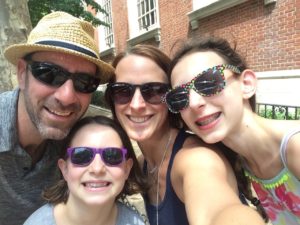
This walking town has also been and continues to be an integral part of Lucy and Sadie’s childhoods. Being able to walk home from school by themselves or in to town after school on a Friday with friends is not only fun but it’s also a boost to their confidence and self-esteem; small gifts all because of some well-maintained sidewalks and a lovely community.

“If I could get paid to be the Pleasantville Welcome Wagon, I would!” is what I’m often telling people I meet who are new to our little town. I’m so excited for them, for the greatness that they don’t really know they’ve found.
Filed Under: Inside Thoughts Tagged With: childhoods, Community Enthusiasm, new construction, Pleasantville, Sidewalks, small town charm, Walking, Welcome Wagon

Spotlight on Lila and DeWitt Wallace: Chappaqua’s 20th Century Powerhouse Couple of Modern Media

December 2, 2018 by Dana Y. Wu

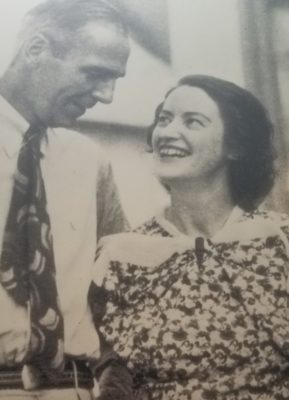
2019 marks the 80th anniversary of the Reader’s Digest headquarters in Chappaqua. Lila Bell Acheson Wallace and her husband, Dewitt Wallace were co-founders, co-editors and true partners in their powerhouse media business enterprises for generations, which included the enormously successful magazine, condensed books, direct mail-order books, trade/retail books, children’s books, music and international editions.
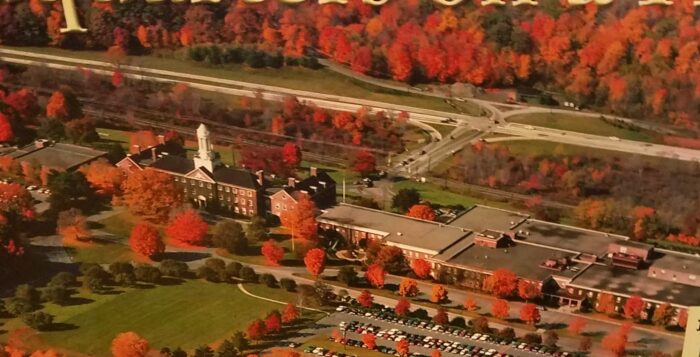
They started Reader’s Digest in 1922 with borrowed money and no subscriptions. Within a year of the Digest’s launch from their apartment in Greenwich Village, the Wallaces moved the company office to a garage in Pleasantville but quickly spread to 14 different overflowing offices throughout the village as circulation surpassed one million by 1935. In the late 1930s, they acquired 80 rolling acres of woodlands in Chappaqua to establish the headquarters’ campus but retained “Pleasantville” for its postal address as they liked the name of the town. Visible for miles around when it opened in 1939, the original three-story red-brick structure, had a white cupola featuring a carillon and four flying Pegasus sculptures, symbolizing writers’ inspiration.

Lila Wallace oversaw every aspect of the interior and exterior construction of the headquarters, which was modeled after buildings in Colonial Williamsburg, with the intention of creating a beautiful campus for their growing workforce and rapidly expanding publishing business. She felt that a positive and stimulating environment was important for employees. With her patrician style and love of culture and arts, Lila chose to display her valuable collection of Impressionist art in the headquarters’ hallways, offices, conference rooms and cafeteria.

“Lila Wallace was a huge supporter of the natural world. The property had its own apple orchard, and employees could take home as many apples as they wanted. We were also able to rent, for $10 a year, a fenced-in garden plot up at the top of the property, with free water. Many of us spent our lunch hours up there tending our gardens.” – Mara van Fleet, Former Readers Digest employee

“Rather than just surrounding themselves with all this great art in their Bedford home, High Winds, they shared it with employees by lining the halls and principal rooms on the first floor of the office building accessible to all every day,” remembers Ellis Cousens, a Bedford resident who was a Finance Director at the headquarters in the 1990s.

Former Reader’s Digest senior editor and Chappaqua resident, Suzanne Chazin, recalls, “Lila’s office had French glass doors and a Modigliani right outside. It felt amazing to work in the office that had been hers. And Dewitt’s office was the editor in chief’s office when I was there so I was in it all the time for editorial meetings. I remember the Chagall on the wall.” Chazin continues, “For the people who were there, it was daily life. Now, it seems sort of amazing but we were around this decor every day, with all this art on the walls that you could just walk up to.”

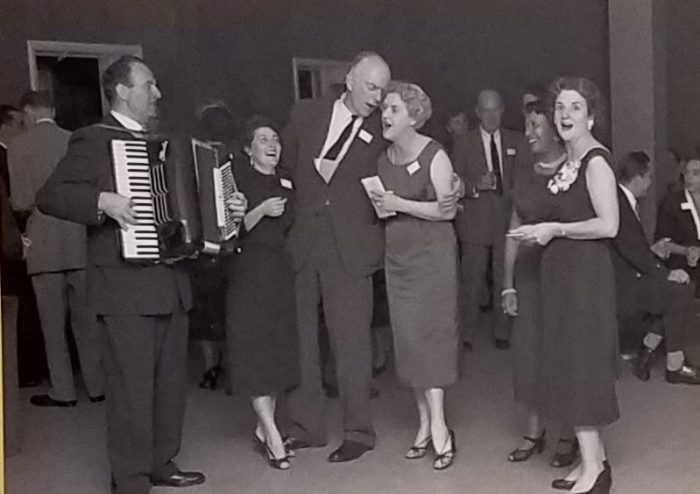
The photos were displayed on panels at the New Castle Historical Society.

Creating charming “outside rooms” with clipped hedges, neat lawns and flower beds was as important to Lila as the antiques and art collection within the buildings and as the back-cover artwork that she selected for each issue. Chappaqua author and illustrator Mara van Fleet, who joined the Reader’s Digest art department in 1999, remembers. ” Cousens adds, “During my time there, many employees maintained vegetable gardens, designated by Lila, behind the auditorium towards Cowdin Lane. She instituted early Friday closure during spring and summer with the explicit intent to give employees several hours of paid time off to tend their gardens, either at the Digest or at home.

While Reader’s Digest publications may be looked upon as a conservative repository of American values, the company had progressive employee policies, including five day work weeks and vacation days, liberal pension plans, life-insurance policies, profit-sharing plans and even a program to encourage employees to volunteer in community organizations. Although the Wallaces did not have children, they ran their internationally successful media company with a family feel that included free trips to Williamsburg, VA (which the Wallaces helped to restore) and free turkeys at Thanksgiving.

Long after they retired in 1973, employees still felt the couple’s nurturing touch. Jennifer Bancroft Payne, a Chappaqua resident, remembers how her father, Norman Bancroft, said that “he always felt like family rather than an employee” at Reader’s Digest. As van Fleet attests, “It was really one of the last old-fashioned companies where you felt you like you like working with your large extended family. Everyone walked down the halls with smiles on their faces and genuine warmth.”

Today, along Reader’s Digest Road, Chappaqua Crossing’s transformation of the former headquarters’ grounds has been stark. However, the new development’s “incomparable array of amenities designed to create a work environment that is both enjoyable and efficient” fittingly continues the Wallace’s original idea of providing many perks for employees on the campus. “Employees of the publication were treated to a large dining hall, gym facilities, a laundry room, a garage onsite for repairs, and even a small medical office where they had MKMG dermatologists come in for free skin screenings.” says van Fleet.  “There was even a subsidized company store with different vendors who came every day.”

In our age of 24/7 news and media, podcasts, Netflix and Youtube, it may be hard to imagine the expansive influence that DeWitt Wallace’s original idea of a magazine with diverse content aimed “to interest and at the same time to widen one’s outlook, to increase one’s appreciation of things and people in the world” had on our global, popular culture. Golda Meir praised Reader’s Digest as “A publication which helps its huge public understand the complex issues of our time.” Pushing for legislation and social reform, Reader’s Digest had a way of presenting complex medical issues in an understandable form and its top articles were on drinking and driving, tobacco/smoking, sex education, drugs and on taboo subjects such as sexually transmitted diseases (1930s), birth control (1960s), pornography (1970s) and AIDS (1980s).

With a worldwide readership with over a 100 million subscribers in 163 countries, 48 editions and 19 languages at its height, the Wallaces sent their optimism around the world through Reader’s Digest’s humorous articles, innovative features and inspiring stories. Chazin recalls how Reader’s Digest was content-driven when she wanted to write about Dr. Barry Marshall who had “discovered a potential cure for ulcers back when ulcers were considered incurable. He was a very controversial figure but Reader’s Digest ran the the piece. When Dr. Marshall won the Nobel Prize for Medicine in 2005, he thanked Reader’s Digest as being one of the very first publications to spread his ideas far and wide.”

The philanthropic programs that Wallaces started have brought benefits to our community, the nation and the world. Much of their fortune went to establishing four private foundations, which then merged into the DeWitt Wallace-Reader’s Digest Fund and the Lila Wallace-Reader’s Digest Fund. Early in the 2000s, the funds sold the last of their Reader’s Digest stock and merged into a single national philanthropy with a name reflecting its roots: The Wallace Foundation. With assets of about $1.5 billion in 2015, The Wallace Foundation still stays true to Lila and DeWitt Wallace’s passions for education, youth development and the arts.

Filed Under: Cover Stories Tagged With: DeWitt, Direct Mail, Lila, Lila Bell Wallace, magazine, Mail-order Books, New Castle Historical Society, Pleasantville, Publisher, publishing, Reader's Digest, Readers Digetst History, Wallace

What’s New This Season at Local Farmers Markets

June 1, 2018 by Amy Kelley

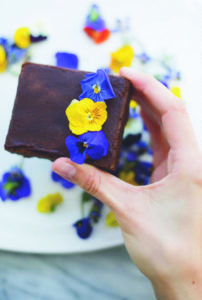
A cocoa/cauliflower brownie from the SweetHearth Bake Shop, a new gluten-free vendor at the Chappaqua Farmers Market

Now that the weather is finally more like a velvet glove than an iron fist, many residents of the Castles and beyond truly look forward to enjoying nature’s benevolence at one of our area’s farmers markets.

At press time, local market directors spoke to us about a variety of new offerings planned to expand and improve upon what’s available this year.

Chappaqua Farmers Market, Saturdays 8:30 a.m. to 1 p.m., at the train station. Pascale Le Draoule, market director, said there will be even more of a focus on certified organic growers this year. “We actually had five produce vendors and one of our conventional produce vendors was not doing very well and decided to leave. We saw that as a very strong message,” La Draoule said. New vendors include Sun Sprout Farm, a certified organic grower from New York’s black dirt country and Caradonna Farms, an orchard with “a dizzying array of fruits.”

Shoppers can also look forward to Dacha Fermented Veggies and SweetHearth Bake Shop, “a new gluten-free baker who does very interesting things, using cauliflower and local fruits and vegetables. She’s very creative and everything she makes is beautiful.” The Carbon Chocolate Workshop will also be new to the market, offering organic chocolate, and Temima’s Bakery from Pound Ridge also. “There will be a lot more gluten-free at the market this year, a lot more fruit, more certified organic,” Rosseau said. “We always have cool activities for kids.” Also expect cooking demos on-site.

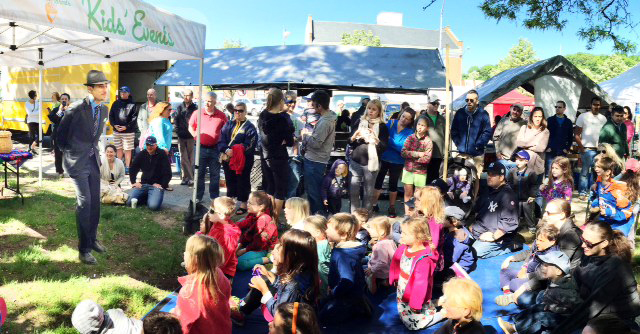
Children watch an entertainer perform at the Pleasantville Farmers Market
PHOTO BY CHAD DAVID KRAUS PHOTOGRAPHY

Ossining Farmers Market, Saturdays 8:30 a.m. to 1 p.m., the parking lot at Spring and Main. Community members will have more prepared food options this year at Ossining’s market, Dacotah Rosseau, marketing and communications manager, said, and more space to enjoy them too in an expanded, umbrella-shaded seating area. “People can buy a meal to take home or eat right here,” Rosseau said.

Sunset View Farm, a nose-to-tail operation, will offer grilled meats and rotisserie chickens.  “We’ve got a really neat bakery out of New York City,” Rosseau added. Called Kouklet, the microbakery will offer sweet and savory Brazilian pastries. There will also be a new olive oil company, BulI, that sells estate-grown unfiltered extra virgin olive oil from Italy. The market also usually features music and occasionally hosts kids’ activities.

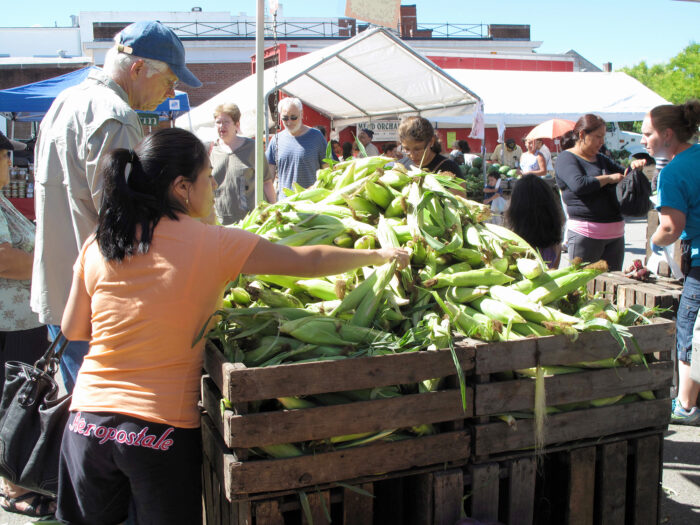
Produce sold at Muscoot Farms Sunday market

Pleasantville Farmers Market, Saturdays 8:30 a.m. to 1 p.m. at Memorial Plaza next to the train station (closed for Pleasantville Day, Saturday, May 19). New this year in early June is Morgiewicz Produce, a fourth-generation family farm from Goshen that will offer Asian greens, calaloo, kohlrabi, lettuces and more. There are more than 65 events planned, from music to magic to talks and a book signing. Stuart Vance, vice-chair of Foodchester, which runs the market, said: “Shoppers appreciate the market’s entertaining, positive vibe.”

If Saturday slips away without an uplifting morning trip to the market, the Muscoot Farmers Market at 51 Route 100 in Katonah, located on the Albert B. Delbello Muscoot Farm, is open on Sundays from 9:30 a.m. to 2:30 p.m. starting May 14. Any kids in tow will love the chance to see the historic farm’s many animals, and currently 30 vendors are showcased on the market’s website.

Shoppers at the Ossining Famers Market

Filed Under: Armonk Cover Stories Tagged With: Chappaqua, Farmers Market, Farmers Markets, Fresh Produce, Local, Ossining, OUTDOOR, Pleasantville, Pleasanville, Produce, small

Seeds of Giving and Sharing Grow too at the Pleasantville Community Garden

June 17, 2017 by Inside Press

By Molly Alexander

Community is defined as “a feeling of fellowship with others, as a result of sharing common attitudes, interests and goals.” While it’s not hard to find in many places, it can be easier to grow. David Juros and his son, Devon Juros, were eager to change lives through such a simple concept: a community garden.

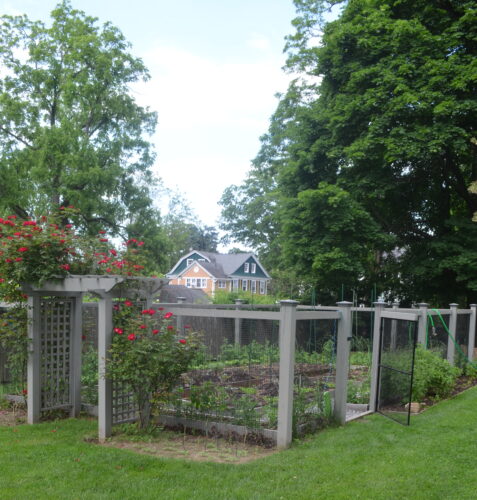
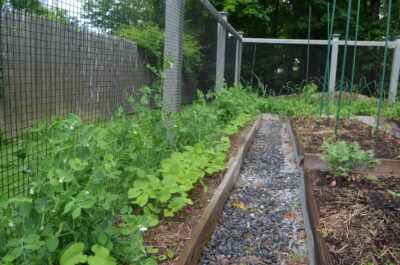
Pleasantville Community Garden. Photos by Molly Alexander

Most people don’t know that at least one fifth of Westchester County needed food assistance about three or four years ago. Thanks to Devon and David, this number has most likely gone down as the food availability goes up. When Devon, age 11 at the time, heard this statistic in school, he felt the need to take action. Devon and his family had always volunteered together, helped with food preparation for Midnight Run and worked in soup kitchens but it just wasn’t enough. He came up with the idea to make a community garden so that everyone would have food because the garden’s harvests would go to local food pantries.

 It took about three years to learn exactly what was needed to garden, let alone funding tasks. Devon and his father had very little experience gardening besides Devon’s grandfather having a veggie garden and other family history of farming. Although Devon did have some knowledge under his belt, there was plenty of learning to do for a larger garden.

David and Devon also had to raise money and apply for grants, as well as create an organization and gain support from the community all from nothing. Finally, in June of 2014, 100 supporters came together and built the garden and planted the first seeds of the future.

In the community garden, they mostly grow simple foods because people who can’t usually afford such extravagant vegetables don’t really know how to cook with them in the first place. For example, kale is an example because it is both hard to work with, and those who don’t have enough to eat won’t bother their time with it. Good examples include green peas, sugar snap peas, tomatoes, squashes, peppers, and lettuces. They plant peas in early March, which grow until November depending upon the weather. Spinach and carrots can grow in the cold weather.

However, David and Devon don’t do this planting solo. While they usually maintain the garden, they host big events for the community where people can bring their kids and come help out. The community also has the opportunity to “own” the garden for week, meaning they manage it from Sunday to Friday, checking the water levels, weeding and/or harvesting the garden if necessary. David said that this is a good opportunity for families with children, seniors who want gardens but may not have the time or the room, and plenty of teenagers have signed up on their own. “It really teaches the community about growing,” David added.

 David has described his work with Devon as an incredible learning process, and is grateful for all the support they’ve received and for the 200 people working in a year who gather food every Saturday and attend food donation events. Together, they have grown over 34,000 pounds of organically grown food, and there are still more people to get involved. The American Community Gardening Association highlights some of the most important purposes of a community garden to be community development, stimulating social interaction, beautifying neighborhoods, producing healthy food, conserving resources and creating opportunities for recreation, exercise and education. “It does so many important things,” David agreed. “It creates a sense of community, adds green to our environment which is very important and it helps to get people more involved in the growing system.” His advice to anyone interested in having a community garden or even their own garden is to go through with it.

David’s last piece of advice to other communities considering a garden: “Devon and I started with no knowledge and I think we’re pretty successful in the way we’ve done it. It only took a few conversations. It’s important for communities to plant fresh food for those who can’t afford it.”

Molly Alexander, a junior in the LIFE School at Horace Greeley High School, is an intern for Inside Chappaqua and Inside Armonk Magazines.

Filed Under: Westchester Tagged With: Community gardens, Feeding the Hungry', Midnight Run, Pleasantville, Pleasantville Community Garden, Westchester community garden

“Maybe Never Fell” Delves into Relationship Struggles

November 15, 2016 by Inside Press

A Provocative New Play by Axial Theater Director Howard Meyer

By Matt Smith

Photos by Lynda Shenkman Curtis

“Goethe. There are passages in his books where he refers to ‘The Jew.’ An entire race of people summed up in two words. Can you imagine that today? The Black. The Muslim.”

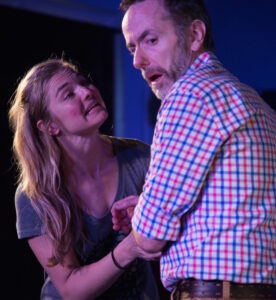
I’m sure when playwright Howard Meyer initially wrote Maybe Never Fell, the brilliant new play now showing at the Axial Theatre in Pleasantville through Sunday, November 20th, he never intended it to premiere during such a tumultuous election season, let alone four days before the explosive reveal itself. Furthermore, if he’s like anyone in the rest of the world, it’s likely Meyer probably didn’t expect the outcome to be what it was. But given the result–and what’s transpired over the past week and a half (during which, mind you, this show has continued to play through)–this line, spoken by main character, the German-born Mattie, to American Jew Max, and the subject matter as a whole, are frighteningly more relevant today perhaps than ever before. maybe1

The storyline follows the 26-year-old German-born Mattie Schiller (the brilliant Sara Hogrefe), who’s been impregnated by American Jew Max Weber (a charming David Lanson), himself a lovelorn bachelor torn between his attraction to Mattie and ex-wife Rebecca, and plagued by the past actions of his ancestors, which makes it all the harder to align with his true cultural identity.

Deep stuff, indeed–and as director Jenn Haltman writes in the Director’s Note outlined on the first page of the program, “Digging into the ugliness that still lies beneath the surface is a hard thing to face up to.” That’s certainly true, and Meyer is completely unapologetic–indeed the subject matter is grim, straightforward, right in front of your face from the get-go–and there’s no escaping it, either, as it’s integral to the climax of the story.

What saves the piece, however, from being “just another rote history textbook lesson” (an expert move on Meyers’ part) is the interweaving of Mattie’s personal struggle (and on some level, Max’s, as well) alongside the historically true elements and events: she had had an abortion when she got pregnant at 15, by childhood best friend Gunther Holt (the hysterical Dominic Russo, who cleverly provides relevant comic relief, that comforts rather than distracts from the main action), and now struggles to come to terms with her new pregnancy by a man whom she fears will leave him eventually due to their religious differences and his newly proclaimed love for his ex-wife.

It’s a genius way of storytelling: it doesn’t hit us over the head with the historical elements, but still reminds us that it’s relevant, ever-present and lurking in the background ’til it’s used with passion and power in the final climatic scene. And at the same time the true revelation of Mattie’s and Max’s family history is revealed, Mattie simultaneously peaks within the story of her own struggle.

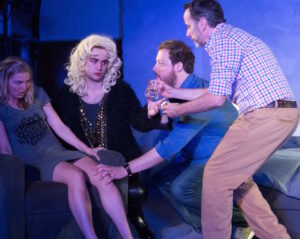
maybe2A tough task to pull off, no doubt, but, coupled with Meyer’s exquisite script, this cast does it effortlessly, with their top-notch performances blending perfectly with the others in each individual scene. As mentioned, Hogrefe’s Mattie is captivating from the moment the lights go up, channeling every emotion imaginable as she’s hit with multiple revelations throughout the course of the evening; Lanson offers a charming Max, who compels you to empathize and understand his struggle, especially in the show’s final moments; Russo–whose performance takes quite the unexpected turn in its own right–simply couldn’t be more delightful as Mattie’s bestie, Gunther–and Spencer Aste’s Manfred is just so darn powerful–his affective delivery conveys his genuine care for his daughter and his family’s legacy through his actions. Major props, too, to set designer Tim McMath, who does a lot with just a single set in a small space, and sound designer John McKenna, who cleverly infuses the show with an authentic German feel during the occasional scene breaks.

And then, of course–to return to the subject of the writing, the crux around which this masterpiece revolves–there’s the meaning of the title. Now, obviously, one could take the literal meaning–Max, the “maybe” in question, never really “fell” for Mattie or Rebecca, and spends the majority of the play waffling between staying with either one amidst the multiple discoveries that are revealed.

But, in my opinion, it takes two to make or break a relationship… and with her unwillingness to commit to either Max or Gunther, Mattie’s just as much of a “maybe” as is her other half. With her past history of abortion and attempted suicide, it’s easy to understand why she takes multiple trips to that window ledge throughout the course of the play, on the verge of jumping before she’s talked out of it.

But again, while she certainly has enough reason to feel like falling–and true, her life is not necessarily stable and hangs in the balance, especially at play’s end–she doesn’t, in fact, fall at all (as the title suggests). She’s damaged, for sure… but in not falling, she shows us she’s not fully destroyed. And with enough inner strength to know the fight is worth fighting. For her baby. For her friendship/relationship/whatever she’s got going on with Gunther. And for herself.

No doubt it’ll be hard–she does spend the play’s final moments alone onstage and in tears–but she’s giving the audience a sense of hope that, despite major hardships, everything’s going to be okay. And believe me, it’s a message we could all use right about now. I mean, if Mattie can do it, why can’t we?

Maybe Never Fell, written by Howard Meyer, plays at Pleasantville’s Axial Theatre (8 Sunnyside Avenue) through Sunday, November 20th. For tickets and more information, please visit axialtheatre.org.

 Matt Smith is a writer and regular contributor to The Inside Press. For further information or inquiry, please visit www.mattsmiththeatre.com


Filed Under: Gotta Have Arts Tagged With: Axial Theater, Howard Meyer, Maybe Never Fell, Pleasantville

  • « Go to Previous Page
  • Page 1
  • Interim pages omitted …
  • Page 7
  • Page 8
  • Page 9
  • Page 10
  • Go to Next Page »

Primary Sidebar

Please Visit

White Plains Hospital
William Raveis – Armonk
William Raveis – Chappaqua
Northwell Hospital
Houlihan Lawrence – Chappaqua
Houlihan Lawrence – Armonk
Houlihan Lawrence – Briarcliff
NYOMIS – Dr. Andrew Horowitz
Westchester Table Tennis Center
Spavia
Compass: Miller Goldenberg Harris Team
Lipari & Mangiameli Dentistry
Raveis: Lisa Koh and Allison Coviello
Bristal Assisted Living
Maid Brigade
Kevin Roberts Painting & Design
Zwilling J. A. Henckels
Meagher & Meagher Attorneys at Law
Compass: Aurora Banaszek
Dr. Briones Medical Weight Loss Center
OuterBoundaries travel
CPW Vein & Aesthetic Center
Roamfurther Athletics
Decicco and Sons
Carolyn Simpson (Doublevision Photographers)
King Street Creatives
Joseph Richard Florals
Pinsky Studio

Follow our Social Media

The Inside Press

Our Latest Issues

For a full reading of our current edition, or to obtain a copy or subscription, please contact us.

Inside Pleasantville and Briarcliff Manor Inside Chappaqua and Millwood Inside Armonk

Join Our Mailing List


Search Inside Press

Links

  • Advertise
  • Contact Us
  • Digital Subscription
  • Print Subscription

Publisher’s Note Regarding Our Valued Sponsors

Inside Press is not responsible for and does not necessarily endorse or not endorse any advertisers, products or resources referenced in either sponsor-driven stories or in advertisements appearing in this publication. The Inside Press shall not be liable to any party as a result of any information, services or resources made available through this publication.The Inside Press is published in good faith and cannot be held responsible for any inaccuracies in advertising or sponsor driven stories that appear in this publication. The views of advertisers and contributors are not necessarily those of the publisher’s.

Opinions and information presented in all Inside Press articles, such as in the arena of health and medicine, strictly reflect the experiences, expertise and/or views of those interviewed, and are not necessarily recommended or endorsed by the Inside Press. Please consult your own doctor for diagnosis and/or treatment.

Footer

Support The Inside Press

Advertising

Print Subscription

Digital Subscription

Categories

Archives

Subscribe

Did you know you can subscribe anytime to our print editions?

Voluntary subscriptions are most welcome, if you've moved outside the area, or a subscription is a great present idea for an elderly parent, for a neighbor who is moving or for your graduating high school student or any college student who may enjoy keeping up with hometown stories.

Subscribe Today

Copyright © 2026 The Inside Press, Inc. · Log in