• Skip to primary navigation
  • Skip to main content
  • Skip to primary sidebar
  • Skip to footer

The Inside Press

Magazines serving the communities of Northern Westchester

  • Home
  • Cover Stories
  • Features
    • Portraits and Profiles
  • Advertorials
    • Lifestyles with our Sponsors
    • Sponsor News!
  • Wellness
  • Happenings
  • Advertise
    • Advertise in One or All of our Magazines–And/Or Subscribe
    • Advertising Payment Form
  • Contact Us
  • Search

Cover Stories

Tipper Gore & Breaking the Silence About Mental Illness

May 31, 2019 by Grace Bennett

Tipper Gore and Steve Lieber, Chairman of the BBRF Board Photo by Chad David Kraus

“Back in the day, there was bipartisan support for meeting mental health challenges,” Tipper Gore* said in a conversation with Jeffrey Borenstein, M.D, President and CEO  of Brain & Behavior Research Foundation, at the BBRF May New York City luncheon event, Breaking the Silence About Mental Illness. She told the attendees the common ground ‘worked,’ in that it eventually helped lead to the passage of the Wellstone bill which brought mental health parity to the workplace. “Sitting members on both side of the highest legislature of the land acknowledged there were mental health issues in families,” said Gore.

Today, Gore directs attention on mental health issues affecting middle school and high school students via her work with Tennessee Voices for Children (“there are 56,000 underserved children in Tennessee alone,” she said), and the Tyler Clementi Foundation, which focuses on anti-bullying and suicide prevention. She spoke of an alarming rise in the suicide rate among these younger people and a very concerning spike seen in girls. She expressed concern about a shortage of care: “We need more boots on the ground to have a greater impact.”

Gore also said that getting properly diagnosed and receiving the appropriate treatment when she herself suffered from depression provided “real relief,” pointing to the critical nature of BBRF’s efforts.

Dr. Borenstein said BBRF is the leading foundation for grants to scientists to effectively treat brain behavior disorders; since 1987, $394 million has been awarded to more than 4,700 researchers around the world, leading to $4 billion in additional funding.

BBRF funds “out of the box ideas for innovative research” which has led to important new treatments including the rapid acting antidepressant esketamine to treat refractory (treatment resistant) depression, and brexanolone for post-partum depression. “Every dollar donated goes to scientific research and 100% of the research is invested into grants,” he stated.

Luncheon Committee with Tipper Gore including (left of Gore) Dr. Jeffrey Borenstein, President and CEO, BBRF, and (to her right) Dr. Herb Pardes, President BBRF Scientific Council   Photos by Chad David Kraus

Gore’s participation in the day’s event was deeply appreciated by everyone at BBRF. “It was an honor and a privilege to have someone of her stature and with her passion help us,” said Chappaqua’s Lauren Duran, the BBRF Vice President for Communications Marketing & Public Relations.

*As Second Lady, Gore served as Mental Health Policy Advisor to the President, Her goals were to diminish the stigma surrounding mental illness and to bring awareness to the need for affordable mental health care. In 1999, Gore hosted the first White House Conference on Mental Health. That same year, she launched the National Mental Health Awareness Campaign (NMHAC) to encourage Americans to seek treatment for mental illness. Gore has frequently spoken about her own experience with depression and treatment following the near-fatal injury of her son Albert.

Source: Wikipedia
Filed Under: Cover Stories Tagged With: anti-depressants, BBRF, Brain & Behavior Research Foundation, Breaking the Silence, depression, Gore, innovative, Mental health, Mental Illness, research, Tennessee Voices for Children, Tipper Gore, Tyler Clementi Foundation

Sparkle for a Cause Events at Crabtree’s Kittle House Continue to Shed a Light and Raise Funds for Area Non-Profits

May 31, 2019 by Miriam Longobardi

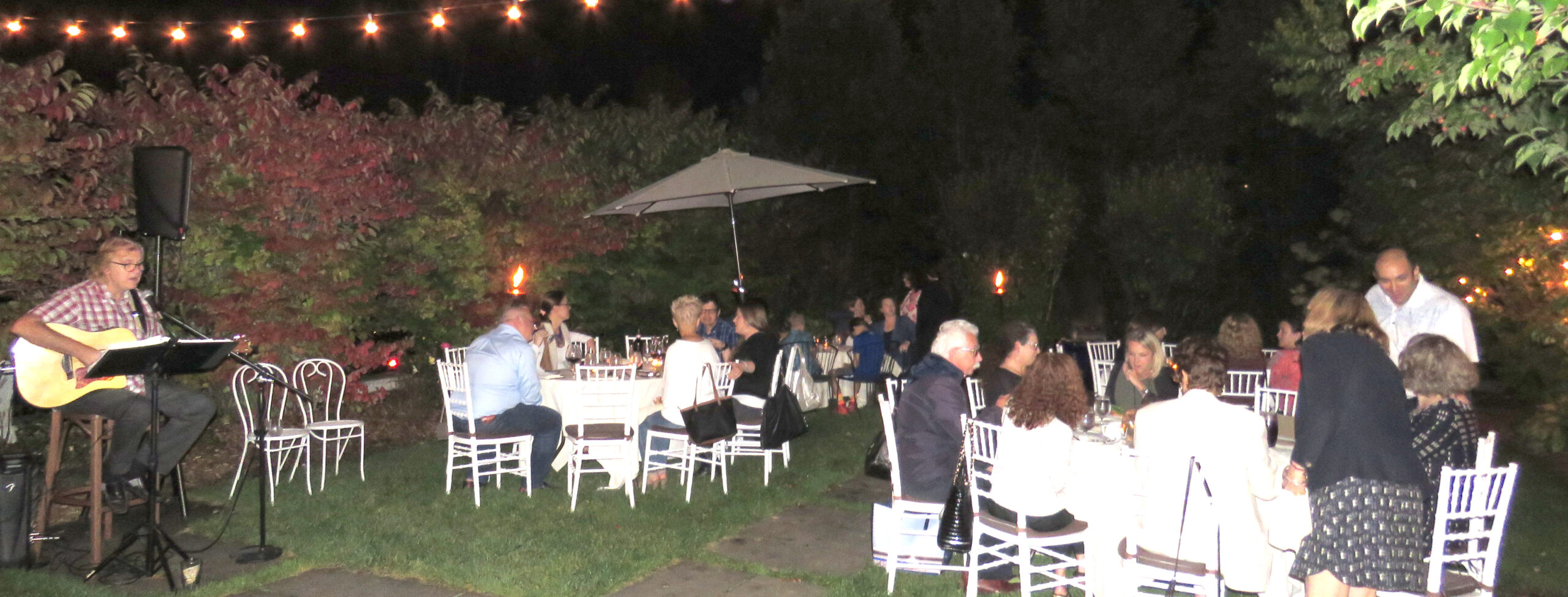
Photo by Grace Bennett


Envision the setting: It is a beautiful spring or summer evening, you are surrounded by lush plants and colorful flowers in full bloom, servers glide by with trays of tasty tapas and sparkly drinks held aloft and deliver them to your elegantly set table while acoustic guitar music plays in the background, mingling with the sound of animated conversations. No, you are not on a tropical island; you are at Crabtree’s Kittle House for Sparkle for a Cause on a Tuesday, supporting a worthy charity while enjoying a night out.

Sparkle for a Cause is an organization sponsored by the Amy Marie Crabtree Foundation benefitting a wide variety of local, not-for-profit causes, such as brain and other cancer research, women and children’s issues, homeless shelters, helpless animals, and domestic violence, to name a few. The events take place in the picturesque Amy’s Garden, which, along with the foundation, are named for Amy Marie Crabtree, late wife of John Crabtree, owner of Crabtree’s Kittle House and president of Team Amy. She passed away in 2009 after a battle with brain cancer and the causes the Foundation supports were near and dear to her heart.

“She had always talked about fixing up the garden,” John Crabtree explains. Once Crabtree, along with the help of his sister, began the endeavor, word quickly spread throughout the community and offers of support came pouring in. “People donated time, fountains, a fire pit, and a group of neighbors had a plaque made,” he reports. He decided to incorporate charitable causes that were important to Amy.

Before long, Tuesdays became dedicated to charity. Restaurant patrons have the choice of eating outside in the garden (weather permitting), in the Tap Room or main dining room. If there is inclement weather the event is held indoors–it is never canceled. If diners identify themselves as supporting the Sparkle for a Cause event taking place, 30 percent of the proceeds (prior to tax and gratuity) from all participants are donated to the featured charity of the evening. Specialty wine-based as well as non-alcoholic drinks and tapas-styled appetizers are created for these events, but guests may order from the Tap Room or main dining room menus as well.

The SPCA, Chappaqua Children’s Book Festival, League of Women Voters and the Make a Wish Foundation are but a few of the local charities that have participated. Each August, there is a Backyard Barbeque at the Kittle House benefitting the foundation and charities representing their four core causes. Those charities are honored with the recognition of their diligent efforts and compassion, and each also receives a portion of the evening’s donations.

While Sparkle for a Cause was initially more of a ladies-night-out type of evening, it has evolved and now anyone from the community attends. It is perfect for date nights, group outings, friend get-togethers, or just a fun dinner out.

“I love the Kittle House, and supporting local nonprofits is important to me, so I have been going to Sparkle events since they started eight years ago. You never know who you will meet there so it’s a wonderful opportunity to bring the community together in support of the many local charities. A nice thing about it too is that you can feel comfortable coming alone and join a table because there is a great sense of community,” said Chappaqua resident Ronni Diamondstein.

Due to its growing popularity, reservations are highly recommended, particularly if you want to dine in Amy’s Garden where the entertainment is. If you are affiliated with a local charity interested in having your fundraising event there, there are some remaining dates available. Call the Kittle House (914-666-8044) or follow the link below for more information. Sparke events take place from June through the end of October. For more information, visit kittlehouse.com

Upcoming Sparkle for a Cause events:

June 4 NAMI Westchester (National Alliance on Mental Illness)
June 11 WIHD (Westchester Institute for Human Development)
June 25 Girl Scouts Heart of the Hudson
July 9 Chappaqua Children’s Book Festival
July 16 Mt.Kisco Childcare Center
July 23 Friends of Karen
July 30 914 Cares /Kids Kloset
August 6 League of Women Voters
August 20 A-Home
August 27 Adopt-A-Dog
September 24 Mt. Kisco Interfaith Food Pantry
October 22 Ronald McDonald House

Filed Under: Cover Stories Tagged With: fundraising, not for profits, Sparkle for a Cause

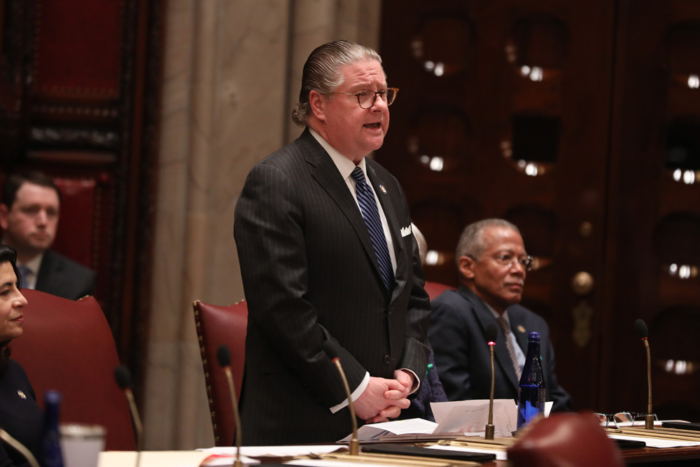
Catching Up with District 40’s State Senator Pete Harckham

May 31, 2019 by The Inside Press

Publisher’s Note: The Inside Press has offered forums to many of our political representatives over the years. For our June Father’s Day edition, we hoped to gain a sense of our new state Senator Pete Harckham*. We sent him a number of key questions to answer. And here are his responses! – Grace

1. What were your two or three (or more!) most important goals during your campaign and how are you working to meet them?

My most important goals were:

1) Codifying Roe v Wade into NY law by passing the Reproductive Health Act

2) Enacting common sense gun safety measures such as the Red Flag Bill

3) Passing the Child Victim’s Act

4) Making the Property Tax Cap Permanent

With the support of the Democratic conference, I was able to meet the first three within the first 30 days of my term. Permanent property tax cap relief was passed as part of the state budget on April 1st.

Although election reform was a longer-term goal, we accomplished much of it in February including merging two primary dates into one, saving taxpayers money and early voting, which was fully funded in the state budget.

2. What new goals/agendas have emerged since your campaign and why?

As Chair of the Senate Committee on Alcoholism & Substance Abuse, fighting opioid addiction and other forms of substance abuse are major goals. Like many states, New York is currently suffering from an epidemic of opioid abuse which is devastating individual lives, families and communities.

I fought for and won $100 million in substance abuse funding in the state budget, as well as an increase from 14 to 28 days, the minimum stay in an inpatient substance abuse facility before an insurance company review. We also eliminated multiple co-pays at outpatient substance abuse care visits. Now, patients will pay only a single co-pay every time they go for outpatient treatment, regardless of the number of doctors or providers they meet with.

Another major goal I have is saving as many jobs of current Indian Point workers during the decommissioning as possible.

3. What has surprised you the most since beginning your service as state Senator? Can you describe an event that moved you or an interaction with a constituent that enlightened you?

The most surprising thing thus far has been the frenetic pace in Albany. Everyone wants a piece of you at the same time and walking from my office to the Senate chamber can be like walking through a crowded market where everyone is calling out to get your attention. Fortunately we have a terrific team to share the load.

I’ve been deeply moved by the veterans I’ve met with across the district. One group of veterans I met has made it their mission to seek out homeless veterans, provide them with housing and connect them with services they need. It’s how they help each other rebuild their lives. Veterans’ personal stories and their determination to assist each other continue to inspire me. That is why we increased funding to expand the Joseph P. Dwyer Peer to Peer PTSD program.

I’ve also been moved by the courage of parents who have lost sons and daughters to the scourge of opioid abuse and who now serve as community prevention and treatment advocates. Their personal stories of loss are heartbreaking yet they have dedicated their lives to ending this tragic epidemic and helping others who are suffering. Their selflessness and determination is deeply moving.

4. What are the biggest challenges facing the district? How do you plan to meet them?

The biggest challenges are:

1) Indian Point closure, which will greatly impact the workers and the economic well-being of the surrounding communities. I have introduced legislation to require the decommissioning entity to hire existing workers first.

2) High property taxes. We need to reform the way we fund education in New York to take the burden off of property tax payers.

3) Metro-North capital upgrades and service improvements. We must insure that capital investments from congestion pricing are spent expeditiously and wisely.

5. Our June theme is ‘Play and Explore!’ Can you tell us a little about how you spend your downtime?

I do not really have much downtime in this job but when I do, I spend it with my partner Jin-Hee and my daughters Emma and Kate, as well as hiking with our dogs.

*State Sen. Pete Harckham represents some 308,000 constituents in New York State Senate District 40, which includes parts of Northern Westchester (Buchanan, Cortlandt, Croton-on-Hudson, Lewisboro, Mount Kisco, Mount Pleasant, New Castle, North Salem, Peekskill, Pleasantville, Pound Ridge, Sleepy Hollow, Somers, Yorktown), Putnam (Brewster, Carmel, Patterson, Southeast) and Dutchess (Beekman, Pawling).

Filed Under: Cover Stories Tagged With: Alcoholism & Substance Abuse, District 40, keynote, legislation, legislator, New York State Senate District 40, questions, senator, State Seantor Peter Harckham

The San Miguel Academy: Why Many Residents Rally Behind This Independent & Successful School for Boys in Newburgh

May 31, 2019 by Amy Kelley

Vanessa Williams and Frank Shiner
Photo by Simon Feldman

It’s an alliance that makes sense: residents of Chappaqua, a town known for the excellence of its school system, support a small independent school called San Miguel Academy, about an hour away in Newburgh, NY. The academy aims to help boys in Newburgh– a city with an average annual income of about $33,000 compared to upwards of $105,000 in Chappaqua– “break the cycle of poverty through education.”

“We’re so lucky to have the support system we do in the Chappaqua area,” said Melissa Paul, Senior Development Officer at the academy. “They play a major role in our existence and in our ability to continue to exist.”

She attributes the connection to Father Mark Connell, a Roman Catholic priest who worked for a time at the Church of St. John and St. Mary in Chappaqua. Connell taught for many years at John F. Kennedy High School in Somers (now known as Kennedy Catholic), but he was eventually transferred to Mount Saint Mary College in Newburgh. Still, he came down on Sundays to celebrate Mass in Chappaqua.

“That was my first exposure to Newburgh and I got to see the depth of the poverty,” Connell said. “I would tell stories about it from the pulpit, and people at Mass would ask, ‘What can we do to help?’” “He gave his community a call to action,” Paul said.

Creating the School

“We all know that education can snap the back of poverty,” Connell recalled telling the congregation in Chappaqua. “The response after Mass was immediate.” A dinner followed; the beginnings of a board resulted; a fundraising dinner on the heels of that raised $1 million.

Connell started a boys’ middle school after learning that research showed intervention in middle school is much more effective than in high school. (He had intended to start a co-ed school, but a group of nuns already had a vision for an all-girls school, Connell said.) Significant financial support from Chappaqua residents continues to this day. “We don’t receive any money from the archdiocese or the government,” Paul noted.

Additional PHOTOS BY GRACE BENNETT

ChappPAC Concert with Frank Shiner & Vanessa Williams: A Fundraising Hit

Last December, Chappaqua residents Frank Shiner and Vanessa Williams performed a fundraising concert for the school, and filled every seat in the Chappaqua Performing Arts Center, Shiner said. “It was so much fun; we had a blast,” Shiner said, adding that a tongue-in-cheek duet of “Baby, It’s Cold Outside” was a big hit. “We came together and rallied the troops and the community stepped up.”

San Miguel Academy opened in 2006 with a fifth-grade class, adding another every year until the school stabilized at providing an education to boys in grades five through eight. Boys attend the school at no cost.

Once A San Miguel Boy, Always a San Miguel Boy

Either way, the graduates of San Miguel do not leave the school community behind after graduation. “We say you’re a San Miguel boy forever,’” Paul said. “We have a 12-year commitment to our boys.” This means that well after graduation, graduates get help securing internships, looking for jobs, or help with family support.

“When we take them in fifth grade, we make a pledge that we will take them as far in their education as they want to go,” Connell said. After graduation, most of the youngsters go on to attend high school at private day schools or boarding schools. A small percentage attend the local public schools.

As for the application process, “it’s kind of word of mouth,” Paul said. “We do prefer families that meet the criteria to qualify for free lunch.” San Miguel students stay at school until 5 p.m. Monday through Thursday at the school’s Step-Up After School Enrichment Program, and they attend school in the summer as well. The Summer Scholars Program is a six-week program during July and August designed to prevent San Miguel students from suffering what Paul referred to as the “summer slide.”

It’s a faith-based school, not a Catholic school, Connell said, with a focus on values and character education. “We really try to get across that we’re a human services center that offers middle school, a summer program, family support services” and more, Paul said, adding that the school has paid doctor’s bills for the boys, helped with special needs therapy costs, arranged for transportation to high school and more. “There are a lot of things that we cover.”

Program Breeds Success

Last year, some of the first 5th graders to enter San Miguel graduated college. “All of our boys graduate high school and 86 percent go on to college, trade school, or the military,” Paul said. One of the young men now manages a minor league baseball team. Another is an accountant at a local firm. Others are finishing up college. “We’re so proud of our boys and what they have been able to accomplish,” Paul said.

Filed Under: Cover Stories Tagged With: Frank Shiner, Newburgh, San Miguel Academy, School for Boys, Vanessa Williams

The Devil in a Day

May 31, 2019 by Sabra Staudenmaier

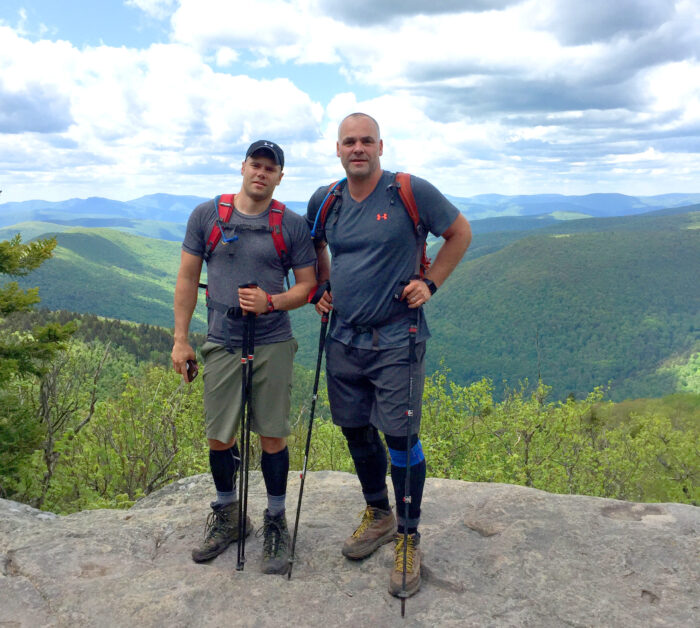
(L-R): Matt Chmielecki and Walter Staudenmaier

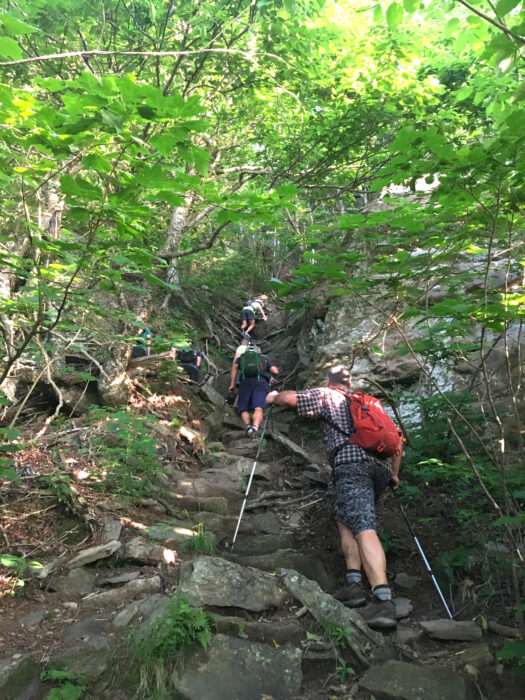
The Devil’s Path is considered one of the most difficult hikes in the country. Located in the Catskill Mountains about a two-hour drive north of Chappaqua; the trail is approximately 25 miles long with six peaks and 16,000 feet of elevation. For most brave adventurers who take on this challenge, it is tackled over the course of two to three days; but for the past four years an ambitious group of Dads from Chappaqua have partaken in what has become an annual tradition of completing the hike in one grueling 14-hour stretch.

When the weather starts to get warm, but before summer’s heat sets in, the men call in a personal day at work and forgo their usual train commute into the City. They pack their cars with supplies and convoy north to the Catskills.

Practice hikes take place in advance. Brian  Cook takes his training very seriously. To prepare for his inaugural hike he was often seen walking around town with a weighted backpack to simulate the supplies he would be carrying. Andy Shaiken, who has also completed the New York City marathon, considers the hike to be “more difficult and more rewarding” in comparison.

The men depart on a Thursday night. They leave one car full of supplies at the halfway point and another at the end. It is not an out and back trail, so they finish at a different point from where they start. They then check into the Kaatskill Mountain Club Hotel and attempt to go to bed early; but nerves prevent much sleep. At 4 a.m. they wake up and the long day begins.

Walter Staudenmaier, who will be hiking the Devil’s Path for the fourth year this Spring, packs seven bacon and banana sandwiches, fourteen GU energy gels and twelve liters of a 50/50 water and Gatorade mix as his personal fuel of choice.

They rendezvous in the parking lot and head to the trail for a 4:45 a.m. sharp departure. There is excited and nervous banter at the beginning. A brisk pace is set. It’s dark, so headlamps are needed for the first 45-minute gradual uphill climb. Putting one foot in front of the other, the monotony of the hike sets in and the first hill quickly disappears. A regimen is established; the hikers briefly stop every 45 minutes to take salt tablets and supplements to offset what their bodies are expending. Few additional stops are taken.

The first half of the hike consists of three intense peaks. “There is an incredibly steep descent to the halfway point of the trail that rattles your knees, your toes are banging into your boots at every step.” Recalls Staudenmaier.

At the halfway point, the men take a well-deserved 30-minute break. They get off their feet, massage their legs, change clothes, replenish supplies, use tiger balm to try to get muscles loose and prepare to set off again.

The second half begins with a torturous vertical climb and exhaustion quickly sets in. A third of the way into the second half the hikers feel extremely uncomfortable. The last four hours are “complete misery; every single step hurts.”

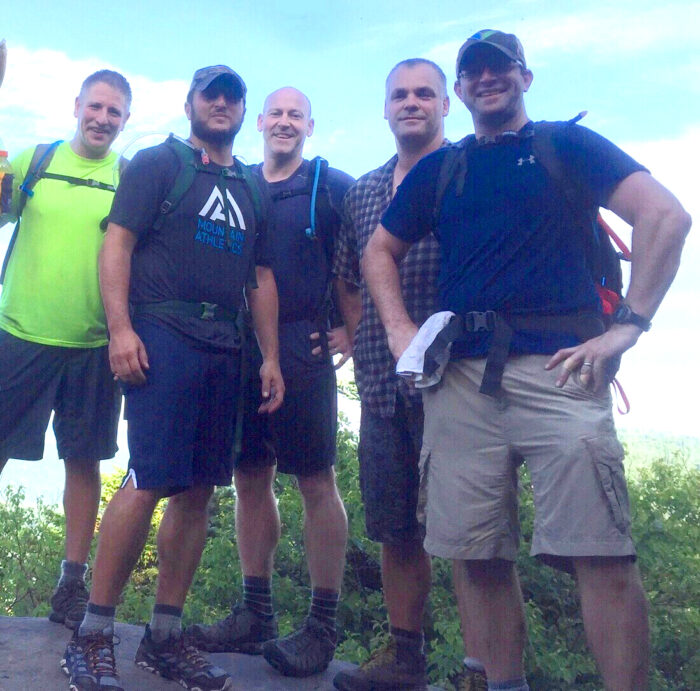
(L-R): Chappaqua Dads, Brian Cook, Andrew Skala, Andy Shaiken, Walter Staudenmaier, and Eric Rose

About halfway through the second half is the point of no return. Until then, the path is always no more than a couple of miles away from a put out; but towards the end that option is lost because it’s the same distance to finish as all other exit points. At about eleven hours in, with approximately three hours remaining, there is no way out except to finish.

“Hiking for 14+ hours straight is a whole lot easier when you are sharing the struggle with good friends.  It also helps to have a cooler full of beer at the end of the trail waiting for us.” Says Matt Chmielecki, a Cross Fit enthusiast who will be hiking the trail for the third year this Spring.

Overall, the first half of the hike is much more technical and challenging; there are a lot of rock ledges and obstacles. The second half is easier but exhaustion gets in the way of appreciating it. The fatigue gets so intense in the second half, the hikers don’t take many photos; only at the very end.

The journey shifts from struggle to relief once the hike is complete. A steak dinner at the hotel is the final reward, in addition to the satisfaction of having completed “the Devil” in a day.

PHOTOS courtesy of Sabra Staudenmaier


Filed Under: Cover Stories Tagged With: adventure, Catskill Mountains, Chappaqua Dads, Dads who hike, elevations, hiking, mountain, Nature, New York City Marathon, peaks, The Devil's Path, trails

  • « Go to Previous Page
  • Page 1
  • Interim pages omitted …
  • Page 81
  • Page 82
  • Page 83
  • Page 84
  • Page 85
  • Interim pages omitted …
  • Page 149
  • Go to Next Page »

Primary Sidebar

Please Visit

White Plains Hospital
William Raveis – Armonk
William Raveis – Chappaqua
Northwell Hospital
Houlihan Lawrence – Chappaqua
Houlihan Lawrence – Armonk
Houlihan Lawrence – Briarcliff
NYOMIS – Dr. Andrew Horowitz
Westchester Table Tennis Center
Spavia
Compass: Miller Goldenberg Harris Team
Lipari & Mangiameli Dentistry
Raveis: Lisa Koh and Allison Coviello
Bristal Assisted Living
Maid Brigade
Kevin Roberts Painting & Design
Zwilling J. A. Henckels
Meagher & Meagher Attorneys at Law
Compass: Aurora Banaszek
Dr. Briones Medical Weight Loss Center
Chocolate Chalet
Terra Tile & Marble
CPW Vein & Aesthetic Center
Armonk Tennis Club
Gleason Plumbing and Heating
Houlihan: Tara Siegel
Beascakes Bakery
Pinsky Studio

Follow our Social Media

The Inside Press

Our Latest Issues

For a full reading of our current edition, or to obtain a copy or subscription, please contact us.

Inside Pleasantville and Briarcliff Manor Inside Chappaqua and Millwood Inside Armonk

Join Our Mailing List


Search Inside Press

Links

  • Advertise
  • Contact Us
  • Digital Subscription
  • Print Subscription

Publisher’s Note Regarding Our Valued Sponsors

Inside Press is not responsible for and does not necessarily endorse or not endorse any advertisers, products or resources referenced in either sponsor-driven stories or in advertisements appearing in this publication. The Inside Press shall not be liable to any party as a result of any information, services or resources made available through this publication.The Inside Press is published in good faith and cannot be held responsible for any inaccuracies in advertising or sponsor driven stories that appear in this publication. The views of advertisers and contributors are not necessarily those of the publisher’s.

Opinions and information presented in all Inside Press articles, such as in the arena of health and medicine, strictly reflect the experiences, expertise and/or views of those interviewed, and are not necessarily recommended or endorsed by the Inside Press. Please consult your own doctor for diagnosis and/or treatment.

Footer

Support The Inside Press

Advertising

Print Subscription

Digital Subscription

Categories

Archives

Subscribe

Did you know you can subscribe anytime to our print editions?

Voluntary subscriptions are most welcome, if you've moved outside the area, or a subscription is a great present idea for an elderly parent, for a neighbor who is moving or for your graduating high school student or any college student who may enjoy keeping up with hometown stories.

Subscribe Today

Copyright © 2026 The Inside Press, Inc. · Log in