• Skip to primary navigation
  • Skip to main content
  • Skip to primary sidebar
  • Skip to footer

The Inside Press

Magazines serving the communities of Northern Westchester

  • Home
  • Cover Stories
  • Features
    • Portraits and Profiles
  • Advertorials
    • Lifestyles with our Sponsors
    • Sponsor News!
  • Wellness
  • Happenings
  • Advertise
    • Advertise in One or All of our Magazines–And/Or Subscribe
    • Advertising Payment Form
  • Contact Us
  • Search

College

How to Pay for College

September 1, 2015 by The Inside Press

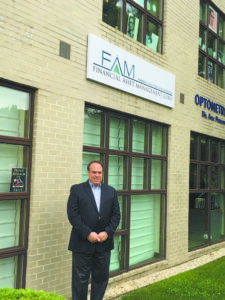
IMG_4590By Scott Kahan

Paying for college can be very complicated, especially if families haven’t saved enough. With many private colleges now costing close to $60,000 per year, parents can expect to spend over $250,000 for a four year degree. State schools can cost as much as $25,000 per year, or higher for out-of-state residents. How do families pay for all this? And what if parents have more than one child? Below, Scott M. Kahan, Certified Financial Planner professional and President of Chappaqua’s Financial Asset Management Corporation, offers suggestions for getting one’s financial planning under control and making the whole college process a little less stressful.

1. Consider your family’s overall financial situation. “College is one goal among many,” Kahan emphasizes to parents. “Retirement is [also] a major goal that should not be sacrificed. You can borrow for college, but you can’t borrow for retirement.” For that purpose, he suggests maximizing your savings into work retirement plans such as 401Ks.

2. For optimum savings, choose the 529 Plan. Available in all states, these plans provide tax-free growth on the money put in, as long as it is used for college. The money can also be used for any immediate family member’s college expenses, meaning, if needed, a parent can take money from one child’s account and use it for another. There is no limit to the number of plans one can set up.

Additionally, using the NYS plan (www.nysaves.org), parents can deduct their contribution on their NYS tax returns ($10,000 max for married couples; $5,000 max for single parents). Says Kahan, “Families can always fund more, but only that amount is deductible.” He also recommends parents use the direct savings plan, rather than the advisor plan, since there are no additional costs built in. Keep in mind, too, that when applying for financial aid, some schools (not all) will not count the 529 as a child’s asset in the calculations. Finally, Kahan suggests grandparents and other family members consider funding these accounts as well, in order to maximize savings.

3. If you have home equity available, consider borrowing from that. Kahan forewarns: “How you do this is important.” With interest rates still low, he suggests refinancing your mortgage rather than taking out a home equity line of credit (HELOC). Why? “The reason is simple,” Kahan states. “A HELOC has a variable rate. When rates start rising, as they will before you know it, this rate will increase, and the college loan will become very expensive. By refinancing a mortgage and taking cash out, you can lock in today’s lower rates for the term of your mortgage. The cost to obtain a new mortgage may be higher, but in the long run, could save you money.”

4. Avoid borrowing from a 401K plan; again, keep retirement money separate from this process. “There could be some advantages to doing this,” says Kahan, “but if you leave your job with an outstanding loan, that loan then becomes taxable income and possibly subject to an additional 10% penalty.”

5. Beware the private student loans trap, as these loans have “low interest rates to start, but those rates can climb.” Also, considering that these are private loans, they do not necessarily provide the same flexibility with deferment and forgiveness of debt as some government loans.

6. Consider the Free Application for Federal Student Aid (FAFSA) for your child. These forms should be completed in January of the year the child enters college. Even if a given family may not qualify for financial aid, this plan will allow a parent or child to borrow money using loans available through the school and government programs.

7. Look into Stafford loans and Parent Plus loan options. Stafford loans are student loans that can have lower interest rates, depending upon family finances. Parent Plus loans are parent loans, which allow parents to borrow up to the full cost of education each year.

8. Seek out a Certified Financial Planner professional. He or she can help you identify your goals and figure out how to best execute your plan. “By taking into account all your goals and family finances, they can put you on the right path to meeting those goals,” Kahan explains.

Additionally, Chappaqua residents/parents can benefit from the Horace Greeley Scholarship Fund, www.HGSF.org, which provides scholarships to students based on financial need.
Rest assured that all information provided is confidential.

Each year, with the help of a local college financial director, Mr. Kahan also presents a seminar on how to prepare and plan to pay for college at Horace Greeley High School in Chappaqua. He can be reached at 914 238-8900 or email: skahan@famcorporation.com. FAM is located at 26 S. Greeley Avenue.
Filed Under: Health and Wellness with our Sponsors Tagged With: ad, College, Financial Asset Managment, inside chappaqua, Inside Chappaqua (Sept 2015), Scott Kahan

Advice to a Rising College Freshman

May 31, 2015 by The Inside Press

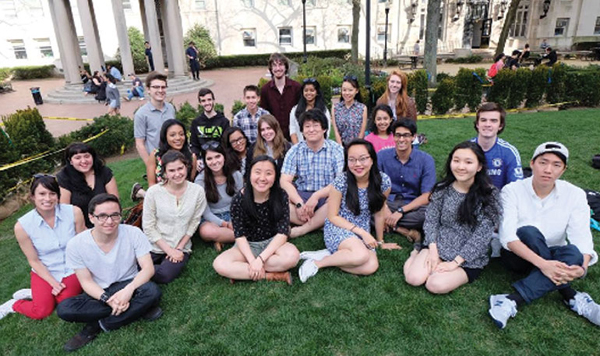
Chloe (seated center in gray top, with sunglasses on her head) with classmates/friends at Columbia University

by Chloe Salzman

Graduating from Horace Greeley a year ago, I knew little to nothing of what to expect of the beginning of my college experience. All I knew was that it would be very different from Chappaqua, and that was exactly what I had signed up for. More specifically, I had looked for a school that would be massively more diverse than Chappaqua, and I succeeded. Of my freshman class, 49% of us identify as a Minority race, whereas 75.5% of Chappaqua is White. In my last year of high school, 
I thought about the diversity of Chappaqua a lot, not only in race, but also in cultural and social experiences; 
I was trying to prepare myself for life outside of our bubble, but struggled to find any tangible experiences that would prepare me for my future college life.

As most of my peers growing up were white, I came into college really unsure of how race dynamics would play out, both on the larger scheme and in my own personal sphere. Diversity’s presence affects one’s social experience because it creates, for many, an unprecedented proximity of different cultures and races. To my pleasure, I immediately began making friends from all around the country, and the world, from all sorts of different cultures; however, as my class began to settle into this new and diverse community, I noticed that individual social niches were less and less diverse. I’ve since learned that this phenomenon is not unique to my experiences, but rather happens in most colleges. And it isn’t just noticeable to the students–it’s actually been documented and studied. There’s a widespread tendency for students to create more homogeneous social groups, and depend on classes or dormitories to enhance the diversity of their lives.

Minorities, especially blacks, are not private about explaining their perspectives and their reasoning for segregating themselves. There is an inherent sense of community in a homogeneous group. What’s more, they attest to the social hierarchy, even in diverse and liberal environments, that exists in American social dynamics that put blacks at the bottom of the totem pole. This dynamic creates even more of an incentive to join racially segregated groups.

I’ve come now to understand this dynamic better than I ever could have from living in Chappaqua. More importantly, I’ve tried to find any way I can to be a part of a solution: in order to reap the benefits of a diverse school, you need to seek out that diversity, to involve yourself in events and affairs with people of all different cultures, and to be as supportive and egalitarian as you can be.

So, I urge every single student leaving Greeley and entering the real world, the world with diversity and prejudice against anyone, even towards those with privilege, to enter college ready to learn about and accept any and every culture, because the window of opportunity may not remain open forever.

If you go into college thinking of ways to meet the people who resemble your childhood friends, how will you grow? The person you were in high school will always be there and you will always be comfortable going back into a niche like Chappaqua. It takes intention and effort and curiosity to go to college and think “How are my friends different from me? How can 
I learn from them?”

Maybe the diversity of a college campus will be present in your immediate social circle, maybe it won’t. Even if it isn’t, that doesn’t mean you have failed at integrating new cultures into your life. On campus there will constantly be debates, discussions, and plays written, directed or performed by students. Take advantage of them. Care and be interested in what matters to your student body–not just to your friends–and you will automatically get something out of what the cultures around you have to offer.

When there was a Black Lives Matter protest at our annual tree lighting ceremony, the student body was forced to care. When Rape Happens Here was projected onto the front of a prominent, iconic building of our campus, to combat sexual violence and rape culture, we were forced to care. And when students were yelling so loudly at a Fight for $15 protest for an increase in minimum wage that the teachers in class were hardly audible, we were forced to care. All of that was simply part of my experience being present on a politically active campus. But when you internalize your campus spirit and diversity, then you benefit as an individual, and you take the lessons you learn outside of the classroom with you beyond college.

Chloe Salzman is a Horace Greeley High School graduate, class of 2014.

Filed Under: Et Cetera Tagged With: College, culture, diversity, Inside Press, theinsidepress.com

College Planning 101

May 25, 2015 by The Inside Press

Bradley E. Silverman, a junior partner and financial advisor with Raymond James of Armonk

by Dan Levitz

When I received the assignment for this article it certainly seemed like a perfect fit. Suburban Dad with a high school senior seeks and finds expert advice regarding the daunting reality of paying for college. I’m pretty sure my Editor was confident I was the right guy for the story because, presumably, my family was already knee-deep in the college process and must have planned ahead for this wonderful rite of passage that comes with an inevitable, and sometimes tremendous, financial burden. I eagerly accepted the assignment, self-assured that I was the Man for the job. Notably, after doing my research, I realized that I was not quite as well-informed as I believed and wish I had known then what I know now. Story of my life!

In 11th grade, as my son began thinking seriously about where he might like to continue his education, my wife and I felt strongly that our priority should be helping him make an informed decision about college. Years ago things were certainly different; I didn’t visit a single school when I was applying and, in retrospect, I couldn’t have been less informed. It’s quite possible that I may have decided where to attend college based on a sweatshirt worn by a cute girl in my class. So, this last year was absolutely fruitful in that we visited over 10 varied schools in different parts of the country, and my boy was able to find the right situation for him. Now, small deposit made, the sobering reality of paying for the privilege of his higher education has abruptly arrived.

When I walked into the offices of Raymond James in Armonk to gather some expert advice on how parents should start financial planning for college, I journalistically took the position of pure ignorance on the subject which was not much of a stretch. I met with Bradley E. Silverman, a junior partner and financial advisor with the firm, and within minutes he informed me that he not only had already enacted a college savings plan for his three year old son but also had one in place for his daughter who is not expected to join the family until she’s born several months from now! Clearly I was in 
the right place and also talking to the 
right person.

I complimented Mr. Silverman on his vision in planning so early for his children’s future and he modestly pointed out that college planning is part of his job and that he would be remiss if he didn’t do so himself. I told him about my family and that, while my wife and I certainly saved money over the years, we did not use any specific method or instrument for college savings. Sensitively, Mr. Silverman didn’t comment on our lack of financial vision but did proceed to inform me of a variety of financial plans that parents can benefit from in planning for their children’s education.

Mr. Silverman described several methods of financial planning for college but the one he and his family are utilizing, and that he recommends, certainly sounds like a responsible and educated approach. The 529 Savings Plan is state-sponsored and offers tax-deferred savings as well as a certain amount of flexibility that can be beneficial to the family and student. A 529 Plan offers a number of investment portfolios allocated among stocks, bonds, mutual funds, CDs and money market instruments. Significantly, in addition to parents contributing to a 529, grandparents can do so as well and, at the same time, potentially affect their estate planning in an advantageous manner. An important aspect of the 529 is that qualified higher education expenses like tuition, books and supplies can be paid for via the plan while maintaining a tax advantage. And, of course, the big picture is that if a 529 Plan is enacted when a child is small the gains from the investment will hopefully be substantial and go a long way towards paying for a higher education with very favorable tax consequences.

As we chatted, I expressed genuine amazement at the cost of college in 2015, especially private colleges. We discussed the financial advantages of state universities like the fine SUNY system in New York, of which Mr. Silverman and I are both proud graduates. I asked him about the ideal value-wise scenario for college and Mr. Silverman replied, “Financially that would be an Associate’s Degree at a good Community College and then on to a great University.” I think this pragmatic approach might be a hard sell to an ambitious college senior, but Mr. Silverman will find this out for himself as his kids mature. In any case, I was impressed with his knowledge and ability to communicate the many advantages of thinking ahead and saving early in a child’s life.

After our conversation, I felt very positive about learning more about this type of financial planning because college is a tremendously important experience and it shouldn’t have to be a crippling financial burden. I’ve given some very broad strokes but the folks at Raymond James can answer any and all questions on the subject and certainly get young parents started on intelligently saving for their children’s higher education. Not a bad idea.

Dan Levitz, an art dealer and writer, has been a Chappaqua resident for the past 11 years and has a blog on 
The Huffington Post.

Filed Under: Armonk Cover Stories Tagged With: College, education, financial planning, Inside Press, savings, theinsidepress.com

Growing Up Greeley

March 7, 2014 by The Inside Press

By Tim Bloom

pastedGraphic_1I have lived in Chappaqua my entire life, except for eight summers in Maine and one in China. I loved growing up here, given the beauty of the town, the cohesiveness of the community and the myriad opportunities to do almost anything. There were times, mostly in recent years, where I felt how small Chappaqua is and how insulated we are from what life is really like “out there.” But, that doesn’t mean I didn’t have some defining moments, mostly thanks to some influential figures I had the good fortune to encounter along the way.

Now that I am in college, I can see what a great education I got here; from a terrific kindergarten teacher, Mrs. Kane, at Roaring Brook, to one of my favorite instructors at Seven Bridges,  Mr. Knisely, who taught me how to write and do research. At Greeley I learned how to learn. I also learned how to ask the right questions, but most importantly, I learned how to advocate for myself, and to speak up if something seemed unfair, unethical or just plain wrong. I think it’s hard for some to do that sometimes because the ramifications for speaking up can be significant, but it doesn’t mean we shouldn’t.

There is a sense here that the stakes are high in everything kids do. While that may be true, I am glad I was allowed to screw up sometimes and didn’t always have a backup plan. If we get rescued every time we mess up, we are doomed to repeat those mistakes. There is a lot of pressure on us to always do well, but sometimes that just isn’t possible.  I hope parents let their kids fail sometimes because that is how we learn how not to fail the next time.

tim-babyI played baseball, soccer and eventually football here and was lucky enough to have played for the legendary Bill Tribou at Greeley. He always expected the best from us, and he was a big influence on my determination to always try my hardest at everything I undertake.  I also benefited enormously from joining the Chappaqua Fire Department. I believe real community service should be in one’s community or at least close to it. Being a volunteer firefighter has been one of the highlights for me of growing up here. I don’t think it’s for everyone, but it is a meaningful way to help my friends, neighbors and community.

I am now at a university that is many, many times larger than Greeley and I live in a big city for the first time in my life. I play in the band, am pledging a fraternity, and am on the business staff of a professional theatre company celebrating its 125th year. While it’s exciting and a lot of fun, I appreciate having grown up in a beautiful small town, and having received an education that prepared me very well for college. Don’t know where I will end up living, but I do know how lucky I am to have spent my first 18 years growing up in Chappaqua.

Tim Bloom, HGHS Class of 2013, was Student Council President, a recipient of the Chappaqua Rotary’s Jill Goodman Service award. Tim is a first year student at the University of Pennsylvania, where he is studying Political Science and is a member of the business staff of Mask and Wig Club.  

Filed Under: Inside Thoughts Tagged With: College, education, school, sports

The Great Unknown, One Year to Go

August 16, 2013 by The Inside Press

By Lindsay Hand

One more year.

lindsay-blue-dressI have been waiting for this moment. The moment when I can say “one more year until I go to college, until I am an adult, until my life really begins.” From the Friday night fro-yo runs to the seemingly endless piles of work each year to the fun times spent with friends, Chappaqua is filled with memories upon memories. I have spent my entire life so far here, and though I have had some experiences living on my own away from home, I don’t think anything can prepare me for leaving completely.

It’s weird to think about the future. Sure, it’s exciting, but it’s also big and scary. It’s like part of me is Nemo –daring, adventurous, anxious to explore –and the other part is Marlin, holding that unruly part of me back, worried about what might happen if I let myself go. This final year here at home is important not only for obvious reasons–academics, family, and friends –but because it is my last chance to ready myself for immersion in the outside world, to come to terms with the fact that while I know my family will always be there for me, once I leave, I’m essentially on my own.

I know that I have lived a sheltered life here in Chappaqua, with many advantages not enjoyed by so many others. I have been so fortunate; I grew up with loving family, amazing friends and fantastic education. I have had so many opportunities to expand my horizons, challenge myself and test my abilities. The real test, however, will come next year, when I am living on my own in college, away from everything that I always just took for granted. As excited as I am for this new experience, I am admittedly nervous for my future endeavors and know I will miss almost everything about home.

There are the little things: brownies from the Farmer’s Market every Saturday, bumping into that person I knew five years ago in Starbucks, and that community feel at the homecoming game every Fall and Relay For Life each Spring. While we all might have complaints or pet peeves about one thing or another, I recognize that Chappaqua is a unique place in which I have been very lucky to have grown up, and it will most definitely be a culture shock when I’m no longer in this familiar environment.

lindsay-readingThere’s No Crystal Ball

It is one thing to think about the future from the comfort and familiarity of one’s house, but it is something else entirely to go out there and live it. Going to college and having to actually live life without parents (laundry doesn’t just clean itself) is an experience unlike anything any of us have ever been through before, other than, possibly, in small doses each summer; there are so many more responsibilities to manage, decisions to make. All of the studying and working hard over the years has not necessarily answered the question that plagues everyone from childhood through adolescence: “what do you want to be when you grow up?”

A decade ago, our answers would have ranged from astronauts to Disney princesses to firefighters. Now, the answer doesn’t come so easily, and I’m pretty sure there’s no college major called Being a Disney Princess. In many ways, this is probably what scares us all the most; at 17-years-old, how can we possibly know for sure what we want to do for the entirety of our lives? I, personally, have no idea where life will lead me. All I can do is pursue my passions, go with the flow and make my life as full and happy as 
I can. Hopefully the rest will all fall into place.

lindsay-age-2As I stand at the precipice of my senior year of high school, ready to jump into my future, I am held back by the sudden shock that after this year, I may never again see many of the people with whom I have grown up. We’ll all move on, finding our niches whatever and wherever they may be, and going our separate ways. The future is arriving, and we have to make the most of this last year together.

“Again, you can’t connect the dots looking forward; you can only connect them looking backwards. So you have to trust that the dots will somehow connect in your future. You have to trust in something–your gut, destiny, life, karma, whatever.” – Steve Jobs

treehoue bookTwo-time Inside Chappaqua Guest Editor Lindsay Hand is a senior at Horace Greeley High School. Growing up, she loved the Magic Treehouse books.

Filed Under: Cover Stories Tagged With: College, graduation, growing up

  • « Go to Previous Page
  • Page 1
  • Page 2
  • Page 3
  • Page 4
  • Go to Next Page »

Primary Sidebar

Please Visit

White Plains Hospital
William Raveis – Armonk
William Raveis – Chappaqua
Northwell Hospital
Houlihan Lawrence – Chappaqua
Houlihan Lawrence – Armonk
Houlihan Lawrence – Briarcliff
NYOMIS – Dr. Andrew Horowitz
Westchester Table Tennis Center
Spavia
Compass: Miller Goldenberg Harris Team
Lipari & Mangiameli Dentistry
Raveis: Lisa Koh and Allison Coviello
Bristal Assisted Living
Maid Brigade
Kevin Roberts Painting & Design
Zwilling J. A. Henckels
Meagher & Meagher Attorneys at Law
Compass: Aurora Banaszek
Dr. Briones Medical Weight Loss Center
Elliman: Pam Akin
Houlihan: Kile Boga-Ibric
World Cup Gymnastics
Whitaker’s Garage Door Store
Gleason Plumbing and Heating
Temple Beth El
New Castle Physical Therapy
Breathe Pilates and Yoga

Follow our Social Media

The Inside Press

Our Latest Issues

For a full reading of our current edition, or to obtain a copy or subscription, please contact us.

Inside Pleasantville and Briarcliff Manor Inside Chappaqua and Millwood Inside Armonk

Join Our Mailing List


Search Inside Press

Links

  • Advertise
  • Contact Us
  • Digital Subscription
  • Print Subscription

Publisher’s Note Regarding Our Valued Sponsors

Inside Press is not responsible for and does not necessarily endorse or not endorse any advertisers, products or resources referenced in either sponsor-driven stories or in advertisements appearing in this publication. The Inside Press shall not be liable to any party as a result of any information, services or resources made available through this publication.The Inside Press is published in good faith and cannot be held responsible for any inaccuracies in advertising or sponsor driven stories that appear in this publication. The views of advertisers and contributors are not necessarily those of the publisher’s.

Opinions and information presented in all Inside Press articles, such as in the arena of health and medicine, strictly reflect the experiences, expertise and/or views of those interviewed, and are not necessarily recommended or endorsed by the Inside Press. Please consult your own doctor for diagnosis and/or treatment.

Footer

Support The Inside Press

Advertising

Print Subscription

Digital Subscription

Categories

Archives

Subscribe

Did you know you can subscribe anytime to our print editions?

Voluntary subscriptions are most welcome, if you've moved outside the area, or a subscription is a great present idea for an elderly parent, for a neighbor who is moving or for your graduating high school student or any college student who may enjoy keeping up with hometown stories.

Subscribe Today

Copyright © 2026 The Inside Press, Inc. · Log in