• Skip to primary navigation
  • Skip to main content
  • Skip to primary sidebar
  • Skip to footer

The Inside Press

Magazines serving the communities of Northern Westchester

  • Home
  • Cover Stories
  • Features
    • Portraits and Profiles
  • Advertorials
    • Lifestyles with our Sponsors
    • Sponsor News!
  • Wellness
  • Happenings
  • Advertise
    • Advertise in One or All of our Magazines–And/Or Subscribe
    • Advertising Payment Form
  • Contact Us
  • Search

Search Results for: education foundation

The Space Between Light and Darkness BREAK THE HOLD FOUNDATION

August 24, 2019 by Sabra Staudenmaier

PHOTOS BY DONNA MUELLER

Changing the Conversation about Youth Mental Health

Mental health issues can be difficult to understand. Struggles of the mind are laden with kaleidoscopic subtleties that can complicate their management and resolution. How can we help someone who is in a place where the pain and suffering in their mind is so terrible that it outweighs everything else life offers? Between the light of wellness and the darkness of mental illness there is a dim place that is under-discussed. It is here that a social network, community, family, friends and self-care plays a crucial role; this is where life-saving opportunities are being missed.

Through a new and innovative program, the Break The Hold (BTH) Foundation of Pleasantville is making strides by breaking down misconceptions about mental illness and building a safety network that mitigates the real risk factors. They are, in effect, extending branches for those suffering to grab hold of and implementing safety nets to catch those who are spiraling into darkness.

Driven by the love for their middle son, Brian T. Halloran, who lost his battle with depression in January of 2018, Pleasantville residents Brian and Jolina Halloran are determined to help those suffering the way he did. Through the BTH Foundation, named after their son’s initials, the

Suicide is the second leading cause of death for ages 10-24. Each day in the U.S., there is an average of over 3,470 attempts by young people in grades 9-12. Four out of Five teens who attempt suicide have given clear warning signs. They don’t want to die.

Source: bthbreakthehold.org

Hallorans provide school and community-based advocacy programs that promote emotional wellness, resilience and suicide prevention in Pleasantville and nearby communities. Their program focuses on suicide education, raising awareness of the warning signs and empowering young people to have the courage to communicate about this difficult but important issue. The BTH Foundation is giving the community the tools to deal with mental health preventatively and is referring those suffering to the appropriate places to get the help they need. The outstanding progress the BTH Foundation has made merits attention.

The Education Platform – BTH 360

In short, the BTH Foundation’s mission is suicide prevention. The BTH program advocates a safety net system of “Recognizing and Referring”; teaching those in the community how to recognize someone suffering and refer them to receive appropriate help. “We often hear that a friend had seen a flag that could have been addressed but felt that saying something about their friend’s struggles is snitching. The message needs to get out that keeping friends healthy and happy is the right thing to do,” says Brian Halloran.

When BTH is contacted, they have a team of clinicians who, based on a triage system, put together an action plan to help connect those in need with viable options and work to overcome barriers to treatment such as financial cost.

Prevention through education is key. The BTH Foundation has worked alongside the Pleasantville High School (PHS) administration and a team of local psychologists.  Together, they have developed programming for the school district that satisfies the NY State mandates for mental health in the curriculum. Their program is focused on teaching Dialectical Behavior Therapy (DBT), which is evidence-based training for emotional regulation. DBT uses mindfulness strategies to manage emotions, increasing student’s tolerance of negative emotions.

The idea is that everyone will be speaking the same language, everyone will learn to respond a little bit more thoughtfully rather than emotionally. We must get to the kids early. They need to be able to understand and communicate what is going on in their heads,” says Halloran.

Last September, ninth graders in PHS had 16 hours of mandated mental health education incorporated into the school curriculum. This coming school year, fifth graders will receive 10 hours of the program. Within 4 years everyone at PHS will have had 26 hours of DBT training. In addition, all staff in the Pleasantville High School, Middle School and Elementary School are receiving 8 hours of DBT training. Parent workshops are offered regularly.

It is especially important to educate teens before they go to college. The BTH Foundation arranges senior transition meetings to help. “Adolescents lose many protective factors once they leave home to go away to college. Many risk factors increase at this time,” Halloran warns.

BTH is sharing their model with neighboring school districts around Westchester. For example, this Fall, the program will be rolled out to ninth graders at Alexander Hamilton High School in Elmsford.  The Foundation is also working to get government resources.

Dismantling the Stigma

Those suffering with mental illness are not the only ones in the dark. Some people think of suicide as “the ultimate selfish act” and wonder “how could they do that to their family and friends?” These judgements are often based on misconceptions. Most who die by suicide do not want to end their life; they want to escape their pain. Suicide is not a rational decision; it is one made under extreme duress.

A person trapped in a burning building might reasonably make the decision to jump out of the window rather than suffer the pain and anguish of being burned by the fire. A person jumping off a bridge to end their life is trying to escape pain that is very real, just like the pain of burning to death. The instinct to escape mental suffering can be as powerful as the instinct to escape physical pain. BTH is trying to break down social barriers to recovery by addressing misconceptions and normalizing the conversation about mental health.

Mental health is a public health issue requiring the help of the entire community. We have lifeguards and life preservers to mitigate the risks of swimming, the Heimlich maneuver to prevent choking and defibrillators in the case of cardiac arrest. Public controls are placed in countless situations to manage health risks. The BTH system of Recognizing and Referring is something everyone can help implement. The community should not underestimate how important they are.

Are you OK? Is something wrong? Can I help you? Those were the words I desperately wanted to hear.” – Kevin Hines, Suicide The Ripple Effect

The Art of Mental Wellness

We can’t stop thoughts from coming into our heads, but we can cultivate an awareness of them. Just because a thought is in your head does not mean it’s true. Skills can be taught so thoughts can be assessed and managed. For someone struggling with a mental illness like depression, thoughts of self-criticism and self-doubt can grow to become powerful and even debilitating. Thoughts like: “everything I do is wrong”, “nobody likes me”, “everyone I love would be better off without me”, “I have nothing to give”, “I am not able to live up to what everyone needs from me” and “I am a failure.”

Living with these ruminating thoughts is frightening and painful.

Unable to control and manage overwhelming negative thoughts, and not understanding what is happening in your head, can lead to a feeling of being trapped. Panic can ensue and bring with it impulses to escape the epic amount of mental and emotional suffering that the negative thoughts create.

The shame of what is secretly happening inside one’s mind prevents resolution and the thoughts continue to spiral. “I felt unable to function. I was being crippled by my struggle as the pain got louder and louder. It might have looked like I was ok on the outside, but the amount of work it took to maintain this false appearance was not sustainable,” recalls one survivor of depression.

The shame that prevents one from reaching out for help is a huge barrier to treatment. The person suffers internally in silence as their condition worsens and signs are missed.

Those who could help don’t know how to read the signs indicating there is an issue, and if they do sense there is something going on they don’t know how to react. If the person continues to suffer in silence, they are unlikely to get better. Depending on the sufferer’s resilience and stress factors, the bubble can ultimately break.

Please remember to be kind. You never know what someone else is going through. Jolina Halloran.

Mental health struggles are managed best when openly discussed. “There is a false belief that talking about suicide will escalate the idea. However, the opposite is, in fact, the case. An adolescent or young adult who is spiraling downward benefits immensely from simply talking about their thoughts”, says Dr. Gayle Augenbaum, a child and adolescent psychiatry specialist who practices in Armonk. BTH gives people a safe and accessible place for these conversations to take place. These simple conversations can deter unhealthy choices such as self-medicating with drugs and alcohol or worse.

Ultimately the BTH Foundation encourages people to be involved in their own self-care. “If you want to beat this mental illness problem, you have to be involved in the process. Everyone can help and we need a network and a community of support, but it is also necessary to take effort in and be proactive in your own self-care,” advises Halloran. Just as an individual with asthma pays extra attention to their breath, and a person with a food allergy has a heightened awareness of what they eat; similarly, a person who suffers from “brain pain” can become aware of the thoughts that enter their minds and learn how to manage them.

You don’t necessarily beat depression once and then it is gone. It is often something you live with throughout your life. When a person who suffers from depression is well, they can learn to practice preventative measures to maintain and manage their mental health. Mental illnesses like depression can break down one’s resilience over time and can turn thoughts into irrational behavior. But the key is “over time”; that’s where the opportunity lies, between the light and the darkness.

How Mindfulness Can Help

The principles behind mindfulness are the basis for much of DBT. Mindfulness concepts like self-compassion, non-judgement and gratitude can redirect thoughts from the darkness into the light. “Meditation helps bring awareness to your thoughts. You are not blocking thoughts but relating to them differently, letting them come and go and observing them. This will help in life because you will be able to recognize when thoughts are not helpful and can dismiss them instead of intensifying them which can lead to sadness or anxiety,” says Jodi Baretz, a holistic based therapist from the Center for Health and Healing in Mt. Kisco.

There are other methods to proactively keep one’s mental health in shape. Exercise can help in many ways including shifting one’s focus from the mind to the body. Getting enough sleep can play a big role as well.

The Next Generation

There is concern that the next generation is especially at risk of depression. Technology fosters social isolation; the omnipresent screens that children and teens are growing up with are barriers to human interaction. Mental illness breeds on social isolation; humans are meant to be in groups and care about one another.

While it is extraordinarily difficult for an adult to manage a mental illness, it is even more difficult for a child or adolescent. “Kids and teenagers don’t have the right words to name their emotions and their frontal lobes are not finished developing. Therefore, they are more impulsive and more reactive and tend to be more rigid with whatever they are feeling, not recognizing that there is hope for change.” Says Augenbaum. Teens don’t have the ability yet to understand that situations aren’t permanent. This is a learned lesson that takes time and life experience they don’t yet have. And so, the risk factors continue to pile up.

Walking into the Light

The Hallorans have suffered the unimaginable in losing their son Brian. But with the work of the BTH Foundation, steps have been taken towards compassion and understanding and away from judgement and misconception. Every time a teen who has gone down the road of darkness is given the tools to recover, Brian is there. With Brian’s light leading the way, steps are being taken in the right direction. This past June, the community showed their support by participating in the BTH Foundation’s second suicide awareness walk. The steps they took communicated a clear message to those suffering from mental illness: you are not alone in this fight; we will walk into the light with you. For more information, please visit:  www.bthbreakthehold.org


National Suicide Prevention Lifeline:

800-273-TALK (8255) or Text “TALK” to 741-741

A Bit About Brian

Brian was a beloved son, brother and friend. He was well-liked, smart and athletic. He was friendly and had a lot of empathy for others. His parents knew he was a good person but “didn’t realize how kind he was”.  After he passed away, friends and acquaintances contacted his parents and told them that if Brian saw someone who seemed sad he would not hesitate to reach out to them.

Brian appeared to most to be a typical teenager, but underneath his strong exterior he was suffering from depression. Depression can come and go. It can appear to be managed but then come back. Though Brian had been doing well, still the day came in January 2018 when his parents got a knock on their door. Brian had died by suicide while away at school in South Carolina. Before Brian died he reached out to several people but was not able to connect with anyone.


Filed Under: Pleasantville Cover Stories Tagged With: Break the Hold, Conversation, depression, emotions, Light, Mindfulness, struggles, suicide, triage, Youth Mental Health

Inside the The Gordon Parks Foundation

August 24, 2019 by Ronni Diamondstein

Gordon Parks, Untitled 1941
Credit: Photograph by Gordon Parks.
Copyright: Courtesy of and copyright The Gordon Parks Foundation.

  Making a Difference in the World to Overcome Bigotry, Poverty & Hatred

Nestled on Wheeler Avenue in Pleasantville are the exhibition space and offices of The Gordon Parks Foundation with its mission to permanently preserve the work of Gordon Parks, make it available to the public through exhibitions, books, and electronic media, and support artistic and educational activities that advance what Gordon described as “the common search for a better life and a better world.” The Foundation shines a light on the remarkable career of the iconic creative talent of Gordon Parks.

Parks was an extraordinary artist with an amazing range. His portraits were diverse, from socialites like Gloria Vanderbilt, civil rights leaders like Martin Luther King Jr. to sports figures like Muhammad Ali. “Gordon Parks used the power of art to make a difference in the world and to overcome bigotry, poverty and hatred,” says Peter W. Kunhardt, Jr., the Executive Director of the Foundation. As a photojournalist, Parks captured the poverty and racism that affected Black America.

Breaking Barriers

“Gordon broke barriers as the first African American photographer to work at Life Magazine and worked closely with my grandfather Phil Kunhardt who was the managing editor,” says Kunhardt.

Gordon Parks (1912-2006), a multi-talented, modern-day Renaissance man, was born into poverty and segregation in Fort Scott, Kansas.  As an itinerant laborer, he worked as a brothel pianist and railcar porter among other jobs before buying a camera from a pawnshop, training himself to become a photographer. He also found success as a writer, composer and film director. “He was the first black filmmaker to direct a studio motion picture, and his first film Shaft helped create a genre. But Parks’ enduring contribution was to break down the barriers of racism in Hollywood,” writes Desa Philadelphia for the Directors Guild of America.

“At the core of The Gordon Parks Foundation’s work is the support of current and emerging leaders who carry on Parks’ legacy,” says Kunhardt who has led the foundation since 2011. During Kunhardt’s tenure the Foundation created The Gordon Parks Foundation Scholarships and Prizes program, and established The Gordon Parks Foundation Fellowship, which has awarded six fellowships to photographers, artists, filmmakers, and musicians whose work addresses themes of representation and social justice. In 2019, he oversaw the launch of The Gordon Parks Arts and Social Justice Fund dedicated to supporting these educational initiatives.

Gordon Parks, Untitled 1941
Credit: Photograph by Gordon Parks.
Copyright: Courtesy of and copyright The Gordon Parks Foundation.

Supporting the Next Generation of Artists Inspired by Parks

Each year the Foundation celebrates Gordon Parks’ legacy and honors those who continue his vision for social change at The Gordon Parks Foundation’s Annual Awards Dinner and Auction. The Gordon Parks Foundation Award is given to individuals who have enriched our lives in ways that reflect Parks’ ideas and goals by using creative means to inspire the next generation. The Patron of the Arts Award recognizes and celebrates individuals with a deep appreciation of the arts. Recipients receive this special recognition for their support and promotion of artistic creativity in the visual arts, film, literature, or performing arts.

Kunhardt sums up the impact of the Foundation’s work. “Through initiatives such as our scholarship and fellowship programs, as well as these annual awards, we continue to empower the next generation of change-makers and those who are current forces for social justice and the arts.”

The exhibitions at The Gordon Parks Foundation space feature fellowship recipients, curated selections of Gordon Parks’ work, and works by artists whose work is influenced by Parks.

The Gordon Parks Foundation Honoree Chelsea Clinton accepts award from Sarah Lewis and Alex Soros at the annual Gala at Cipriani’s in New York, June 4, 2019. PHOTO BY SEAN ZANNI FOR PMC

I don’t think there has ever been a more important time in my life to support art and artists. They help prevent us from becoming complacent or numb to the challenges we face, while urgently illuminating those challenges. They show us what is possible when love and kindness, not hate and indecency, are celebrated and empowered. And they offer us hope, pushing us toward what Gordon called “the common search for a better life and a better world.
– Chelsea Clinton

Not to Be Missed Exhibits

Two upcoming exhibitions are Guadalupe Rosales’ Must’ve been a wake-dream: September 6 through October 18, 2019 and Hank Willis Thomas’: Exodusters October 25 through December 20, 2019.

Must’ve been a wake-dream is a celebration of Rosales’ work as a 2019 Gordon Parks Foundation Fellowship recipient, which includes collaborations with Latinx and LGBTQ communities to examine the interplay between photography and community. Through her careful collecting, preservation, and presentation of vernacular photographs, letters, party flyers and ephemera representing Latinx Southern California youth culture, Rosales creates an expanding archive that brings visibility to a community that has been overlooked, misrepresented and criminalized. Also on view during Must’ve been a wake-dream will be a group of Gordon Parks’ photographs, selected by Rosales, from Parks’ celebrated Harlem Gang Leader series, made as the first African-American photographer for LIFE magazine in 1948.

Hank Willis Thomas has an ongoing vested interest in photography as a documentation of history and a universal means for people to represent their stories. Exodusters examines the representation and depiction of history, particularly during a significant moment in the pursuit for freedom and liberty during the Great Depression in Dust Bowl America. Thomas draws upon the archive of Gordon Parks’ seminal and semi-autobiographical film The Learning Tree (1969) that depicts the fictional Cherokee Flats, which is based off of Parks’ hometown in Fort Scott, Kansas, where he returned to produce the movie.

The Gordon Parks Foundation welcomes visitors to view the rotating shows of photography in their exhibition space. Hours are Monday-Friday, 10 a.m. to 4 p.m. Closed Saturdays and Sundays. Admission is free.

For more information: gordonparksfoundation.org

Filed Under: Cover Stories Tagged With: Black America, Creative Talent, Diverse, Gordon Parks, Gordon Parks Foundation, Overcoming Bigotry, photographer, Racism

Elisha Wiesel to Deliver Keynote Address at the 2018 Holocaust and Human Rights Education Center Benefit

August 22, 2018 by Inside Press


The Holocaust & Human Rights Education Center proudly honors Joseph E. Nyre, Ph.D., President of Iona College and Mitchell Wm. Ostrove, Founder and CEO of The Ostrove Group at their annual dinner.  Elisha Wiesel, son of Holocaust survivor and Nobel Prize winner Elie Wiesel, will be the keynote speaker. 

Joseph E. Nyre, Ph.D. serves as the eighth president of Iona College, a vital economic, educational, religious, and cultural institution in New Rochelle.  Pres. Nyre is a U.S. Naval Veteran and a first-generation college graduate who obtained three advanced degrees and completed pre and postdoctoral studies at the University of Missouri, University of Kansas, and Harvard Medical School.  He has been nationally recognized for this program of research, for attaining a stunning $44 million in academic and service grants, and for authoring vital state and national legislation.  Under his leadership over the past seven years, Iona College has realized remarkable successes, including record levels of scholarships, launching new academic programs, centers and institutes, tripling the College endowment to $150 million, and launching Iona Forever, the largest campaign in Iona’s history.

Mitchell Wm. Ostrove is a 50 year member of the Million Dollar Round Table and has served as its Foundation President from 2002-2003.  Long active in this community, Mitch served as Chairman of the Men’s Division of Albert Einstein College of Medicine, a Trustee of Temple Israel of New Rochelle, Commissioner of the New Rochelle Youth Bureau, director of the New Rochelle Police Foundation, and past Co-chair of the Westchester Business & Professional Division of UJA-Federation.  He also serves on the boards of Hillel’s of Westchester, the Westchester Jewish Council, and the Holocaust & Human Rights Education Center.  He has received Humanitarian Awards from Einstein College of Medicine, the Ameritas prestigious Lester Rosen Award, the Spencer McCarty Award, and the UJA-Federation Insurance Man of the Year Award, among others.

Elisha Wiesel is the Chief Information Officer at Goldman Sachs.  Mr. Wiesel has been active in local non-profits serving at-risk youth in New York City since 2002 when he joined the board of Groundwork, and continued on to Good Shepherd Services in 2010.  He stepped down from the board in 2016 after having rebooted the Midnight Madness all-night urban puzzle-solving experience into a multi-million dollar fundraising platform for local communities and a signature creative experience for the broader financial community.  Since Elie Wiesel’s passing in 2016, Elisha speaks at events and for causes where he feels he can be helpful in remembering his father’s messages and values.

This annual dinner will take place on Thursday, October 25 at 6:30 p.m, at the Mamaroneck Beach & Yacht Club, 555 South Barry Avenue, Mamaroneck, NY  10543.

For more information, please contact Millie Jasper (914)696-0738 or benefit@hhrecny.org

Tickets:

https://hhrecny.z2systems.com/np/clients/hhrecny/event.jsp?event=95


Filed Under: Inside Westchester, New Castle News Tagged With: Annual Benefit, Elie Wiesel, Elisha Wiesel, Holocaust and Human Rights Education Center, Joseph E. Nyre, Mitchell Wm. Ostrove

Chappaqua School Foundation: Inspiring a Generation through Innovation

April 21, 2018 by Shauna Levy

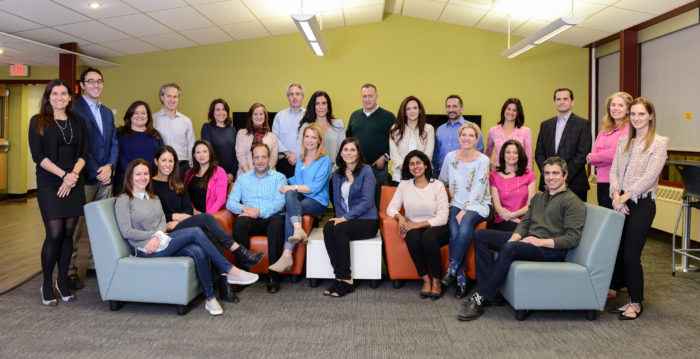
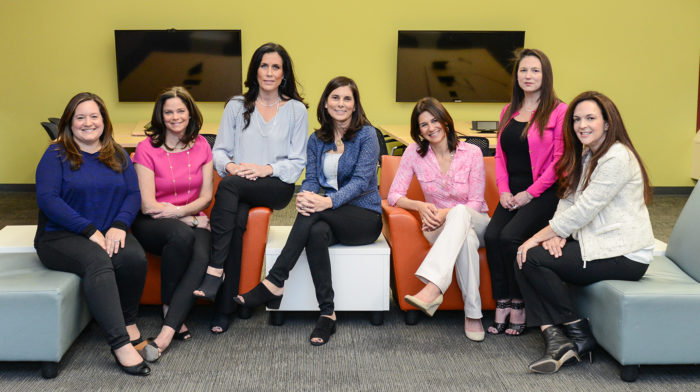
CSF Board Members
PHOTO BY CAROLYN SIMPSON, DOUBLEVISION PHOTOGRAPHERS

In a town known for its top-notch school district, excellence in education is the expectation amongst Chappaqua residents. Any variations in school rankings are analyzed, dissected and actively discussed. The Chappaqua Central School District (CCSD) is characterized by its challenging curriculum, a committed faculty and an impressive array of innovative programming at every level.

It’s the common perception that Chappaqua’s high property taxes are responsible for such programming. In fact, over 75% of the school district’s budget is allocated to fixed costs, with little leftover to support programs that do not fit into the category of core academics. Therefore, funding is supplemented privately by organizations such as the Chappaqua School Foundation (CSF). CSF fills the void, enhancing the students’ education by fostering innovation and funding meaningful initiatives beyond the scope of the school budget.

Making the Grade

Marjorie Troob, President of CSF, was unfamiliar with the foundation’s significant role in the district until she attended the CSF Spring Benefit eight years ago. “During the president’s speech, my ears perked up,” Troob recalls. “She was discussing a district-wide initiative to raise $75k for SMART boards for incoming 3rd graders, the grade my son was entering. It immediately impressed upon me how enriching this addition would be to the classroom. I thought that by reaching out to my network within the community, together, we could make this happen quickly.” Her efforts were fruitful and Troob, realizing the influence of CSF, joined the board two years later and became a fixture in the organization.

Since its inception in 1993, CSF has raised over $3.8 million, funding over 300 educational grants and innovative projects. The Board of Directors is comprised of approximately 30 parent volunteers. “Our Board members represent each of Chappaqua’s schools and come with diverse backgrounds and skill-sets, providing us with broad insight into the heartbeat of the community. They are highly collaborative, committed and dynamic, not to mention that we have some of the nicest people you will ever meet.”

Fundraising efforts are conducted throughout the year with events including Mom’s Night Out, the Harlem Wizards basketball game, a Beginning of School event for preschoolers and their largest fundraiser, the Annual Spring Benefit. “It truly never gets boring,” Troob adds. CSF also hosts the Janet L. Wells Faculty Innovator of the Year Award and CSF Grant Recipient Ceremony that recognizes faculty who have demonstrated an exceptional commitment to delivering educational innovation to their students.

Soundview Prep
ADVERTISEMENT

Granting Wishes

The foundation works alongside CCSD, teachers, parents and students to identify significant strategic initiatives for the schools that are innovative and meaningful. “The school budget is so tight and set six months in advance. CSF funds projects that wouldn’t otherwise be covered,” explains Troob. CSF ensures that teachers can realize their educational aspirations by applying for two types of grants known as Instagrants and traditional grants. Instagrants are smaller grants that are under $2,500 and experience a quicker approval process. These are ideal for teachers who require grants for projects they wish to implement during the school year. Traditional grants are awarded through a more vetted process for programs that tie into the curriculum and take longer to develop.

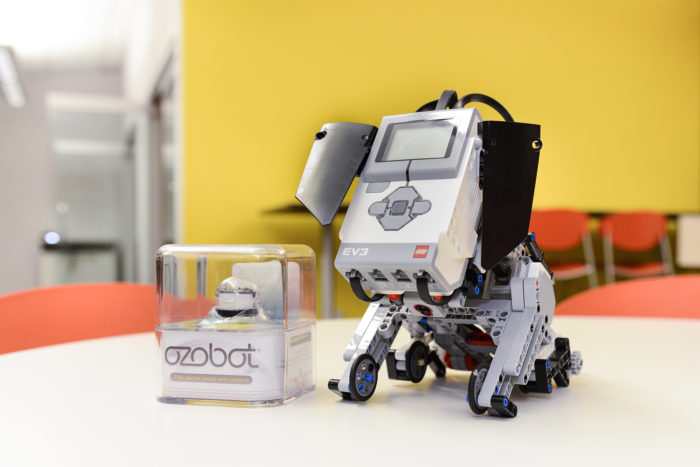
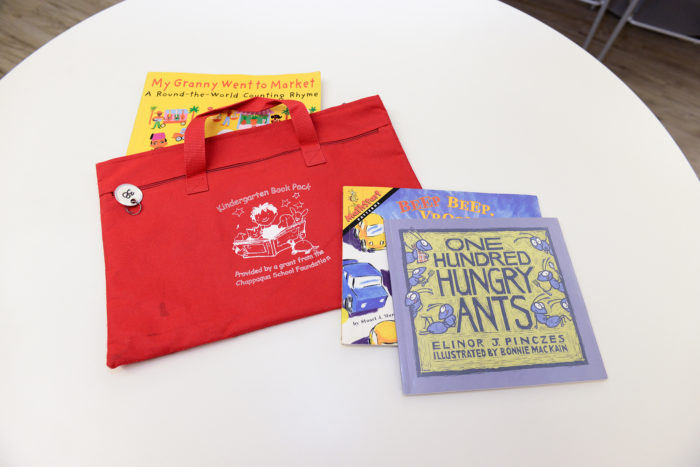
When discussing just some of the recent grants, Troob enthusiastically lists a wide range of projects including an indoor hydroponic garden, LEGO robots, 3D printers, coding blocks, digital telescopes, kindergarten book-packs and robotics equipment saying, “Many are innovative, while some are more functional, yet all make a meaningful impact on the students who are the recipients. The ideas truly get better every year.”

The Horace Greeley High School iLab is an example of a grant that left a monumental impression on the entire district. CSF was instrumental in developing this space approximately six years ago. Reminiscent of a sleek, startup office, the lab was designed using the latest technology and features furniture that encourages collaboration and project-based learning. This installation ultimately transformed the district’s curriculum.

Troob explains, “This project went beyond simply upgrading furniture. The concept of taking a fresh look at how we can integrate innovations into a learning space was cutting-edge.  Since then, CSF has partnered with the district to create innovative learning spaces and classrooms in all six schools. This is not the case in many neighboring districts.”
Giving Students a Voice

CSF encourages students to weigh in through the Student Advisory Council (SAC), a student-run, CSF Board-supported, advisory group at Horace Greeley High School. Formed in 2015, the council began with only eight members and has evolved into a major branch of the foundation, boasting 65 members. Nona Ullman, Vice President of Innovation, describes just how valuable the students’ contributions are saying, “They play the role of management consultants, interviewing teachers and analyzing data on how our grants are improving education.

This year, they piloted a new concept, ‘Grant Sharktanks,’ where students brainstormed ideas with the goal of increasing student-written grants. As a result, three new student-written grants have been funded including Yogibos, a rainy-day activity cart and an outdoor classroom at Bell.” She adds, “Through the SAC, we are providing students with an authentic learning experience that empowers them to make a major contribution to their school community.”

New Beginnings

As Troob begins wrapping up her term as president, she reflects upon the previous year, saying, “Its been a time of new beginnings as we welcomed new administrators including a new superintendent and identified a magnificent new venue for the Spring Benefit at the Sleepy Hollow Country Club featuring a host of new auction items. As we look to the future, it continues to be an exciting time as we begin collaborating with the district to launch a targeted grant that seeks to provide a digital one-to-one learning environment in our schools.”

Throughout changing budgets, administrators and even weather, it is certain that CSF is committed to harnessing the power of the Chappaqua community to maintain the highest standard of excellence for all of its students
Filed Under: Cover Stories Tagged With: Board, Chappaqua Central School District, Chappaqua School Foundation, CSF Committee, Ideas, innovation, Instagrants, school, School Initiatives, Student Advisory Council

Making Headway Foundation Approves Over $350,000 in Grants to Help Children with Brain Tumors

January 30, 2017 by Inside Press

Chappaqua, NY — The mission of the Making Headway Foundation is provide care and comfort for children with brain and spinal cord tumors while funding medical research geared to better treatments and a cure. Over the past 20 years, Making Headway has invested over $20 million in research and services to these children and their families. In January 2017, Making Headway continued this incredibly valuable work by approving over $350,000 in new grants to The Stephen D. Hassenfeld Children’s Center for Cancer and Blood Disorders at the NYU Langone Medical Center. These grants will fund a variety of programs that address both the short-term and long-term needs of children with brain or spinal cord tumors.

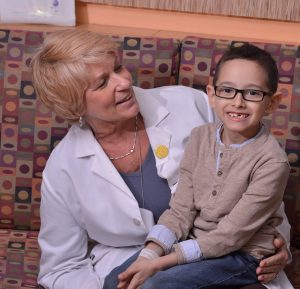
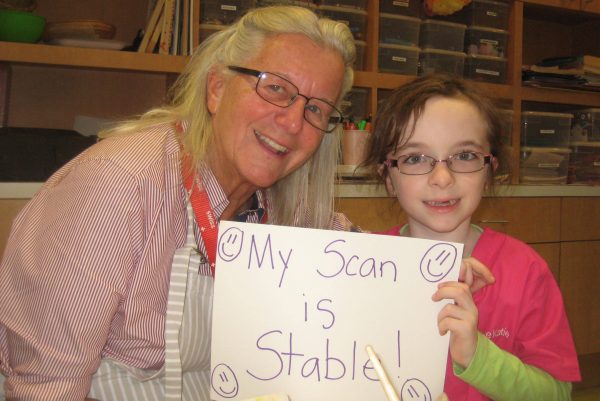
Patients and care givers at NYU’s Hassefeld clinic.Photos for the Making Headway Foundation.

Today, there are more than 28,000 children living with a brain or spinal cord tumor, commonly referred to as a Central Nervous System (CNS) tumor. Over 2,500 children (seven every day) are diagnosed every year. In 2016, pediatric CNS tumors caused more deaths than any other type of pediatric cancer. Making Headway is committed to helping these children by providing Care, Comfort, and a Cure.

In order to have the most significant impact Making Headway focuses on holistic approaches to research and services. With this in mind, it approved funding for four significant, but very different research grants. For example, one grant will fund the NYU Center for Biospecimen Research & Development, which catalogs and stores thousands of invaluable medical samples from children with brain or spinal cord tumors. Doctors from around the world can request and receive samples for their research, at no cost. Making Headway is trying to encourage more research and collaboration, with an expectation of practical improvements related to the treatment and prevention of pediatric brain and spinal cord tumors. This grant is complimented by another that supports a Clinical Trials Manager. Clinical trials are important research studies that explore whether a medical strategy, treatment, or device is safe and effective for humans. The Clinical Trials Manager will oversee 35 active research projects that are devoted to pediatric brain or spinal cord tumors. Each trial has the potential to discover a new treatment or possibly a cure for these pediatric tumors.

Making Headway is also investing in research to help children from a psychological perspective. It is well-established that children with brain or spinal cord tumors present with a host of cognitive, academic, and socio-emotional challenges both during and after treatments are completed. Funded by Making Headway, the Hassenfeld Neuropsychology Testing Program evaluates and monitors newly diagnosed children. This is part of unique, formal protocol created at Hassenfeld (through another Making Headway grant), in which all newly diagnosed patients receive pro-active interventions, such as educational support and related services as needed.
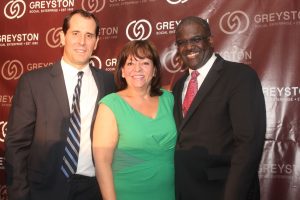
Making Headway understands that in order for children to receive the highest quality medical services, there must be specifically trained doctors who understand the unique technical needs of pediatric brain and spinal cord tumor patients. Making Headway has been helping to meet this need through an annual grant to support a pediatric neuro-oncology fellowship at NYU Langone Medical Center. Chosen from among the best candidates in the country, these fellows evaluate and treat a broad range of brain or spinal cord tumors in children, manage neurological complications of systemic cancer in children, participate in the conduct of clinical trials and prepare for an academic leadership career in pediatric neuro-oncology. Now in its 6th year, this program has been very successful, as each fellow has moved forward with a robust career in pediatric neuro-oncology.

Making Headway was created 20 years ago by a few families who had a child diagnosed with a brain or spinal cord tumor. Since that time, this Westchester-based non-profit organization has been dedicated to helping other children and their families. Its investments in medical research and training have been critically important, leading to new breakthroughs and training the next generation of pediatric neuro-oncologists. Beyond research, it provides a true continuum of services in order to help families impacted by pediatric brain or spinal cord tumors. Its ongoing programs include educational and psychological counseling, fun family events, a scholarship fund, and a variety of in-hospital care services.

To learn more, or to donate to Making Headway, visit www.MakingHeadway.org or call 914-238-8384.


Filed Under: New Castle Releases Tagged With: Making Headway Foundation, pediatric brain cancer, Pediatric brain tumors, pediatrics

  • « Go to Previous Page
  • Page 1
  • Page 2
  • Page 3
  • Page 4
  • Page 5
  • Interim pages omitted …
  • Page 37
  • Go to Next Page »

Primary Sidebar

Please Visit

White Plains Hospital
William Raveis – Armonk
William Raveis – Chappaqua
Northwell Hospital
Houlihan Lawrence – Chappaqua
Houlihan Lawrence – Armonk
Houlihan Lawrence – Briarcliff
NYOMIS – Dr. Andrew Horowitz
Compass: Natalia Wixom
Repose
Compass: Miller-Goldenberg Team
Lipari & Mangiameli Dentistry
Raveis: Lisa Koh and Allison Coviello
Eye Designs of Armonk
Maid Brigade
Kevin Roberts Painting & Design
Gold Coast Epoxy
Meagher & Meagher Attorneys at Law
Compass: Aurora Banaszek
SWEAT
Beecher Flooks Funeral Home
EyeGallery
Whitaker’s Garage Door Store
Moderne Barn
Temple Beth El
New Castle Physical Therapy
Mohini Rawat Physical Therapy
Fleetwood Pastry Shop

Follow our Social Media

The Inside Press

Our Latest Issues

For a full reading of our current edition, or to obtain a copy or subscription, please contact us.

Inside Pleasantville and Briarcliff Manor Inside Armonk Inside Chappaqua and Millwood

Join Our Mailing List


Search Inside Press

Links

  • Advertise
  • Contact Us
  • Digital Subscription
  • Print Subscription

Publisher’s Note Regarding Our Valued Sponsors

Inside Press is not responsible for and does not necessarily endorse or not endorse any advertisers, products or resources referenced in either sponsor-driven stories or in advertisements appearing in this publication. The Inside Press shall not be liable to any party as a result of any information, services or resources made available through this publication.The Inside Press is published in good faith and cannot be held responsible for any inaccuracies in advertising or sponsor driven stories that appear in this publication. The views of advertisers and contributors are not necessarily those of the publisher’s.

Opinions and information presented in all Inside Press articles, such as in the arena of health and medicine, strictly reflect the experiences, expertise and/or views of those interviewed, and are not necessarily recommended or endorsed by the Inside Press. Please consult your own doctor for diagnosis and/or treatment.

Footer

Support The Inside Press

Advertising

Print Subscription

Digital Subscription

Categories

Archives

Subscribe

Did you know you can subscribe anytime to our print editions?

Voluntary subscriptions are most welcome, if you've moved outside the area, or a subscription is a great present idea for an elderly parent, for a neighbor who is moving or for your graduating high school student or any college student who may enjoy keeping up with hometown stories.

Subscribe Today

Copyright © 2026 The Inside Press, Inc. · Log in