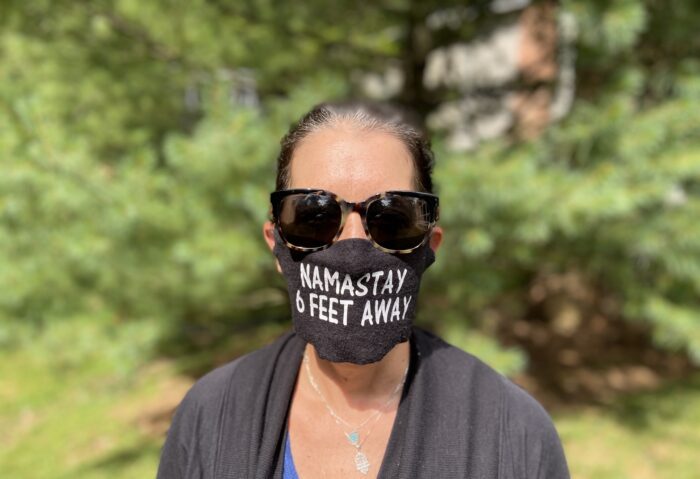
It is really difficult to wrap your head around a silver lining when there is so much suffering across the world right now. Not only are people sick and dying in record numbers, but there is devastating economic loss, an increase in domestic violence, streets are filled with rioting and police brutality, the critical use of masks has been politicized, and on and on and on. I will leave consideration of those issues to others because my expertise is around self-care, which has become more important than ever in the face of the illness and adversity we face on a daily basis. In addition to boosting our immune system and staying active, it is equally important to monitor our mental health in this time when so many are experiencing sadness and isolation.
So, I am wondering are people more inclined to take care of themselves during this time?
Based on working with clients and responses from my “Mindful Moms” Facebook group that I surveyed on this topic, it appears that self-care routines are directly influenced by how many others in the house need attention. Moms of young children who require home schooling and entertaining have little time for themselves. Their responses reflected the all-encompassing demands on their time: “Everything is a mess, no routine, stress, no privacy, no motivation, no ability to attend virtual events–being home with everyone is a giant whirlwind with no structure.” The situation is especially difficult for teachers and others working from home. Some of my clients described feeling trapped with no end in sight. Self-care is not an option for them right now.
However, moms with older and adult children seem to be up-leveling their self-care routines while enjoying the added and unusual bonus of having their kids with them at home. The trend seemed to be difficulty with self-care at the beginning of the pandemic, with the onset of isolation, sadness, and fear together with eating and drinking too much, baking a lot, and mourning the life of freedom that we used to enjoy.
However, as time went on, so did the ability to find new healthy routines, such as walking, biking, online workouts, cooking healthy food, taking new classes, and obtaining certifications. As time passed, women experienced more sleep, less rushing, meditation, self-reflection, and added skills, like doing their own hair and nails. People also enjoyed reconnecting with family and friends, and as my mother, who typically dines out every night said, reconnecting with her kitchen appliances.
There have been many stages to this quarantine, from wiping down every grocery item to wondering if our kids will ever go back to school, and everything in between. While it is easier for some of us to adjust to new ways of living and caring for ourselves, even calling it “the season of self-improvement,” others feel stuck, fearful, and isolated, finding it more difficult than ever to motivate them.
We are all in the same storm, but not in the same boat.
While self-care remains vital during these challenging times, it means different things depending on one’s individual situation. It is critical that we do not compare ourselves to others and that we indulge in serious self-compassion because all of us are suffering in this moment. The key is to be kind to yourself and honor everything you are able to do during this time. As Don Miguel Ruiz says in one of his Four Agreements, “Do the best you can,” even if your best is just 20 percent at the moment. Honor and respect what you are experiencing, feel your feelings, and please don’t hesitate to seek help if you need it. May you be happy, healthy, and safe, may you live with ease, and may this s— show be over soon.
 “Instead of always searching and grasping for more, gratitude allows us to appreciate what we have now. Cultivating joy requires building the gratitude muscle as part of our daily and weekly workouts. Only in this rep-set, we ditch the wishing, complaining and striving, and refocus on noticing what is going well in our lives right now, no matter how small or seemingly insignificant.
 Holidays are supposed to be a festive time of year, but with all the political divisiveness, natural disasters and even terrorism in downtown Manhattan yet again, it has become difficult to maintain a sense of calm or contentment. The endless news cycles and social media frenzies have us outraged, but at the same time, desensitized us to the horrors that occur in the world. How do we set aside the screens, and engage in productive and constructive conversations with our family and friends when we are so divided? And, how can we find peace and happiness in such stressful times?
 After the shock, denial, anger, etc., we have to acknowledge that this is happening, allow ourselves to feel our feelings, but then do whatever is in our control to fight for what we believe.