• Skip to primary navigation
  • Skip to main content
  • Skip to primary sidebar
  • Skip to footer

The Inside Press

Magazines serving the communities of Northern Westchester

  • Home
  • Cover Stories
  • Features
    • Portraits and Profiles
  • Advertorials
    • Lifestyles with our Sponsors
    • Sponsor News!
  • Wellness
  • Happenings
  • Advertise
    • Advertise in One or All of our Magazines–And/Or Subscribe
    • Advertising Payment Form
  • Contact Us
  • Search

school

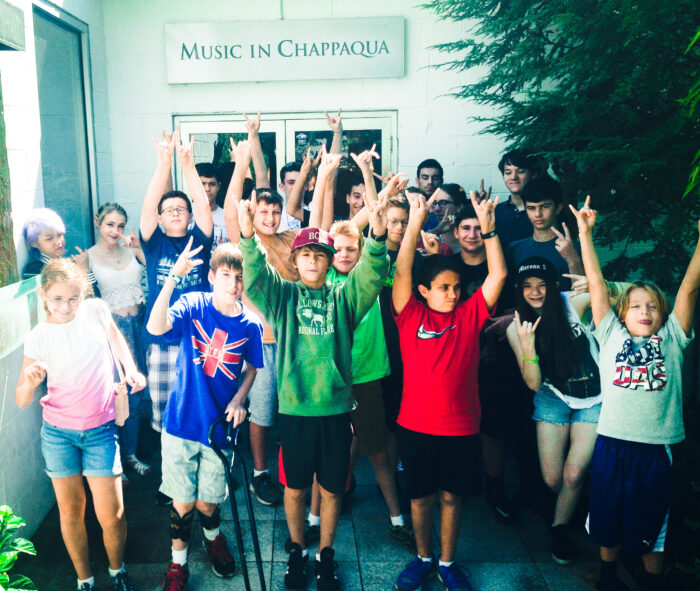
25 Great Reasons to Discover Music in Chappaqua

June 1, 2018 by The Inside Press

Proudly celebrating its silver anniversary–a quarter century of service, music and harmony in the community, Music in Chappaqua, lead by director Janet Angier, salutes its students past and present, thanks its outstanding faculty and is excited for the next 25 years of music making! Here’s why:

1. You’re Never Too Young: Early childhood beginners, middle school and high school students are encouraged and welcomed to take up an instrument or improve their skills with our award-winning faculty

2. …And, You’re Never Too Old: Stopped playing when life became busy with career and family? In celebration of our quarter century, Music in Chappaqua is offering new adult students a 15 percent discount to come play and study with us.  Just mention this article during the month of June for your first time discount..

3. Amazing Faculty: Enthusiastic, caring, supportive, encouraging, accomplished, and dedicated teachers on staff

4. We Listen to You: We match teachers with students’ learning styles, music preferences, and personalities

5. Award Winning Students: Whether you’re interested in classical music competitions, NYSSMA, NYSMTA, singer-songwriter or vocal competitions, our students are prepared to perform at their highest potential and go on to win across the board

6. Students Pursue Their Passions: Many of our students go on to continue their study at prestigious colleges and universities including The Manhattan School of Music, Interlochen Arts Academy, Julliard, Harvard University, Yale University, Stanford University, Berklee, and more

7.  Students Become Professional Performers: Thriving careers in music started at Music in Chappaqua; such as world renowned mezzo soprano Stephanie Marshall, who now performs with the English National Opera, began her studies with our director, Janet Angier

8. All Genres of Music: Classical, Jazz, Broadway, Folk, Bluegrass, Country, Pop, Hip-hop, Rock, Progressive Rock, Metal and everything in between – we teach all styles and levels

9. All Instruments: Voice, Piano, Violin, Viola, Cello, Double Bass, Clarinet, Flute, Saxophones, Trumpet, Guitar, Electric Bass, Drums, Songwriting, Harmonica, and Ukulele

10. Easy Scheduling: Open 7 days a week all year round; generally follows the public-school calendar, extremely flexible summer opportunities

11. Flexible Teaching Locations: Lessons are offered in our Chappaqua studios or in the comfort of your home

12. Custom Tailored Curriculum: Your musical aspirations, needs and wants are listened to and a custom tailored program is designed for your private lessons or Rock Workshop experience

13. Specialized Approach: We aim to suit each individual student’s personal artistic and educational requirements

14. Serving Pros and Non-Pros: From absolute beginners to professionals who are preparing to go into the recording studio, all levels of skill are welcome to study with us

15. Positive Learning Environment: With opportunities to meet and make new friends performing or collaborating in rock bands, songwriting sessions, and recitals

16. Confidence and Self Expression: Students are encouraged and inspired with enthusiasm and exuberance; we believe real music making creates students who are comfortable and confident in their performances and with who they are as a person

17. Regular Performance Opportunities: Year-round performances offered including Open Mic Nights, Singer-Songwriter Shows, Formal Recitals, and Rock & Roll Shows

18. Fantastic Performance Venues: Performances take place where so many stars have launched careers; notable venues have included Steinway Hall, The Wainwright House, Rockwood Music Hall, and NYC’s The Bitter End

19. Beautiful Facility: Clean, modern exterior and interior designs, a relaxing lobby welcomes students and guests with visibility into cutting-edge, lesson studios

20. State of the Art Equipment: Four grand pianos, a fully equipped Rock rehearsal room, plus the latest computer hardware and software, all designed to enhance the learning and performance process

21. Beautiful Landscaping: Modern culture, art, architecture and design tucked into a convenient Chappaqua location, our space exudes peace and tranquility; a proud recipient of The Beautification Award from the Town of New Castle

22. Summer Rock and Roll Camp: A highly successful day camp that runs for 6-week long sessions, The New York Rock Academy places kids and teens at any playing level into bands with others of similar age, musical taste, and playing ability

23. Giving Back to The Community: Local groups and activities are sponsored by Music in Chappaqua such as the Town of New Castle’s Summer Concert Series and the recent March For Our Lives Benefit Concert

24. A Trustworthy Business For 25 Years: Proudly celebrating a quarter century of service, music and harmony in the community

25. You! Music in Chappaqua looks forward to welcoming you into our studios soon!
Filed Under: Lifestyles with our Sponsors Tagged With: 25 Years, kids, music, Music in Chappaqua, school, Self Expression, Silver Anniversary, State of the Art

Chappaqua School Foundation: Inspiring a Generation through Innovation

April 21, 2018 by Shauna Levy

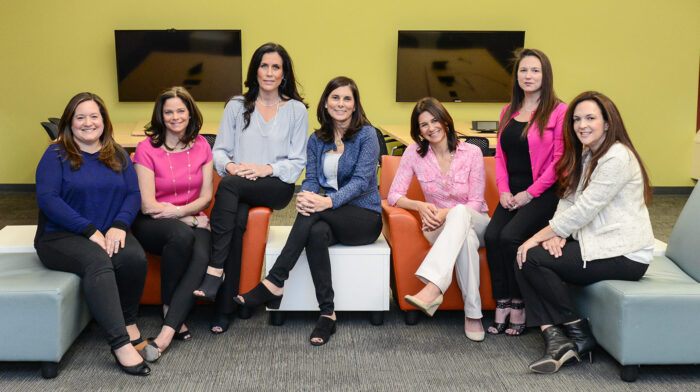
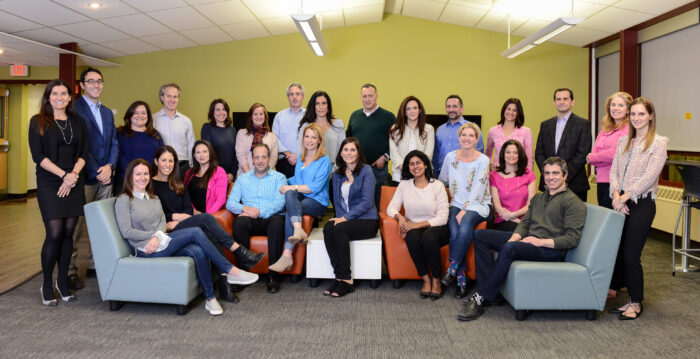
CSF Board Members
PHOTO BY CAROLYN SIMPSON, DOUBLEVISION PHOTOGRAPHERS

In a town known for its top-notch school district, excellence in education is the expectation amongst Chappaqua residents. Any variations in school rankings are analyzed, dissected and actively discussed. The Chappaqua Central School District (CCSD) is characterized by its challenging curriculum, a committed faculty and an impressive array of innovative programming at every level.

It’s the common perception that Chappaqua’s high property taxes are responsible for such programming. In fact, over 75% of the school district’s budget is allocated to fixed costs, with little leftover to support programs that do not fit into the category of core academics. Therefore, funding is supplemented privately by organizations such as the Chappaqua School Foundation (CSF). CSF fills the void, enhancing the students’ education by fostering innovation and funding meaningful initiatives beyond the scope of the school budget.

Making the Grade

Marjorie Troob, President of CSF, was unfamiliar with the foundation’s significant role in the district until she attended the CSF Spring Benefit eight years ago. “During the president’s speech, my ears perked up,” Troob recalls. “She was discussing a district-wide initiative to raise $75k for SMART boards for incoming 3rd graders, the grade my son was entering. It immediately impressed upon me how enriching this addition would be to the classroom. I thought that by reaching out to my network within the community, together, we could make this happen quickly.” Her efforts were fruitful and Troob, realizing the influence of CSF, joined the board two years later and became a fixture in the organization.

Since its inception in 1993, CSF has raised over $3.8 million, funding over 300 educational grants and innovative projects. The Board of Directors is comprised of approximately 30 parent volunteers. “Our Board members represent each of Chappaqua’s schools and come with diverse backgrounds and skill-sets, providing us with broad insight into the heartbeat of the community. They are highly collaborative, committed and dynamic, not to mention that we have some of the nicest people you will ever meet.”

Fundraising efforts are conducted throughout the year with events including Mom’s Night Out, the Harlem Wizards basketball game, a Beginning of School event for preschoolers and their largest fundraiser, the Annual Spring Benefit. “It truly never gets boring,” Troob adds. CSF also hosts the Janet L. Wells Faculty Innovator of the Year Award and CSF Grant Recipient Ceremony that recognizes faculty who have demonstrated an exceptional commitment to delivering educational innovation to their students.

Soundview Prep
ADVERTISEMENT

Granting Wishes

The foundation works alongside CCSD, teachers, parents and students to identify significant strategic initiatives for the schools that are innovative and meaningful. “The school budget is so tight and set six months in advance. CSF funds projects that wouldn’t otherwise be covered,” explains Troob. CSF ensures that teachers can realize their educational aspirations by applying for two types of grants known as Instagrants and traditional grants. Instagrants are smaller grants that are under $2,500 and experience a quicker approval process. These are ideal for teachers who require grants for projects they wish to implement during the school year. Traditional grants are awarded through a more vetted process for programs that tie into the curriculum and take longer to develop.

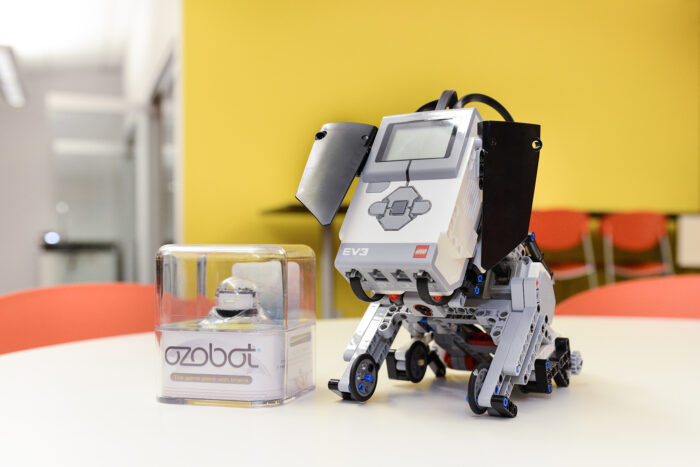
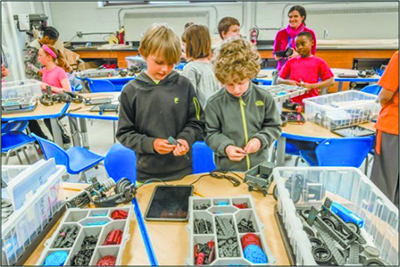
When discussing just some of the recent grants, Troob enthusiastically lists a wide range of projects including an indoor hydroponic garden, LEGO robots, 3D printers, coding blocks, digital telescopes, kindergarten book-packs and robotics equipment saying, “Many are innovative, while some are more functional, yet all make a meaningful impact on the students who are the recipients. The ideas truly get better every year.”

The Horace Greeley High School iLab is an example of a grant that left a monumental impression on the entire district. CSF was instrumental in developing this space approximately six years ago. Reminiscent of a sleek, startup office, the lab was designed using the latest technology and features furniture that encourages collaboration and project-based learning. This installation ultimately transformed the district’s curriculum.

Troob explains, “This project went beyond simply upgrading furniture. The concept of taking a fresh look at how we can integrate innovations into a learning space was cutting-edge.  Since then, CSF has partnered with the district to create innovative learning spaces and classrooms in all six schools. This is not the case in many neighboring districts.”

Giving Students a Voice

CSF encourages students to weigh in through the Student Advisory Council (SAC), a student-run, CSF Board-supported, advisory group at Horace Greeley High School. Formed in 2015, the council began with only eight members and has evolved into a major branch of the foundation, boasting 65 members. Nona Ullman, Vice President of Innovation, describes just how valuable the students’ contributions are saying, “They play the role of management consultants, interviewing teachers and analyzing data on how our grants are improving education.

This year, they piloted a new concept, ‘Grant Sharktanks,’ where students brainstormed ideas with the goal of increasing student-written grants. As a result, three new student-written grants have been funded including Yogibos, a rainy-day activity cart and an outdoor classroom at Bell.” She adds, “Through the SAC, we are providing students with an authentic learning experience that empowers them to make a major contribution to their school community.”

New Beginnings

As Troob begins wrapping up her term as president, she reflects upon the previous year, saying, “Its been a time of new beginnings as we welcomed new administrators including a new superintendent and identified a magnificent new venue for the Spring Benefit at the Sleepy Hollow Country Club featuring a host of new auction items. As we look to the future, it continues to be an exciting time as we begin collaborating with the district to launch a targeted grant that seeks to provide a digital one-to-one learning environment in our schools.”

Throughout changing budgets, administrators and even weather, it is certain that CSF is committed to harnessing the power of the Chappaqua community to maintain the highest standard of excellence for all of its students

Filed Under: Cover Stories Tagged With: Board, Chappaqua Central School District, Chappaqua School Foundation, CSF Committee, Ideas, innovation, Instagrants, school, School Initiatives, Student Advisory Council

Breeding the Next Generation of Young Scientists

April 21, 2018 by Shauna Levy

The students of the Dr. Robert Pavlica Authentic Science Program at Byram Hills High School have been consistently racking up an impressive roster of scientific accolades in recent years. In 2017 alone, they earned coveted top awards from the Westchester-Rockland Junior Science and Humanities Symposium, Regeneron Science Talent Search, the American Academy of Neurology’s Neuroscience Research Prizes and the Siemens competition to name a few. All of this recognition, however, is not what’s most extraordinary, according to program director, Stephanie Greenwald. “The best part is the community Dr. Pavlica created. He felt strongly that any student who wanted to be here could. We have honored that legacy and cultivated an environment that empowers students to be their absolute best.”

When Greenwald began her career as a school administrator and science teacher almost 25 years ago, science research wasn’t necessarily a “thing.” What she did know, was that she loved teaching and inspiring children. With 14 years at Byram Hills H.S. under her belt, when the previous director retired last year, she was offered her current position and fell into “the absolute best job I ever had.” There is no question about Greenwald’s passion as she rapidly speaks, “There is nothing more exciting than watching a student who enters this room timidly, find what they love and see that moment when it all clicks. That is my favorite thing in the whole world.”

Developing a Broad Skill Set

Celebrating its 30th anniversary next year, this three-year research program was designed for students who wish to pursue excellence in advanced areas of original research. Students develop skills in bibliographic research, research methodology, and modes of communicating research. Though the workload is described as “very high,” students don’t appear scared off with approximately 80 students enrolled. They participate in group classes with BH faculty and individual meetings with mentors.

The focus is on quantifiable science, yet there is a sense that something magical is at play in this classroom where students’ greatest capabilities make themselves apparent. Greenwald describes the staff’s philosophy, “We pride ourselves on guiding students to find what they are truly passionate about.  Almost any topic can be researched. If it can be measured with a numeric value, it’s science.” This is the key to the program’s continued success. Greenwald, explains, “The students who self-select into the program have such a high level of enthusiasm because they are studying what they love. That without a doubt is the major intrinsic motivator.” Study topics have included everything from fashion, football and dogs to vectors, biodiesel fuel and prostate cancer microbiology.

Combating Science Illiteracy with Communication

Once students select their subject matter, the focus is on reading as much material as possible including everything from layman material to professional literature. This research prepares them for the ultimate task of producing a 40-50 page publication. Greenwald describes the process, “They become experts, getting to know ‘the movers and shakers’ in their field. It is imperative that students are able to communicate in everyday terminology.” Communications are integral to the program and an English teacher is on staff to strengthen these skills. According to Greenwald, “There is a vast amount of science illiteracy in this country. Scientists must become better communicators. It is a pet peeve of mine that we have a plethora of incredible experts, yet only a small list of people who understand them. The public must be able to understand that science is not something you can refute. It is simply fact.”

Working with Professional Mentors

A pivotal point in the program is when students identify a professional mentor from a university, medical center or research institute with an expertise in their area of study. “There are so many glorious people who see themselves in the students and wish they had a program like ours when they were younger. We truly wouldn’t exist without their time and generosity.”  Mentors may be local, but many span the world and have been as far as England and Israel. They communicate via email, telephone, video conference or in person. Oftentimes, students are invited to spend time working at their laboratories.

The program has very clear benchmarks, during which students receive a high level of critiquing that they learn to accept in order to produce their best work product. “Our grading system is set-up to empower students to be able to take risks and fail. They are not penalized for giving the wrong answer,” says Greenwald. When students hit roadblocks, they are encouraged to ask questions and seek solutions. “I always tell them that all that stands in our way are words and time. If you can’t understand it, research it,” Greenwald guides.

Breeding Young Scientists

At its core, the program aims to support an initiative to create a greater number of PhD and advanced degree candidates in the sciences in this country. Fostering scientific literacy is further supported by engaging in programs at the elementary school level. Greenwald described a common sense approach to breeding young scientists: “Teach them to wonder and problem solve. Encourage them to always ask questions,” she said. “Experiment with trial and error.”

Of the future, Greenwald is optimistic. She disagrees with the stereotypical view of millennials saying, “Every day, I watch students suddenly see above and beyond what they expected their capabilities to be. That’s the moment they learn they are in control of their destiny. It happens here all the time and that’s what makes this place so special. I tell the students, I have faith in my future as long as you take care of it for me.” And, her work is contributing to their ability to do just that.

Filed Under: Armonk Cover Stories Tagged With: Authentic Science, Byram Hills High School, class, school, Science

Christine Ackerman on Being Open & Engaged

October 22, 2017 by The Inside Press

An Avid Runner, the CCSD’s New Superintendent also Goes the Extra Mile to Emphasize Communication, Transparency and Supporting District Wide Initiatives in STEM, Health – and Social Justice, too.

PHOTO BY GRACE BENNETT

BY GRACE BENNETT

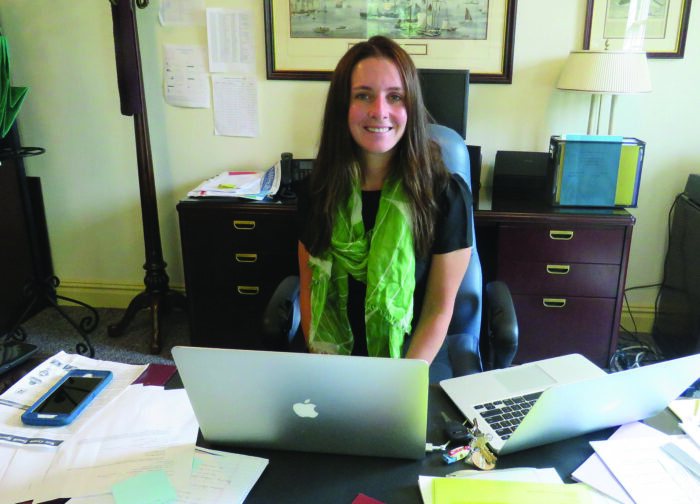
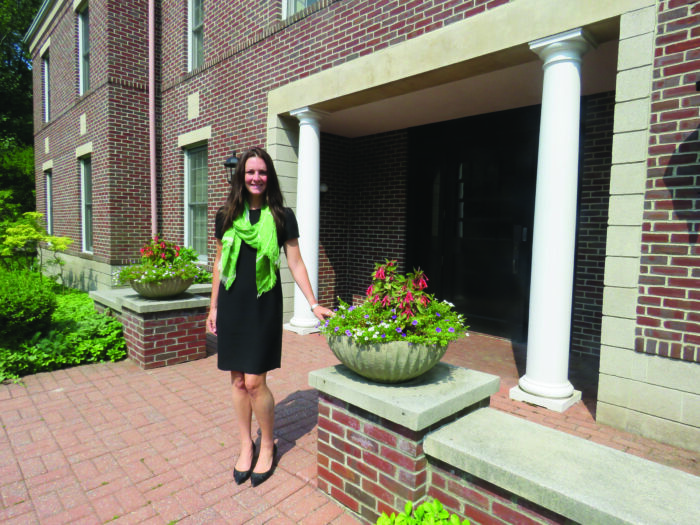
Maybe I’m just getting older, but upon meeting new Chappaqua school district Superintendent Christine Ackerman this past summer, I could not help but marvel at how youthful she seemed; I was certain she was young enough to be my daughter. Ok, well almost! And so I asked her how her youth might lend a reinvigoration of sorts and fresh perspective to our schools while taking on 21st century challenges.

First, some background: Ackerman, only 39 years old, comes to Chappaqua after three years as Superintendent of the Greenwood Lake Union Free School District, following four years as Assistant Superintendent for Curriculum, Instruction and Pupil Personnel Services with the Millbrook Central School District, where she had served as its high school principal for a year and a half. Prior to that, she was Assistant Principal & Director of Social Services at Valhalla Middle/High School, Dean of Students at John Jay High School in Katonah, and a teacher and Dean of Students in the New York City school system.

A native of Vernon, New Jersey and one of four children, she credits her decision to take an unorthodox route for an educator – going directly from college to graduate school to receiving her PhD – as the reason that doors opened very quickly and enable her to compile such an impressive and varied resume for someone so young.

A New and Broader Outlook

“I think I have a fresh perspective. I’ve had a lot of different experiences in various roles within a school district,” Ackerman explained when asked what she brings to Chappaqua. “I’ve been a teacher, an assistant principal, a principal, an assistant superintendent for special ed, for curriculum and instruction, and superintendent, so I think I have a large frame of reference, which I am able to use when I’m looking at different issues, whether they’re instructional or social/emotional.” She elaborated that she will be able to draw from her experiences in diverse districts, “from high-performing districts to the inner-city,” enabling her to work with different constituent groups on a wide range of issues.

She also stressed the value of having her own children (a third grader at Westorchard and a fifth grader at Seven Bridges) enrolled in Chappaqua schools. “I can’t underscore the importance of having my own kids here: it’s very, very important,” said Ackerman, a single mom in the district. “I want people to have confidence in the fact that I feel that this is the best place for my kids to receive an education. I think it speaks volumes, it speaks more than anything I could ever say to have my own children to be able to experience what I feel is one of the best educational experiences they could have in the state, if not the country.”

“When you have children that go through the district, it gives a different perspective, not only as an administrator, but as a mom,” Ackerman continued. “You get real time experience when you’re a mom – the homework, the assessments – you have a different lens because you’re not only looking at it in terms of how the structure and the education and social program are operating, but you’re looking at it in terms of how your own child is experiencing it.” She added that “it lends a different credibility” when people know that decisions she makes as an instructional leader will directly impact her own children too.

As an example, Ackerman described transitioning one of her prior district’s anthology reading program to a writing workshop program – what currently exists in Chappaqua – as the literacy instructional base. Not surprisingly, there were many questions, and she was able to “very clearly say it benefits [the children, including my own] and why these are the practices I’ll be doing with my own children at home to support what’s happening in the classroom.”

Ackerman does not sense any real discomfort of her kids or their teachers in her dual position as Superintendent and classroom mom. “I think [my kids] are proud of their mom, and they see me because I’m very present in the buildings with the kids. For them it’s normal to have their mom walking around the building and going in and out of their classes,” she said. She added that in her prior Superintendent position, if “any initial unfamiliarity with me existed, as time went on and the frequency of my interactions with the people increased, I think that any kind of trepidation dissipated. It would be my goal, though, that people would feel comfortable interacting with me as a colleague, not necessarily as a supervisor, because I think that’s where the best collaboration happens for kids.”

Ackerman’s children, like their mom, however, are most excited about the opportunities available to them in Chappaqua. “The facilities and the extracurricular program in Chappaqua is unbelievable; when it’s all you’ve experienced, you don’t really have a broader perspective of what else is out there for kids,” she said, noting the difference in other schools her children have attended. “When we pulled up to Seven Bridges and my son saw where he was going to school, he was amazed, and so was I,” she added.

“All of our facilities are so thoughtful and designed in a way to really support instruction differently. The opportunities here are endless for our kids, and I am just so privileged that my kids are going to be able to have that same opportunity as other students.”

Full STEAM Ahead: Collaboration and Technology

Emphasizing the high level of instruction in our district schools, Ackerman hopes to even further enhance technological and collaborative tools to even better prepare our students for college and beyond.

“I’m extremely passionate about educational technology, because I feel that we need to prepare students to leave here ready to interact and integrate into a society that is focused on web-based interactions,” she said. “And I also feel that, if you look at college and career readiness standards, we exceed many of the academic standards, but one of the things that businesses really focus on is the ability of kids/employees to work collaboratively to solve real-world problems.”

Ackerman has been very impressed with CCSD’s work with collaborative spaces.

“I think one of the smart, visionary decisions that the previous Superintendent had was the concept of these maker-spaces, because they really have kids applying content in real-life application.” She points to the district’s redesign of school spaces to support STEAM work.

“We have our iLab in the high school, and we’re beginning to think differently in our elementary schools by incorporating some of the practices in our high school. We’re looking at spaces differently.” She described a pilot project at Westorchard “where we’re really looking at our classroom design in a way that supports student collaboration.”

Challenges Ahead

As Superintendent, Ackerman is an integral part of the CCSD Board of Education. “It’s a partnership, so every meeting I’m there with them, preparing the agenda, preparing reports for the community, for the Board of Education on our progress and what we’ve been focused on. We have a very dedicated group of individuals from all sorts of constituencies. I feel so fortunate to be able to work for this Board of Education. They’re really focused on the kids.”

Upon arriving in Chappaqua, Ackerman has had numerous “entrance meetings” with different constituent groups, all confirming the CCSD’s strength. “The faculty, staff, and administrative team are extremely strong, very professional, and devoted to our kids in a way that’s probably unique compared to other districts,” she said. “You have some of the top people in their profession working in this district with our students. This is where you want to teach: the professional development, the commitment of the community towards providing the best education for the children here, is unparalleled.”

One of the biggest challenges facing the district that she has been asked to focus on is communication and transparency. “Some of the things that we’re already in the process of engaging in will be re-designing our website, thinking about how we’re structuring our board meetings, talking about what can we share versus what can’t we share, and just being really cognizant of making sure that people feel comfortable with the processes that we have in place,” Ackerman explained.

“We have a lot of committees – including communications – that look at a lot of many different aspects of our program,” she continued. “I look forward to leveraging some of those committees to talk about what I heard in entrance meetings. One of the things that we’ve been talking about in terms of communication is our social media presence – we really don’t have one. Can we have a voice on social media? These are all things that are important but they’re a process and they take time,” she added.

Ackerman thinks that the team in place is up to the challenge, brushing aside the idea that a consultant or public relations firm might be needed. “I just think we need to work with the people that we have and work with our parents to all be comfortable, because I think, in terms of people feeling like they want more communication from the district that can get that feedback from our community and use that to figure out how we’re going to move forward.” Ackerman is on it.

She noted that she has already engaged in some outreach with local publications, this one included. “I think we need to look at that,” she said. “I’ve already made some contact with our local media providers, I’ve tried to build relationships with our newspaper, because I think there’s a lot going on here that we can highlight as well. I feel like it’s an opportunity for us.”

Ackerman also recognizes that there is work to be done as far as instilling strong values in students of an affluent district. She recalled that one of the focus areas of this past summer’s administrative retreat was the social and emotional growth of students, which she described as an integral piece of the academic program and “one of our responsibilities.”

“I know that there’s been a lot of work done in individual buildings around this particular issue with staff members and under the leadership of the administration, so one of the areas that I know we’re going to look at collaboratively as a district K-12 is how we’re all working collectively on that important component of the academic program,” she said.

She also noted the need to help the student body appreciate diversity and build tolerance. “I support social justice [and was] trained by the Social Justice Institute,” Ackerman said. “I find that it has to be embedded in the curriculum and that it’s something that happens on a regular basis in the classrooms through teachers interactions with kids, but I also know there’s value in having teacher-student connections and individual conversations that focus on these issues specifically.” She is working on figuring out how to structure the school day around promoting “common values that we all value as humans and that we need to partner on and complement each other from home to school.”

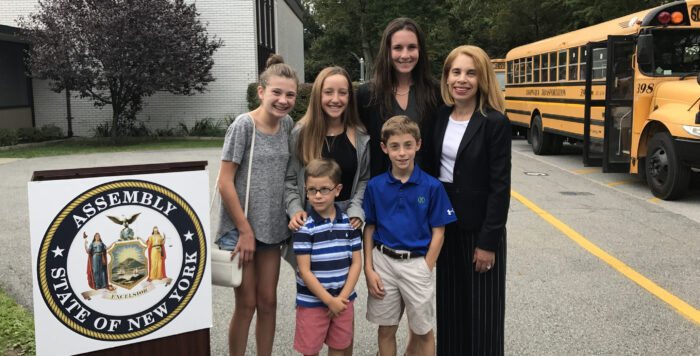
Shown here with Christine Ackerman (L-R): Georgia Rappaport, Sara Albert, School Board member Vicki Tipp, Luke Leopold and Jared Saiontz

Nutrition and Fitness

Ackerman, an avid runner (five to seven miles every morning before going to work), is an advocate in fitness and healthy eating, for herself, her children and the students in the district. “I think it’s important for my own kids to see me valuing my health and to be healthy, so I am committed to making sure that our kids [do the same],” she said. She also notes the evidence that supports how nutrition affects school performance; “there’s so much research that supports how students come to school, and what happens in the morning, particularly around what they’re eating in terms of preparing them for instruction, so I think how our kids spend their lunch breaks and what they eat during their lunch breaks are important, absolutely.”

First Impressions

One of Ackerman’s early experiences as the CCSD Superintendent was marching in the town’s Memorial Day Parade and meeting Hillary and Bill Clinton and Governor Andrew Cuomo. “It was amazing for me to be able to be in the presence of the former President and the Secretary of State. They took time with me to find out where I was from, and offered their assistance with any support that I would need. They affirmed to me how great the community was. I was honored,” she said. However, what impressed her even more was that the Board of Education immediately followed these illustrious residents in the parade. “What I found most telling though about that experience, and this really for me put in perspective how much this community values education, was the parade order was the President, Secretary of State, the Governor, and the Chappaqua Board of Education. That was amazing to me.

To see that level of commitment that this community has toward its schools and respect,” Ackerman recalled.

The school year got off to an exciting start, too, with a packed-house September 8 community event celebrating the new Greeley track and field under the newly-installed lights. “This community event was designed to foster a sense of togetherness amongst our K-12 students and community,” she said. “We also wanted to take a moment to truly celebrate our new facility that will be used by all facets of our community.” Indeed, the event was attended even by Chappaqua’s youngest residents and enjoyed by all.

An emotional and inspiring event on that same field followed several weeks later, as the Greeley boys’ varsity soccer team dedicated a home game to one of its own who tragically passed away this summer. “One of my most memorable moments so far was watching the boys’ soccer team honor Casey Taub [who had worn uniform number 22] by leading the crowd in a standing ovation as they played during the 22nd minute of a recent home game,” Ackerman recalled. “The senior captain even scored a goal at 22:22 – it was such a moving tribute to this young man. I continue to be impressed by the quality of instruction and the caliber of students who are members of the Chappaqua Central School District community.”

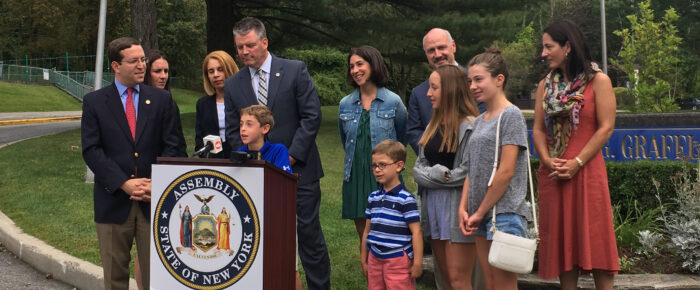
PHOTO BELOW (Left to Right): State Assemblyman David Buchwald, Superintendent Christine Ackerman, CCSD Board Member Vicki Tipp, Senator Terrence Murphy, Jared Saiontz at the mic, Stacey Saiontz, Town Supervisor Rob Greenstein, Liz Rappaport, Luke Leopold, Sara Albert, Georgia Rappaport (holding white bag). Additional people who have helped advocate for the bills and traveled to Albany who are not pictured are: Patty Albert (mom), Elliott Saiontz (older brother of food allergic child); Heather Brown (mom) and Spencer Brown (food allergic child); Jill Mindlin (mom) and Maya Mindlin (food allergic child); and Jon Terrry (advocate whose sister passed from allergic reaction to a bee sting).

She is also impressed with the philanthropy and advocacy of student and parent groups. For example, “our students and parents worked together to advocate for legislation that would allow bus drivers who are not employees of the District to administer EpiPens.” She added that “we are currently working to develop a Board of Ed policy in conjunction with Chappaqua Transportation to support our students in this way.”

To that end, Ackerman wanted the community to be aware that the District will be engaging in “a strategic cohesive planning process to identify long and short term goals in relation to the Board of Education’s strategic questions over the course of this school year.” And most importantly, Ackerman stressed that she is available to talk with anyone about any issue.

“I am available and people can feel free to contact me if they need help, if they want to talk to me, they have ideas, I’m open. They can email me at chackerman@ccsd.ws or they could set up a meeting. I’m here, I’m open, and I’m here to be their partner. I’m really looking forward to those experiences with people here.”


Bus Drivers Get Green Light to Administer EpiPens

At her first press conference for the district at Douglas Grafflin Elementary School, Christine Ackerman joined parents and students and Westchester sponsors of a new law passed to protect and save the lives of students who suffer from severe allergies. Assemblyman David Buchwald and State Senator Terrence Murphy co-sponsored the legislation which now allows school bus drivers and others employed by firms providing services to schools to administer epinephrine when a child suffers anaphylaxis shock.

Christine Ackerman: “Our students and parents worked together to advocate for legislation that would allow bus drivers who are not employees of the District to administer EpiPens.”

David Buchwald: “The New York State Department of Health will need to move quickly to issue the regulations necessary for the timely implementation of this act.”

Terrence Murphy: “When a child experiences anaphylaxis, there is little time to wait for emergency personnel to arrive. Every second is crucial.”

Advocate Stacey Saiontz: “Recently, a school bus driver in Massachusetts saved a student’s life when emergency personnel could not arrive on the scene in time. I am so pleased New York school bus drivers will be able to do the same.”


Grace Bennett is Publisher and Editor-in-Chief of Inside Chappaqua Magazine. This interview was edited by long time Inside Press contributor Debra Hand. Special thanks as well to intern Amanda Kraus for transcribing.

Filed Under: Cover Stories Tagged With: Administration, Bus Drivers, CCSD Superintendent, Chappaqua Central School District, Christine Ackerman, EpiPen, health, nutrition, school

An Open Letter to the Chappaqua Central School District Community

June 3, 2016 by The Inside Press

Bond 2

For some time now, the Chappaqua Central School District has been on a journey of creating active learning environments for teaching and learning–environments where 21st century students can apply the content they learn to authentic projects, build new knowledge, and work together to design new thinking. We want students to explore their passions and solve relevant, complex problems both individually and collaboratively by using varied approaches, providing accurate feedback to each other, and by setting their own learning goals.

To assist us in achieving our learning goals for students, we are seeking to provide larger, purposefully designed, more flexible learning spaces that serve the needs of all students as they participate in multi-disciplinary projects. Traditional classroom spaces are confining and include less flexibility for teaching and learning.

Recently, the Board of Education passed a resolution calling for a $42.5M capital projects bond referendum on Tuesday, June 14, 2016. This project is considered a “no marginal increase project.” That is, the tax levy will not increase as a result of this bond.

If the bond referendum is approved, the monies would be expended to improve our infrastructure, upgrade our fields, build flexible, research-supported, intentionally-designed learning environments, and improve the Chappaqua Public Library.

Our Children and Our Schools

Buildings and resources have a natural lifespan, and most of our buildings are more than 40 years old. This bond will enable us to address aging infrastructure and bring our buildings in compliance with the governmental codes. There are numerous infrastructure projects that will help preserve the basic integrity of our buildings and create safer school environments through various health and safety upgrades and improvements.

We also will renovate and upgrade present space with:

  • Global learning centers at each elementary school and the high school, which are 21st century libraries with work spaces intentionally designed to address how students learn and collaborate in today’s world.
  • STEAM learning centers at each middle school and the high school (the STEAM center at Greeley is the only new construction). STEAM centers typically include a design studio and labs for fabrication, robotics, and 3D modeling and printing. Students across grade levels will participate in project-based learning and bring ideas from conception through design to production leading to a deeper understanding of academic content.
  • Instructional centers at Horace Greeley High School, which are deliberately designed learning environments that promote the development of critical skills. These new, larger flexible environments contain classroom spaces and common areas that are designed to allow for multi-disciplinary project-based learning across all subjects, from the humanities to the sciences.

Our Community

The Chappaqua Central School District is one of a few districts in New York State that is responsible for the operation and maintenance of a public library. The Chappaqua Public Library site opened in 1978 and not much has changed structurally since. This bond will support the community’s public library and its Master Plan by providing an adult quiet area, expanded children’s area, meeting/study rooms, enclosed teen zone, café, more instructional space, and family bathrooms.

There are 18 fields throughout the District that are used extensively by our schools and our Chappaqua community. This bond will allow us to make upgrades and improvements such as installing sprinklers at Seven Bridges, improving drainage and replacing sod at Greeley’s Field C, installing an environmentally-friendly modern turf field with lights and a walking path at Bell, and installing an environmentally-friendly modern turf field with lights, along with track renovations and the addition of bathrooms, at Greeley’s Competition Field. The modern turf fields will exponentially increase playing and practice time and increase their availability for use by the community.

Voting on this bond referendum will take place on Tuesday, June 14th between 7 a.m. and 9 p.m. at Horace Greeley High School. Until then, I invite you to visit the bond referendum webpage we have created at www.ccsd.ws/bond. There you will find much more detailed information including presentations and videos, a list of proposed projects, conceptual drawings, videos of students and teachers discussing the benefits of larger, flexible, learning spaces equipped with advanced technology, a list of resources, answers to frequently asked questions, time lines, and an online form that you can use to submit questions and comments. Please remember to check this page often as new items will be posted as they become available, and please remember to vote on Tuesday, June 14, 2016.

Regards,
Lyn McKay
Superintendent of Chappaqua Schools

Filed Under: Inside Thoughts Tagged With: budget, chapp, school

  • « Go to Previous Page
  • Page 1
  • Page 2
  • Page 3
  • Page 4
  • Page 5
  • Go to Next Page »

Primary Sidebar

Please Visit

White Plains Hospital
William Raveis – Armonk
William Raveis – Chappaqua
Northwell Hospital
Houlihan Lawrence – Chappaqua
Houlihan Lawrence – Armonk
Houlihan Lawrence – Briarcliff
NYOMIS – Dr. Andrew Horowitz
Stacee Massoni
Purple Plains
Compass: Donna Gordon
Westchester Table Tennis
Compass: Miller Goldenberg Harris Team
Repose
Dodd’s Wine Shop
Rocks by Jolie B. Ray
Outer Boundaries Travel
Jean Jacques
The Briarcliff Manor
Eye Designs of Armonk
Elliman: Pam Akin
Compass: Natalia Wixom
Sonny Pilates
Houlihan Lawrence: Harriet Libov
Gleason Plumbing and Heating
New Castle Physical Therapy
King Street Creatives
Houlihan: Tara Siegel

Follow our Social Media

The Inside Press

Our Latest Issues

For a full reading of our current edition, or to obtain a copy or subscription, please contact us.

Inside Armonk Inside Pleasantville and Briarcliff Manor Inside Chappaqua and Millwood

Join Our Mailing List


Search Inside Press

Links

  • Advertise
  • Contact Us
  • Digital Subscription
  • Print Subscription

Publisher’s Note Regarding Our Valued Sponsors

Inside Press is not responsible for and does not necessarily endorse or not endorse any advertisers, products or resources referenced in either sponsor-driven stories or in advertisements appearing in this publication. The Inside Press shall not be liable to any party as a result of any information, services or resources made available through this publication.The Inside Press is published in good faith and cannot be held responsible for any inaccuracies in advertising or sponsor driven stories that appear in this publication. The views of advertisers and contributors are not necessarily those of the publisher’s.

Opinions and information presented in all Inside Press articles, such as in the arena of health and medicine, strictly reflect the experiences, expertise and/or views of those interviewed, and are not necessarily recommended or endorsed by the Inside Press. Please consult your own doctor for diagnosis and/or treatment.

Footer

Support The Inside Press

Advertising

Print Subscription

Digital Subscription

Categories

Archives

Subscribe

Did you know you can subscribe anytime to our print editions?

Voluntary subscriptions are most welcome, if you've moved outside the area, or a subscription is a great present idea for an elderly parent, for a neighbor who is moving or for your graduating high school student or any college student who may enjoy keeping up with hometown stories.

Subscribe Today

Copyright © 2026 The Inside Press, Inc. · Log in