• Skip to primary navigation
  • Skip to main content
  • Skip to primary sidebar
  • Skip to footer

The Inside Press

Magazines serving the communities of Northern Westchester

  • Home
  • Cover Stories
  • Features
    • Portraits and Profiles
  • Advertorials
    • Lifestyles with our Sponsors
    • Sponsor News!
  • Wellness
  • Happenings
  • Advertise
    • Advertise in One or All of our Magazines–And/Or Subscribe
    • Advertising Payment Form
  • Contact Us
  • Search

Inside Press

As One Town Resolves the HUD Dispute, Another Fights On

August 25, 2016 by The Inside Press

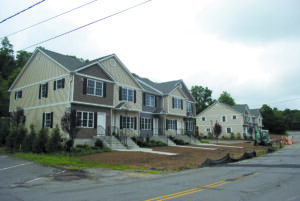
Affordable housing is being built on Old Route 22 in Armonk. Andrew Vitelli Photos.

By Andrew Vitelli

“It’s really mind-boggling, if you think about it,” New Castle Supervisor Rob Greenstein says. Sitting just a stone’s throw from the site of the controversial Chappaqua Station housing project, Greenstein is referring to criticism of the town coming from the U.S. Department of Housing and Urban Development and from a monitor appointed following a 2009 settlement between HUD and Westchester County. “I think they should be singing our praises and holding us up as an example of doing more than our share. And instead, we’re criticized.”

In purely numerical terms, New Castle has more than carried its weight; even without Chappaqua Station, which Greenstein opposes, more than 30 units are in the pipeline. But the fight over Chappaqua Station, built on Hunts Lane between the railroad tracks and a Saw Mill Parkway exit ramp, has dragged on for years and put the town in the middle of a bitter fight between HUD and county leadership.

On Old Route 22 in Armonk, meanwhile, a row of freshly-built multifamily homes has sprung up, construction equipment sitting outside. In July, North Castle was removed from a list of municipalities facing legal action over their zoning laws and the concentration of multi-family housing within the municipality. The town’s presence on the list, the town’s supervisor says, had more to do with the lack of infrastructure throughout much of the town–along with the flooding of Kensico village a century ago–than any discriminatory intent on the town’s part, and in the end the HUD-appointed housing monitor agreed. “I’ve found them to be very receptive to our communications,” Supervisor Michael Schiliro says.

These towns are just two of more than 30 towns and villages impacted by the settlement, but their stories give a closer look at how the settlement has played out in many of these communities.

The Settlement

The housing settlement, which has cast a shadow over Westchester politics for nearly a decade and brought the county to the center of a battle over federalism, government overreach, and allegations of modern-day segregation, was signed in August 2009 by then-County Executive Andrew Spano. In 2007, the Anti-Discrimination Center, a Manhattan based non-profit which fights housing discrimination, sued the county over accusations that the county had been collecting federal funds earmarked for low-income housing without meeting the requirements necessary to receive these funds. In February 2009, U.S. District Court Judge Denise Cote ruled that the county had failed to conduct an analysis of impediments to address claims of housing discrimination. Facing the possibility of liabilities of more than $150 million, Spano had no choice but to agree to the settlement, under which Westchester admitted no wrongdoing but agreed to commit $51.6 million to building 750 affordable housing units, mostly in municipalities, including New Castle and North Castle, with few black or Latino residents.

That November, Rob Astorino, a Republican and an opponent of the settlement, unseated Spano to become county executive. While Astorino vowed to comply with the settlement, the last six and a half years have been marked by recurring conflict between HUD and the county. There have been spats over which projects should be counted towards the settlement, over legislation banning landlords from rejecting people with government housing vouchers, and over the county’s effort to press towns and villages to adopt a model zoning ordinance.

A continuing source of strife has been the county’s obligation to conduct an analysis of impediments, including those based on race or resistance to affordable housing, to identify exclusionary zoning. The county has submitted eight analyses to HUD, finding no exclusionary zoning regulations. HUD has rejected every submission. This dispute has cost the county more than $20 million in grant money from HUD.

For both sides, though, the principles in play go beyond the sum of the projects and the dollars involved. Astorino has called HUD’s actions “Washington-driven social engineering,” a sentiment echoed by, among many others, the Wall Street Journal’s editorial board. On the other side have been allegations of thinly-veiled racism, with The New York Times editorial board accusing the county of “keeping Jim Crow’s spirit alive.”

The Challenge in Chappaqua

New Castle is not only one of the richest communities in the country, but home to both the Clintons and Governor Cuomo. Add to that the town’s role on the wrong side of a watershed 1977 zoning ruling, Berenson v. New Castle, and it’s understandable that Chappaqua would end up in the spotlight, Greenstein says.

“The truth is, it makes it a perfect little town to make an example of, and I think that’s part of the problem,” says the town supervisor. “Because of those three reasons, I think that there are some people biting at the bit to make an example of us, and we have definitely felt that pressure.”

New Castle, which adopted the model zoning ordinance in 2011, has one major affordable housing project that has sailed through with little opposition: a 28-unit affordable housing project called Chappaqua Crossing at the site of what was once the Reader’s Digest building on Roaring Brook Road. Conifer Realty purchased the Chappaqua Station site in September 2010. Conifer’s plans for the site (originally 36 units) were at the time backed by Barbara Gerrard, then the town’s supervisor, as well as the town board. One of the proposal’s early critics, as Greenstein now points out, was James Johnson, the HUD-appointed monitor overseeing Westchester’s compliance with the settlement, who in an April 2012 letter to the board suggested that the site was isolated and stigmatizing.

The monitor signed off, however, after the developer made changes to the site’s design to help integrate the project into the community aesthetically, created public space within the building, and addressed traffic concerns. One change was to downsize the complex from 36 to 28 units.

“Some would say he flip-flopped on the issue,” Greenstein says of the monitor, who recently resigned from the case. “I haven’t changed my opinion. I think that site is isolating and stigmatizing.” The town board granted Conifer a special permit in September 2013, contingent on Conifer obtaining the necessary variances and permits. By then, however, public opposition to the project had begun to take hold. In the 2013 town board elections, Greenstein ran on the Team New Castle ticket along with town board candidates Lisa Katz and Adam Brodsky. Opposition to Chappaqua Station was a significant factor in Team New Castle’s election to all three positions. With the supervisor and a majority of the town board opposed to the project at its current location, along with concerns voiced by Building Inspector Bill Maskiell, progress on the development has slowed in the last two and a half years.

The root of the resistance to Chappaqua Station–whether born from flaws in the project or a wider resistance to public housing–is much contended. In February 2014, Conifer filed a Housing Discrimination Complaint with HUD, stating that during public debate opponents of the project claimed that “the project would be a stigmatized ghetto, that the children who lived there would be ostracized by children who live in the Village, and that the project would be where the ‘blacks and Hispanics’ live.”

Holly Leicht, HUD’s regional administrator for New York and New Jersey, says it’s hard to answer with any certainty whether opposition is due to the project itself or reflects a fear of any affordable housing. “There are probably people on both ends of the spectrum,” Leicht explains. “There usually are in these situations, where there’s a controversial project.”

But Greenstein points out that the town’s other major affordable housing project under the settlement, Chappaqua Crossing, has received little pushback from the community.

“When you look at that building, you’re not going to say, ‘That’s affordable housing.’ You’re going to say, ‘That’s housing,’” Greenstein says, referring to Chappaqua Crossing. Turning his attention to Chappaqua Station, he remarks, “Now compare that to this project over here. That’s on a third of an acre, from lot line to lot line there’s not a blade of grass.”

“There’s no question that people are opposed to this particular location,” Greenstein adds. “I want to make it clear that people are not opposed to affordable housing.”

The battle over the project has also ensnared the county. In December of 2013, the county’s Board of Legislators voted to withhold funding for the project; a year later, the board approved funding, on the condition that the project must receive all the necessary variances. The monitor faulted the county for counting the units towards the settlement agreement (it needed financing in place for 450 units by the end of 2014) but also blamed the county for failing to push New Castle to end the impasse. This May, Judge Cote said the units could count towards the settlement but also said the county had breached its obligation by not weighing in on behalf of the developer against local opposition.
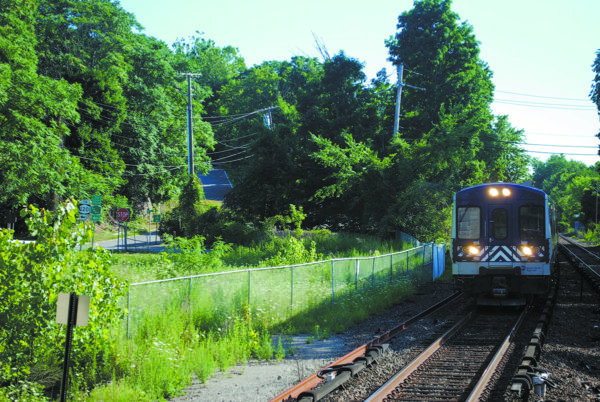
The proposed site of Chappaqua Station has drawn opposition from a wide segment of New Castle residents and officials.
The proposed site of Chappaqua Station has drawn opposition from a wide segment of
New Castle residents and officials.

Mike Kaplowitz, the chairman of the Board of Legislators, says the project has been problematic from the get-go.

“Pretty much, nobody is happy,” Kaplowitz says. “That project is so messy. I don’t meet many people in New Castle who are happy on either side of that issue.”

Leicht acknowledges that the town has some legitimate concerns over the project, but says HUD is worried that the town is dragging its feet.

“I think that a legitimate back and forth, and focusing on the health and safety issues, is fine. The sense was that this is being protracted for a very long time,” she says. “I think part of the frustration is that things keep coming up sequentially rather than part of one process that is condensed.”
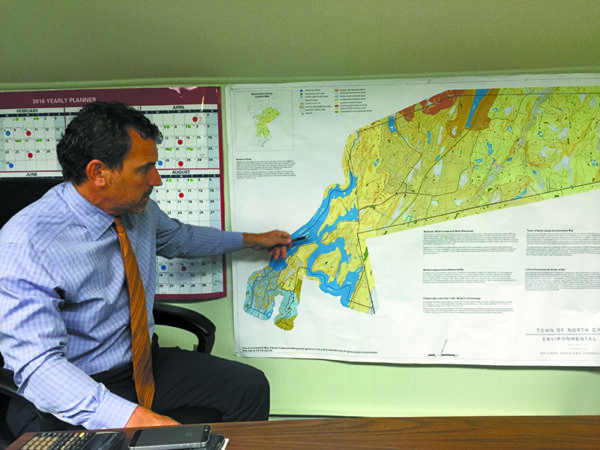
North Castle Supervisor Michael Schiliro explains restrictions imposed by his town’s infrastructure.

A Solution in North Castle

Around a century ago, the Village of Kensico was flooded due to the creation of the Kensico dam, leading many of the village’s residents to move south to what is now the Hamlet of North White Plains. Supervisor Schiliro believes this piece of history along with the hamlet’s proximity to White Plains has led to a higher population density, and a concentration of the town’s minority population, in North White Plains that exists to this day.

Today, one zoning district in downtown North White Plains has three-and-a-half times the rate of minority households as the town as a whole. Additionally, large parts of the town are zoned for single-family housing, with these districts primarily white.

For the housing monitor, this itself amounted to prima facie (legal language meaning presumed until proven otherwise) evidence of clustering under what’s known as the Huntington test (named for the 1988 watershed case Town of Huntington v. NAACP).

“Do I disagree with their findings? No. They’re mathematical. We technically fail the Huntington test,” Schiliro admits. “But part of it is something that happened 100 something years ago, which developed a denser zoning or development here.”

The town’s zoning is based more on the limits of its infrastructure than anything else. In the rural northern parts of the city, sewer and water is sparse outside downtown Armonk. This prohibits the kind of housing density seen in North White Plains. Schiliro, a Democrat elected in 2013, met with officials from the monitor’s office his first year in office, giving them a tour of the town to show them the restrictions preventing multi-family housing throughout most of North Castle.

In May of this year, however, the housing monitor released a report placing North Castle on a list of seven municipalities whose zoning could result in liability under the Huntington test or the related Berenson test (named after the 1977 ruling involving New Castle). “In the absence of remediation,” the report stated, “the Department of Justice is encouraged to give serious consideration to bringing legal action against one or more of these municipalities.”

“I was disappointed because genuinely I felt that we had made a lot of progress,” Schiliro says, looking back at the May report. “So our reaction was, let’s sit down with the monitor and the monitor’s office again. It wasn’t any animosity, any anger. It was just, let’s communicate.”

Schiliro again met with officials from the monitor’s office in June following the report’s release and pressed the town’s case. A month later, the monitor withdrew his recommendation of legal action, noting progress made by the town and also acknowledging environmental and infrastructural constraints.

While the issue was ultimately resolved, the monitor’s decision to place North Castle on such a list in the first place was viewed by some of HUD’s critics, particularly the Astorino administration, as an example of “breathtaking” government overreach. A spokesman for Astorino said the county executive was puzzled by the monitor’s initial decision, as was Westchester Legislator Margaret Cunzio, who represents North Castle.

“I think it was unfair because since day one they had been compliant and they had been working with both the monitor and the HUD office,” says Cunzio, a Conservative. “The town has done nothing since day one but try to fulfill their requirements.”

Schiliro carefully avoids any criticism of HUD or the monitor.

“It must be a challenge for them,” he says. “It’s a lot of work to really understand all the towns in the county, and each town is very different.”

Schiliro also notes that the town has made progress since the monitor’s 2014 visit. North Castle adopted the model zoning ordinance in 2014, and 25 affordable housing units are in development throughout Armonk.

“The town has always had affordable type housing for decades,” Schiliro notes. “We listened to what the latest communications were from the monitor and we made some adjustments to our code like creating the model ordinance so the future units would conform with what the parameters of the lawsuit were.”

Light at the End of the Tunnel?

At the end of the year, the county is obligated to have financing in place for the 750 units required under the settlement. But the county’s need for affordable housing has no end date.

“If we get to the end of the settlement and 750 units have been built but everyone is saying, ‘I never want to have to deal with the federal government, or the federal government’s money, or affordable housing, again,’” Leicht explained to legislators at a June meeting, “then we have not really met our goal here.”

Speaking to the Inside Press, Leicht circles back to this idea when asked whether New Castle, with 60 affordable housing units in the works including Chappaqua Station, has in fact done more than its share.

“These projects are happening, and I am optimistic that the 750 units will be met, but I don’t really think anybody would say that’s the entire affordable housing need in the county,” Leicht comments. “I haven’t had anybody, no matter where they stand on this settlement, not acknowledge that Westchester really has affordable housing needs.”

When people move into that housing [in Chappaqua], we will do everything in our power to make them feel welcome and part of the community.” –Robert Greenstein

Even some of Chappaqua Station’s opponents now seem resigned to the likelihood that it will be built.

“I’d like this project not to go forward because it’s a terrible site,” Kaplowitz says. “But unfortunately the wheels are in motion and there’s nothing we can do to stop it.”

Greenstein notes that there’s no guarantee the project will meet the conditions required for the building permit, but acknowledges the futility of risking litigation to try to stop it from moving forward.

With the housing monitor absolving North Castle of its Huntington test failure, this reporter asks the town’s supervisor, is the town in the clear regarding settlement compliance? “I would think we should be,” Schiliro replies diplomatically. “We will just continue on this path,” he continues. “As new developments come about, the model ordinance is in place; we’ll continue to further affordable housing like we’ve been doing for decades.”

At year’s end, the county is set to have the 750 units in the works, theoretically winding down its obligations under the settlement. But if the past is a guide, nothing is that simple.

In his letter of resignation Johnson, the housing monitor, wrote that his successor should be prepared to deal with the case for some time to come.

Andrew Vitelli, a Westchester native, is the editor of Inside Armonk Magazine.
Filed Under: Armonk Cover Stories Tagged With: affordable housing, Affordable Housing in Armonk, Armonk, Board of Legislators, Chappaqua Crossing, Housing, HUD, Inside Press, North Castle, theinsidepress.com, Town of New Castle, Westchester affordable housing

Five Biggest Financial Mistakes Made During a Divorce

August 25, 2016 by The Inside Press

divorce story galBy Ilene Amiel

Divorce is a stressful time. It’s hard to think clearly and be organized when your life is turning upside down. Once you decide to divorce, you begin a process new to you. I tell my clients that getting divorced is like playing a board game that doesn’t come with instructions. You’re not sure what to do, how the game works, what the rules are and how to win (or not lose).

You hire a lawyer or mediator and hope that he/she will help you get a fair settlement. From a legal standpoint, you may be in good shape. But from a financial standpoint, you really need to understand the game. Not understanding your finances can cost you a lot of money and affect you and your children for the rest of your life.

The five biggest mistakes that people make involve budgeting, taxes, medical insurance and credit score management. Here they are:

1. Underestimating Budgets

The most important documents that you will be required to prepare are the Financial Affidavit aka Statement of Net Worth and a monthly budget. Your attorney can help you put them together but, ultimately, it’s up to you to provide accurate and complete information in each category; these will be the basis for negotiations and for the courts. The challenge is to create detailed financial documents based on dozens of line items to properly reflect your assets, liabilities and monthly expenses.

You must include every single expense even if it occurs only once or twice a year. Unexpected expenditures that arise such as appliance, home or car repairs along with unforeseen medical expenses have to be included. Although the Statement of Net Worth and budget can be revised, once you have submitted your final documents, your lawyers will use them to negotiate a settlement. If you underestimate your monthly expenses, you will have to deal with it once the divorce is completed.

2. Misunderstanding Marital Status on Tax Returns

If you’re in the middle of a divorce on December 31, and you both agree to the filing, you can file a joint return. However, once the divorce is final, the IRS considers you divorced for the entire year. You must file as single or head of household (if you have custody of the children). The reason this is important is that generally filing jointly provides the most beneficial tax outcome for most couples. If one of the spouses owes taxes, it could be considered a marital liability. I highly recommend that you consult with your CPA or tax preparer. He/she can review your previous returns and evaluate the current situation to choose the best financial option.

3. Forgetting about a Maintenance Tax

The second issue that is often forgotten is tax on maintenance (aka alimony or marital support). Maintenance is taxable as income to the recipient and tax deductible for the payor. Many people neglect to save a percent of their monthly payment for taxes and then need to come up with a large payment on April 15. You do have a choice and for some couples, the tax consequences are more favorable if they make payments nondeductible and nontaxable because of tax consequences.
Taxes are an ongoing obligation and need to be planned for during the year.

4. Inadequately Researching Medical Insurance

Once your divorce is final, each spouse will be responsible for their own medical insurance. For those individuals whose spouse was insured by an employer sponsored plan, COBRA allows for you to stay on the same plan as you had when while married for three years post divorce. With the costs of insurance changing constantly, it is best to research the options before the divorce is final in order to determine the most cost effective plan to meet your needs.

5. Failing to Check Credit Rating

And now, the last but not least most important mistake that divorcing individuals make: not checking and understanding their credit rating.

Your credit rating is used to determine what rates you can get on loans, lines of credit, car leases and credit cards. While you were married, anything in a joint account or jointly owned will be reflected on your individual credit report and score. Before your divorce is complete, you should get a copy of your credit score and report from all three reporting bureaus–Experian, Equifax and Trans Union. If your credit score is low or contains errors, now is the time to fix it. If you have late payments on your report, they can remain on there for seven years.

You need to fix these mistakes on the reports and learn how to improve your score so you will have the highest rating possible as you move from a married person to a single person with your own identity.

Ilene Amiel is a CDFA (Certified Divorce Financial Analyst) who helps divorcing individuals with the financial aspects of their divorces. For more information about Ilene, please visit divorcefinancialconsultant.com or call (914) 980-0898.

Filed Under: Sponsor News! Tagged With: Divorce, Finance, Financial mistakes, Inside Press, Mistakes during divorce, theinsidepress.com

Armonk Summer Concert Series

August 23, 2016 by The Inside Press

The Swingaroos perform at Whippoorwill Hall Theatre on July 9, 2016 as part of the Armonk Summer Concert series. Front row from left: Kimberly Hawkey (vocals), Dan Glaude (clarinet), Nat Ranson (trombone), Ray Cetta (upright bass) seen in rear. Marianne Campolongo Photo.

By Marianne A. Campolongo

Stormy weather did nothing to hamper the opening night of the Armonk Summer Concert Series. Although they had to postpone their plans for a picnic under the stars at Wampus Brook Park’s gazebo until the following weekend, a near-capacity crowd turned out at Whippoorwill Hall Theatre to see The Swingaroos, a spirited young band who cover jazz, blues, and pop standards from 1930 to 1945, as well as performing original tunes penned by the band’s vocalist Kimberly Hawkey and pianist Assaf Gleizner. The other band members are Dan Glaude on the saxophone and clarinet, Nat Ranson on trombone, Ray Cetta on bass and Uri Zelig on drums.

Kimberly Hawkey of the Swingaroos performs at Whippoorwill Hall Theatre on July 9, 2016 as part of the Armonk Summer Concert series. Marianne Campolongo Photo.

Hawkey said she and the band actually preferred the indoor space. “It felt like an old 1940’s theatre and the sound was great. The audience was really receptive. Some of them were grooving in their seats. You need inspiration, especially when you’re playing jazz because much of it is improvised. It was a fun group to play for, a great audience.”

The free Summer Concert Series, held twice a month in July and August, is produced by Sam Morell, a semi-retired chemical engineer, who volunteers for many town activities, under the aegis of The Small Town Theatre Company.

“We have very gracious sponsors,” said Morell. The Town of North Castle and several local businesses lent financial support, and raffles were held during intermission. The summer’s line-up included Charlie Lagond (jazz), the New Rochelle Opera, and Hager, Ibarra, Schulman, Spielman, and Johnson singing Broadway show tunes.

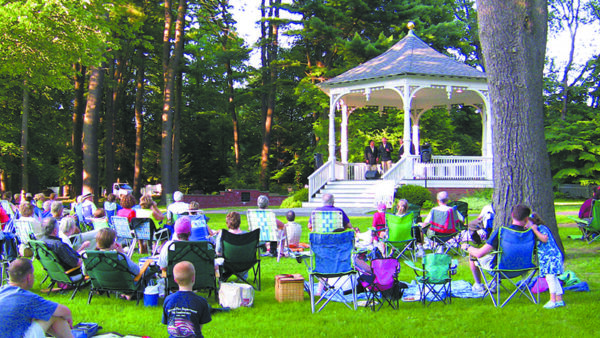
“The best social media are people getting together not virtually but bringing a picnic basket, a lawn chair and sharing some food together with friends and listening to a concert,” said Morell. “Saturday evening under the stars and the moon.”

Marianne Campolongo is a professional photographer and writer from Chappaqua. Visit www.campyphotos.com.

The Small Town Theatre Company Summer Concert. Sam Morell Photo.

Filed Under: Armonk Cover Stories Tagged With: Armonk, Armonk Summer Concert Series, concert, Inside Press, summer, theinsidepress.com

Cider, Donuts and Racing Mark Chamber’s Fall Festival

August 23, 2016 by The Inside Press

By Justin Ellick

The 5th Annual Cider and Donuts Festival, previously called the Armonk Fall Festival, is coming to Wampus Brook Park. The event, sponsored by the Armonk Chamber of Commerce, will be held Sept. 18 and gathers residents and merchants of Armonk to welcome the changing of seasons and to reflect on yet another spectacular summer.

Cider & Donut 5

The festival, which brings together the town’s residents for a day of activities each year, focuses on Armonk’s long history as a cider and donut hotbed. Over the years, the festival has grown rapidly, with more events and more guests showing up every year. Last year was the first year the Cider and Donut Festival partnered up with Jamie’s 5K Run for Love, and the Chamber of Commerce is confident that the race’s popularity and participants will skyrocket this year as a result of the great success of last year’s festival. This year, the Chamber decided to add on another wing to the festivities, as the Byram Hills Pre-School Association and its annual carnival will join the fun. With so many activities to get through in so little time, people are excited to see what kind of impact the festival has on the small hamlet of Armonk.

“Ideally we’d like the festival to serve as a way of getting Armonk values and the people who display them out in the open a little more,” said Neal Schwartz, president of the Chamber of Commerce. “Armonk is filled with many small businesses trying to expose themselves to a wider range of consumers. The festival offers a great opportunity for these small-business owners to increase business as well.”

Mike Dardano Photos
Mike Dardano Photos

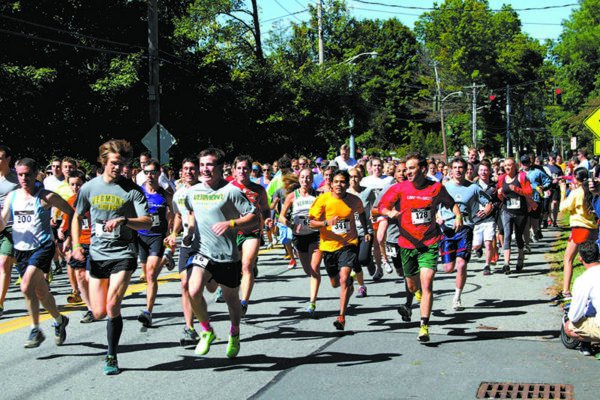
The festival, running from 10 a.m. to 2 p.m., is the largest it’s ever been. The fun will start with some races, as the kids will get a chance to test their speed with the Donut Dash (ages 2-8) at 10 a.m., followed by the McIntosh Mile at 10:10 a.m. After the children have had their fun, Jamie’s 5K Run for Love is set to begin at 10:30 a.m. This portion of the festival is a continuation of a popular annual event, with runners coming from all over to honor the late Jamie Love, who was a track and field star at both Byram Hills High School and the University of Vermont. This year, net proceeds from the run will benefit the North Castle Public Library’s children’s programs along with the Armonk Chamber of Commerce, so that the town can continue to run popular programs and events.

Once the festival and races start at 10 a.m., non-racing attendees can jump right into the Cider and Donut Festival games and activities. These will include donut fishing, as well as pie-eating contests and dunk tanks. The donuts, from Beascakes Bakery, will be freshly out of the oven, practically melting in festivalgoers’ mouths. To accompany the donuts, there will be plenty of apple cider to go around.

This year, the festival is merging with another popular Armonk event in the Pre-School Association Fall Carnival. This will also get underway at around 10 a.m., with rides and activities for children, as well as pizza and ice cream. The festival has become an Armonk tradition, and one that continues to grow.

Cider and Donut Kids pie eating 2014

“Our first year, all we had was a couple of booths and limited activities, along with the fact that not many people attended the festival,” continued Schwartz. “In under five years we’ve been able to grow significantly the festival and the events it offers, and in turn have attracted more and more people every year.”

The Cider and Donuts Festival has quickly become one of Armonk’s biggest events of the year, as local merchants and residents of Armonk look forward to coming together as a community.

For more information, visit http://www.armonkchamberofcommerce.com/

Greeley grad Justin Ellick, a sophomore Media and Communications Major at Ursinus College in Philadelphia, is an intern for Inside Chappaqua and Inside Armonk Magazines this summer.

Filed Under: Armonk Cover Stories Tagged With: Armonk, Armonk Cider and Donuts Festival, Fall, festival, Inside Press, theinsidepress.com

Child Hunger Rountable Highlights Hunger in County

July 24, 2016 by Inside Press

Lowey, USDA Official, and Food Bank for Westchester Hold Child Hunger Roundtable and Food Bank Tour in Hottest and Hungriest Season

66,000 children in Westchester are food insecure; 13,600 in Rockland enrolled in school nutrition programs

Families of kids receiving free and reduced lunch in school face hundreds in additional costs in summer

Congress must save and strengthen child nutrition programs

Elmsford, NY – Congresswoman Nita M. Lowey (D-Westchester/Rockland) and United States Department of Agriculture Under Secretary for Food, Nutrition, and Consumer Services Kevin Concannon yesterday toured Food Bank for Westchester’s distribution center and held a roundtable on helping children at risk of hunger during the summer.

“The dog days of summer shouldn’t also be the hungry days of summer,” said Lowey, Ranking Member of the House Appropriations Committee. “Yet tens of thousands of children in the Lower Hudson Valley are hungry in the months they don’t attend school where they receive vital meals. We can’t expect children to grow, thrive, and succeed if they are hungry. That’s why I’m working with Food Bank for Westchester and USDA Under Secretary Concannon to pass legislation to save and expand summer feeding programs and other nutrition initiatives for millions of American children and families.”

Under Secretary Concannon said, “The USDA has long recognized summer as a vulnerable time for kids and has been focused on closing the food security gap that occurs during the months when school is out of session. Since 2009, more than 1.2 billion meals have been served through the Summer Meal Programs, fueling kids and teens throughout the summer and helping to ensure they are healthy and ready to learn when the school year begins. Alongside Congresswoman Lowey, New York State, the Food Bank for Westchester, and other partners, we will continue our commitment to the New Yorkers most in need.”

President and CEO of the Food Bank for Westchester Ellen Lynch added, “One in five people in Westchester County are food insecure, and 33 percent of those people are children. We thank Congresswoman Nita Lowey and USDA Under Secretary Kevin Concannon for their visit today and are grateful for their efforts on behalf of children and families. With their help, we are optimistic that we will be able to expand our summer feeding programs and make sure that more children receive the nutritious food they need and deserve.’’

Millions of American children are food insecure, including 66,000 in Westchester County, according to the Food Bank for Westchester. Many go without the nutritional support they receive at school during the summer months, including up to 25,000 Westchester students in grades five and under who receive free or reduced lunches in school. In Rockland County, according to People to People for Rockland, food insecurity affects 9.5 percent of the population, including 13,641 children enrolled in school nutrition programs. The Food Bank of Westchester officials said that, based on Feeding America estimates, families need an additional $318 for meals in the summer for each child who loses the benefit of free or reduced school lunch programs while school is out.

Following a tour of the Food Bank for Westchester’s impressive distribution center, Lowey and Concannon heard from hunger relief advocates, youth agency and nutrition program representatives, and school officials about the dire circumstances facing many local families and proposals to close the meal gap.

Joe Allen, Chairman of the Board for People to People for Rockland, which served nearly 47,000 individuals last year, said, “Since the recession began in 2008, the number of Rocklanders needing the services of the People to People pantry increases virtually every single month. In the throes of summer, the situation gets more severe. Too many parents now dread the financial strain that comes with feeding their families in the summer, traditionally the season of rest and relaxation.”

Elmsford Union Free School District Superintendent Joseph Ricca said, “Too many of our children are living in a constant state of uncertainty and anxiety about finding their next nutritious meal. During the summer months or holiday school recesses, these concerns are exacerbated. We must continue to work hard to support our neediest children and their families by providing them with opportunities to secure the food that they need during these challenging times. We are grateful to Congresswoman Lowey, Under Secretary Concannon and the Food Bank for Westchester for continuing to bring these dire circumstances affecting our children to the forefront.”

Congress is overdue to pass a Child Nutrition Reauthorization bill. Many related programs expired last summer, were temporarily extended, and will expire on September 30th. The bill Republicans passed in the House Education and Workforce Committee in May to reauthorize the Healthy Hunger-Free Kids Act of 2010 would put more children at risk of hunger year-round.

The partisan bill’s shortcomings include:
· A higher threshold for the Community Eligibility Provision, which helps schools with high poverty rates provide free breakfast and lunch to all students;
· Block grants and decreased funding for states in place of vital and successful initiatives like the Summer Food Service Program and school lunch and breakfast programs; and
· No permanent authorization and less funding than is currently provided for the Summer Electronic Benefits Transfer (EBT) for Children pilot project.

As Ranking Member of the House Appropriations Committee, Congresswoman Lowey has strongly supported the Summer EBT program since 2010 and President Obama’s proposal to expand it nationwide, including for New York families. It provides debit-like cards for food purchases during the summer to families with children in free and reduced lunch school feeding programs. Concannon said Summer EBT has helped reduce the most severe food insecurity by one-third during the summer months and enabled children at risk of hunger to eat more nutritious meals in the eight states where it operates.

“Thankfully we have great organizations like People to People for Rockland and the Food Bank for Westchester to fill the hunger gap,” said Lowey. “Our communities are strongest when our economy helps Americans secure good jobs that fully support their families and when the government safety net is sufficient to help when they need it. When Congress returns to Washington in September, ending hunger for millions of young Americans must be a top priority. Our children are counting on us to put food on the table, and we cannot let them down.”

# # #

Filed Under: New Castle Releases, Uncategorized Tagged With: Child hunger, Food Bank, hunger, Inside Press, roundtable, theinsidepress.com, Westchester

  • « Go to Previous Page
  • Page 1
  • Interim pages omitted …
  • Page 6
  • Page 7
  • Page 8
  • Page 9
  • Page 10
  • Interim pages omitted …
  • Page 59
  • Go to Next Page »

Primary Sidebar

Please Visit

White Plains Hospital
William Raveis – Armonk
William Raveis – Chappaqua
Northwell Hospital
Houlihan Lawrence – Chappaqua
Houlihan Lawrence – Armonk
Houlihan Lawrence – Briarcliff
NYOMIS – Dr. Andrew Horowitz
Westchester Table Tennis Center
Spavia
Compass: Miller Goldenberg Harris Team
Lipari & Mangiameli Dentistry
Raveis: Lisa Koh and Allison Coviello
Bristal Assisted Living
Maid Brigade
Kevin Roberts Painting & Design
Zwilling J. A. Henckels
Meagher & Meagher Attorneys at Law
Compass: Aurora Banaszek
Dr. Briones Medical Weight Loss Center
Fleetwood Pastry Shop
Whitaker’s Garage Door Store
Beecher Flooks Funeral Home
Chocolate Chalet
King Street Creatives
Pinsky Studio
Home Grown Gardens
Joseph Richard Florals

Follow our Social Media

The Inside Press

Our Latest Issues

For a full reading of our current edition, or to obtain a copy or subscription, please contact us.

Inside Pleasantville and Briarcliff Manor Inside Chappaqua and Millwood Inside Armonk

Join Our Mailing List


Search Inside Press

Links

  • Advertise
  • Contact Us
  • Digital Subscription
  • Print Subscription

Publisher’s Note Regarding Our Valued Sponsors

Inside Press is not responsible for and does not necessarily endorse or not endorse any advertisers, products or resources referenced in either sponsor-driven stories or in advertisements appearing in this publication. The Inside Press shall not be liable to any party as a result of any information, services or resources made available through this publication.The Inside Press is published in good faith and cannot be held responsible for any inaccuracies in advertising or sponsor driven stories that appear in this publication. The views of advertisers and contributors are not necessarily those of the publisher’s.

Opinions and information presented in all Inside Press articles, such as in the arena of health and medicine, strictly reflect the experiences, expertise and/or views of those interviewed, and are not necessarily recommended or endorsed by the Inside Press. Please consult your own doctor for diagnosis and/or treatment.

Footer

Support The Inside Press

Advertising

Print Subscription

Digital Subscription

Categories

Archives

Subscribe

Did you know you can subscribe anytime to our print editions?

Voluntary subscriptions are most welcome, if you've moved outside the area, or a subscription is a great present idea for an elderly parent, for a neighbor who is moving or for your graduating high school student or any college student who may enjoy keeping up with hometown stories.

Subscribe Today

Copyright © 2026 The Inside Press, Inc. · Log in