• Skip to primary navigation
  • Skip to main content
  • Skip to primary sidebar
  • Skip to footer

The Inside Press

Magazines serving the communities of Northern Westchester

  • Home
  • Cover Stories
  • Features
    • Portraits and Profiles
  • Advertorials
    • Lifestyles with our Sponsors
    • Sponsor News!
  • Wellness
  • Happenings
  • Advertise
    • Advertise in One or All of our Magazines–And/Or Subscribe
    • Advertising Payment Form
  • Contact Us
  • Search

music

Frank Shiner Finds Home, Again, In Music, Acting

June 3, 2017 by Brian Donnelly

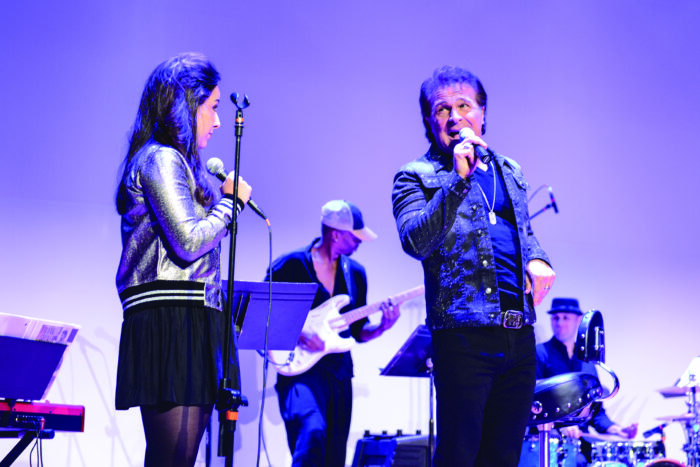
Shiner with his daughter Lindsay at the Chappaqua Performing Arts Center
PHOTO BY Carolyn Simpson/Doublevision Photographers


Frank Shiner and his wife, Suzanne, have restored two 100-year-old homes since moving to Westchester. The first was in New Rochelle–built in 1906 –and the second in Chappaqua–built around 1912–which he and his wife have called home since 2003. The couple has three children: Matthew, 28; Jeremey, 26; and Lindsay, 17.

Since moving in, they have restored or replaced lighting fixtures with period pieces, resurfaced the wood–while preserving a “historic patina,” and, of course, restored the original pool.

“We bought dilapidated places and brought them back to what they were originally,” said Shiner, who is involved in the New Castle Historical Society.

In front of their home was a live-in cottage, which Frank has converted into a garage and his own rehearsal space. The award-winning singer and recording artist practices there before shows, where he performs some of his favorite songs. But, he is quick to point out, “I don’t do covers.” “I put another spin on it, or make people think about it a different way,” he said.
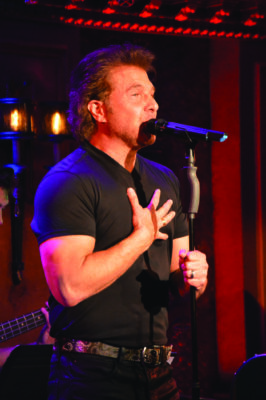
Randy Radic, who reviews music for Huffpost.com, agrees. In addition to declaring, “the man can sing,” Radic says, “you’d be hard pressed to say who did the original. And who cares anyway, because Shiner’s rendition is so darn good.”

His recent shows, which included one at the Chappaqua Performing Arts Center April 22, featured songs from his new album, Lonely Town, Lonely Street.

The 12-track album dropped May 19 and features his reimagined versions of R&B, jazz and blues classics popularized by artists like Elton John, The Rascals and Donny Hathaway. The Doc Pomus song “There Is Always One More Time” is both the last song on the album and at shows because, he says, it drives home the message that it’s never too late.

“People walk out of there feeling like anything’s possible,” the “Blue-Eyed Soul” singer said.

Originally, Frank was an up-and-coming actor in New York City, earning roles in soap operas and theater. He was doing well, but not making enough to support his wife and son. When his second son, Jeremy, was born, he decided to give it all up and take a sales job.

“I was like, ‘OK, I’ve got a baby, one on the way, a mortgage. I can’t be this selfish and do this any longer,’” he said.

In 1995 he started his own business managing payments for doctor’s offices, which today has 130 employees nation wide. He never thought he would perform again, until one night in 2011 when the couple stopped in for a bite at the since closed 353 Restaurant in Bedford. “They had an open mic night,” Frank said. “I hadn’t sung in front of people in 12, 15 years, and Suzanne said, ‘get up and sing me a song.’”

Frank tried to say no. But, Suzanne, who was going through chemotherapy for triple-negative breast cancer, “literally cried and pulled her wig back and showed me the bald head,” Frank said. “She played me pretty good.”

He then got up and sang and, “had a little bit of fun.”

The bandleader asked him to sing another song, and then a third. After that, Frank ran out of songs he knew well enough, which he said was the only reason he got off stage.

“It meant a lot to me, because I felt like he wasn’t himself for so long for us, to give us this amazing life,” Suzanne said, looking up with her glassy blue eyes as if watching Frank take the stage all over again. “It was like it never left him.”

Afterward, the bandleader running the open mic asked him to join his orchestra. For the second time that night, Frank unsuccessfully declined an offer.

“I didn’t want to do it, he said. “I just wanted to be with [Suzanne] and support her through the illness. She insisted.”

Suzanne’s battle with breast cancer spanned what Frank calls “five years of hell” and multiple complications. She had 12 surgeries all together. Today she is cancer free.

“Anything I have ever done she has inspired,” Frank said, calling the dancer from Arkansas “the best woman I know.”

From there the businessman made music his career–while keeping his day job. He performed with the orchestra, and everywhere else he could until he caught the eye of his now manager, Ken Levy. “It was like, ‘Bam,’ we went right into production,” Frank said.

His first album, appropriately titled “The Real Me,” was released in 2014 and picked up by Universal Records. Through songs by Van Morrison, Randy Newman and Elvis Costello, he told the story of putting his dreams on hold to raise his family, and then coming back to it.
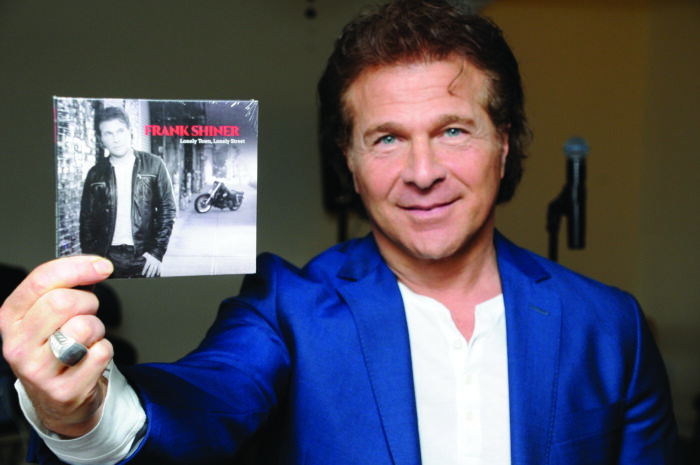
Lonely Town, Lonely Street is Frank Shiner’s sophomore album. PHOTO BY BRIAN DONNELLY

“The message was, ‘who is the real you?’” he said.

On his new album, every song is about love, which Frank said he didn’t notice until he started recording.

“I don’t believe in coincidence,” Frank said. “Something happened at that open mic night… It was almost like the world or god was saying, ‘job well done, and now you guys need some healing.”

After a deep breathe to exhale the emotion, the Blue-Eyed Soul singer picked his head back up, locked eyes with his blue-eyed bride, and continued.

“Music has been so healing, I cannot tell you. It’s totally changed our lives.”

And with another change coming–their youngest, Lindsay, going to college in the fall–the soon-to-be empty nesters are looking forward to the next chapter. Suzanne wants to take tap dance and yoga classes, and both want to travel. Frank may even try to perform while abroad. The resurgent singer also wants to, like his home, return to what he was originally. “I want to do Broadway musicals,” he said.
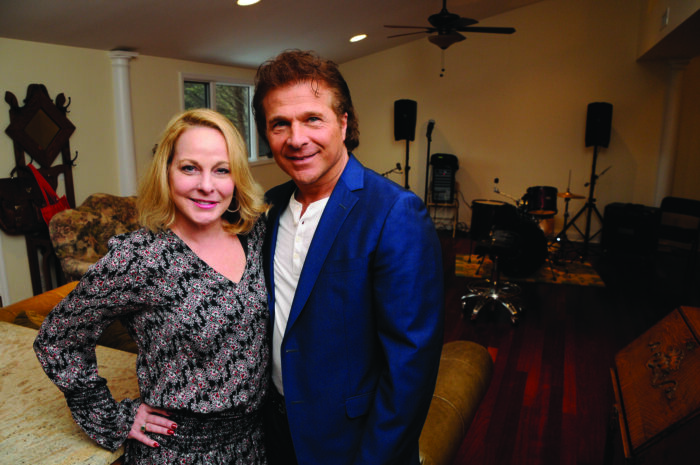
Frank Shiner met his wife, Suzanne, in an acting class in Manhattan. When he first talked to her she tried selling him clothes from the store she worked at. Offended, he didn’t speak to her for the duration of the class. Luckily, they had another class together. PHOTO BY BRIAN DONNELLY

And Frank is taking steps toward picking up where he left off nearly 30 years ago, when he was cast in a “Broadway-bound” musical scored by country music superstar Garth Brooks–support fell through for it when Brooks dropped out. Frank has tasked his agent with starting the process of getting him in front of agents, and he said he may just sing some Broadway songs at his upcoming show at Feinstein’s 54 Below in Manhattan, scheduled for July 8.

“We’re just going to do a lot of things we haven’t been able to do for a long time–find ourselves again,” Suzanne said.

Find out more about Frank Shiner at www.frankshiner.com.
Filed Under: Cover Stories Tagged With: Blue-Eyed Soul, Changed Life, Chappaqua Performing Arts Center, Chappaqua Singer, Frank Shiner, Lonely Street, Lonely Town, music, Musician

Armonk House Rock and Roll is Here to Stay

December 1, 2016 by Marianne Campolongo

If you’re looking for a place where you can not only listen to live music, but also get up and dance, then check out Armonk House.

The bar and restaurant has live music most Friday and Saturday nights, and DJ’s on Thursdays. Owner Connie Petrovich, a warm, friendly woman who goes out of her way to make sure all her guests feel welcome, said she “grew up in the restaurant business” starting at age three when her parents bought George’s Lounge in Pelham. The former owner of the Parkway Grill in Yonkers, Petrovich acted as the general contractor when designing the space and even had a hand in dismantling the 200-year-old barn whose wood adorns some walls. Her sister Terry Petrovich helped pick out the antique fixtures which give the restaurant its eclectic charm.

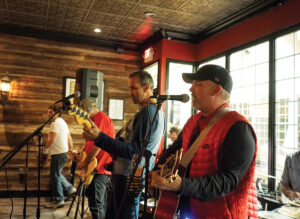
ia16-703Exit 5, described by the band’s drummer Jeff Silverman as “a bunch of dads from the Bedford area playing five decades of rock,” was on tap for the bar and restaurant’s first anniversary bash in November, playing a mix of classic rock covers, pop, punk, and current indie favorites spanning the 60s through today. When they started their set with Van Morrison’s “Brown-Eyed Girl,” our favorite, my husband and I knew we’d come to the right place. Joining Silverman were lead singer-guitarists Brian Belfiglio and Lee Davis, bassist Dave Wills, and Dan Paige on keyboard.
As on other nights when there’s music, while diners are still eating, they kept their ballads mellow, but then the center tables were pushed aside so the crowd had room to dance.
Cal Kramer, the drummer from Blond Ambition, another band that plays there, was at the one-year celebration with his wife. A realtor in his day job, Kramer has been a musician for 50 years as have most of the members of his group. “When I play music I feel like I go on vacation for three hours,” he said. Blond Ambition’s repertoire includes a wide range of classic rock “from Tom Petty to Fleetwood Mac and a lot of eclectic stuff,” he said. He looks forward to their next gig there scheduled for the night before Thanksgiving. “I like Connie, she’s getting good bands,” he said.

jazz-118Petrovich said she loves how the people of Armonk have embraced her.
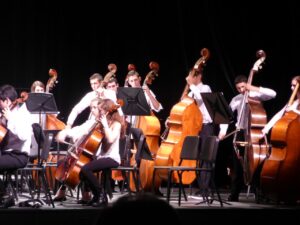
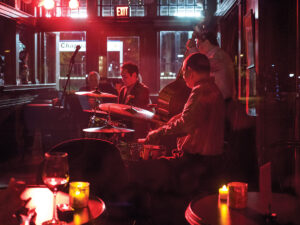
Sam Sorentino, a musician who has played there and who helps schedule the bands, said that “word got out” and bands are now calling them to play.

The December lineup: Dec. 1 and 15 Dance Party Meetup group with DJ Joe, Dec. 3 Innuendo, Dec. 9 Night Train, Dec. 16 Bookends, Dec 17 The Little Black Dress, Dec. 22 Duke and Damien, Dec. 23 Group Therapy. There’s also a fundraiser for the Heavenly Production Foundation on Dec. 18. The music generally starts at 9:30 and there is usually no cover charge. Check the website www.armonkhouse.com for additional information and New Year’s Eve announcements.

Filed Under: Armonk Cover Stories Tagged With: Armonk House, bars, live bands, music, rock and roll

Daniel Lauter Quartet at Chappaqua

October 19, 2016 by The Inside Press

10_22-chappaqua-promo-full

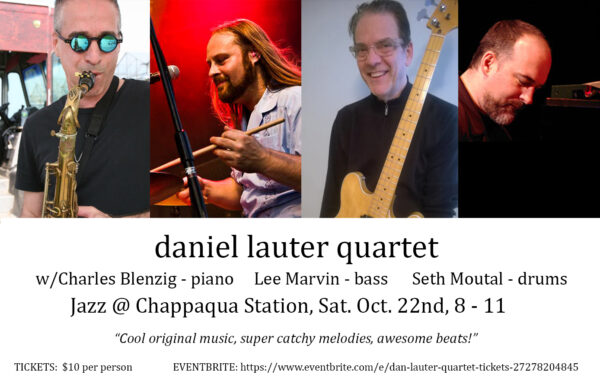
DANIEL LAUTER QUARTET live at Chappaqua Station  

Cool original music, super catchy melodies, awesome beats!  At Chappaqua’s best venue for foodies and live music. Housed in the original Train Station building, it retains it’s old world charm with the warmth of a classic all wood interior, stone exterior coupled with a relaxed vibe and modern menu.

Daniel Lauter –Saxophones

Charles Blenzig – Piano

Seth Moutal – Drums and Tabla

Lee Marvin – Upright Bass

—

THE QUARTET:

Daniel Lauter – Chappaqua resident, dynamic world music saxophonist, composer of catchy and melodic original jazz, tribal swing, funk, and groove based music styles.

Charles Blenzig –  hugely talented jazz piano and synth player, and teacher at Purchase Conservatory, whose music encompasses bebop and modern-day fusion.

Seth Moutal – ‘electric’ performer, drummer and percussionist, easily moves between funk, jazz, middle Eastern, African styles.

Lee Marvin – creative, solid and versatile bassist, contemporary composer, performer, plays with the Lehman College faculty jazz ensemble, rocks both funk, and jazz styles.

Sat Oct 22nd, 8-11 PM

—

TICKETS:

$10 per person for a table reservation.   Bar seating available on first come, first served basis.

—

EVENTBRITE:

https://www.eventbrite.com/e/dan-lauter-quartet-tickets-27278204845

Filed Under: Happenings Tagged With: Chappaqua, concert, music

Byram Hills Music Education Program Honored

April 13, 2016 by The Inside Press

hs 16

Byram Hills has been honored with the “Best Communities for Music Education” designation for its outstanding commitment to music education. Byram Hills is one of seven Westchester County school districts – and just 476 districts nationwide – to receive the prestigious designation from the NAMM Foundation. The district’s excellent music program spans all four district schools and includes instruction that builds as students grow. Students can begin studying one of 10 instruments in the fourth grade. By the time they reach the high school, students can participate in a variety of choral, band and orchestra groups and continue their music education with courses that range from introductory guitar to Advanced Placement Music Theory. Byram Hills students have been chosen for All-County, All-State and National Music Honor ensembles.

gr 6 2

“Although I am new in my position, it didn’t take long for me to see just how special our music program is at Byram Hills,” said Director of Fine Arts Deepak Marwah. “We have a dedicated music faculty of passionate educators, and the work they do in the classroom inspires high levels of musicianship and creativity in our students each day.”

hs 11

The Best Communities Music Education designation is awarded to districts that demonstrate outstanding achievement in their music program, including providing all students with access to music education. To qualify for the Best Communities designation, Byram Hills provided NAMM with information about district funding, graduation requirements, music class participation, instruction time, facilities, support for the music program, and community-music-making programs.

The NAMM Foundation, which began as the National Association of Music Merchants, is an international association representing the music products industry and championing the intrinsic value of music education.

Filed Under: North Castle News Tagged With: Armonk, Arts, Inside Press, music, music education, theinsidepress.com

A Conversation with Chappaqua’s Conductor Extraordinaire, Michael Shapiro

March 6, 2016 by The Inside Press

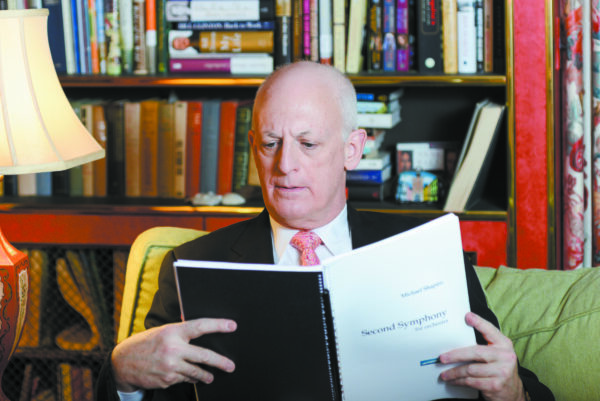
Michael Shapiro Photo by Carolyn Simpson
Photo by Carolyn Simpson

By Matt Smith

“The qualities that make a good conductor are, of course, a good ear, knowledge of the score, technical ability (hands, baton), a deep knowledge of all the instruments in the orchestra, and an ability to lead,” explains David Leibowitz, Conductor and Music Director of the New York Repertory Orchestra. “A great conductor has all these, but also that extra ingredient–a strong vision of how a piece of music should sound and how to convey that vision to the players.”

“That is what Michael has,” he continues. “He knows what he wants and he gets it. More important, he doesn’t stop until he gets it.” The “Michael” to which he refers is, of course, Michael Shapiro, world-renowned composer and conductor–and current music director and conductor of New Castle’s very own Chappaqua Orchestra.

Born and bred in Brooklyn, New York, Shapiro prides himself on his strong connection to music, and a strong passion for all types of the art form–something he presumably inherited from his father, a Klezmer band clarinetist who himself was “involved in all different forms of music.” In particular, “he loved swing jazz,” says Shapiro. “And through him [and his connections], I was able to hear some of the greats–like Louis Armstrong–live in concert, when I was a child. [I was] very lucky to grow up [in the business] and go to concerts continually, which has been a tremendous influence on me.”

Enjoying “the greats” set off a spark in little, seven-year-old Shapiro, who soon after developed his own interest in music. And he has since “done music all my life.” And indeed, throughout his career, Shapiro has conducted “literally all over the country,” working with such orchestras as the City of Birmingham Symphony Orchestra in the UK, Houston Symphony Orchestra, Virginia Symphony Orchestra, Charleston Symphony Orchestra, West Point Band’s The Jazz Knights, Traverse Symphony Orchestra, Garden State Philharmonic, Opera Theatre of Northern Virginia, and the Dallas Winds Symphony, to name a few.

He has also worked at a worldwide level, serving as vocal coach and assistant conductor at the Zurich Opera Studio in Zurich, Switzerland; as music consultant to the United States Holocaust Memorial Museum in Washington D. C., and as composer-in-residence at the Cabrillo Festival of Contemporary Music, where his original orchestral composition, Roller Coaster, received its West Coast premiere. Furthermore, he has also composed incidental music for Dateline NBC.

Of course, since 2002, Shapiro has served as music director and conductor of The Chappaqua Orchestra. Since beginning with the organization, which he notes “brought [him] back to conducting really fiercely,” he prides himself on taking the group “from one point to the other and making it a [more vibrant] presence in the culture of our town” He notes that under his tutelage, the orchestra has performed “all kinds of different literature…[and] is now very close to being an all-professional orchestra of the highest quality.”

And he’s not just tooting his own horn–or rather, waving his own baton; others think so, too. In fact, it’s well documented that under Shapiro’s leadership, the Chappaqua Orchestra has successfully “reached new artistic heights” in the last 14 years. Additionally, to his credit, the April 2006 performance of the Verdi Requiem,
conducted by Shapiro and performed in collaboration with the Taconic Opera, was even deemed the “musical event of the decade” in Westchester.

And if all that wasn’t enough, when he’s not conducting an orchestra, you’ll find him conducting business: “I’ve been involved in real estate for many years,” he shares. He’s also a bestselling author; one of his books, The Jewish 100, was, in fact, a New York Times bestseller and has since been translated into eight languages, include Chinese, Japanese, Portuguese and Russian, since its release in 1994 (Note: An updated edition was released more recently, in 2012). “And I love sports,” he says. “Particularly golf…I’m a golfer. And I love basketball [and] being tortured by the New York Knicks.”

He also enjoys spending time with his kids, and learning about music from them too. “My daughter loves rock music of the 60’s and early ’70’s,” he shares, with a laugh, “and she’s remarked how I know so little about it…because back then, in those days, I was listening to Brahms.”

Above all, however, he thanks partner Marjorie Perlin, for her insurmountable love and support. “[She’s] the most supportive person in my life,” he says. “She’s the best listener and the best critic. Her support has been completely total and has been a tremendous help in getting me to even higher levels, not only [in terms] of performance, but [in terms of] my own musical standards.”

So, given all of his present success, where does Shapiro see himself professionally in the next five years? He answers first, quite simply, “Doing the same, but in more prominent venues.”

“I’m always pushing the envelope as much as I can, and trying to get bigger and better performances,” he continues. “I’m really looking forward to writing more pieces for the theatre, either incidental music or ballet, and certainly [more] opera.”

Shapiro also seems to have a good sense of what is really important in terms of the art form. “The great performances and standing ovations and all the rest of those things are wonderful,” he explains, “but….working with fantastic, high-quality performers and producing works that you’re proud of [no matter what the result]… that’s what counts.” Shapiro recalls one such “massive” standing ovation at a concert this past January at Meyerson Symphony Center in Dallas, Texas. “That [standing ovation] doesn’t often happen,” he states, with a smile, “so, when it does, it’s just amazing.”

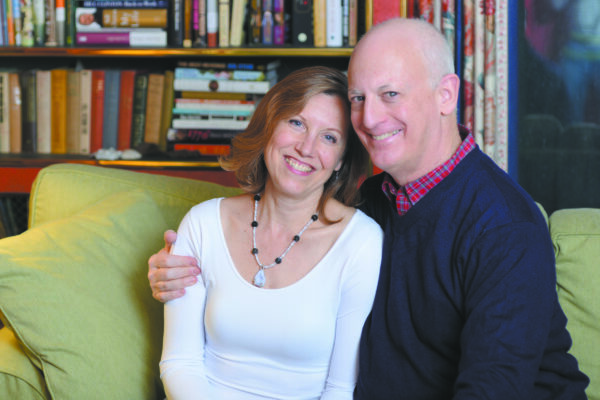
With his ”best critic,” Marjorie Perlin
With his ”best critic,” Marjorie Perlin (Photo by Carolyn Simpson)

So, considering such successes, when was the first time he knew he had “made it” as a musician? Ever so humble, he chuckled as he responded: “I’m still trying to make it.”

However, he does recall the “first major big performance” he gave–“when I knew I had something good,” he notes–at Westchester County Center in front of 2,000 people. “It was a commission by the now-defunct Philharmonic Symphony of Westchester” to compose music for narrator and orchestra to accompany a recitation of the signing of the Declaration of Independence–when he was just 25 years old.

“[The] piece premiered during the Bicentennial, so it was a big [deal],” Shapiro explains. “And [it] was narrated by José Ferrer, who won the Academy Award for Cyrano de Bergerac. The great pianist Van Cliburn was also on the program…so [these were] famous people [I was dealing with]. It was a great thrill for me to be around them and have that [experience].”

And as to how he has arrived to his current stature, Shapiro credits rigorous training. The first of his music teachers was Consuelo Elsa Clark, with whom he studied in Rockville Centre. “Miss Clark was an amazingly great teacher,” he shares. “And she came from a very strong tradition. It was great learning from her.”

From there, he went on to study conducting with Carl Bamberger at the Mannes College of Music (“and much later at Bard College with Harold Farberman,” he notes). “I also studied with other composers–Vincent Persichetti was a major influence. Sir Malcolm Arnold, too, [I studied with] briefly.”

Shapiro’s “most influential” composition teacher, however, was famed American composer Elie Siegmeister, with whom he studied privately “and rigorously,” for four years, while attending classes at Columbia and Juilliard, the latter where he eventually earned his master’s degree.

And of course, there was his score reading and ear training teacher, Mme. Renée Longy, known to generations of Julliard students, due to her rigorous demands, as “the infamous madame of dictation.” “She was extraordinarily difficult,” Shapiro confesses, honestly, “but ultimately, [a] very loving teacher.” In fact, Longy’s techniques proved to be so beneficial in the long run that Shapiro admits, “I still use [them] to this day when I conduct an orchestra.”

To that end, on the subject of teaching and further developing upon what one learns in school, Shapiro notes that once he discovered he had the musical talent, and enjoyed playing instruments, there was no question he’d pursue it full time:

“It’s like eating. When you’re hungry, you need to eat,” he says. “It’s the same way with music…It’s just a feeling… something you respond to… like anything else. You have a talent in it, you [pursue it].” “And then,” he adds, with a wink, “if you’re smart, you get the right teachers.”

Furthermore, to aspiring musicians, he advises: “keep your head down and just go to work,” he says, emphasizing that one should not compare him or herself to anyone else or their path. “And never stop reading. Or listening,” he advises. “Even at my stage, having [conducted] as long as I have, I’m always teaching myself by watching and listening to what others have done.”

His colleagues echo Shapiro’s advice, as many have continued to hone their skills through watching him work. “Michael cares deeply and fully about the art of music,” comments David Leibowitz, of the aforementioned New York Repertory Orchestra. “He is never anything less than 100% committed to [his] music–whether in performance or composing, or in just discussing what he likes and doesn’t like about a [particular] piece of music or performer. [Additionally], he has a very definite point of view [about what music should or shouldn’t be] and [he] argues his case well.”

Shapiro explains his art further: “Conducting is really listening [and] hearing to an extremely high level. [It’s about] manipulating the sound orally and not necessarily in words or in thoughts. To be a true composer, you need to compose every day [and] that means every day. To be a true conductor, you need to know your scores better than the individual players in the orchestra or band know their parts. The depth of knowledge has to be total, in the fullest sense of the word.”

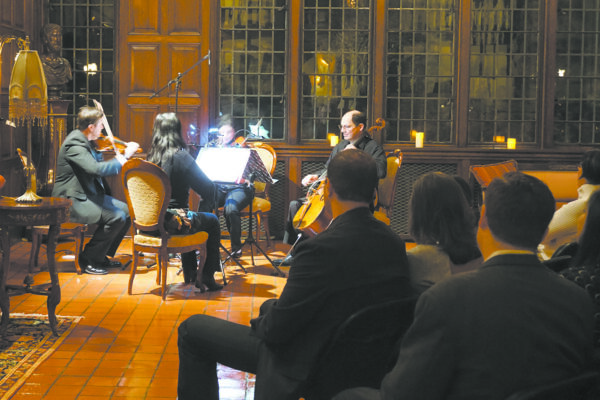
Chappaqua Orchestra members performing during a Winter fundraiser

But while he’s indeed adamant about one putting their nose to the grindstone, he also stresses the importance of letting loose and thinking creatively. “Without the creative [element] at the highest possible level, you can’t really do a fine job from a professional standpoint,” he says. “It all has to–and should–work together. You can’t really have one without the other.”

As a master composer at both the creative and professional level, Shapiro recognizes the value of music within a given community. He states, “Music [says] something [in a way] that words can’t. It’s ethereal, and that’s what makes it special. Music can lift us up to a different place. It can really move the spirit like nothing else.” And, having spent 40 years in the business, Shapiro obviously knows, and has witnessed, the power of music firsthand. Given this, when he composes, he draws inspirations from the great musicians of the past–musicians whose music moved his spirit in the same way as he describes. Stephen Foster, John Philip Sousa, Charles Ives, and George Gershwin are among those who influence Shapiro and his work. “As a kid, too,” he continues, “I was very influenced by [pianist] Arthur Rubinstein [and] by [conductor] Leopold Stokowski, whom you may remember from Fantasia.”

But while it’s nice to reminisce and draw inspiration from the past, Shapiro acknowledges the importance of advancing the art form and composing new work. And his colleague is the first to say that Shapiro himself is indeed doing just that. “Composers of our time keep the art form alive,” Leibowitz explains. “We cannot sustain a musical world that relies only on the music of the past. As a composer, [Shapiro] does the immeasurably important work of creating new and wonderful music.”

To that end, if he could leave a lasting mark on the New Castle community, Shapiro, who described himself in three words as “giving, loving, and inquisitive,” would like to be remembered for his contributions to the town through his work with the orchestra.

On a personal level, and in a similar vein, he’d like to be remembered as a composer for his score of Frankenstein, which, incidentally, made its world premiere at our very own Jacob Burns Film Center in Pleasantville. Since its premiere, says Shapiro, the score has enjoyed over two dozen performances nationwide “and continues to be asked for from Europe to Australia.”

But, he says, upon reflection, at the end of the day, “I don’t know any composer who doesn’t want to be remembered as a great composer. So [ultimately], I’d love my music to survive me.”

No doubt it will, but in the meantime, The Chappaqua Orchestra isn’t going anywhere anytime soon; in fact, the Town Board recently approved a lease issued last July to utilize Wallace Auditorium at Chappaqua Crossing as a full-time arts and cultural center–and a permanent location for the group. “I’m very happy about the development of the Wallace Auditorium,” says Shapiro, on the subject. “The orchestra now has a home.”

Their “home” will hopefully allow them to play and entertain audiences for years to come–it’s a good thing, too, as Shapiro makes note that these types of groups are unfortunately, not around much anymore. “When I was a kid in the ’50’s, there were 20 orchestras in Westchester,” he shares. “Now, it’s just Yonkers Philharmonic and The Chappaqua Orchestra. Some communities [today] don’t know how to support them.” Also, “Not as many people go to concerts of that kind…. and [because of that] many of us question the future of large ensembles such as symphony orchestras.”

With that in mind, Shapiro “welcome[s] everyone to come to our events and take some time to listen to new music.” And in that same vein of supporting music within our town, he states, “I hope that the work that I’ve done will reach more and more people within the community.” For more information on Shapiro and his work, please visit michaelshapiro.com.

Lover of all things musical, Matt Smith — a proud graduate of Skidmore College — is a regular contributor to the Inside Press, Inc.

Festive CO Fundraiser in Historic Chappaqua Home

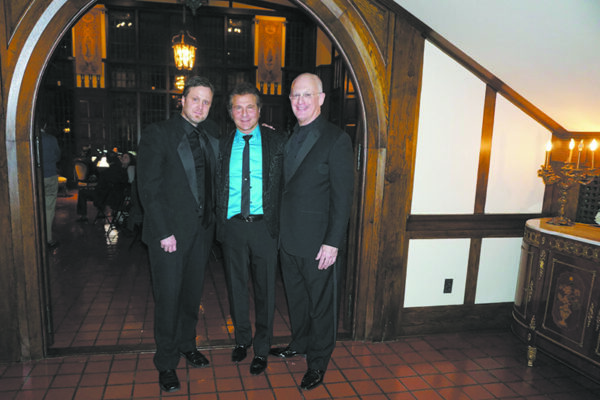
Chappaqua Orchestra’s David Restivo (left) with Frank Shiner and Shapiro.

Earlier this year: a Chappaqua Orchestra fundraiser took place in a gorgeous music parlor inside the historic Chappaqua home of Frank and Suzanne Shiner.

The program’s “first set” featured:

• String Quartet #1 by Leona Liu

• Dissonance Quartet by Wolfgang Amadeus Mozart: Katsumi Ferguson and Dave Restivo, violins;
Nicole Peragine, viola; Seth Jacobs, cello

• Fantasie for Soprano Saxophone and Piano by J.B. Singelee: Christopher Brellochs, saxophone and Cynthia Peterson, piano

• Meadowlark by Stephen Schwartz: Elizabeth Gerbi, Christopher Brellochs, Cynthia Peterson

A “second set” featured:

• String Quartet in F Major by Maurice Ravel: Katsumi Ferguson, Dave Restivo, Nicole Peragine, Seth Jacobs

• Two songs by Sheldon Harnick and Jerry Bock: Will He Like Me? and I Don’t Know His Name Erin Stewart, Cynthia Peterson

• Stormy Monday Frank Shiner, Christopher Brellochs, Cynthia Peterson

• Duet: That’s All I Ask of You from Phantom of The Opera: Erin Stewart and Frank Shiner

• Bring Him Home from Les Mis, arranged by Cynthia Peterson: Frank Shiner, Katsumi Ferguson, Dave Restivo, Seth Jacobs, Cynthia Peterson

Filed Under: Cover Stories Tagged With: conductor, Inside Press, Michael Shapiro, music, orchestra, theinsidepress.com, Westchester

  • « Go to Previous Page
  • Page 1
  • Interim pages omitted …
  • Page 6
  • Page 7
  • Page 8
  • Page 9
  • Page 10
  • Page 11
  • Go to Next Page »

Primary Sidebar

Please Visit

White Plains Hospital
William Raveis – Armonk
William Raveis – Chappaqua
Northwell Hospital
Houlihan Lawrence – Chappaqua
Houlihan Lawrence – Armonk
Houlihan Lawrence – Briarcliff
NYOMIS – Dr. Andrew Horowitz
Westchester Table Tennis Center
Spavia
Compass: Miller Goldenberg Harris Team
Lipari & Mangiameli Dentistry
Raveis: Lisa Koh and Allison Coviello
Bristal Assisted Living
Maid Brigade
Kevin Roberts Painting & Design
Zwilling J. A. Henckels
Meagher & Meagher Attorneys at Law
Compass: Aurora Banaszek
Dr. Briones Medical Weight Loss Center
Whitaker’s Garage Door Store
Fleetwood Pastry Shop
Terra Tile & Marble
Decicco and Sons
Pinsky Studio
Carolyn Simpson (Doublevision Photographers)
King Street Creatives
Beascakes Bakery

Follow our Social Media

The Inside Press

Our Latest Issues

For a full reading of our current edition, or to obtain a copy or subscription, please contact us.

Inside Pleasantville and Briarcliff Manor Inside Chappaqua and Millwood Inside Armonk

Join Our Mailing List


Search Inside Press

Links

  • Advertise
  • Contact Us
  • Digital Subscription
  • Print Subscription

Publisher’s Note Regarding Our Valued Sponsors

Inside Press is not responsible for and does not necessarily endorse or not endorse any advertisers, products or resources referenced in either sponsor-driven stories or in advertisements appearing in this publication. The Inside Press shall not be liable to any party as a result of any information, services or resources made available through this publication.The Inside Press is published in good faith and cannot be held responsible for any inaccuracies in advertising or sponsor driven stories that appear in this publication. The views of advertisers and contributors are not necessarily those of the publisher’s.

Opinions and information presented in all Inside Press articles, such as in the arena of health and medicine, strictly reflect the experiences, expertise and/or views of those interviewed, and are not necessarily recommended or endorsed by the Inside Press. Please consult your own doctor for diagnosis and/or treatment.

Footer

Support The Inside Press

Advertising

Print Subscription

Digital Subscription

Categories

Archives

Subscribe

Did you know you can subscribe anytime to our print editions?

Voluntary subscriptions are most welcome, if you've moved outside the area, or a subscription is a great present idea for an elderly parent, for a neighbor who is moving or for your graduating high school student or any college student who may enjoy keeping up with hometown stories.

Subscribe Today

Copyright © 2026 The Inside Press, Inc. · Log in