 Create lighting to help enhance any environment! The variety of soft, understated elegant lighting enhances your home without being noticed. With no glare, the lighting makes everything look prettier. Security lighting options are automated, giving the allusion that someone is home when you’re not. Design Lighting by Marks uses only the best-quality fixtures, taking advantage of LED and environmentally friendly options. With more than 40 years of lighting installations throughout the tri-state area, the company designs, measures, and pre-assembles in its facility. Working together with his electricians and landscapers, owner Mark Mosello completes the installations seamlessly in one day. designlightingbymarks.com
Inside Press
Chappaqua Paint & Hardware
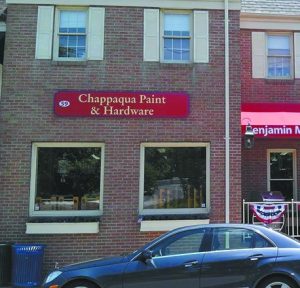 Our store, located at 59 S. Greeley Avenue in Chappaqua, is an old fashioned hardware store… friendly, reliable, convenient, knowledgeable, and helpful. We are open seven days a week, during snow storms, hurricanes and power outages. Customers come to us at all hours for help with issues like replacing broken light bulbs, selecting paint colors, delivering BBQ grills, special ordering generators, and assisting with handyman projects. Chappaqua Paint & Hardware knows that a good hardware store is committed to helping our customers with all their household needs. Our #1 priority is to keep a happy home for every customer! chappaquapandh.com
On “Giving Back to a Jewish Population in Cuba”
By Matt Smith
There is an old Hebrew saying, which stems from an early 20th century Zionist folksong: “Livnot uI’hebanot.” Translated into English, this saying means, “To build and to be built by it.” You may also know this saying: “It’s better to give than it is to receive.” However you know the adage, we’re sure you can agree it’s one to live by. And it’s certainly one Rabbi Jonathan Jaffe of Temple Beth El of Northern Westchester kept in mind this past winter when he sojourned to Cuba with a group of congregants for a project in community outreach.
“I think that for every generation of American Jews, there has always been an inspirational challenge to rise up,” explains the Rabbi. “[And as] I believe the theory of [Jewish American historian] Jonathan Sarna points out, my generation of American Jews is at a loss because of a lack of a challenge that way. We don’t have some all-encompassing, inspirational task to which we can dedicate ourselves.”
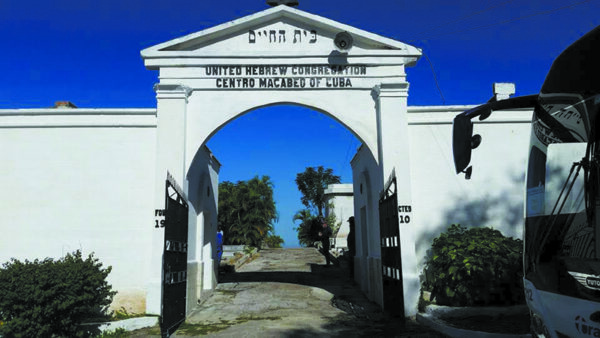
Given this fact, the Rabbi took it upon himself to create one for the people of his congregation. He turned his attention toward the tumultuous relationship between the United States and Cuba, which he saw as an opportunity to heal wounds–“an amazing goal to center the congregation around”–and a way to “fulfill that need” for a present-day, inspirational challenge by giving back to the Jewish population in Cuba.
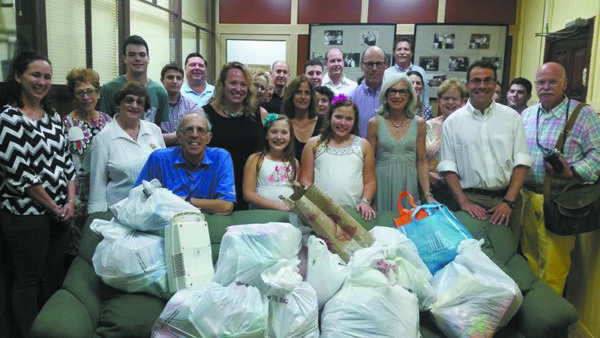
And so, the trip was constructed under the auspices of “bringing supplies and donations to the needy populations, especially the Jewish populations, in Cuba.” The group of congregants, which totaled around 25 people of various ages, brought in over 2,000 pounds of supplies–medical, hygienic, dental, and school/office–and donated an additional $2,000 to various Jewish communities throughout the country.
While there’s no doubt he enjoyed his time in Cuba (the group took part in walking tours, scuba diving, music and food), the Rabbi admits that, during the trip, his eyes were opened to how much the country is still struggling culturally and economically– and found that especially humbling when he found himself without his American luxuries.
“It’s hard to lead a synagogue trip when you can’t use a credit card or cell phones,” the Rabbi acknowledges. “And that’s [the case because] the bureaucracy and the limited markets available make things very difficult at times.” Additionally, he notes that “not only did they not have cell phones, but even the nice hotels don’t have voicemail [systems available] in the rooms. So, if you wanted to contact someone, you went downstairs and you had someone write down a note and go up and slip it under the person’s door. It felt like we were stuck in the Stone Age from a communication standpoint.”
Rabbi Jaffe was also particularly struck to see the lack of resources firsthand–and the impact the loss had on the town’s residents. “We were walking around the very small town of Trinidad,” the Rabbi explains, “and [we had] a college student [who] was drinking out of his Gatorade bottle… and a man approached him and asked if he could have the [Gatorade] bottle because he needed something to feed his child milk. They don’t have baby bottles. It makes you realize how privileged we are.”
Considering this overall American privilege, and the relationship Cuba has not only with America in general, but specifically, the Jewish people, Rabbi Jaffe comments that he felt the trip “was an amazing experience in Jewish peoplehood.”
“We share a common bond, a common history, a common ancestry, and that wherever you go in the world, you can always find a Jewish population and [know] that you’ll be treated as an insider rather than an outsider. And that it’s this beautiful global aspect of Judaism, in that you have to leave your community and your shell in order to experience that.”
Observing how his own group of congregants experienced the trip was a source of joy too. “[We had people] from nine years [old] through their mid-70s [and] the group just beautifully gelled. It was really nice to see.” Livnot uI’hebanot. “And,” says the Rabbi, with a smile, “we are all closer for it in the end.”
Camp Fairs, Camp Open Houses, Camp Consultants: Making Sense of it All
By Heather Skolnick
Spring has sprung but for those who have not finalized camp selections for their children, now is the time. The camp selection process can be an arduous one. As a mom who recently enrolled her two youngest in their first real camp experience, I know first-hand how daunting this can be. Fortunately, our community has many ways to help parents navigate the complexity of camp selection. But how is one to know what a successful interaction between prospective camps and families looks like?

One popular option is to attend a camp fair. These fairs are a way for families to get exposed to multiple camps in one fell swoop. They also provide the ability to associate a face with the camp experience and speak in person with the directors of the facility. For camp directors, this type of interaction with families allows them to explain the points of differentiation of their camp.
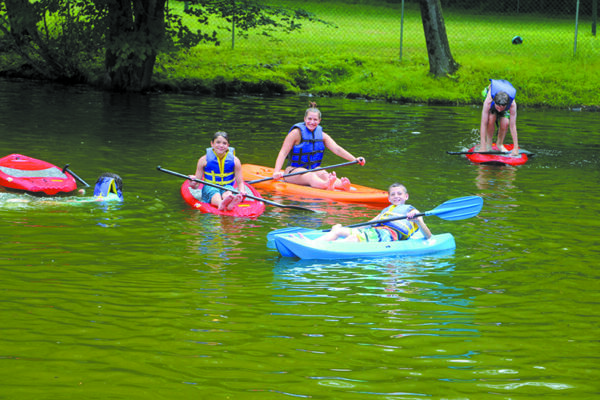
Westchester Family hosts a couple local camp fairs, which have a great representation of our local camps. Editor Jean Sheff says, “A successful camp fair is one where parents and camp representatives get to interact in a meaningful way. Parents are looking to match their family’s needs with the right camp, and camps are looking for new campers. It’s a real win-win when the match is made.”
Westchester Parent hosts a similar camp fair; this year was their 34th annual event. Jacqueline Lachman, head of marketing, said “Our goal is to expose parents to a wide variety of camps and summer activities, so they can get a lot done in one place in a few hours. Additionally, we want to be sure that parents are able to see that all of their questions are answered and the kids have a little fun. There is often a mix of parents who are embarking on this decision for the first time, some returning for new options and those looking to make a change to accommodate each child during various life stages. We try to have each group represented. Camp fairs are best when there’s a mix of local day camp opportunities.” She added, “It also helps to have some sleepaway camps on-site, to let parents explore that option without having to drive all over the place, and maybe decide it is time to switch.”
The Camp Connection is another resource with Susan Pecker as the local expert. Pecker is an experienced camp consultant who covers camps across Westchester, Rockland, Massachusetts, Connecticut and Rhode Island. She can help ensure campers are well matched with camps. Pecker says that a good visit with the camp or camp director is critical. When working with Pecker, both parties already know about each other and what they are looking for so they have a solid starting point. She feels it’s important for the camp director and camper to have face-to-face interaction so that they can each determine if they are a match for each other. Pecker recommends looking at each camp individually. She finds that it may be difficult to have meaningful dialogue between prospective families and camps at large camp fairs. Pecker added, “Going to visit a camp is a great idea but going to see a camp this time of year doesn’t give a great representation of what it’s like. Go to see a camp when it’s active and in session–that is the best way to evaluate it.” Some parents may choose to visit a camp’s open house, allowing them and their children a chance to see first-hand what the camp has to offer.
“Some camps might think an open house is about bells and whistles, about putting on some awesome display to entice prospective families,” said Chris Del Campo, director of communications at Harvey Cavalier Camp. “But my 20-plus years as a camp director has shown me that moms and dads (and grandmas, too) want to meet face-to-face with the people who will be caring for their child in a safe and nurturing environment where kids will have fun doing the things they enjoy.”
“Open houses are a great way to bring prospective families to your camp to experience what makes your camp so special,” explained Matt Pritikin, the Associate Director of Breezemont Day Camp in Armonk. “In the few hours parents and kids spend at our camp, our goal is to maximize the number of things they see and do, culminating in a unique experience shared together.”
In speaking with parents, what constitutes a successful interaction between them and their children and prospective camps varies. Local mom Amanda Goldberg is already looking into camp for the summer of 2017. Her family will be attending an informational session for a specific summer program and will speak with camp directors at that time. “The three of us will have an opportunity to ask questions of the directors,” she said. “While my son has watched all of the promotional videos for the camp program, he has some very specific questions that cannot be answered from a video. It would be our son’s first time away from home and it is also important to meet the people who will be caring for him for six weeks.”
Learning about various summer programs can be accomplished many different ways. Each approach offers something different and it is important to recognize what a successful interaction entails. Ultimately, what’s important is that parents, children and camp directors leave with a clear indicator of whether or not that camp is a good fit for the child.
Heather Skolnick and her husband and three kids are New Castle residents. Heather works for Macys on their Omnichannel Process and Systems team. She often reminisces fondly about her fun-filled summers at camp.
Greyston Bakery Implementing Mindful Business Strategies
Making a Difference Since 1982
By Janine Crowley Haynes
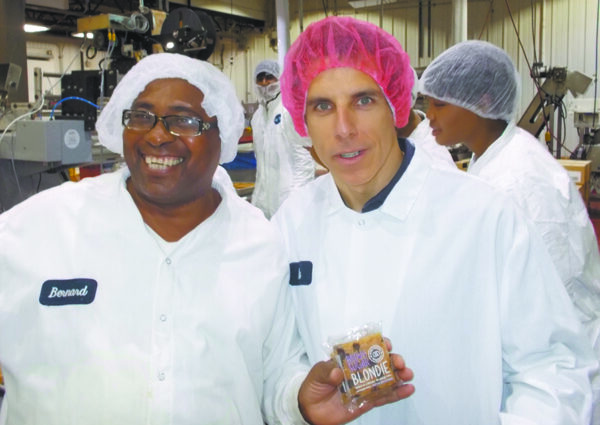
Here in Northern Westchester, you may not know of Greyston Bakery by name, but, perhaps, you know Ben & Jerry’s Chocolate Fudge Brownie ice cream. Based in Southwest Yonkers, Greyston Bakery delivers 35,000 pounds of brownies per day to Ben & Jerry’s. Greyston’s decadent, mouthwatering baked goods are also sold at Whole Foods and available on their website at Greyston.com. On the packaging of their products is the Greyston mission statement: Bakers on a Mission. We Change Lives. That’s one weighty claim. How could a bakery have the audacity to make such a declaration?
Mindfulness seems to be the buzzword of late, but mindfulness is an age-old concept to describe zen-like philosophical principles. Most of us associate mindfulness with yoga and meditation. Today, the word is being used extensively–mindful living, mindful eating, mindful parenting, mindful shopping, mindful business practices, etc. But…what does it actually mean? Mindfulness is derived from, but not limited to, Buddhist philosophy. It’s about being self-aware of the choices made in the present and how the decision-making process affects the outcome of the future. Philosophically speaking, mindfulness has the potential to change one’s trajectory, path, and eventual outcome in the future. Making mindful decisions is not limited to caring for one’s own wellbeing and prosperity. It also includes feeling a deep sense of responsibility and moral obligation to give back, serve, and uplift those in our communities and beyond for the greater good of humanity.
However, when a company decides to implement mindful principles as part of its business model, how exactly does that translate in the real world? What’s the impact on its success? In addition to turning a profit, is it possible for companies to uplift and enhance the lives of its employees and extend its reach into the community to effect positive change?
That’s one tall order. Yet, Greyston Bakery has been fulfilling that order since its inception in 1982. This is NOT your ordinary bakery. Founder and Buddhist Monk Bernie Glassman opened Greyston Bakery 34 years ago. His intention was to solve the serious social issues of high poverty and unemployment rates in Southwest Yonkers by employing the so-called unemployable. Glassman believed that business success and social justice are two sides of the same coin.
One key principle the Greyston business model is based on is Open Hiring. It benefits those who would not be considered employable by most companies’ standards. In Greyston’s 2015 Fast Facts – Mapping a Solution to Poverty pamphlet, it reads, “…The Bakery has a fundamental commitment to social justice through our Open Hiring policy in which individuals are offered employment regardless of educational attainment, work history, incarceration or past social barriers. Anyone with a positive attitude and strong work ethic is given a chance to transform their life for the better….” Basically, there’s no box to be checked on the application that delves into the applicant’s past. A prospective employee is put on a waiting list, and, when a position opens up, Greyston interviews the next person on the list.
To be clear, Greyston Bakery is a for-profit company. However, all the proceeds go to the Greyston Foundation which, in turn, provides various social programs offered to its employees as well as the community it serves. To say the least, Greyston is a multidimensional, nationally-recognized social enterprise. Since 2008, Greyston became a Certified B Corp, meaning it has to meet “…rigorous standards of social and environmental performance, accountability, and transparency…B Corp certification evaluates an entire company (e.g. worker engagement, community involvement, environmental footprint and governance structure) rather than looking at just one aspect of a company…”* In addition, Greyston has achieved Level 3 SQF Certification–the highest level in food safety and quality.

There are several philosophical plaques that hang along one of the walls in The Bakery’s environmentally conscious architectural structure. In addition to mindfulness, Greyston implements another important principle known as PathMaking. The plaque reads, “PathMaking…is both a guiding philosophy and a program at Greyston. The PathMaking philosophy is our belief that individuals can be supported to achieve wholeness (self-sufficiency) that comes from having a well-balanced, satisfying and integrated personal, spiritual and professional life. The PathMaking program at Greyston provides direction, support and referrals to all members of the Greyston Mandala–employees, clients and the board in the areas of personal and professional development and organizational success.”
Once hired, Greyston maps out a tailored-made path for the employee. Greyston mindfully considers all the aspects and challenges facing the individual–both in their work environment as well as in their personal life. Then, the new employee is placed in a nine-month apprenticeship program and provided support through various social programs offered by the Greyston Foundation.
Greyston’s Workforce and Development programs offer educational support, training, and business skills. The Greyston Childcare Center provides childcare and youth services for employees with children. Affordable housing is also available for those in need. What’s important to note here is that everything offered through the Greyston Foundation is within walking distance of the Bakery and/or accessible via public transportation. There are countless examples of the great works Greyston is doing for its community.
One example is, in collaboration with the City of Yonkers, Mayor Mike Spano, and New York State Senator Andrea Stewart-Cousins, there are now 441 plots of community gardens scattered throughout Southwest Yonkers. In 2014, these gardens produced 27,200 pounds of produce.
So, up here living in Northern Westchester, why should we care about Greyston’s efforts in Southwest Yonkers?
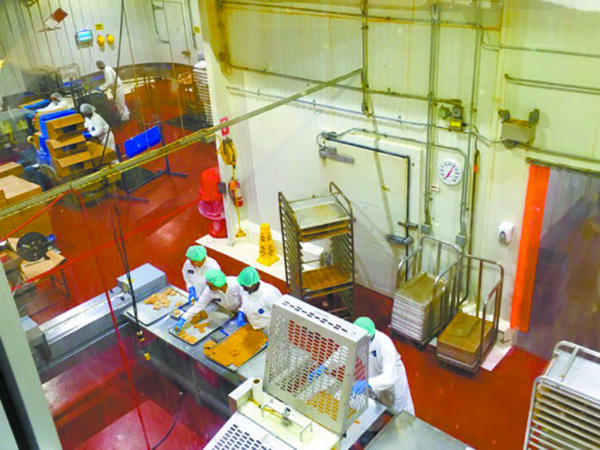

President and CEO Mike Brady wants to extend its reach and share Greyston’s successful, prosperous and inspirational story beyond Southwest Yonkers. Clearly, Greyston is making a positive impact on its community by providing real, substantive solutions for the difficult problems of poverty and unemployment. And…it all leads back to the road of implementing mindful business strategies–a path worthy of following. Just don’t forget to stop and savor the brownies along the way. For more information, visit www.greyston.com
Janine Crowley Haynes, Chappaqua resident, freelance writer & author of My Kind of Crazy: Living in a Bipolar World.
*triplepundit.com
Greyston Employees on a Path to a Prosperous Future
 Employee: Celia Robertson
Age: 35
Years employed: 15
Position: Line Staff
Her inspirational story: At the age of 20, Celia Robertson was hired by Greyston Bakery. It was her first job. She knew of The Bakery because her brother was a mixer at the time. To describe Robertson as an enthusiastic employee is an understatement. “I just love what Greyston stands for and the opportunities it provides,” Robertson states. She is a mother of two children–Khaliyah, 12, and Joseph, 8. “My daughter is already a great baker,” says Robertson, beaming with pride. As a single mother, she is grateful to have access to the child and youth services offered through the Greyston Foundation. Her aspirations beyond Greyston Bakery include opening a restaurant in Southwest Yonkers offering Jamaican and Creole cuisine.
 Employee: Curtis Savage
Age: 24
Years employed: 3
Position: Quality Assurance Technician
His inspirational story: “When I was a teen, I was going down a dark path, cutting class, hanging out with the wrong crowd…It wasn’t good,” says Savage. His employment options were limited because he did not complete high school. Savage is one of many employees who have and are benefitting from Greyston’s Open Hiring policy. “My life changed when I was hired by Greyston,” he states. Savage is a father of three children: Samantha, 6; Nicholas, 3; and Curtis, 2. After having children, Savage’s perspective shifted. “I want my kids to have the best of everything,” says Savage. He is grateful for the support offered through the Greyston Foundation including childcare as well as taking advantage of the business and training programs through Greyston’s Workforce and Development Center. Savage is working on getting his GED and certification in food safety. When asked what his aspirations are for his future beyond Greyston Bakery, Savage confidently replied, “I plan on going to college, focusing on healthcare…then work towards becoming an RN.”
Save the Date: June 15
A key fundraiser benefitting the Greyston Foundation will be held on June 15 at Chef/Owner Peter Kelly’s Xaviars X2O on the Hudson in Downtown Yonkers. For additional info, please contact karent@greyston.org.