• Skip to primary navigation
  • Skip to main content
  • Skip to primary sidebar
  • Skip to footer

The Inside Press

Magazines serving the communities of Northern Westchester

  • Home
  • Cover Stories
  • Features
    • Portraits and Profiles
  • Advertorials
    • Lifestyles with our Sponsors
    • Sponsor News!
  • Wellness
  • Happenings
  • Advertise
    • Advertise in One or All of our Magazines–And/Or Subscribe
    • Advertising Payment Form
  • Contact Us
  • Search

Cover Stories

Pro-Choice Community Express Fear, Outrage & a Call to Action to News of Roe v. Wade Being Overturned

July 12, 2022 by Illeana Baquero

As America prepared to celebrate the anniversary of its independence, pro-choice advocates across the nation mourned what they felt was a step backward in the fight for women’s rights and bodily autonomy.

On June 24, the Supreme Court released its decision on Dobbs v. Jackson Women’s Health Organization, one which overturned the constitutional right to abortion provided by the landmark rulings in Roe v. Wade (1973) and Planned Parenthood v. Casey (1992). Their decision now leaves it up to each state to set their own laws regarding abortion access.

The official ruling reads: “The Constitution does not confer a right to abortion; Roe and Casey are overruled; and the authority to regulate abortion is returned to the people and their elected representatives.”

In the wake of the decision, women’s rights activists and advocates for legal abortion access across the nation have come forward to express their sorrow, frustration, and fear for the future of the nation and American women’s right to control their own futures.

Cheryl Brannan, president and founder of Sister to Sister International, feels that “it’s a travesty.

“A woman should have full autonomy over her body and the absolute right to make a choice. That’s what access to healthcare is all about,” Brannan said. “It’s a travesty to justice and an intrusion on a woman’s personal life. It’s almost like we’re property…Instead of moving forward, we feel we are moving backward.”

As far as steps being taken in our local community, she said that she had recently met with the local board of legislators and supported them in their work to pass legislation that will provide additional protections for women.

Brannan said, “I am happy that here in New York State with our elected officials, they are conscious and savvy enough to know that we need to have legislation that supports women’s ability to choose and have an abortion as wanted, however I do think that it’s important that it’s codified because if not it can be rolled back just like Roe v. Wade was.” 

She went on, “This could affect us very negatively if not codified, one, and secondly, especially for low-income women and women of color, coming from other states where it may not be legal, they could certainly make a beeline for New York state, which, of course, would lead to more people coming through the system, which is one drawback of Roe v. Wade being overturned. A lot of women don’t have means to travel to another state, and if they do then of course it’s going to be a lot more people accessing services here locally. No matter how you cut it, it’s not a good thing.”  https://www.s2si.org/

Susan Chatzky, a Briarcliff resident, shares a similar sentiment.

“Obviously, our centers are going to see more volume. We’re not ideally located for most of the states in question who will have issues, the only thing that makes us favorable is that we do have Planned Parenthood at or near most airports, like there’s one near LaGuardia, there’s one near White Plains, but it necessitates flying, which is a tremendous expense,” she said.

Chatzky went on: “Women are going to suffer, women are going to die, and there are going to be a lot of people who are going to be born and live their lives unwanted, and without resources, without access to food, shelter, education, healthcare, and all of the other things we already don’t have enough of. It’s incredibly sad.”

Mini Timmaraju, president of national pro-choice advocacy group NARAL Pro-Choice America, said in a statement posted to their website that “the impact on the real lives of real people will be devastating. The Supreme Court has given the green light to extremist state lawmakers who will waste no time springing into action to put in place total bans on abortion…The 8 in 10 Americans who support the legal right to abortion will not let this stand. There is an election in November, and extremist politicians will learn: when you come for our rights, we come for your seats.

“The people who will be hurt most by the Supreme Court’s decision are those who already face barriers to accessing abortion care–including women; Black, Indigenous, and other people of color; those working to make ends meet; the LGBTQ+ community; immigrants; young people; those living in rural communities; and people with disabilities,” Timmaraju said.

She continued: “Leading up to the Supreme Court’s decision and emboldened by the Court’s anti-choice supermajority, extremist state lawmakers doubled down on their attacks on reproductive freedom in an orchestrated effort to undermine our fundamental right to make our own decisions about abortion without political interference. Anti-choice lawmakers have already filed over 500 restrictions on abortion this year, including bans on abortion at 15 weeks of pregnancy, bans before most people know they are pregnant, bans modeled after Texas’ vigilante-enforced ban on abortion, total bans on abortion, and medically unnecessary restrictions on medication abortion care.

“With the legal right to abortion in jeopardy in over half the states in this country and the Supreme Court’s decision making clear that we cannot rely on the courts to protect our fundamental rights, electing candidates who will fight for our freedom to decide is more urgent than ever,” Timmaraju concluded. https://www.prochoiceamerica.org/fight-back-for-our-freedom/

Brannan shared a similar call to action, noting that she “invite[s] people to join our movement. They can do so by emailing us using the contact information on our website, and we will continue to fight. But most importantly, we are encouraging people to register to vote, and we are encouraging them not only to galvanize and make our voices heard in New York state, but also in other parts of the country, because we need to be heard in Congress.”

Chatzky offered ways to get involved both on the local level, by phone banking and supporting pro-choice candidates when it comes time to hit the polls, as well as supporting national organizations in the form of donations or volunteer work.

“The Brigid Alliance is excellent,” she said. “They’re offering funds for transportation for people to move about. AirBnB actually donates a certain number of rooms to people who need medical care if it’s unavailable where they live, so people can look into supporting that. We were looking at trying to establish some sort of house hosting website where you could sign up to become a host and people could find you online for free, including hiring a private investigator to do background checks to ensure that people on both ends will be safe.”  https://brigidalliance.org/

Additionally, Chatzky mentioned organizations which use the assistance of volunteer pilots to help people fly, at no cost, to other states in order to get access to the healthcare they need, Elevated Access being one example.

Brannan, Chatzky, and Timmaraju’s messages all offer similar notions of hope for progress in the face of what they feel is regression for women’s rights in America. They encourage concerned Americans not to give up on fighting for justice or take a passive stance if they live in a state which has not restricted abortion access, but rather to use this as an opportunity to organise and exercise their voices through votes and volunteering in order to create the change they hope to see.


Filed Under: Cover Stories Tagged With: Abortion, abortion care, NARAL, Planned Parenthood, Pro-Choice, Roe v. Wade, Sister to Sister International, The Brigid Alliance

Chappaqua Library Centennial Celebration Emphasized Symbols for Growth and Endurance

June 9, 2022 by Alexa Troob

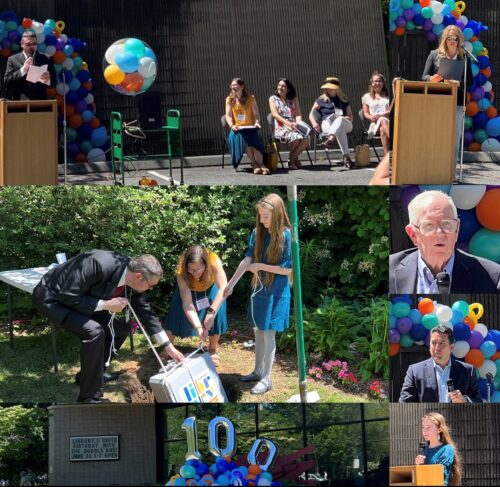
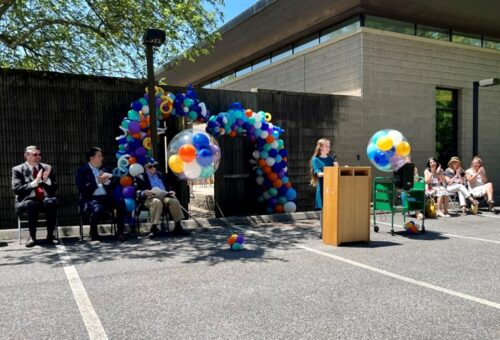
At a June 4, 2022 Chappaqua Library 100 Year Centennial Celebration.                 Photos by Grace Bennett and Alexa Troob for the Inside Press 


On Saturday, June 4, members of the Chappaqua community gathered in town to honor the beloved Chappaqua Library as it marked its 100 year anniversary. Library Director, Andrew Farber and Board President, Elizabeth Farkas Haymson began the Centennial Ceremony by welcoming the crowd and starting the celebration. “We have come from humble beginnings, but through the support of our local community, we have grown into the center of Chappaqua. Today we will honor the library’s achievements: where we started, and where we hope to find ourselves in the future,” said Andrew Farber.

Lisa Katz, Town Supervisor, then gave a proclamation, acknowledging the library as “a pillarstone of our community” and appreciating all that it offers. She shared the substantial impact that the library had on her own children’s love for reading and learning. 

Town historian Gray Williams shared a brief history of the library and the people who were particularly important in founding it in 1922 (a more in depth history of the library was later on display). While hearing about and celebrating the past of the library, it became clear that values such as education and making contributions to better the community have remained at the core of the library’s, and all of Chappaqua’s, foundation. 

The next guest speaker was David Vinjumari, author, NYU Professor, and Library Space Planner, who spoke about the importance of libraries. He classified the importance of libraries not only as a means of accessing books and information, but even as a matter of life or death. While this may seem like an exaggeration, it was actually proven by one of Vinjumari’s colleagues at NYU, Eric Klinenberg, as he studied a heat wave that swept through Chicago in 1995. More specifically, he studied why different neighborhoods that looked identical to each other in terms of race, income, and living conditions had drastically different death rates. Why did many fewer people, specifically the elderly, die in some neighborhoods compared to others? What he found was that the neighborhoods with lower death rates were the ones with more public institutions such as parks and community and senior centers, but most importantly, libraries. Public libraries were what helped keep people alive in times of extreme distress and “social connection was actually the difference between people living and dying,” shared Vinjumari. 

“During the pandemic especially, I think we as a community were also able to realize our need for togetherness and connection that we were robbed of for so long, creating only a deeper appreciation for public libraries. While a library is definitely about lending books, promoting reading, and helping people access information, it is also so much more. It holds the power to connect, making sure nobody in a community feels like they are alone.”

Vinjumari continued by noting the role that The Chappaqua Library plays in making sure all people feel welcomed and supported, specifically those that are either underserved or less able to take care of themselves than most of the fortunate citizens in Chappaqua. There are programs that help adults with disabilities, programs intended to appreciate different cultures, programs that deliver books to those unable to leave their houses, and so many more that are vital to our community. 

Bell Middle School Student Violet Clinton spoke about the impact that The Chappaqua Library has had on her young life. “I want to thank the children’s librarians for helping make the library a special place for me and for all the kids growing up here. The Chappaqua Library helped begin my love of reading and I will cherish it for a lifetime,” she shared. 

A TIME CAPSULE and A RED MAPLE TREE

The ceremony came to a close with the burying of a time capsule in the courtyard and a tree dedication. “The new tree will mark time moving forward, and in a short while we will bury a time capsule that will preserve the past,” said Elizabeth Farkas Haymson. The time capsule consisted of meaningful things from the library’s past for future generations to hopefully discover some day. Its contents included, but were not limited to, a history of the library, photos of the library from both the past and present, the first Chappaqua Library’s Writer’s Contest, library cards from 1987 to today, homemade COVID masks, a letter written by Bill Clinton appreciating all that the library provides, several Inside Chappaqua magazine articles regarding the library, including a cover article on the future of libraries by past Library Board President Ronni Diamondstein, and more. 

Next, the tree dedication took place, signifying time moving forward. The Town of New Castle donated the Red Maple Tree that was dedicated as a symbol of growth and endurance for the library for the next 100 years. The Library’s Centennial Ceremony was a great way to celebrate the past, and give hope for the future of the library. 


Filed Under: Cover Stories, New Castle News Tagged With: Chappaqua library, Chappaqua Library Centennial, Future of Libraries, Red Maple Tree, Time Capsule

New Castle Stands Against Gun Violence in Rally Also Urging National Changes

June 6, 2022 by Illeana Baquero

Survivor Described the Personal Impact of Gun Violence and County Officials Discussed New York Law Changes and Plead for Additional Changes at Federal Level to Make a Real Difference

Inside Press Photos 

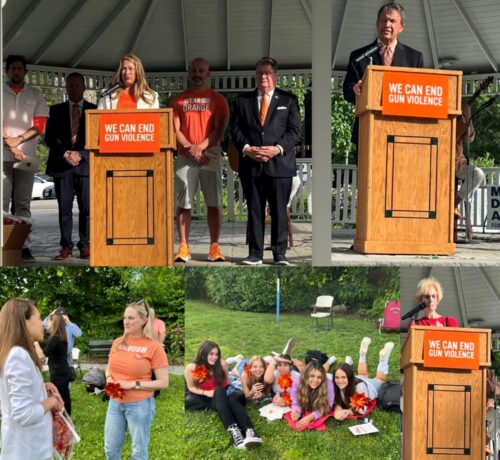
On Friday, dozens of people gathered at the New Castle Recreation Field Gazebo in Chappaqua in protest of continued acts of gun violence across the nation.

“Our country needs to do more to prevent gun violence,” said New Castle Town Supervisor Lisa Katz in her welcoming remarks following an opening prayer by Rabbi Jonathan Jaffe of Temple Beth El.

“When it comes to the safety of our children and fellow citizens, the toxic, hyper-partisan politics of the day must be set aside. We must come together in earnest to immediately effectuate change where there is common ground and at the same time create an environment for bridging the gap where more work needs to be done,” said Katz.

The call to action comes on the heels of the mass shootings in Buffalo, Uvalde, and Tulsa. As Katz, local and county public officials and members of Moms Demand Demand Action spoke, they looked out at concerned citizens attending wearing orange, the color which has become synonymous with the anti-gun violence cause. According to the Wear Orange website, the movement came about following the shooting of Hadiya Pendleton in 2013, after which her friends wore orange – the color hunters wear in the woods to defend themselves from other hunters – to commemorate her life.

“Gun deaths in our country are occurring at a staggering rate,” said Chief of Police Jim Caroll. “About one hundred Americans are killed every day and hundreds more are injured. The massacre in Uvalde was yet another grim reminder that in the U.S., children are much more likely to die by gun violence than any other cause…We have suffered too much at the hands of people who use guns to commit horrific acts of violence.”

Erin Fuller Brian, a Pleasantville resident and survivor of the 2017 mass shooting in Las Vegas, went on to share her story: “My life was forever changed,” she said of experiencing the deadliest mass shooting in United States history.

Although she and her husband were fortunate enough to have escaped prior to the shooter opening fire, she described their fear and confusion in the ensuing chaos, and the years of trauma that followed.

Inside Press photo

Fuller Brian gave birth to two children during the pandemic, and became choked up as she described the ways in which the recent shootings have hit home for her and her family.

”To be perfectly honest, the anxiety I feel just about keeping them safe on a daily basis is sometimes too much to bear. I obsess over their safety constantly and have intrusive thoughts about what could potentially happen to them after experiencing just how fragile life is and how it could be taken away in an instant.”

“And then something like Uvalde happens,” she said. “Nineteen children and two of their teachers were slaughtered, and I am broken. We all are. We send our children to school assuming they will come home safe and alive. These parents and families and students are living in a horrific nightmare. I think about what I went through and how hard it was for me to process when I was 29 years old, but most of the survivors of this shooting are children. They are eight, nine, and ten years old. How are they supposed to move on from this?”

While Fuller Brian expressed her grief, she also shared a message of hope, offering ways for the community to get involved in the fight and prevent more lives being lost to gun violence.

Some of these include fighting for common sense gun safety legislation with organizations such as Brady, Moms Demand, or Giffords, donating to those efforts, voting for politicians who support gun reform, talking to friends and family, calling representatives, and joining the March for our Lives protests on June 11th in Washington, D.C., Manhattan, or one of the tens of other locations.

“Have conversations about this, especially with your friends who are responsible gun owners,” Fuller Brian said. “You’d be surprised how much common ground you’re able to find because the NRA wants us to believe that this is a left vs. right, red vs. blue, gun owner vs. non-gun owner issue, but it’s not. It’s a pro-safety vs. pro-violence issue, and I don’t know a single responsible gun owner who is pro-violence.”

“This should not be a partisan issue. This is common sense,” she said.

Westchester County Executive George Latimer expressed a similar sentiment, stating that: “We have a lot of work to do. We will do our share at the local government level in Westchester County, and we hope that we can put enough pressure on the existing decision-makers or vote and get some new decision-makers.”

Latimer referred to a comment made in a radio interview by Robert F. Kennedy in the wake of Martin Luther King Jr.’s death: “No one knows who next will suffer some senseless act of bloodshed,” Kennedy had said.

“I ask myself, what are the next places where this is going to happen?” Latimer told the crowd. “It could happen anywhere. It could happen when I sit at a restaurant in an outdoor setting, in a plaza, any place. If someone has access to a weapon of mass destruction, it depends on that day, if that person decides to shoot up every civilian in sight.”

New York State Senator Peter Harckham shared a legislative update on the steps which New York State is taking to increase gun safety, included in a package of ten more gun safety measures passed on Thursday to be signed into law by the governor.

Included in this package is an increase on the age restriction for purchasing semi-automatic weapons to 21, a ban on the purchase of body armor, such as the kevlar vests which rendered the bullets of the security guard in the Buffalo shooting useless on the armored shooter, microstamping technology to allow for the tracing of bullets, an expansion of red flag laws, a ban on long magazines and auto-feeders, and a proposal for tracking and reporting mechanisms for hate speech on social media to hold those platforms accountable, among others.

“While we continue to work hard in New York State to keep you safe and pass the laws that we’ve all been talking about, we need to get national movement because without national background checks and without some national regulations, the flood of guns is going to continue to come to New York.”

Instrumental music was performed by John Burton. On the way out, orange pinwheels were distributed to the audience to place around the gazebo and along the road to commemorate the lives lost in these tragedies and to ensure that the community’s effort for change is visible to all.

Filed Under: Cover Stories, New Castle News Tagged With: Erin Fuller, George Latimer, gun violence, Gun Violence Awareness, Lisa Katz, Moms Demand Action, New Castle, Peter Harckham, Stand Against Gun Violence

Danielle’s Dreams: Sprinkling Joy Through Art and Adventure

June 1, 2022 by Jean Sheff

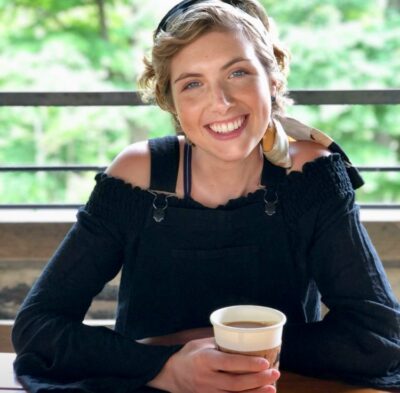
On an early summer day in 2019, Danielle Leventhal stepped into room 205 at Seven Bridges Middle School in Chappaqua. Danielle, a 2012 graduate of Horace Greeley High School, had attended Seven Bridges, as did her younger brother Alex. 
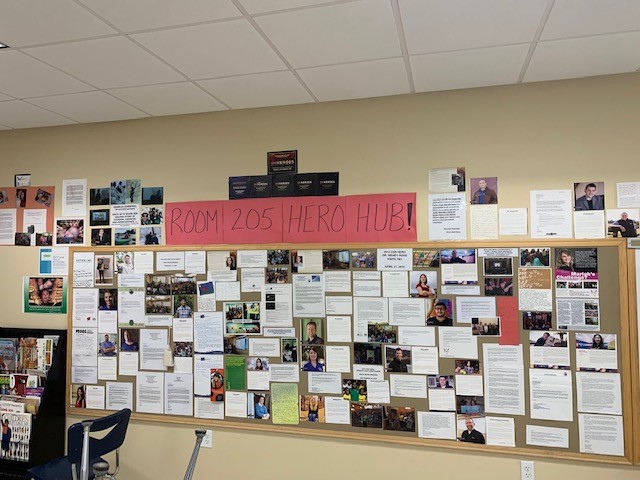
In a story that embraces the remarkable twists and turns of fate, Danielle was returning to Seven Bridges–on her actual 25th birthday–to speak to Brian O’Connor’s fifth grade class as a part of his curriculum on the CNN Heroes program. 

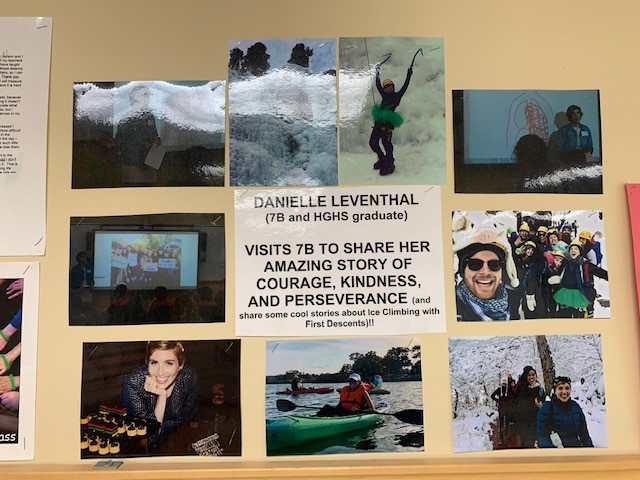
Brian O’Connor’s Seven Bridges Middle School teacher’s wall of CNN Heroes

Celebrating Heroes

For 12 years, O’Connor’s social studies class has watched CNN Heroes and discussed the 10 everyday heroes and their amazing accomplishments. Students then write a letter to one hero, sharing how they were inspired by their story. “We have sent out 5,000 letters in the last 12 years,” says O’Connor, who will teach the program for the 13th time this year. Many heroes write back and have even come into the classroom to meet the students and share more of their story. 

CNN’s production team got word of O’Connor’s program and visited the school to film a three-minute segment for their 10-year anniversary special. O’Connor attended the live event at the Museum of Natural History in New York. There he met and connected with Brad Ludden, a 2016 Top 10 CNN Hero and the founder of First Descents, a non-profit organization that provides life-changing outdoor adventures for young adults impacted by cancer. 

Jennifer Leventhal (Danielle’s mother) had stayed in touch with O’Connor over the years. When she saw the segment, she reached out to offer congratulations. “Jennifer also shared that Danielle had been diagnosed with cancer, had gone through treatment, and was going to take part in a First Descents program,” says O’Connor. O’Connor later invited Danielle to come to speak to his students about her powerful First Descents experience, which is what she joyously did that summer day in 2019. 

Danielle on O’Connor’s wall of CNN Heroes

Diagnosis

 After high school, Danielle, a gifted artist, graduated in 2016 from the Sam Fox School of Design & Visual Arts at Washington University in St. Louis with a double major in painting and art history. She was busy painting and working in the art world when, in 2017 at 22, she noticed a pain in her shoulder and chest. It impacted her breathing on her runs, so she went to urgent care, but the EKG showed nothing. Danielle wasn’t satisfied. She requested a chest X-ray. It revealed a softball-sized mass near her aorta. “Danielle had excellent body intuition and her follow through helped save her life for another four adventure-filled years,” says Jennifer. 

Despite the diagnosis of a rare sarcoma, Danielle had unrelenting hope balanced with a firm grasp on reality. “If you looked at a snapshot of Danielle and her high school friends and asked which kid could handle adolescent cancer the best? I’m sure Danielle’s name would not have come up,” says Jennifer. “She was gentle and perhaps even delicate, but she was indeed fiercer than we, or even she knew and funnier than she had ever been.” 

William D. Tap, M.D. chief of Sarcoma Medical Oncology Service at Memorial Sloan Kettering (MSK) was Danielle’s oncologist. In addition to surgery, her treatments included proton therapy, a radiation treatment used to shrink the tumor, followed by chemotherapy, studies on acupuncture and eventually clinical trials of new drugs. 
Sarcomas are a rare group of malignant cells that begin in the bones or soft tissues says Dr. Tap. “There are some 60 different sarcomas and for each sarcoma subtype there may only be a few hundred to a few thousand people diagnosed in the United States each year,” he adds. 

Because sarcomas are so rare, and because youngsters often have lumps and bumps that are not given adequate attention, sarcomas are often misdiagnosed or receive a late diagnosis. “Sarcomas present with a remarkably wide range of symptoms from belly pain to shortness of breath,” says Dr. Tap. “Honestly, they are easy to miss.” Treating sarcomas in the young adult range (age 15-39) is very challenging. “The survival rate of pediatric cancers has increased greatly, but we need more research to discover how we can positively treat these rare cancers that are affecting young adults.”

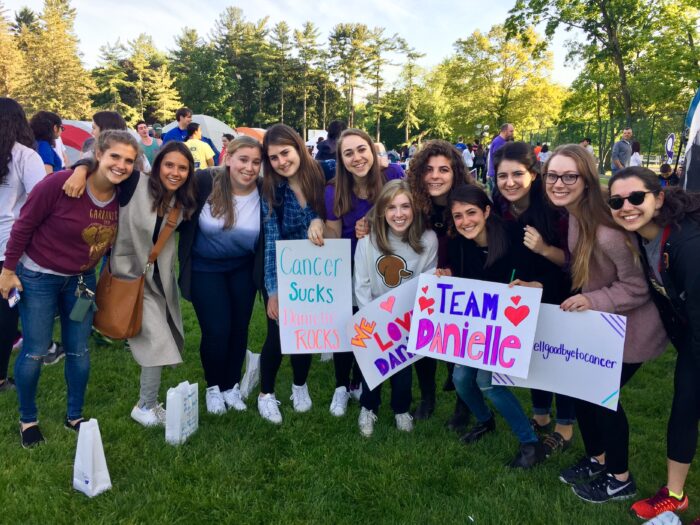
This demographic also has a diverse range of needs, worries and concerns, specific to their age group says Dr. Tap. There are questions regarding their education, career, future fertility, and emerging independence. “For well-rounded care, it’s important that the medical team understand these unique psychosocial aspects and how they affect the patients’ life,” says Dr. Tap. 

Danielle was an inaugural participant in Tap’s Adolescent and Young Adult (AYA) program at MSK. The program brings together care experts across specialties along with the patient’s oncologist. This can be a social worker or fertility expert–whatever is needed. “They usher the patient through treatment and assist with the stressors of their diagnosis,” says Dr. Tap. “The program also creates a peer group environment where patients can have meaningful dialogue and combat the isolation the patient may be feeling.”

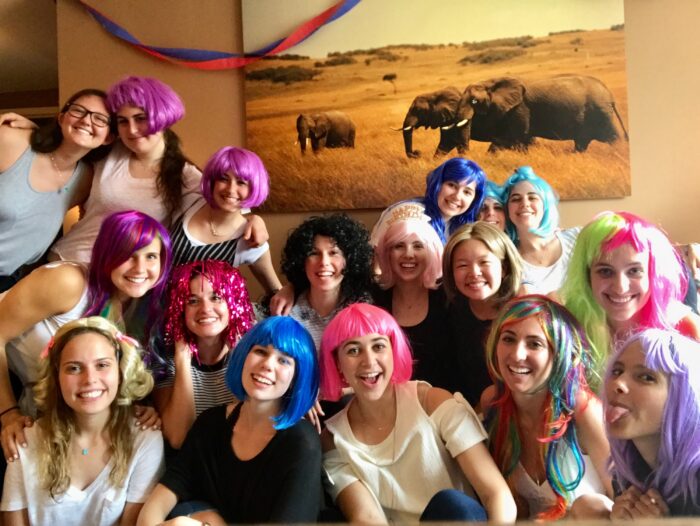
When Danielle lost her hair, her friends all wore wigs to her 23rd birthday party so she wouldn’t feel alone.

Dr. Tap praises Danielle’s ability to grow with her cancer diagnosis. “She gained an agency and confidence that strengthened her relationship with her family and friends and that was dramatic to see,” he says. Her dedication to help develop the program for others to benefit even when her disease was threatening her life showed strength and resilience, which Dr. Tap says is a testimony to Danielle as a person.

Donut Paintings for Project Bakesale, 2021. Acrylic on Wood Panels. Each square painting was created in exchange for a donation to Blue Georgia runoff candidates.

Her mother recalls an early lesson Danielle took home from AYA. She learned that it’s your journey. How much you want to share is your choice, she says. “If you look at cancer as a slice of pie, it’s a small part of the whole pie. It’s not nothing, but it’s not everything either,” she says. As she got sicker, Danielle shared more. She wanted to create a legacy with intentions of being helpful to other young adults with cancer. 

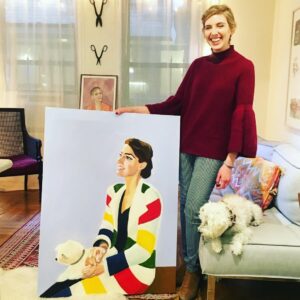
Sharing opened new doors. One day in New York City Danielle spotted Suleika Jaouad, who at 22 was diagnosed with leukemia and documented her journey in The New York Times column, “Life Interrupted”. Danielle thanked her for her articles and later hand delivered a portrait she had painted of Suleika. It was Suleika who encouraged Danielle to go on a First Descents trip. “She said it would change her life,” says Jennifer, “and it did.”

First Descents

Brad Ludden, a professional kayaker, was in his teens when his young aunt was diagnosed with breast cancer. He took her and her friends on a kayaking adventure and learned that outdoor adventure could be profoundly healing. Ludden founded First Descents to offer healing adventures to young adults impacted by cancer and other serious health conditions. 

“First Descents” is a term used widely in adventure sports. It’s a feat that someone has completed before anyone else and merits respect, as in kayaking white water rapids that have never been descended,” says Emily Burick, First Descents development officer and now an ambassador for Danielle’s Dreams Adventure Program.

Burick says First Descents encourages participants to make the most of the time you have, in the places you are in, and the people you are with. Their tag line, Out Living It, is a play on words celebrating the spirit that participants embrace. 
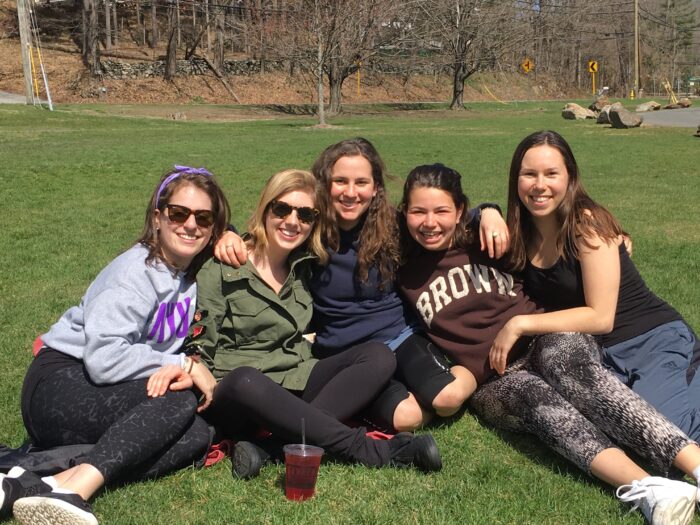
In 22 years, some 10,000 young adults have gone through the core program, which includes a weeklong adventure free of cost. Adventures range from rock or ice climbing to whitewater kayaking and surfing. Participants develop an unwritten bond and become like a second family and can continue to adventure with peers through the #Out Living It project. 

Burick met Danielle on her weeklong First Descents ice climbing adventure in Ouray, Colorado. She knew her as Donut. “It’s a tradition that everyone gets a nickname. It happens sometime from when the staff picks you up at the airport and you arrive at the lodge, says Burick. “From then on you introduce yourself as that nickname. The beauty of it is that it allows you to assume a new identity and be free.” 

Jason “Buck” asked Danielle which of her paintings were her favorite and she said, “A donut”. She had made many paintings, but her favorite was a series of donuts. The name stuck. 

“Donut was kind, radiant, and joyful,” says Burick. “She took part in everything, and it was not without fear.” The program helps participants learn what they are in control of, and what they aren’t, how they can take on the challenge and how not let cancer define them.

“It was important for Donut to be an advocate for herself and others, she became so involved and that was very characteristic of her,” says Burick. Danielle/Donut introduced First Descents to Soul Ryeders, a Rye-based organization that offers resources, programs and community support to those impacted by cancer. The two organizations have since established a partnership. “She didn’t want her experience to just be about her, she wanted it also to be about others, that was who she was to her core,” says Burick. 

Sharing and Caring

It was in that spirit that Danielle returned from New York City to Seven Bridges Middle School. “Danielle was an amazing role model, she was so prepared, had an amazing presence, and connected with the students as if she were a veteran teacher,” says O’Connor. She was candid and age-appropriate in speaking about her treatments and her ice climbing adventure with First Descents. She encouraged the students to be kind, appreciate family and friends and reminded them if they didn’t feel well, they must tell someone. 

Danielle did not know that O’Connor had a surprise planned that day. He had invited Brad Ludden to Skype into the session and they all sang happy birthday to her. “In my 22 years of teaching that was the most memorable moment,” says O’Connor. “The room was filled with good vibes and the kids were so happy to honor her. I will never forget it, and I believe the students will remember it too.”

Danielle’s Dreams

When the pandemic hit, Danielle devoted herself to her artwork, painting daily and instead of going out, embracing what she called an “In Living It” spirit. 

Danielle passed away on August 4, 2021, at 27 after outliving terminal cancer for four years. 

Her legacy continues as Danielle’s Dreams works to “sprinkle joy through art and adventure” for young adults with cancer. Two programs, Danielle’s Dreams Adventure Program, First Descents and Danielle’s Dreams Art Programs, AYA at MSK, allow you to support Danielle’s Dreams through tax-deductible donations. 

And this month you can take part in a Virtual Fitness Fundraiser honoring Danielle on her birthday. On Wednesday, June 15, 2022 at 7 p.m. Lauren Chiarello Mika, a fitness instructor at Memorial Sloan Kettering Center and founder of Chi Chi Life, hosts a 45-minute virtual Pilates Fusion Class, which is appropriate for all ages and abilities. 

Lauren is a two-time Hodgkin’s lymphoma survivor who has been cancer free for 13 years. She also took part in a life-changing First Descents adventure and is now mother to identical twin boys born in 2020. 

Jennifer and Danielle took Lauren’s virtual Pilates Fusion class in 2020-2021. “I called them the Dynamic Duo,” Lauren says. “Here was a mother and daughter moving beside each other, bonding physically and emotionally.” Danielle made a painting of Lauren and her boys, which she sent to her along with a meaningful note. “I will always treasure these,” says Lauren. “It shows the spirit of giving that Danielle embraced.”

On the cover:
Lieutenant’s Island
No. 2, Oil on Canvas, 2019, winner of the “Popular Vote” award for the cover of the 2020 Wellfleet travel guide

First Descents Virtual Fitness Fundraiser

Wednesday, June 15, 2022 at 7 p.m.

Take part in a 45-minute virtual Pilates Fusion Class, hosted by Lauren Chiarello Mika. The low-impact, mindful movement class is appropriate for all ages and abilities and supports the mission of First Descents. It’s a perfect way to honor and celebrate Danielle on her birthday and offer adventure to young adults like Danielle impacted by cancer.

Your $45 registration fee includes the virtual class and a custom-designed “Donut” hat in honor of Danielle.

Register or donate today: https://support.firstdescents.org/event/danielles-birthday-fundraiser/e402259

Resources

  • Danielle’s Dreams, daniellesdreamteam.com
  • First Descents, firstdescents.org
  • Soul Ryeders, soulryeders.org
  • Chi Chi Life, chichilifenyc.com
  • Adolescent and Young Adult Program at MSK, https://mskcc.org/experience/patient-support/lisa-and-scott-stuart-center-adolescent-and-young-adult-cancers-msk/when-young-people-get-cancer

Filed Under: Cover Stories Tagged With: adventure, Art, artist, Cancer Diagnosis, Danielle Leventhal, Danielle's Dreams, Family, First Descents, friends, Horace Greeley High School, painting, Sarcoma, Seven Briidges Middle School, Spirited

How Will Shortz Turned Pleasantville into a Table Tennis Mecca

June 1, 2022 by Andrew Vitelli

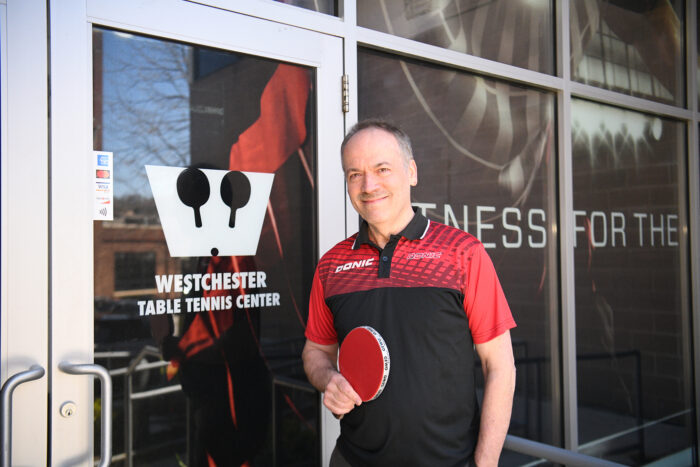
PHOTO BY DONNA MUELLER

On February 19 Will Shortz, a Pleasantville resident and The New York Times puzzle editor, saw his Wordle streak come to an end. 

Shortz knew the word began with S and ended with “ILL” – but instead of choosing a word that contained multiple potential second letters he guessed through the possibilities: skill, spill. He was out of guesses before trying the correct answer, “Swill.”

“I was surprised how much it hurt me to lose,” Shortz, explains a few days later. “So I am not going to let myself lose again.”

Shortz, a puzzler with few peers in the world, takes such vows seriously. In 2012, Shortz had just opened the Westchester Table Tennis Center in Pleasantville and set out to play ping pong all 366 days of the year. But on October 3, Shortz was at the World Puzzle Championship in Kraljevica, Croatia and got lost on the way to a tennis club he had lined up to play after the tournament.

“The club wasn’t where I thought it was going to be, and I arrived just as they were closing,” Shortz recalls. “I don’t speak Croatian, so what could I say to them as they are leaving?”

Shortz has not let it happen since. Despite his busy schedule, a global pandemic and frequent travel, he has spent a chunk of his day on the table for more than 3,500 days in a row, as of press time. His streak is probably a record, although no one officially keeps track.

“Will does not travel unless he has an itinerary of where he’s going to go, the club he is going to play,” says Robert Roberts, Shortz’s close friend and travel companion, the manager of the tennis club, and a three-time Caribbean table tennis champion. 

This tendency towards obsession has served Shortz well as a puzzler. Shortz started making crossword puzzles when he was around eight years old and by the time he sold his first at age 14, to his national Sunday school magazine Venture, he knew he wanted to make puzzling a career. By 16, he was a regular contributor to Dell puzzle magazines. At the University of Indiana, he received a specialized degree in enigmatology, or the study of puzzles; he is believed to be the only person in the world with such a degree. 

In 1993, Shortz joined The New York Times as puzzle editor. The puzzle team has grown to include six members, but at the time it was a department of one. He’s helmed the department going on three decades, in addition to his role as puzzle master on NPR’s Weekend Edition. He founded both the American Crossword Puzzle Tournament and the World Puzzle Championship, and each year travels across the world for the latter.

While not on the level of others who have passed through his club, Shortz is also a very good ping pong player. He is rated 1600, or upper intermediate, putting him in the top half of tournament players while not at a championship level (your correspondent, a mediocre ponger, narrowly avoided a goose egg when the two last faced off nearly a decade ago). 

Though the sport seems to hold little in common with puzzling, Shortz sees parallels between his two passions.

“From the participants standpoint, when you do it you get completely wrapped up in the activity, focused on solving the puzzle and winning the game and you forget everything else in the world,” Shortz says. “And when you’re done, you’re ready to go back to the world. It is a great feeling. It refreshes you.”

And it is in the table tennis world that Shortz has turned Pleasantville into a national destination, drawing the best players from across the globe to one of the largest table tennis centers in the United States. 

“I’m really proud of it,” says of the Westchester Table Tennis Center, which Shortz opened in May 2011. “I love it when people come into the club, look around and go, wow. Because when you think of a table tennis facility you think of something cramped with a low ceiling and dim lighting. And when you come into our place, it is professional.”

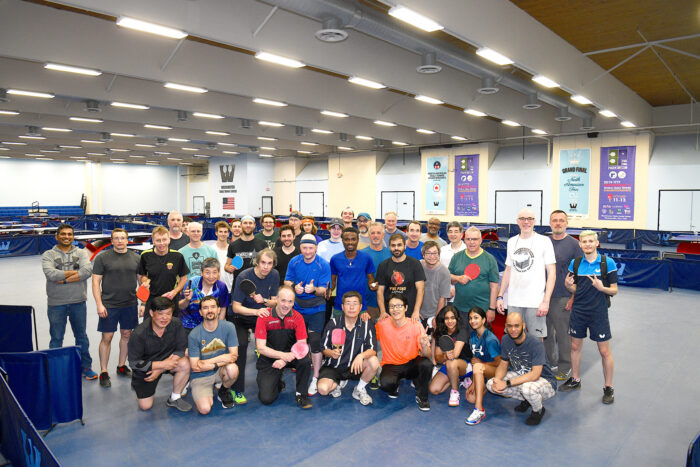
PHOTO BY DONNA MUELLER

Coming to Pleasantville

Shortz grew up on an Arabian horse farm in central Indiana and stayed in his home state to attend university. But after college, his budding puzzling career drew him to the New York metropolitan area.

“If you want to be in puzzles, New York is the area to be,” Shortz says.

Shortz moved to Stamford, Connecticut in 1977, then four years later to Forest Hills, Queens. In 1993, he found a three-story Tudor in Pleasantville and fell in love both with the town and the property.

“I was in Forest Hills for 12 years. And it always felt like a stage for something else. It didn’t feel permanent,” he says. “I remember I bought this house, and the first morning I walked down those steps saying, this feels like home.”

In 1999, folklorist Steve Zeitlin and author Stefan Kanfer founded the Rivertowns Table Tennis Club, which eventually rotated between Hastings-on-Hudson, Ardsley and Tarrytown. Shortz joined in 2001. 

In 2004, a new puzzle craze hit the US, this one focused on single-digit numbers. 

“When I first heard about Sudoku, I thought, ‘There has never been a popular number puzzle so I am dubious about this,’” he recalls. “Then when I tried one and I understood the addictiveness of it, I became an enthusiast.”

In 2005, Shortz published his first Sudoku book. It sold more than a million copies. He’s since published dozens more; by 2006 he had sold more than five million copies, according to an NBC News article, and that summer he said that he was making more money from Sudoku than he was for The New York Times. 

He has now published hundreds of Sudoku books, and it was his Sudoku bonanza that provided the money for Shortz and Roberts to open the Westchester Table Tennis Center in 2009. 

The Club

The table tennis center comprises 30 tables spread throughout multiple rooms and abundant space between each table. In contrast to the stereotypical claustrophobia-inducing basement ping pong club, the Pleasantville center’s high ceilings make the facility seem even larger than its 21,000 square feet. 

The club was the largest in the US when it opened, Shortz says; though it was expanded during the Covid-19 shutdown and is now bigger nearly by half, larger clubs have opened elsewhere. 

“Initially, it was hard,” recalls Roberts. “Trying to build a club of this magnitude is not easy, especially seeing that we had a lot of competition in the city.”

The club had the advantage of starting with much of the existing membership of Rivertowns Tennis Club. It has grown from there, and now has roughly 200 members. 

It has become a destination for some of the world’s top talent, particularly for the club’s tournaments, which Roberts describes as the best in North America. 

“The United States does not rank well internationally in table tennis,” Shortz explains. “The top men’s players, if they want to get good, they have to go abroad.”

Now, the best players from abroad are coming to Westchester. On the day Inside Press visited the club, Nigerian Olympian Olajide Omotayo, ranked 92nd in the world in the International Table Tennis Federation (ITTF) male world rankings, was teaching a class on spin serves. Croatian Andrej Gacina, ranked 20th in the world at the time, won the club’s Westchester Open tournament in 2016, while 46th-ranked Bojan Tokic of Slovenia won it in 2014 and 2017. 

“We are doing our part for increasing the popularity of table tennis in the United States and the level of skill of players,” Shortz says. 

Something for Everyone

Most of the players who pass through the club are, of course, not nationally ranked and harbor no Olympic ambitions. 

“There are kids who say, ‘This takes the stress away from school. Coming here, I get to relax,’” Roberts says. “There are a lot of adults who, I don’t know what’s going on in their life, but they say, this here basically saved them.”

The club also holds frequent special events. On Wednesdays, the club holds a program for people with Parkinson’s disease. Shortz founded PingPongParkinson in 2017, which aims to halt the progression of the disease by using ping pong as a form of physical therapy.

“When the ball comes over the net, they start their stroke and the shaking stops,” Shortz says.

The club also occasionally holds novelty contests, with players using a miniature paddle or a giant ball. 

Shortz has yet to turn the center into profitable business, instead using his New York Times salary and book sales to fund the venture. “It’s a big expense, actually. It doesn’t make money,” he says. “I’m hoping eventually it breaks even.”

This is just one of Shortz’s pong-related goals. He has already played at a ping pong club in all 50 states, and now hopes to play in more countries than anyone else in history (he’s hit 40 so far).

But Shortz has challenges outside of the ping pong table. For the Times, he and his team still must sort through some 200 crossword submissions each week and narrow it down to one puzzle each day. 

“We look for something fresh, interesting, never done before. Maybe it has a playfulness or a sense of humor about it. Then we look at construction,” he says. “If the theme is good, then we look to see if the fill is interesting, lively, colorful, juicy, with as little stupid obscurity or crosswordese as possible.”

He or his team then rewrite many of the puzzle’s clues–usually around half–before publication. Reference books are piled in each room in his home to help with this task.

And in January, the Times announced that it has paid low seven figures to buy Wordle. As a puzzle the game will fall under his purview, though Shortz says he has no plans to make any changes.

“I’m a big fan. I play it every day,” he says. “My hope is not to mess up the game.”

Filed Under: Cover Stories Tagged With: Crossword Puzzles, Leisure, Pleasantville, recreation, Table Tennis, Table Tennis Tournaments, The New York Times, Westchester Table Tennis Center, Will Shortz

  • « Go to Previous Page
  • Page 1
  • Interim pages omitted …
  • Page 45
  • Page 46
  • Page 47
  • Page 48
  • Page 49
  • Interim pages omitted …
  • Page 149
  • Go to Next Page »

Primary Sidebar

Please Visit

White Plains Hospital
William Raveis – Armonk
William Raveis – Chappaqua
Northwell Hospital
Houlihan Lawrence – Chappaqua
Houlihan Lawrence – Armonk
Houlihan Lawrence – Briarcliff
NYOMIS – Dr. Andrew Horowitz
Westchester Table Tennis Center
Spavia
Compass: Miller Goldenberg Harris Team
Lipari & Mangiameli Dentistry
Raveis: Lisa Koh and Allison Coviello
Bristal Assisted Living
Maid Brigade
Kevin Roberts Painting & Design
Zwilling J. A. Henckels
Meagher & Meagher Attorneys at Law
Compass: Aurora Banaszek
Dr. Briones Medical Weight Loss Center
OuterBoundaries travel
Fleetwood Pastry Shop
Elliman: Team Ad
Whitaker’s Garage Door Store
Saltbox Sash
Carolyn Simpson (Doublevision Photographers)
Donna Mueller
Joseph Richard Florals

Follow our Social Media

The Inside Press

Our Latest Issues

For a full reading of our current edition, or to obtain a copy or subscription, please contact us.

Inside Pleasantville and Briarcliff Manor Inside Chappaqua and Millwood Inside Armonk

Join Our Mailing List


Search Inside Press

Links

  • Advertise
  • Contact Us
  • Digital Subscription
  • Print Subscription

Publisher’s Note Regarding Our Valued Sponsors

Inside Press is not responsible for and does not necessarily endorse or not endorse any advertisers, products or resources referenced in either sponsor-driven stories or in advertisements appearing in this publication. The Inside Press shall not be liable to any party as a result of any information, services or resources made available through this publication.The Inside Press is published in good faith and cannot be held responsible for any inaccuracies in advertising or sponsor driven stories that appear in this publication. The views of advertisers and contributors are not necessarily those of the publisher’s.

Opinions and information presented in all Inside Press articles, such as in the arena of health and medicine, strictly reflect the experiences, expertise and/or views of those interviewed, and are not necessarily recommended or endorsed by the Inside Press. Please consult your own doctor for diagnosis and/or treatment.

Footer

Support The Inside Press

Advertising

Print Subscription

Digital Subscription

Categories

Archives

Subscribe

Did you know you can subscribe anytime to our print editions?

Voluntary subscriptions are most welcome, if you've moved outside the area, or a subscription is a great present idea for an elderly parent, for a neighbor who is moving or for your graduating high school student or any college student who may enjoy keeping up with hometown stories.

Subscribe Today

Copyright © 2026 The Inside Press, Inc. · Log in