• Skip to primary navigation
  • Skip to main content
  • Skip to primary sidebar
  • Skip to footer

The Inside Press

Magazines serving the communities of Northern Westchester

  • Home
  • Cover Stories
  • Features
    • Portraits and Profiles
  • Advertorials
    • Lifestyles with our Sponsors
    • Sponsor News!
  • Wellness
  • Happenings
  • Advertise
    • Advertise in One or All of our Magazines–And/Or Subscribe
    • Advertising Payment Form
  • Contact Us
  • Search

Julia Bialek

Redefining Beauty in the Age of Social Media

March 8, 2019 by Julia Bialek

We live in a digital world, a world in which eye contact has been replaced by the glow of backlit screens, chatter has been swapped out for the familiar sound of keyboard clicks, and “Happy Birthday!” cards have been transformed into posts on our friends’ Facebook walls. And as the world has become more digital, so, too, have our socialization trends, with social media becoming the primary means of communication for teenagers in my generation. While social media allows for a more interconnected, open, and limitless world, there is a hidden danger that people tend to gloss over when talking about its constant use: The effect on our self-esteem.

Whether it is a photo that a friend just posted on Instagram, an ad on Facebook with a near perfect looking model, or a makeup artist’s tutorial video on YouTube, it is only too easy to see photos and videos of people on social media and start comparing ourselves to them. In fact, I would argue that the constant slew of images that we are bombarded with online each day creates subconscious definitions of beauty, success, and happiness in our minds, definitions that are narrow, limiting, and unrealistic; definitions that we can never live up to. She’s so beautiful, why don’t I look like that? He has so many followers, I could never be that popular! Look at her friends, his hair, her clothes, his life!  But despite taking on a semblance of reality, most of what we see on social media is a lie. It’s 21st-century deception. Because unlike ever before, social media gives us the unique ability to curate our lives, to reveal to the world only what we want them to see. And if we can post the photo where we look the happiest, the prettiest, the most put together, why wouldn’t we want the world to see that?

And that, right there, is the danger of social media: By only sharing snapshots of our lives, we highlight the perfect and pretend that the imperfect does not exist.

We immerse ourselves in fictional worlds where all we see are images of sunny beach vacations, smiling family portraits, aesthetically pleasing coffee, and people at their prime. However, what we don’t see are all of the moments in between, all of the moments of sadness, suffering, and imperfection. And because we tend to keep those less-than-perfect moments hidden from our feeds, it is easy to compare our real lives to the “social media lives” of others and feel like we just don’t measure up. After all, when we are constantly surrounded by images of people whose lives look so put together, it can make it seem like we are the only ones whose lives aren’t.

Thankfully, social media is slowly starting to change. Now more than ever, companies, celebrities, and other social media users are embracing the idea that imperfection should not be hidden. With companies like Dove working to improve body confidence with their body positivity campaigns, celebrities like Selena Gomez, Demi Lovato, and Sarah Hyland opening up about their mental health battles, and couples like Gabrielle Union and Dwyane Wade sharing their struggles with fertility, social media is slowly becoming more transparent, communicating the idea that not only is it okay to be imperfect, but it is also okay to share those imperfections if we choose to do so.

Although social media often makes it seem this way, no one’s life is a continuous slide-show of vacations, parties, smiles, and friends. And while there is nothing wrong with choosing to share on social media the photos, stories, and videos that make us feel best about ourselves, there is also no shame in sharing the imperfect aspects of our lives as pivotal parts of our stories. Because, at the end of the day, that’s what social media is: Platforms that allow us to share the stories of our lives with the world. And no matter what narrative we choose to tell, it is important to put everything we see online into perspective. Because, for better or for worse, what we see on social media is not the whole picture of someone; rather, it is merely a few pieces in the puzzle of who they are.
Filed Under: Inside Thoughts Tagged With: beauty, instagram, redefine beauty, self image, self worth, selfie, Social Media, social network

Represent Global: Nelson Mandela’s Hope to Inspire a Generation

December 2, 2018 by Julia Bialek

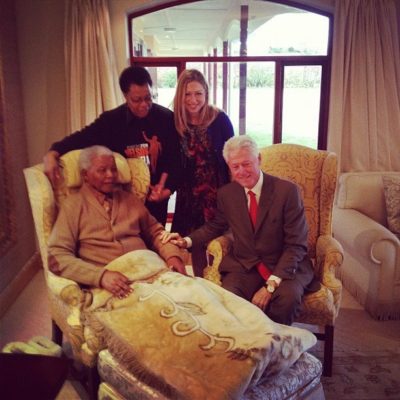
Nelson Mandela, Kweku Mandela, Chelsea Clinton, and Bill Clinton. Photo by Kweku Mandela

In a world with over seven billion people, it is easy to feel insignificant, like our personal footprints could not possibly be powerful enough to leave a lasting imprint. But Nelson Mandela is one of the notable individuals whose life has shattered this notion. By fighting against injustice and advocating for human rights, freedom, and equality, Nelson Mandela proved that one person does have the power to make a significant impact on our world. And with the fifth anniversary of his death on December 5th, it is important that we not only draw inspiration from Nelson Mandela’s life, but also draw inspiration from the legacy he left behind.

Over this past summer, I had the privilege of being a Youth Fellow for Represent Global, a new global foundation and social empowerment platform. Founded by Nelson Mandela’s grandson, Kweku Mandela, Represent aims to activate, educate, and inspire youth all over the world to become changemakers, leaders, and social activists through making humanitarian issues (like opioid addiction and human trafficking) relevant and accessible to my generation. The idea for Represent was conceived out of the desire to transform Nelson Mandela’s legacy into an inspiration, a catalyst for change. Kweku Mandela explains, “My Grandfather did not want his legacy to be represented by an airport, a school, or a simple physical manifestation. Instead, he wanted his actions to act as a model for the next generation to use as a means to make humanity more just and equitable for all. He believed that all it takes is one generation –one generation to end poverty, one generation to end discrimination, and one generation to push the spirit of mankind. Represent’s purpose is to make sure this is that generation.”

Based on my experience this summer, that goal seems more feasible than ever. Through helping to plan Represent’s launch event this summer, which celebrated Nelson Mandela’s centenary with events around the world that raised money and awareness for local causes, I was introduced to the social justice facet of the nonprofit world. Above all, I was astounded by the passion, drive, and talent possessed by all of the young people I was working with, each of whom saw something he or she wanted to change about the world and did something about it, rather than waiting for someone else to act. They are fighting today to make tomorrow better, and it is utterly inspiring.

That experience makes me feel hopeful that we truly do have the potential to be the “one” generation of which Kweku Mandela speaks. Just look around. My generation is overwhelmingly dedicated to social justice, committed to finding issues we care about, learning the facts, and making our voices heard. Whether it is by posting on social media, walking out of school, or marching through the streets of our nation’s capital, my generation shows up and takes a stand against injustice. We are committed to shaping the world into a better place, and I am immensely proud of that. Working with Represent this summer highlighted to me how powerful young people can be when they find a passion, create a vision, and fight to make it a reality. And now more than ever, with this experience to guide me,  I feel empowered to do just that.

Even though it has been five years since Nelson Mandela’s death, his influence on our planet has not waned. We remember him as an anti-apartheid activist who stood up against inequality; we remember him as South Africa’s first black president, committed to strengthening the definition of freedom; but most importantly, we remember Nelson Mandela for what he taught us about fighting for our beliefs, and we use his life as a source of inspiration. Each day, if we can overcome apathy and find something to fight for, if we can raise our voices and make ourselves heard, if we can summon the courage to be the change, we can use Nelson Mandela’s legacy as a source of strength. Because the most important thing I took away from my experience this summer with Represent Global is the understanding that we all have the power to make a difference. And if we can transform that understanding into action, we can all live by Nelson Mandela’s legacy, and perhaps even create our own.

Filed Under: Inside Thoughts Tagged With: Bill Clinton, Chelsea Clinton, Generation, inspiration, Nelson Mandela, Nelson Mandela Legacy, Represent Global

My School Days as a Twin

August 29, 2018 by Julia Bialek

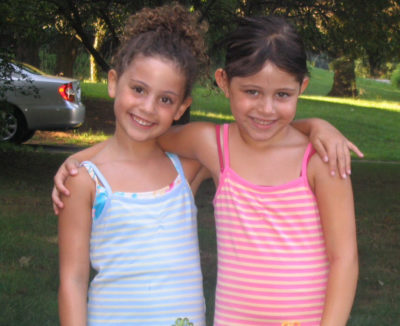
(L-R): Rebecca and Julia Bialek on the first day of kindergarten
PHOTO COURTESY OF JULIA BIALEK

I have a twin sister, but we were born on different days. Throughout our lives, our parents worked hard to ensure that we were not grouped as a unit; in their minds, the fact that we shared a womb had no bearing on our ability to act and be treated as individual people. And it doesn’t. Whether it was pure luck or my mom’s greatest intentional gift to us (as she will claim), the fact that my sister was born before midnight and I was born after has profoundly impacted the course of our lives. Our separate birthdays have infused a sense of individuality into both of us from the very beginning, allowing us to retain our own identities. Yes, we are twins, but we aren’t “the twins.” We are Julia and Rebecca. It only made sense that when the first days of school approached, my parents continued this arrangement.

Parents of twins have a choice: place their twins in the same classes or separate them. Naturally, my parents elected to separate us, placing us in different classrooms in which to grow and learn independently of the other. Although one of the built-in perks of having a twin is never needing to face a new situation alone, our parents wanted to provide us with the space to become our own people. I am so grateful for that. As we enter our senior year and reflect on our time as students, people, and twin sisters, it has never been more apparent how much of a gift that decision has been. Thank you mom and dad.

Growing up as twins, Rebecca and I have experienced most of our milestones and achievements together, from first days of school and first days of camp, to becoming bat mitzvahs and getting our driver’s licenses. In many cases, the memories I lay claim to also belong to her, with our shared experiences outnumbering our individual ones. But when it comes to school, most of my memories belong solely to me, as our separate educational paths have rarely collided. We always had different teachers, we were always in different classes, and we were always happy that way. As twins, we have spent nearly 18 full years side-by-side, growing up in rooms next to each other, spending the summers in the same bunk at camp, coming home to the same house, and so on. Despite our love for each other, that is a lot of time to spend with one person. Going to school each day allowed us to spend healthy time apart, providing us with a place to be our own people (albeit in the same building). In fact, school is the only place where our individual memories, experiences, and stories outnumber our shared ones.

Spending our days separately and pursuing our educations independently of the other, my sister and I have been able to learn, grow, and prosper in our own unique ways. That time apart, that time to explore who we are without the influence of the other twin, has been essential in shaping the people we have become. For my sister and me, being twins has always meant going through life as our own people, just doing it next to each other. But as college approaches and my sister and I face being separated by a greater distance than just our bedroom wall, we are confronted with the reality that we must continue our lives as our own people, but not side-by-side. For the first time in our entire lives, not only will our educational careers be separate, but our entire lives will be separate.

For the first time in our entire lives, we will not be together.

As we tour colleges, write applications, and begin our last year of living together in the same home, I cannot help but wonder how different our lives are going to be without having the other twin a shouting distance away. Even though Rebecca and I have very different personalities and interests, even though we were happy to be in separate classes, even though we are both ready for this change, it is going to be a shock to live without her. I have never known life without my twin sister, and I know that I will have to cope with a Rebecca-shaped hole in my life. It feels like yesterday that we were walking off of the bus together after our first day of kindergarten, and now we are seniors in high school preparing to live our lives as independent people in college. While it feels surreal that time has passed so quickly, I am eased by the knowledge that my twin sister is experiencing these changes with me, even if she is not residing in the bedroom next door.

As we approach this new and exciting time in our lives, I realize that this is the first chapter of my story that will not feature my twin sister as a main character. But Rebecca, as we continue to write our narratives and live our lives, I want you to know that I am me because of you. You will always be an important part of my story, because you are an important part of me.

Filed Under: Et Cetera Tagged With: Essay, First Day of Kindergarten, Growing up as twins, Julia Bialek, Kindergarten, life, Parents of Twins, School Days, siblings, Twin Sisters, twins

Local Author Tackles Tough Topic in Latest Children’s Book: Repeating Kindergarten

August 29, 2018 by Julia Bialek

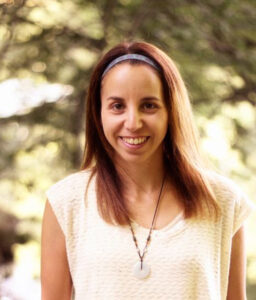
Becca Eisenberg, book author

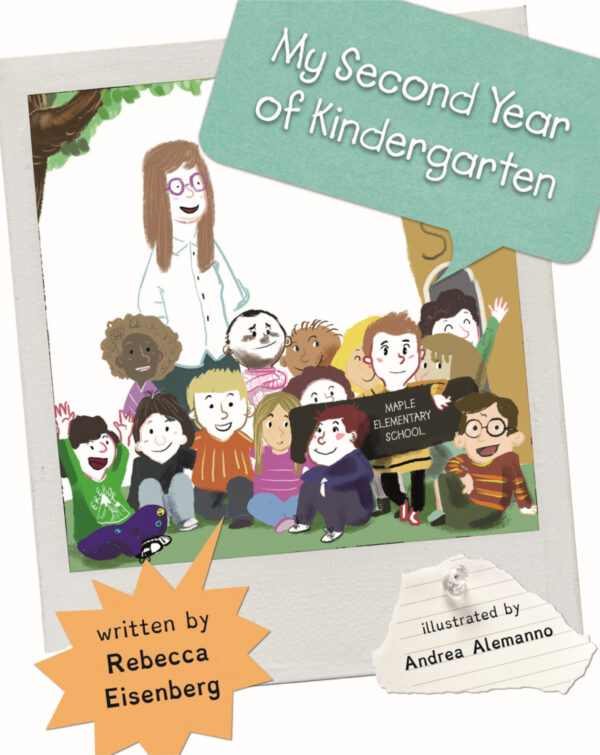
It is always inspiring to meet people who are guided by their passion, especially when that passion is helping others. Rebecca Eisenberg who goes by “Becca,” a speech language pathologist, author, instructor, parent, and Armonk resident epitomizes that sentiment. A proponent of children’s literature, Eisenberg recently self-published a children’s book entitled My Second Year of Kindergarten aimed at providing parents and teachers with a resource on the topic of repeating kindergarten. The inspiration for the book? Her own experience.

They say necessity is the mother of invention and Eisenberg can attest to that. When she and her husband made the difficult decision to have their son repeat kindergarten, she searched for a children’s book to help explain the transition to her son; disappointed to have found no such publication, Eisenberg decided to write her own. “As a speech pathologist and mother, I have always looked for children’s literature to help explain difficult transitions or complex issues, and when I was looking for a book about repeating a grade, there was no book at all! I decided I was going to write my own. I tend to create my own work when I can’t find it. I read the draft to my son, and he loved it. The more I thought about it, the more I was devoted to putting it out there,” says Eisenberg.

Inspiring a Growth Mindset

For over two years Eisenberg worked hard to create a book with which all children and parents could identify. My Second Year of Kindergarten is about a boy named Peter, named for a student she worked with who defied all odds and learned to spell, write, and communicate beyond expectations, who is repeating kindergarten. The book follows Peter’s progress from “last year” to “this year,” highlighting the skills Peter gains from repeating the grade. With this book, and the reading guide for educators and parents she created to accompany it, Eisenberg hopes to inspire a growth mindset for children by changing the default attitude from “I can’t do it,” to “I’m learning how to do it.”

Eisenberg draws from her own personal experience to offer advice to parents who are considering having their child repeat kindergarten. Tips such as, “Be honest! Explain the reasons why you have made the decision to have your child repeat kindergarten,” and “Connect with other parents whose children already repeated kindergarten” are compiled in the back of her book. Although Eisenberg had what she described as an “ideal experience” with repeating kindergarten (due to a supportive school and family), Eisenberg knows that some people still treat the topic as something shameful and not to be discussed. Through her book, she hopes to change that. By starting meaningful and honest conversations through literature, she is well on her way.

Although Eisenberg believes that repeating kindergarten does indeed have benefits, she does not advocate it for every child. “If a child is repeating kindergarten, there is a reason for it; either social or academic delays,” explains Eisenberg. “When parents and their ‘team’(their school and other individuals involved in the decision) make the decision to repeat kindergarten, it is about making the best decision for the child.” Eisenberg stressed that she did not write the book to promote the idea of repeating kindergarten for all children, but rather to provide a resource for the families who decide that their child will benefit from it. Some benefits she cites of repeating the grade include social closeness with peers and more time to understand information, which can increase a child’s confidence and happiness at school.


Web Resources for Parents, Children and Educators

As a web savvy author, she also created a website www.mysecondyearofkindergarten.com to serve as a resource. With downloadable worksheets for children and podcasts it offers valuable information so that children repeating a grade can view it as an empowering and positive experience. In addition to the website for the book, she writes an impressive blog called www.gravitybread.com that forms the foundation for all of her work and emphasizes learning during mealtimes. Since 2012, she has updated her blog with language tips, special needs resources, book and app reviews, her interpretations of research articles, and other information with the goal of sharing her passion of connecting with children through storytelling with other parents.

Hearing her talk about her book, her blog, and the other resources she has created with such pride, Eisenberg’s profound commitment to others shines through.

“I have always been passionate about helping other people, for work and in my life. Ever since I was little I have felt the desire to help people with different abilities and needs. It is just a part of who I am.” She truly embodies what it means to put your heart into your work.

Kindergarten Skills

Deciding whether or not to repeat kindergarten can be a very hard decision for families. Dawn Lorenz, a kindergarten teacher at World Cup Nursery School in Chappaqua for 24 years, notes that children entering kindergarten should have the following skills:

  • The ability to listen attentively
  • Follow multi-step directions
  • Stay on task for increasing periods of time
  • Work cooperatively
  • Resolve conflicts socially
  • Function independently (put on shoes, use bathroom independently, etc.)
  • Transition between tasks or locations
  • Follow classroom rules
  • Ask for help when needed

Lorenz warns parents against having their child repeat kindergarten so they can gain an advantage in academics or sports. “There needs to be a clear reason to repeat the grade. It isn’t about being the oldest, fastest, best, or smartest, it is about that individual child and how they will feel during that kindergarten year. Childhood is a journey, not a race; the social-emotional skills are a foundation for academics, now and in the future, so we should not rush our kids to attain skills. We need to respect that five-year-old year and how important it is to a child’s life and development,” she explains.

Potential Reasons to Repeat Kindergarten

  • Social or emotional immaturity
  • A slower developmental timeline
  • Any reason that leads you to suspect that your child may need just a bit of extra time

Lorenz says that she has never had parents who came back to her regretting their decision to have their child repeat kindergarten, but there are many parents who wish they did make that decision because their child just was not ready yet. “We have to make the decision based on our individual children after taking into consideration advice from the “experts” in our lives (whether that be teachers, school districts, preschool directors, etc.).”

“There should not be any embarrassment or stigma at all if you are making the decision for the appropriate reasons for your individual child. You want to set the stage for the rest of their career in education–you want them to be happy and love learning!” sums up Lorenz.

Filed Under: Armonk Cover Stories Tagged With: book, Kindergarten, kindergarten readiness, Learning, Repeating Kindergaren

Hot Ticket: ‘An Evening With Robert Klein’ on June 30th at the Chappaqua Performing Arts Center

June 22, 2018 by Julia Bialek

Rolling Stones Magazine Named Robert Klein one of the Top 50 Comedians of All Time

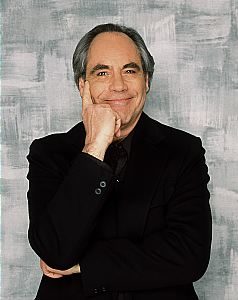
Robert Klein


Robert Klein will be performing at the Chappaqua Performing Arts Center on June 30th at 8 p.m.. An iconic comedian, Robert Klein has been in the comedy business for over 40 years and continues to have an acclaimed career in comedy, on Broadway, and in film and television. Passionate about making people laugh and sharing his love of comedy with audiences, comedy-legend Robert Klein’s show, “An Evening With Robert Klein,” should not be missed.

Purchase tickets at Ticketmaster: 

https://www.ticketmaster.com/Robert-Klein-tickets/artist/702598

or at: www.chappaquapac.org

Recently I had the opportunity to speak with Robert Klein about his upcoming show and his career in comedy:

 Julia Bialek: Tell me about your new show! What is it about?

 Robert Klein: It’s actually not a “new” show. I’ve written 14 hours of material in my career, but everything seems to be new when people hear about it for the first time! I have developed a large repertoire from the nine HBO specials I did, but I always improvise a little during shows. And this show is particularly fun because it’s local! I live right by the venue.

JB: From where did you draw your inspiration when creating the material?

RK: Everything. When I was starting out, I talked about my short experience as a substitute teacher, which I did after Yale Drama School. Now I talk about being old. There isn’t one theme to my comedy. A million people look at an event or situation, and I look at it, and I find a funny thing in it. That’s my talent, that’s what I have been doing for nearly 50 years. Actually I have been doing it since I was a young boy, but now I don’t get in trouble for it.

JB: Were you a jokester growing up?

RK: Yes. My father was too. I think being a jokester runs in my family. But that is often the case with comedians. It’s an odd way to make a living, but making people laugh is a really wonderful thing. Everyone loves to laugh in good and bad times, and I love to make them laugh. Currently in comedy, a lot of people utilize political satire. I just recently worked with Alec Baldwin on a few episodes of Will and Grace. I reminded him that if he did the material that he does on Saturday Night Live in some other countries, he would be in jail or dead!

JB: Do you have any favorite political material that you have created?

RK: I have often utilized political satire, especially around the time of Watergate. Mind Over Matter was my first comedy album which I devoted a lot of to the Watergate scandal. That is actually the album that influenced a lot of other comedians (Bill Maher, Jay Leno, John Stewart, etc.) to go into comedy since there wasn’t a lot of political satire at the time. The culture was different then, you couldn’t just say whatever you wanted. In fact when I was in a summer replacement show in 1970 with Glen Campbell, I got eight shows and was warned not to do Vietnam materials. My career has spanned all of these changes.

JB: How has stand-up comedy changed over the years?                

RK: As I said, one of the changes is that things are not censored anymore. It’s gone too far the other way actually, where profanity is used for shock value, sometimes as a substitute for wit. That’s one way it has changed–anything goes. Additionally, comedy has gotten much crueler than it used to be. They may call it political correctness, but I think caring about feelings is a value to be admired and pursued. It just means courtesy. Another big change, which is remarkable, is that when I started in the industry, stand-up comedy was not thought of as a profession. It wasn’t something where people said, “I want to be a comedian when I grow up.” Now, there are schools teaching it, and universities have stand-up courses. Tens of thousands of people pursue a profession in comedy!

JB: What made you turn to comedy?

 RK: I went to college pretty young, at 16. When I was at Alfred University in college, I started on the pre-med track, but chemistry, biology, spelling, comprehension, and physics all got in the way. While I was at Alfred, I participated in some of their amazing productions. The two men that ran the drama department told my dad that they could get me into the Yale School of Drama. My dad was incredulous, saying, “An Ivy League for acting?” But I did get in, and that year of graduate school was valuable in that it immersed me in the business, and it set me in the right direction. My biggest break was being hired by Second City in Chicago. It was, and still is, a great organization where I learned improvisation and set pieces. There was a certain amount of luck in that because I didn’t know how to get started, as I knew no one in business. One thing led to another and I’ve been doing this since I was 23. Except for a few months as substitute teacher and a few summer jobs, I’ve never done anything else in life. I am spoiled in that way: I had success quickly. I’ve been in six Broadway shows, over 40 feature films, hundreds of television shows. I’ve also written a book, a screenplay, and comedy albums. I’ve done everything you can do in show business. Working is natural for me and I’ve never thought of retiring. I love doing this and am doing it better than I have ever done it.

JB: Your work in comedy has influenced so many other successful comedians. What do you believe to be your legacy on the comedy community?

RK: That’s an interesting question. I am proud that there is a documentary about me on Starz Network! Unfortunately produced by Harvey Weinstein, it’s called, “Robert Klein Still Can’t Stop His Leg.” In it, all the famous comedians talk about how I influenced them, which I think is a big part of my legacy. I also think I try to be intelligent and tasteful and not too cruel in my work. I have always stuck to my guns. Yes, I use four letter words from time to time, but we’re adults. I like to use profanity like a good writer would. It’s a matter of class and I always thought my material was pretty intelligent. I put on a total show: I like to sing, and I use original material. In this business, there is a lot of stealing; Dickens could more easily have protected his work in 1850’s London than I can now! I always like being original, and I have never stolen from anyone else. I wrote every word of my comedy materials. It’s a legacy of intelligent, good comedy and making people feel better.

JB: Is there anything particular you are looking forward to for this show?

RK: I’m looking forward to the new venue here. I know it has been open for a year, but I’ve never been inside. I’m excited to see Reader’s Digest, which I pass to go to my dentist, and perform in such an intimate theater. I love live audiences because I feel incredibly fulfilled when I perform. I think that even though I’ve been in show business for a while, I still surprise people, especially because I do some music in my show. I also still get a big kick out of it. So tell everyone to come out and watch. Not that I am worried about it for any particular reason, but comedians have a tendency to die. See me before I die! Is that a good sales pitch?  “Come watch me before I die!”

Filed Under: Gotta Have Arts Tagged With: An Evening with Robert Klein, Chappaqua Performing Arts Center, Comedian, Comedians, Comedy, Comedy Legend, Robert Klein

  • « Go to Previous Page
  • Page 1
  • Page 2
  • Page 3
  • Go to Next Page »

Primary Sidebar

Please Visit

White Plains Hospital
William Raveis – Armonk
William Raveis – Chappaqua
Northwell Hospital
Houlihan Lawrence – Chappaqua
Houlihan Lawrence – Armonk
Houlihan Lawrence – Briarcliff
NYOMIS – Dr. Andrew Horowitz
Westchester Table Tennis Center
Spavia
Compass: Miller Goldenberg Harris Team
Lipari & Mangiameli Dentistry
Raveis: Lisa Koh and Allison Coviello
Bristal Assisted Living
Maid Brigade
Kevin Roberts Painting & Design
Zwilling J. A. Henckels
Meagher & Meagher Attorneys at Law
Compass: Aurora Banaszek
Dr. Briones Medical Weight Loss Center
Elliman: Team Ad
World Cup Gymnastics
EyeGallery
Elliman: Pam Akin
Temple Beth El
King Street Creatives
Houlihan: Tara Siegel
Home Grown Gardens

Follow our Social Media

The Inside Press

Our Latest Issues

For a full reading of our current edition, or to obtain a copy or subscription, please contact us.

Inside Pleasantville and Briarcliff Manor Inside Chappaqua and Millwood Inside Armonk

Join Our Mailing List


Search Inside Press

Links

  • Advertise
  • Contact Us
  • Digital Subscription
  • Print Subscription

Publisher’s Note Regarding Our Valued Sponsors

Inside Press is not responsible for and does not necessarily endorse or not endorse any advertisers, products or resources referenced in either sponsor-driven stories or in advertisements appearing in this publication. The Inside Press shall not be liable to any party as a result of any information, services or resources made available through this publication.The Inside Press is published in good faith and cannot be held responsible for any inaccuracies in advertising or sponsor driven stories that appear in this publication. The views of advertisers and contributors are not necessarily those of the publisher’s.

Opinions and information presented in all Inside Press articles, such as in the arena of health and medicine, strictly reflect the experiences, expertise and/or views of those interviewed, and are not necessarily recommended or endorsed by the Inside Press. Please consult your own doctor for diagnosis and/or treatment.

Footer

Support The Inside Press

Advertising

Print Subscription

Digital Subscription

Categories

Archives

Subscribe

Did you know you can subscribe anytime to our print editions?

Voluntary subscriptions are most welcome, if you've moved outside the area, or a subscription is a great present idea for an elderly parent, for a neighbor who is moving or for your graduating high school student or any college student who may enjoy keeping up with hometown stories.

Subscribe Today

Copyright © 2026 The Inside Press, Inc. · Log in