• Skip to primary navigation
  • Skip to main content
  • Skip to primary sidebar
  • Skip to footer

The Inside Press

Magazines serving the communities of Northern Westchester

  • Home
  • Cover Stories
  • Features
    • Portraits and Profiles
  • Advertorials
    • Lifestyles with our Sponsors
    • Sponsor News!
  • Wellness
  • Happenings
  • Advertise
    • Advertise in One or All of our Magazines–And/Or Subscribe
    • Advertising Payment Form
  • Contact Us
  • Search

Grace Bennett

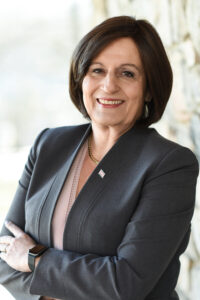
Gun Violence, Redistricting Challenge and More Driving Chappaqua’s Kristen Browde in her Bid for State Assembly

March 22, 2020 by Grace Bennett

PHOTO BY CAROLYN SIMPSON, DOUBLEVISION PHOTOGRAPHERS

When Kristen Browde’s son Theo came home from Horace Greeley, where he’s a sophomore, and told her about a second mandatory lockdown drill, Browde said her decision was made up to run for state assembly in New York’s 93rd district. “This generation has grown up with the fear that their school could be next.”

Browde, who has sat on the Chappaqua School Board’s financial advisory committee for almost ten years, said one of the things the committee often has talked about is how to “harden” our schools, but her contention is that security measures inside schools are not nearly enough.

“It remains easier in New York, in spite of our SAFE Act and red flag laws and all the progress we have made, to buy a high powered weapon–a military style weapon–and ammunition, than it is to buy a pack of Sudafed–and that is just wrong.”

A former TV broadcaster, Browde cited experience that includes decades of effective lobbying in Albany as a national and local officer for and on behalf of The American Federation of Television and Radio Artists (now SAG-AFTRA). She worked on legislation to ban the use of non-compete contracts that kept industry salaries low or stagnating.

“When I worked at Channel Five and Channel Four, the broadcast companies would put a non-compete clause into our contracts. This would say ‘even after you leave my station, you cannot go to work for anybody else in this market for a certain amount of time.’ The result of that was that the employee’s bargaining power was substantially reduced because you would have to sit out six months or even a year without a salary–and that is how they kept you where you were at a lower salary, too. “It took seven years to get it passed. Back then, the Republicans were controlling the state legislature.” Browde proudly stated that she finally helped pass the Broadcast Employees Freedom to Work Act.

“And now that the State Senate (a last bastion of the Republicans), has flipped, all of a sudden, bills that had been bottled up for years… were finally able to be brought to the floor and enacted into laws signed by Governor Cuomo.

“In recent years I have had the opportunity to build relationships with people like the Governor and with the leaders of both houses, in the course of working on these issues. I know who they are and who we need to work with to make changes happen.”

Gun violence prevention will be her top priority. “Every parent who puts their kid on a school bus in the morning wants one thing–to get that kid back at the end of the day. It is not just the kids that are growing up with this fear, parents are as well. We are having to spend huge sums of money on school security… But if we can protect just a little bit more and at no cost, we ought to be doing that… Do the background checks and do the positive identification. You don’t stop with the weapons; it’s about the ammunition too. Moms Demand Action has a tremendous legislative program, so does the Brady Campaign. Both have absolutely solid things that this legislation should be working on in the next session.”

Browde cited another critically important legislative task ahead: redistricting.

“We are going to have a census. It is almost certain that New York is going to lose a Congressional seat… Nita Lowey’s seat is a pretty safe Democratic seat. Sean Patrick Maloney’s is not. There are lines that are almost certainly going to be redrawn… We will need to protect the sanctity one person, one vote, rather than protect the sanctity of an individual politician. We have seen that in places like North Carolina what happens when you have tremendously gerrymandered districts that pack all the Democrats into one tiny little area: the Republicans, even though they are only 50% of the state, control 75-80% of the Congressional seats. We can’t let that happen anymore.”

The conversation veered into today’s antisemitism which hits close to home for Browde. “My father’s family fled Germany on Kristallnacht and his dad, my grandfather, didn’t get out, but his mom did.”

“Whether it is, anti-Jewish, anti-Black, anti-Hispanic, we have to use every single resource that is humanly possible to bring to bear to battle hate… That’s a conversation that we in New York can start. Frankly, we in New York have the biggest problem with it right now.

At this juncture, Peter Moses, Browde’s campaign advisor and a longtime journalist himself, pointed to Browde being “incisive, direct, and a listener” as key strengths during her media career. It’s that same skill set, he said, that helped her pass legislation in Albany.

“It is why (Westchester County Executive) George Latimer has her on a couple of committees. The fact that she’s really bright may have influenced him, but what keeps her there, what she keeps bringing to the table with all the new roles she takes on, is her ability to communicate and listen.”

Melding Career Strengths Toward Key Consensus Building

“I’ve gone from reporter to divorce lawyer, which I used to describe as combining the two least respected professions in America into one stellar career, Now I’m adding politician, so it’s a trifecta,” Browde chimed in with a smile.

“As a divorce lawyer, you are dealing with people who at one point said they love each other and now can’t see eye to eye about anything and you are trying to bring them together to a settlement that they can both live with. When you are doing a job of a legislator, or let’s say, someone who is trying to persuade other legislators to come over to your side, you are doing the same thing. People who want the same thin–which is the best for the people of the state of New York.”

“I’m also trying to figure out what the other person really needs, because frankly, while I don’t agree with the policy positions espoused by most Republicans, the fact is I don’t think they are bad people. I just think they have a different view of what is best…there are common points and if we can get together on those common points, then that is fine.

Browde reminded me too that “the sticking point right now is not the Republicans. In Albany today, Democrats control all three houses, the two houses of the legislature and the Governor’s mansion, which are the three critical points of power in Albany. The problem is that the Democrats in the Assembly often can’t reach an agreement. I’m pretty good at getting Democrats together… and have worked with people across the party, from the extreme left to the more conservative members of the party… and we got bills through and we got bills signed.”

“It is less about policy differences than effectiveness,” said Browde. “What I have shown is that first off, I don’t stop. I don’t stop. I am good at bringing people together who don’t start agreeing… the only effective way to work in a legislative setting is to build coalitions.”

Browde shared her optimism in the challenge to win the seat with “approximately 90,000 registered voters stretched out from Harrison and White Plains up to the Connecticut line.”

“I am not Michael Bloomberg, I am not self-financing, so we are doing the same thing that everybody else is which is raising money through various Democratic Party channels: “People get fired up about my campaign–they’re visiting us at KristenForNY93.com. People are energized about the political process in general right now. The June 23rd primary is the focus right this minute, and then it is off to November!”
Filed Under: Cover Stories Tagged With: 93rd Assembly seat, albany, broadcaster, Consensus building, gun violence, Kristen Browde, lobbying, Redistricting, The American Federation of Television and Radio Artists

A Conversation with Adam Schleifer: Candidate for the 17th District

March 22, 2020 by Grace Bennett

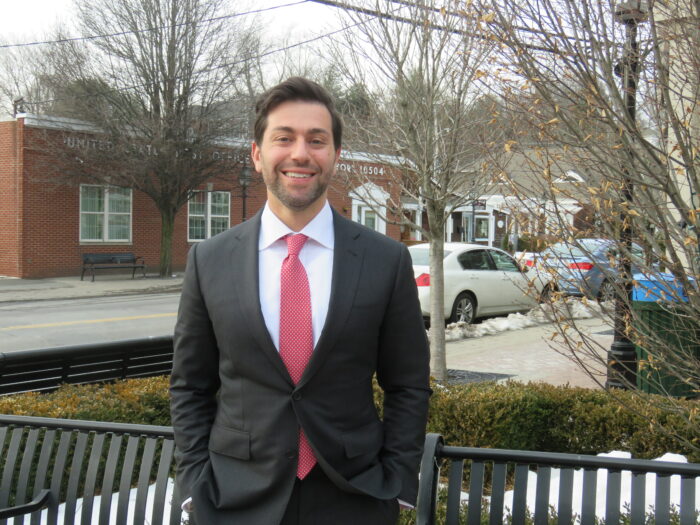
PHOTO By Grace Bennett

It’s always delightful to discover a candidate’s creative side. In an interview with 38-year-old Adam Schleifer over coffee in Armonk, we covered a lot of territory–including his acapella, choir and Glee Club participation at both Greeley High School and at Cornell University! But we also discussed in depth Schleifer’s most recent role as a no-nonsense, accomplished federal prosecutor in California and the issues he would prioritize and strengths he would bring to the table as Congresswoman Nita Lowey’s successor.

Growing Up in and Returning to Chappaqua

We met soon after a Chappaqua forum addressing controlling noise from Westchester County Airport, an issue important to both New and North Castle neighborhoods. No stranger to noise, spending his early years in Manhattan next door to New York Hospital, and sharing a room with a younger brother, Schleifer attended the forum “to learn about the flight path over New Castle” and consider ways to tackle the issue and affected residents’ unhappiness. “The questions are whether there’s more that can be done to have a curfew that’s more enforceable,” he noted, recognizing the noise caused by both private and commercial aviation and the need to “reasonably balance the infrastructure and commercial needs of the area with the livability of the area.”

Schleifer was in the second grade when his family moved from the city to a home near Kisco Park–a neighborhood he speaks of fondly.  “It was like the Wonder Years… cul-de-sacs and streets branched off… I would ride my bike around, explore and get into minor trouble-but nothing too serious, thankfully,” he recalls. He also had a fantastic Greeley experience, remembering the sprawling campus and different buildings housing many school clubs. “It fit my sense of a really sophisticated, grown-up experience; it always struck me that if you went to Horace Greeley, you were prepared for the world.”

He also took full advantage of his years at Cornell, double-majoring in Government and Philosophy, singing acapella and playing baseball. Schleifer notes that he encourages others to embrace college as a time in life when “your entire job is to invest in yourself and learn as much as you can to develop the toolbox you can use  to negotiate the rest of the world.”

Schleifer picked up a few more good tools at Columbia Law School, especially, he said, serving on Law Review and participating on a competitive international Moot Court team.

He was also a research and teaching assistant in Constitutional Law for Professor Michael Dorf, and also formed a close bond with other professors, including Professor Arthur Chaskalson, former Chief Justice of South Africa’s Constitutional Court and member of Nelson Mandela’s defense team.

From Public Service to Private Practice and Back Again

After graduation, Schleifer spent two years as a federal law clerk, for both a Clinton-appointed pragmatic Democrat in the Southern District of New York, and, thereafter for a conservative appointee to the 9th Circuit Court of Appeals. As a result of working equally well with both, he realized that “it was the beginning of my sense that in government, in law, in policy and in politics, most of the time, there is a right answer to a question. The media can produce a a warped sense that everything is hyper-partisan.”

Schleifer then spent five years practicing commercial litigation with Wachtell, Lipton, Rosen & Katz in New York City, starting just weeks after Lehman Brothers’ bankruptcy. “It was a tremendous time to start your career as a private attorney. The founder of the firm wasn’t sure if the western capitalist marketplace system would even be around in three months at that point.” But then Schleifer decided that he wanted to be in the public sector “partly out of an insight that banking and insurance were two sides of one financial coin,” and became a Special Associate Counsel for the New York State Department of Financial Services focusing on consumer protection issues.

Schleifer is most proud of having worked against a payday lending lead generator named Money Mutual, which was backed by “high finance” companies that collected and sold information about people intended to seduce certain communities–mostly of color and veterans–into agreeing to usurious payday loans via advertising by spokesman Montel Williams, who they trusted. Schleifer’s team removed those ads from the airwaves and “we shut down that practice as it existed in New York.” He also said that he did similar work with respect to the subprime auto lending industry as part of a team on the first-ever case brought by a state under the Dodd-Frank Act to enforce consumer protection spending laws. It was this type of work, he said, that inspired him to become an Assistant U.S. Attorney for the Department of Justice.

As a federal prosecutor in California, Schleifer had the experience of being in court every day on behalf of the United States, eventually taking on more responsibilities regarding investigation, indictment and courtroom prosecution of crimes. He worked on everything from a prosecution of a motorcycle gang member dealing in large-scale distribution quantities of methamphetamine, to a gang’s conspiracy to traffic in illegal assault rifles and high-capacity handguns, to the murder of a federal agent by an international drug cartel, to “smog fraud,” where people were falsely certifying that their cars had passed emission standards.

Schleifer is particularly proud of his prosecutorial work on financial frauds, including a scheme by two Israeli brothers who took advantage of their own synagogue members and the immigrant community of the San Fernando Valley, essentially taking their money by claiming that they were expert investors. He worked on a similar matter where a Church member took control of a church primarily made up of elderly members, masterminding the multi-million dollar sale of the building and taking the money for himself. Schleifer noted that in many other areas of crime “we ask ourselves where the system may have “failed” someone, where someone who otherwise would have lived a life of honesty and rectitude was pushed by various circumstances to do things that were unfortunately anti-social and criminal, but in the fraud world, it is much more clear that many of these people are acting out of sheer avarice and laziness and vanity. I take this very seriously.”

Strengths and Priorities

“I have a record of achievement; I’m getting actual things done–like the Montel Williams case–but that’s just one example of actually working hard on behalf of New York borrowers to make New York markets more fair and to make the insurance and healthcare industries more fair and transparent,” Schleifer said of his qualifications, adding that his state and federal bipartisan experience sets him apart.

As far as what his priorities would be as Congressman, Schleifer noted that they have changed and evolved as he has engaged with people in the district. For example, local constituents are angry about the cap on state and local tax deductions: “that’s a cynical, unfair attack on blue states–that would be part of a broader repeal of the Trump tax bill,” he said. Schleifer added: “We need to make sure that at the higher levels, we have fiscally responsible, sustainable and fair marginal tax rates.

“I hope to accomplish many more than five things if I am elected… but I can say amongst the really important ones are gun legislation–universal background checks, it should be harder to possess a firearm than drive or lease a car, so that seems pretty common sense to me. There should be a ban on certain weapons of war, similar to some of the ones I took off the street in California.”

Schleifer is also committed to addressing climate change. “That may be number one because it is a matter of national security, international standing and intergenerational fairness. Everything else becomes a sort of arranging the deck chairs of the Titanic if we don’t have a healthy and habitable planet that we can leave to our children and our grandchildren.” He said that he would push very hard for a carbon tax “to disincentivize the production of additional greenhouse gases while also forcing companies that emit greenhouse gases to pay the full freight for the environmental cost that they impose.” He believes that green technology would benefit from the fair competition that would result, which would create more jobs, another one of his priorities.

Noting that gun control is the first step in addressing the rise in domestic terrorism and antisemitic violence, Schleifer adds that federal criminal laws–including the Matthew Shepard Hate Crime Prevention Act–already on the books are underutilized, but are now being more frequently used (as in the recent attack in Monsey). He wants to focus on “enforcing (these laws) in a tough way to stand up to the scourge of terror because in 2020, whether it is Jewish people or any other people, should not be attacked for exercising their First Amendment rights or for anything else–(such as) who they love, what skin color they have or freedom of religion. This is a shadow of barbarism that we cannot abide.”

Schleifer would also like to see a federal holiday on election day, at least every four years, and “we should be promoting both through interstate compact and through constitutional amendment” the abolition of the electoral college.

“It’s insane that in 2020, most of the country’s views are essentially irrelevant to the question of who becomes the president and that a few voters in Ohio, Pennsylvania, Michigan, Wisconsin, and maybe sometimes Nevada, Oregon, Washington or Arizona define our presidential conversation. Voters in Texas, whether they are blue or red, and voters in New York, whether they are blue or red should have a say in our presidency,” he said, adding that he would also push for things like a tax credit to incentivize voting and other methods to support fair and active voter participation.

Schleifer also has a personal connection and many views regarding the United States relationship with Israel, as the grandson of Holocaust survivors and the son of a woman who has devoted a large part of her life to supporting that relationship (Schleifer’s mother Harriett is President of American Jewish Committee).  He recognizes the unfortunate politicization of the issue over the past four years, laying blame at both the feet of Congressional Republicans and the Israeli government.

“I think that we need to get back to the fundamental strategic reality, which is that the United States and Israel are close and mutually beneficial allies and that is not a question of partisanship, but a question of mutual interest.  We should be mindful of the fact that Israel is the only democracy in the Middle East, which is a pretty rough neighborhood. They have been so for a long time in an area that is, to borrow from Martin Luther King, ‘suffers from the sweltering heat of injustice and oppression.’ Israel is in many ways the shining light of the region, and it is unfortunate that it has become popular to both hate Jews to hate Israel in some very ignorant and uninformed ways throughout the world and throughout all parts of the political spectrum.”

Schleifer points to the antisemitism demonstrated by left-wing politicians in Britain and France and right-wing would-be fascists in Germany as examples abroad, to both alt-righters chanting “Jews will not replace us!” in Charlottesville and certain left-wing groups in the U.S. attacking our community.

Why Run for Congress?

Schleifer loved being a federal prosecutor, but when he was home for Yom Kippur last fall, his father had asked if he thought he would return to New York. That same day, Bet Torah Rabbi Aaron Brusso delivered a sermon on the troubling trend of “cancel culture”–noting how that on social media people are not engaging with each other as humans but rather are just trying to outdo one another. The sermon resonated with Schleifer, who while admittedly not particularly political and only a passive user of Twitter for news, felt despair over the state of the country and the president, who he calls the “bully/fraudster in chief.”

“I know how to take on bullies and fraudsters because that was my specialty for last the six years. Trump has done more to undermine our institution and our sense of constitutional governance than anyone, maybe ever, in our country,” Schleifer said. And he recalls that at the same time, he was reading More for Less by Andrew McAfee, which is about, as he calls it, the “four horsemen of the optimist: fair, efficient and vibrant capitalist markets, the resulting innovation, biological, technological, environmental advances, and free and informed citizenry with a responsive government. Schleifer thought “wouldn’t it be nice if our political leaders actually spent time thinking about real data and how to solve real problems.”

When he learned that Nita Lowey was not seeking re-election, Schleifer “felt like this problem was identifying itself to me. I felt that I had a record of concrete achievement at the state and federal level and that this was my home district and that I could make a real contribution.“

After a few weeks of discussion with his wife Nicole, who works in strategic communications, and discussions with stakeholders and individuals in his personal life and the world of politics, “I thought that I would come back home and give it a shot.”

Filed Under: Election 2020 Tagged With: acapella, Adam Schleifer, Chappaqua, Congress, Congressional Candidate, Federal Prosecutor

Conversation with Chappaqua Native and National Security Expert Evelyn Farkas And Now Congressional Candidate for the 17th District

February 22, 2020 by Grace Bennett

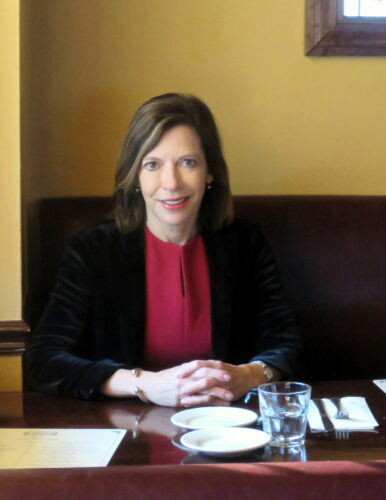
PHOTO By Grace Bennett

An interview with the very accomplished Evelyn Farkas might have started ‘anywhere’ but we started with her raison d’etre for being ‘back in Chappaqua,’ her childhood home, and her ‘connection’ to the 17th District: “I grew up here, and I never really left… I don’t have my own nuclear family, so this is where I come back to as often as possible, for holidays and more…

“I left my town to serve my country,” she added pointedly. “I came back to serve my country,” said Farkas, whose campaign announced over $460,000 raised by the first filing deadline, just six weeks post launching.

The 52-year-old Farkas, MSNBC National Security contributor and a former Deputy Assistant Secretary of Defense for President Obama, speaks proudly of her parents who raised her here–94- and 81-year old Hungarian immigrants who fled Hungary after the Communist Revolution failed. “They came to America for freedom and economic opportunity,” after moving from Manhattan’s ‘Little Hungary’ to Chappaqua when Evelyn was one month old; she and her three siblings graduated from Horace Greeley High School.

“When his ship docked in Brooklyn, my dad was 31, and he had to learn English. He knew a little from music and films, but that was all. He took odd jobs and eventually got his Master’s in Library Sciences from Columbia University. He had a Ph.D. and a law degree, so he was on track to be a judge in Hungary. My mother was 13 years younger, so when she came to the U.S. she did a year of high school and college in Oklahoma where she studied pharmacy. They moved to Westchester because he got a job as director of the Briarcliff Manor Public Library. They chose Chappaqua for the schools. I’m so grateful to this district and my schooling. When I got to college, I realized just how well prepared I was.”

I asked her what stood out the most for her in Chappaqua schools: “I learned to write really well–it was a fantastic education, starting at Grafflin elementary school. I can still sing the school song!” We shared a laugh as Farkas recited its lyrics. Greeley, she elaborated, gave her “a great start” with advanced placement in Social Studies, for example. She also recalled a guidance counselor who had a huge impact on her life; she said he helped her navigate college admissions–eventually landing at Franklin & Marshall College with a double major in government and German; she related that her mom worked at three hospitals to supplement her dad’s modest income, so that they could afford her years at F&M, from where, upon graduation, she landed a first job at the Council on Foreign Relations. She described a “massive debt” not paid off until many years later with federal assistance. Today she is on F&M’s board.

Breaking Barriers

“I do pride myself on working my way up–being self-made,” said Farkas, who after two years overseas went on to graduate school outside Boston to get a Masters and PhD at Tufts Fletcher School of Law and Diplomacy. While she was there, she served as a fellow for the House foreign affairs committee, and worked inside Bosnia for six months. As a Human Rights Officer, “it was the most absorbing, meaningful job I’ve had to date.” What followed: The Marine Corps hired Farkas as one of its first two women assistant professors and eventually promoted her to associate after she finished her doctorate. It was on to the Senate Armed services staff for Senator Carl Levin (“a phenomenal member”) who endorsed Farkas to represent NY-17 in Congress in the late fall.

For nearly a decade, Farkas worked on “a whole swath of issues… combating terrorism but also narcotics, Asia Pacific policy, export control, and homeland defense after 9/11.” This led to a key appointment on a post 9/11 commission “getting to the bottom of the nexus between terrorism and weapons of mass destruction.” She also worked at the American Security Project founded by Senator John Kerry with whom she worked closely with on environmental issues before returning to the Department of Defense and reporting to “the head of the U.S.-European Command.” Farkas then became the Sherpa to Secretary Leon Panetta for the 2012 NATO summit which led to her most pivotal role when appointed to become Obama’s Assistant Director of Defense for Russia, Ukraine and Euroasia.

“Of course, famously, one of my countries invaded the other… I was alarmed to hear that the Trump campaign had this weird relationship to the Kremlin. I knew exactly what that meant because I knew how the Kremlin operated. And that probably represented something more serious. I went on national TV and raised the alarm. I said we need to get involved and Congress needs to get involved.”

Farkas barreled ahead, speaking and writing op-eds–while weathering time consuming and costly attacks by the far right, she related. “Ultimately the Republicans still in control of Congress made me testify. Of course, there was nothing to it, nobody was leaking to me. I just have a brain and I could put the dots together.”

The Pros of ‘Inside Washington’ Tenure

That brain and resolve eventually landed Farkas as a contributor at MSNBC. Ensconced in her role there, Farkas stated that she did not think she would be a politician. But then in the fall, after Nita Lowey announced her retirement, friends who had worked for Nita and strangers in the district convinced Evelyn to run.

“People said to me they wanted someone who understands national security issues, who’s a fighter, who will protect both our democracy and our economic opportunities; these are issues near and dear to me…”

“So is looking at gun safety and fighting hard so that our children don’t need to be afraid to go to school or working to make sure health care is accessible to more people at more affordable rates, Farkas added.

“I will fight, it’s in my DNA.” Farkas emphasized her national stature and that she knows how to get things done at the federal level. “For seven years, I drafted and passed legislation. I know the ranking members, the senior staffers… I already have a voice that people listen to. They follow me on Twitter, they watch me on MSNBC, and care what I have to say.”

Climate Change as a #1 Priority

She describes the ‘backdrop to everything’ regarding her priorities boils down to “protecting our freedom and our economic way of life,” and in that, her Number 1 priority, she makes clear, is the climate crisis.

“With the planet on fire literally and melting, we can’t ignore the climate crisis. While that’s my top priority, there are other issues. And we have to tackle them all.”

“All of us are affected by what’s happening: Along the Hudson, Long Island Sound, Rye Brook: all affect the district and those who live here–connected to that are issues pertaining to the airport for example. We do have to manage our air quality and noise.”

Gun safety is a very close second priority, calling the current state of affairs “an appalling blemish on our society.”

“It’s also preventable… Do background checks. It’s so basic. Many of these shooters would not otherwise have had access to weapons. Mental illness would have disqualified some too. Farkas also advocates no fly/no buy legislation, noting her background in counter terrorism. “Appallingly, people who are banned from flying because of suspicion they might be involved with terrorism are not on a banned list for buying firearms!”

Another must do, she emphasized, is a ban on automatic and semi-automatic weapons. “I worked for the military and saw weapons in Afghanistan and Iraq and been out to battle zones. Those weapons belong in the hands of our military, and after that, our law enforcement. I don’t want those types of weapons on the streets of America.”

Protecting women’s rights, Farkas stated, is also a high priority. “It’s bad enough that at the state level there was an attack on Roe v. Wade, and not only that but access to reproductive health care. We need to work harder at getting equal pay for women and even harder for women of color across the board. We need to rectify that.”

Speaking of women, Farkas said she has received words of encouragement from Hillary Clinton for whom she helped fundraise in 2008, and again in 2016, “joining a group of other Chappaqua women at that time. “I spoke with her recently about this race… she had a number of pieces of concrete advice; her last was my favorite, and that was: ‘Have fun.’ She also said, ‘call me anytime’ when I offered to keep in touch!”

Addressing Today’s Antisemitism

As I was working on shaping this story, antisemitism had passed a boiling point–with brutal and lethal attacks on Hasidic and ‘visibly” Jewish people, in particular in Crown Heights, Williamsburg, Jersey City and Monsey with memories of the Tree of Life Synagogue shooting still searing through Jewish and public consciousness. How are we going to heal this country, I asked Farkas. How do we take this deep division developed over these last three years and bring this country back together? How would you address antisemitism, I asked.

Farkas said that knowledge of the Holocaust was “ingrained in me,” despite that her parents weren’t Jewish, she said her grandparents had friends growing up who were Jewish who were terribly affected… It was a horrible time period in Hungary’s history. Coming out of that, my parents wanted us to understand how horrible humans could be to each other and have an awareness so we could do everything to prevent it.”

Farkas explained that her family history shaped her world view and she geared her education choices toward preventing atrocities. The genocide in Bosnia, she related, was one of her doctoral topics. “I’ve been wanted to stop hate from the beginning of my life.

Taking on Trump

“But now I’m also disgusted by what Trump has done,” she continued. “He says he’s proud of his daughter and Jewish son in law, but he is aiding and abetting anti-Semitism, aiding and abetting ‘otherism’ and hatred of African Americans, the LGBTQ and Muslim communities.”

Farkas said she spoke at a Jewish Federation of Peace lecture series in Pennsylvania. She recalled that the series was named after a prominent survivor, Leo Camp, who had survived Auschwitz. “We have to remember so that it doesn’t happen again,” Farkas said. Referring to a recent article about another survivor, she added: “This man, who didn’t even want to speak to his immediate family about his experience, is now so alarmed by what is happening that he is speaking out publicly as much as possible. I know many of the survivors who are very old doing just that.”

In our discussion about antisemitism, Farkas noted that she is “absolutely opposed to the BDS Movement.

“I think it’s bad for Israel. It is bad for U.S./Israeli relations. At best, it’s misguided. When it comes to Israel, yes, we need a two-state solution. Israel has the right to remain a Jewish state and I believe the Palestinians should have their own state as well. We need to remain shoulder to shoulder with Israel on security. I’ve worked on that in the Pentagon…” She said that “giving Israel the “qualitative military edge in defense means giving Israel the ability to deter all the other bad actors in the area from taking military action against Israel.”

She stated that Trump has “done more to put Israel at risk, to diminish protections than any other President in my lifetime. Politically, it also concerns me that the Israeli government has enabled Trump and others to make support a partisan issue when it has always been a bipartisan issue. Some people–and Trump is at the forefront of this–are changing the bipartisan support. He says ridiculous things like only he supports Israel, only the Republicans support Israel… There’s Nita Lowey, there’s Senator Levin, and many others.”

Mandating Education to Fight Hate

Farkas said that we also can’t always assume negative intentions to those making criticisms of Israel any more than of any other country. “That said, we do have to educate. There are younger people coming into Congress who have probably never traveled to Israel. Our commitment to Israel isn’t just political and military–it is moral.“

“This is why if you have people not educated in the history–and even don’t know how we in America did nothing and turned Jews away during the Holocaust… we now have a moral responsibility to Israel and to the Jewish people. In Congress, I would rectify this lack in education. I also view it as a broader issue than Israel and antisemitism. I’m against all ‘isms.’”

Time was almost up. Early in the interview, Farkas had shared her motivation in breaking barriers: “I’m a Doer. Even though I can be a Thinker, I’m a Doer.” I asked her for a final thought. “Although I grew up here in Chappaqua, we did struggle. But we got by because of its excellent education system.

I feel I want to protect that for future generations–that political freedom, that economic opportunity. I will fight for this district. From day one, I will be able to deliver. Because I’ve already legislated at the Federal level.”

For more information, please visit evelynforny.com

Filed Under: Election 2020 Tagged With: 17th District, Congress, Congressional Candidate, Evelyn Farkas, National Security Expert, Nita Lowey

Publisher Pride

February 22, 2020 by Grace Bennett

We are officially in our 17th year, and I couldn’t be prouder of this company launched in 2003, and especially of our team whose mission is to create features which shine a light on all the wonderful, big hearted people living here and all the fun and vital happenings in this area–and also to give our sponsors an effective place to share their news too! We have two terrific new additions to our team: Robin Chwatko, as advertising manager, and Sherry Topel, who is managing accounts, too.



If we missed your story or sponsorship ‘in print,’ remember to contact me about our online edition, insidepress.com, for possible publication and/or advertising options, too. In the meantime, I invite you to enjoy just one of 11 springtime ‘Inside Press’ editions–Inside Chappaqua & Millwood, Inside Armonk and the new Inside Briarcliff/Ossining/Pleasantville Magazine (which we are calling ‘BOP’ Magazine) that we produce. We love sharing the joys of your hometown and supporting local efforts to protect our precious environments. I love hearing from readers, too. Drop me a note anytime: grace@insidepress.com

Enjoy!

Filed Under: Just Between Us Tagged With: advertising options, Features, Inside Press, news, Publisher, Readers, team

The U.S. Holocaust Memorial Museum Honors Chappaqua’s Stacey Saiontz

December 1, 2019 by Grace Bennett

Jared Saiontz, Jack Feldman, Stacey Saiontz, Marc Saiontz and Elliott Saiontz

Some 500 persons attended a New York Tribute Dinner on October 28th during which Chappaqua’s Stacey Saiontz was one of two recipients of National Leadership Awards by the U.S. Holocaust Memorial Museum. Saiontz is a founding member of the Museum’s Next Generation board and was recently appointed to its Education Committee. She shares her passion with her children who were featured in the HBO documentary The Number on Great-Grandpa’s Arm.

Saiontz with fellow honoree Gary Jacob

“The first words that spring to mind about Stacey are high energy and committed,” said Howard D. Unger, of the United States Holocaust Memorial Council, in introducing Saiontz. “Whether it is fiercely advocating for food allergy legislation or relentlessly advancing Holocaust related causes,” he added, “when Stacey is in, she is all in.” The dinner raised over $3.2 million. Saiontz called the Museum “a beacon on the global stage; it reminds us all of what we are capable of, the good and the bad, and offers a universal message of tolerance and importance of taking action. The Holocaust is not just a story of hate; it’s also a story of resilience, humanity, love and kindness,” she said.

Gary Jacob, a second honoree who has served as a regional co-chair of the event,  is vice president of Glenwood Management and vice chairman of the Settlement Housing Fund. Powerful presentations at the benefit included harrowing testimony from Auschwitz-Birkenau survivor Irene Weiss.

Weiss described her family’s losses and how she was “forced to live and work next to the crematorium” and “forced out on a death march with 1000s of other prisoners.” “How does one put into words the magnitude of such a loss?” she asked.

Sara J. Bloomfield, Museum Director, said that while the world will always change, “human nature never will, and that we alone are responsible for the solutions.” She described the need “to unlock these powerful lessons of Holocaust history…so that wishful thinking might be constantly be met with determined resistance, so that today’s bystander will not become tomorrow’s victim… That’s the museum’s bold and urgent aspiration.” For more info, visit ushmm.org.

Filed Under: Happenings Tagged With: benefit, Gary Jacob, honoree, Howard Unger, Irene Weiss, National Leadership Award, New York Tribute Dinner, Presentations, Sara Bloomfield, Stacey Saiontz, U.S. Holocaust Memorial Museum

  • « Go to Previous Page
  • Page 1
  • Interim pages omitted …
  • Page 16
  • Page 17
  • Page 18
  • Page 19
  • Page 20
  • Interim pages omitted …
  • Page 24
  • Go to Next Page »

Primary Sidebar

Please Visit

White Plains Hospital
William Raveis – Armonk
William Raveis – Chappaqua
Northwell Hospital
Houlihan Lawrence – Chappaqua
Houlihan Lawrence – Armonk
Houlihan Lawrence – Briarcliff
NYOMIS – Dr. Andrew Horowitz
Westchester Table Tennis Center
Spavia
Compass: Miller Goldenberg Harris Team
Lipari & Mangiameli Dentistry
Raveis: Lisa Koh and Allison Coviello
Bristal Assisted Living
Maid Brigade
Kevin Roberts Painting & Design
Zwilling J. A. Henckels
Meagher & Meagher Attorneys at Law
Compass: Aurora Banaszek
Dr. Briones Medical Weight Loss Center
Elliman: Pam Akin
EyeGallery
Decicco and Sons
Houlihan: Kile Boga-Ibric
Wags & Whiskers Dog Grooming
Breathe Pilates and Yoga
Donna Mueller
Saltbox Sash

Follow our Social Media

The Inside Press

Our Latest Issues

For a full reading of our current edition, or to obtain a copy or subscription, please contact us.

Inside Pleasantville and Briarcliff Manor Inside Chappaqua and Millwood Inside Armonk

Join Our Mailing List


Search Inside Press

Links

  • Advertise
  • Contact Us
  • Digital Subscription
  • Print Subscription

Publisher’s Note Regarding Our Valued Sponsors

Inside Press is not responsible for and does not necessarily endorse or not endorse any advertisers, products or resources referenced in either sponsor-driven stories or in advertisements appearing in this publication. The Inside Press shall not be liable to any party as a result of any information, services or resources made available through this publication.The Inside Press is published in good faith and cannot be held responsible for any inaccuracies in advertising or sponsor driven stories that appear in this publication. The views of advertisers and contributors are not necessarily those of the publisher’s.

Opinions and information presented in all Inside Press articles, such as in the arena of health and medicine, strictly reflect the experiences, expertise and/or views of those interviewed, and are not necessarily recommended or endorsed by the Inside Press. Please consult your own doctor for diagnosis and/or treatment.

Footer

Support The Inside Press

Advertising

Print Subscription

Digital Subscription

Categories

Archives

Subscribe

Did you know you can subscribe anytime to our print editions?

Voluntary subscriptions are most welcome, if you've moved outside the area, or a subscription is a great present idea for an elderly parent, for a neighbor who is moving or for your graduating high school student or any college student who may enjoy keeping up with hometown stories.

Subscribe Today

Copyright © 2026 The Inside Press, Inc. · Log in