• Skip to primary navigation
  • Skip to main content
  • Skip to primary sidebar
  • Skip to footer

The Inside Press

Magazines serving the communities of Northern Westchester

  • Home
  • Cover Stories
  • Features
    • Portraits and Profiles
  • Advertorials
    • Lifestyles with our Sponsors
    • Sponsor News!
  • Wellness
  • Happenings
  • Advertise
    • Advertise in One or All of our Magazines–And/Or Subscribe
    • Advertising Payment Form
  • Contact Us
  • Search

Northern Westchester Hospital

State of the Art Cardiac Cath Lab Anticipated Opening at Northern Westchester Hospital: September 2

August 24, 2020 by Lauren Rosh

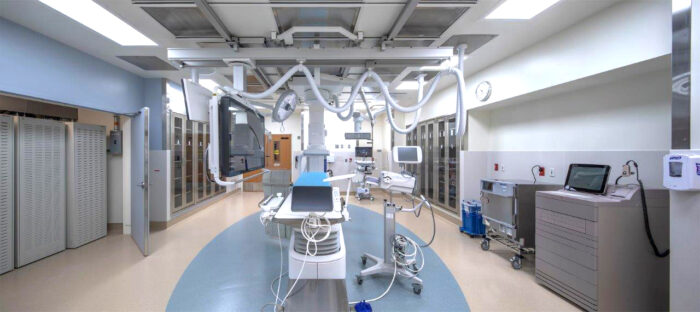
The Newly Opening Cardiac Catheterization Lab at Northern Westchester Hospital

Northern Westchester Hospital will open its highly anticipated comprehensive Cardiac Catheterization Lab on September 2nd, providing state-of-the-art interventional cardiology services to residents of Westchester, Putnam and Fairfield Counties, who would otherwise have to travel long distances during cardiac events when every second counts.

The Cath Lab will work as an extension of and in conjunction with Lenox Hill Hospital’s cardiac services, providing care for emergency level patients 24-hours a day, seven days a week.

“A cardiac catheterization lab is a specialized area in a hospital where cardiac specialists diagnose and treat coronary artery disease, such as various types of heart attack, using tiny flexible tubes called catheters to access the heart and coronary (heart) blood vessels,” explained Interventional Cardiologist Carl Dietrich Reimers, M.D., FACC, FSCAI, director of the new NWH Cardiac Cath Lab.

Garvey Rene, M.D., FACC, FSCAI of Caremount Medical, is associate director of the Cath Lab.

According to Dr. Reimers, Northern Westchester Hospital’s Cardiac Catheterization Lab will treat patients with coronary artery disease–a narrowing or blockage of arteries carrying oxygenated blood to the heart.

Until now, Northern Westchester Hospital patients who needed cardiac catheterization were taken to Valhalla, New York, or Stamford or Danbury, Connecticut. The new Cath Lab will eliminate the time between an emergency and treatment.

“It is critical to have a catheterization lab in close proximity since the most effective treatment is performed within 90 minutes of the onset of symptoms,” says Dr. Reimers, who is also vice chairman of cardiology at Lenox Hill Hospital and assistant professor of Cardiology at the Zucker School of Medicine at Hofstra/Northwell.

“When there is a blockage in the artery, the heart begins to suffocate from the lack of oxygen. However, if treated promptly, the damage can be reversed.

“When someone experiences chest pain and calls 911, the goal is to diagnose the patient, bring them to the catheterization lab and perform the procedure all within 90 minutes,” he added.

This new location eliminates delays in care that may come along with being transported to a location outside of Northern Westchester.

“The new Cath Lab will be vital to elevating the level of care that patients can receive right in the community,” said Dr. Reimers. “All of the physicians covering the Cath Lab also rotate at Lenox Hill to ensure seamless care for patients who require more complex procedures.”

Northern Westchester Hospital and Lenox Hill Hospital are both a part of New York State’s largest healthcare system, Northwell Health. A benefit of being a part of this network is the collaboration that exists between hospitals and facilities across the system.

All of the nurses preparing to work in Northern Westchester Hospital’s Cath Lab are trained in critical care medicine and have experience working in intensive care units. To build the team’s experience, the nursing team trained at two of Northwell’s facilities on Long Island. Additionally, Dr. Reimers said, four techs all trained at Lenox Hill Hospital to get hands-on experience prior to the lab opening.

Healthgrades ranked the cardiac program at Lenox Hill Hospital among the top 5% for six consecutive years. Additionally, Lenox Hill Hospital was one of the first hospitals in New York City to open a cardiac catheterization lab. In 1938, the first angiocardiography in the United States was performed at Lenox Hill Hospital, and in 1967, Lenox Hill Hospital opened the first cardiac care unit in the New York metropolitan area.

The collaboration between Northern Westchester Hospital and Lenox Hill Hospital will allow doctors, nurses and staff to discuss difficult scenarios.

“We will be available 24/7, 365 days a year to handle all cardiac emergencies,” said

Dr. Reimers. “We believe Northern Westchester Hospital’s Cardiac Cath Lab will save lives.”

For more information, please visit:nwhc.net/blog/CardiacCathLab
Filed Under: Cover Stories Tagged With: Cardiac Catheterization, cardiac emergencies, cardiac specialists, Cath Lab, coronary artery disease, heart attack, interventional cardiology, Northern Westchester Hospital, Northwell

COVID-19 Antibody Testing Available at Northern Westchester Hospital’s Center for Healthy Living

June 10, 2020 by Inside Press

Northern Westchester Hospital (NWH) has issued a release announcing the availability of serology COVID-19 antibody testing for community members living in the villages, towns (and hamlets within the towns) of:  Armonk, Bedford, Chappaqua, Lewisboro, Mount Kisco, Pleasantville, Somers, North Salem, Yorktown, Pound Ridge, and Mt Pleasant. In order to accommodate the local community with minimal wait times and to maintain appropriate social distancing guidelines, all individuals coming for a test must be pre-registered and will be expected to wear a mask. In compliance with NY State Department of Health (DOH) guidelines, effective immediately and through July 31, antibody testing is available at:

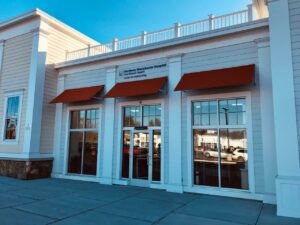
Center for Healthy Living

480 South Bedford Road, Chappaqua, New York, 10514

Located in Chappaqua Crossing – Next to Whole Foods. Ample Parking

Hours of Operation:

Antibody testing will be offered Monday through Friday between 7am and 3pm through July 31st.  You can come anytime during this designated time period.

Pre-registration is required 24 hours in advance and can be completed at https://bit.ly/3dFyuSG

Upon arrival please bring:

  • A copy of your confirmation email (from pre-registration). No prescription is needed but pre-registration is required.
  • A copy of your insurance card (copayments are waived)
  • Please know that you will be asked screening questions and will be masked upon entry per NYS regulation

Information about Antibody Testing:

What is serology (antibody) testing? After a simple blood draw, the antibody test may determine whether or not people who have been previously infected or exposed to COVID-19 have antibodies in their blood. Antibodies are proteins in the blood made by one’s immune system that help fight infection.

What does a negative result mean? Negative means that COVID-19 antibodies were not detected in your blood. Most commonly, this indicates you have not been infected with the COVID-19 virus. A negative result does not rule-out early or recent infection and antibody testing should not be used to diagnose COVID-19 infection.

What does a positive result mean? A positive result indicates that you have COVID-19 antibodies in your blood. This means you have been exposed to COVID 19 and developed antibodies. At this point scientists are unsure how detected antibodies impact immunity and protect against re-infection.  Therefore, it is important to note that regardless of your test result, it is essential that you continue to adhere to the Governor’s Executive Order and the New York State Department of Health guidelines for masking, social distancing and hand washing.

Why participate? Scientists are still working to understand many things about COVID-19, like how it travels from person to person, why it affects people differently, if it is a seasonal disease (meaning it can come back year after year like the flu), and if people can be infected again. That’s why these efforts are so important for you, your family and the community as a whole.

Reminder- Pre-registration is required 24 hours in advance and can be completed at https://bit.ly/3dFyuSG.

Participants will receive a confirmation email after successful pre-registration.  Please note that pre-registration takes 24 hours to be processed so please plan accordingly so there are no delays when you arrive for your test. 

Testing continues to be available for first responders and essential workers who live or work in the towns served by NWH and for family members of NWH staff.

Why participate? Scientists are still working to understand many things about COVID-19, like how it travels from person to person, why it affects people differently, if it is a seasonal disease (meaning it can come back year after year like the flu), and if people can be infected again. That’s why these efforts are so important for you, your family and the community as a whole.

Reminder- Pre-registration is required 24 hours in advance and can be completed at https://bit.ly/3dFyuSG.

Participants will receive a confirmation email after successful pre-registration.  Please note that pre-registration takes 24 hours to be processed so please plan accordingly so there are no delays when you arrive for your test. 

Testing continues to be available for first responders and essential workers who live or work in the towns served by NWH and for family members of NWH staff.

News and photo courtesy of Northern Westchester Hospital


Filed Under: New Castle Releases Tagged With: Center for Healthy Living, COVID-19 Testing, Northern Westchester Hospital

Northern Westchester Hospital’s Emergency Chair: 50 Percent Decline in ER Visits Impacting Patients with Life-Threatening Conditions

May 13, 2020 by Grace Bennett

Dr. James Dwyer, Chair of Emergency Medicine at Northern Westchester Hospital (NWH), discussed the alarming decline in visits to the ER among patients with serious, life-threatening medical conditions, including heart attacks, strokes, and appendicitis.

“We are seeing similar scenarios over and over again,” said Dr. Dwyer in an interview this week. “A patient, for example, who has abdominal pain is afraid to come into the Emergency Department, so they tough it out and think: ‘it will go away, it will go away..,’ and then by the time they realize it won’t, they come in with a ruptured appendix as opposed to catching the appendicitis before it’s ruptured and getting to the operating room earlier.”

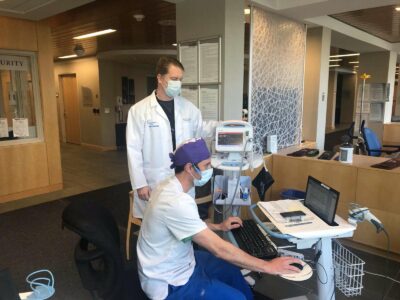
Dr. James Dwyer, Chair of emergency Medicine (standing) with Michael Pancoast (seated) at the triage station just inside the emergency room at Northern Westchester Hospital.
Photo courtesy of NWH

According to Dr. Dwyer, ERs around the country are seeing a drop in overall patient volume due to patient fears about COVID-19. As a result, untold numbers of people may be dying at home or risking long-term health consequences by ignoring serious symptoms.

Meanwhile, “when appendicitis (removal of the appendix) is performed as a routine procedure, the outcomes are outstanding; most of the people are out the same day,” said Dwyer. In contrast, a life-threatening rupture can spread infection in the abdomen requiring more involved surgery and longer recovery times.

Since the pandemic started March 11, about 50% of the appendicitis cases have presented as ruptured–a normal scenario is 5-10 percent,” he elaborated. “1 in 2 ruptured versus 1 in 10… people are definitely waiting to get this taken care of.”

NWH is seeing about a 50 percent drop to their usual ER volume, Dr. Dwyer said. At NWH, the ER typically sees more than 80 patients per day and is now seeing as few as 30. “The decline in ER visits among people with serious, life-threatening conditions, including heart attacks, strokes, infections and trauma, is taking a toll on the health and wellbeing of people in the United States and around the world.

Dr. Dwyer said some patients experiencing symptoms may not be calling their doctors because they are afraid their doctors will tell them to go to the Emergency Department. “It’s possible not enough people experiencing symptoms are reaching out to their primary doctors,” he said adding that the many excellent practitioners in the area could properly discern symptoms and steer patients to the ER, as needed.

Financial Asset Management Corporation (May 2020 version)
ADVERTISEMENT

“I saw a patient who had been short of breath for six days before he decided to see his primary doctor;  when he finally saw him,  he found a very rapid heart rhythm, an atrial fibrillation. We immediately admitted him to the hospital.”

“We need people to understand that it is safe to go to the ER, and far more dangerous to stay home and wait for serious symptoms to disappear.”

Before coronavirus, 12% (just over one in 10) people with stroke symptoms waited one day before visiting the ER; now, 25% (one in four) wait at least one day, despite symptoms that can include loss of vision, speech, sensations and weakness on one side.

Surviving stroke, he explained, is very time dependent. “For those who present early– within 4.5 hours–we can give medication that breaks up the clot. The window for treating more severe stroke–via an endovascular procedure to open up the blood vessel–is traditionally within six hours, and in a small minority of cases, up to 24 hours.”

“The earlier you get these therapies, the more successful they are at preventing a bad outcome,” he said.

“We want people to know that it’s safe to visit the ER,” he emphasized. “At NWH, people are screened at the front door of the Emergency Department, everyone in the entire institution wears a mask, and patients are treated in private rooms.”

NCPT in-story ad
ADVERTISEMENT

Dr. Dwyer added: “The precautions we take here are working. Very few staff members have been diagnosed with COVID since this started.” Dr. Dwyer also pointed out that only a small number of visitors are allowed in the hospital so as to protect overall populations. These include partners of women giving birth, parents to a pediatric patient, and close family members to those dying of COVID-19 or any other condition.

As of this morning (May 13), NWH was caring for 19 COVID-positive patients in the hospital, which is significantly down,” Dr. Dwyer said.  “We were up in the 80s at the beginning of April, so it has come down quite a bit.  We still have 10 people on ventilators who are COVID positive. Some of these critically ill people require an extended period  of time for their lungs to recover on the ventilator.”

“We happen to have had some success treating patients on ventilators. The 10,000th discharge from Northwell in fact was from Northern Westchester Hospital, someone who was severely infected who is now recovering.”

“From our institution alone, we have had 247 live covid discharges.  That’s very encouraging.” There have been 58 COVID-related mortalities.

Dr. Dwyer elaborated: “We have worked very, very hard to make sure this is a safe environment, and in the ER, especially. When you come into the ER, you are screened at the door, and given a surgical mask and then escorted to one of 26 private rooms–there is very little chance of being exposed to COVID at NWH.

He pointed out that his nine-year-old nephew was a patient recently.  “He had a laceration. He had cut his ear on a branch outside running around–he came into the ER, and one of the nurse practitioners sewed his ear up. I feel comfortable having my own family here.”

Dr. Dwyer urges people to recognize the signs and symptoms of the following life- threatening conditions:

Heart attack

People who survive a heart attack may have weakened heart muscles and are at risk for life-threatening complications including another more serious heart attack. Go to the ER immediately if you have any of the following symptoms:

  • Chest pain, including tightness, and pain that spreads to the arms, neck, jaw or back;
  • Sudden onset of shortness of breath, sweating, dizziness or lightheadedness;
  • Unexplained nausea, indigestion, or heartburn.

Strokes

When caught early, immediate treatment may prevent death and minimize the long-term effects of a stroke. Even if a stroke is minor, it is important to receive an evaluation and treatment in order to prevent another, possibly devastating, stroke: Go to the ER immediately if you have any of the following symptoms:

  • Body weakness, especially on one side;
  • Facial droop;
  • Difficulty speaking or finding words;
  • Sudden loss of vision;
  • Numbness or loss of sensation;
  • Unsteadiness on your feet.

Appendicitis

When caught early, a surgeon can remove the appendix and often send you home the same day. If the appendix ruptures, a patient will spend days in the hospital and be at risk of life-threatening conditions that include peritonitis and sepsis. Go to the ER if you have the following symptoms:

  • Pain in the right lower quadrant of the abdomen (which typically increases when you move and intensifies over 24 to 48 hours), sometimes with
  • Loss of appetite;
  • Nausea and vomiting;
  • Fever.

Filed Under: Surviving COVID-19 Tagged With: Advanced Stroke, Antibodies, Appendicitis, COVID-19, Emergency Room, ER, heart attack, heart disease, Life threatening conditions, Northern Westchester Hospital, Precautions, Primary doctors, Ruptured Appendix, Strokes

Teens Show How to Have Fun While Social Distancing

May 7, 2020 by The Inside Press

Mount Kisco, NY–Hoping to make a difference during COVID-19 quarantine and concerned their peers were getting antsy to get out and socialize, Northern Westchester Hospital’s (NWH)  President’s Junior Leadership Council (PJLC) produced a video encouraging teens to social distance and have fun at the same time (https://www.youtube.com/watch?v=L0-9yp54HZU .

The video stars students at high schools throughout Northern Westchester– enjoying at home activities that include dancing, painting, playing basketball and cooking.

“We’re hoping to motivate teenagers to find interesting and enjoyable activities they can do in quarantine,” says 15-year-old Byram Hills High School sophomore Sydney Levy. “Ultimately, staying home is the answer to ending the spread of this pandemic, and it is important to physically distance whenever it is necessary to leave home.”

Wags & Whiskers
ADVERTISEMENT

If you want to be cool, follow one simple rule: Stay home, the video begins.  It concludes by saying, We know everyone is feeling FOMO from COVID-19 and ends with students, each in their home, holding a word to collectively spell out The Shorter It Will Be Is Up To You And Me.

“Physical distancing contributes to the safety of the community and the health and wellbeing of the doctors, nurses and staff at Northern Westchester Hospital,” says 17-year old Sacred Heart junior Madison Mezzatesta, “We hope our video inspires others in the community to find things that they love doing at home to make the most of this difficult experience.”

PJLC is currently working on more COVID 19 videos, in an effort to create a series of inspirational messages for teens.

The NWH PJLC is a leadership organization that helps high school students in northern Westchester connect to their community; promotes the health, safety and wellbeing of adolescents and young adults; and engages them on issues that matter to them and affects their lives. Its members include 50 high school students from communities served by the hospital: Chappaqua, Armonk, Yorktown, Byram Hills, North Salem, Bedford, Katonah-Lewisboro, Somers and Pleasantville.

NWH relies on the PJLC to help hospital administrators understand issues facing teens and adolescents, and the students provide input on health-related educational programming that the hospital offers at local schools. Each year, students from the PJLC identify a major health concern within their peer group and develop creative, relatable ways in which educators can inform students, parents, and the community.

News courtesy of Northern Westchester Hospital

Filed Under: Stay Connected Tagged With: COVID-19, Northern Westchester, Northern Westchester Hospital, Northwell, PJLC, President's Junior Leadership Council, Quarantine, social distancing, teens

The Recovering and the Recovered

April 18, 2020 by Amy Kelley

Our author brings us up to date on her own gradual return to good health after falling ill with coronavirus–and shares the harrowing but similarly miraculous journeys to recovery experienced by, as it happens, two well-known, Chappaqua-based musicians.

During this terrible time in American history, we brace ourselves to digest the latest news each day as to how many fellow New Yorkers are suffering and dying; this week, public officials announced well over 10,000 had died in New York City alone. It’s a tragic, frightening statistic, and as Governor Andrew Cuomo regularly reminds us, there are real faces behind the numbers and devastated families who cannot properly care for those hospitalized or later deceased or adequately address their own grief.

But every day, there are also more than twice as many people recovering from COVID-19, the novel coronavirus.

Le Jardin du Roi
ADVERTISEMENT

As dire as the situation certainly is, it’s important to remember, too, that many New York residents are also getting better, and many experts predict at least a year of subsequent immunity follows, although inadequate widespread testing remains an ongoing challenge.

A few weeks past my own last symptoms, solidly recovered from COVID-19, Mount Sinai Hospital  scheduled myself and my 18-and-up family members to donate plasma.

I feel very lucky.

I can walk into the pharmacy without fear and get takeout coffee without fearing invisible germs on the cup. And when I line up outside the grocery store. I’m meticulous about social distancing–but that’s because I don’t want to worry anyone else, not because I worry about myself.

There are more and more of us every day–the recovering and the recovered. (Editor’s Note: The jury is still out on the degree of  immunity to coronavirus infection, post recovery too. Please speak with your doctor.)

We’re not all young, either. I’m 50, and the Chappaqua residents I interviewed for this article– by phone, because both were not totally well yet–are a bit older. I also have a minor heart condition and asthma.

People always want to know more about my asthma so here’s a description that, under normal circumstances, would be oversharing and plus would bore you to tears: I’ve had asthma since I was seven.

My asthma is idiopathic, meaning that there’s no known cause. I’m on the highest dose of Symbicort, twice daily, and use my albuterol rescue inhaler more than I’m supposed to. Not a day goes by that I don’t think, several times, about my difficult breathing.

Yes, my heart condition was exacerbated by the virus–that’s why I was hospitalized and tested. But my lungs remained clear while hospitalized, and when I developed more significant shortness of breath a few days later at home, I wasn’t worried.

As a lifelong asthmatic, I know when to worry, and it just didn’t get that bad.

The editor asked me to share my recovery story as a follow up to my ‘being sick’ story https://www.theinsidepress.com/area-journalist-diagnosed-covid-19-positive-and-quarantined-with-family/  but also to speak with two members of the Chappaqua community, both of whom happen to be accomplished musicians who had contracted coronavirus. Each had become seriously ill, but each also appears to have fortunately recovered as well. She asked if I’d check in with them:

Jon Cobert: “My Wife Tried to Revive Me… then she Called 911”

Jon Cobert

I personally never lost my sense of taste and smell, which has become one of the telltale signs of coronavirus, but my husband and two of my sons did.

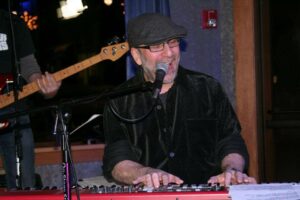
So did this Chappaqua resident, music legend Jon Cobert. His wife and son caught the virus as well, and they too lost their senses of taste and smell.

Cobert, 65, a five-time Grammy nominated musician who has played with John Lennon, Tom Chapin, Harry Chapin, Laura Branigan and many others, first called his doctor in mid-March. “I had a headache and a fever on March 16 after dinner, and I kind of knew,” he said, adding that he doesn’t usually get headaches or fevers, and his doctor said to keep an eye on things.

When Cobert developed a cough, though, his doctor arranged for him to have his lungs looked at on March 20, and he was tested. He got the call that the test was positive on March 23.

Cobert said he had been hoping he didn’t have it, although he recalled having worked with two musicians who later tested positive as well. His doctor said he should take his temperature and call to come in if he became very short of breath. At first, he was tired with a productive cough; but then he developed gastrointestinal symptoms.

A few days later, he passed out while sitting at the kitchen table.

“I just felt all the energy drain out of my body,” he said. “My wife tried to revive me, and then she called 911.”

Cobert said the Chappaqua Ambulance Corps was there in less than five minutes. He was taken to Northern Westchester Hospital and treated for atrial fibrillation. “They were fantastic,” he said.

Unfortunately, that overnight stay wasn’t the last Cobert saw of the hospital. On March 28, he developed chest pains and shortness of breath, and had to return.

But he was once more cleared to return home, and now his heart rate is, according to his Apple Watch, normal.

While Tylenol was hard to find, Cobert’s family was able to find generic acetaminophen. His sister-in-law gave him an oxygen meter, and he had an inhaler left over from a bout of bronchitis in the fall that he used a few times.

As of early this week, Cobert was feeling back to his normal self. “I went for a walk yesterday and it was quite therapeutic,” he said. “It was nice to get outside for an extended period and get some exercise. I highly recommend it.”

He even did his first Facebook live performance to the delight of his fans. He plans to do it weekly every Thursday.

Michael Shapiro Thought About “the Love I Feel for the People in my Life”

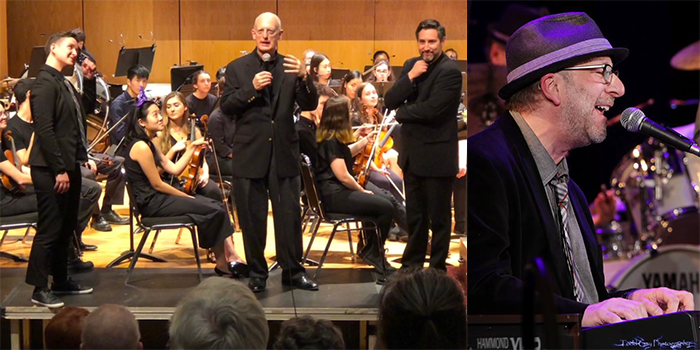
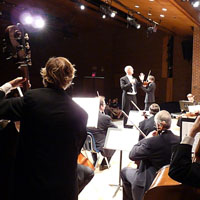
Michael Shapiro conducting the Chappaqua Orchestra.
PHOTO by Randy Matusow

Composer and conductor Michael Shapiro, 69, also spent time at Northern Westchester Hospital, five days, he shared, due to COVID-19-caused pneumonia, which he described as “feeling like having broken-up concrete in the bottom of my lungs.”

“They took wonderful care of me,” he said of the hospital staff. “They could not have been better. My long time doctor, Marvin Chinitz, was particularly insightful and I think saved my life.”

Shapiro, the former music director of the Chappaqua Orchestra, said he had fever as well. “I’d feel better, then it would spike, I’d feel better again, and the same thing happened. It would spike up again,” he said.

“I was constantly thinking about the things I believe in… the love I feel for the people in my life, all my family members, the things I still need to do,” Shapiro said, describing his time battling the virus.

This year’s Passover Seder, Shapiro said, was particularly meaningful as the fight between good and evil and against tyranny became less abstract for him, the Biblical made real as families hunkered down in their homes, the Angel of Death in the form of coronavirus raging across the world.

On a local level, Shapiro said he and his longtime partner Marge Perlin, her two sons and their girlfriends, most of whom tested positive but with relatively mild symptoms, depended on treasured friends and community members, who helped them in many ways.

Shapiro is on the mend now, gathering strength. Public music making is now restricted to commercial and public radio where Shapiro’s works, particularly his new Archangel Concerto for Piano and Orchestra (recorded last May by Steven Beck, pianist, and the BBC National Orchestra of Wales) is being broadcast internationally, on BBC3, CBC, and radio stations across America. SiriusXM is featuring Shapiro’s music on its program Living American to be broadcast six times and downloadable the next three months.

Shapiro is starting to get back to work on a new violin concerto for virtuoso Tim Fain which they hope to record when the lights go on again.

He credits his return to good health with the support he received within the community, especially. He mentioned: “Richard Leroy, dynamically leading social action at Temple Shaaray Tefila, who arranged for two weeks of meal delivery during the household’s quarantine; Vinny Milazzo of the Village Market, who energetically provides curbside service; and Erin Teter, manager of the Quaker Hill Tavern, whose loving example is an inspiration.”

“They are special, special people and community members,” Shapiro said of Leroy, Milazzo, and Teter. “We love them, they are curing the world every day, and we hope the community supports and cares for what they do.”

Filed Under: Surviving COVID-19 Tagged With: Composer, COVID-19, Grammy, John Lennon, Jon Cobert, Michael Shapiro, Mount Sinai Hospital, musicians, Northern Westchester Hospital, Recovered, recovery, Surviving COVID-19

  • « Go to Previous Page
  • Page 1
  • Interim pages omitted …
  • Page 4
  • Page 5
  • Page 6
  • Page 7
  • Page 8
  • Interim pages omitted …
  • Page 13
  • Go to Next Page »

Primary Sidebar

Please Visit

White Plains Hospital
William Raveis – Armonk
William Raveis – Chappaqua
Northwell Hospital
Houlihan Lawrence – Chappaqua
Houlihan Lawrence – Armonk
Houlihan Lawrence – Briarcliff
NYOMIS – Dr. Andrew Horowitz
Westchester Table Tennis Center
Spavia
Compass: Miller Goldenberg Harris Team
Lipari & Mangiameli Dentistry
Raveis: Lisa Koh and Allison Coviello
Bristal Assisted Living
Maid Brigade
Kevin Roberts Painting & Design
Zwilling J. A. Henckels
Meagher & Meagher Attorneys at Law
Compass: Aurora Banaszek
Dr. Briones Medical Weight Loss Center
Play Nice Together
World Cup Gymnastics
Decicco and Sons
Chocolate Chalet
Home Grown Gardens
Gleason Plumbing and Heating
Joseph Richard Florals
Donna Mueller

Follow our Social Media

The Inside Press

Our Latest Issues

For a full reading of our current edition, or to obtain a copy or subscription, please contact us.

Inside Pleasantville and Briarcliff Manor Inside Chappaqua and Millwood Inside Armonk

Join Our Mailing List


Search Inside Press

Links

  • Advertise
  • Contact Us
  • Digital Subscription
  • Print Subscription

Publisher’s Note Regarding Our Valued Sponsors

Inside Press is not responsible for and does not necessarily endorse or not endorse any advertisers, products or resources referenced in either sponsor-driven stories or in advertisements appearing in this publication. The Inside Press shall not be liable to any party as a result of any information, services or resources made available through this publication.The Inside Press is published in good faith and cannot be held responsible for any inaccuracies in advertising or sponsor driven stories that appear in this publication. The views of advertisers and contributors are not necessarily those of the publisher’s.

Opinions and information presented in all Inside Press articles, such as in the arena of health and medicine, strictly reflect the experiences, expertise and/or views of those interviewed, and are not necessarily recommended or endorsed by the Inside Press. Please consult your own doctor for diagnosis and/or treatment.

Footer

Support The Inside Press

Advertising

Print Subscription

Digital Subscription

Categories

Archives

Subscribe

Did you know you can subscribe anytime to our print editions?

Voluntary subscriptions are most welcome, if you've moved outside the area, or a subscription is a great present idea for an elderly parent, for a neighbor who is moving or for your graduating high school student or any college student who may enjoy keeping up with hometown stories.

Subscribe Today

Copyright © 2026 The Inside Press, Inc. · Log in