• Skip to primary navigation
  • Skip to main content
  • Skip to primary sidebar
  • Skip to footer

The Inside Press

Magazines serving the communities of Northern Westchester

  • Home
  • Cover Stories
  • Features
    • Portraits and Profiles
  • Advertorials
    • Lifestyles with our Sponsors
    • Sponsor News!
  • Wellness
  • Happenings
  • Advertise
    • Advertise in One or All of our Magazines–And/Or Subscribe
    • Advertising Payment Form
  • Contact Us
  • Search

Media Arts Lab

The Jacob Burns Film Center Turns 25

August 20, 2026 by Laura Joseph Mogil

PHOTO COURTESY OF JACOB BURNS FILM CENTER

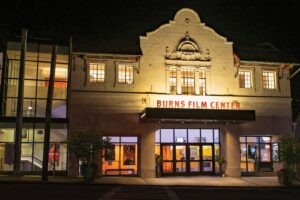
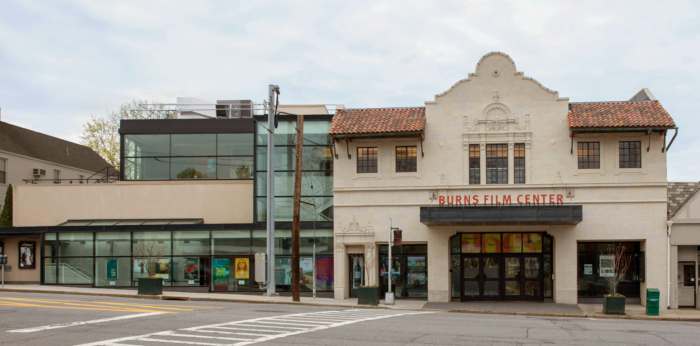
Today the Jacob Burns Film Center in Pleasantville is widely recognized as one of the most successful suburban art house cinemas in the United States. Every year, some 200,000 people flock to the Burns from around and outside Westchester County for its state-of-the-art, five-screen theater presenting over 400 independent, documentary, and foreign films annually. It is also renowned for its film discussions with celebrity actors, filmmakers, screenwriters, and critics. In addition, some 7,000 local students walk through the Burns’ doors every year, mostly free of charge.

But it wasn’t always that way. In the late 1990s, founders Stephen and Lisa Apkon and Sabrina Coughlin, brought together a group of community members, including Brian Ackerman (Founding Programming Director), to help bring their dream of a nonprofit cultural arts and education center to life. The group’s focus was on reviving the 1925 Rome Theater, a beautiful Spanish mission–style historic landmark that was a working cinema until 1987.

According to Stephen Apkon, who is also former executive director (2001-2014) and a board member of the Burns, “The project grew through a series of informal coffees, dinners, and gatherings where community members embraced the vision and helped launch fundraising efforts.”

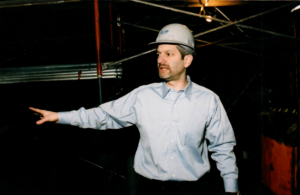
The group (originally known as Friends of the Rome Theater) soon launched a $5 million capital campaign to build the Burns. Early on, the campaign received a $1.5 million grant from the Jacob Burns Foundation, and the film center was named in honor of this leadership gift. The Burns broke ground in May 2000 and opened in June 2001, with three movie screens and the first year’s attendance totaling approximately 3,000 guests.

As far as big names in the film business who have heIped the Burns, Apkon said, “I’d have to start with three great Burns film center board members and filmmakers, Ron Howard, Jonathan Demme, and Steven Spielberg. Also, somebody who’s been very important from the beginning is Janet Maslin. A former New York Times chief film critic, Maslin has served as the long-standing president of the film center’s board of directors and regularly moderates high-profile Q&As with renowned directors and actors. In addition, the Burns has hosted major filmmakers and celebrities, including Tom Cruise, Meryl Streep, Alicia Silverstone, Brendan Fraser, Barry Jenkins, and Martin Scorsese.

Since its inception the Burns was always envisioned as a film and education institution. Brandon Shenkman, the Burns’s director of education, said, “It’s truly wonderful because education was not an afterthought, rather it’s been built into the DNA from the very beginning.”

“Our goal is to turn people from passive scrollers into active viewers,” said Shenkman, adding that students learn both critical viewing skills and the tools to tell their own stories through visual media.

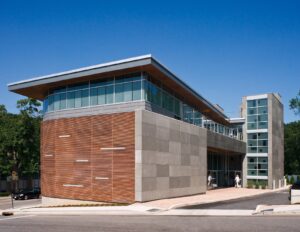
A key milestone for educational programming at the Burns was the $20 million Campaign for 21st Century Education that allowed the Burns to build the Media Arts Lab across the street from its theater. Launched in November 2006, the campaign was successfully completed in December 2008, and the Media Arts Lab opened in January 2009.

Shenkman said, “The vision for the Media Arts Lab was to have this hugely beautiful professional space that was built as a playground for people who wanted to learn anything and everything about filmmaking and visual arts.” The lab has a recording studio, sound stage, screening room, and a huge editing bay of computers.

The Burns champions the notion that media literacy should be something that’s accessible to everyone and works hard to help the 80 local schools it serves every year to overcome any economic barriers that might prevent them from participating in educational field trips.
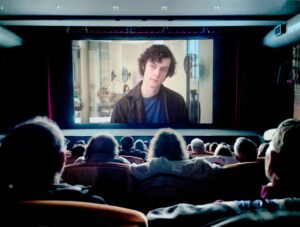
PHOTO COURTESY OF JACOB BURNS FILM CENTER

“Over 70 percent of the students we work with each year come from underserved schools. The children participate free of charge, including bus transportation to and from the Burns,” said Shenkman.

School-based programming begins in third grade and extends through high school, using film and media projects to strengthen writing, critical-thinking, and visual literacy skills. “Our programs work with both school curricula and Common Core standards,” said Shenkman. Programs are designed to complement classroom learning and cover subjects ranging from environmental science to civics and government.

At the pinnacle of education offerings are the “Director’s Cut” programs, which focus on narrative filmmaking, documentaries, and screenwriting. The – free of cost, immersive, pre-collegiate filmmaking fellowships are offered in partnership with the New York University (NYU) Tisch School of the Arts. Designed for high school students, these highly selective groups receive mentorship, access to industry-standard equipment, and a stipend. The program culminates in a table read by professional actors of student work (screenwriting fellowship), and the documentary program is incollaboration with Imagine Entertainment, Ron Howard’s production company

The Burns’ educational offerings also expand to public programs, including afterschool and adult education. “Courses range from filmmaking to cinema studies and screenwriting – basically anything that is a film adjacent discipline,” said Shenkman. The Burns also has a filmmaking summer camp for fourth through twelfth graders that covers the whole filmmaking process from pre-production filming to editing.

Many students at the Burns have gone to top colleges, including Harvard, Brown, Rhode Island School of Design (RISD), and NYU. “Beyond that, I get at least three or four emails a month from people who say that they made a film with us 10, 15, or 20 years ago, and are now out there in the field,” said Shenkman. “In addition, there are a lot of former students who work for us as instructors.”

Another important growth opportunity for the Burns came when the nonprofit purchased a home adjacent to the Media Arts Lab. Called the Artist Residency, it is the third building on the Burns campus. Since its opening in 2009, it has hosted dozens of artists-in-residence from over 20 countries, ranging from emerging voices to internationally renowned filmmakers (such as Academy Award winner Bong Joon-ho of “Parasite” fame).

“A lot of the people that stay with us are not famous, but they’re doing amazing, really important projects. It’s always been part of our mission to highlight voices that don’t always get the chance to be on screen,” says Shenkman.

In March 2015, in direct response to appeals from the community, the Jacob Burns Film Center began the next step in its evolution by opening two new theaters on the third floor of the theater complex along with an updated gallery space. Most recently, the Take 3 Wine Bar and Café opened in 2024, a perfect place for pre- or post-film conversation.

According to Chris Holliday, the Burns’ director of Special Programs and Strategic Partnerships, the “secret sauce” behind the film center’s success is that “nothing beats that communal experience of being in a movie theater.”
Media Arts Lab
Media Arts Lab
PHOTO COURTESY OF JACOB BURNS FILM CENTER

Apkon agreed, adding, “Since the beginning we wanted the experience not to end when the credits come on the screen, but to really begin. And the way that’s happened is through conversations with filmmakers, actors, set designers, and screenwriters, really covering all of the different facets of storytelling. I think that that is something very special about the Burns. There’s both a conversation with the featured guests and a conversation that’s created within the audience.”

Apkon said, “People want to come together and have shared experiences, especially now. At a time where a lot of media is contributing to us being more and more polarized, I believe that there is a need and a very strong desire for people to come together in places like the Burns.”

For readers wondering how the movies get chosen at the Burns, the film center has a team of three full-time programmers who travel all over the world to scout titles and talent. “We go to film festivals, like Sundance in the U.S., the Berlinale in Germany, Cannes in France, and BFI Flare, which is the LGBTQ+ film festival in London,” said Holliday.

“We truly watch a lot of movies and want to be able to bring in a variety of films that appeal to everyone. And that means trying to get that balance between something like “The Devil Wears Prada” with a documentary from director and producer Maite Alberdi,” said Holliday. (Alberdi is a rising star in the film world who is the first Chilean woman to be nominated at the Oscars.)

He noted that he wants not only to inspire people and educate people, but also to challenge audiences by presenting a film they may never have thought to see unless it’s programmed at the Burns. “Hopefully these films open peoples’ eyes and broaden their horizons,” said Holliday.

The amazing range of film series and festivals at the Burns, spans from the annual Jewish Film Festival (celebrating its 24th season this past March) to “Out There,” a new monthly series that celebrates Queer stories through a diverse selection of films from around the globe. The Burns also has an international documentary film series called “Docs Without Borders” and a series of family-friendly films called “All Ages,” which screens everything from “The Wizard of Oz” to “Shrek”.

“In addition, we have a program called Community Matters where we partner with nonprofit organizations across Westchester doing phenomenal work,” said Holliday. “I think that’s what makes the Burns so special is we show films from all over the world, but we also bring together groups in the community to have conversations and experiences together.”

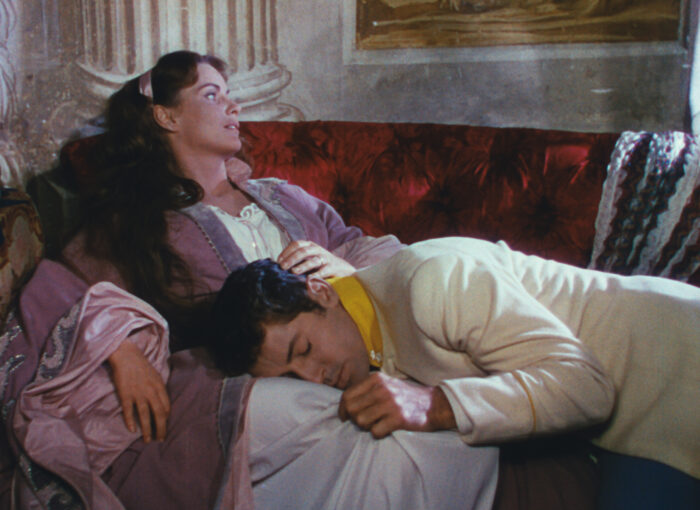
Twenty-fifth anniversary programming in 2026 has included the first- ever retrospective of Ron Howard’s work, from “The Courtship of Eddie’s Father” (1963) to his Academy award-winning movies “Apollo 13” and “A Beautiful Mind”. The “Founder’s Series” featured some of Apkon’s favorite films, and “Time Capsule 2001” which showcased films from the Burn’s opening year. (See the side bar for upcoming 25th anniversary programming.)

When asked if he ever imagined if the Burns would be become such a cultural cornerstone in Pleasantville and beyond, Apkon said, “We believed that it could be the key to redeveloping the commercial area in Pleasantville, and we thought we could have an impact on the area around us. However, it so quickly exceeded our expectations. We are so grateful to be a part of this community.”

Apkon marveled at the shops and restaurants that have opened and at how Pleasantville has become a bustling downtown. “When we opened 25 years ago, there were numerous vacancies and lots of turnover. Now, there’s not only thriving businesses, but also a lot of residential units that have been built. One of the fun things to see is when the real estate agents are advertising in their ads that a home is ‘walking distance to the Jacob Burns Film Center’,” he said. Apkon pointed out that the Burns is also a destination location for people from all over the Greater New York Metropolitan area.
Stephen Apkon at the Burns construction site
PHOTO COURTESY OF JACOB BURNS FILM CENTER

Looking at the history and future of the Burns, Apkon commented on how film has changed in the past quarter century: “The way a movie is delivered, whether it’s 35mm film or digital, at the core it’s still about the story. And the stories reflect not only our cultures, but they reflect the times and the things we as humanity are dealing with at the moment,” he said.

Apkon predicted that the programming will continue to evolve and to reflect the world around us. “Right now, we are at a very big crossroads for the humanities as it relates to communications, and that is around AI in terms of both the discernment and creation of images,” he said.

“I believe that literacy will continue to evolve and shift and needs to reflect the new modes of content creation and distribution. And I believe that the Jacob Burns Film Center should be and will be at the center of that very important conversation. I think that the ongoing challenge is always to stay new and to stay relevant to audiences as the community and the world changes.”
Filed Under: Features Tagged With: Jacob Burns Film Center, Media Arts Lab, Pleasantville, Stephen Apkon

Behind the Scenes Scoop with Andrew Jupin at The Jacob Burns Film Center

March 8, 2019 by Stacey Pfeffer

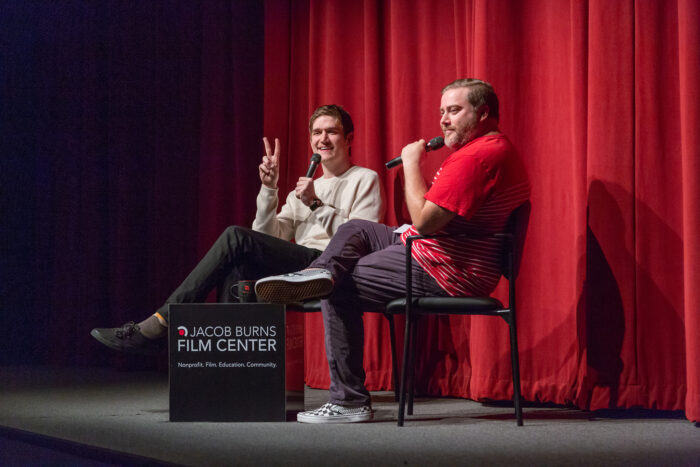
Bo Burnham and Andrew Jupin in Eighth Grade
PHOTO BY ED CODY

Creating A Local & Cultural Mecca for Film Lovers of All Ages

Back in the day when I lived in the city and was child-free, I had plenty of options to see independent or foreign films. I could traipse downtown to the Angelika Film Center to catch the latest Merchant Ivory film or head crosstown to Lincoln Plaza Cinemas to immerse myself in the latest Pedro Almodovar release. There were a few other art houses and independent movie theaters that I could go to but the Angelika and Lincoln Plaza still stand out vividly in my mind.

Fast forward to a decade later and as a suburban mom with kids, I am lucky enough to live mere miles from the Jacob Burns Film Center (JBFC), a five-screen cinema offering a full range of programming from films, events, community screenings, visiting artists and special guests. I like to think of it as an art house theater with 92 Street Y caliber lectures and classes all rolled into one. And although I don’t get to go there as often as I like, I have been known to sneak in an early movie while the kids are in school or plan a date night to catch an indie film with my husband. I’ve even taken my kids to Family Saturdays at the Media Arts Lab just a stone’s throw away where they’ve made amazing hands-on projects.

Programming Reigns Supreme

“The breadth of programming is what makes us so unique,” explains Andrew Jupin, a Senior Programmer at the JBFC who started working there in 2006 as a projectionist. The movie theater landscape has changed significantly in Westchester in recent years with the Saw Mill Multiplex in Hawthorne shutting down and an anticipated closing of the Greenburgh Multiplex in Elmsford later this year. In addition, new players such as ultra-luxe iPic in Dobbs Ferry and a recently renovated Bedford Playhouse have been attracting moviegoers.

But Jupin argues that seeing movies at these places is an “anonymous experience.” And he’s right. It is not uncommon to see people milling about in the JBFC lobby post-screening discussing a film they just saw. As a programmer, Jupin also works on planning director Q & As and curating films that engage moviegoers throughout Westchester. Each year more than 200,000 people visit the JBFC to see more than 400 films from over 40 countries. Since it opened in 2001, three million people have walked through the doors of this Spanish mission-style theater to see cutting-edge cinema.

Carefully Curated Series

One of Jupin’s responsibilities is programming an ongoing series called Retro Revival sponsored by Wine Enthusiast. It is now in its third year and Jupin is passionate about selecting the films that become part of the series. We discuss a recent showing of I Am Cuba and Jupin’s excitement about the movie which he dubs a “lost treasure” is palatable. “This movie from the former USSR was virtually unseen here.” Martin Scorcese and Francis Ford Coppola were champions of the film and Milestone Films had to fight legal battles to get it shown here.” Jupin loves introducing something like this to an audience. “They [the moviegoers] trust us and our selections.” Jupin likes to choose tried and true classics like It’s a Wonderful Life to offerings that are for “adventurous hardcore cinephiles.”

And Jupin is well-qualified to make those selections. He’s an adjunct professor at the School of Film and Media Studies at Purchase College and also teaches at Westchester Community College. In his spare time, he also hosts a popular weekly podcast called We Hate Movies with several friends where they discuss terrible movies. He’s seen hundreds of “trashy films” and likes the dichotomy of working at JBFC where he gets to “bring worthwhile films to an audience.”

Jupin laments that sell out crowds for a screening are often viewed as a barometer of success. “I’ve been to film screenings where there are ten people but those ten people are blown away and they want to see more films by that director or on a certain subject and they then tell their friends.” Jupin, along with other programmers at the theater, finds it incredibly rewarding when they can open their audience to new ideas or new films not seen in a mainstream moviehouse.

Two other ongoing series at the Burns include Global Watch: Crisis and Social Action and Remix: The Black Experience in Film, Media and Art. “The films in these series are often not the most easiest to watch,” Jupin says but they hold true to board member and curator Jonathan Demme’s vision of the JBFC “as a force for social change disguised as a movie theater.”

Thought-Provoking Q & As and Lectures

As part of his programming responsibilities, Jupin also conducts Q & As with filmmakers, actors or other movie industry veterans. This past year he particularly enjoyed meeting first time director Bo Burnham of Eighth Grade and Alex Winter, the director of the documentary film, The Panama Papers. “The Q & As were so different. Burnham was a former comedian and the discussion was funny and light-hearted. With Winter, we spoke about journalism ethics.”

An Economic Engine for 10570 and Beyond

Having worked in Pleasantville for more than a decade, Jupin loves the tight-knit community aspect of the neighborhood. The Inwood resident enjoys the restaurants, book store and small local shops nearby. The JBFC has strong relationships with several local businesses offering discounts to JBFC members through a program called Reel Partners. This past summer, the JBFC released a study The Economic Close-Up showcasing how it is a cultural magnet and economic driver in the region. As we look out the windows of the Media Arts Lab, there are several multi-unit condos being built within walking distance of the JBFC. In 2018, 80 units of transit-oriented housing were under construction in Pleasantville and six new restaurants had opened within the past year.

Senso Retro Revival

An Exciting Future

It is an exciting time for the JBFC with a recent Regional Economic Development Council initiative from Governor Cuomo providing $506,500 to the JBFC for capital improvements. The theater requires a lot of upkeep and they hope to use some of the funds for new seating and other things that will continue to make coming to the JBFC a top-notch experience. “A flat screen TV or a film being screened on Netflix still can’t compare with seeing a film on the big screen.” Throw in the fact that the JBFC is a true cultural and community hub and you’ll know why this five-screen theater continues to be one of the most successful suburban art houses in the country.


Jacob Burns Staff

Edie Demas, Executive Director

Edie joined the JBFC as executive director in May 2014. Previously, she worked with the Wallis Annenberg Center for the Performing Arts in Los Angeles and was Director of Education at New York’s New Victory Theater, where under her direction, its education programs were honored with the Americans for the Arts award for Arts Education. She also spent several years in Ireland, where she worked as an education officer with Graffiti Theatre Company, founded UnReel, an international film festival for young people, developed scripts for children’s film and television, and served as an Associate Artist for Education and Outreach at The Abbey Theatre. Edie holds an MA and PhD from NYU’s Program in Educational Theatre.

Dominick Balletta, Managing Director

Dominick joined the JBFC in May 2008, following seven years as General Manager of NYC’s Film Forum. Since 2011, he has served as an advisor to the DeVos Institute of Arts Management. As a producer his credits include Another Telepathic Thing and I’m Carolyn Parker, both directed by Jonathan Demme, and Moisés Kaufman’s 33 Variations, starring Jane Fonda (Tony Award nomination). He has served as a grant panelist for NEA, NYSCA, ArtsWestchester, and CEC/ArtsLink.

Brian Ackerman, Director of Programming
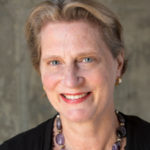
Brian joined the JBFC as the Founding Programming Director in 2001, which followed several years in an advisory capacity assisting the planning and development of the theaters. He designed the programming template that presents over 400 films annually to include special events, new releases, documentary, foreign-language, retrospective films, as well as thematic series, under one roof. He has worked for over 30 years in the New York cinema arts scene–building, programming, and operating art houses. He also serves on juries at film festivals including SXSW and Full Frame.

Judy Exton, Director of Development

Judy joined the JBFC as Director of Development in December 2001. Prior to this, she raised money for a number of nonprofits, including New York City Ballet, Caramoor, and Boys & Girls Clubs of America. Judy holds a B.A. in Communications from The College of Wooster.

Emily Keating, Director of Education

Emily has overseen the JBFC education programs since their inception in 2001. She has consulted for non-profit film centers on the development of their school programs, and has presented at many national education and literacy conferences. She is an adjunct faculty member at Pace University’s School of Education.

Sean Weiner, Director of Creative Culture
Sean received his M.F.A. from Hunter College in Integrated Media Arts and a B.A. in Cinema Studies from SUNY Purchase, where he is now a faculty member. At the JBFC, Sean is the director of Creative Culture, an initiative connecting emerging makers to creative careers through fellowship opportunities and residency programs.


Westchester Jewish Film Festival

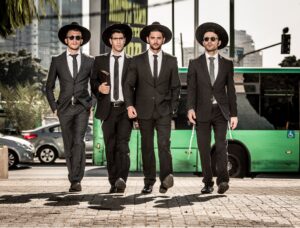
Mark your calendars for one of the most popular film series featured at JBFC- the 18th Westchester Jewish Film Festival. The festival from April 2-17 features 42 entertaining, thought-provoking, and engaging film from documentaries to narratives. Plus, the festival will continue its tradition of bringing some of Israel’s fantastic television programming – 12 episodes of the hit comedy series The New Black (Shababniks) and all five episodes of the dystopian drama Autonomies.

The New Black (Shababniks)

This year for the first time, the festival will kick off with not one but two unique programs. One theater will showcase the New York premiere of award-winning Israeli filmmaker Yair Lev’s You Only Die Twice, a suspenseful documentary thriller with splashes of humor at just the right moments. At the same time, in another theater, we’ll screen the first four episodes of The New Black (Shababniks).

Goldas Balcony

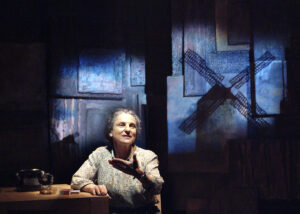
Continuing to feature stunning new films from around the world, we’re also showing Shoah: Four Sisters by the late Claude Lanzmann, which reveals stunning footage not used in his epic 1985 masterpiece Shoah. The festival centerpiece is Golda’s Balcony, the Film, a cinematic event about Golda Meir’s extraordinary life and legacy, featuring a stellar performance by Tovah Feldshuh, who will appear at a post-screening discussion on April 6.

All this, plus a very special tribute to the Carl Reiner!

“This is our most popular series and several shows sell out, so book early,” advises Jupin.

Opening Night with RECEPTION

April 2

6:30 p.m. You Only Die Twice

7:00 p.m. The New Black (Shababniks)

Filed Under: Pleasantville Cover Stories Tagged With: Community Screenings, cultural mecca, Family Saturdays, film, film lovers, history, Independent, Jacob Burns Film Center, lectures, Media Arts Lab, Retro Revival, theater, Westchester Jewish Film Festival

Primary Sidebar

Please Visit

White Plains Hospital
William Raveis – Armonk
William Raveis – Chappaqua
Raveis: Stacey Sporn
NYOMIS – Dr. Andrew Horowitz
Houlihan Lawrence – Chappaqua
Houlihan Lawrence – Armonk
Houlihan Lawrence – Briarcliff
Repose
Compass: Miller Goldenberg Harris Team
Maid Brigade
Stacee Massoni
Meagher & Meagher Attorneys at Law
Raveis: Lisa Koh and Allison Coviello
Pleasantville Tavern
Compass: Aurora Banaszek
Jacob Burns Film Center
Houlihan Lawrence: Harriet Libov
Floorcraft
Bristal Assisted Living
Douglas Elliman: Chappaqua
Spavia
Armonk Outdoor Art Show
Armonk Tennis Club
Breezemont Day Camp
Mohini Rawat Physical Therapy
Beecher Flooks Funeral Home
Temple Beth El
Pinsky Studio
Breathe Pilates and Yoga
Carolyn Simpson (Doublevision Photographers)

Follow our Social Media

The Inside Press

Our Latest Issues

For a full reading of our current edition, or to obtain a copy or subscription, please contact us.

Inside Chappaqua and Millwood Inside Armonk Inside Pleasantville and Briarcliff Manor

Join Our Mailing List


Search Inside Press

Links

  • Advertise
  • Contact Us
  • Digital Subscription
  • Print Subscription

Publisher’s Note Regarding Our Valued Sponsors

Inside Press is not responsible for and does not necessarily endorse or not endorse any advertisers, products or resources referenced in either sponsor-driven stories or in advertisements appearing in this publication. The Inside Press shall not be liable to any party as a result of any information, services or resources made available through this publication.The Inside Press is published in good faith and cannot be held responsible for any inaccuracies in advertising or sponsor driven stories that appear in this publication. The views of advertisers and contributors are not necessarily those of the publisher’s.

Opinions and information presented in all Inside Press articles, such as in the arena of health and medicine, strictly reflect the experiences, expertise and/or views of those interviewed, and are not necessarily recommended or endorsed by the Inside Press. Please consult your own doctor for diagnosis and/or treatment.

Footer

Support The Inside Press

Advertising

Print Subscription

Digital Subscription

Categories

Archives

Subscribe

Did you know you can subscribe anytime to our print editions?

Voluntary subscriptions are most welcome, if you've moved outside the area, or a subscription is a great present idea for an elderly parent, for a neighbor who is moving or for your graduating high school student or any college student who may enjoy keeping up with hometown stories.

Subscribe Today

Copyright © 2026 The Inside Press, Inc. · Log in