• Skip to primary navigation
  • Skip to main content
  • Skip to primary sidebar
  • Skip to footer

The Inside Press

Magazines serving the communities of Northern Westchester

  • Home
  • Cover Stories
  • Features
    • Portraits and Profiles
  • Advertorials
    • Lifestyles with our Sponsors
    • Sponsor News!
  • Wellness
  • Happenings
  • Advertise
    • Advertise in One or All of our Magazines–And/Or Subscribe
    • Advertising Payment Form
  • Contact Us
  • Search

help

One Woman’s Silver Linings Cancer Playbook

October 24, 2018 by Beth Besen

PHOTO BY CAROLYN SIMPSON/DOUBLEVISON PHOTOGRAPHY

The Blessings of Early Detection and Excellent Treatment

Self-described “gym rat” Eileen Cohen looks the very picture of health as we sit down to a morning coffee at Tazza of Millwood. Watching her enter the café, fit and trim with a bounce to her step, one would never know we were meeting to discuss her recent health sCare.

No, that is not a typo; call it this writer’s literary device, my way of introducing two highly intertwined topics–the “big C, Cancer, and the importance of Care. From healthcare providers to friends and family, Care is a patient’s most valuable resource.

Eileen’s health scare came during her annual routine mammogram. She’d scheduled the exam, expecting the usual “everything looks good, see you next year” results. Instead, this time, Eileen recalls hearing the technician offer a quiet “hmmmmm,” and telling her she needed to stay and speak with the radiologist. She was informed that her mammogram showed new calcifications, and she was given the option of observation versus biopsy. However, a biopsy was recommended to rule out malignancy. She chose the biopsy, saying, for her, there was no question. But, then she paused to reflect, “Maybe people get scared. I don’t know the mindset of others… but I can’t imagine not wanting to know.”

Wife and mother (to three busy teenagers), this Chappaqua mom had just celebrated turning 50 years young when the subsequent biopsy forever changed her life. The pathology was classic-type Lobular Carcinoma in Situ (LCIS); while LCIS is not a cancer, it is a proliferative process that connotes an increase in lifetime breast cancer risk in either breast. Given the increased risk of breast cancer, Dr. Ranjana Chaterji, a Northwell Health Breast Surgeon and Director of Quality at The Breast Institute at Northern Westchester Hospital (NWH) did an MRI with contrast which showed another spot. This was near the original area of concern and, when biopsied, was shown to be more classic-type LCIS. Surgical excision was recommended to rule out an associated invasive breast cancer component. There is only a five percent chance of upgrade to invasive breast cancer at the time of surgical excision, but Eileen fell into that five percent category; her pathology report confirmed Invasive Lobular Carcinoma, which would require definitive cancer surgery and treatment.
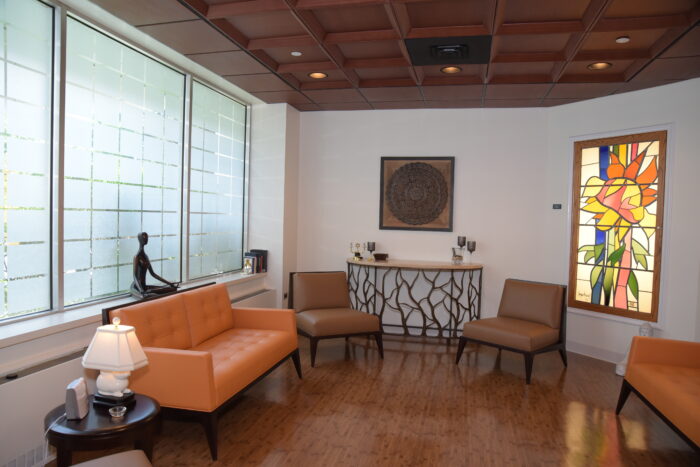
NWH Meditation room. PHOTO COURTESY OF NWH

However, prior to surgery, patients undergo preoperative medical clearance, including, for some like Eileen, cardiac clearance. Eileen’s pre-surgery cardiology visit resulted in the finding of yet another medical issue–PVC, or Premature Ventricular Contractions. This condition can be treated with medication or surgery; Eileen needed surgical correction.

Given these diagnoses, there are, doubtless, many who would feel angry, depressed or a combination of both. Eileen, however, feels lucky and thankful–lucky that her original diagnosis led to the more invasive cancer diagnosis, and thankful that her cardiology tests caught her weakening heart condition in time to successfully rebound!

Thankfulness is, in fact, a recurring theme in our conversation. Eileen describes her close-knit family as supportive, explaining that though she “didn’t want to include them in everything going on; that would actually make it harder (on her),” her children and husband really rallied to step up and step in to fill in where needed. For example, both her girls were serious dancers with companies in NYC, and it had been Eileen’s pleasure to drive them to the city for their classes. During treatment, however, they learned to navigate the trains and travel to classes themselves, gaining an independence Eileen sees as a silver lining. And, while recent college tours for Eileen’s son had been a great opportunity for family road trips, post-diagnosis visits became more of a father/son activity. She is very grateful that her husband could take off days from work as necessary during her surgeries and radiation treatments.

Support wasn’t limited to immediate family. Friends gathered around, some making the time to call and check in every day. And, in a strange turn of events, Eileen also found out that a younger cousin was going through a similar experience. In fact, the women actually began radiation on the very same day. Eileen describes daily texts with her cousin–texts of encouragement and information-sharing (e.g., which clothes are most comfortable)–and also underscores the sense of relief that their mutual experience and support affords; there is nothing quite like going through something with someone you know who is experiencing the very same situation.

And then there’s the equally invaluable support of dedicated professionals. Eileen credits not only her team of expert physicians at Northern Westchester Hospital – Dr. Chaterji was joined by Dr. Alfred Tinger, the Former Chief of Radiation Oncology specializing in breast cancer treatment –but also the adjunct services available there. She took full advantage of the free programs available to cancer patients at NWH’s Bruce and Andrea Yablon Cancer Health and Wellness Program. The program is available to all cancer patients in the community regardless of whether or not their oncologist is located at the hospital. As long as one of their physicians has admitting privileges to the hospital, they can participate in the program.

These services include: Integrative Medicine, such as acupuncture, aromatherapy, energy healing/Reiki, guided imagery, oncology medical massage and reflexology; Nutritional Support with a Registered Dietician which helps patients eat well during and after treatment; Fitness Programming specially tailored to patients’ needs; Mindful Wellness with licensed psychiatrists, psychologists, pastors and social workers and the Survivorship Program to ease patients back into life after cancer. What’s more, there are additional workshops, special programs and resources available to cancer patients, survivors and caregivers too.

Everyone’s needs differ, and those different needs become even more pronounced during cancer treatment. Personally, Eileen especially liked visiting the acupuncturist and her nutritionist, Pat Talio. She found acupuncture helped “give (her) balance during an unbalanced time” and that the nutritionist could help her refine her diet so as to avoid questionable ingredients and additives.

NWH’s Licensed Acupuncturist Vanessa McKay-Barr says, “Eileen is one of those patients that does the homework you give them. Whether it’s treatment frequency, exercises, or dietary suggestions, she did the work and it paid off. Her persistence and desire to have the best results for her mind, body, and soul was inspiring to see. She focused on the positives of treatment and didn’t let any symptoms overcome her thoughts. I particularly enjoyed talking to her about her family and watching her face brighten as she would speak of her children. She was a pleasure to work with and I wish her the best in her journey of Cancer Survivorship.”

Rounding out support are the nurses and technicians, each and every one, the very definition of “caregiver.” Patients are treated with empathy and respect, welcomed with smiles and given endless understanding.

The facility itself is bright, cheerful and comfortable with waiting-room activities (Eileen particularly liked the puzzles) to help patients relax prior to treatment. There is even valet parking for those who need that level of assistance. Fighting cancer can be physically, spiritually, emotionally and psychologically debilitating, but getting treatment at NWH and making use of its additional services gives a patient the very best in team support to help win that fight. For further information on the Bruce and Andrea Yablon Cancer Health and Wellness program, call 914-242-8146 or visit www.nwhcancercenter.org.

Exercising Good Health
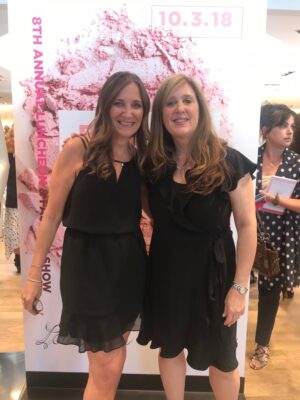
Eileen Cohen at Pink Aid with Dr. Bonnie Litvack, Director of the Women’s Imaging Center at NWH
PHOTOS COURTESY OF EILEEN COHEN

In the past, cancer patients were often told to “take it easy,” to save their strength and reduce exercise activity. But, like treatment itself, this advice has changed dramatically over the years. Nowadays, if a patient feels up to it, most doctors support maintaining an exercise routine. In fact, the American Cancer Society notes, “newer research has shown that exercise is not only safe and possible during cancer treatment, but it can improve how well you function physically and your quality of life.”

No one would agree more with this than Eileen who shared, “The fact that I was able to work out through my treatments made me feel like myself.” She further noted that it was during one of her regular Saw Mill exercise classes that she connected with one of her instructors on a whole new level. Eileen had shown up for a 7:30 a.m. class (prior to her scheduled surgery no less!) and happened to fall into a fundraiser for Pink Aid. Coincidence? Perhaps, but maybe something of a higher power brought Eileen to that class on that day. She believes in a higher power, and that the path to spiritual fulfillment is personal; even the gym can be a powerful place of inspiration and well-being.

Through her class instructor, Denise Walker, also a breast cancer survivor, Eileen has become an advocate, helping to raise both awareness (of the need for early detection) and funds (for those who need financial help for treatment). She says, “I was private while I was going through treatment, but I feel like if I can help others recognize that they need to take care of themselves and be proactive, I will.” On October 3rd, Eileen “walked” in the 8th annual Pink Aid Fashion Show sponsored by Mitchells of Westport, CT. Critical funds were raised for the organization whose “mission is to help underserved local women…and to empower breast cancer survivors to heal by helping and inspiring others.” Indeed, according to Eileen, laughter, tears and wisdom were shared amongst speakers and attendees. There was a communal spirit of support and gratitude; each woman felt grateful to be connected to the others there, grateful for their access to excellent healthcare and, ultimately, grateful for their lives.

The Point Is: NWH’s Vanessa Mckay-Barr, L.Ac Explains How Acupuncture Can Help Cancer Patients
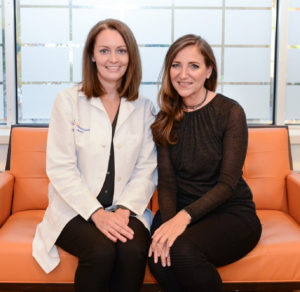
Acupuncturist Vanessa McKay-Barr and Eileen Cohen PHOTO BY CAROLYN SIMPSON/DOUBLEVISON PHOTOGRAPHY

When a patient gets a cancer diagnosis and is quickly thrust into treatment, there is tremendous emotional impact. In fact, stress and anxiety are the most prevalent issues for these acupuncture patients. Acupuncture helps a person’s body go from fight or flight mode to rest and relax mode. By reducing stress and calming the mind, acupuncture leaves patients with a greater sense of well-being. For this reason, McKay-Barr often refers to acupuncture as “inner-cise” (exercise for your energy).

Acupuncture also helps alleviate many of the side effects from cancer treatment such as nausea and vomiting, chemotherapy induced neuropathy, menopausal symptoms, dry mouth, fatigue, constipation, and insomnia. Furthermore, in addition to the clinical value, there is a psychological and emotional benefit; acupuncture creates balance in the Central Nervous System by regulating hormones such as serotonin, noradrenaline, and dopamine. This can alter mood chemistry and help address the physical impact caused by cancer and cancer treatment. In Chinese Medicine theory, emotions are stored in a person’s blood. Therefore, by improving circulation, acupuncture helps move, release and let go of emotions (those due to the stress of a cancer diagnosis or even from long-ago issues) that can be held in the body.

Through the Bruce and Andrea Yablon Cancer Health and Wellness Program at NWH, McKay-Barr’s acupuncture sessions help alleviate any issues patients have from cancer treatment. However, she says she “most enjoys seeing patients work through the most difficult part of their lives and come out on the other side with a gratitude that you cannot teach. The gift of life, positivity, gratefulness, and an overall improved quality of life from this process is so rewarding to see. This is why I love what I do.”

Saw Mill Club and NWH: Two Local Resources for Health, Well-Being and a Sense of Community
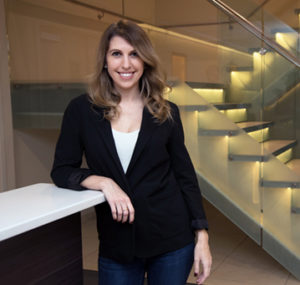
Barbara Accetta
PHOTO COURTESY OF SAW MILL CLUB

The Saw Mill Club is so much more than a place to exercise. According to Barbara Accetta, Media and Creative Director for the club, the real impact comes from the sense of community felt throughout the club. She shares that there’s a “real healing environment that can be felt whether you are in a class or not. Each person will find someone who has a journey just like theirs, whether it be injury or illness.” As noted above, the sense of camaraderie and relief a shared health journey affords cannot be understated. Agrees Accetta, “find someone who has a place where they feel they “belong” and you will find someone who is thriving.”

Accetta also points out that, while the club offers multiple varieties of classes for all different levels of experience, and has instructors with general and/or specific knowledge, specific post-illness and post-injury members should consult with their healthcare providers to best navigate their particular needs. The club does have Physical Therapy, one-on-one personal training and massage–all great options for anyone and everyone’s well being.

The Saw Mill Club and NWH have a long and steadfast relationship, and their proximity to each other makes for an easy partnership. Saw Mill has participated in “exercise as medicine” for several patient groups including new mothers, cancer survivors, and hip and knee patients. Saw Mill has also hosted the Annual Hospital Gala on four occasions over the last ten years, turning their indoor tennis courts into a spectacular space for this special fundraiser evening.

Like NWH, Saw Mill is one of Mount Kisco’s larger employers, and has collaborated on wellness programs for hospital employees as well as currently offering a special membership relationship. In the words of General Manager and Vice President, Kevin Kane, “We have common aims for the success of Mt. Kisco and care deeply about our Village by participating in several civic boards and committees.”

Eileen Cohen at Pink Aid walking the runway with Dr. Bonnie Litvack, Director of the Women’s Imaging Center at NWH

Filed Under: Cover Stories Tagged With: cancer, center, help

Untold Stories from the Border: Local Couple Helps Migrant Families in McAllen, Texas

August 29, 2018 by Shauna Levy

Chappaqua residents Larry and Debbie Rose are not self-proclaimed humanitarians. Their actions, however tell a different story. As news of families in crisis at the U.S.-Mexico border reached a crescendo, the couple reconsidered their summer vacation plans. Instead, they booked tickets to McAllen, Texas, the town that’s gained notoriety for being home to the migrant detention center that has been separating families.

The decision to choose volunteerism was a simple one. Debbie explains, “We’ve had many passionate conversations about this topic and realized that while our children were at sleepaway camp, we have an opportunity. It sounds cliché, but we just wanted to make a difference. We went for it.” They identified the Catholic Charities Humanitarian Respite Center, located a few miles from the detention center in McAllen as a place where they could help migrant families. “It was one of the few places accepting volunteers who were not attorneys or fluent in Spanish,” according to Larry.

Families in Crisis

The couple touched down in Texas and got acquainted with the respite center immediately after checking into their hotel. They were astounded by the scene that met them. Debbie recalls their first impressions, “We opened the door and found ourselves in the midst of a large, hot room, reminiscent of the DMV brimming with families. Within only ten minutes, a little boy about four years old took my hand and began rapidly speaking Spanish. I made out the word ‘agua’ and offered him water. In that moment it became real.”

With a tour of the facility, the Roses gained clarity over what they were witnessing. The respite center is pivotal to asylum seekers, providing each individual with a set of clothes including shoes, food, a shower and shelter to sleep as they await their futures. Larry elaborates, “We learned that these families had crossed the border, arrived at the detention center, and gained access to the respite center because they had a sponsor in this country. A volunteer would attempt contact with the sponsor. If contact was made and that sponsor could provide bus fare, that family could leave that afternoon.”

Gathering Provisions

The Roses wasted no time assessing how they could add the most value, mingling and conversing with families and volunteers alike. “They desperately needed sneakers,” reports Debbie, explaining, “Everyone gets a new pair because they have literally walked from their starting point to the border.” Fortuitously, the Roses encountered a volunteer who pointed out the many teenage boys slumped over around the room. It was an eye-opening moment as Debbie says, “It was a situation that never crossed our minds and it was then that we decided to target teenagers in our efforts.”

With this knowledge, Debbie and Larry began the first of four visits to various supermarkets where they purchased items in bulk including toys, sneakers, pants and at least 100 loaves of bread. In the meantime, on Facebook, a grassroots movement was evolving at home. Of the phenomenon Debbie says, “Our goal was to directly help families at the border through our own volunteer efforts and monetary donations. This was not a fundraising effort, but many of our friends who couldn’t join us wanted to get involved. Then, their friends wanted to help and suddenly it was a domino effect. I ultimately posted my Venmo ID and we raised $6,300 in just a few days.”

While providing basic necessities was fulfilling, the Roses were most impacted by the children they met as they handed out the supplies they purchased. Debbie describes one young girl crying on her father’s shoulder, saying, “I simply gave her an Etch A Sketch and she didn’t shed a tear for the rest of her time there. Not only was this wonderful for the child, but it also provided relief for the parents who had just gone through this ordeal.” Similarly, Larry engaged with teenage boys by playing Jenga. He recounts the experience, “It started with one boy, but soon we had a serious Jenga tournament with several teams that lasted hours. During this time, one well-dressed boy reported, in perfect English, that his favorite toy at home was a remote control helicopter. It hit me that while these kids have nothing now, it wasn’t always that way. These are all families who had enough means to get out of their country. For them to have abandoned their lives with only the clothes on their back, things had to have been really bad.”

The American Spirit

In only four days, the Roses were able to reorganize the center’s food storage system, upgrade toys in the playroom and touch the lives of families in dire straits. Debbie says, “With the reputation of this country being unwelcoming, I wanted to be welcoming.” And, they weren’t alone as Larry explains, “Part of the untold story is the American spirit. It was truly a nationwide effort, with people from all over the country pitching in.”

Filed Under: Cover Stories Tagged With: donations, food storage, help, humanitarians, Migrant detention centers, Migrant Families, refugee, sneakers

Extraordinary Ventures Doing Extraordinary Work

April 21, 2018 by Lindsay Hand

How one local organization provides employment opportunities for adults on the autism spectrum

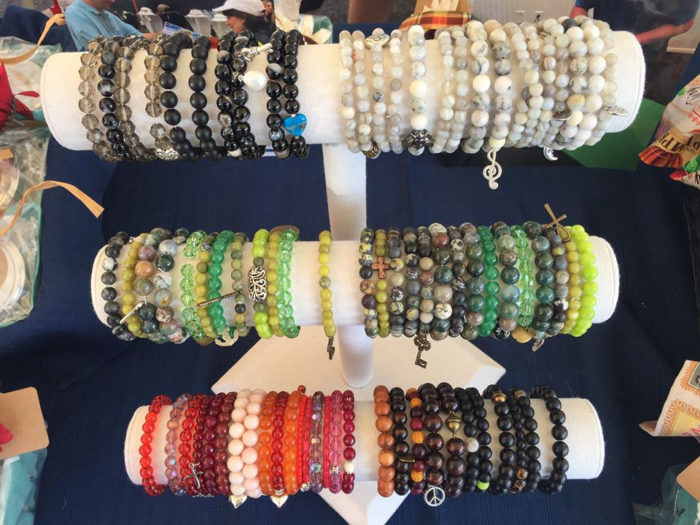
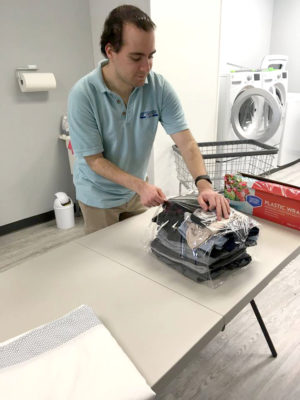
EVNY employee earning laundry service skills and bracelets made by EVNY employees (Above)
For parents of children on the autism spectrum, figuring out what comes next after their children age out of school is difficult and stressful. Enter Extraordinary Ventures, a nonprofit organization that provides jobs and a comfortable working environment to adults on the autism spectrum. After visiting Extraordinary Ventures in North Carolina, Chappaqua resident Elise Orlando, whose son is on the autism spectrum, saw an incredible opportunity to bring a similar setting to Westchester as many students at Devereux, a school for children with autism in Millwood, were on the verge of graduating. Extraordinary Ventures offered to open a New York establishment, and now two years later Extraordinary Ventures New York (EVNY) has approximately thirty employees, a number of different businesses and a space in Mount Kisco.

The four board members along with the rest of the staff work tirelessly to support the employees, and have built this organization into something truly amazing. The employees work two to four hours a week, get paid, and even pay taxes, just as they would in any other job. Orlando, a board member, said, “We have worked hard over the years to ensure our children get cutting edge education to meet their needs. They are ready to contribute to society, but in their own way.”

Working Hard & Gaining Confidence

EVNY began with making, packaging and selling candles and bracelets, all of which are broken down into steps to follow. “We look at our population and figure out what skills they have and develop businesses around it,” explained Orlando. The candles and bracelets are often themed seasonally or around holidays, and they can also be customized for gifts or favors for showers, weddings, Bar and Bat Mitzvahs, and more. The employees are very proud of the merchandise they make, and some of them additionally work as salesmen at the various places the products are showcased, including farmer’s markets, craft fairs, and holiday boutiques. According to EVNY Director Liz Oliveto, “our guys feel much more confident…seeing that they can do things.” This confidence leads to saying yes to trying new things and even volunteering to do tasks, in addition to extending to home life. Both Oliveto and Orlando described how thrilled parents are to hear their children talk so excitedly about work and even change their behavior at home by doing things like baking brownies.

EVNY is also about to launch a commercial laundry service, with an additional specialty service for items like sleeping bags and pet beds. “You can bring your laundry anywhere, but by allowing EVNY to handle it you provide employment for adults with autism and support a mission,” said Orlando. With businesses like this and the candles and bracelets, EVNY is providing these individuals with a variety of opportunities and an environment in which they can interact and learn new skills. “Far too often they are told ‘you can’t do that,’” explained Oliveto, who worked with many of the employees at Devereux. “And that’s the great thing about Extraordinary Ventures…here, they have choices.”

Looking Toward the Future

Moving forward, EVNY is also launching a Vocational Training Program. This 12-session course will teach students the skills necessary to prepare for a job, perform job tasks, and interact properly while at work. Students will learn things like writing a resume, dressing for and participating in an interview, and completing forms. A regular volunteer cohort is also in the cards as the organization continues to grow. Oliveto is hoping to get volunteers of all ages, from 13-year-olds and high schoolers to retirees and senior citizens, to come to EVNY and spend time with the employees. With new partnerships with local groups like the Lutheran Church of the Resurrection in Mount Kisco, many people will have the opportunity to work closely with EVNY and help them in their mission.

Orlando discussed how the incidence of autism spectrum disorder has increased since her son was diagnosed in 1994, and how education and employment opportunities need to keep up with that. There is no doubt that EVNY is starting to bridge that gap by providing this wonderful opportunity for these employees. In her words, “There’s nothing better than seeing the satisfaction and sense of accomplishment among our employees when they complete a job. And they always seem surprised when they get paid for it!”

The love and passion of Oliveto and her staff is incredible and will only help the organization continue to grow and be more successful in the years to come. With the amazing community interest and support, EVNY will no doubt keep growing its businesses and helping more adults on the autism spectrum. As Oliveto explains, “I genuinely like my employees…they’re fun to work with and fun to be around. I’m glad we made a place where they are happy, productive and comfortable.”

To learn more about Extraordinary Ventures New York, visit www.EVNY.org.

Filed Under: Cover Stories Tagged With: Adults with Autism, autism, Extraordinary Ventures, help, nonprofit, venture

My Sisters’ Place: A Haven for Hope and Help

April 21, 2018 by Stacey Pfeffer

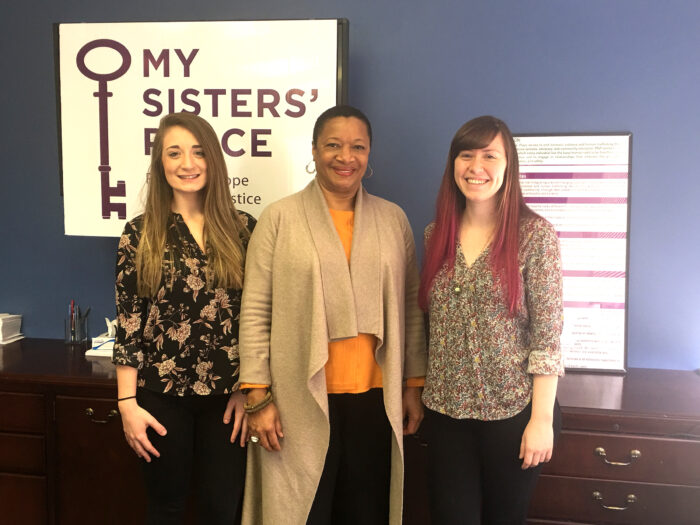
(L-R): Danielle DiNapoli, Karen Cheeks-Lomax and Gabriella Ibacache

A Not for Profit Providing Local Support to Victims of Domestic Violence & Human Trafficking

It’s a non-descript building in downtown White Plains steps from the Metro-North station but for people served by the non-profit My Sisters’ Place (MSP), it is a beacon of hope. It is a safe haven where victims of domestic violence (DV) and human trafficking can finally begin to change their lives.

Founded more than 40 years ago, MSP offers residential, support and legal services for victims of abuse and trafficking. The non-profit also offers educational and preventative programs for students in middle school and high school. In addition, MSP advocates for legislation protecting victims and provides training for healthcare professionals and law enforcement personnel. In short, MSP is a comprehensive agency that provides direct services, legislative advocacy, and prevention education to 15,000 people a year in Westchester County.

Domestic violence is the leading cause of injury to women in the US and up to 10 million children witness some form of domestic violence annually.1 Although 84% of the victims of abuse and human trafficking that MSP helped last year were female, they also provide services to a small percentage of men or transgender individuals. Last year MSP provided counseling to 130 children and emergency housing for more than 175 adults and children at two confidential full-service shelters located in Westchester.

Battling Misconceptions

There is a misconception that both domestic violence and human trafficking don’t happen in affluent communities but these problems cut across socioeconomic levels, notes Karen Cheeks-Lomax, the CEO of MSP. When they do happen in affluent communities, they are widely sensationalized in the media such as the brutal stabbing of Scarsdale pediatrician, Dr. Robin Goldman, by her husband Jules Reich, a well-respected tax attorney, and a human trafficking and sex slave ring discovered in Pound Ridge-based author Joseph Yannai’s basement.

Judy Dobles, a Chappaqua-based volunteer for the past six years with MSP, knows all too well that domestic violence doesn’t discriminate. As a volunteer in the ‘Sisters in Law’ program, she has accompanied MSP clients to court, solely for the purpose of supporting the victim as much as possible.

“Whether that’s talking or just sitting quietly by their side, if they don’t want to talk, shielding them from having to see their abuser before going in to the courtroom, and basically just trying to keep them as calm as possible before they have to go in before the judge,” explains Dobles. She recalls one of her first “accompaniments” with a very educated, successful client who had had a lucrative career and came from an affluent background.  “It was difficult to connect that information with the broken person I saw before me.”

Still Dobles finds this type of volunteerism rewarding. “It’s rewarding when a client walks into a courtroom or magistrate’s room and can answer questions calmly and succinctly.  It’s really rewarding when they exit the room with a smile because they feel like they are being heard and they’re not alone. Also, as a huggy/feely person myself, I would say that 99% of the time, my clients and I hug goodbye–and I feel truly honored to get those hugs.”

Expanding the Definition of Domestic Violence

“Domestic violence doesn’t fit in a box,” notes Cheeks-Lomax. Danielle DiNapoli, a community educator in MSP’s Domestic Violence Education and Prevention (DVEP) program which educates more than 5,000 middle and high school students a year. She explains that it is “not just physical abuse. It is an intentional pattern of behaviors where one person is gaining and maintaining control over another. It can be financial, mental, cyber or spiritual/cultural abuse.”

DiNapoli also teaches the students about warning signs in a relationship that may lead to abuse further down the road. Extreme possessiveness, jealousy, isolating the victim from family/friends or checking in at the person’s place of work or showing up at social outings to which they are not invited are all potential warning signs. It can also be verbal abuse such as putting a partner down or controlling what they eat or wear.

For high school students, DiNapoli states that 1 in 3 have been involved in an abusive relationship.2 They may feel particularly afraid to discuss it with an adult because their parents, she points out, might not even know about the relationship or forbid dating. Gabriella Ibacache, a children’s counselor at MVP points out that the abuse may start off as very small or subtle and the abuser may manipulate their partner by apologizing or buying them gifts.

DiNapoli wants students to understand that the power and control that we see in society can trickle down into our relationships. “By the time I’m seeing them [the kids may be 11 or 12 years old], and this is the first time that they are talking about these issues, and that’s a real problem. We need to be teaching kids how they should be treated and treat one another at a much earlier age,” explained DiNapoli.

Safety Planning

When DiNapoli talks to high school students, MSP provides survivor stories and they discuss warning signs, what type of abuse the survivor endured and reasons why the survivor did not leave. “A lot of the kids ask, ‘why didn’t the victim just leave?’ People tend to shame and blame the victim for not leaving,” said DiNapoli. But on average, DiNapoli says it takes the victim seven attempts before she leaves permanently. And when the victim does decide to leave for good, it is the most dangerous time for that person. They could be seriously harmed or killed. “So much of what we do at MSP is “safety plan” –figuring out the safest way to leave, and that’s not the same for every person, and can change daily due to new salient factors,” explains Cheeks-Lomax.

Ibacache notes that the barriers to leaving can still be just as hard even when the victim is affluent. When children are in the mix, the danger increases significantly warns Ibacache.

Human Trafficking: It Does Happen Here

For more than a decade, MSP has been helping victims of human trafficking and last year helped 85 survivors of human trafficking. In New York State, there were 942 victims identified by social service providers and law enforcement in 2016. Of the victims, 82% were for sex trafficking purposes and 18% were for labor trafficking with 27% of the victims being minors. 43% are citizens from other countries and 57% are residents of New York from outside the five boroughs.3

Housing, Public Transportation & Immigration Status: A Trifecta of Issues for Many MSP Clients

Although MSP has 60 employees and is a $6 million agency (with $1.6 million from private donors), Cheeks-Lomax notes that they are working in a sector that is very challenging.  There are challenges that are unique to Westchester County such as a lack of affordable or low-income housing and public transportation for clients.

Imagine if you need to push a baby carriage to get here, notes Cheeks-Lomax. “If you don’t have safe housing, you can’t do much,” laments Cheeks-Lomax. MSP recently won a conditional award to work with Westhab, the largest developer of affordable and low-income housing in the county, and hopes to partner with them to create 17 two-bedroom apartments for MSP clients in the near future.

“Immigration status is also a huge issue. In 2009, Westchester County was not reimbursing immigrant populations at MSP. We briefed the issue as to who should be served by these federal dollars. We took it all the way up to the governor. If people couldn’t come to us, we argued that they would end up at a hospital or a drug rehab. Every single county now in New York State provides services to immigrant victims of DV and human trafficking,” Cheeks-Lomax explains triumphantly.

Looking Ahead

Cheeks-Lomax is hopeful that the #metoo movement will highlight the power dynamic that is present in domestic violence cases and raise awareness about it. “There are the same fundamentals of fear and intimidation intersecting. For us, it proves a point. It is always about power and control and the abuser does it because he/she can.” She is also looking forward to working with County Executive George Latimer, and believes MSP will make some good headway with his administration.

1. Source: dvrc-or.org
2. Source: loverespect.org
3. Source: NYS Office of Temporary and Disability Assistance Refugee Services


6 Critical Life Messages to Help a Friend

If you believe a friend is in an abusive situation, these are the ‘messages’ that the staff at My Sisters’ Place say she or he needs to hear. “It is important not to “revictimize” the person who has been abused,” notes Cheeks-Lomax. All of these messages validate the person’s experience instead of shaming or blaming the victim.

  1. I believe in you.
  2. I trust you.
  3. I know you can handle it.
  4. You are listened to.
  5. You are cared for.
  6. You are very important to me.

Source: My Sisters’ Place Domestic Violence Education and Prevention Program

Filed Under: Armonk Cover Stories Tagged With: domestic violence, Full Service Shelter, haven, help, Human Trafficking, Injury to Women, My Sister's Place, revictimizing, Safe house, safe housing, shaming, women

How Organ Donations Save Lives: Local Transplant Survivors & Advocates Educate the Community

March 8, 2018 by Deborah Raider Notis

Amy Silverstein
COURTESY OF UJA WESTCHESTER
When Pleasantville resident Daniel Flood was 68 years old, he went into renal failure. He was sick, depressed, and looked jaundiced. Doctors told Daniel that he had six months to find a donor or he would have to go on dialysis for the rest of his life. At that moment, his three daughters, Jennifer, Cynthia and Heather, and their mother, Roseann made it their mission to do whatever they could to find a kidney donor for Daniel.

Amy Silverstein’s first heart gave out in 1988. She received her first transplant, the heart of a 13-year-old child, after spending two lonely months in the hospital. This heart, which was expected to last 10 years, gave her 25 more years of life.

When her second heart failed, she realistically did not expect to receive a second donor heart.

(L-R) Cynthia, Heather and Jennifer
COURTESY OF FLOOD SISTERS FOUNDATION

A Dire Need for Organ Donations

The American Transplant Foundation, an organization dedicated to helping people to find organ donors and providing emotional and financial support to transplant patients and donors, estimates that over 100,000 people in this country are on a waiting list for an organ transplant. Every 10 minutes another name is added to a transplant list. Both Daniel Flood and Amy Silverstein beat the odds.

When Flood was in his 60’s, he found out that he was born with one kidney. He developed hypertension, which eventually destroyed his one kidney. Neither his three daughters nor his wife were donor matches for him. His daughters decided to take an unorthodox route and posted for a kidney donor on Craigslist. “The Craigslist ad was a shot in the dark!” states his daughter, Jennifer Flood. “We used Craigslist for selling items, finding jobs, for childcare. It was a success for all these things, and we said why not post for a kidney donor in the volunteer section for dad?” The ad sparked the interest of an acquaintance who worked for the tri-state news radio station WCBS 880AM. She interviewed the Flood sisters, enabling a wider audience to hear their story.

Silverstein already outlived doctors’ expectations. After her first transplant, she was able to finish her third year of law school, marry her husband, Scott, raise her son, and live an active, fulfilling life. Yet, life with her donor heart was not carefree. She was often nauseous, had around 15 infections every year, underwent over 70 painful heart biopsies, took thousands of doses of medicines, and suffered from breast cancer caused by the anti-rejection drugs. “I didn’t stop,” says Silverstein. “I went to the gym and stood online at the grocery store, no matter how nauseous I felt that day. I kept going. I always tried to put on a good face.” In 2014, 26 years after she received that first donor heart, her heart failed. Encouraged by her family and friends, she travelled across the country to Cedars-Sinai Hospital in California and put herself back on the donor list.

The American Transplant Foundation estimates that liver and kidney disease kill more than 120,000 people every year. Twenty-six million Americans have kidney disease, and many do not even know it. Every year, there are approximately 6,000 living donations. Living donors can donate kidneys, while hearts are donated by someone who is brain dead but still on life support. A heart donor must be under 65 years old and cannot have a history of heart disease or trauma to the chest. As difficult as it is to receive a kidney, it is significantly harder to find a matching donor heart. To get on the donor list for a heart, candidates must adhere to a strict set of health-related rules.

After the Flood family’s radio interview, thousands of strangers, reached out to them. They were able to start a widespread campaign to find a matching donor for Daniel. They tracked potential donors via an Excel spreadsheet, personally speaking to every potential donor. Jennifer Flood, a nurse, knew that Daniel’s options were limited as he could only receive a kidney from a donor with an O blood type. After their review, the list dwindled down to six potential donors, three of whom were disqualified as a result of other medical issues. According to Jennifer, “The campaign was an emotional rollercoaster.”

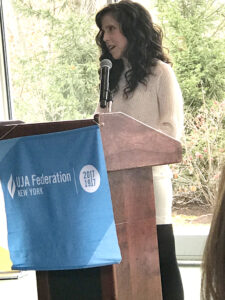
Everything was different for Silverstein the second time her heart failed. In a hospital bed across the country, she had little hope that she would survive. Yet she was surrounded by much love and support, which helped her to persevere. Nine of Silverstein’s friends put together a schedule, and they took turns flying from New York to California to stay with Silverstein in her hospital room. Visitors were few and far between when she was 25. At 50, after her second heart failed, her friends did not leave her side. These friendships were “life-saving and illuminating,” according to Silverstein, who said that she realized the value and magnificence of her female friendships and spoke about them at a recent UJA event at Chappaqua’s Temple Beth El.

How the Organ Waitlist Works

According to the American Transplant Foundation, the waitlist for an organ transplant is not simply a numerical line. The waitlist encompasses a gigantic pool of patients, all of whom are characterized by their blood types, health needs, severity of the illness of the candidate, geographic location of the candidate and specific genetic characteristics. If a donor becomes available, matching features are entered into the system and a list of potential candidates, starting locally and possibly spreading nationally is developed.

Daniel Flood was extremely fortunate. An unknown woman from Monterey, California saw his daughters’ Craigslist ad in 2008 and offered to donate a kidney to Daniel. The donor empathized with the family’s situation, as she lost a close mother figure and was particularly close to her father.

In December 2009, Daniel received a new kidney. His family’s unconventional campaign to find a matching kidney donor was a success.

Two months into her stay at Cedars-Sinai Hospital, Silverstein was offered another heart. Once again, she matched with a 13-year-old girl, and this child would give Silverstein the invaluable gift of a longer life. “With this second transplant, I don’t know how long I have,” noted Silverstein, who travels back to California every six months to see her doctors. “But I know that whenever I need to talk to someone, I have nine friends I can call, and I will have an honest, free-flowing conversation. I have an incredible support system.”

Silverstein is particularly lucky. Many people in her situation do not have people on whom they can rely. Autumn Porter, a Senior Program Coordinator at The American Transplant Foundation, believes it is vital to create a network of support for transplant patients. The Foundation has a mentorship program to help both transplant candidates and donors. This program also gives people a platform through which transplant candidates can help find living donors and to get their stories out to a wider audience. These resources are designed to alleviate some of the stress of this process for transplant patients.

Complications from Immunosuppresive Drugs

Since his transplant, Daniel Flood feels significantly better and appreciates that he can enjoy his life and his family. Silverstein has been re-energized by her third heart, running three times a week. However, she knows that with a heart transplant “you are trading one disease for another.” She is grateful for the medical advances over the past 25 years. All transplant patients must take anti-rejection, or immunosuppressive drugs. These drugs block the immune system, helping to protect the new organ and help maximize its functionality. Long-term use of these drugs can lead to complications, including diabetes, high blood pressure and some cancers.

These vital anti-rejection drugs are often unbelievably expensive. Porter notes, “Many people cannot afford these protocols.” The American Transplant Foundation helps transplant patients to access these medicines. The Foundation’s “Patient Assistance Program” also offers financial help for donors, helping them to pay for their expenses.

Educating Others About Organ Donations

After helping their father, the Flood sisters wanted to use their newfound knowledge to help other people find living kidney donors. They started Flood Sisters Kidney Foundation and, thus far, have helped to match 11 other people with living donors. Leveraging social media and various media outlets, they share patients’ stories. “Every story is unique. I believe people are driven to help someone in need because they have seen someone close to them receive a transplant or go through setbacks in their lives, and they want to make a difference,” states Jennifer. The Flood sisters hope to enhance and expand their Foundation, incorporating an educational component and nutritional program. They also recently held a Bon Jovi acoustic concert at Tarrytown Music Hall earlier this month with part of the proceeds benefitting the Foundation.

Silverstein inspired millions with her story. In 2008, Silverstein wrote about her first heart transplant in Sick Girl. In 2017, she authored My Glory Was I Had Such Friends, the story of how the support of her friends was life-changing for her when her second heart failed. JJ Abrams plans to bring her latest story to television. “Appreciate when you feel well,” Silverstein says.

“And remember, even in my position, all good things are possible. Try not to be defined by it. It is very easy to get swallowed up by the illness that you have. I’ve been lucky not to become my illness and that is my hope for others.”

Filed Under: Armonk Cover Stories Tagged With: donor, donor heart, Flood Sisters Foundation, help, organ transplant, organ waitlist, survivors, transplant survivors

  • « Go to Previous Page
  • Page 1
  • Page 2
  • Page 3
  • Page 4
  • Go to Next Page »

Primary Sidebar

Please Visit

White Plains Hospital
William Raveis – Armonk
William Raveis – Chappaqua
Northwell Hospital
Houlihan Lawrence – Chappaqua
Houlihan Lawrence – Armonk
Houlihan Lawrence – Briarcliff
NYOMIS – Dr. Andrew Horowitz
Stacee Massoni
Purple Plains
Compass: Donna Gordon
Westchester Table Tennis
Compass: Miller Goldenberg Harris Team
Repose
Dodd’s Wine Shop
Rocks by Jolie B. Ray
Outer Boundaries Travel
Jean Jacques
The Briarcliff Manor
Eye Designs of Armonk
Play Care Early Learning Center
Bristal Assisted Living
Compass: Natalia Wixom
Sonny Pilates
Korth & Shannahan
New Castle Physical Therapy
Dr. Briones Medical Weight Loss Center
Fleetwood Pastry Shop

Follow our Social Media

The Inside Press

Our Latest Issues

For a full reading of our current edition, or to obtain a copy or subscription, please contact us.

Inside Armonk Inside Pleasantville and Briarcliff Manor Inside Chappaqua and Millwood

Join Our Mailing List


Search Inside Press

Links

  • Advertise
  • Contact Us
  • Digital Subscription
  • Print Subscription

Publisher’s Note Regarding Our Valued Sponsors

Inside Press is not responsible for and does not necessarily endorse or not endorse any advertisers, products or resources referenced in either sponsor-driven stories or in advertisements appearing in this publication. The Inside Press shall not be liable to any party as a result of any information, services or resources made available through this publication.The Inside Press is published in good faith and cannot be held responsible for any inaccuracies in advertising or sponsor driven stories that appear in this publication. The views of advertisers and contributors are not necessarily those of the publisher’s.

Opinions and information presented in all Inside Press articles, such as in the arena of health and medicine, strictly reflect the experiences, expertise and/or views of those interviewed, and are not necessarily recommended or endorsed by the Inside Press. Please consult your own doctor for diagnosis and/or treatment.

Footer

Support The Inside Press

Advertising

Print Subscription

Digital Subscription

Categories

Archives

Subscribe

Did you know you can subscribe anytime to our print editions?

Voluntary subscriptions are most welcome, if you've moved outside the area, or a subscription is a great present idea for an elderly parent, for a neighbor who is moving or for your graduating high school student or any college student who may enjoy keeping up with hometown stories.

Subscribe Today

Copyright © 2026 The Inside Press, Inc. · Log in