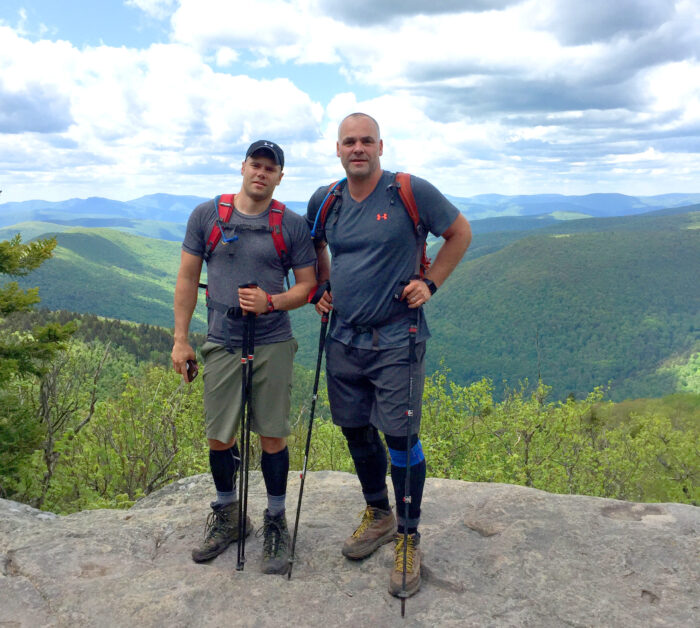
The Devil’s Path is considered one of the most difficult hikes in the country. Located in the Catskill Mountains about a two-hour drive north of Chappaqua; the trail is approximately 25 miles long with six peaks and 16,000 feet of elevation. For most brave adventurers who take on this challenge, it is tackled over the course of two to three days; but for the past four years an ambitious group of Dads from Chappaqua have partaken in what has become an annual tradition of completing the hike in one grueling 14-hour stretch.
When the weather starts to get warm, but before summer’s heat sets in, the men call in a personal day at work and forgo their usual train commute into the City. They pack their cars with supplies and convoy north to the Catskills.
Practice hikes take place in advance. Brian Cook takes his training very seriously. To prepare for his inaugural hike he was often seen walking around town with a weighted backpack to simulate the supplies he would be carrying. Andy Shaiken, who has also completed the New York City marathon, considers the hike to be “more difficult and more rewarding” in comparison.
The men depart on a Thursday night. They leave one car full of supplies at the halfway point and another at the end. It is not an out and back trail, so they finish at a different point from where they start. They then check into the Kaatskill Mountain Club Hotel and attempt to go to bed early; but nerves prevent much sleep. At 4 a.m. they wake up and the long day begins.
Walter Staudenmaier, who will be hiking the Devil’s Path for the fourth year this Spring, packs seven bacon and banana sandwiches, fourteen GU energy gels and twelve liters of a 50/50 water and Gatorade mix as his personal fuel of choice.
They rendezvous in the parking lot and head to the trail for a 4:45 a.m. sharp departure. There is excited and nervous banter at the beginning. A brisk pace is set. It’s dark, so headlamps are needed for the first 45-minute gradual uphill climb. Putting one foot in front of the other, the monotony of the hike sets in and the first hill quickly disappears. A regimen is established; the hikers briefly stop every 45 minutes to take salt tablets and supplements to offset what their bodies are expending. Few additional stops are taken.
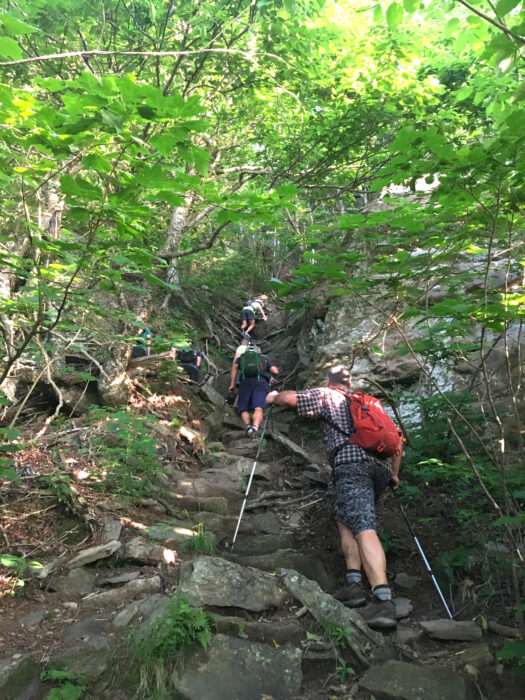
The first half of the hike consists of three intense peaks. “There is an incredibly steep descent to the halfway point of the trail that rattles your knees, your toes are banging into your boots at every step.” Recalls Staudenmaier.
At the halfway point, the men take a well-deserved 30-minute break. They get off their feet, massage their legs, change clothes, replenish supplies, use tiger balm to try to get muscles loose and prepare to set off again.
The second half begins with a torturous vertical climb and exhaustion quickly sets in. A third of the way into the second half the hikers feel extremely uncomfortable. The last four hours are “complete misery; every single step hurts.”
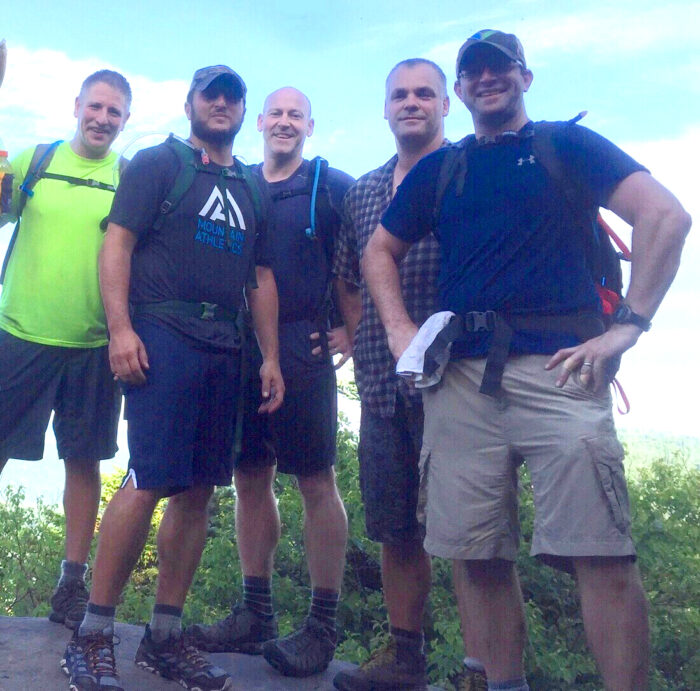
About halfway through the second half is the point of no return. Until then, the path is always no more than a couple of miles away from a put out; but towards the end that option is lost because it’s the same distance to finish as all other exit points. At about eleven hours in, with approximately three hours remaining, there is no way out except to finish.
“Hiking for 14+ hours straight is a whole lot easier when you are sharing the struggle with good friends. It also helps to have a cooler full of beer at the end of the trail waiting for us.” Says Matt Chmielecki, a Cross Fit enthusiast who will be hiking the trail for the third year this Spring.
Overall, the first half of the hike is much more technical and challenging; there are a lot of rock ledges and obstacles. The second half is easier but exhaustion gets in the way of appreciating it. The fatigue gets so intense in the second half, the hikers don’t take many photos; only at the very end.
The journey shifts from struggle to relief once the hike is complete. A steak dinner at the hotel is the final reward, in addition to the satisfaction of having completed “the Devil” in a day.

 Investing in Personal Objectives
 Following Your Passion
 The Birth of a New Career
 Nurturing Your Ambition
 Realizing Your Dreams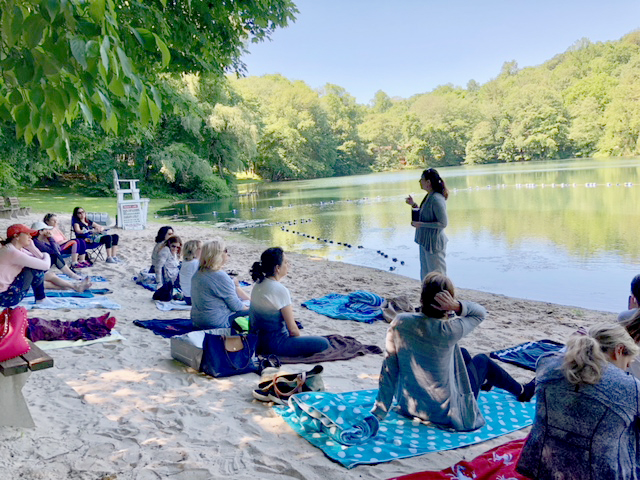
 Jodi Baretz, a mindfulness-based psychotherapist and holistic health coach, and author of the Amazon best-selling book Mindful is the New Skinny, has made it her life’s work to help people maximize joy through meditation and other mindfulness techniques. For almost a decade, she has worked to help clients with stress, food issues and relationship problems so they can feel and look their best. She offers individual therapy and coaching through The Center for Health and Healing in Mt Kisco and has pioneered several successful mindful mom’s programs, including her new program: “Club Mindful – A Gym for the Mind”. Baretz developed the summer lake meditation series several years ago and it has grown to become a highlight on the calendars within the local mindfulness community.
 Throughout the restaurant, soup and bread stations were set up alongside additional displays of painted bowls. Signs explaining the work being done to end hunger sat beside more of the painted bowls. The Mount Kisco Interfaith Food Pantry displayed a sign saying, “We fed 41,791 people last year”. The Boys & Girls Club of Northern Westchester showed a sign informing, “We serve over 80,000 nutritious meals each year.” Hillside Food Outreach had a sign that shared, “We have over 300 volunteers that pack & deliver to our clients.”







 When their kids grew up and went away to college, Cheryl, a television producer, found herself at home alone with her three dogs working on projects while her husband worked long days in the music industry getting home late most nights. They decided that they would be able to spend more time together if they downsized and moved to the city.