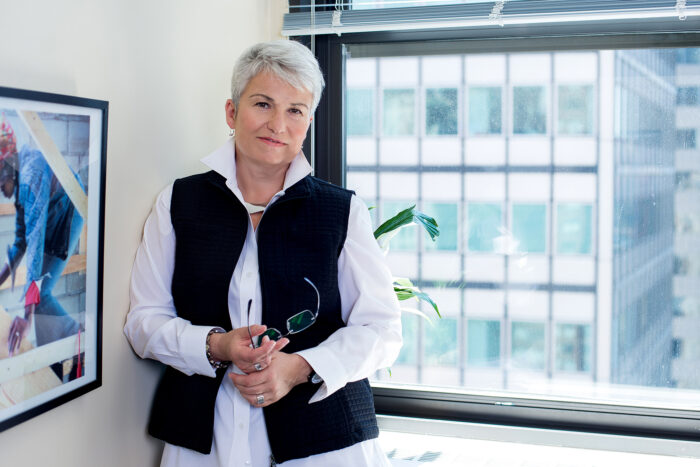
As people age, it’s important for them to have a home where they can feel secure, live comfortably, and thrive. With that in mind, Habitat for Humanity New York City and Westchester County in partnership with Westchester Residential Opportunities (WRO) in White Plains launched Aging in Place (AIP), a program to empower seniors to remain safely and independently in their homes.
“The program serves a very critical and practical need. There are many seniors who don’t have resources to complete simple home repairs that would allow them to age safely in their homes, in their communities, within their network of support, in their declining years,” said Karen Haycox, CEO, Habitat for Humanity NYC/Westchester County. “We see this as an opportunity to stabilize this vulnerable community at a vulnerable time in their lives.”
Habitat partnered with WRO to establish AIP, a home renovation and energy efficiency program for seniors that provides upgrades to improve safety and mobility. It serves homeowners aged 62 and over whose income is 80 percent or less than the area median income and who demonstrate a critical housing need. “Small repairs can make a big difference, such as repairing a loose railing or unsafe steps or finding a better way for seniors to navigate out of the bathtub,” explained Haycox. “We focus our interventions on places where we can make a strategic difference.”
An Acute & Growing Demand
A Westchester County Housing Needs Assessment reported that over 30% of homes throughout Westchester County were built before 1940 and will likely need major repairs and system replacements in addition to physical modifications to mitigate accessibility challenges. “The acute and growing demand for resources that empower seniors to remain safely and independently in their homes was a common refrain. We saw an opportunity to step in and make a difference,” said Haycox. “The mission of Westchester Habitat is to create, preserve, and advocate for healthy, affordable homes for all. We envision a county that’s a national leader in meeting the housing needs of its growing senior population.”
For WRO it has been the perfect collaboration. “We have 55 years of bringing all facets of housing help to vulnerable populations in Westchester, and pairing that with Habitat with their skills is perfect. Our mission is to promote equal, affordable, and accessible housing opportunities for all residents of our region,” said Marlene Zarfes, Executive Director, WRO.
“As our senior population increases, with the number of residents aged 60 or over expected to rise to 25% by 2030, our existing county-wide deficiency of affordable housing for seniors, many of whom live on fixed incomes, becomes more acute while the wait for affordable housing grows longer. These funds will help us make necessary aging-in-place repairs that enable seniors to remain safely in their homes while increasing energy efficiency.”
The program targets interior and exterior home repairs, safety improvements, and energy efficiency upgrades. Current services include grab bars/handrails; light switches and door knob replacement; lighting and trip prevention modifications; and accessibility modifications for hearing and vision-impaired homeowners.
Haycox pointed out AIP can offer seniors a positive outlook. “We try to do what we can for these valuable members of society as they age. We aim to improve their quality of life, enabling them to live safely and independently in their homes, close to family and friends, while saving them money and even reducing their carbon footprint,” she said. Zarfes added, “As seniors are aging in place, the home has to be safe and secure. As their mobility and income declines, we need to get involved.”
U.S. Senate Majority Leader Charles Schumer and former U.S. Representative Mondaire Jones also allocated $500,000 in Congressionally appropriated funds in the FY 2023 Omnibus Budget to support seniors in need of these services. “We depend on the commitment of like-minded like-hearted individuals,” said Haycox noting AIP serves as a lifeline to seniors. “We hope people feel Habitat for Humanity is there for them. We will respond to this need as our resources are able, to reach out and provide stability to this community, and we urge people to join us.”
For additional information about the inaugural supporters/partners including the Field Hall Foundation, and to apply for initial AIP accessibility and mobility modifications, write to: AgingInPlace@HabitatNYCWC.org, call (914) 240-7003, or visithabitatnycwc.org/aging-in-place.
 Over the remainder of their time in the program, Weissman and Marcus will work to “investigate global issues, analyze diverse perspectives, communicate ideas effectively in both English and a second language, and take action,” according to the program’s website.
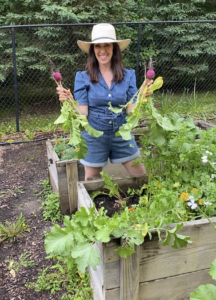
 As my kids entered preschool, I began teaching kids cooking classes, coaching moms and speaking on panels about joyful, healthy eating. I was grateful when my kids invited me in to teach in their entire grades! I wanted to do more in the community, met Andrea Garbarini, and we shared the vision of starting an edible school garden at BRS Elementary School. Together with a dedicated team, we created the first edible school garden in the Pleasantville district. I also found a home at Temple Beth El of Northern Westchester in Chappaqua, where I continue to partner with Hope Blauner, teaching the early childhood edible school garden.
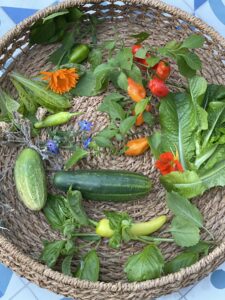 Another way to bring joy and ease into family food is what I like to call ‘parts of a meal.’ By allowing our kids to have their individual food preferences one meal can make everyone happy – there’s something everyone likes to eat. Fajita night can mean rice and beans for one and beans and veggies for another. When we “give up the get” of trying to get our kids to eat healthy, and honor our kids’ own relationship with food, we experience joy in the moment and legacy for the future.
 I could hear the sound of music with Julie Andrew’s voice in my head singing, “High on a hill was a lonely goatherd Lay ee odl lay ee odl lay hee hoo,” as I made my daily visits to the Fat and Sassy Goats grazing outside of New Castle Town Hall last spring. The goats began their work in late May and were contained by a solar-powered electric net fence. The goats helped clear weeds and vines without the use of pesticides or heavy machinery.
 On my visits to the goats, I frequently saw members of the New Castle Police Department, some of whom were as obsessed with the goats as I was. The goats appealed to people of all ages. Grandparents brought their grandchildren. Teens stopped by and tiny tots in strollers came by to watch the goats. One friend enjoyed her birthday breakfast in their company.
 “This was our first project working directly with a municipality, and in particular, Dennis Corelli, Environmental Coordinator, Sabrina Hull, Director of Planning and Christina Papes, Town Clerk who all went above and beyond to ensure everything went smoothly every step of the way,” said Balch. “We would also like to thank Round Rock Preserve for their catalytic goat grazing project, the New Castle Police Department for being great goat neighbors, and the many friendly people from the community who stopped by to say hi or to watch and appreciate the goats.”