• Skip to primary navigation
  • Skip to main content
  • Skip to primary sidebar
  • Skip to footer

The Inside Press

Magazines serving the communities of Northern Westchester

  • Home
  • Cover Stories
  • Features
    • Portraits and Profiles
  • Advertorials
    • Lifestyles with our Sponsors
    • Sponsor News!
  • Wellness
  • Happenings
  • Advertise
    • Advertise in One or All of our Magazines–And/Or Subscribe
    • Advertising Payment Form
  • Contact Us
  • Search

Armonk Cover Stories

Down to the Village for the Annual Frosty Day Parade

October 21, 2016 by Matt Smith

photo-1

For the residents of Armonk, the cool weather can only mean one thing: Frosty Day is right around the corner.

Now in its seventh year, the winter spectacle has become an annual town staple, ushering in the holiday season with style and flair. Originally conceived by North Castle Historical Society Vice President Ed Woodyard as a Winter Walk and Tree Lighting in the Park, it morphed into Frosty Day in 2010, when the NCHS decided to recognize the contributions of New Castle resident Steve Edward Nelson. Nelson, who penned the lyrics to the snowman’s iconic anthem while he lived in White Plains, was a frequent visitor to Armonk and Nelson’s love for the hamlet is said to have provided inspiration for certain moments within the song. The “Village Square”–which Frosty “runs all around… with a broomstick in his hand”–is supposedly referencing the Bedford Road Historic District, while the town’s first police chief, John Hergenhan, inspired “traffic cop [who] hollered, ‘Stop!’”

“Because of these connections, [we thought], ‘Why not ramp this thing up?’” explains Robby Morris, President of Friends of Frosty, Inc., the not-for-profit organization in charge of planning the day’s events.

“We took it from a small little winter walk, into a full-out Disney production of ‘Frosty the Snowman,’ with costumes and activities galore.”

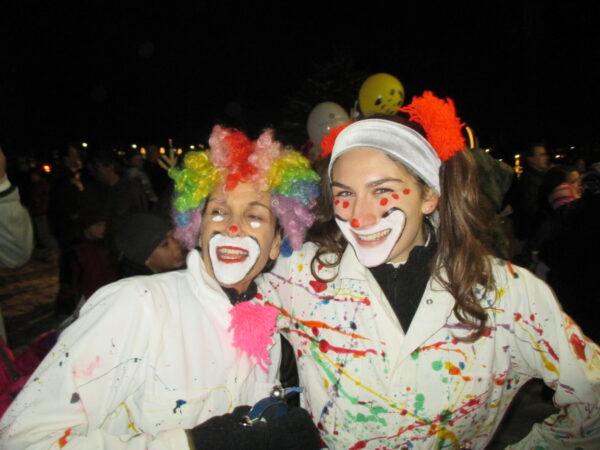
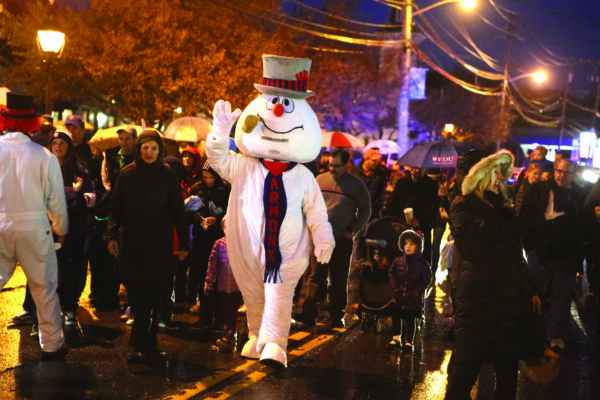
That they did–and this year promises to be no different. The day-long extravaganza kicks off with a host of activities throughout the downtown area, including train rides, face painting, a hot chocolate tasting, and the return of “Build-A-Frosty.” “From decorating a cupcake to creating an ornament from scratch, we’ve got something for everyone,” says Morris, with a smile. He also notes that Frosty himself will, of course, be visible throughout the day, spreading holiday cheer by posing for photos and giving warm hugs.
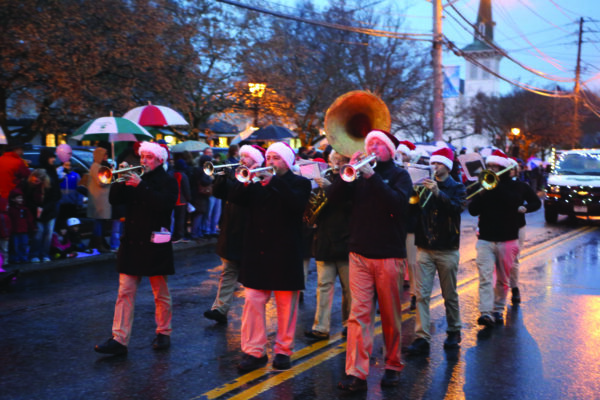

photo-2

photo-3 photo-4He’ll also anchor the main parade event, which commences on Old Route 22 and continues along Main Street toward Maple Avenue, before finishing up at Wampus Brook Park. As Frosty passes, he’ll invite all spectators to join the parade to its final destination. “We get almost 40 participants each year, from cars and floats to marching bands and other groups,” Morris continues. “They all come together, and It’s a lot of fun.” From there, the day culminates in the park with the original Tree Lighting ceremony, wherein Frosty will pull switch and set the park aglow.

As one would probably imagine, it’s a huge undertaking for all involved. “We probably work six months on this one-day event,” Still, Morris acknowledges the payoff simply can’t be beat. “It brings out the best in our community,” he says, noting that local businesses take in upwards of 300 visitors throughout the day. The fact that around 60 percent of them are coming in from out of town is another plus, as it not only boosts town vibrancy, but provides out-of-towners “good exposure to what Armonk has to offer” and may hopefully entice them to return in the future.

“The whole thing is at no cost to anyone,” explains Morris, adding that all expenses are covered through local sponsors, including Breezemont Day Camp, White Plains Hospital Medical and Wellness, Douglas Elliman Real Estate, Hickory and Tweed, and The Bristal Assisted Living.

There’s indeed no “official” cost of admission, but the event does act, in part, as a fundraiser. As part of their Winter Warmth project, “Help Frosty Help Others,” members of Friends of Frosty, Inc., encourage attendees to donate winter clothing (jackets, hats, mittens), which will be distributed to a local charity following the parade. Bins will also be available prior to the event, at area schools, restaurants, and the North Castle Public Library. “People can drop items in as they walk through,” says Morris. “Anything is appreciated.”

While the lights and razzle-dazzle are indeed alluring–especially with the added bonus of the hamlet’s connection to the famed lyricist–Morris is quick to stress the true importance and meaning behind all the flash. “It’s a great event for that time of year where you’re giving back,” he says, with a broad smile.

He’s happy to report that year after year, the Armonk community never fails to deliver, and “when you’re watching everyone come together and get involved,” he says. “It’s a wonderful thing.”

The seventh annual Frosty Day Parade will be held November 27 from 12 to 5 p.m. in the Armonk Town Plaza. For more information, including schedules and sign-up sheets, please visit www.armonkfrosty.com.

PHOTOS COURTESY OF ROBBY MORRIS

Matt Smith is a writer and regular contributor to The Inside Press. For further information or inquiry, please visit www.mattsmiththeatre.com.
Filed Under: Armonk Cover Stories Tagged With: Armonk, Frosty Day, Frosty Day Parade, Holiday, Parade

Building The Armonk Outdoor Art Show

August 25, 2016 by The Inside Press

Photo Courtesy/Tompkins Excavating

By Brian Donnelly

Work always begins on a Thursday. By Friday, an open grassy field flanked by trees is lined with stakes in the ground where 185 vendors then erect tents in symmetrical rows. Lining the old IBM parking lot, nearby roads, and highways are signs directing people to this annual phenomenon. This year those signs will read, “The 55th Annual Armonk Outdoor Art Show.”

“By the end of the day Friday after the artists have erected their tents, it’s like a miniature city,” said Stacy Wilder, one of four co-chairs and 300 volunteers, some of whom work year-round to stage the art show. Slated for Sept. 24 and Sept. 25, rain or shine, the nationally renowned show features 185 artists spanning 33 states, Israel, and Canada. The exhibits run the gamut, including fine arts – paintings, mixed media, printmaking, drawing, pastels, sculpture, photography/digital art, and wearable art – and fine crafts.

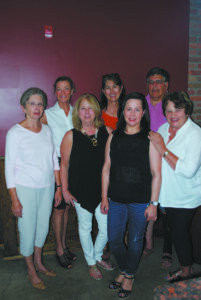
(L to R) Art Show Artist Liaison Judy Moniz; Executive Director Anne Curran; co-chairs Debbie Heidecorn, Marian Hamilton, Stacy Wilder, and David Africk; and co-chair advisor Susan Geffen.
(L to R) Art Show Artist Liaison Judy Moniz; Executive Director Anne Curran; the four co-chairs:
Debbie Heidecorn, Marian Hamilton, Stacy Wilder, and David Africk; and co-chair advisor Susan Geffen.

“It’s well-selected and juried, and even though it is fine arts and crafts there are things there for people with all different budgets,” Wilder, a 22-year resident of Armonk, said. “Whether you’re looking for a print that’s $50, or a bronze statue for many, many thousands of dollars, we’ve got a full range of quality art.”

Armonk resident Lanni Sidoti, 52, exhibits enamel jewelry and wall pieces. “I kind of consider it the highlight of the year,” she said, looking forward to her fourth time exhibiting at the show, which happens to be within walking distance from her home. “I’m very happy that I’m in it. Just because I’m in it one year doesn’t mean that I’m in it the next year.”

Even returning artists have to be juried in every year, with the exception of the award winners of the prior year. Hundreds of artists apply to be a part of the show, including more than 600 this year alone. Among those selected, 46 are new to this year’s show.

“We get to look at the cream of the crop and boil it down to who we think is really the best,” Wilder said. “So, we have a reputation for having really great quality work.”

The art show’s executive director, Anne Curran, has been working on the show’s administrative aspects since the beginning of this year. “The art show is a premiere two-day event that has broad appeal for corporate sponsors,” Curran says. “There is great value in sponsorships for all of us.”

By Christine Mackellar–jewelry

Long-time volunteer and interior designer Susan Geffen said the show has, in years past, featured renowned artists like New York wire artist Skye Ferrante and Brooklyn painter Ken Solomon. His work has been shown at the Brooklyn Museum and the Museum of Modern Art (MOMA).

“Some artists do it as a stepping stone to other things. For others this is how they sell their art,” she said.

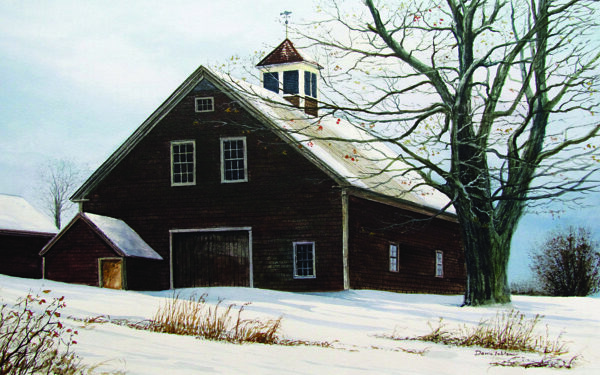
By Denis Leblanc -watercolor
By Denis Leblanc-watercolor

The latter category includes Sidoti. “It’s my best show,” she said.

Geffen first attended the art show when she moved to Armonk in the early 1970s, a decade after its inception in 1961. The first show featured only a handful of artists displaying their work on the lawn of the Armonk Methodist Church bordering Main Street. As turnout grew through the years the show relocated to the parking lot in front of the library, and then again to the Legion Field behind Town Hall. In 1997 it moved to its current home at Community Park, the old IBM field, according to the art show’s website.

The last move, Geffen said, turned a nice community event into a nationally-ranked attraction. “Art Fair Sourcebook,” which Wilder called a bible for art fair exhibitors, named it among the “Prime 50” Fine Art and Fine Craft Fairs in the U.S. “Sunshine Artist Magazine” has consistently named it among the “Top Fine Art and Design Shows” in the New York Metro Area.

(L to R) Art Show Artist Liaison Judy Moniz; Executive Director Anne Curran; co-chairs Debbie Heidecorn, Marian Hamilton, Stacy Wilder, and David Africk; and co-chair advisor Susan Geffen. Photo by Andrew Vitelli


“It was the move that started it because we were able to contain the show so that we had an entrance, and we were able to charge an admission fee,” said Geffen, whose many volunteer roles include offering free personal consults connecting visitors with art that best fits their taste and decor. “So, we started to make more money, more money for the library.”

The show is sponsored by Friends of the North Castle Public Library, Inc. The proceeds, which Wilder said have topped $100,000 each of the past 15 years, benefit the North Castle and North White Plains libraries. Approximately 8,000 people visit the show every year, Geffen said.

“The Armonk Outdoor Art Show is the largest fundraising event that’s held by the Friends,” said Edie Martimucci, executive director of the North Castle Public Library. “And the impact that it has on our library is that it enables the Friends to help us with our programming.” In addition to supporting programs like the summer reading program, movie series, yoga classes and art lectures, the proceeds from the art show have funded many renovations and upgrades to the library. They include a new circulation desk and an interactive play and reading area in the children’s room.

Martimucci recently presented to the Friends plans to open an art gallery in the library. She hopes to open it in late 2017.

Wesley Rasko–glass
Wesley Rasko–glass

“We are a library that is a result of the art show and we want to have more cultural programming that reflects art,” she said.

First-time exhibitor Luis Perez, 54, will debut in style with a double booth. He will help run another double booth, which features the Byram Hill High School students exhibiting their work.

“Most high schools have great art programs and we want to pursue this wonderful experience for teenagers to know what it’s like to be a pro artist,” he said. High school artists have been an integral part of the art show for the last few years. This year they more than doubled in number from about 10 to 24. Perez plans to make it even bigger next year by inviting students from Valhalla High School to submit applications, too.

Valerie Bunnell–sculpture

“I’ve always enjoyed seeing the show. I think it’s a really well put together show and the fact that I get to be a part of that is really exciting,” said Andrea Conrelius, 18, who was a part of last year’s high school booth.

While the Armonk Outdoor Art Show has grown into a city of a show in its 55 years, Geffen said it’s still the same “great hometown thing to do” that it was when volunteers baked pies, cakes and the much-loved art show brownies in the early days. Today, the show features a wide selection of food vendors.

Steven Kolodny– jewelry piece
Steven Kolodny–
jewelry piece

“We all really like each other,” Wilder said of her fellow volunteers. “It’s a great group of people and it makes you feel good about where you live because you’re working with your friends and neighbors for a common cause.”

The art show is held at 205 Business Park Drive in Armonk and runs from 10 a.m. to 5 p.m. on Sept. 24 and Sept. 25, rain or shine. Admission is $12 for adults and $10 for seniors or with coupon, while children under 18 get in for free. Visit www.armonkoutdoorartshow.org for more information.

Marvin Blackmore–clay

Brian Donnelly was born and raised in Westchester. He is a freelance reporter, videographer and social media specialist, whose hobbies include riding bicycles, waves and rooftop hammocks.

Filed Under: Armonk Cover Stories Tagged With: Armonk, Armonk Outdoor Art Show, art show

Armonk Outdoor Art Show: Question and Answer with Anne Curran

August 25, 2016 by The Inside Press

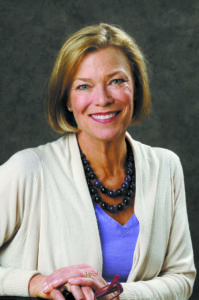
Anne Curran photoBy Andrew Vitelli

When did you first get involved with the Armonk Outdoor Art Show? What made you get involved?

I first attended the show in the early 1990’s when I lived in White Plains. My husband and I became acquainted with Armonk because of coming to the art show, and we still credit the art show as what motivated us to find our home here, 18 years ago. We felt that a community that supports a wonderful art show and theatre group (The Armonk Players), as well as the local library, had to be a great place to live, and that is still true today.

Over the past decade, I volunteered at the annual shows and always enjoyed working with neighbors and meeting old and new friends. Early this year, after completing my final term as town clerk, I accepted the position of Executive Director of the Art Show. I work very closely with the co-chairs of the show and others who have key organizational roles. I’m happy to work for the Friends of the North Castle Public Library, and contribute to the wonderful work done by so many long serving and dedicated volunteers. In many ways, I feel like assuming the role of Executive Director of the Art Show has brought me full circle to what originally brought me to Armonk.

Is running the art show a year-round effort? What are some of the biggest challenges in preparing for the show?

The organizational requirements are tremendous and it is very much a year-round effort. Since the show is juried, marketing to exhibitors is important so that we continue to draw a large quality pool of applicants. The evaluation of applications is time-consuming and takes place during the early months of the year. Soliciting contributions and corporate sponsors is key to successful fundraising and this year we have provided Gold Sponsors with the opportunity to have a booth at the show. This has been very well received and we hope to continue to offer special opportunities for our highest level donors to connect with art show visitors. The planning of all aspects of communications, field operations, volunteer committees and volunteer staff for the two-day event is a team effort. Fortunately, the team works very well together and has a good time, too! We are always looking for new volunteers to take on small or larger assignments. The work is rewarding and there is a wonderful community of art show friends that will warmly welcome new volunteers.

What makes the show so unique and valuable for the community?

It is a high quality show that is nationally recognized as one of the top Fine Art and Fine Craft Shows, and while extremely well organized, it maintains a very personal, small community feeling that artists and visitors appreciate. The community benefits from the recognition of hosting such a highly regarded and well attended show in Armonk, while the net proceeds help fund a broad spectrum of library programs, entertainment, new technology, and facility enhancements. Besides that, there is huge satisfaction in putting on the show, now celebrating our 55th year.

How can businesses who want to support the art show get involved?

Corporate Sponsorships are available at three levels: Gold Sponsors ($5,000); Silver Sponsors ($2,500); Bronze Sponsors ($1,000). Business can also support the show as a Community Booster for contributions of $500 and $250. We promote all donors in our communications and maximize corporate visibility for our sponsors. Visit armonkoutdoorartshow.org for more details and to contact me. I would be happy to discuss the unique value to any business by supporting the art show.

For more information, contact https://www.friendsncpl.org/

Filed Under: Armonk Cover Stories Tagged With: Anne Curran, Armonk, Armonk Art Show, art show, Friends of the North Castle Public Library, Inside Press, theinsidepress.com

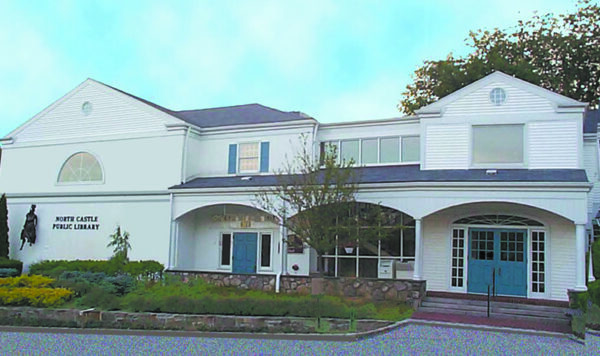
It’s All Happening at the North Castle Public Library

August 25, 2016 by The Inside Press

nc library

By Deborah Raider Notis

The North Castle Public Library is much more than a place to borrow books. It is a hub of exciting, innovative programming. It is a community center filled with opportunity to grow, flourish, meet new people, and to feel an even greater connection to this community.

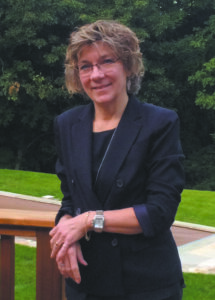
“We aim to offer totally comprehensive programming with the whole interests in mind,” notes North Castle Public Library Director Edie Martimucci. Martimucci, who has worked in the library system for more than 18 years, has been director of the North Castle Public Library since April 2016. She helps to bring the highest quality of free programming to both the Armonk and North White Plains branches of the library.

The creative, intellectual, and community-enhancing programming at The North Castle Public Library has one other added benefit. Nearly all of these programs are free to the public. For the past 70 years, the funding for many of these free programs can be attributed to the Friends of the North Castle Library. The Friends of the North Castle Library funds special programming that makes the library a greater draw for residents of both North Castle and the greater Westchester area.

They are responsible for the Sunday Music Concert Series, teen programs including a songwriting program, family programs like Family Chess, and various health and wellness programs. The Friends of the North Castle Library also sponsors bi-annual productions of The Armonk Players, a community theater group. Additionally, the Friends of the North Castle Library provided funding for the original library building, Whippoorwill Hall, and various other building renovations. The Friends of the North Castle Library’s annual Art Show, one of the most prestigious art shows in the United States and their largest fundraiser, helps to support many of these programs.

Over the past year, attendance at library programs went up astronomically, but Martimucci is hoping to spur even greater community participation in library events going forward. She has helped to bring diverse programs into the library, including weekly Tai Chi, art history, and Italian language and culture programs, all of which are exceptionally well-attended. This year, the North Castle Public Library also added weekly Bridge lessons.

North Castle Public Library Director Edie Martimucci

For the younger set, the North Castle Public Library offers everything from yoga for mothers with children ages one to four to sewing to STEAM (science, technology, engineering, art, math) programs. According to Megan Dean, Director of Youth Services for the North Castle Public Library, “We are looking at the future of libraries. Thus far libraries have been all about circulating books.

Now we are looking at different programming and circulating other materials that allow for exploration and trial and error. We want to find new things and ways that the library can contribute to the community.” To that end, the library has added maker programs, science labs, Photoshop and print-making programs for middle schoolers, and 3-D printing workshops for middle and high school students. These programs meet once a week and typically have between 10 and 20 participants.

Dean has also started a program through which maker kits are circulated for two weeks to library members. With so many options, Dean hopes to encourage more members of North Castle’s younger community to become active at the library.

Knowledgeable instructors, including Pace University professor Val Franco and Alka Kaminer, who runs a weekly Chair Yoga class, give these programs even greater appeal.

“We have quite a few independent teachers who love to teach and enjoy our library community,” states Martimucci. Unique programming, like cooking classes sponsored by the White Plains Hospital in conjunction with the library and the Sunday Music Concert Series, has been a significant draw, and both the “A Taste of Sinatra” and “Love Songs of World War II” concerts packed the house with approximately 175 attendees each.

Martimucci has great aspirations for the library for the coming year. She hopes to build the library’s academic reputation, making it an educational hub for the North Castle community. Adding four-week continuing education classes, on any topic from history to science, is a high priority for Martimucci.

“The library should open up endless possibilities. I want to help to incite people’s desire to learn.”

She would also like to implement an annual community spelling bee. Structurally, she wants to reconfigure the rooms throughout the Armonk branch to allow for programming. “If we create more dedicated spaces, programming won’t interfere with studying,” notes Martimucci. She hopes that this will encourage even greater participation in programming.

But most importantly, Martimucci wants input from the community. She encourages people to provide the powers that be at the library with their ideas and feedback.

Go onto the library’s website and submit suggestions to the virtual suggestion box. And show up. The North Castle Public Library is a phenomenal resource that is open to the whole community.

Whether you’re interested in nutrition, cooking, physical well-being, music, academics, science, youth programming, or the arts, the North Castle Public Library has something for you.

Deborah Raider Notis lives in Westchester with her husband, four boys, and her dog. She is the co-owner of gamechangernow, LLC (gamechangernow.com), a free referral service connecting Westchester families to instructors. You can find Deborah’s writing for the Inside Press and on suburbanmisfitmom.com.

Filed Under: Armonk Cover Stories Tagged With: Armonk, community, library, North Castle Public Library

As One Town Resolves the HUD Dispute, Another Fights On

August 25, 2016 by The Inside Press

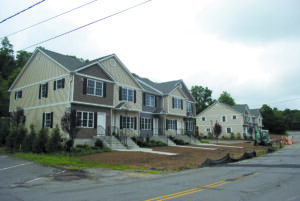
Affordable housing is being built on Old Route 22 in Armonk. Andrew Vitelli Photos.

By Andrew Vitelli

“It’s really mind-boggling, if you think about it,” New Castle Supervisor Rob Greenstein says. Sitting just a stone’s throw from the site of the controversial Chappaqua Station housing project, Greenstein is referring to criticism of the town coming from the U.S. Department of Housing and Urban Development and from a monitor appointed following a 2009 settlement between HUD and Westchester County. “I think they should be singing our praises and holding us up as an example of doing more than our share. And instead, we’re criticized.”

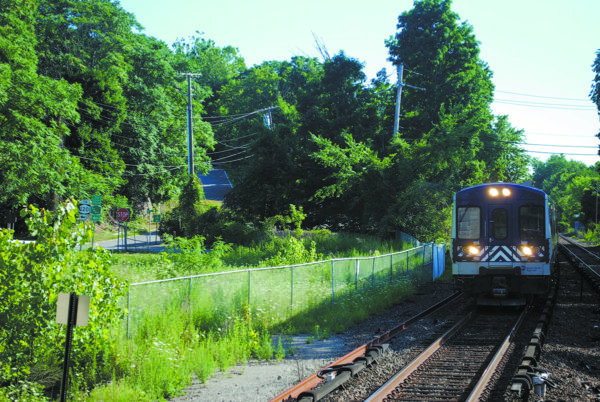
In purely numerical terms, New Castle has more than carried its weight; even without Chappaqua Station, which Greenstein opposes, more than 30 units are in the pipeline. But the fight over Chappaqua Station, built on Hunts Lane between the railroad tracks and a Saw Mill Parkway exit ramp, has dragged on for years and put the town in the middle of a bitter fight between HUD and county leadership.

On Old Route 22 in Armonk, meanwhile, a row of freshly-built multifamily homes has sprung up, construction equipment sitting outside. In July, North Castle was removed from a list of municipalities facing legal action over their zoning laws and the concentration of multi-family housing within the municipality. The town’s presence on the list, the town’s supervisor says, had more to do with the lack of infrastructure throughout much of the town–along with the flooding of Kensico village a century ago–than any discriminatory intent on the town’s part, and in the end the HUD-appointed housing monitor agreed. “I’ve found them to be very receptive to our communications,” Supervisor Michael Schiliro says.

These towns are just two of more than 30 towns and villages impacted by the settlement, but their stories give a closer look at how the settlement has played out in many of these communities.

The Settlement

The housing settlement, which has cast a shadow over Westchester politics for nearly a decade and brought the county to the center of a battle over federalism, government overreach, and allegations of modern-day segregation, was signed in August 2009 by then-County Executive Andrew Spano. In 2007, the Anti-Discrimination Center, a Manhattan based non-profit which fights housing discrimination, sued the county over accusations that the county had been collecting federal funds earmarked for low-income housing without meeting the requirements necessary to receive these funds. In February 2009, U.S. District Court Judge Denise Cote ruled that the county had failed to conduct an analysis of impediments to address claims of housing discrimination. Facing the possibility of liabilities of more than $150 million, Spano had no choice but to agree to the settlement, under which Westchester admitted no wrongdoing but agreed to commit $51.6 million to building 750 affordable housing units, mostly in municipalities, including New Castle and North Castle, with few black or Latino residents.

That November, Rob Astorino, a Republican and an opponent of the settlement, unseated Spano to become county executive. While Astorino vowed to comply with the settlement, the last six and a half years have been marked by recurring conflict between HUD and the county. There have been spats over which projects should be counted towards the settlement, over legislation banning landlords from rejecting people with government housing vouchers, and over the county’s effort to press towns and villages to adopt a model zoning ordinance.

A continuing source of strife has been the county’s obligation to conduct an analysis of impediments, including those based on race or resistance to affordable housing, to identify exclusionary zoning. The county has submitted eight analyses to HUD, finding no exclusionary zoning regulations. HUD has rejected every submission. This dispute has cost the county more than $20 million in grant money from HUD.

For both sides, though, the principles in play go beyond the sum of the projects and the dollars involved. Astorino has called HUD’s actions “Washington-driven social engineering,” a sentiment echoed by, among many others, the Wall Street Journal’s editorial board. On the other side have been allegations of thinly-veiled racism, with The New York Times editorial board accusing the county of “keeping Jim Crow’s spirit alive.”

The Challenge in Chappaqua

New Castle is not only one of the richest communities in the country, but home to both the Clintons and Governor Cuomo. Add to that the town’s role on the wrong side of a watershed 1977 zoning ruling, Berenson v. New Castle, and it’s understandable that Chappaqua would end up in the spotlight, Greenstein says.

“The truth is, it makes it a perfect little town to make an example of, and I think that’s part of the problem,” says the town supervisor. “Because of those three reasons, I think that there are some people biting at the bit to make an example of us, and we have definitely felt that pressure.”

New Castle, which adopted the model zoning ordinance in 2011, has one major affordable housing project that has sailed through with little opposition: a 28-unit affordable housing project called Chappaqua Crossing at the site of what was once the Reader’s Digest building on Roaring Brook Road. Conifer Realty purchased the Chappaqua Station site in September 2010. Conifer’s plans for the site (originally 36 units) were at the time backed by Barbara Gerrard, then the town’s supervisor, as well as the town board. One of the proposal’s early critics, as Greenstein now points out, was James Johnson, the HUD-appointed monitor overseeing Westchester’s compliance with the settlement, who in an April 2012 letter to the board suggested that the site was isolated and stigmatizing.

The monitor signed off, however, after the developer made changes to the site’s design to help integrate the project into the community aesthetically, created public space within the building, and addressed traffic concerns. One change was to downsize the complex from 36 to 28 units.

“Some would say he flip-flopped on the issue,” Greenstein says of the monitor, who recently resigned from the case. “I haven’t changed my opinion. I think that site is isolating and stigmatizing.” The town board granted Conifer a special permit in September 2013, contingent on Conifer obtaining the necessary variances and permits. By then, however, public opposition to the project had begun to take hold. In the 2013 town board elections, Greenstein ran on the Team New Castle ticket along with town board candidates Lisa Katz and Adam Brodsky. Opposition to Chappaqua Station was a significant factor in Team New Castle’s election to all three positions. With the supervisor and a majority of the town board opposed to the project at its current location, along with concerns voiced by Building Inspector Bill Maskiell, progress on the development has slowed in the last two and a half years.

The root of the resistance to Chappaqua Station–whether born from flaws in the project or a wider resistance to public housing–is much contended. In February 2014, Conifer filed a Housing Discrimination Complaint with HUD, stating that during public debate opponents of the project claimed that “the project would be a stigmatized ghetto, that the children who lived there would be ostracized by children who live in the Village, and that the project would be where the ‘blacks and Hispanics’ live.”

Holly Leicht, HUD’s regional administrator for New York and New Jersey, says it’s hard to answer with any certainty whether opposition is due to the project itself or reflects a fear of any affordable housing. “There are probably people on both ends of the spectrum,” Leicht explains. “There usually are in these situations, where there’s a controversial project.”

But Greenstein points out that the town’s other major affordable housing project under the settlement, Chappaqua Crossing, has received little pushback from the community.

“When you look at that building, you’re not going to say, ‘That’s affordable housing.’ You’re going to say, ‘That’s housing,’” Greenstein says, referring to Chappaqua Crossing. Turning his attention to Chappaqua Station, he remarks, “Now compare that to this project over here. That’s on a third of an acre, from lot line to lot line there’s not a blade of grass.”

“There’s no question that people are opposed to this particular location,” Greenstein adds. “I want to make it clear that people are not opposed to affordable housing.”

The battle over the project has also ensnared the county. In December of 2013, the county’s Board of Legislators voted to withhold funding for the project; a year later, the board approved funding, on the condition that the project must receive all the necessary variances. The monitor faulted the county for counting the units towards the settlement agreement (it needed financing in place for 450 units by the end of 2014) but also blamed the county for failing to push New Castle to end the impasse. This May, Judge Cote said the units could count towards the settlement but also said the county had breached its obligation by not weighing in on behalf of the developer against local opposition.

The proposed site of Chappaqua Station has drawn opposition from a wide segment of New Castle residents and officials.
The proposed site of Chappaqua Station has drawn opposition from a wide segment of
New Castle residents and officials.

Mike Kaplowitz, the chairman of the Board of Legislators, says the project has been problematic from the get-go.

“Pretty much, nobody is happy,” Kaplowitz says. “That project is so messy. I don’t meet many people in New Castle who are happy on either side of that issue.”

Leicht acknowledges that the town has some legitimate concerns over the project, but says HUD is worried that the town is dragging its feet.

“I think that a legitimate back and forth, and focusing on the health and safety issues, is fine. The sense was that this is being protracted for a very long time,” she says. “I think part of the frustration is that things keep coming up sequentially rather than part of one process that is condensed.”

North Castle Supervisor Michael Schiliro explains restrictions imposed by his town’s infrastructure.

A Solution in North Castle

Around a century ago, the Village of Kensico was flooded due to the creation of the Kensico dam, leading many of the village’s residents to move south to what is now the Hamlet of North White Plains. Supervisor Schiliro believes this piece of history along with the hamlet’s proximity to White Plains has led to a higher population density, and a concentration of the town’s minority population, in North White Plains that exists to this day.

Today, one zoning district in downtown North White Plains has three-and-a-half times the rate of minority households as the town as a whole. Additionally, large parts of the town are zoned for single-family housing, with these districts primarily white.

For the housing monitor, this itself amounted to prima facie (legal language meaning presumed until proven otherwise) evidence of clustering under what’s known as the Huntington test (named for the 1988 watershed case Town of Huntington v. NAACP).

“Do I disagree with their findings? No. They’re mathematical. We technically fail the Huntington test,” Schiliro admits. “But part of it is something that happened 100 something years ago, which developed a denser zoning or development here.”

The town’s zoning is based more on the limits of its infrastructure than anything else. In the rural northern parts of the city, sewer and water is sparse outside downtown Armonk. This prohibits the kind of housing density seen in North White Plains. Schiliro, a Democrat elected in 2013, met with officials from the monitor’s office his first year in office, giving them a tour of the town to show them the restrictions preventing multi-family housing throughout most of North Castle.

In May of this year, however, the housing monitor released a report placing North Castle on a list of seven municipalities whose zoning could result in liability under the Huntington test or the related Berenson test (named after the 1977 ruling involving New Castle). “In the absence of remediation,” the report stated, “the Department of Justice is encouraged to give serious consideration to bringing legal action against one or more of these municipalities.”

“I was disappointed because genuinely I felt that we had made a lot of progress,” Schiliro says, looking back at the May report. “So our reaction was, let’s sit down with the monitor and the monitor’s office again. It wasn’t any animosity, any anger. It was just, let’s communicate.”

Schiliro again met with officials from the monitor’s office in June following the report’s release and pressed the town’s case. A month later, the monitor withdrew his recommendation of legal action, noting progress made by the town and also acknowledging environmental and infrastructural constraints.

While the issue was ultimately resolved, the monitor’s decision to place North Castle on such a list in the first place was viewed by some of HUD’s critics, particularly the Astorino administration, as an example of “breathtaking” government overreach. A spokesman for Astorino said the county executive was puzzled by the monitor’s initial decision, as was Westchester Legislator Margaret Cunzio, who represents North Castle.

“I think it was unfair because since day one they had been compliant and they had been working with both the monitor and the HUD office,” says Cunzio, a Conservative. “The town has done nothing since day one but try to fulfill their requirements.”

Schiliro carefully avoids any criticism of HUD or the monitor.

“It must be a challenge for them,” he says. “It’s a lot of work to really understand all the towns in the county, and each town is very different.”

Schiliro also notes that the town has made progress since the monitor’s 2014 visit. North Castle adopted the model zoning ordinance in 2014, and 25 affordable housing units are in development throughout Armonk.

“The town has always had affordable type housing for decades,” Schiliro notes. “We listened to what the latest communications were from the monitor and we made some adjustments to our code like creating the model ordinance so the future units would conform with what the parameters of the lawsuit were.”

Light at the End of the Tunnel?

At the end of the year, the county is obligated to have financing in place for the 750 units required under the settlement. But the county’s need for affordable housing has no end date.

“If we get to the end of the settlement and 750 units have been built but everyone is saying, ‘I never want to have to deal with the federal government, or the federal government’s money, or affordable housing, again,’” Leicht explained to legislators at a June meeting, “then we have not really met our goal here.”

Speaking to the Inside Press, Leicht circles back to this idea when asked whether New Castle, with 60 affordable housing units in the works including Chappaqua Station, has in fact done more than its share.

“These projects are happening, and I am optimistic that the 750 units will be met, but I don’t really think anybody would say that’s the entire affordable housing need in the county,” Leicht comments. “I haven’t had anybody, no matter where they stand on this settlement, not acknowledge that Westchester really has affordable housing needs.”

When people move into that housing [in Chappaqua], we will do everything in our power to make them feel welcome and part of the community.” –Robert Greenstein

Even some of Chappaqua Station’s opponents now seem resigned to the likelihood that it will be built.

“I’d like this project not to go forward because it’s a terrible site,” Kaplowitz says. “But unfortunately the wheels are in motion and there’s nothing we can do to stop it.”

Greenstein notes that there’s no guarantee the project will meet the conditions required for the building permit, but acknowledges the futility of risking litigation to try to stop it from moving forward.

With the housing monitor absolving North Castle of its Huntington test failure, this reporter asks the town’s supervisor, is the town in the clear regarding settlement compliance? “I would think we should be,” Schiliro replies diplomatically. “We will just continue on this path,” he continues. “As new developments come about, the model ordinance is in place; we’ll continue to further affordable housing like we’ve been doing for decades.”

At year’s end, the county is set to have the 750 units in the works, theoretically winding down its obligations under the settlement. But if the past is a guide, nothing is that simple.

In his letter of resignation Johnson, the housing monitor, wrote that his successor should be prepared to deal with the case for some time to come.

Andrew Vitelli, a Westchester native, is the editor of Inside Armonk Magazine.

Filed Under: Armonk Cover Stories Tagged With: affordable housing, Affordable Housing in Armonk, Armonk, Board of Legislators, Chappaqua Crossing, Housing, HUD, Inside Press, North Castle, theinsidepress.com, Town of New Castle, Westchester affordable housing

  • « Go to Previous Page
  • Page 1
  • Interim pages omitted …
  • Page 23
  • Page 24
  • Page 25
  • Page 26
  • Page 27
  • Interim pages omitted …
  • Page 41
  • Go to Next Page »

Primary Sidebar

Please Visit

White Plains Hospital
William Raveis – Armonk
William Raveis – Chappaqua
Northwell Hospital
Houlihan Lawrence – Chappaqua
Houlihan Lawrence – Armonk
Houlihan Lawrence – Briarcliff
NYOMIS – Dr. Andrew Horowitz
Westchester Table Tennis Center
Spavia
Compass: Miller Goldenberg Harris Team
Lipari & Mangiameli Dentistry
Raveis: Lisa Koh and Allison Coviello
Bristal Assisted Living
Maid Brigade
Kevin Roberts Painting & Design
Zwilling J. A. Henckels
Meagher & Meagher Attorneys at Law
Compass: Aurora Banaszek
Dr. Briones Medical Weight Loss Center
Fleetwood Pastry Shop
Whitaker’s Garage Door Store
Elliman: Pam Akin
Beecher Flooks Funeral Home
Breathe Pilates and Yoga
Gleason Plumbing and Heating
Temple Beth El
King Street Creatives

Follow our Social Media

The Inside Press

Our Latest Issues

For a full reading of our current edition, or to obtain a copy or subscription, please contact us.

Inside Pleasantville and Briarcliff Manor Inside Chappaqua and Millwood Inside Armonk

Join Our Mailing List


Search Inside Press

Links

  • Advertise
  • Contact Us
  • Digital Subscription
  • Print Subscription

Publisher’s Note Regarding Our Valued Sponsors

Inside Press is not responsible for and does not necessarily endorse or not endorse any advertisers, products or resources referenced in either sponsor-driven stories or in advertisements appearing in this publication. The Inside Press shall not be liable to any party as a result of any information, services or resources made available through this publication.The Inside Press is published in good faith and cannot be held responsible for any inaccuracies in advertising or sponsor driven stories that appear in this publication. The views of advertisers and contributors are not necessarily those of the publisher’s.

Opinions and information presented in all Inside Press articles, such as in the arena of health and medicine, strictly reflect the experiences, expertise and/or views of those interviewed, and are not necessarily recommended or endorsed by the Inside Press. Please consult your own doctor for diagnosis and/or treatment.

Footer

Support The Inside Press

Advertising

Print Subscription

Digital Subscription

Categories

Archives

Subscribe

Did you know you can subscribe anytime to our print editions?

Voluntary subscriptions are most welcome, if you've moved outside the area, or a subscription is a great present idea for an elderly parent, for a neighbor who is moving or for your graduating high school student or any college student who may enjoy keeping up with hometown stories.

Subscribe Today

Copyright © 2026 The Inside Press, Inc. · Log in