• Skip to primary navigation
  • Skip to main content
  • Skip to primary sidebar
  • Skip to footer

The Inside Press

Magazines serving the communities of Northern Westchester

  • Home
  • Cover Stories
  • Features
    • Portraits and Profiles
  • Advertorials
    • Lifestyles with our Sponsors
    • Sponsor News!
  • Wellness
  • Happenings
  • Advertise
    • Advertise in One or All of our Magazines–And/Or Subscribe
    • Advertising Payment Form
  • Contact Us
  • Search

exercise

Poppy’s Top Tips On Preserving Youth

April 10, 2019 by Anna Bennett

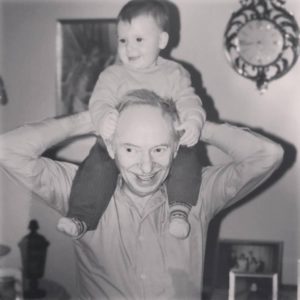
Editor’s Note: This eulogy was delivered on April 9, 2019, by Anna Bennett at the funeral of her grandfather, Jacob Breitstein, affectionately known as Poppy by all.

Hi Everyone,

Thank you all for being here. For those of you who don’t know me, my name is Anna and I am Jacob’s granddaughter. Over the years, I’ve written a few pieces about him, most of them painful, about memories he has shared with me about the holocaust. However, when I think of my Poppy, my first thought is not of the sufferings he endured – I think of a very special man whose strong energy was infectious to all, and that kept me laughing for all of my life. For this reason, I wanted to read an essay I wrote just under ten years ago (I was 17 and he was 87) which I feel reflects his true spirit. I love you Poppy, and I will miss and remember you fondly forever.

Poppy’s Top Tips on Preserving Youth

Everyone wishes they were a little younger. Of course, there is no method to shed twenty years, but there are certain ways to feel younger. Most people aspire to feel a little younger, like maybe…. lose a few pounds? Or decrease their cholesterol…? But my Grandpa, whom we all affectionately call Poppy, is the most youthful 87-year-old anyone will ever meet, and let me tell you, he wants everyone to know it. Fortunately for all of us, he has agreed to share his top tips that have helped him stay young all these years:

1) Never buy blush. There is an improved, healthier, longer-lasting alternative: Slap your cheeks every morning in the shower for precisely one minute. This is totally free, and totally not tested on animals (other than you). Do this and you’ll be set with a natural, rosy glow for the entire day.

2) Eat lots of fruits and vegeTABLES (as Poppy would pronounce them). Not only do fruits and vegetables help us keep our girlish figures, but they also lower the risk of a number of serious illnesses and health problems. It’s common knowledge that on the food pyramid, the recommended number of servings of fruits and vegetables is about five per day… But since they are so good for us, shouldn’t we bump it up to fifteen? Poppy thinks so.

3) Wake up at 5am and do exercise videos. If there’s one way to stay young, it’s to wake up bright and early and get a great boost of energy for the day ahead. Lay out your mat, and whip out your jump rope, and get set for at least an hour’s worth of exercise videos. Poppy would recommend “The Complete Workout & Stress Reduction Program” from the Jane Fonda 1982 collection – but don’t worry, Jane is timeless.

4) Do the MIRF. What is MIRF, you ask? It stands for “Multiple Infestations Removed Forever,” Poppy’s invention to live until at least the age of 115. The idea is that one must clench all the muscles in your body at the same time for at least fifteen seconds per day and then release. This will speed up the blood flow, and remove all the infestations that could have killed you. He has claimed rights to MIRF, and even submitted it to be a word in Webster’s dictionary. It was declined by the editor, perhaps due to jealously of not having invented MIRF himself.

5) Do NOT take elevators. Another chance to flaunt your energy at old age. Whenever you have a choice between taking an elevator or the stairs, opt for the stairs. You can even make a game out of this. Say your apartment is on the 9th floor of a building, and your family insists on taking the elevator. You, on the other hand, run down the nine flights as fast as you can, and just as the elevator door opens … casually appear outside with no signs of tiredness.

6) Never go out to eat. It is expensive, a hassle, and you probably make better food than they do. And most of all, they will poison you. Poppy knows this is true because he has felt sick many times after going out to eat. Thank goodness he had MIRF to save him, or else he might have died. Not to mention, restaurants don’t serve nearly enough fruits and vegeTABLES. Note: If you are forced to eat out, stick to the bread, as it is the only food at restaurants without poison.

7) Lastly, dance whenever you have the chance. When you’re 87 years old like Poppy, you must verify your ability to live until 115. So, when given the chance to dance, go crazy! Jump all over the place and say “I feel like I’m thirty!” (repeat this many times) … Doing this will make people want to imitate you and therefore MIRF. And when your friends and family are tired of dancing, just continue dancing on and on…

Conclude

Poppy was always the last one on the dance floor – not only to flaunt his good health, but just because he loved to dance. He also loved to sing – and just like his dancing, he would sing whenever he felt like it.

One of his favorite songs in recent years was “Que Sera, Sera?” by Doris Day.

This translates to “What will be?” … The lyrics continue: “Whatever will be, will be. The future is not ours to see.”

I think Poppy sang this song in our company to teach us … to live in the moment and be true to ourselves … because whatever will be, will be.

I hope to live by these words and celebrate your life when I hear them. I love you Poppy.
Filed Under: Inside Thoughts Tagged With: exercise, Health Tips, memorial, MIRF, Poppy

Corelab Armonk Brings the Megaformer to Your Backyard

May 25, 2017 by Inside Press

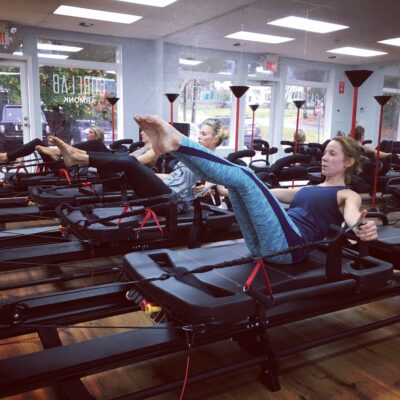
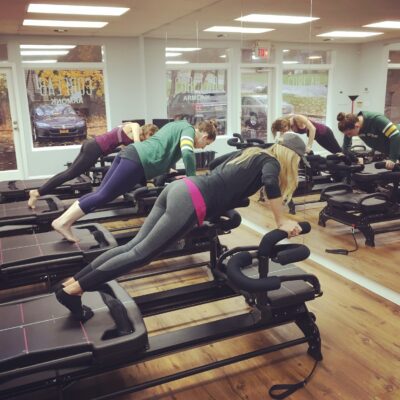
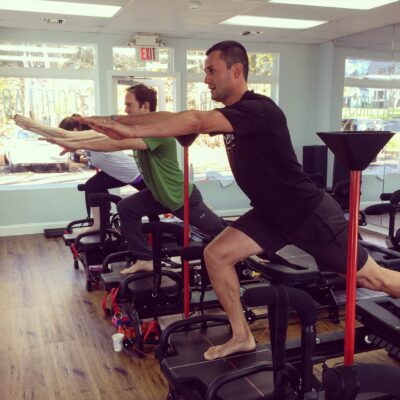
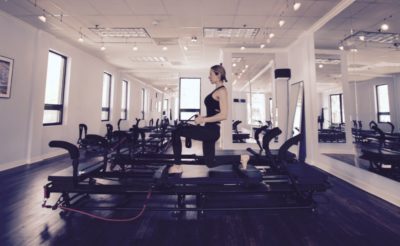
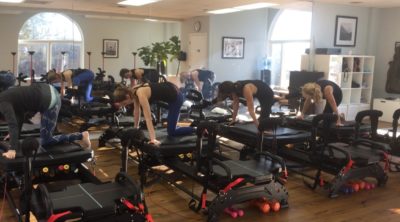
This summer, let Corelab Armonk be your workout of choice. Opened in late fall, Corelab Armonk has steadily been gaining a following with its Megaformer workout.  The studio offers a boutique-like setting with just seven of the Megaformer M3S machines to ensure that you get the most out of your workout.

Since its inception, the Megaformer has been creating ripples in the fitness world, developing a cult-like following not just locally, but internationally, with celebrities regularly turning up for their fix. In just 50 minutes, the Megaformer gives you a full body, high intensity yet low impact workout, that will leave you sweating and shaking while minimizing wear and tear on your joints.

The Megaformer was created by fitness guru Sebastien Lagree back in 2005, to combine the benefits of Pilates with the strength elements of bodybuilding.  According to Lagree, “Physical fitness is more than being able to run a long distance or lift heavy weights at the gym; or how long you worked out or at what intensity. While these are important measures of fitness, they only address single areas. Physical fitness is made up of five basic elements: cardio, strength, endurance, body composition, and flexibility.”

How does the Megaformer get all these elements into just 50 minutes?  The workout combines the spring-loaded resistance of the Megaformer with slow and controlled movements allowing precision in form as well as minimizing impact on joints, while quickly and effectively bringing your muscles to fatigue and boosting your heartrate. The use of slow and controlled movements is key as it taps into your slow twitch muscles fibers, increasing endurance and setting you up for a post-exercise fat burn, while creating a lean and toned physique.


It is these elements that drew Kimberly Holzmann-Krolick, founder of Corelab Armonk, to the workout back in 2008 while living in London. After returning to the States and training with Lagree in Los Angeles, Holzmann-Krolick opened her first studio, Corelab, in Katonah in 2013. Seeing firsthand the results of this workout on her own physique and then with her clients, she wanted to continue to grow the Corelab community in Northern Westchester.  According to Holzmann-Krolick, “Though the Megaformer is the hot workout these days, it has been around for well over a decade, and has only improved with time. What appeals to me most about this workout, is the long-term implications for your health and the inherent intelligence of the workout in building strength and endurance alongside balance and flexibility, but not compromising safety and limiting the chance of injury. It has absolutely amazing cross-training benefits for whatever sport you do, with our skiers and running clients swearing by it and is as good for men as it is women. It is the smartest full body workout I have encountered and one that I intend to do in some iteration well into my eighties.”


Corelab Armonk has morning, evening and weekend classes as well as offering private sessions.  The studio offers a first class free to all new clients. This summer, Corelab Armonk will offer discounts to students and will be running various events throughout the summer.  To sign up for a class, or get additional information checkout the website at www.corelabny.com. 


Corelab Armonk, 475 Main Street, Armonk, NY. Telephone: 914-401-4235. Website: www.corelabny.com Email: info@corelabny.com

Filed Under: Lifestyles with our Sponsors Tagged With: Armonk, core strength, Corelab, exercise, fitness, Inside Armonk, InsidePress, Megaformer

The Truth about Crunches Plus Safer Alternatives

April 21, 2016 by The Inside Press

By Matt Marucci 

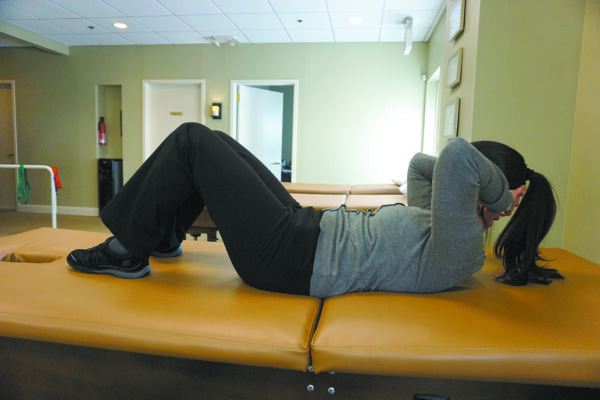
A crunch might be the most common abdominal exercise, but it fails to accomplish the two most common goals of abdominal work: protecting the lower back from injury and toning your mid-section. If you can perform one single crunch, you have a six pack. Whether you can see it, is a matter of body fat. Decreasing body fat is a function of cardiovascular exercise and sound nutrition, neither of which is addressed by crunches. Crunches may enhance the appearance of your rectus abdominus, but this comes with some risk.

Crunch
Crunch

To understand the risk, let’s talk about your core–which is designed to stabilize the spine. Comprised of the transversus abdominus and deep extensors, these muscles act to minimize movement of your spine. Crunches and pelvic tilts require flexion of the spine (think of slouching in front of the computer): the antithesis of stability! Repeated flexion of your spine places stress on your vertebral discs and ligaments. Over time, such cumulative stress can increase your risk for lower back injuries.

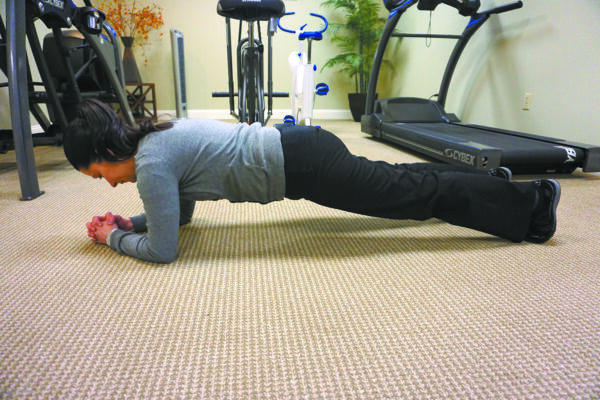
Plank
Plank

Exercises like planks and side planks properly emphasize stability of the spine. You can even work your core by keeping your stomach firm while performing other exercises, such as pushups or rows. The difference is that your ability to keep your stomach tight should be the rate limiting factor for these exercises. For example, if you can perform 15 pushups with good form, you are doing a great job of strengthening your pecs and triceps. However, if you want to focus more on your core, you would perform only as many pushups as you can with your stomach tight. If you feel your stomach fatigue at seven reps, the exercise is done because you have fatigued your core. Bottom line: There are worse things you can do to your spine than crunches, but if your goal is to work your core or decrease your risk of lower back problems, you can do far better than a crunch.

Matthew Marucci, PT, MSPT, OCS, CSCS, is Chair, Hudson Valley District NYPTA, and owner of New Castle
Physical Therapy & Personal Training. www.newcastlept.net


Filed Under: Sponsor News! Tagged With: abdominal exercise, crunch, crunches, exercise, Inside Press, theinsidepress.com, tips

Avoiding Injuries While Getting Back into Shape

April 21, 2016 by The Inside Press

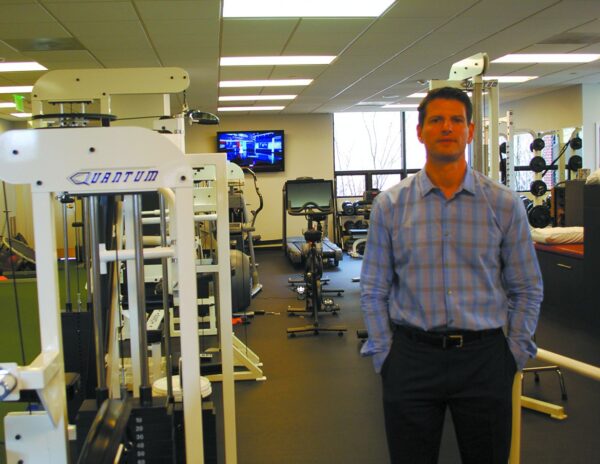
Armonk Physical Therapy & Sports Training Clinical Director Robert Fay

Article and Photos By Andrew Vitelli

You’ve spent the summer sitting on your couch, your treadmill collecting dust and the golf course or tennis courts frosted over. Now, with temperatures finally back in the 70s, you’re eager to spend every free moment at the driving range or on the track, enjoying the sunshine while putting your underused muscles and joints through the wringer. It’s an experience many of us can relate to and, according to Armonk Physical Therapy & Sports Training Director Robert Fay, a leading cause of injuries during this time of the year.

“If you do too much too quickly it leads to overuse injuries like tendonitis, stress fractures and that sort of thing,” Fay explains. “A lot of these injuries can be avoided if people go a little slower as they start up. But I know that it’s hard sometimes.”

Fay, who co-founded Armonk PTST in 2001, sees an increase in these kinds of injuries around this time of year. A general rule of thumb for aerobic workouts, Fay says, is to increase your workout by no more than 15 percent from your previous efforts. If you’ve only been eking out a mile at a time on the treadmill over winter, don’t try running a half marathon the first time you make it to the track.

“As the weather starts to get nice, we’ll get somebody this weekend that’ll go out and play golf Saturday and Sunday, hadn’t picked up a club in several months, and go and play 18 holes,” Fay says. Instead, he suggests, “Maybe go and just play nine holes the first couple of times.”

A large part of Fay’s practice consists of treating patients who have sustained injuries, whether minor, like Tennis Elbow or tendinitis, or serious, such as an ACL or Achilles tendon tear. Fay and his staff also, however, will meet with healthy athletes to evaluate where they may be particularly prone to future injuries.

“If you have weakness in one joint, a lot of times that’s not the joint that you injure,” Fay explains. “You might have a shoulder weakness, and then you overuse the next joint.”

Or, for example, having strong quads but weak hamstrings could make you more likely to tear your ACL (anterior cruciate ligament). Of course, getting healthy people into a physical therapist’s office to prevent injuries is a lot tougher than it is to get them in once they’ve hurt themselves. Mostly, Fay says, those who come in for preventive treatment are high school athletes whose parents are concerned about potential injuries.

“But I think it should also be done for that weekend warrior, 40-year-old or 50-year-old type person,” Fay notes.

After evaluating the athletes, Fay’s team can advise them of what exercises or stretches they can do to address their deficiencies and lower the risk of injury. And if saving oneself from a serious injury isn’t sufficient motivation, Fay points out that the weaknesses that these injury prevention exercises address can also be hurting their performance. “So that’s the key thing that I think it’s very important to get across to people.”

Fay, now the sole owner, co-founded Armonk PTST in 2001 after previously working in Pleasantville and Greenwich, Conn. His aim is to give clients true one-on-one therapy, meaning their trainers are only working with one person for the full hour.

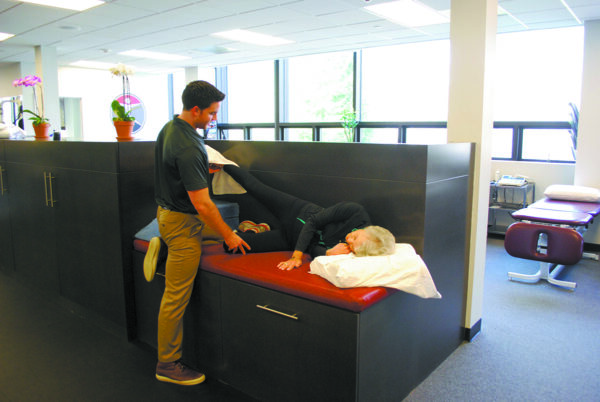
Physical therapist John Connolly works with client Gwen Grotta at Armonk Physical erapy & Sports Training
Physical therapist John Connolly works with client Gwen Grotta at Armonk Physical Therapy & Sports Training

Armonk PTST also offers services ranging from Pilates to occupational hand therapy (a full list can be found at their website, armonkptst.com). Armonk PTST’s trainers, Fay explains, have a greater understanding of injuries than a typical trainer, giving them insight when working with clients who have suffered injuries in the past.

Not all pain and soreness is injury related. Fay acknowledges that, as anyone who’s gotten back into working out after hiatus can attest, a moderate amount of soreness the next day or two can be expected. If, however, you feel pain during your workout rather than the day after, that can be a sign of an injury. Another red flag, Fay says, is if the pain is in the bone or tendon rather than the muscle.

While there’s no fool-proof way to avoid all injuries, taking precautions can make them a lot less likely. The two most important things to keep in mind, Fay concludes, are not overexerting yourself early on and addressing weaknesses and imbalances before you reach mid-season form. Otherwise, you may spend the bulk of the outdoor season rehabbing indoors.

For more information, visit http://www.armonkptst.com/. 

Andrew Vitelli, a lifelong Westchester resident, is the Guest Editor of Inside Armonk Magazine.

Filed Under: Armonk Cover Stories Tagged With: advice, Armonk, exercise, injury prevention, Inside Press, Physical Therapy, theinsidepress.com, training

  • « Go to Previous Page
  • Page 1
  • Page 2

Primary Sidebar

Please Visit

White Plains Hospital
William Raveis – Armonk
William Raveis – Chappaqua
Northwell Hospital
Houlihan Lawrence – Chappaqua
Houlihan Lawrence – Armonk
Houlihan Lawrence – Briarcliff
NYOMIS – Dr. Andrew Horowitz
Westchester Table Tennis Center
Spavia
Compass: Miller Goldenberg Harris Team
Lipari & Mangiameli Dentistry
Raveis: Lisa Koh and Allison Coviello
Bristal Assisted Living
Maid Brigade
Kevin Roberts Painting & Design
Zwilling J. A. Henckels
Meagher & Meagher Attorneys at Law
Compass: Aurora Banaszek
Dr. Briones Medical Weight Loss Center
CPW Vein & Aesthetic Center
Houlihan: Kile Boga-Ibric
Play Nice Together
Fleetwood Pastry Shop
New Castle Physical Therapy
Temple Beth El
Saltbox Sash
Carolyn Simpson (Doublevision Photographers)

Follow our Social Media

The Inside Press

Our Latest Issues

For a full reading of our current edition, or to obtain a copy or subscription, please contact us.

Inside Pleasantville and Briarcliff Manor Inside Chappaqua and Millwood Inside Armonk

Join Our Mailing List


Search Inside Press

Links

  • Advertise
  • Contact Us
  • Digital Subscription
  • Print Subscription

Publisher’s Note Regarding Our Valued Sponsors

Inside Press is not responsible for and does not necessarily endorse or not endorse any advertisers, products or resources referenced in either sponsor-driven stories or in advertisements appearing in this publication. The Inside Press shall not be liable to any party as a result of any information, services or resources made available through this publication.The Inside Press is published in good faith and cannot be held responsible for any inaccuracies in advertising or sponsor driven stories that appear in this publication. The views of advertisers and contributors are not necessarily those of the publisher’s.

Opinions and information presented in all Inside Press articles, such as in the arena of health and medicine, strictly reflect the experiences, expertise and/or views of those interviewed, and are not necessarily recommended or endorsed by the Inside Press. Please consult your own doctor for diagnosis and/or treatment.

Footer

Support The Inside Press

Advertising

Print Subscription

Digital Subscription

Categories

Archives

Subscribe

Did you know you can subscribe anytime to our print editions?

Voluntary subscriptions are most welcome, if you've moved outside the area, or a subscription is a great present idea for an elderly parent, for a neighbor who is moving or for your graduating high school student or any college student who may enjoy keeping up with hometown stories.

Subscribe Today

Copyright © 2026 The Inside Press, Inc. · Log in