Saving brainpower in stroke patients demands medical insight and quick thinking. At White Plains Hospital, the standard of care includes the most advanced technology and services.

Each year, approximately 795,000 people in the U.S. suffer strokes – 17% of which are fatal. With one of the most comprehensive stroke programs in the region, providing immediate and lifesaving stroke care is an area where White Plains Hospital and its newly appointed Director of Stroke Services, Dr. Paul Lleva, is proud to excel.
Board-certified in neurology, vascular neurology, neurosonology (or brain imaging), and internal medicine, Dr. Lleva currently sees patients at White Plains Hospital Physician Associates in Somers and is working to further enhance the Hospital’s robust stroke care program. “White Plains Hospital has been building a world-class stroke program, bringing in top specialists and the latest technology and treatments,” Dr. Lleva says. “As we look to the future, our program aims to be the top advanced stroke care provider in our region and beyond.”
Recent notable advances in stroke care at the Hospital include:
Quicker Clot Busters. “For every minute elapsed after a stroke, a patient may lose 1.9 million neurons,” or nerve cells in the brain, says Dr. Lleva. The team at White Plains Hospital relies on the newest medicine, called Tenecteplase, to rapidly dissolve the clots obstructing blood flow. “This drug works very specifically against the clot, destroying it more quickly and more effectively than previous medications,” he says.
The Gold Standard Of Care. The highest-quality acute care currently available for strokes, a procedure called a mechanical thrombectomy, is currently being performed at White Plains Hospital. During this minimally invasive procedure, specially designed instruments are inserted into a large blood vessel in the groin through a small port and threaded through thin catheters to reach – and remove – blood clots in the brain within 24 hours from symptom onset.
To assist in these procedures, the Stroke Team at the Hospital also uses advanced imaging, called perfusion imaging, to differentiate salvageable brain tissue from irreversibly damaged brain tissue to pinpoint cases where mechanical thrombectomies will be most effective.
Artificial Intelligence (AI)-Powered Software. This modern technology guides radiologists and neurologists toward the correct intervention within seconds. “Our team uses software that will detect the amount and location of salvageable brain tissue, as well as damaged tissue,” Dr. Lleva says. “As a tool for our care team, it provides a more uniform and consistent diagnosis in rapid time.”
24/7 Emergency Consultations. At White Plains Hospital, a neurologist is always available for an emergency consultation at the bedside, either in-person or remotely. “With telestroke services, a vascular neurologist can expeditiously see the patients within minutes of arrival, allowing us to quickly diagnose patients and get them appropriate care immediately,” Dr. Lleva says.
World-Class Team. The increasing complexity of stroke cases seen at White Plains Hospital has driven the recruitment of experts in neurocritical care and neuroendovascular surgery with decades of experience in treating and managing advanced stroke cases.
Smoother Recovery. After stroke, some patients will develop arm and leg spasticity, language difficulty, pain, inability to walk, and limited ability to care for themselves. These complications are addressed in our outpatient stroke center in collaboration with Burke Rehabilitation to improve patients’ mobility, lessen discomfort, and restore quality of life.
To make an appointment with Dr. Lleva at 325 Route 100, Somers, NY, call 914-849-5300.
This article originally appeared in Health Matters, a White Plains Hospital publication.



 Hear the phrase “rotator cuff repair” and you may think of professional athletes who have gone through the procedure. But anyone can be at risk for the condition, according to Dr. Gregg Cavaliere, a board-certified Orthopedic Surgeon and Sports Medicine physician at White Plains Hospital Physician Associates, practicing in Hawthorne and Yonkers.

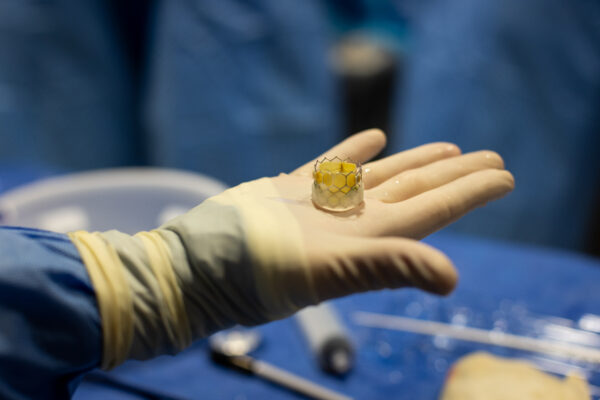
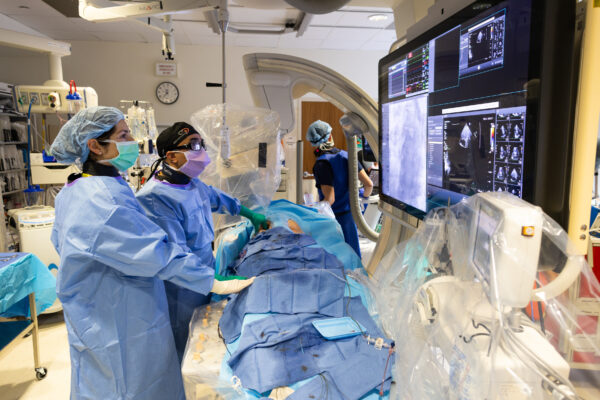
 White Plains Hospital is one of just two healthcare facilities in Westchester offering this life-saving procedure to patients in Westchester County. Every patient is fully evaluated by a cardiac surgeon, interventional cardiologist, cardiologist and radiologist to determine the ideal course of treatment, whether that is a TAVR procedure or open-heart surgery. Also, with advanced imaging technology on-site, including high-resolution CT scanning, fusion imaging and cardiac MRI, patients can undergo convenient, same-day pre-operative testing at the Center for Advanced Medicine & Surgery (CAMS) in White Plains prior to the procedure.
 It’s important to maintain healthy habits, such as a balanced diet and regular exercise, throughout the year. Working out – especially outside – wards off winter weight gain and gives you energy, and there are many enjoyable outdoor activities to choose from, such as ice skating, cross-country skiing or even walking. Just 10 minutes of outdoor aerobic exercise boosts the endorphins, dopamine, and serotonin which improves mood and decreases the risk of seasonal affective disorder.
 As we spend more time indoors, the spread of viruses such as the flu, COVID-19 and RSV tends to increase. Consult with your physician about which vaccinations are right for you: a new RSV vaccine is now available for select groups. There are plenty of additional protective measures you can take to boost your immunity, says Dr. Michael Finkelstein, Internal Medicine physician at Scarsdale Medical Group. Wash your hands regularly, avoid smoking, get plenty of sleep, and eat a well-balanced, nutritious diet. Vitamin C, found in most fruits and vegetables, helps heal wounds and repair and maintain healthy bones, teeth, skin and cartilage. Zinc can help control infections by slowing down the immune response and preventing runaway inflammation. Garlic has antibiotic properties that are effective in fighting a range of bacteria, fungi and viruses. However, anyone with a persistent cough, pain or other abnormal symptom should see their physician as soon as possible.