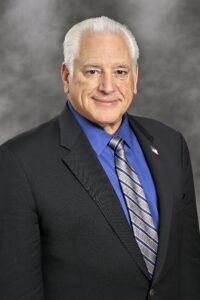
 Hear the phrase “rotator cuff repair” and you may think of professional athletes who have gone through the procedure. But anyone can be at risk for the condition, according to Dr. Gregg Cavaliere, a board-certified Orthopedic Surgeon and Sports Medicine physician at White Plains Hospital Physician Associates, practicing in Hawthorne and Yonkers.
“Anyone whose work involves repetitive overhand activities, like athletes in certain sports, carpenters, and electricians” can be particularly susceptible to a rotator cuff tear, he says. Even Today weatherman Al Roker underwent a rotator cuff repair on his left shoulder in 2014.
The main cause of a rotator cuff tear is injury, but in Roker’s case the trouble was caused by advancing osteoarthritis; as with many body parts, erosion can take its toll over time. In fact, rotator cuff tears are most common in people older than 60.
The rotator cuff is a group of four muscles and four tendons that hold the shoulder joint in place, allowing you to move your arm and shoulder. The “tear” in question is usually one of the tendons. Symptoms can include recurring pain at that site – sometimes so severe that sleep is difficult; a limited capacity for moving the affected arm; “cracking” sounds when moving the arm; and muscle weakness.

Such symptoms do not always set off alarm bells for the person experiencing them, however. “There will always be people who just take some more Advil and just hope the pain goes away,” says Dr. Cavaliere’s WPHPA colleague Dr. Anthony Maddalo, also a board-certified orthopedic surgeon. “Sometimes they live with the pain for years.”
The two surgeons have worked together for about 30 years, assisting each other with major procedures; they estimate they have done “thousands” of rotator cuff repair surgeries during that time, to the point where “we’re like a right hand and left hand working together,” Dr. Maddalo says. “That helps us do the procedures most efficiently and expeditiously.” Typically that means between 60 and 75 minutes for Drs. Maddalo and Cavaliere.
The majority of the procedures are shoulder arthroscopies, minimally invasive operations that involve inserting a small camera, or arthroscope, into the shoulder joint. The resulting images are displayed on a video monitor and are used to guide the miniature surgical instruments being used. Because of this, incisions are relatively small, certainly in comparison to open rotator cuff repairs, which involve incisions that are typically several inches long – more invasive and time-consuming, and usually requiring a longer recovery time.
There are two ways of conducting the surgery: the patient either lies down on their “good” side or is in a seated position. “We like the seated option,” says Dr. Maddalo, “because that allows us more easily to address any other issues we may discover when we go in.”
The surgeons recommend their patients, now with stitches and wearing a sling, avoid physical activity involving the affected shoulder for two weeks, followed by “passive motion” therapy for another two weeks; that involves a therapist or an assistant at home putting the arm through a comfortable range of motion while the patient is lying down.
“One of the biggest sticking points is educating patients on what ‘passive motion’ is,” Dr. Maddalo says. “They’ll come into the office for a follow-up and use both arms to push themselves out of a chair – exactly what they should not be doing, but it’s habitual and they don’t think about it. They also need to be careful about starting to drive again. If the surgery was on their right shoulder, they’ll need to use their left hand to put the car in gear.”
At the six-week mark, the sling and passive motion therapy are usually discontinued in favor of active assisted range of motion exercises, such as the patient lifting their arms above their head without help from a therapist in order to stretch the muscles used during a routine motion. Strengthening exercises then begin 10-12 weeks after the procedure; all told, Dr. Cavaliere says, full recovery usually takes four to six months, depending on the severity of the tear.
The key to all of this, the physicians say, is to not ignore the pain. “Everyone is different,” Dr. Maddalo says, “and everyone has a different tolerance level of pain. A sudden injury is one thing, but if they’ve been having chronic pain in their shoulder for a long time, they really do need to see a specialist. There’s no reason to keep experiencing that pain when there are many options available.”
Dr. Gregg Cavaliere and Dr. Anthony Maddalo are orthopedic surgeons at White Plains Hospital Physician Associates in Hawthorne and Yonkers. To make an appointment, call 914-631-7777 (Hawthorne) or 914-375-7777 (Yonkers).
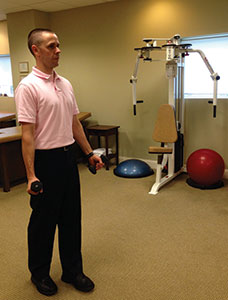 The rotator cuff is a group of four muscles whose primary function is to stabilize the shoulder. Given the amount of mobility our shoulders afford us (painting a ceiling, scratching our back) stabilization is no small task. The shoulder’s stability also depends on the strength of muscles attached to our shoulder blades. For more literature on avoiding cuff injuries and videos of the exercises listed below, please visit New Castle Physical Therapy’s Facebook page.