• Skip to primary navigation
  • Skip to main content
  • Skip to primary sidebar
  • Skip to footer

The Inside Press

Magazines serving the communities of Northern Westchester

  • Home
  • Cover Stories
  • Features
    • Portraits and Profiles
  • Advertorials
    • Lifestyles with our Sponsors
    • Sponsor News!
  • Wellness
  • Happenings
  • Advertise
    • Advertise in One or All of our Magazines–And/Or Subscribe
    • Advertising Payment Form
  • Contact Us
  • Search

Andrew Vitelli

Briarcliff’s Stopera Wins Senior National Curling Championship

November 2, 2024 by Andrew Vitelli

In recent years, Briarcliff’s Bill Stopera has been focused more on his children’s curling success than his own. But in April, the lifelong curler proved he wasn’t done adding to his own resumé.

Stopera’s Team USA finished second at the World Senior Curling Championships in Östersund, Sweden. Team USA – comprising Stopera, Mike Farbelow, Rich Ruohonen, and Darren Lehto – won the Senior Men’s Nationals championship in Mapleton, Minnesota two months earlier and earned a spot to represent the US in Sweden at the tournament, open to players 50 years and older.

“It’s just a great experience to play against the best guys in the world,” Stopera, who began curling when he was eight years old, tells Inside Press. “I’ve been playing against a lot of the old legends of the game, guys that have won world championships.”

Team USA came a whisker away from the gold, losing to Canada on the final shot by Canadian Paul Flemming.

“It was an incredible shot the guy made and unfortunately we were on the losing end,” says Stopera. “It sucks to lose, but it was a great shot.”

Winning the silver at the senior world championships is just the latest feat in Stopera’s long curling career. Stopera, 56, started curling as a child when his family in Schenectady joined a local curling club as a social activity. A casual curler throughout his youth, he rediscovered the sport when he moved to Westchester in 1997 and began training at Ardsley Curling Club.
Stopera won the US curling championships in 2012, and the next year nearly qualified for a spot in the 2014 Winter Olympics.

While Stopera was facing off against some of the game’s former greats, he said the tournament had a friendly environment despite the tough competition.

“You’re playing against former guys that you watched on the internet,” Stopera, an insurance broker in his day job, says. “It was neat to watch them play, to play against them, and to be competitive.”

“You get to wear the USA on the back, so it’s always cool,” he adds.

Stopera is open to competing in the senior national and world tournaments again in the future, though he says the nearly two-week trip to Sweden was a grind.

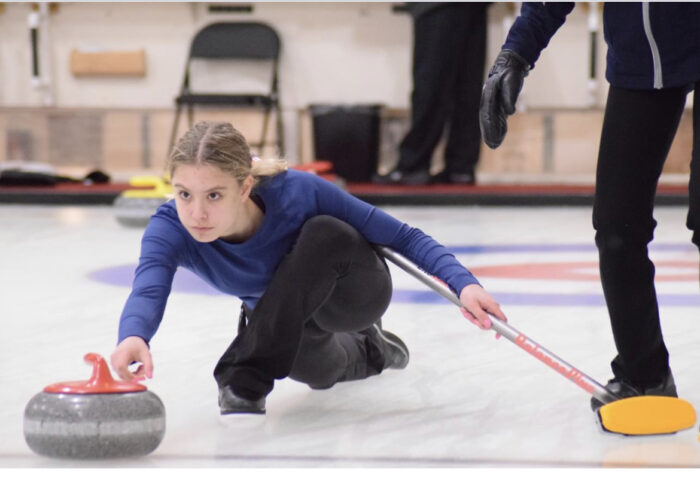
Stopera has passed his love of curling onto his two children. Andrew, now 27, has been on the ice nearly since birth, and is aiming to qualify for the 2026 Winter Olympics in Italy. Megan, an 18-year-old Briarcliff High School grad, took longer to embrace the sport but has also become a young star, winning the silver medal at the US Junior Curling Championships in April 2023.

“It still baffles my mind how fast she developed,” Bill Stopera told this magazine last year. “Once the switch flipped, Megan was ‘all in.’”

Despite his own recent success, Bill says his focus has been more on supporting the next generation of Stopera curlers than honing his own skills.

“They’ve got a lot of curling in front of them, so it’ll be more stress to deal with,” he notes.

Filed Under: Cover Stories Tagged With: curling, Curling Championship, Stopera

For the Love of the Pie

August 16, 2024 by Andrew Vitelli

(L-R): Scott Fiore and Darin Feldman
Photos by EVAN TRAINOR

How One Facebook Group is Shaking up Westchester’s Pizza Scene

As a lifelong New Yorker and Queens native, New Rochelle’s Darin Feldman was always a big pizza fan. But until a few years ago, his family’s mindset was that “pizza is pizza,” and the slice shop around the corner would generally do.

“We always liked pizza a lot,” Feldman says. “But we never really differentiated between places.”

Then a few years back, Feldman and his son decided to take a ride to acclaimed Eastchester pizzeria Polpettina. He was impressed by the pie’s quality and unique style and began wondering what other noteworthy slices he was missing out on a short drive away.

Last summer, Feldman started Westchester Pizza Lovers, a Facebook group where members debate that very question. As of press time the group has nearly 7,600 members, who each day share pictures and rate their slices from across the county.

Westchester Pizza Lovers was not the first food group launched by Feldman. Two years prior he started NY EATS & TREATS, “a group for eaters, boozers, fine diners and late-night munchers.” That group has some 1,600 members. But he found that his posts about pizza were the ones with the most discussion and engagement.

“For better or worse, everyone in the food group was referencing me as the pizza guy,” he recalls.

Feldman then reached out to his friend Scott Fiore, a North Castle resident whom he met through another food group and proposed launching a page dedicated just to pizza in Westchester. “I said, ‘Yea, that sounds like a good idea,’” Fiore recalls.
“I didn’t expect it to be this big.”

Unlike Feldman, Fiore never questioned the difference between noteworthy and run-of-the-mill pizza.

“My father was very particular about his pizza,” the Bronx native says. “You couldn’t just bring him home any pizza. If it was too thick, he’d look at it and be like, ‘Oh that’s a wagon wheel. What are you bringing this stuff home for?’” he recalls. “It always had to be thin, well-done but not burnt.” So, Fiore always found himself searching for worthy pizza, including when he and his wife moved to Westchester.

“That’s how we started, just looking for good pizza and going to different restaurants and different pizza places,” he says. “It was just about a love of pizza and finding really good pizza. Not just finding pizza, but really good pizza.”

Feldman and Fiore weren’t the only ones. Once launched, Westchester Pizza Lovers took off, at times adding some 1,000 members in a month.

Some of the best

Westchester Pizza Lovers features a constant stream of posts of people sharing their pizza orders of the day, from pizzerias across the county. Posters sometimes rate their pies, often on a 1-10 scale, describing what they liked about the pizza and where it could be improved. Rules for the group are simple – be respectful and stick only to Westchester pizzas (Feldman has launched a separate page for pies across the Hudson Valley).

“Marios Pizza & Pasta, Mt. Kisco NY, great pizza!!” reads one typical post, along with photos. “Thin crust nice and crisp. 10/10!”

“Went for a grandma slice,” says another post, along with a picture of a sad-looking square corner slice from a local pizzeria. “There was no love put into this creation, lol!”

Members also often seek advice on where to get pizza in a given town, or with a certain dietary restriction.

“Are there any vegan pizza options in lower Westchester?” one commenter asked, in a post that received several responses. “Also, any places that have vegan cheese, not just sauce and toppings?”

While a wide range of pizzerias are shared on the page, several favorites have emerged. Johnny’s in Mount Vernon, an 82-year-old establishment which Feldman calls the best in the county “by leaps and bounds,” earns plenty of acclaim. But the most popular in terms of posts and enthusiasm is Pizza Fenice in Pelham, a relative newcomer to the pizza scene.

“Everything he puts out is just exceptional,” Feldman said of owner John Gristina.

There are plenty of places in Chappaqua, Briarcliff, Armonk, and Pleasantville – Inside Press’s coverage area – that are frequently touted in the group. One is Arthur Avenue Wood Fired Pizza in Pleasantville, a favorite of Feldman, whose owner, Brian Peroni, is a group member.

Peroni said he found the page and realized it could be a useful way to keep up on the Westchester pizza scene and promote his own business (restaurant owners are allowed to post promotional items only on Fridays).

“It was nice to see,” Peroni says. “It’s nice to see other places and hope that other businesses are doing well.”

Peroni says that posts in the group have occasionally brought in new customers.

“People come in and say they were on Westchester Pizza Lovers, and they saw it,” he recounts. “So, it’s been a positive. It’s been a plus.”

Another popular local spot is Donato’s Trattoria in Briarcliff, which Fiore says ranks in his personal top 15 or so pizzerias in the county. Amore in Armonk, a personal favorite of Feldman and Fiore, is also frequently shared. In Chappaqua, Feldman mentions Old Stone Trattoria as one of his favorites and says Pizza Station gets significant attention from group members.

And another relative newcomer – Margherita Pizza in Thornwood – has gained popularity.

Burbs or the boroughs?

So how does Westchester’s pizza scene stack up against pizza in New York City? On aggregate, Feldman says, it does not compare. “However, I do think there are quite a few individual pizzas throughout Westchester, and more than a handful, that can absolutely compete with any of the ones in New York City,” he notes.

He points to Johnnys and some of the slice shops in Yonkers – Dunwoodie Pizzeria, John’s Pizza on Devoe Street, Sophia’s on McLean – as just about as good as the best places in the boroughs.

“A lot of people ignorantly say, ‘Westchester pizza, there’s nothing here,’” he continues. “That’s really not true. You just have to do a little bit of homework and be willing to branch out of the comfort zone of your own backyard and maybe travel 15 to 20 minutes.”

For now, Westchester Pizza Lovers is a labor of love for Feldman, who co-owns A-Game Sports in New Rochelle. “At this point in time, I get zero income,” he says of his pizza group. “For now, this is just a fun hobby for me.”

But Feldman has thought about finding ways to turn the group into something bigger and hopes to do meetups, pizza crawls, and events in the future. And both Feldman and Fiore hope their group can help people discover their new favorite pizzeria in their own neighborhood or just beyond.

“Life is too short to eat [lackluster] pizza,” Feldman said in a May 30 post on the group, using a more colorful term. “Drive the extra 20 minutes to get a pie you are truly going to enjoy.”

Filed Under: Cover Stories Tagged With: Best Pizza, Darin Feldman, Favorite Pizza Shops, Pizza Pies, Scott Fiore, Westchester Pizza Lovers

Eye on the Olympics for Curling: How Briarcliff’s Megan Stopera Surprised Everyone Including Herself

August 18, 2023 by Andrew Vitelli

Throughout her childhood, the sport of curling was unavoidable for Briarcliff’s Megan Stopera.

Her father, Bill, was a lifelong curler who narrowly missed the Olympics in 2013. Her brother, Andrew, was also a distinguished curler, bringing the family across the world to watch him compete and moving to Minneapolis after college to be at the sport’s epicenter.

But for 15 years, Megan was utterly uninterested. She’d roll her eyes when the conversation in the household turned to curling strategy. She’d travel across the world – to South Korea, to Scotland, to Canada – to support her brother at tournaments and competitions, but she would spend most the contest looking at her phone instead of the ice.

“They always wanted me to do it, but I was just super stubborn,” Megan, now 16 and entering her senior year at Briarcliff High School, recalls. “I never really wanted to do it, so I almost feel like they gave up on it.”

The turnaround came when Megan, then 15, went to watch her brother compete in the Olympic trials in Omaha, Nebraska. When she came home, she announced to her family: I want to curl now.

“That was a shock to all of us, quite honestly. We didn’t expect that,” Bill Stopera said. “She was always, ‘I’m not curling. I’m never following in any of your footsteps. I hate curling.’ It’s pretty funny.”

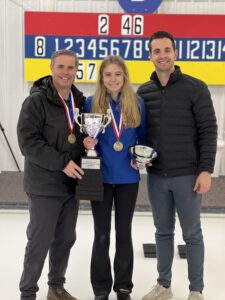
L-R: Bill, Megan and Andrew Stopera

Less than two years later, Megan Stopera is among the best young curlers in the country. In April, her team won the silver medal at the US Junior Curling Championships. Earlier this year, she won the gold medal in the U.S. Club Curling Championships.

“It still baffles my mind how fast she developed,” Bill says. “Once the switch flipped,” he adds, “Megan was ‘all in.’”

“I just knew I wanted to be like my brother, and go as far as he’s gone,” Megan explains. “I understood how much work that was going to take, and I was willing to do that work. And I got on the ice a couple of days later with my dad and I just loved it, and I’ve been practicing ever since.”

Megan began heading to the Ardsley Curling Club, a 91-year-old institution in southern Westchester, nearly every day, according to her mother, Perri. She spent hours each day on the ice and had an experienced coach in her father.

Bill Stopera, the youngest of nine children, started curling in 1976, when he was just eight years old. Growing up in Schenectady, just north of Albany, he first got on the ice when his family joined a local curling club as a social activity. He played sporadically throughout his youth; he was more focused on basketball.

Bill moved to Westchester in 1997 and a few years later started curling again at Ardsley Curling Club. He soon rediscovered his love of the sport, and his talent, and started thinking about competing. “That’s when I realized maybe I could play with the best players in the world, arguably,” says Bill, an insurance broker. “I like to compete. I like to win. And I found out pretty quickly that I was as good as anyone at the club.”

Bill’s team won the US curling championships in 2012; in 2013 he finished third in the Olympic trials, just missing out on a spot in the 2014 Winter Olympics in Sochi, Russia.

Unlike his sister, Andrew began curling more or less as soon as he was big enough to throw the 40-pound curling stone. He attended Hackley High School in Tarrytown, where a teacher set up an after-school curling club. Unlike his father, he stopped playing basketball his sophomore year of high school to focus on curling.

“After my freshmen year it was like, ok, if I want to be really good at curling, as good as I hoped I could be, I had to commit to it,” says Andrew, now 25. “I loved competing, loved hanging out with the people I already knew and who I got to meet.”

Andrew was one of the top teen curlers in the nation, with his team finishing second at the US Junior Curling National Championships. His men’s team finished third in the Olympic trials two years ago, while his mixed doubles team finished ninth.

Megan was watching from the stands at those Olympic trials when she decided it was finally time for her to embrace the game that meant so much to her family. While her love of curling came overnight, she says her talent for it did not.

“I definitely took a few months for me to even learn how to slide correctly,” she says. “And I would say I didn’t feel like I was that great until just a couple months ago.”

Andrew now has his eyes set on the 2026 Winter Olympics in Italy, though he will need to get past gold medalist John Shuster, who beat him out in the Olympic trials for the 2022 Olympics and a decade earlier finished first when Bill Stopera’s team finished third. Megan also hopes to one day qualify for the Olympics, and the two have talked about pairing up for mixed doubles when she is a bit older.

“I make the joke to my current [doubles] partner that she’s got another three years, and then she might be on the outs,” Andrew says. Nine years apart in age, having curling as a common passion has brought Megan and her brother closer together.

“They definitely spend a lot more time together, and they talk about it all the time now, which they didn’t have before,” says Perri Stopera, a speech language pathologist. “And, of course, the father daughter relationship has just blossomed together.”

Filed Under: Cover Stories Tagged With: Briarcliff High School, Curlers, Curling Champtionship, Megan Stopera

Area Journalists Address Alarming Trends Hurting Journalism, but also Relay Reasons for Optimism

April 24, 2023 by Andrew Vitelli

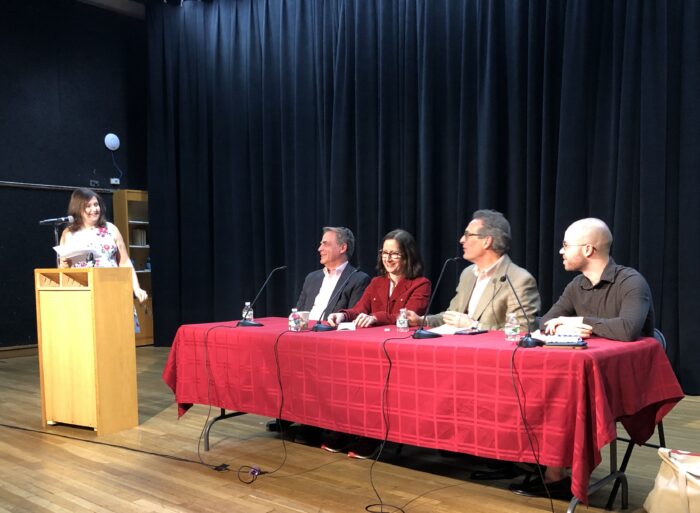
Chappaqua Library Panel on the Future of Local Journalism.  Photo by Andrew Vitelli

Fewer Reporters, Social Media & Artificial Intelligence Challenges, and an ongoing Funding Puzzle were Discussed at the Chappaqua Library Panel Event

David McKay Wilson, now a columnist for The Journal News, began working for the Gannett in 1986. At the time, he recalled, “every town was covered, every school board.”

“You got that Sunday newspaper that was like this,” he said, using his hands to signal the edition’s heft. “That of course has all changed.”

Wilson was one of four journalists on a panel on the future of local journalism held March 22 at the Chappaqua Library. The panel was moderated by Inside Press publisher Grace Bennett.

Martin Wilbur, editor-in-chief of The Examiner, expressed a similar concern, recalling that in the past every community and school district would be covered by its own fulltime reporter.

“When you consider just in about 30 years, the diminishment of that, it is alarming,” Wilbur said. “At The Examiner, I feel like a guy with one water bucket, and I’ve got 10 places where my roof is leaking, and I am running around.”

The diminished presence of local news was a major theme of the panel discussion. Since 2005, Bennett noted in her introductory remarks, some 2,500 newspapers have closed in the US, a quarter of the total, with the Covid-19 pandemic accelerating that trend.

“The influence and purpose of journalism and the value of the Fourth Estate has been clear for centuries,” remarked Bennett. “In trying times like these, our nation could use not less journalism, but more, and we need new government funding and research and a template for saving and even expanding journalism.”

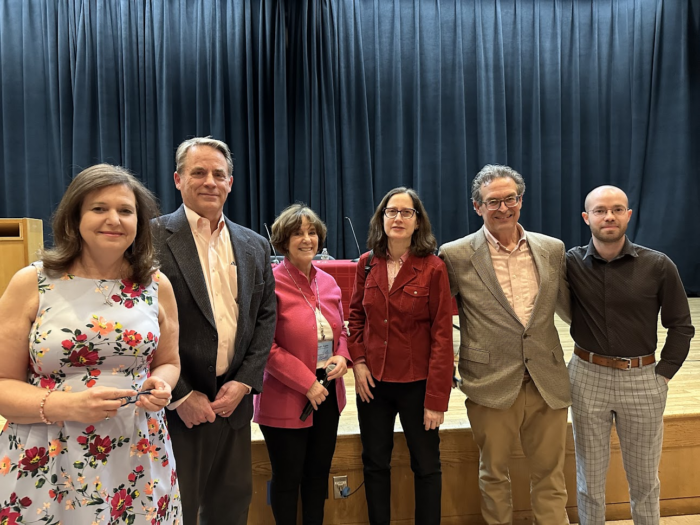
(L-R): “Future of Local Journalism” panel moderator Grace Bennett, Inside Press, with Panelist Martin Wilbur, Examiner News, Chappaqua Library Program Coordinator Joan Kuhn, Panelist Michelle Falkenstein, freelance writer, and Panelists David McKay Wilson and Asher Stockler, Journal News.
Photo by Denise Mincin


Modern Day Tech Challenges

“It is very difficult to adapt the traditional structure of news to a lot of newfangled media,” said Asher Stockler, a government accountability reporter for The Journal News. “I don’t know how I could condense a story, let’s say, about police brutality into a TikTok.”

While local newspapers have been shut down or scaled back their staff, there’s been an explosion of low-quality news sources.

“In 2019, the Pew Research Center found that 54% of Americans got their news sometimes or often from social media, the number one source being Facebook,” said Michelle Falkenstein, a freelance culture reporter. “So, it is alarming, really.”

A handful of social media sites have a tremendous impact on what articles get views and clicks, a dynamic Stockler called “one of the biggest threats” to a robust news industry. Clickbait headlines can skew a social media site’s algorithm to promote vapid regurgitations of old stories.

“Even with, ‘if it bleeds it leads,’ a lot of times it was a sensationalized version of some sort of actual basis,” Stockler said, referring to the old adage that gruesome stories were typically featured prominently. Often with clickbait, he said, “there is no new information.”

And then there is the effect that 280-character tweets and 30-second reels have had on the attention spans of news consumers.

“You can’t write long anymore,” said Falkenstein. “If I get 800 words, I feel like I hit the jackpot.”

Addressing Artificial Intelligence

Soon, reporters will have to contend with advanced AI – artificial intelligence – which Stockler called an “impending disaster.”

AI can be a reporting tool, he acknowledged, but there is a danger if it is used to replace instead of supplement the reporting process.

“What do you do when an algorithm creates something libelous or something defamatory?” Stockler asked. “I just think it is going to open a rift in terms of whatever trust is left in the content generation business.”

Despite all the headwinds facing local news, the conversation was far from all gloom and despair. Social media brought with it some benefits, the panelists noted, including the ability to engage with their readers.

“I’m a boomer and I love Facebook,” said Wilson. “I know that is not popular in some settings but I really do.”

Wilson said he posts all his stories on Facebook and other social media sites.

“Part of my journalism is being on Facebook and having these interactions with people who I know,” he said. “It’s an engagement that I enjoy, and I think that it has got to be part of journalism today.”

Certain parts of the country, Falkenstein explained, are news deserts, where there is little to no coverage of what is happening locally. “People end up paying more to live in these communities, because they are not aware of things that are going on with taxes and that sort of thing or pet projects that might come up,” she said. “They also don’t vote as much. They don’t feel as invested.”

Better News in Places Like Westchester

Though the local news scene is less robust than it once was, Westchester and the Hudson Valley have “bucked the trend a little bit,” Bennett posited.

“In Westchester, we are relatively lucky. There is an informed citizenry or a citizenry that wants to learn more about what is going on,” said Wilbur. “And there is enough disposable income among businesses and organizations that a lot of places around the country do not have.”

And while the platforms and the technology may continue to change, the key to retaining readers’ trust is much the same – “doing really good work,” he added. That includes transparent sourcing, printing opposing opinions, and running corrections when necessary.

“We don’t know the next platform or the next thing six weeks, six months, six years. We just know it’s going to change, and it’s going to continue to change,” concluded Wilbur. “And the organizations that survive are the ones who will best be able to adapt to whatever might come their way.”


Filed Under: Cover Stories Tagged With: Artificial Intelligence, Asher Stockler, Chappaqua library, David McKay Wilson, Examiner News, Funding for Publications, Future of Journalism, Future of Local Journalism, Grace Bennett, Inside Press, Journal News, journalism, Library Panel, Local Journalism, Martin Wilbur, Michelle Falkenstein, Newspapers, Publications, Social Media

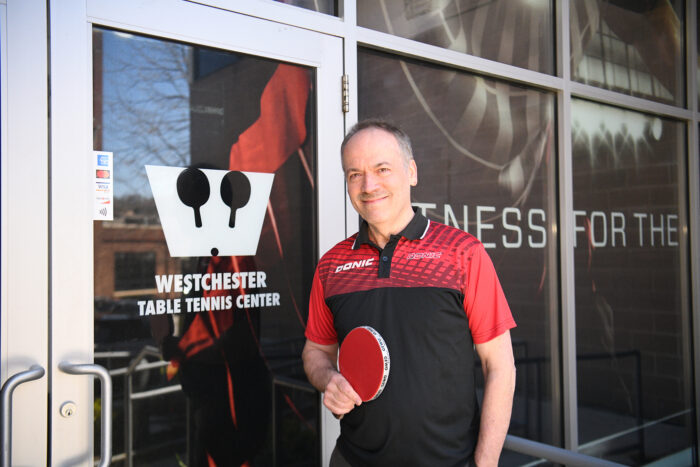
How Will Shortz Turned Pleasantville into a Table Tennis Mecca

June 1, 2022 by Andrew Vitelli

PHOTO BY DONNA MUELLER

On February 19 Will Shortz, a Pleasantville resident and The New York Times puzzle editor, saw his Wordle streak come to an end. 

Shortz knew the word began with S and ended with “ILL” – but instead of choosing a word that contained multiple potential second letters he guessed through the possibilities: skill, spill. He was out of guesses before trying the correct answer, “Swill.”

“I was surprised how much it hurt me to lose,” Shortz, explains a few days later. “So I am not going to let myself lose again.”

Shortz, a puzzler with few peers in the world, takes such vows seriously. In 2012, Shortz had just opened the Westchester Table Tennis Center in Pleasantville and set out to play ping pong all 366 days of the year. But on October 3, Shortz was at the World Puzzle Championship in Kraljevica, Croatia and got lost on the way to a tennis club he had lined up to play after the tournament.

“The club wasn’t where I thought it was going to be, and I arrived just as they were closing,” Shortz recalls. “I don’t speak Croatian, so what could I say to them as they are leaving?”

Shortz has not let it happen since. Despite his busy schedule, a global pandemic and frequent travel, he has spent a chunk of his day on the table for more than 3,500 days in a row, as of press time. His streak is probably a record, although no one officially keeps track.

“Will does not travel unless he has an itinerary of where he’s going to go, the club he is going to play,” says Robert Roberts, Shortz’s close friend and travel companion, the manager of the tennis club, and a three-time Caribbean table tennis champion. 

This tendency towards obsession has served Shortz well as a puzzler. Shortz started making crossword puzzles when he was around eight years old and by the time he sold his first at age 14, to his national Sunday school magazine Venture, he knew he wanted to make puzzling a career. By 16, he was a regular contributor to Dell puzzle magazines. At the University of Indiana, he received a specialized degree in enigmatology, or the study of puzzles; he is believed to be the only person in the world with such a degree. 

In 1993, Shortz joined The New York Times as puzzle editor. The puzzle team has grown to include six members, but at the time it was a department of one. He’s helmed the department going on three decades, in addition to his role as puzzle master on NPR’s Weekend Edition. He founded both the American Crossword Puzzle Tournament and the World Puzzle Championship, and each year travels across the world for the latter.

While not on the level of others who have passed through his club, Shortz is also a very good ping pong player. He is rated 1600, or upper intermediate, putting him in the top half of tournament players while not at a championship level (your correspondent, a mediocre ponger, narrowly avoided a goose egg when the two last faced off nearly a decade ago). 

Though the sport seems to hold little in common with puzzling, Shortz sees parallels between his two passions.

“From the participants standpoint, when you do it you get completely wrapped up in the activity, focused on solving the puzzle and winning the game and you forget everything else in the world,” Shortz says. “And when you’re done, you’re ready to go back to the world. It is a great feeling. It refreshes you.”

And it is in the table tennis world that Shortz has turned Pleasantville into a national destination, drawing the best players from across the globe to one of the largest table tennis centers in the United States. 

“I’m really proud of it,” says of the Westchester Table Tennis Center, which Shortz opened in May 2011. “I love it when people come into the club, look around and go, wow. Because when you think of a table tennis facility you think of something cramped with a low ceiling and dim lighting. And when you come into our place, it is professional.”

PHOTO BY DONNA MUELLER

Coming to Pleasantville

Shortz grew up on an Arabian horse farm in central Indiana and stayed in his home state to attend university. But after college, his budding puzzling career drew him to the New York metropolitan area.

“If you want to be in puzzles, New York is the area to be,” Shortz says.

Shortz moved to Stamford, Connecticut in 1977, then four years later to Forest Hills, Queens. In 1993, he found a three-story Tudor in Pleasantville and fell in love both with the town and the property.

“I was in Forest Hills for 12 years. And it always felt like a stage for something else. It didn’t feel permanent,” he says. “I remember I bought this house, and the first morning I walked down those steps saying, this feels like home.”

In 1999, folklorist Steve Zeitlin and author Stefan Kanfer founded the Rivertowns Table Tennis Club, which eventually rotated between Hastings-on-Hudson, Ardsley and Tarrytown. Shortz joined in 2001. 

In 2004, a new puzzle craze hit the US, this one focused on single-digit numbers. 

“When I first heard about Sudoku, I thought, ‘There has never been a popular number puzzle so I am dubious about this,’” he recalls. “Then when I tried one and I understood the addictiveness of it, I became an enthusiast.”

In 2005, Shortz published his first Sudoku book. It sold more than a million copies. He’s since published dozens more; by 2006 he had sold more than five million copies, according to an NBC News article, and that summer he said that he was making more money from Sudoku than he was for The New York Times. 

He has now published hundreds of Sudoku books, and it was his Sudoku bonanza that provided the money for Shortz and Roberts to open the Westchester Table Tennis Center in 2009. 

The Club

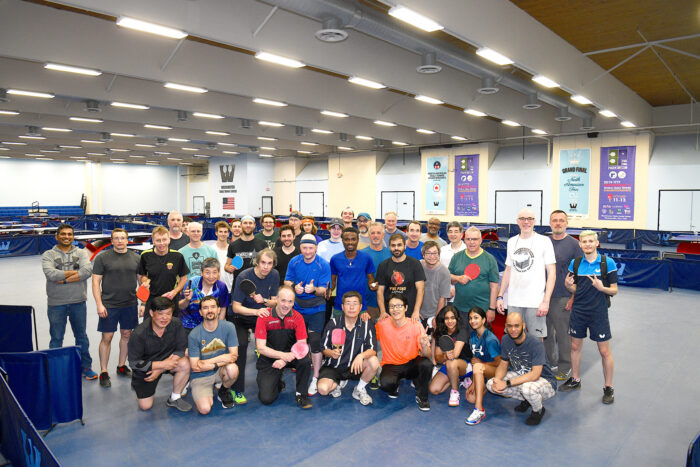
The table tennis center comprises 30 tables spread throughout multiple rooms and abundant space between each table. In contrast to the stereotypical claustrophobia-inducing basement ping pong club, the Pleasantville center’s high ceilings make the facility seem even larger than its 21,000 square feet. 

The club was the largest in the US when it opened, Shortz says; though it was expanded during the Covid-19 shutdown and is now bigger nearly by half, larger clubs have opened elsewhere. 

“Initially, it was hard,” recalls Roberts. “Trying to build a club of this magnitude is not easy, especially seeing that we had a lot of competition in the city.”

The club had the advantage of starting with much of the existing membership of Rivertowns Tennis Club. It has grown from there, and now has roughly 200 members. 

It has become a destination for some of the world’s top talent, particularly for the club’s tournaments, which Roberts describes as the best in North America. 

“The United States does not rank well internationally in table tennis,” Shortz explains. “The top men’s players, if they want to get good, they have to go abroad.”

Now, the best players from abroad are coming to Westchester. On the day Inside Press visited the club, Nigerian Olympian Olajide Omotayo, ranked 92nd in the world in the International Table Tennis Federation (ITTF) male world rankings, was teaching a class on spin serves. Croatian Andrej Gacina, ranked 20th in the world at the time, won the club’s Westchester Open tournament in 2016, while 46th-ranked Bojan Tokic of Slovenia won it in 2014 and 2017. 

“We are doing our part for increasing the popularity of table tennis in the United States and the level of skill of players,” Shortz says. 

Something for Everyone

Most of the players who pass through the club are, of course, not nationally ranked and harbor no Olympic ambitions. 

“There are kids who say, ‘This takes the stress away from school. Coming here, I get to relax,’” Roberts says. “There are a lot of adults who, I don’t know what’s going on in their life, but they say, this here basically saved them.”

The club also holds frequent special events. On Wednesdays, the club holds a program for people with Parkinson’s disease. Shortz founded PingPongParkinson in 2017, which aims to halt the progression of the disease by using ping pong as a form of physical therapy.

“When the ball comes over the net, they start their stroke and the shaking stops,” Shortz says.

The club also occasionally holds novelty contests, with players using a miniature paddle or a giant ball. 

Shortz has yet to turn the center into profitable business, instead using his New York Times salary and book sales to fund the venture. “It’s a big expense, actually. It doesn’t make money,” he says. “I’m hoping eventually it breaks even.”

This is just one of Shortz’s pong-related goals. He has already played at a ping pong club in all 50 states, and now hopes to play in more countries than anyone else in history (he’s hit 40 so far).

But Shortz has challenges outside of the ping pong table. For the Times, he and his team still must sort through some 200 crossword submissions each week and narrow it down to one puzzle each day. 

“We look for something fresh, interesting, never done before. Maybe it has a playfulness or a sense of humor about it. Then we look at construction,” he says. “If the theme is good, then we look to see if the fill is interesting, lively, colorful, juicy, with as little stupid obscurity or crosswordese as possible.”

He or his team then rewrite many of the puzzle’s clues–usually around half–before publication. Reference books are piled in each room in his home to help with this task.

And in January, the Times announced that it has paid low seven figures to buy Wordle. As a puzzle the game will fall under his purview, though Shortz says he has no plans to make any changes.

“I’m a big fan. I play it every day,” he says. “My hope is not to mess up the game.”

Filed Under: Cover Stories Tagged With: Crossword Puzzles, Leisure, Pleasantville, recreation, Table Tennis, Table Tennis Tournaments, The New York Times, Westchester Table Tennis Center, Will Shortz

  • « Go to Previous Page
  • Page 1
  • Page 2
  • Page 3
  • Page 4
  • Interim pages omitted …
  • Page 7
  • Go to Next Page »

Primary Sidebar

Please Visit

White Plains Hospital
William Raveis – Armonk
William Raveis – Chappaqua
Northwell Hospital
Houlihan Lawrence – Chappaqua
Houlihan Lawrence – Armonk
Houlihan Lawrence – Briarcliff
NYOMIS – Dr. Andrew Horowitz
Westchester Table Tennis Center
Spavia
Compass: Miller Goldenberg Harris Team
Lipari & Mangiameli Dentistry
Raveis: Lisa Koh and Allison Coviello
Bristal Assisted Living
Maid Brigade
Kevin Roberts Painting & Design
Zwilling J. A. Henckels
Meagher & Meagher Attorneys at Law
Compass: Aurora Banaszek
Dr. Briones Medical Weight Loss Center
Roamfurther Athletics
CPW Vein & Aesthetic Center
Whitaker’s Garage Door Store
World Cup Gymnastics
New Castle Physical Therapy
King Street Creatives
Breathe Pilates and Yoga
Home Grown Gardens

Follow our Social Media

The Inside Press

Our Latest Issues

For a full reading of our current edition, or to obtain a copy or subscription, please contact us.

Inside Pleasantville and Briarcliff Manor Inside Chappaqua and Millwood Inside Armonk

Join Our Mailing List


Search Inside Press

Links

  • Advertise
  • Contact Us
  • Digital Subscription
  • Print Subscription

Publisher’s Note Regarding Our Valued Sponsors

Inside Press is not responsible for and does not necessarily endorse or not endorse any advertisers, products or resources referenced in either sponsor-driven stories or in advertisements appearing in this publication. The Inside Press shall not be liable to any party as a result of any information, services or resources made available through this publication.The Inside Press is published in good faith and cannot be held responsible for any inaccuracies in advertising or sponsor driven stories that appear in this publication. The views of advertisers and contributors are not necessarily those of the publisher’s.

Opinions and information presented in all Inside Press articles, such as in the arena of health and medicine, strictly reflect the experiences, expertise and/or views of those interviewed, and are not necessarily recommended or endorsed by the Inside Press. Please consult your own doctor for diagnosis and/or treatment.

Footer

Support The Inside Press

Advertising

Print Subscription

Digital Subscription

Categories

Archives

Subscribe

Did you know you can subscribe anytime to our print editions?

Voluntary subscriptions are most welcome, if you've moved outside the area, or a subscription is a great present idea for an elderly parent, for a neighbor who is moving or for your graduating high school student or any college student who may enjoy keeping up with hometown stories.

Subscribe Today

Copyright © 2026 The Inside Press, Inc. · Log in