• Skip to primary navigation
  • Skip to main content
  • Skip to primary sidebar
  • Skip to footer

The Inside Press

Magazines serving the communities of Northern Westchester

  • Home
  • Cover Stories
  • Features
    • Portraits and Profiles
  • Advertorials
    • Lifestyles with our Sponsors
    • Sponsor News!
  • Wellness
  • Happenings
  • Advertise
    • Advertise in One or All of our Magazines–And/Or Subscribe
    • Advertising Payment Form
  • Contact Us
  • Search

Inside Press

Vaccinations for the Flu Available Soon at Open Door Family Medical Centers

August 26, 2020 by Inside Press

Deemed Especially Vital During COVID-19

Since March, many of us have been consumed, rightfully so, by the Covid-19 pandemic.

Months later, the virus continues to dictate our lives.

But, as summer moves into fall, should we also start worrying about the flu?

Dr. Daren Wu, Chief Medical Officer, Open Door Medical Center

According to Dr. Daren Wu, Chief Medical Officer at Open Door Family Medical Center, protection against the flu has never been more important than now.

“We strongly encourage patients to get the flu shot and, once a vaccine is available, a vaccine against the coronavirus that causes COVID-19 as well,” said Dr. Wu. “These viruses are two completely different species, so getting vaccinated for one will not protect you against the other. What you definitely do not want is the 1 – 2 punch of getting both viruses, which is entirely possible.  Each virus can be deadly, and in tandem they can be that much worse. When your immune system is down because of the flu, other infections – including coronavirus – can kick in.”

Flu vaccinations will be available across Open Door’s six health centers in Westchester and Putnam Counties and eight School-Based Health Centers in the Ossining and Port Chester School Districts, beginning in September. Most patients, he said, usually need little convincing to get an annual flu shot, and it is available to all patients over six months old. However, he added, there is still a great deal of misinformation about the flu and he encourages “anti-vax” community members to learn more and get the flu shot.

This is particularly important among those most at risk: the elderly, young children, pregnant women, and those with certain health conditions that make them more vulnerable to serious flu complications.

“Our minds are on Covid-19, but getting the flu will lower your immune system and can make you more susceptible to all sorts of secondary infections, including bacterial infections and other viruses such as Covid-19,” said Dr. Wu. “The flu shot is not perfect, but we keep framing the message that it is overwhelmingly safe and can give you significant protection.”

Flu activity begins to increase in October and November and can last until May. It typically peaks in January or February.

“The CDC recommends a yearly flu vaccine for everyone six months of age and older,” said Dr. Wu.  “Young children up through the age of eight years old, who are getting vaccinated for the first time, require two doses of flu vaccine, spaced at least 28 days apart. Because children under the age of six months are too young to receive the vaccine, it is especially important that their parents and older siblings get vaccinated to prevent the spread of the flu to infants who are particularly vulnerable to serious complications.”

The effectiveness of the annual flu vaccine depends in part on the match between the viruses used to produce a vaccine and the strains of flu that will circulate in the new flu season. While the vaccine is produced to protect against the flu viruses that research and surveillance indicate are most likely to be common this season, there is no way to predict with certainty.

“Flu viruses not only change from season to season, but can even change within the course of a single season,” said Dr. Wu. “Still, antibodies made in response to a vaccination with one flu virus can sometimes provide protection against different flu strains. That’s why, even if the vaccine is a less than a perfect match, it is still far more effective in preventing the flu than getting no shot at all.”

This year, he added, it’s even more important for people to comply.

EIGHT GOOD REASONS TO GET A FLU SHOT

Here, according to Dr. Wu, are eight good reasons to get a flu shot:

Getting the flu can weaken your immune system and make you more susceptible to secondary infections. This takes on especial importance this year, at least until there is a vaccine for Covid-19, which is a more lethal virus.

The flu can affect anyone. The flu is a serious virus and spreads easily. Vaccination protects you, your family and friends.

The flu shot is safe. Flu vaccines CANNOT cause the flu – they are made with either killed or weakened viruses. One of the biggest myths out there is that flu shots can cause the flu and that simply is not true.  Serious reactions are extremely rare. Mild reactions include soreness, redness or swelling where the vaccine was given.

The flu shot you received last year is no longer effective. The influenza virus changes and mutates fairly rapidly. New flu vaccinations are developed each year to ensure evolving viruses are adequately targeted and protected against.

You want to protect your kids. Young children under the age of five are more susceptible to serious complications from the flu, such as pneumonia, secondary infections from bacteria and other viruses, and dehydration. Both children (over six months old) and parents need the shot.

You are pregnant or considering getting pregnant. Pregnant women are at a higher risk of developing complications from the flu. The flu shot is safe during pregnancy.

You or someone you know is over 65 and/or has a long-term illness. As human immune defenses become weaker with age, a vaccination is designed specifically for people 65 years and older. Additionally, a number of long-term, chronic health conditions such as diabetes or cancer, are associated with an increased risk of flu-related complications (as they are with Covid-19).

Getting vaccinated is part of a healthy lifestyle. The flu can blindside you with its intensity and leave you feeling sick for days. When you get a flu shot, you build up your immunity, making you stronger and more resistant to the flu.

If you would like to make an appointment to get a flu shot, please call Open Door at 914-632-2737 or email hello@odfmc.org.

Information courtesy of Open Door Family Medical Center. 

Open Door Family Medical Center

Open Door Family Medical Center provides health care and wellness programs to individuals and families in need throughout Westchester, Putnam and Ulster Counties. A pioneer Federally Qualified Health Center, Open Door provides more than 300,000 patient visits annually and serves nearly 60,000 individual patients who might not otherwise have access. Open Door offers integrated services and a holistic approach to building healthier communities. Primary medical care, dental care, integrated behavioral health care, clinical nutrition, wellness programs, and chronic disease management are the foundation of its clinical programs. Founded as a free clinic in 1972, Open Door’s mission of building healthier communities through accessible, equitable, culturally competent health care has led to site and service expansions. Today, Open Door operates centers in Brewster, Mamaroneck, Mount Kisco, Ossining, Port Chester, and Sleepy Hollow, in addition to eight School-Based Health Centers in the Port Chester and Ossining School Districts, a mobile dental van in Mount Kisco, and a new dental practice in Saugerties, NY. Open Door is accredited by the Joint Commission and is recognized by the National Committee on Quality Assurance as a Patient-Centered Medical Home.

 

Filed Under: Surviving COVID-19 Tagged With: COVID-19, Flu, Open Door Family Medical Centers, Vaccinations

Opportunity to Support ‘Backpacks to School,’ an Annual Initiative of The Sharing Shelf

August 3, 2020 by Inside Press

The Sharing Shelf plans to fill at least 1,500 backpacks and seeks to raise $45,000 for this project.

Each summer, The Sharing Shelf organizes its “Backpacks to School” initiative to buy new backpacks and fill them with grade appropriate school supplies for low-income children in Westchester County. The program works with individuals and businesses County-wide to raise the funds needed to purchase everything needed for this initiative, from new backpacks to binders, notebooks, folders, crayons, pencils, pens and paper.

At this moment the last days of being in a school are a distant blur and back to school is filled with uncertainty, whether our children will return to school as we know it, shift into a hybrid system, or continue with home-based schooling.

The Sharing Shelf, in consultation with educators, has decided to proceed with its annual program. These educators have told us that regardless of what form school will be, children still need to learn. They will not only need the usual supplies but also resources to keep them mentally engaged and enriched. It is The Sharing Shelf’s plan to provide not just the basics, but enhanced materials such as age-appropriate educational magazines, puzzles, activity sets and books.

Even before the pandemic and economic downturn, Westchester County was a community with a mix of great wealth yet home to nearly 60,000 low-income children. In some of our communities, 8 in 10 public school students qualify for free or reduced lunch. We believe that number, given the current environment, is probably much higher. In April 2020, unemployment in Westchester county skyrocketed to over 14% from 4% in January 2020.  Meanwhile, the average family spends $122 on school supplies, a sum out of reach for families struggling financially.  

The Sharing Shelf plans to fill at least 1,500 backpacks and seeks to raise $45,000 for this project. Volunteers will help assemble the backpacks, using social distancing in a special area at The Sharing Shelf’s Port Chester warehouse during the month of August. The backpacks and supplies are critical to the academic success of low-income children and will allow them to return to school prepared, confident, and ready to learn.

To find out more about how to help or to donate, please contact The Sharing Shelf Program Director, Deborah Blatt at dblatt@sharingshelf.org or (914) 305-5950. You may also visit www.sharingshelf.org and click on Backpacks to School

About The Sharing Shelf

Founded in 2009, The Sharing Shelf is Westchester’s Clothing Bank for Children. The program collects new and gently used clothing for infants, children and teens. The clothing is distributed to local, low-income children through area social service agencies, schools, hospitals and other non-profits at no cost. The children receive a week’s worth of seasonally appropriate clothing matched to their sizing needs. Since 2011, The Sharing Shelf has been filling new backpacks with fresh supplies for back to school. For more information, visit www.sharingshelf.org

This story is courtesy of The Sharing Shelf.

Filed Under: Stay Connected Tagged With: Back to School, Backpacks, Learn, Resources, School Supplies, schools, The Sharing Shelf, Westchester

A Cautious Optimism Over ‘Diminished’ COVID-19 Cases Conveyed by Westchester County Executive George Latimer

July 8, 2020 by Inside Press

A close and unrushed ‘listen’ to George Latimer’s most recent update this week on coronavirus in Westchester offered several reasons to stay at least cautiously optimistic that infection from coronavirus is “diminishing” across the county, including in Chappaqua in the two days preceding the July 6 briefing. Chappaqua experienced a recent spike–27 cases, including 21 in Chappaqua, were tracked to the New Castle hamlet in the last two weeks–but the infection may be leveling off thanks to cautionary measures that have included a mandatory quarantine of persons impacted.

While conveying a message of hope and positivity, Latimer also issued clear warnings for continued vigilance and compliance with recommendations (social distancing/mask wear/hand washing) against the coronavirus to make sure it stays that way.

The continuous decline for two and a half months in active cases has likely been due to the act of compliance with masks in public, stressed Latimer, Westchester’s County Executive who has been providing near daily updates streamed live on Facebook and shared later in a You Tube link. The full press briefing may be viewed here https://youtu.be/ys1l09q1Uks

Coronavirus battling measures included asking business and store owners to wear masks, “influencing society. Now, it has become much more of the norm than it ever was,” he said.

On July 6, Latimer reported 527 active cases of CoronaVirus within the county.

Between March 1 (a period commonly designated as the ‘beginning of the pandemic’) and July 6,  35,084 people tested positive for Covid-19. “However, percentage-wise, there has been a little over 1% of positives as of the night on July 5. In one day, only 41 people were found to have the virus after testing almost 4000 people– indicating the spread is diminishing.”

Compared to March or April, he explained, “arguably the height of the pandemic across America, there was as much as 30% of all people tested coming in positive. But as more testing is being conducted, the percentage of those who have the coronavirus has been substantially lowering”.

More Positive Findings for Westchester

  1. Fewer hospitalizations. In addition: as of July 5 too, 29% of Westchester county residents have been tested for Covid-19, “which again, is a huge number and much higher than in other jurisdictions.” There have been fewer hospitalizations too, he shared, with 61 people having been hospitalized as of Saturday, dropping from the 70 individuals reported a week ago.
  2. Zero fatalities the night of July 5. “To top off the relatively good news, there were no fatalities on the night of July 5 and only three deaths in the recent week, ameliorating from the 30-50 deaths per day a couple of months ago in America.”

Staying cautiously optimistic, Latimer conveyed that “the past week has seen a rise and fall in cases, from the recent Chappaqua outbreak, dating back to over two weeks ago; the rise has increased to 27 positive cases that tie back to the set of activities… that include a graduation drive in ceremony and a ‘field night’ event following the graduation, both in rather large gatherings and minimal masks and social distancing.”

“Of the 27 positive cases, 21 tracked to Chappaqua, three of them tracked to Mount Kisco, two track to Bedford, and one track to Pleasantville. “As of now, there have been no new cases in the last two days that are trackable to the Chappaqua spike. If so, it is thought to be leveling off,” Latimer said. “Keep in mind, if they caught COVID that night, they would have gone through two weeks without having shown symptoms…  Of course, it’s possible that if somebody caught it, and then was further infected later, there are still some ways that the Chappaqua spread may linger on longer.”

“I think we’ve had a good response at this particular outbreak,” continued the executive. “Nothing is perfect, but we’ve gotten substantial compliance. 80-85% of the people have responded… We seem to be in a pretty good place for having understood and dealt with it.”

As for the opening of Phase 4 this week (on July 7) in response to the Covid-19 pandemic, major changes are set “for allowable activity.

For outdoor and indoor arts entertainment, low-risk areas have been set to a limit of up to 50 people. As Latimer would elaborate, this would include “the traditional summer band concert in Scarsdale at Chase Park or the theatrical and concert performances that go on in the gazebo in Armonk.” Anything along these lines, while fitting the specific guidelines, will do.

As the last revealed phase of reopening, the governor still has not reopened amusement parks, health clubs, and gyms. “These will not be things that are going to be lifted in future phases; instead, there would be executive orders by the governor on that specific action or function that may happen at any point in time.”

Latimer’s briefings will continue once a week every Monday at 2 pm EST, as opposed to the daily updates Monday through Thursday, he said. Despite a recent uptick in numbers, the steady decrease throughout would mean “we would not need to do this on a regular basis,” he stated from the County Executive’s White Plains conference room.

Editor’s Note: Brian Zhang, a rising junior at Byram Hills High School, assisted in preparing this update, as a first assignment as a summer intern for the Inside Press.


Filed Under: Surviving COVID-19 Tagged With: active cases, Chappaqua, COVID-19, fatalities, George Latimer, Hope, hospitalizations, optimism, Positive, Westchester, Westchester County Executive

Field Hall Announces Summer Grants with Focus on Helping Vulnerable Seniors and their Caregivers

July 7, 2020 by Inside Press

The Field Hall Foundation announces $240,000 in new grants.  $190,000 has been awarded through its Summer 2020 grant cycle, and will be used to pilot, support and/or expand programs focused on the most basic needs of vulnerable seniors and their caregivers. 
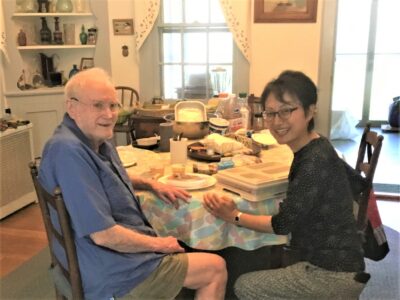
Three full grants have been awarded to:

Family Services, Inc.                                                       

$45,000 – To pilot an Elder Abuse Intervention program which will provide prevention and intervention services for victims of elder abuse

Hudson River Housing, Inc.                                                              

$50,000 – To pilot an Elder Care Services Program that will help homeless and low-income seniors obtain and sustain stable housing

The Osborne Association                                                      

$50,000 – To support and expand their Elder Reentry Initiative in Dutchess County, which helps older, incarcerated adults successfully transition back into the community                             

Five smaller grants were awarded to:

Hillside Food Outreach, Inc.

$10,000 – To increase the amount of fresh fruits and vegetables they purchase and deliver, at no cost, to low-income seniors in Putnam and Westchester counties

Meals on Wheels of Poughkeepsie

$5,000 – To purchase new kitchen equipment that will allow them to meet the increased demand for home delivered meals

North East Community Council, Inc.

$10,000 – To expand their home-delivered food pantry services to older adults in the rural north east section of Dutchess County

Putnam County Office for Senior Resources

$15,000 – To provide free respite services to eligible spouses or relatives caring for older adults at home

WestFair Rides, Inc.

$5,000 – To provide older adults with free livery transportation to/from medical appointments when volunteer drivers are not available.

COVID-19 Emergency Relief grants, totaling $50,000, have also been awarded.  Funding focused primarily on senior food insecurity, personal protection equipment for nursing home staff, and telehealth equipment and services.  Grant recipients include:

Andrus on the Hudson Nursing Home, Bethel Springvale Nursing Home, Cabrini of Westchester Nursing Home, Catholic Charities, Dutchess Responds, EverCare Home Health Agency, Hillside Food Outreach, Maryknoll Sisters, Meals on Wheels of Hyde Park, Neighborhood House, New Jewish Home Sarah Neuman, North East Community Center, Pawling Resource Center, Putnam Community Cares, Putnam COVID-19 Response Fund, Ride Connect, Visiting Nurse Service Westchester, and WestFair Rides.

Going forward, an additional $50,000 has been added to the COVID-19 Emergency Relief Fund for programs supporting seniors impacted by the COVID-19 pandemic. 

Since its inception in 2019, the Foundation has awarded more than $1 million in grants to improve the lives of older adults and their caregivers in Dutchess, Putnam and Westchester counties.  Letters of Inquiry are accepted on an ongoing basis.  For more information visit the Foundation’s website,  http://www.fieldhallfoundation.org


Filed Under: Stay Connected Tagged With: Caregivers, COVID-19, Field Hall Foundation, Grants, Nursing Homes, seniors, Vulnerable

Divorce on a Budget: Attorney Tips for Getting the Greatest Value from your Divorce Lawyer

June 30, 2020 by Inside Press

By Neil Kozek, Esq. and Michelle Lewis, Esq.

If there is one constant across nearly all matrimonial cases, it is that the process is very expensive. This has given rise to many jokes (Why is divorce so expensive? Because it is worth it…) and to a pervasive suspicion of lawyers. Clients often feel a lack of control over the divorce process and an even greater sense of helplessness.

Clients’ lack of control over their divorce and their legal expenses are both exacerbated in litigation. Interaction with the court leads to the involvement of judges and courthouse staff.  If spouses cannot agree on custody, an Attorney for the Child and Forensic Evaluator may be appointed. The Court may also order appraisals of valuable assets. When spouses are unable to agree on interim financial and living arrangements, their attorneys must file costly motions. These motions take months to resolve, cause professional fees to skyrocket, and delay the ultimate resolution of the case.

As litigators, collaborative attorneys, and mediators, we have identified several factors that can have immeasurable impact on the financial and emotional cost of the divorce.

Choose the Most Appropriate Process for your Needs.

Whether spouses choose to collaborate, mediate or litigate disputes, their mutual goal is almost always to reach agreement regarding the same issues:

  • How much time each will spend with their children;
  • How they will make important decisions about their children;
  • How the costs of raising children will be paid (child support);
  • Whether spousal support is necessary, in what amounts and for what duration;
  • Who will live in the marital residence and whether it will be sold;
  • What is marital property and how will it be divided;

The means divorcing couples employ to reach agreement about these and other issues varies widely.

Some couples can reach an agreement resolving all or most of the above issues at their kitchen table. These exceptional couples need attorneys to advise them of the law, identify and help negotiate any areas they neglected to address in their informal discussions, and to draft an agreement and divorce documents to submit to the court. This is generally the least costly way and most efficient way to separate and divorce using attorneys.

Other couples may be well suited for mediation, a process that typically involves a single neutral professional to facilitate a settlement and independent review attorneys to advise each spouse, to ensure each understands the agreement fully, and to address any unresolved issues. Couples who mediate generally share a commitment to resolve their differences out of court. When successful, mediation can be a cost-effective and efficient means to reach a separation agreement. Typically, spouses who are most appropriate for mediation are both well-informed about the values and the identity of all assets and liabilities and are somewhat aligned regarding what is best for their children. Some level of trust, while often eroded by the acrimony of a troubled relationship, is a bonus to the success of any mediation.)

For couples committed to avoiding litigation and attracted to holistically reaching an agreement, Collaborative Divorce is an excellent option.  Collaborative Divorce Practice (CP) involves working with an interdisciplinary team including a financial neutral (when identification, valuation and division of assets and liabilities exist) and a mental health professional to help resolve parenting and communication issues. The CP’s team approach fosters cooperation and communication, increasing the chances of a successful negotiated resolution. It is also often less costly than litigation.

Finally, where a total breakdown of trust and communication has occurred, as well as in cases involving domestic violence, child abduction, and other emergencies, it may be necessary and prudent to retain attorneys for litigation. Litigation is typically the most expensive and time-consuming option for separation and divorce, but as explained below, there are ways to control your legal fees even if you find yourself in a litigated process.

Choose an Experienced Attorney Who Shares Your Values and Goals.

Your choice of attorney may be the most important decision in shaping the course of your divorce, so be sure to seek out an attorney who has a reputation for working to preserve the relationship between divorcing spouses and minimize acrimony. Try to avoid attorneys who reflexively adopt an adversarial posture that deepens negative feelings, polarizes, and fosters mistrust.

Attorneys who exclusively litigate usually view each case as a prospective litigation and may not seek opportunities to find common ground and reach agreement out of court.  Some litigators may even seek to gain an advantage in litigation by encouraging exaggerated claims of verbal or physical abuse. While we believe these professionals are few and far between, prospective clients should be aware of attorneys who seem to encourage behavior that would inflame rather than quell the fires of marital conflict.

Attorneys who mediate and/or practice Collaborative Law are often inclined to encourage dialogue and, in a collaborative setting (or even a litigation), to work cooperatively to resolve issues without court intervention. Some litigators may also practice in a “collaborative spirit”, litigating only intractable disagreements.

When consulting with an attorney, explain your goals. If you want to avoid litigation, ask the attorney what percentage of his or her cases require court intervention and how many trials he or she does each year. The information can be very telling. If you believe that your case will require a tough trial lawyer, make sure the attorney you choose is comfortable in court and has successfully conducted many trials. If, on the other hand, you want to prioritize an amicable resolution with your spouse and/or you have minor children and want to preserve a civil relationship, select counsel who settles most cases out of court and strives to avoid adversarial proceedings.

There is no “best” attorney for every client, but there is a best attorney for you. The attorney-client relationship is very personal and the person you choose walk this road with you should be someone you can communicate with and a person in whom you place a great deal of trust. 

If you ask the right questions and explain your priorities to any prospective attorney, you increase your chances of retaining the most appropriate attorney for your divorce. Making a well-informed choice upfront can save you from disappointment and frustration, and in the long run will also save you legal fees.

Be Conscious of How You Use Your Attorney’s Time.

1. Do not Use Your Attorney as A Therapist Unless You Can Afford To.

Attorneys are also considered “Counsellors” and often serve in an advisory role. The process of separating and divorcing is one of the most difficult times of most people’s lives. Fear, grief, rage, disappointment, guilt, and shame are common emotions during this disorienting time. Family law attorneys want and need to understand the story of your marriage and the reasons for your decision to transition. It is natural for attorneys and clients to form an emotional bond, and many attorneys are naturally empathetic to their client’s concerns. However, clients sometimes involve their attorneys in emotional issues and family dynamics that may not materially impact the outcome of a settlement or trial at great personal expense.

While turning to your attorney to meet emotional needs might offer some fleeting comfort, as both a cost cutting measure and for achieving optimal mental health, we urge our clients to seek out a qualified therapist during the divorce process. Many therapists accept insurance and even those that do not rarely charge rates comparable to family law attorneys.

2. Communicate in Writing When Possible.

We have noticed that clients who frequently call our office to ask questions or update us about new developments tend to have bills that are appreciably higher than those who send emails to convey the same information.  Some phone calls are necessary, for example when discussing settlement proposals or preparing together for a court appearance. To save on legal fees, however, clients should ask themselves “Can I convey this information in an email?” before calling their attorney.

3. Aggregate Your Questions and Concerns.

Whenever possible, cost conscious clients should aggregate questions and concerns and send fewer emails to their attorneys instead of sending individual emails. Because attorneys typically bill in six -minute increments, each email will potentially cost .1 billable hours, even if it only takes two minutes to read and respond. To address non-urgent matters, the most cost-effective emails address multiple topics using shorter, more concise questions. It is easier to convey a great deal of information in an email that can be read in six minutes or less than in a phone conversation or in multiple emails.

4. Negotiate Interim Issues Whenever Possible.

If you find yourself in a litigated divorce process, there are still ways to meaningfully save on legal fees. One of the most important is to resolve interim issues that need to be decided before a full agreement is reached, or a trial conducted. An agreement about payment of counsel fees during the litigation, parenting time, temporary support, responsibility for ongoing expenses, and occupancy of the marital residence saves substantial legal fees by avoiding costly motions and court appearances and potentially shortening the timeframe for the litigation. Similarly, even if all issues cannot be settled before trial, resolving as many issues as possible will save time and money by limiting the issues to be decided by a court. This also gives clients the ability to customize a resolution in a way that Judges simply do not have the time or ability to do.

5. Perform Cost Benefit Analyses Throughout Settlement Negotiations and Have Realistic Expectations.

Among the most common mistakes clients make in settlement negotiations is failing to consider the legal fees that will be incurred without a settlement and naively believing that the judge will rule in their favor at trial.

It is ingrained in our culture that the “good guy” should win has after having his “day in court”, but virtually every spouse is convinced that he or she is the “good guy” and will “win” in court. Most attorneys naturally align with their clients and whether deliberately or inadvertently, reinforce the client’s belief that “the truth” or “the law” is on their side.

While judges certainly do their best to achieve justice and ascertain the “truth”, the outcome of litigation is often bitterly disappointing to one or both parties.  This disappointment arises from having clung to the myth of “justice served” and “good guys win”.

When assessing a settlement offer, do not compare the offer only with what you (or your attorney) believe a court would do or what your spouse “deserves”; rather realistically weigh the cost of saying “yes” to the offer against the anticipated costs of trial and the risks of allowing a court to decide the issues.

As we often tell our clients, sometimes it is better to give a spouse more than he or she “deserves” instead of incurring hefty additional legal fees and “rolling the dice” in court.

6. Identify Underlying Interests.

One mistake that often leads to wasted legal fees and trial is the tendency of both spouses to adopt and remain locked in two diametrically opposed positions. One wants to stay in the house; the other wants to sell. One wants to keep the children in private school; the other wants to move them to public schools. When spouses adopt mutually incompatible positions, it seems like there must be a “winner” and a “loser” and only the court can decide which role each spouse will play.

However, if spouses can identify the interests that underly their positions, it is often possible to abandon the “win/lose” paradigm and create solutions that meet both spouses’ needs. The desire of one parent to stay in the house (a position) may be motivated by a desire to offer stability to the children and allow them to maintain their schools and friendships during a time of transition (interests). The insistence on selling the house now (a position) may reflect the other parent’s concern that he or she cannot afford to pay the expenses of the house while establishing a new household of his or her own (interests).

In a negotiation that looks at these underlying interests, solutions that meet both parties’ legitimate needs – whether they involve refinancing the mortgage to lower the monthly payments, a stay-at-home spouse returning to work to help pay living expenses, or an agreement to maintain the house for a limited transition period while the children adjust to the separation – can be reached.

7. Adopt Reasonable Positions Using Objective Criteria.

Another huge contributor to out of control legal costs is positional bargaining. In positional bargaining, each side stakes out an extreme position and then move closer and closer to agreement through a prolonged negotiation process. To shortcut this process, we recommend adopting a reasonable position based on objective criteria (support formulas, caselaw, etc.) at the outset and sharing your criteria with the other side. Negotiating from a place where each spouse is within a justifiable range of outcomes based on measurable criteria saves time and legal fees.

8. Do not Sweat the Small Stuff. Be Generous.

One of the most common pet peeves of the family law attorneys is being asked to negotiate the division of personal property such as furniture, family photos, rugs, dishes, etc. Apart from high-value, collections, art, antiques, and important jewelry, most tangible objects do not have sufficient monetary value to justify paying legal fees to resolve the dispute. Yet clients often insist upon using counsel to battle about these sentimental or symbolic objects. Spouses are advised to weigh the cost of using attorneys to divide tangible items, to arrive at a fair method to divide household furniture and furnishings such as an alternating selection process, and to adopt an attitude of generosity whenever possible.

Conclusion

In sum, the client has far more control of the process than it may first appear.  The savvy client will choose an attorney with whom communication is clear, trust is established early, objectives are identified quickly and the process choice for resolving the dispute is discussed at the very first consultation.  He or she will adopt reasonable positions and the professionals involved in the negotiation will seek to find common ground and solutions that work for both clients. 

Attorneys can and should advocate for their clients without being adversarial.  Effective and efficient communication will save time and money and will likely avoid unnecessary and protracted litigation.  The path to closure takes many twists and turns.  Choose the attorney who walks beside you on that journey carefully. It will make a significant difference in both your financial security and your emotional health.

Mr. Kozek is a litigator, collaborative attorney, and founding member of Kramer Kozek LLP, a boutique Matrimonial Law Firm practicing in suburban and metropolitan New York City. He is a Fellow of both the American Academy of Matrimonial Lawyers (AAML) and International Academy of Family Lawyers (IAFL), a pioneer of New York’s trend toward out-of-court dispute resolution which includes founding the New York Association of Collaborative Professionals (NYACP )and serving on the Board of Directors of the International Academy of Collaborative Professionals (IACP). Mr. Kozek has been recognized in Best Lawyers in America, Top 25 attorneys in Westchester County, and is rated “AV” by Martindale Hubble as pre-eminent in both ethical standards and legal ability. He lectures and has written extensively on the topics of divorce, Collaborative Practice and Alternative Dispute Resolution (ADR).

Ms. Lewis is also a member of Kramer Kozek LLP where she concentrates her practice exclusively on Matrimonial and Family Law matters, focusing on Collaborative Divorce, Mediation, Mediation Review and Litigation. She currently serves on the Board of Directors of the NYACP. Ms. Lewis began her career in ADR while focusing on Family Law and earning her Juris Doctorate from Harvard University prior to joining Kramer Kozek.  Ms. Lewis recently received accolades for her pro bono service to separated and divorcing spouses from the Legal Services of the Hudson Valley. Ms. Lewis has been practicing law since 1998.

Mr. Kozek and Ms. Lewis are both active members of the Family Law Sections of multiple bar associations including the Westchester County, Westchester County Women’s, American and the New York and New Jersey State Bar Associations. Both have been recognized for their achievements in Collaborative and Family Law by New York Metro Super Lawyers.

For additional information about Neil and Michelle or to learn more about Kramer Kozek LLP, their website is kramerkozek.com and the firm’s main number is 914-683-3500. 


Filed Under: Health and Wellness with our Sponsors

  • « Go to Previous Page
  • Page 1
  • Interim pages omitted …
  • Page 38
  • Page 39
  • Page 40
  • Page 41
  • Page 42
  • Interim pages omitted …
  • Page 175
  • Go to Next Page »

Primary Sidebar

Please Visit

White Plains Hospital
William Raveis – Armonk
William Raveis – Chappaqua
Northwell Hospital
Houlihan Lawrence – Chappaqua
Houlihan Lawrence – Armonk
Houlihan Lawrence – Briarcliff
NYOMIS – Dr. Andrew Horowitz
Westchester Table Tennis Center
Spavia
Compass: Miller Goldenberg Harris Team
Lipari & Mangiameli Dentistry
Raveis: Lisa Koh and Allison Coviello
Bristal Assisted Living
Maid Brigade
Kevin Roberts Painting & Design
Zwilling J. A. Henckels
Meagher & Meagher Attorneys at Law
Compass: Aurora Banaszek
Dr. Briones Medical Weight Loss Center
Roamfurther Athletics
Houlihan: Kile Boga-Ibric
Elliman: Pam Akin
Whitaker’s Garage Door Store
Pinsky Studio
New Castle Physical Therapy
Houlihan: Tara Siegel
Wags & Whiskers Dog Grooming

Follow our Social Media

The Inside Press

Our Latest Issues

For a full reading of our current edition, or to obtain a copy or subscription, please contact us.

Inside Pleasantville and Briarcliff Manor Inside Chappaqua and Millwood Inside Armonk

Join Our Mailing List


Search Inside Press

Links

  • Advertise
  • Contact Us
  • Digital Subscription
  • Print Subscription

Publisher’s Note Regarding Our Valued Sponsors

Inside Press is not responsible for and does not necessarily endorse or not endorse any advertisers, products or resources referenced in either sponsor-driven stories or in advertisements appearing in this publication. The Inside Press shall not be liable to any party as a result of any information, services or resources made available through this publication.The Inside Press is published in good faith and cannot be held responsible for any inaccuracies in advertising or sponsor driven stories that appear in this publication. The views of advertisers and contributors are not necessarily those of the publisher’s.

Opinions and information presented in all Inside Press articles, such as in the arena of health and medicine, strictly reflect the experiences, expertise and/or views of those interviewed, and are not necessarily recommended or endorsed by the Inside Press. Please consult your own doctor for diagnosis and/or treatment.

Footer

Support The Inside Press

Advertising

Print Subscription

Digital Subscription

Categories

Archives

Subscribe

Did you know you can subscribe anytime to our print editions?

Voluntary subscriptions are most welcome, if you've moved outside the area, or a subscription is a great present idea for an elderly parent, for a neighbor who is moving or for your graduating high school student or any college student who may enjoy keeping up with hometown stories.

Subscribe Today

Copyright © 2026 The Inside Press, Inc. · Log in