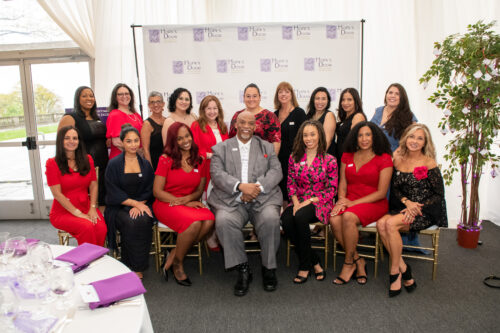
Holidays can be stressful for everyone, especially for those in domestic violence circumstances. Experts contend that the pressure of the celebrations can inflame emotions and behavior. Other stressors can also contribute to domestic abuse. The National Commission on COVID-19 and Criminal Justice reported an 8.1% increase in U.S. domestic violence incidents following the pandemic stay-at-home orders in 2020.
Maya Lloyd, MPH, director of Outreach and Development for Hope’s Door, has witnessed this phenomenon. To help, she has formed the Hope’s Door Survivor Advocacy Group. “The purpose of the group is to include former and active Hope’s Door clients in policy advocacy and give them the opportunity to use their voices and talents to support other survivors, educate the public, and amplify their stories,” says Maya.
Survivor Advocacy Group members volunteer to take part in speaking engagements, media interviews, agency outreach, fundraising events, and to provide support to others as they navigate the court system. “It’s empowering for members to speak their truth and help others,” says Maya, “It helps them find their voice, take their power back, and break the cycle of abuse.”
A Voice Found
Melisa Dean* learned about domestic and relationship violence in high school health class. What she learned was merely a chapter from what turned out to be a very complicated book. “We were taught that it can happen in any home,” says Melisa. “We learned some red flags, but you never think it will happen to you.”
That’s one reason Melisa joined Hope’s Door Survivor Advocacy Group. “When I was presented with the opportunity, I knew it was important to share my story,” she says. “It was very hard to open up, yet I knew if I didn’t do it now, I might not have the guts to do it in the future.”
Sharing her story has allowed her to spread the word on the seriousness of domestic violence. “I know sharing my story is 100% helpful to others,” she says. “It’s so common to be in denial. On average, it takes seven attempts for a victim to leave their abuser. If my story can help someone, that’s all for the better.”
Melissa knows because she was that person. At just 19, she found herself wooed into a relationship with a man 10 years older. She was one of the lucky ones who reached out for help and escaped with the assistance from a local police detective who sent police escorts to help her leave the home. “That was the most emotionally and physically draining day of my life,” she says.
The transition was rough. At first, Melisa says she was in denial about needing additional help. But once she reached out, she was glad she did. “Hope’s Door helped me build a new life,” she says. They helped her with the legal and court processes, and she saw a counsellor there for almost a year. She says Hope’s Door also helped her answer the big questions that she was left with in the wake of her experience–where does she stand in the world? Can a relationship ever be safe?
The End of Silence
Lilliana Estes* also knows that building a new life is a challenge. The manipulation she suffered in an abusive relationship distorted her reality. “You think you are the only one to be in this situation, you feel ashamed, and that shame keeps you silent,” she says.
She was confused but trying to find her way out when, on one of her visits to the local police precinct, an officer asked Lilliana if she wanted him to pass her name on to an organization that could help. She said yes, never expecting to hear from anyone. “I got a call from Hope’s Door the very next day and that call changed my life,” she says.
The physical violence and mental abuse she suffered had worn her down, but through counselling at Hope’s Door, Lilliana began to understood trauma bonding. She became committed to her emotional growth and the personal responsibility she had to take for her life. “In my case, I came to understand it wasn’t just about choosing the wrong partner, it was deeper than that,” she says.
For her, joining Hope’s Door Survivor’s Advocacy Group is part healing and part helping. “I had become wired to be silent, but now I have a voice, and I am going to use it to help others.” Lilliana says.
* name changed to protect anonymity
A local nonprofit, Hope’s Door runs a 24-hour bilingual hotline, 888-438-8700. The agency’s confidential and free services help with safety planning, offers counseling, legal assistance, and emergency shelter to those in need. hopesdoorny.org
7 Ways You Can Help at the Holidays … and Beyond
1) Select Hope’s Door for your #GivingTuesday charity of choice on November 29, 2022.
2) Shop for Hope’s Door through AmazonSmile Charity Lists. This is a meaningful way for you to shop and donate items directly to Hope’s Door. In addition, AmazonSmile donates 0.5% of your eligible Charity List purchases to the organization at no cost to you.
Hope’s Door Donation List on Amazon.com features items such as bedding, clothing, shoes, household items, and toiletries that can help domestic violence victims start a new life. The process is simple. Just visit smile.amazon.com, select Hope’s Door and start shopping.
3) Donate from the Hope’s Door Wish List. Gift cards to local supermarkets, drugstores and department stores are always welcome. See hopesdoorny.com for more information.
4) Attend the Gala Fundraiser events held each fall and spring or organize your own event to support Hope’s Door.
5) Volunteer to join the Friends Committee and help plan and organize Hope’s Door major fundraisers.
6) Invite the Love Shouldn’t Hurt Workshop to your school or organization. This interactive Hope’s Door workshop is designed for middle schools, high schools, colleges, and community-based sites to educate students and residents.
7) Volunteer your talent. Volunteers are needed to help with childcare, translation services, and administrative duties. If you have a skill–sewing, resume writing, self-defense training–offer to share it.
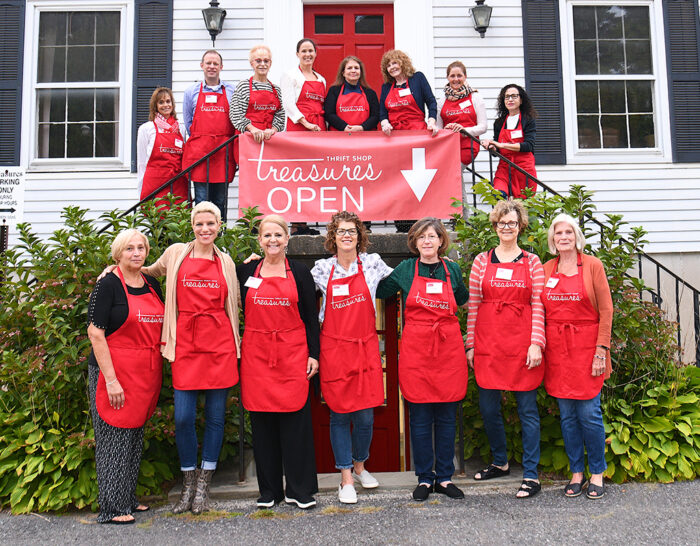
 Adds Trina Fontaine who oversees the shop on behalf of the church’s community out-reach efforts, “Treasures is truly a wellkept secret. Not only does Treasures boast bargains on high-end retail items, but it also helps individuals and households to be environmentally responsible with their donations and purchases.”
 Started in 1967 by Mildred McDonald, a St. Stephen’s congregant and president of its Episcopal Church Women committee, Treasures’ business model has remained constant: providing low-cost, high-quality items to the community in order to lend financial support to local people in need. Half of the profits from Treasures support area non-profit organizations such as Emergency Shelter Partnership, Hope’s Door, Hudson Valley Honor Flight, and the Mount Kisco Interfaith Food Pantry. Through its partnership with Greentree Textiles, Treasures accepts textile and clothing items unsuitable for resale but able to be repurposed, including clothing, shoes, purses, and linens.
 Besides its rotating inventory, what makes Treasures so special is its cadre of 15 warm and welcoming volunteers, all happy to serve customers, bargain hunters and donors alike.
 The story concerning the strangulation and subsequent death of Theresa Gorski of Sleepy Hollow is sad and tragic. Her husband, who had been charged with attempted murder, now faces a homicide charge. Justice in the courts may prevail for Theresa Gorski, but that will be small comfort to those who loved her – most importantly, her two young daughters, ages 5 and 8, who have lost their mother forever.