• Skip to primary navigation
  • Skip to main content
  • Skip to primary sidebar
  • Skip to footer

The Inside Press

Magazines serving the communities of Northern Westchester

  • Home
  • Cover Stories
  • Features
    • Portraits and Profiles
  • Advertorials
    • Lifestyles with our Sponsors
    • Sponsor News!
  • Wellness
  • Happenings
  • Advertise
    • Advertise in One or All of our Magazines–And/Or Subscribe
    • Advertising Payment Form
  • Contact Us
  • Search

Cover Stories

Bert Sugar Remembered for Persona and Prose

May 23, 2012 by The Inside Press

By Andrew Vitelli

A Boxing Legend and Chappaqua Native: Bert Sugar Remembered for Persona and Prose

The illustrious and prolific writing career of Herbert (Bert) Randolph Sugar can be said to date back to 1956, when Sugar, then a 19-year-old summer school student at Harvard University, published a story in the Harvard Crimson detailing Red Sox slugger Ted Williams’ spat with a group of fans.

As is now history, Sugar went on to become perhaps the premiere boxing writer and commentator to ever sit ringside and the author of dozens of books. A 47-year Chappaqua resident, Sugar died on March 25 at Northern Westchester Hospital at the age of 75. Sugar had been battling lung cancer and died of cardiac arrest.

Sugar’s rise in the world of sports reporting was far from a straight line to the top of the industry. After graduating from the University of Maryland, Sugar went on to earn law and business degrees from the University of Michigan. Though he passed the bar, he was a lousy law student– finishing last in his class–but excelled in his business studies, according to family.

“He had a good time doing a million things, other than studying,” says his wife, Suzanne of Chappaqua, whom Bert met at the Ann Arbor campus.

At Michigan, Sugar wrote for The Michigan Daily and after graduating he made his first venture into publishing with Baseball Monthly, which he later sold to Sports Illustrated. He turned his focus to advertising and brought his family from Washington D.C. to New York City and eventually to Westchester.

“It was the age of Mad Men,” explains his daughter, Pleasantville resident Jennifer Frawley.

Even before he turned his career focus to journalism, Sugar earned a reputation for having a way with words. He subscribed to six daily newspapers at a time, says his wife, and Bud Gilligan, who now works at Quaker Hill Tavern in Chappaqua, remembers riding the train to Manhattan with Sugar three decades ago and being awed by his vernacular prowess.

“He was the quickest guy to do a crossword puzzle out of anybody on the whole train,” Gilligan says. “Anybody who was having problems trying to find a word, a word to fit in the crossword puzzle, they would ask Bert.”

After parting ways with the advertising agency at which he worked, Sugar turned his attention to sports journalism and purchased Boxing Illustrated. It was one of a handful of magazines he would own or edit over his career.

While Sugar was a fan of all sports, boxing was always his favorite. It’s been written that his love of boxing began at the University of Maryland, but Suzanne Sugar says it predates his college years. Growing up in Washington, he lived down the block from the CYO, where he’d often go to put on the gloves and hone his limited skills.

“His mother would send him off and probably not know what he was doing,” says his wife.

From the time he jumped headfirst into boxing coverage, Sugar was a star the sport had never seen outside the ring. He was, as many liked to say, a “walking encyclopedia.”

“He knew all the players, he knew all the referees, he knew the boxing game itself, and when he spoke, people would listen,” explains Louis Schwartz, president of the American Sportscasters Association. “He had an awful lot of knowledge in that head of his.”

His unparalleled knowledge was just the tip of the iceberg; he had a larger-than-life personality that shined whether one was watching him on TV or sitting at the next barstool. He was the kind of guy who could make friends smile even while telling grimace-worthy jokes and correcting grammar. His writing–in books, magazines and newspaper columns–showed an unparalleled mastery of the English language and a style so engaging readers needed no interest in the subject matter to become immediately enthralled.

“With an enormous crowd of 51,000 acting like youngsters suffering from a severe case of green-apple colic, hollering and screaming at every image shown on the giant overhead screen and even participating in the first ‘Wave’ ever seen at a boxing event, the fight lived up to its billing as ‘The Event,'” he wrote for HBO.com in his recap of a 2010 match between Manny Pacquiao and Joshua Clottey. “Unfortunately, the fight did not live up to its billing as a fight.”

Sugar was known to write a book in two weeks or less. His method was as unconventional as his writing style; he would jot down his thoughts on pieces of scrap paper, spread them around his desk and sit down with his typewriter. Then he’d spend days on end turning them into a book, according to Michael Gaffney, who was Muhammad Ali’s photographer in the late 1970s and worked with Sugar on Gaffney’s book, “The Champ: My Year with Muhammad Ali.”

“One of Bert’s greatest gifts was that he could write exactly as he spoke, and he was a character,” Gaffney says. “His writing approach was as unorthodox as he was.”

Some of Sugar’s most popular books included “Bert Sugar on Boxing,” “Boxing’s Greatest Fighters” and “Bert Sugar’s Baseball Hall of Fame: A Living History of America’s Greatest Games.” Opinionated on any subject, he also wrote books about horse racing, Harry Houdini, New York City, Blackjack and ABC Sports.

Sugar filmed some of his ESPN segments at Quaker Hill Tavern, where he was known to bring signed copies of his latest books and chat with strangers.

Never blessed with much hair, he began experimenting with different headwear after college and by the time he was becoming a ringside mainstay, his fedora, along with an unlit cigar in the corner of his mouth, had become as much a part of his persona as his eloquent prose. He styled himself, Frawley says, after early-1900s newspaperman Damon Runyon.

“He had a real public persona,” says Frawley. “Wherever he went, he always filled a room.”

Sugar, though, also had a persona distinct from the one known to the public, Frawley describes.

“He was also just a really good, caring person,” she says. “He had a really gentle side, and he really loved his grandchildren and his family.”

Sugar was married to Suzanne for 51 years. They had two kids; Jennifer Frawley and son, J.B. Sugar. He’s also survived by his brother, Steven, and four grandchildren.

Andrew Vitelli is the editor-in-chief of The White Plains Examiner.

Filed Under: Cover Stories

Miracle(s) on Ice

May 22, 2012 by The Inside Press

By David Streich

More Photos and Story here….
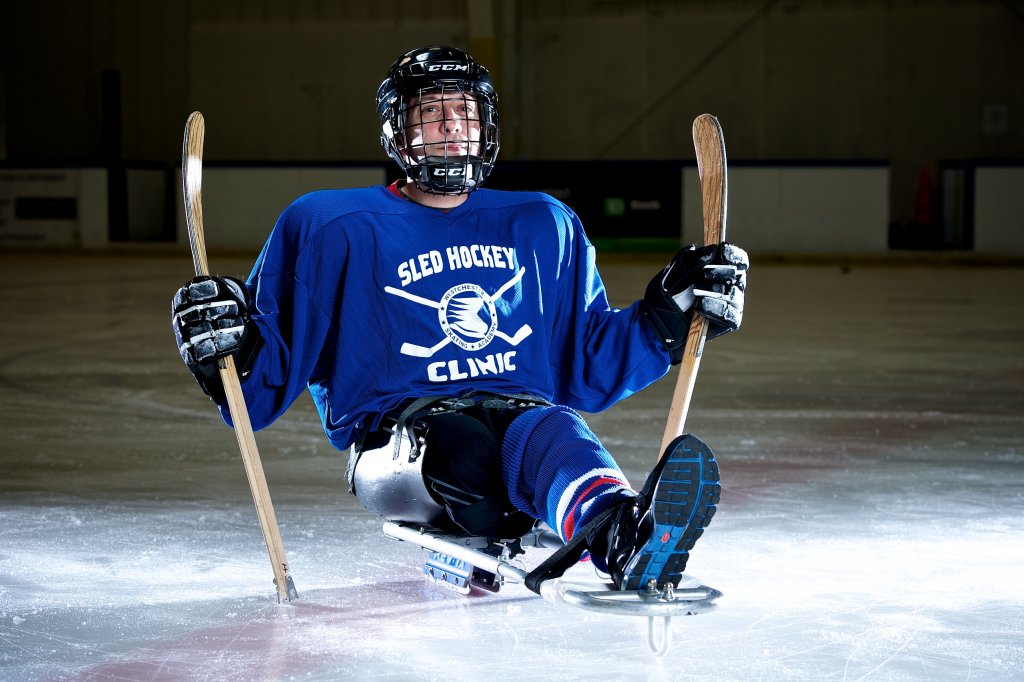
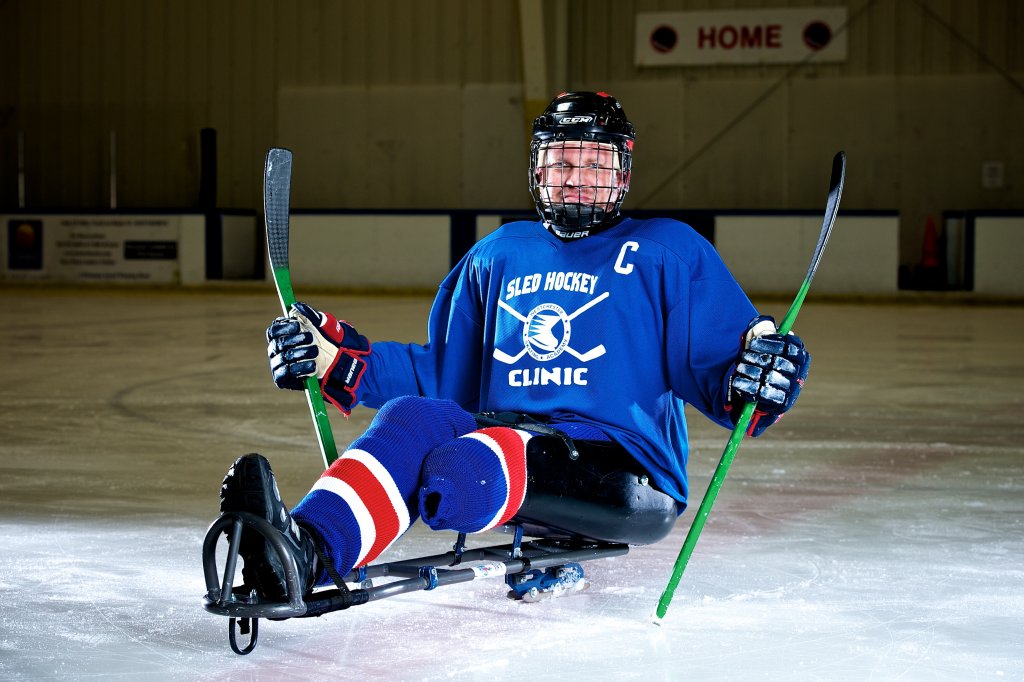
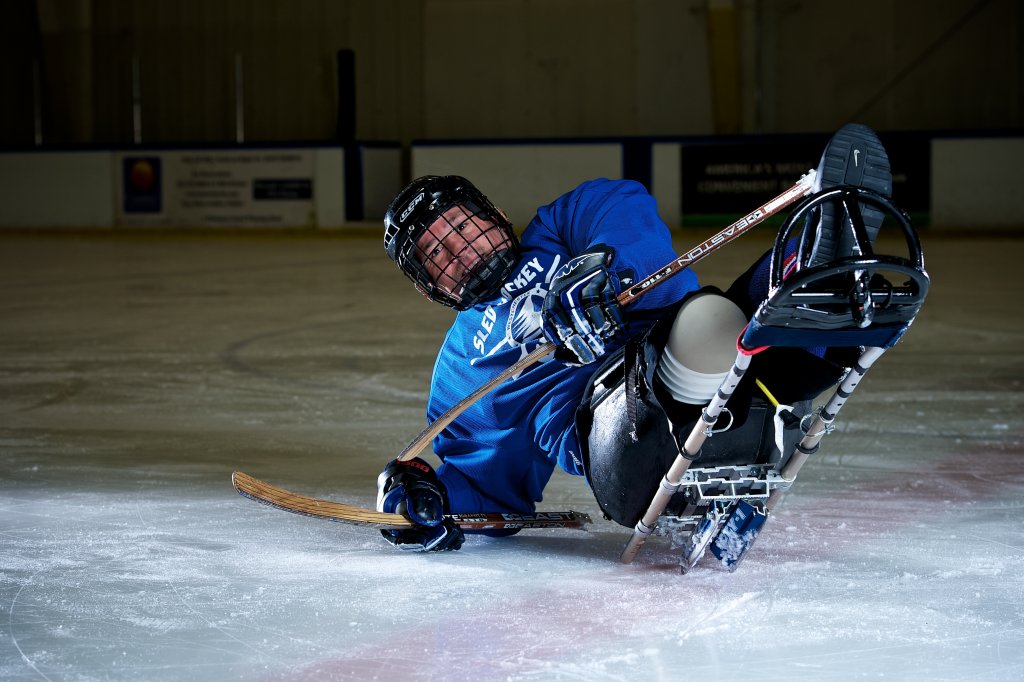
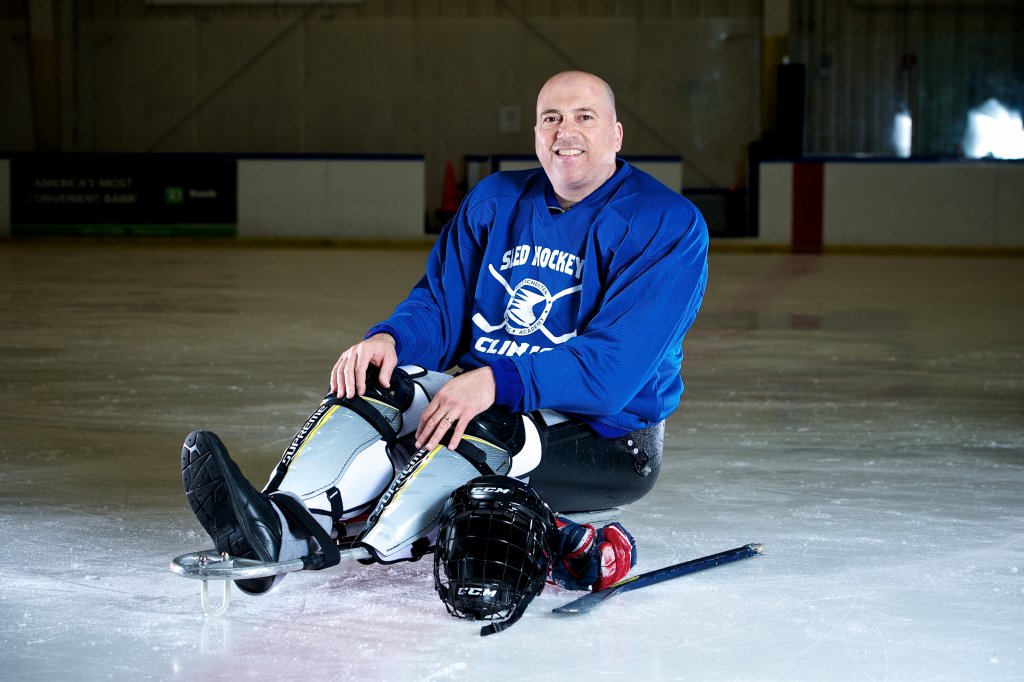
Sled Hockey Clinic Photos by Jim D’Angelo/Ruby Media Group

When I chose to have my leg amputated this past December due to bone cancer, I had no idea that my road to recovery would be smoothed out by a Zamboni. But it was, thanks to the adaptive sport called Sled Hockey. Like you, I had no idea such a sport ever existed. In late December, Mike Hudson, who lost his leg when he was hit by a car in a work-related incident at a construction site, called me to let me know that just because I lost my leg, I didn’t lose my life. He suggested I try sled hockey, and I just laughed. Here I was three weeks after losing my leg, and I could barely even imagine walking again. “Yeah, right,” I said, “maybe next year!”

It hadn’t occurred to me that the next year actually started just a few days later.

Soon afterwards, another stranger named Ron Rogell, the only able bodied member of the team, read my Inside Chappaqua article “One Step Back, Two Steps Forward” (February, 2012), and saw that I enjoyed bowling, biking and hiking. He stalked me out on Facebook, and told me that there would be a sled hockey practice on the New York Rangers training ice in Elmsford. Who in their right mind would pass up an opportunity to get on the ice where the amazing Rangers play? As the father of two young Rangers fans, this would certainly impress my boys. I owed it to them to try it, at least this one time. I asked their mother to put their blue shirts on and I would take them with me.

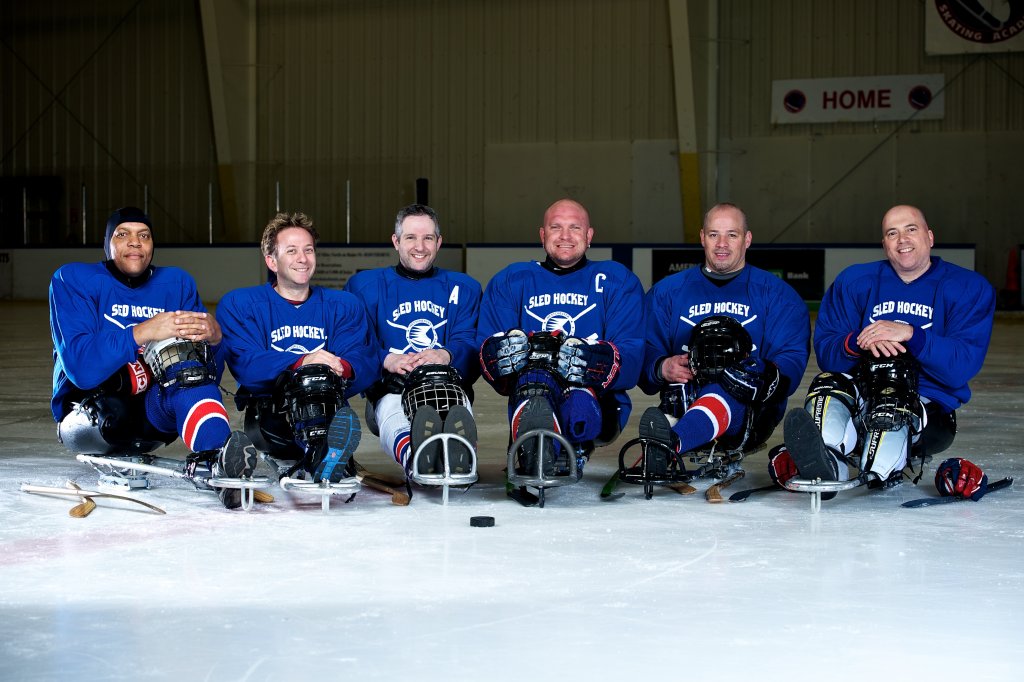
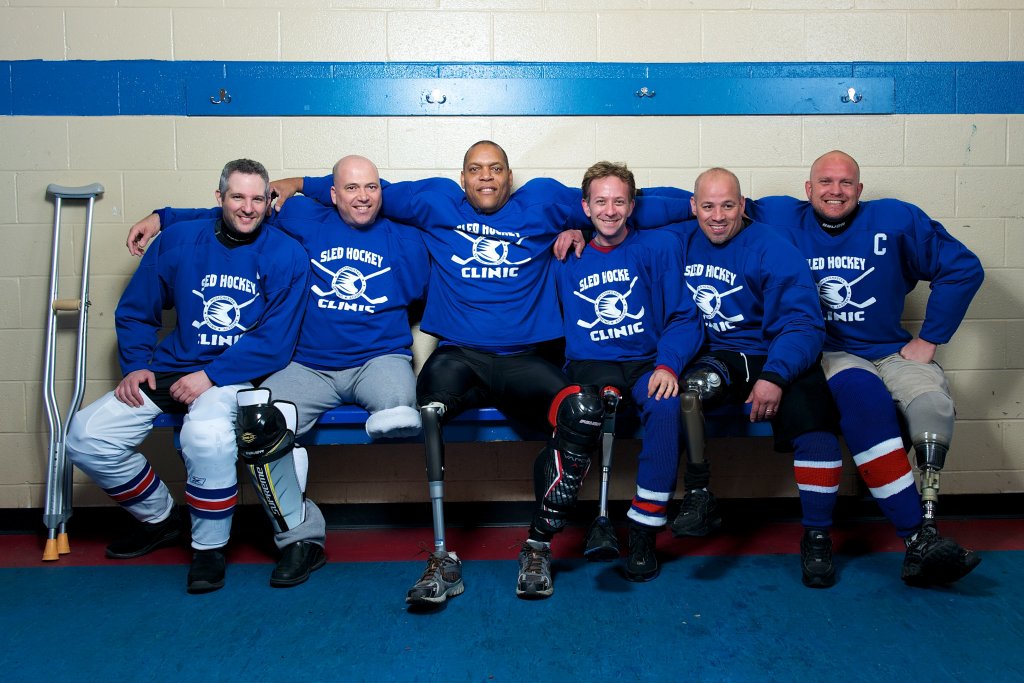
Sled Hockey Team (L-R) Ron Rogell, Rocco Greco, Dexter Benjamin, David Streich, Mario Mason and Captain Mike Hudson

Mike told me that I would need a helmet, chest protector and elbow pads. I went on a spree at Modell’s but left the tags on so I could return the gear the next day. As long as I didn’t get hit in the head with the puck, the helmet would still be in great shape.

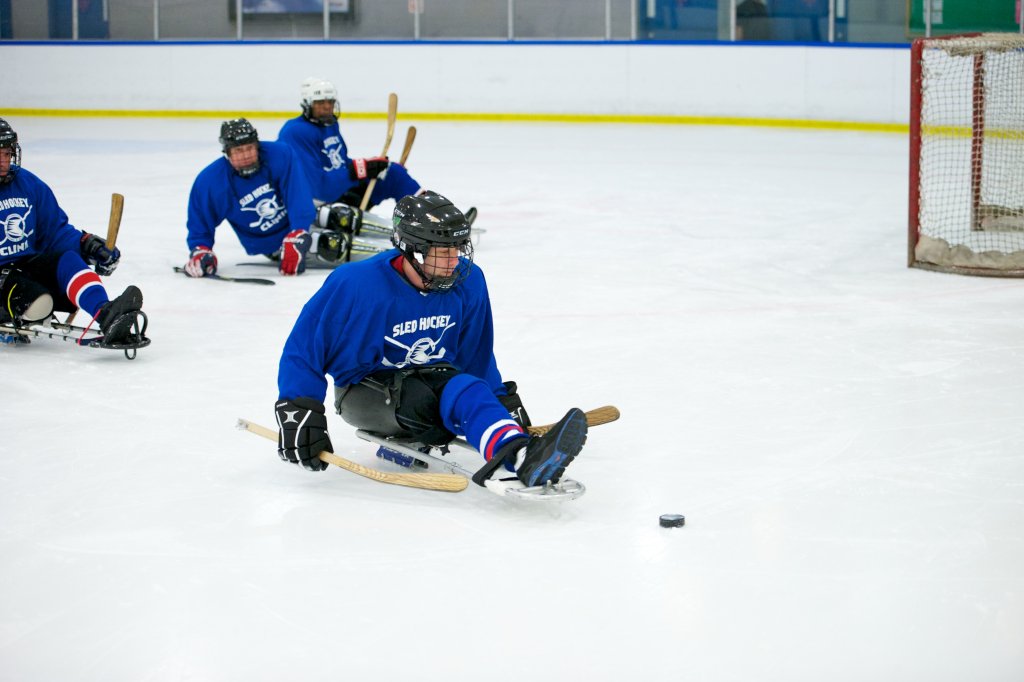
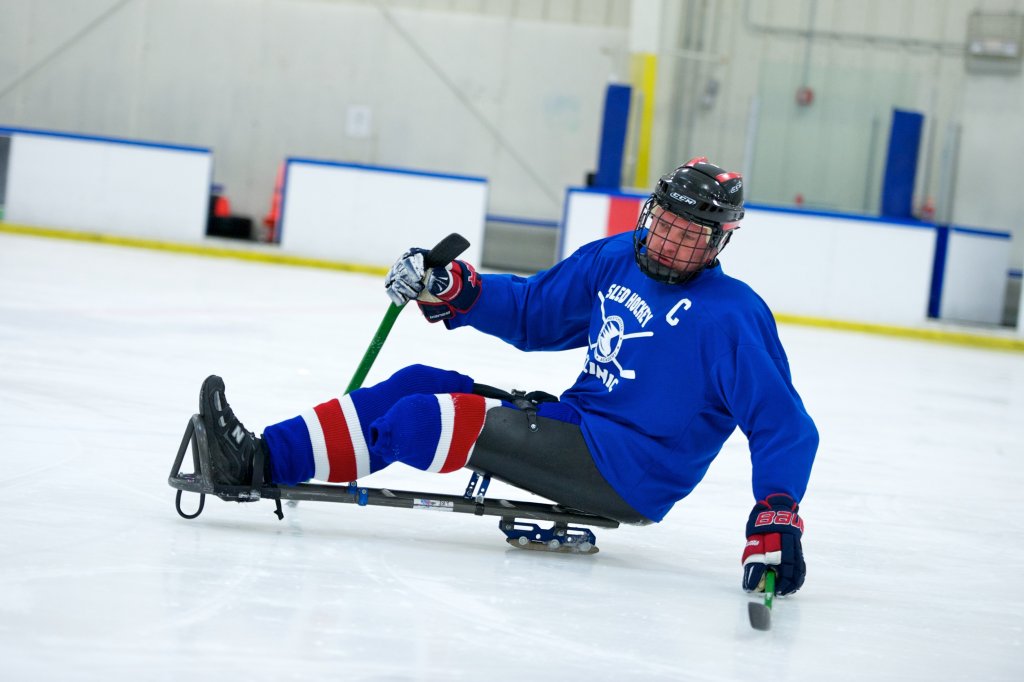
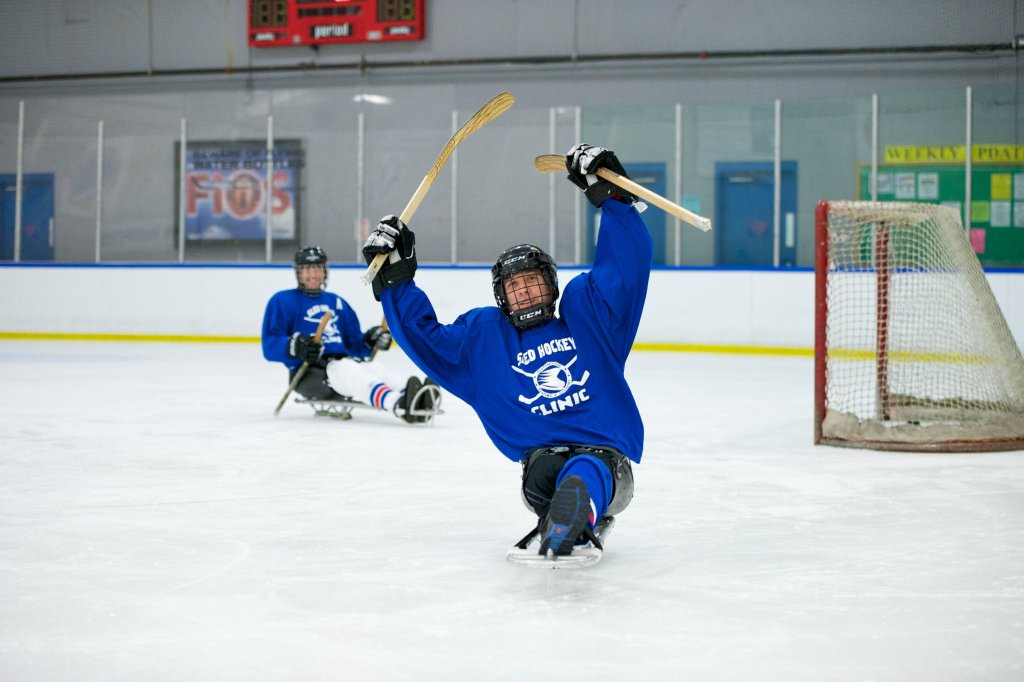
When we got to arena, I met Mike and Ron, and they fit me in a sled, telling me to sit in the bucket and strap myself in. The sled features two parallel ice skate blades under the seat, and a pin that balanced the foot end. Mike handed me two shortened hockey sticks, a lefty and a righty, which had metal picks on the bottoms so I can row, row, row, to propel myself. Once I was strapped in, Mike sent me sailing onto the ice, adrift over the huge Rangers logo on center ice.

The first thing a new player needs to learn is how to fall down and get back up again. It is something that happens often in the beginning. But once I found my balance, and I was able to push myself along with the sticks, it was both unbelievable and amazing! For two months, I had been laying in bed, first with my right leg in a brace, and then with no right leg.

Me and Clever in the MSG dressing room. Photo by Jeffrey Streich

On solid ground, I could move at maybe one mile an hour with crutches or a walker. But here, on the ice, I was flying! How freeing it felt, how special it was to feel the air rush through my helmet and onto my face as I was the one to make it happen with my own energy… Continued Below…

I met several other athletes that night, and I commented to one of them that I only had one leg, but he had two, and he said, “Yeah, but your one leg works, and my two don’t. I have spina bifida.” It just went to show me that this sport is for so many different people for so many reasons, and no matter what your situation is, you’re not the only one who’s got challenges.

At the end of the practice, we played a scrimmage pick-up game, and I got my first attempt at puck handling, checking and slamming. The other players couldn’t believe that I was only two months amputated. I let a lot of pent-up feelings out on the ice that night.

So when I got off the ice at the end of the session, there must have been a huge smile on my face. “So what did you think?” Mike asked, his smile as wide as mine.

“Well, I bought this helmet thinking that I was going to return it,” I confessed as I took it off, “but instead, I’m going home and writing my name in this sucker!” I was never more surprised at myself, and I was so happy that my two sons were there to watch me as I found my new therapeutic, physical, emotional and spiritual salvation.

A few weeks later, I followed the team up to Saugerties, NY for the final two games of the regular season. Lucky for me, they had an extra team jersey, so I got to participate in real official games. I may have played for only five minutes, but I was out there, playing my heart out, trying to hit that puck, pass it to a team mate, and most importantly, not fall down. It was thrilling. But even more thrilling was when I left the ice, and my four-year-old boy, Rocket, ran up to greet me in my Rangers uniform. “Daddy, you look like a superhero!” he shouted. That is a sentence I will never forget for the rest of my life.

Flash forward a few weeks, and I’m chasing the team down to Philadelphia for a weekend-long tournament. We played four games in one day, and another one on Sunday morning. By this time, I have gotten a little bit better, and a lot more dedicated. In between games, we were interviewed by a busload of foreign exchange high school students about our disabilities and the sport. We felt like celebrities.

But the real celebrity status happened the next Thursday, when our team was invited by the real NHL New York Rangers to showcase our skills in Madison Square Garden between first and second periods of a game against the Penguins. We walked and wheeled through the bowels of MSG and excitedly prepped ourselves in our own locker room. As the first period ended and the pro players left the ice, we were escorted through the wide Zamboni entrance. One by one, we pushed ourselves to the center ice of the world’s most famous arena, in front of fifteen thousand hockey fans, including my ten-year-old son, Clever, and my brother, Jeffrey, who served as our official photographer. I’m sure that his job was as thrilling for him as mine was for me.

We were warned that time would go by so quickly, and to remember to look up at the ceiling and the crowd. They announced each of our names as we got a chance to rush the net and take a shot on goal. We were even projected onto every facet of the scoreboard video screens. Nearly everyone made their goal, but when it was my turn, my heart was pounding, and I kept telling myself not to fall. I was able to control my puck right up until my shot on goal, when the puck was deflected by the foot point on my own sled. On one hand, it was a minor let-down, but on the other hand, I figured, that’s why they invented “Next Year!”

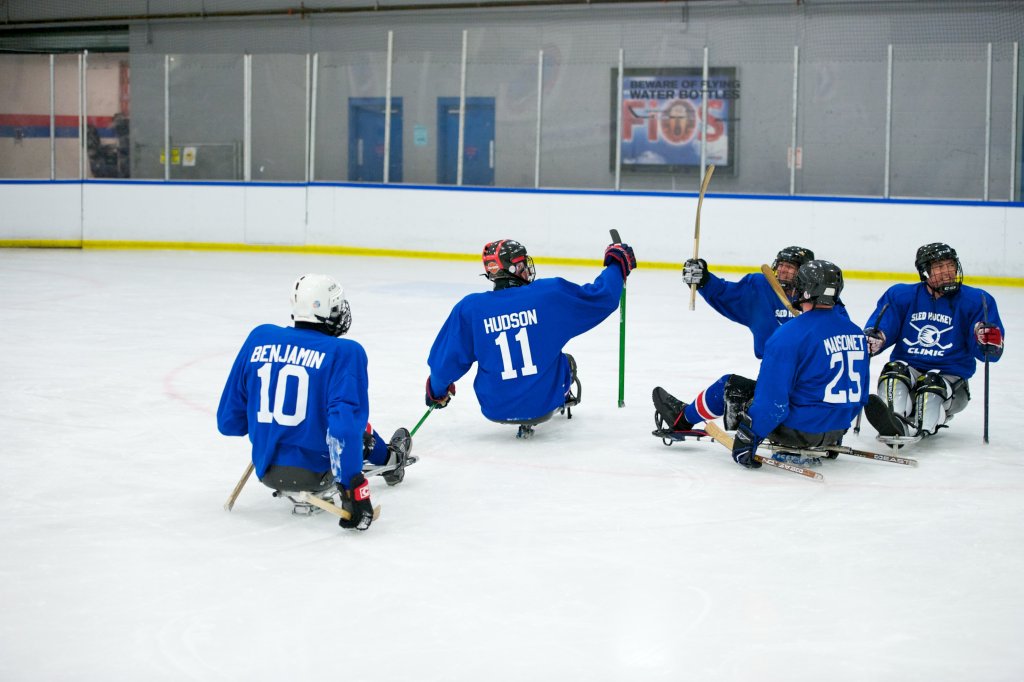
While I enjoyed the sport of sled hockey, one thing was clear to me. Just like how learning to walk again would take time and practice, sled hockey was no different. That’s where the genius of the Sled Hockey Clinic comes into play. Every Monday for ten weeks, a group of us get together at the Westchester Skating Academy to hone our skills, practice drills, take aggression out on the ice, and most importantly, bond as brothers.

In the team photo, above, from left to right, there are my favorite teammates Ron Rogell, 43, the only able-bodied player on our team. A life-long hockey fan, he jumped at the chance to be a part of this sport, and he is very helpful when it comes to loading and unloading the bulky sleds and gear bags. When asked what his favorite memory on or off the ice, he responded, “Seeing the smile on David’s face the first time he got on the ice.”

Rocco Greco, 48, had the same kind of cancer I had—chondrosarcoma—in his left ankle. In May 2011, he lost his leg below the knee, but then the cancer returned, and he had to have a second amputation on his left leg, above the knee. Rocco found out about sled hockey from his doctor in charge of his physical therapy. His next big goal is to walk with his prosthesis without the aid of crutches, and after that, he wants to be able to run.

Dexter Benjamin was hit by a truck 27 years ago in Trinidad, and lost his leg when it took too long before his operation. He says sled hockey changed his life, giving him a sense of freedom. His advice for all is to stay strong, don’t let anything keep you back, and treat everyone with respect.

Then there’s me, David Streich, 43.

Since Mario Mason, 46, lost his leg to an infection in his bone two years ago, he tries to take advantage of everything that is available to him, including running, biking, exercising and skiing… none of which he did with two legs. It was a blessing in disguise. “Sled Hockey gives me a sense of normalcy, if there’s such a thing. I love that it’s a full-contact sport. But my favorite moments are when we get off the ice, take off our helmets and we’re all sitting in the locker room, laughing. That’s when we feel like a family.”

Finally, last but not least, our Captain, Mike Hudson, 38, who lost his leg when he was hit by a car in a work-related incident at a construction site. He was also hooked at first ice, and while he’s very proud of his hat trick in the final game of the regular season, his big goal is to keep spreading the word of sports therapy and getting as many physically limited people involved. “It can really change your life.”

We have plans over the next year to continue to build an adaptive sports network in New York, and expand our education to the general public, but we will need your help.

To find out more about the Westchester Sled Hockey Clinic, watch insane point-of-view videos, visit us at the rink, get on our mailing list and discover how you can donate your time and money to our non-profit organization, please “like” us at facebook.com/sledhockeyclinic.

More Photos and Story here….

Filed Under: Cover Stories

A Giant Heart: Eli Manning Shines a Light on Guiding Eyes for the Blind

May 22, 2012 by The Inside Press

By Ronni Diamondstein Photos by Grace Bennett for Inside Chappaqua Magazine

Two-time Super Bowl champion Eli Manning returns to Westchester this month to serve as Most Valuable Player and host of the 35th Annual Guiding Eyes for the Blind Golf Tournament. For the sixth year in a row, Manning, the New York Giants quarterback, will use his celebrity status to spotlight a remarkable organization that brightens what could be a dark world for the visually challenged and blind.

Eli Manning visited Mulino’s in White Plains early in May, at which time a $3M grant from Pepsico, Inc., toward the development of a Guiding Eyes Canine Development Center, was announced.

This June, Manning will tee off with fellow golfers at the Mount Kisco Country Club. The Louisiana-born football star found his way to this Westchester event thanks to a family friend, Pat Browne, who is a champion blind golfer, winning this tournament 23 times. “Five years ago, Pat Browne called my dad and asked if I would host the Guiding Eyes golf event. Since then, I’ve gotten to witness what Guiding Eyes does and how people’s lives are changed. It’s been very rewarding,” Manning told golfers and supporters at the event dinner last June.

In this economy, not-for-profits have trouble raising funds to meet their needs. “Eli Manning is a big magnet,” says Bill Badger, Guiding Eyes President and CEO, “and we’re privileged to have him.” Last year, the event raised over $650,000 for this organization that provides guide dogs and services for the visually impaired and blind. Badger adds, “Anytime you have a person of Eli’s stature involved, it attracts awareness. He believes in what we are doing and is a genuine and sincere advocate for our mission.”

Lisa Cantwell, a special ed teacher in Yonkers, was able to return to work despite multiple disabilities–thanks to Ogden here.
Eli Manning with 11-week old Steffi

Guiding Eyes for the Blind is dedicated to enriching the lives of blind and visually impaired men and women by providing them with the freedom to travel safely, thereby assuring greater independence, dignity and new horizons of opportunity. The organization runs an internationally accredited, not-for-profit, guide-dog school with a more than 50-year legacy of providing the blind and visually impaired with superior Guiding Eyes dogs, training, and lifetime support services at no cost to the individual.

For the past few years, the Guiding Eyes has cast a wider net to help people. In 2008, they launched a new program “Heeling Autism,” which offers service dogs to autistic children. These children have poor impulse control and “Heeling Autism” dogs are trained to prevent a child from bolting into traffic or some other kind of danger. They help keep the child safe and provide many other benefits to the family. To date, 32 dogs have been placed locally.

The two day tournament begins on Sunday June 10th at the Mount Kisco Country Club where the country’s top blind golfers compete in the Corcoran Cup, the Masters’ Invitational of the United States Blind Golf Association. “The whole weekend is wonderful,” says Dick Pomo, a blind golfer from Green Valley, Arizona, who makes the trip east along with his Guiding Eyes the Guiding Eyes are shared, and the organization’s accomplishments of the year are celebrated.

Wendy David, a clinical psychologist on the board of directors of Guiding Eyes, with Wafer, who she calls “my Vanilla Wafer.” Wafer is David’s fourth Guiding Eyes dog. Her last one was Star, whom she called Star of David

“It’s a feel good day,” says Pomo. “When you sit in the room at the dinner you can feel the warmth. The whole evening is about people giving.” People who can’t attend can help by participating in an online auction and the raffle of a 2013 BMW and a pair of Rolex watches.

Not all dogs trained by Guiding Eyes have a successful career helping the blind. Some dogs start the program, but for one reason or another cannot serve as guide dogs. These dogs are released for adoption. Chappaqua native Bob Malmgren,Vice President of Sports Sales for CBS, got involved in the tournament when his wife Gina adopted one of these dogs. After Gina adopted her dog, Pierre, she changed her career by becoming an Administrative Assistant to Dr. Jody Sandler, Director of Veterinary Services. The Malmgrens now have two of these dogs.

A member of the Mount Kisco Country Club and an avid golfer, Malmgren says it was a natural fit for him to join the classic and help find sponsors. “A lot of our CBS guys are well connected and we jumped right in to help find sponsors and donations.” Malmgren played a big role in securing transportation to the classic for the blind golfers. “I reached out to a friend who runs Southwest Airlines and the blind golfers were flown in free.”

While Malmgren modestly says he’s a small part of the event, he is part of a big group of volunteers and his contribution in getting other donors and support is huge. “The event has continued to grow for 35 years and yet we’ve managed to keep it fun and dynamic without losing the original charm,” says Michelle Brier, director of Marketing and Communication for Guiding Eyes. “This is a testament to Guiding Eyes and believing in what we do.”

There are people who’ve been involved since the beginning. “I go to lots of events and Guiding Eyes is a first class golf event. We never have a problem filling two courses,” says Malmgren who is also a member of the Guiding Eyes Golf Classic Committee. Volunteers make the event happen. Malmgren says that like Eli, every single person involved with Guiding Eyes for the Blind has the same qualities as the Super Bowl hero but they just play on different fields or stages. “We all share the same passion and understand our mission. Everyone involved is an MVP and champion.”

For Pomo, the event is like coming home. “At Guiding Eyes, I feel like part of a family. Eli Manning represents the school and brings in so many people.” Manning continues to be a proud participant and supporter: “It’s amazing what someone with vision impairment can accomplish with a guide dog, and how a child with autism can live his life and allow his parents to breathe a little with a “Heeling Autism” dog. It’s an honor to be a part of this,” says Manning. For more information about the 35th Annual Guiding Eyes for the Blind Golf Classic go to www.guidingeyes.org/ news-events/events/golf/ or call 914.243.2208

Ronni Diamondstein, owner of Maggie Mae Pup Reporter is a Chappaqua based freelance writer, PR consultant, award-winning photographer and a School Library Media Specialist and teacher who has worked in the US and abroad. 

Eyes that Guide and So Much More

Doug Frost, a longtime employee of the Chappaqua Village Market, knows first hand the value of a Guiding Eyes dog. His mother, Lucretia Frost, of Verplanck, New York, now has her second guide dog, Cindy, a black Lab. She got her first dog, Venice, 17 years ago and clearly values the experience. Not only does Guiding Eyes train dogs, but it trains their future owners as well, at a school in Yorktown Heights. “My first stay at Guiding Eyes was in February 1995,” says Lucretia. “You could not meet a nicer group of people. They were all so helpful and concerned about your needs. My second visit was in April 2008, and again, it was great. The complex was beautiful and all the accommodations and amenities made it a comfortable place to stay.”

There are many benefits in having a Guiding Eyes companion, and Lucretia is keenly aware of them. “One of the most important feelings for me is that your dog gives you the freedom to do things on your own.”

Once you have a guide dog, you are not left on your own. “Guiding Eyes keeps in contact and is a great help if any problems arise. The vet’s office continues to take care of Cindy wonderfully.” There is mutual trust between Lucretia and Cindy. “These dogs are so well trained you can go anywhere and feel safe,” says Lucretia. And once Cindy is off duty, free of her harness, she is a loving pet and member of the family.
– Ronni Diamondstein

Filed Under: Cover Stories

Getting to Know: Artist and Tech Guru Marc Jaffe and The Taming Cafe

May 22, 2012 by The Inside Press

Marc Jaffe– an accomplished photographer and a technology expert who has created his own vibrant brand in dual realms—was first inspired by his father, Ed Jaffe. The elder Jaffe began his career as a commercial photographer and is now a sculptor and painter. “I grew up around art my whole life,” said Marc; his foray into the art world began as the subject for one of his father’s sculptures, at the age of six months.

Kinetic energy flows through Jaffe’s photos; the sense of movement visualized in his prints is generated by the unique method he has developed. While traveling by car, Jaffe aims his camera and shoots.The resulting images are arresting and dazzling. His work has appeared in three books and has been shown at the juried Armonk Outdoor Art Show, Greenwich Art to the Avenue, SoNo Arts Festival and Reflected Light: Robert Kennedy Jr’s, Riverkeeper benefit.

Find technology daunting? No worries. Jaffe elucidates the most murky aspects of technology in a manner both joyful and productive. Recently, Jaffe taught a woman residing in a nursing home how to embrace technology. In a lesson on using a Google search, his instructions were: “Type the question the way you would ask me or a doctor.” The client was thrilled to learn how easy it was to harness the energy of her computer. “I teach people how to use their tools. It’s empowering,” Jaffe noted. In addition to teaching, he also serves as the web master for several illustrious sites including the one for this magazine!

The next phase of The Taming Cafe, Jaffe’s technological enterprise, will be the opening of an actual site destined to become the go to location for anyone interested in technology, learning and social networking. This hub will house many components including: Taming Central, a software and hardware training center, Taming Beans; featuring in-house roasted blends and technologically compatible food, the Taming Cage; a repair center for “unruly computers,” Taming Gadgets; a shop selling computers, phones and technology as well as Taming Social for “live social networking and learning.” Jaffe is currently soliciting investors to finance this venture.

Visit marcjaffe.com  Facebook Page to view his work and for further information

– Sarah Ellen Berman

Filed Under: Cover Stories

Miracle(s) on Ice (Continued)

May 22, 2012 by The Inside Press

Continued from Magazine Article…
Sled Hockey Clinic Photos by Jim D’Angelo/Ruby Media Group

Background of the group as told by Michael Hudson:

Currently we are 5 lower extremity amputees and 1 “able body” within our Clinic.

As for how it got started, I was a part of the New York Rangers Sled Hockey Team within the NESHL (North East Sled Hockey League) division. The NESHL has representing teams from NH, VT, MA, CT, NY, NJ and PA at the present time. Their website: www.neshl.org. I had been introduced into this wonderful adaptive sport through the Wheelchair Sports Federation, www.wheelchairsportsfederation.org. As I described earlier, I found my passion within Sled (sledge) Hockey. As our season was coming to an end, I thought there had to be another way to continue and not wait until October for the next season. The 6 of us were at Westchester Skating Academy Feb. 9, 2012 and we were approached by one of the Asst. GM about our own ice time. Three weeks later, March 5th was our debut.

We currently skate the Clinic on Mondays, but I meet a couple of the guys on Thursday mornings as well to practice with them. The same Asst. GM that I referenced above has spoken to me a couple of times about more ice time, we are not ready for that yet though.

The mission of the group is to raise awareness for the adaptive sports in general but more specifically, to recruit for next season with the NY Rangers Sled Hockey Team. Essentially what needs to be mentioned also is the bonuses the adaptive sports bring to physically limited people. The therapy we receive after every practice and training session is incredible!!

As far as funding, I haven’t an exact dollar value. The ice time is expensive for us limited budget guys to afford. I am only receiving pay from Worker’s Comp currently but I saw how happy the guys were and I took it upon myself to set it up and make it happen.

Ultimately, I would like to have enough funds available so we can run clinics each season along with possibly setting up a tournament in the Fall. The tournament would be a slight boost to the local economy also, hotels, restaurants, gas stations.

Here is a link with the whole story of Sled Hockey from its origin in the 60’s in Sweden to presently being an International Paralympic sport. http://en.wikipedia.org/wiki/Sledge_hockey

Sled Hockey Team (L-R) Ron Rogell, Rocco Greco, Dexter Benjamin, David Streich, Mario Mason and Captain Mike Hudson

Photos from far right to far left-

Michael Hudson (C) – left, below knee amputee; 2.5 years ago. http://articles.nydailynews.com/2009-08-24/local/17932846_1_construction-site-road-worker-keller-s-mother

Ron Rogell (A) – an able body that fell in love with the sport and enjoys assisting physically limited people

David Streich – right, above knee; 4 months ago due to cancer

Rocco Greco – left, above knee; within the past 6 months due to cancer

Mario Maisonet – right, above knee; 2 years ago due to infection from a spider bite

Dexter Benjamin – right, above knee; 27 years ago, hit in traffic saving the life of a young boy

dsc_2199
dsc_2215-3
dsc_2223
dsc_2238
dsc_2247
dsc_2267
dsc_2311
dsc_2312
dsc_2369
dsc_2380
dsc_2415
dsc_2421
dsc_2438-2
dsc_2450

Filed Under: Cover Stories

  • « Go to Previous Page
  • Page 1
  • Interim pages omitted …
  • Page 139
  • Page 140
  • Page 141
  • Page 142
  • Page 143
  • Interim pages omitted …
  • Page 149
  • Go to Next Page »

Primary Sidebar

Please Visit

White Plains Hospital
William Raveis – Armonk
William Raveis – Chappaqua
Northwell Hospital
Houlihan Lawrence – Chappaqua
Houlihan Lawrence – Armonk
Houlihan Lawrence – Briarcliff
NYOMIS – Dr. Andrew Horowitz
Westchester Table Tennis Center
Spavia
Compass: Miller Goldenberg Harris Team
Lipari & Mangiameli Dentistry
Raveis: Lisa Koh and Allison Coviello
Bristal Assisted Living
Maid Brigade
Kevin Roberts Painting & Design
Zwilling J. A. Henckels
Meagher & Meagher Attorneys at Law
Compass: Aurora Banaszek
Dr. Briones Medical Weight Loss Center
Chocolate Chalet
OuterBoundaries travel
Houlihan: Kile Boga-Ibric
Play Nice Together
Pinsky Studio
Breathe Pilates and Yoga
King Street Creatives
Saltbox Sash

Follow our Social Media

The Inside Press

Our Latest Issues

For a full reading of our current edition, or to obtain a copy or subscription, please contact us.

Inside Pleasantville and Briarcliff Manor Inside Chappaqua and Millwood Inside Armonk

Join Our Mailing List


Search Inside Press

Links

  • Advertise
  • Contact Us
  • Digital Subscription
  • Print Subscription

Publisher’s Note Regarding Our Valued Sponsors

Inside Press is not responsible for and does not necessarily endorse or not endorse any advertisers, products or resources referenced in either sponsor-driven stories or in advertisements appearing in this publication. The Inside Press shall not be liable to any party as a result of any information, services or resources made available through this publication.The Inside Press is published in good faith and cannot be held responsible for any inaccuracies in advertising or sponsor driven stories that appear in this publication. The views of advertisers and contributors are not necessarily those of the publisher’s.

Opinions and information presented in all Inside Press articles, such as in the arena of health and medicine, strictly reflect the experiences, expertise and/or views of those interviewed, and are not necessarily recommended or endorsed by the Inside Press. Please consult your own doctor for diagnosis and/or treatment.

Footer

Support The Inside Press

Advertising

Print Subscription

Digital Subscription

Categories

Archives

Subscribe

Did you know you can subscribe anytime to our print editions?

Voluntary subscriptions are most welcome, if you've moved outside the area, or a subscription is a great present idea for an elderly parent, for a neighbor who is moving or for your graduating high school student or any college student who may enjoy keeping up with hometown stories.

Subscribe Today

Copyright © 2026 The Inside Press, Inc. · Log in