• Skip to primary navigation
  • Skip to main content
  • Skip to primary sidebar
  • Skip to footer

The Inside Press

Magazines serving the communities of Northern Westchester

  • Home
  • Cover Stories
  • Features
    • Portraits and Profiles
  • Advertorials
    • Lifestyles with our Sponsors
    • Sponsor News!
  • Wellness
  • Happenings
  • Advertise
    • Advertise in One or All of our Magazines–And/Or Subscribe
    • Advertising Payment Form
  • Contact Us
  • Search

Gina Carey

About Gina Carey

Gina Carey is a writer, editor, and content strategist living in Sleepy Hollow. She has over 20 years experience working at major digital companies as well as local publications.

Demystifying Ketamine Therapy: Take a Look Inside the Treatment Everyone’s Talking About

November 10, 2023 by Gina Carey

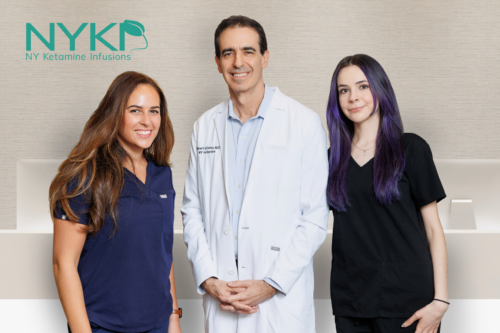
NY Ketamine Infusions Westchester Team led by Robert Glatter, M.D.

While images of home breadmaking, disinfecting mail, or finally scoring an N95 mask are common sketches of quarantine life, more serious details about the toll the global pandemic took on our mental health have slowly emerged. The CDC reports that the number of Americans experiencing anxiety or depression today has jumped three times since 2019, while one in five adults live with some form of mental illness. Mental health is deeply personal, and for many, finding an effective treatment can feel like navigating a labyrinth alone.

One approach that’s making waves is ketamine therapy, a treatment that uses low doses of the drug to manage mental health conditions. It can potentially treat a range of disorders, including depression, anxiety, PTSD, and even chronic pain. While recreational drugs, like Special K, may come to mind, you’re going to need to hold the glitter. The doses administered in ketamine therapy are nowhere near what’s used recreationally, and do not send patients on a psychedelic trip. To understand how the drug works and who it might serve, we spoke with Dr. Robert Glatter, Medical Director at the newly opened location of NY Ketamine Infusions.

Dr. Glatter has a long history administering ketamine, first as an emergency room physician at NYC’s Lenox Hill Hospital. Ketamine was originally developed as an anesthetic in 1970, and was widely used during the Vietnam War by surgeons treating soldiers injured on the battlefield. After doctors noticed its ability to treat soldiers with PTSD, depression, and suicidal thoughts returning from the Gulf War, Glatter says that institutions like Yale and NIMH began studying its effects on the brain. “Essentially, they gave the soldiers these infusions, and they noticed that within a day or so, their moods started to elevate. They felt less suicidal,” he says. “They noticed that the medicine was rapid-acting, and led to mood elevation.”

Years of additional research at Yale, NIMH, Mt. Sinai and Columbia University in NYC led to intravenous (IV) ketamine being used “off-label” to treat mood disorders. Ketamine helps to repair and generate new synapses and dendrites. By doing so, the net effect is enhanced communication between nerve cells, in what Glatter refers to as a “structural repair of the brain,” as opposed to a chemical approach using standard antidepressant medications. Ketamine therapy improves connectivity by repairing and enhancing growth of dendrites and synapses, and for some, results in an almost immediate lift in mood regulation and resilience.

Glatter emphasizes that one of the key differentiators in ketamine therapy is that rapid response. Traditional antidepressants, which aim to correct chemical imbalances, may take weeks or even months to produce effects, while ketamine’s restructuring of the brain often works within days. This can be life-changing for patients in severe crisis or who have struggled for years with treatment-resistant conditions.

So who’s it for? Ketamine therapy has shown to be effective in treating PTSD, which includes mood disorders such as depression, anxiety, bipolar disorder, and OCD. That said, ketamine therapy is not a one-size-fits-all solution, and is not for people with high blood pressure or hypertension. It’s recommended to patients who’ve first shown resistance to other treatments, like anti-depressants and therapy. Glatter says certain patient profiles respond best to it, particularly patients under the age of 70, females (due to synergy with estrogen) and those who have experienced childhood trauma.

Patients can receive ketamine through an infusion (via intravenous drip), a nasal spray, or even as a lozenge. Dr. Glatter calls infusions the “gold standard,” and strongly believes they are the best way to receive treatment. At the clinic, patients undergo six infusions over a two-week period. He says most feel results within 3-4 treatments. Patients with positive results return on average three to six times over the following year to receive a booster infusion. “Boosters are important because they prevent people from backsliding,” Dr. Glatter says.

The results speak for themselves. Glatter says among thousands of patients at NY Ketamine Infusions, 84% reported an improvement in mood and function.

A Typical Treatment

Stereotypical ideas of ketamine might conjure up images of a wild rave, but appointments are more akin to cozying up on a comfy recliner with a blanket. “Ketamine’s action is a delayed effect; it begins to act 12 to 15 hours after the infusion. Nothing therapeutic happens during the infusion,” Dr. Glatter says. “They’re here to get the infusion, and certainly it feels good, but they’re not getting psychedelic.” At NY Ketamine Infusions, after patients check in, they go to a private treatment room. There, they discuss symptoms and progress before a nursing practitioner, under physician guidance, starts the monitored infusion, which can be adjusted at any point during the treatment.

Since opening the doors to their Westchester operation this April, Dr. Glatter wants people to know that ketamine therapy is an option. “We really seek to improve your quality of life and hope you will look at us as part of your mental health care going forward.”

Sources:
https://time.com/6308096/therapy-mental-health-worse-us/
https://www.cdc.gov/mentalhealth/learn/index.htm
Filed Under: Health and Wellness with our Sponsors Tagged With: anxiety, depression, Dr. Robert Glatter, Ketamine Therapy, Mood Disorders

Indies Are Back! And Independent Bookstore Owners Aim to Please!

August 18, 2023 by Gina Carey

Make Believe Books PHOTO by Mia Brown
Make Believe Books / PHOTOS BY MIA BROWN

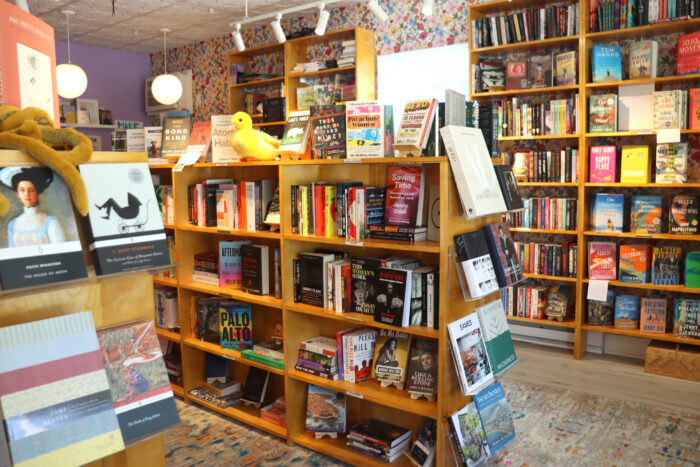
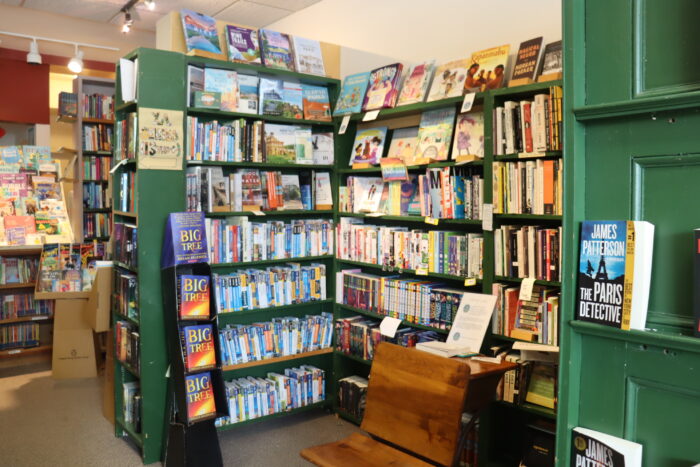
Twenty-five years ago, Meg Ryan’s indie bookshop fell to Tom Hanks’ soulless box store in the Nora Ephron film, You’ve Got Mail. Not long after, brick-and-mortar giants faced the threat of new looming monsters: online shopping and e-publishing. For a time, bookshops both big and small began disappearing, but a refreshing twist to this recurring consumer tale has emerged. Indie bookshops, full of their charming quirks, bookstore cats (or in our area’s case, bunnies), and much-loved story times, are back on the rise.

According to Publisher’s Weekly, American Booksellers Association has seen a spike in membership and member locations since 2021, and it’s estimated that over 300 new bookstores have opened doors across the country in the last several years. This trend holds true in towns up and down Westchester, with one of the newest kids on the block, Armonk’s Make Believe Books, launching just this April.

“More [independent bookstores] have opened than closed by an order of magnitude,” said Laura June Topolshy, owner of the new Make Believe Books.  “And in the last five years, they have exploded.”

These four local indies have a big presence in their communities, and it’s not hard to see why.

Scattered Bookstore Photo by Mia Brown

Scattered Books

29 King St, Chappaqua, NY

For seven years running, the booksellers at Scattered Books have taken diligent care in recommending titles to their readers. “We keep lists in our register of all the books their kids have read, and maybe what they’re ready for next,” owner Laura Schaefer said. “We know them.” Along with this personalized shopping experience, the free-range bookshop bunnies, Acorn, Meatball, and Moo, are a big draw for returning customers, including their more famous clientele. The Clintons are frequent shoppers — “they’re grandkids love the bunnies” – and support the store as customers and by signing stock. Schaefer says she doesn’t always recognize the other A-listers that drop in, though. “That’s really the best part about a bookstore,” she said. “Books just don’t care if you’re famous or not. They’re there for anyone – it’s like the great equalizer.”

What’s in Stock: Adult fiction and non-fiction, with displays for seasonal reads and best-sellers, and a wide assortment of children’s books.

Store Events: The shop hosts author events and has a dedicated parties and special events room. They love the challenge of adapting a party to a theme, from common kids fare to requests as random as “polka-dot-rooster” décor.

What Else Will You Find?: Uniquely designed gift baskets and ala cart items like journals, mugs, and candles (bonus: gift wrapping is available!). You’ll also find local pop ups, merch designed by kids, bookshop bunny cards, and a permanent Refillery station. And of course, Scattered Slime, kits in the store that are a favorite among younger shoppers, who eagerly await to see which new slime theme will drop next on TikTok.

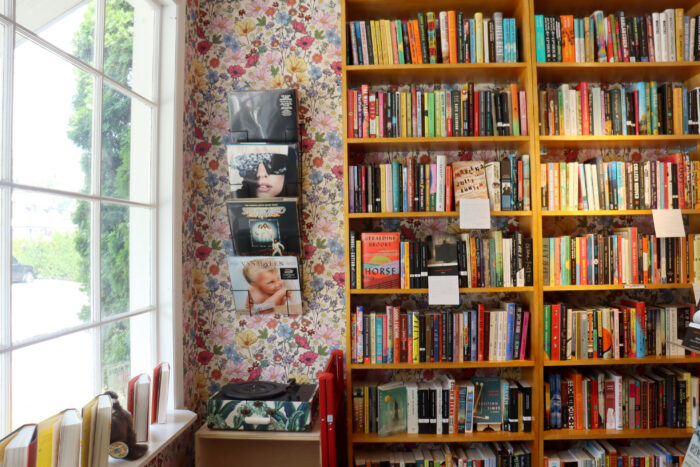
Make Believe Books Photo by Mia Brown

Make Believe Books

15 Maple Ave, Armonk, NY

Though Make Believe Books is just a few months old, years of industry experience helped bring it to life. Owner Laura June Topolsky worked in publishing prior to opening the shop, as do her three family member co-owners. This insider knowledge helped them see the writing on the wall. “More [independent bookstores] have opened than closed by an order of magnitude,” Topolsky said, “and in the last five years, they have exploded.”

Longing for a bookshop close to home, she grappled with the idea of opening one herself. She and her partners began looking at spaces before the pandemic and paused when everything shut down. By a stroke of luck, the shop’s space on Maple became available when their search began again in earnest. “From the moment we opened, we felt, ‘Okay, so everyone else around wanted the same thing we wanted,’” she said. “Everyone’s really excited – everyone’s been so happy there’s a book store here.”

What’s in Stock: The shop carries a little of everything in adult fiction and non-fiction, as well as a well-stocked children’s section. “I’m a book person, and so I spent the three months leading up to opening choosing every single book by hand,” Topolsky noted.

Store Events: The shop has Saturday story time, and plans to host author events in the near future, both in-store and around the community.

What Else Will You Find?: Unique items lovingly curated by the owners, including handmade chocolates, Japanese and French stationery and pencils, tarot decks, cards, and an assortment of stuffies and gifts for kids. There’s also a cozy front porch for you to sit and read your new book.

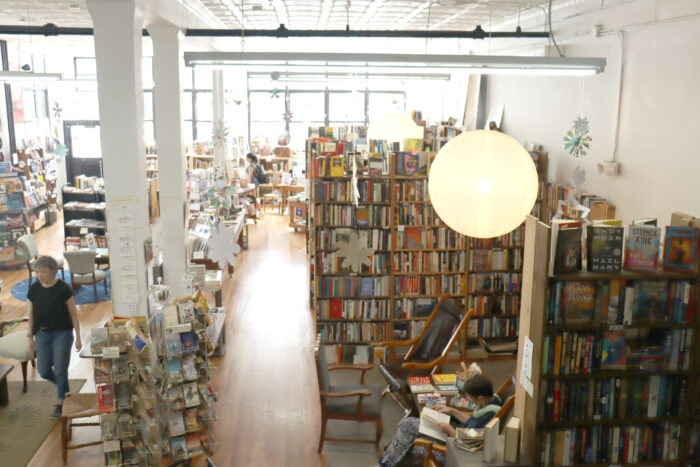
Hudson Valley Books for Humanity Photo by Mia Brown

Hudson Valley Books for Humanity

67 Central Ave, Ossining, NY

Another pandemic baby is Books for Humanity, located in Ossining’s historic Olive Opera House building. The shop’s spark came to founder Amy Hall while she was sorting donations. “I was cleaning out my books at home and realized I didn’t know where to take them,” she said. “And I didn’t want to just toss them out.” Hall specializes in sustainability and human rights as an executive at Eileen Fisher. “It came from those values, of wanting to find a new life for these old books that still had a lot of years left in them.”

Hudson Valley Books for Humanity launched first as a popup in November 2021, with the intention of creating a place to come together for the many cross sections of Ossining. “The human rights side of me wanted to create a space that really, truly welcomed everybody. Where people could come in and see themselves in the books, and also be able to afford a book.” The community has indeed embraced the store, crowning it Best of Westchester’s 2023 Best New Store.

What’s in Stock: 85% of shelf space is dedicated to used, or “pre-loved,” books that are priced affordably and span all genres (except text and reference), with a particularly strong choice of fiction, poetry, memoir, and local interest. There’s a vintage books section and a couple shelves dedicated to foreign language books. New books focused in social justice, environmentalism, and diverse voices are also available.

Store Events: Truly a place to gather, the store’s bustling calendar includes community-focused events that range from author readings and workshops to yoga. Open mic and improv nights occur monthly, and the store has even experimented with hosting small theatrical productions.

What Else Will You Find?: Cozy chairs to hang out in, and hot water with tea bags available to steep (just bring your own reusable mug). Along with shopping for books, there’s a permanent section to get waste-free Refillery soaps. Shoppers will also find local artisan products like jewelry, pottery, and frameable art that come from sustainable materials.

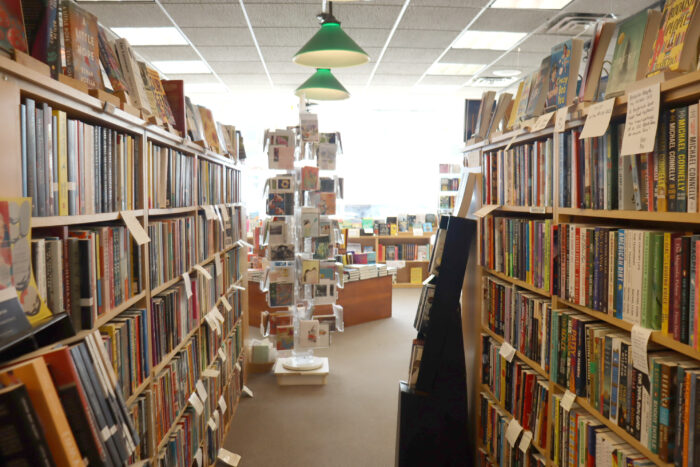
The Village Bookstore Photo by Mia Brown

The Village Bookstore

10 Washington Ave, Pleasantville, NY

The Village Bookstore has been a mainstay in the community since the ‘70s. Current owner Jennifer Kohn took the reins in 2018 when she decided to switch up her career, though she soon faced the challenge of operating a store during a global pandemic. Luckily, she had launched the shop’s first website in late 2019, which had real-time inventory and a full database of their catalog.

“Without having that, it would have been a challenge, because during the pandemic, 50% of our sales came from the website,” she said. “It was a huge shift.” She said that local shops were really stepping in to provide books to readers stuck at home as libraries closed and online sellers like Amazon switched to prioritizing essential items. “Getting books was actually difficult,” she recalled about those early days of 2020. Along with curbside pickup, the shop took an extra step to bring people something to read. “Every night after we closed the story, my husband and I drove around Westchester to deliver books.”

Customers haven’t forgotten how The Village Bookstore stepped in as an essential business to provide some respite during those long periods of isolation. The store won the title of Best Bookstore in Best of Westchester 2023, a true honor in a county full of amazing bookshops.

What’s in Stock: Adult fiction and non-fiction spanning genres like cooking, travel, history, sports, and religion. Children’s books range from board books through YA. You’ll also find a selection of graphic novels and manga.

Store Events: The shop hosts a young adult galley club and recently held its first middle school party, where kids had the run of the store afterhours to chat books and munch on pizza. You’ll often find The Village Bookstore out supporting partners like Hudson Valley Writers Center, local libraries, and the Jacob Burns Film Center.

What Else Will You Find?: Vibrant displays of greeting cards, journals, tarot cards, literary candles, and other bookish gift items – plus free gift wrapping.

Filed Under: Cover Stories Tagged With: independent bookstores, indies

A Studio of One’s Own: The Joy of an Artist’s Residency at the Bethany Arts Community

February 25, 2023 by Gina Carey

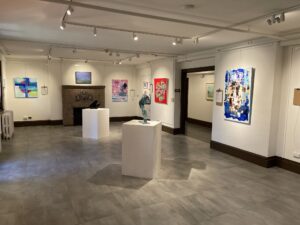
(L-R):Sarah Foucher, Jamison Curcio, Tali Margolin, Sarah Gancher, Jared Mezzocchi, Francesca Montanile, L Feldman, September 2022

Can you imagine setting aside two entire weeks to do the thing you love most? For artists, this can be a professional game-changing experience. Take away the never-ending to-do list at home, plus family or work obligations (because let’s be real: many artists have side gigs). Continue subtracting all of life’s small tasks, like cooking breakfast or grocery shopping. Then, and only then, can the work begin.

This uninterrupted space to create is the atmosphere Bethany Arts Community (BAC) hopes to provide its residency artists, who stay on the property in one- or two-week stretches over the spring and fall. During their stay, the artists are fed, given a private room or apartment, their own studio space, and most important, time.

“A lot of times, your art is the last thing you ever get to in a day,” said Margaret Liston, a Sleepy Hollow-based artist who attended a fall residency at BAC last year. “Sometimes you walk away from it for weeks at a time.”

Liston spent her residency working on a part-memoir, part-cookbook project, and developing a one-woman show to go along with it. She was joined by a cohort of artists whose disciplines fell all over the map. While the spring residency focuses on poets, fall residencies are multidisciplinary, including everyone from musicians to choreographers and dancers, visual artists to costume and lighting designers

Gallery

“Our mission is to create a safe environment for artists to flourish and create without judgment,” said Bonnie Bradley, Executive Director of BAC. “Some of them are seasoned, some of them are emerging. They often collaborate and come together, which fits our mission of supporting art and making it accessible.”

Submissions to the residencies open twice yearly. Applicants are narrowed down by a panel of artists and board members. The remaining candidates are hand-picked from there and sorted into cohorts that will serve as a unique creative community for the duration of their stay.

“We can see them all working together seamlessly, in some way,” Bradley said. “When we choose, it’s intentional.”

The residents arrive with whatever supplies they need for their project and a plan that may shift while there. After they move into their quarters, they’re also provided with a separate work space in a private studio that is fitting for their project.

BAC intentionally leaves these studios undecorated and sparsely furnished, giving the spaces flexibility that allows residents to shape them however suits them. One example Bradley mentioned was in the dance studio, where the mirrors are movable, and have even been rolled outside when a dancer wanted a change of scenery and some fresh air.

From there, the residents have free reign to schedule their time as they please. Night owls don’t have to worry about studio closing hours or disturbing fellow artists sleeping on a different floor.

During her stay, Liston enjoyed cooking at night, when things got quiet. Though the kitchen was designated as her space, she often welcomed others to chat with her as she tested her family’s recipes. “Being around other artists of different disciplines is the most enriching, mind blowing, and supportive place you could ever be,” said Liston, likening the impromptu discourse taking place to her college days.

“You’d get into these deep conversations about art, philosophy, theory,” she said. “It was so incredible.”

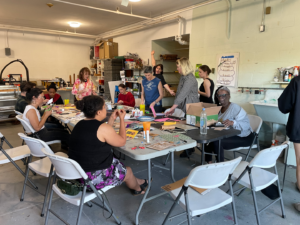
Participants in Tali Margolin’s “Preserving Memories Workshop” in October 2022

And when all that creative energy needs a break, Bethany’s sprawling grounds and nearby meditation trails provide a sense of peace and reflection. Nooks to hole up in for a change of scenery are abundant both inside and outdoors, along with larger spaces to gather when the artists feel like socializing.

The collaboration that invariably occurs at every residency is something the staff never tires of witnessing. In one case, a resident offered to make costumes for dancers in her cohort, and found the perfect fabric left over from a past residency in Bethany’s “garage” (a space used for 3D printing, laser cutting, woodworking, and large-scale projects).

“That Bethany Magic”

“These fabric scraps kind of emerged with this Bethany magic to it,” recalled Lexi Rudley, BAC’s programs and events coordinator. “They ended up creating costumes for this dance duo to take photos in, and dance in, from the stuff we just had lying around.”

That Bethany magic, a kind of kismet the staff witnesses often, is as common as seeing artists of different disciplines clicking to make something new. “It’s never really surprising,” Rudley said. “Everything always ends up working together very beautifully.”

“Their relationships grow organically,” Bradley added.

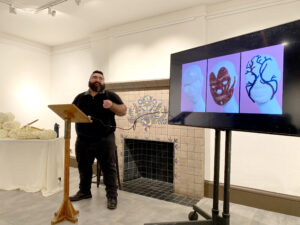
Ben Cuevas pictured at his artist talk, October 2022

While the structure of a residency is fluid, one requirement that is non-negotiable is that residents all eat dinner together (other meals are optional), gelling the community and drawing out the shyer artists. Residents must also conduct a “community give back” program during their stay, connecting them to the public.

Margaret Liston’s program, a first look at her one-woman show, fell early in the schedule. Using BAC’s giant commercial kitchen, she invited viewers to sit around and nibble on her recipes as she cooked and told stories during the performance.

Since her residency, she’s now editing her book, Basic: The Ammaccapane Family Cookbook, and performed her show, Cooking With My Ancestors, in her own kitchen. Looking forward to new iterations, she’s busy rearranging the storytelling and finding a rhythm–and also gathering feedback from everyone who’s watched her performance.

“It gave me a good foundation of where to go next,” she said. “I feel like I got an immense amount of work done, and am pretty solid moving on.”

Filed Under: Cover Stories Tagged With: artist residency, Bethany Arts Community, Lexi Rudley, meditation trails

Primary Sidebar

Please Visit

White Plains Hospital
William Raveis – Armonk
William Raveis – Chappaqua
Northwell Hospital
Houlihan Lawrence – Chappaqua
Houlihan Lawrence – Armonk
Houlihan Lawrence – Briarcliff
NYOMIS – Dr. Andrew Horowitz
Stacee Massoni
Purple Plains
Compass: Donna Gordon
Westchester Table Tennis
Compass: Miller Goldenberg Harris Team
Repose
Dodd’s Wine Shop
Rocks by Jolie B. Ray
Outer Boundaries Travel
Jean Jacques
The Briarcliff Manor
Eye Designs of Armonk
The Harvey School
Raveis: Lisa Koh and Allison Coviello
Bristal Assisted Living
World Cup Gymnastics
Breathe Pilates and Yoga
Beascakes Bakery
Donna Mueller
Wags & Whiskers Dog Grooming

Follow our Social Media

The Inside Press

Our Latest Issues

For a full reading of our current edition, or to obtain a copy or subscription, please contact us.

Inside Armonk Inside Pleasantville and Briarcliff Manor Inside Chappaqua and Millwood

Join Our Mailing List


Search Inside Press

Links

  • Advertise
  • Contact Us
  • Digital Subscription
  • Print Subscription

Publisher’s Note Regarding Our Valued Sponsors

Inside Press is not responsible for and does not necessarily endorse or not endorse any advertisers, products or resources referenced in either sponsor-driven stories or in advertisements appearing in this publication. The Inside Press shall not be liable to any party as a result of any information, services or resources made available through this publication.The Inside Press is published in good faith and cannot be held responsible for any inaccuracies in advertising or sponsor driven stories that appear in this publication. The views of advertisers and contributors are not necessarily those of the publisher’s.

Opinions and information presented in all Inside Press articles, such as in the arena of health and medicine, strictly reflect the experiences, expertise and/or views of those interviewed, and are not necessarily recommended or endorsed by the Inside Press. Please consult your own doctor for diagnosis and/or treatment.

Footer

Support The Inside Press

Advertising

Print Subscription

Digital Subscription

Categories

Archives

Subscribe

Did you know you can subscribe anytime to our print editions?

Voluntary subscriptions are most welcome, if you've moved outside the area, or a subscription is a great present idea for an elderly parent, for a neighbor who is moving or for your graduating high school student or any college student who may enjoy keeping up with hometown stories.

Subscribe Today

Copyright © 2026 The Inside Press, Inc. · Log in