According to the US Bureau of Labor Statistics, one in five businesses fails within their first year, while barely a third make it to the ten-year mark. Which makes it even more remarkable when a business keeps its doors open through multiple decades, across financial crises, pandemics, war, and changes in ownership.
In Chappaqua, at least four businesses have stayed open for more than 50 years, and each tells a different story of what it takes to thrive in an ever-evolving world.
Chappaqua Village Market – 51 years
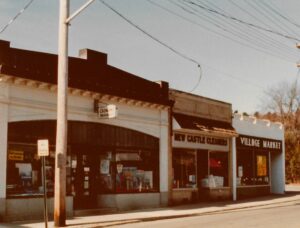
PHOTO COURTESY OF NEW CASTLE HISTORICAL SOCIETY
Tony Milazzo, the founder of Chappaqua Village Market, was 12 years old when he entered the meat business.
“My father was the oldest son. He had to quit high school and go work for my grandfather full time to feed the family,” his son and Chappaqua Village Market’s current owner, Vinny Milazzo, recalls.
Some two decades after Tony Milazzo started working at his own father’s butcher shop in the Bronx, he found an empty storefront in the village and in 1975 opened the doors to Chappaqua Village Market. At the time, the business focused on selling meats.
“The food industry was way different back then,” says Vinny Milazzo. “There was no Costco. Gas stations sold gas. And supermarkets didn’t sell food; they sold dry goods and very little high-quality food.”
Fifty-one years later, Chappaqua Village Market remains a neighborhood staple on the corner of Allen Place, just a few minutes’ walk from the Chappaqua train station. While the location has remained the same, the business has undergone continuous evolution in the decades since doors opened.
First, the store went from just meat and some produce to introduce fish, increase its produce offerings, and eventually add a bakery and prepared foods section. Now, Milazzo estimates, shoppers can knock off 80% of their grocery list, other than household items like toilet paper or soap.
“It’s hard to get a customer who really wants to stop at one store for fish, one store for meat, one store for produce,” Milazzo explains. “There’s just not enough time in the day.” The store has put a particular focus on prepared foods. Some have been old family recipes. Others the Milazzos, who have Italian heritage, have had to work harder to perfect.
“We didn’t know how to cook Passover stuff,” he recounts. “My mother went out of her way and perfected kosher and Jewish recipes that we had no idea originally how to make.” Like his father, Milazzo has been working in the family business since he was not yet a teenager. The elder Milazzo first had a career as a supervisor for Shopwell Foods, where he was the director of meat operations. He worked long, strenuous hours, his son recalls, until he injured his back, requiring multiple surgeries. It was then that his family convinced him he could no longer work 80-hour weeks unloading meat trucks.
“Me and my mother kind of cornered him and said, ‘Ok, that’s enough,’” Vincent Milazzo remembers. Milazzo, a Brewster resident, was 11 years old when his father opened Chappaqua Village Market, and he immediately began working summers. He started working full-time in the mid-1980s, and by around 1990 had taken over the store’s operations.
In addition to weathering the Covid pandemic and keeping up with competitors like Whole Foods, Milazzo has had frustrations dealing with red tape when trying to remodel his shop. Construction projects in recent decades have also shut down roads leading to his business, impacting foot traffic.
Milazzo’s son, Anthony, has been working at the store for more than 15 years, and may one day take over the business. But Milazzo doesn’t plan on hanging up his cleaver any time soon. “I’m not going anywhere,” he says. “My employees are my family.”
Family Britches – 56 years
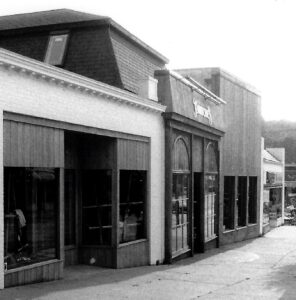
PHOTO COURTESY OF NEW CASTLE HISTORICAL SOCIETY
Casualwear is king in a post-COVID world. But Barry Mishkin, co-owner of clothing store and haberdashery Family Britches, believes people entering or rising in the professional ranks today are increasingly seeing the value in dressing the part.
“Managerial-level people and up, which is our customer base, have realized that they can’t go to work dressed like they are going to play golf,” he says. “They want to look like a manager and an executive, so they need to up their game.”
But that doesn’t mean they know how to create a matching outfit, Mishkin adds. “Most men aren’t good at coordination,” he explains. “That’s where we come in, to not only do the tailoring for them at no charge, but to coordinate the outfit so their wife doesn’t say, ‘Go back upstairs and change your clothes because that doesn’t work.’”
Family Britches has been in business for 56 years, with 53 of them in its current 10,000-square-foot location. But when the store first opened, Mishkin says, the local government was not entirely supportive. “The town didn’t really want a couple of young, 20-year-old kids running a store in town,” he says. “So, they were difficult to work with.”
The 20-year-olds were himself and his partner, co-founder and co-owner Rick Buggee. Buggee, who grew up in New Rochelle, had a background in haberdashery and ran a clothing store in his hometown. Mishkin had just gone to business school but found that a career at a large firm lacking.
“Business school did not push the buttons that I wanted it to,” he says. “Working with people, creating outfits, growing a business on a small basis was much more appealing than finance.”
His business acumen and the fashion expertise of Buggee – “one of the finest merchandise selectors in the country” – created synergies. They chose Chappaqua because of its demographics and the expectation that as the market expanded, so would the need for an upscale haberdashery, which the area lacked.
Three years after opening, in 1973, the store moved to its current location, then bought part of an adjacent building, allowing it to expand to its current size. “That gave us legitimacy, and the town had seen what we could do and they began to change their tune,” Mishkin says.
The pair opened a second location in New Canaan, Connecticut, in 1977; it closed in 2024. Mishkin has outfitted all sorts of customers over the years. “Everybody from President Clinton to wedding parties to the average consumer who comes in looking for an outfit for an occasion, or a Saturday night, or a conference,” he says.
“President Clinton is colorblind, so without us his outfits wouldn’t be coordinated,” he adds.
Mishkin takes particular pride in becoming a cornerstone of the community. “When a customer comes in the door, they are usually called by their first name,” he says. “And we are one of the prime examples of longevity and endurance by serving the customers with what they want, when they want,” he concludes.
The village has changed over the years, especially since the pandemic, as more people moved from the city to the suburbs. Family Britches has likewise evolved, augmenting its suits, sport coats, dress shirts and accessories with a business casual collection. “We’ve continued to do what we enjoy. We’ve served generations of customers,” Mishkin says. “It’s been a labor of love, and a profitable one.”
Squires – 77 years
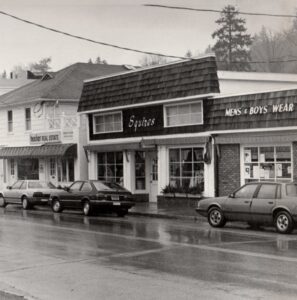
PHOTO COURTESY OF NEW CASTLE HISTORICAL SOCIETY
Michael Kushner and his father, Lloyd, had been running Squires Family Clothing & Footwear for 12 years when Hurricane Floyd hit the region in 1999. Squires was flooded with 42 inches of water.
“We completely lost everything,” Kushner said. “We were bailing all the water out and taking the wet merchandise out and really dealing with a catastrophic loss.”
It was then that Kushner truly discovered the strength of the Chappaqua community. First, out of nowhere, around three dozen members of the First Congregational Church of Chappaqua walked in and lent their manpower to the cleanup. “Without calling, without knocking on the door, they just walked in with their grubby clothes on and just started helping, and they stayed all day, all of them,” Kushner recalls.
Later, Lange’s Deli owner Richard Lange heard about the flooding.
“But I didn’t really know him, and he didn’t know me, but he knew we flooded,” Kushner recounts. “And he came with a whole huge platter of food and drinks, walked into my office, didn’t say hello or goodbye, plopped it on top of my desk, and walked out.”
Kushner was still in his 20s when his father bought Squires, already a community mainstay, from its original owner, Larry Caso, who opened the store in 1949. The elder Kushner had an Army/Navy store in Yorktown Heights and a large family clothing and footwear store in Mohegan Lake and put Michael in charge of running Squires.
“I figured he was just opening up another store, and I would just work there for a little while until I figured out what I wanted to do. I was contemplating going to law school,” Michael says. “I was pretty terrible in the beginning. I learned by making a lot of mistakes.”
“A short-term gig turned into a career,” he says. Part of that was learning how the business had to change over time. “When we bought it, [Caso] sold boy scout and baseball uniforms, and lots of men’s suits, sports jackets and slacks,” Kushner says. “We’ve evolved away from a lot of that. We sell more year-round family clothing, footwear, and accessories. We have great vacation wear for exotic travel.” He also takes pride in Squires carrying seasonal items year-round, saying, “If you need a bathing suit in the wintertime, we have it.”
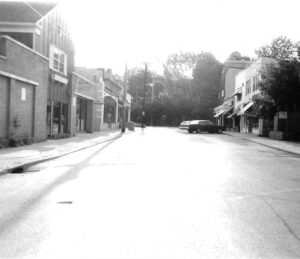
PHOTO COURTESY OF NEW CASTLE HISTORICAL SOCIETY
The store specializes in footwear fitting, starting with first walkers.
In the days before cell phones, Squires’s location in the heart of the downtown turned the shop into something of a gathering point for kids after school.
“The kids would come and drop off their backpacks, and not just two or three of them. I’m talking about 50, 100 backpacks every day after school,” Kushner says. “We had a little place where we would keep them.” The youths would often ask to use the phone to call home for a ride. Occasionally Kushner, who lives in Katonah, would have to drive back to the store after hours because a kid forgot his bookbag.
“You can look at it from a merchant’s standpoint as, that’s a big responsibility, or that’s disruptive, and it was,” he says. “But it was also an important step for engaging the community.”
Years later, many of those kids moved back to Chappaqua and started families of their own.
Kushner now has two grown children, each of whom have been working in the store since their pre-teen years, and now work only weekends, when possible. Kushner says it is too soon to say whether they will eventually take the store over when he retires.
“I always hoped that my kids would have this as part of their DNA,” he adds. “We’ll see where life takes them.”
Chappaqua Cleaners and Tailors – 92 years
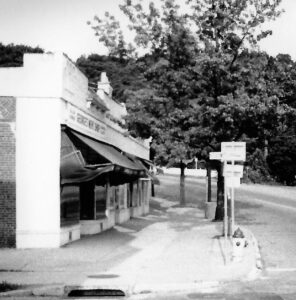
PHOTO COURTESY OF NEW CASTLE HISTORICAL SOCIETY
When Gaetano Magnotta arrived at Ellis Island at the age of 16, he had “a thimble and a dime in his pocket,” his granddaughter says. Already a custom tailor by trade, he saved up his money and in 1934, opened ‘Chappaqua Tailors and Furriers.’
Gaetano ran the store until he died in 1971. Then his son, John Magnotta, took over and ran the business for 46 years. Today it’s owned by Toni Magnotta, John’s daughter, who left her career in accounting and internal auditing in 2017, when her father was diagnosed with brain cancer.
“A lot of my customers have said to us, ‘This is an institution in Chappaqua,’” she says. “Between knowing that my sibling had been there our entire lives and the store having been open 83 years, I didn’t have the heart to close it.” The business, now called Chappaqua Cleaners and Tailors, has changed over the years. When Gaetano opened the shop, it sold high-end men’s clothes, which he tailored himself. Dry cleaning was done offsite.
When John Magnotta took over, he installed a dry-cleaning plant in the store. Eventually, he phased out the retail aspect. “He couldn’t compete with the bigger stores, the more corporate stores that ran big sales,” Toni explains.
Toni has helped bring the store into modern times. She implemented pickup and delivery, which she sees as a necessity in a time when many families have both parents working day jobs. This decision was crucial when the COVID pandemic hit; remote workers started doing a lot less dry cleaning, and almost no one was walking into the store. “You have to be able to accommodate the needs of your customers. You have to be able to change with the changes in the culture and adapt,” she says. “If you don’t change with the times, you will not survive.” Still, many things remain unchanged since Toni’s grandfather ran the store. In the store’s early days, Gaetano hung a cowbell on the door so he would know when a customer walked in. That same cowbell is hanging today. And above the awning on the storefront, a sign reads, “George’s Men’s Shop,” though the store no longer sells retail clothing. Gaetano hung the sign when his oldest son died at 14 years old from a football injury, and it’s hung there ever since.
Over the years, Chappaqua Cleaners and Tailors has placed an emphasis on giving back to the community. The business supports community events, such as the Chappaqua Children’s Book Festival, the New Castle Historical Society’s train show, and the Chappaqua Farmer’s Market. They’ve also helped out in less formal ways – when Squires flooded, Toni says, she provided free dry cleaning.
“Chappaqua has always been a second home to us,” says Magnotta, a Mahopac resident. And the community has embraced their business, she notes. She is proud of her store’s 4.9-star Google rating, as well as the feedback she receives from customers. During Covid, she recalls, one regular customer who no longer needed frequent dry cleaning handed her an envelope of cash and said, “This is what I would normally spend on dry cleaning a week. I want you to have this.” Toni insisted on giving him store credit. “It was really generous, kindhearted, and something that I’ll never forget,” she says.