• Skip to primary navigation
  • Skip to main content
  • Skip to primary sidebar
  • Skip to footer

The Inside Press

Magazines serving the communities of Northern Westchester

  • Home
  • Cover Stories
  • Features
    • Portraits and Profiles
  • Advertorials
    • Lifestyles with our Sponsors
    • Sponsor News!
  • Wellness
  • Happenings
  • Advertise
    • Advertise in One or All of our Magazines–And/Or Subscribe
    • Advertising Payment Form
  • Contact Us
  • Search

Westchester

Opportunity to Support ‘Backpacks to School,’ an Annual Initiative of The Sharing Shelf

August 3, 2020 by Inside Press

The Sharing Shelf plans to fill at least 1,500 backpacks and seeks to raise $45,000 for this project.

Each summer, The Sharing Shelf organizes its “Backpacks to School” initiative to buy new backpacks and fill them with grade appropriate school supplies for low-income children in Westchester County. The program works with individuals and businesses County-wide to raise the funds needed to purchase everything needed for this initiative, from new backpacks to binders, notebooks, folders, crayons, pencils, pens and paper.

At this moment the last days of being in a school are a distant blur and back to school is filled with uncertainty, whether our children will return to school as we know it, shift into a hybrid system, or continue with home-based schooling.

The Sharing Shelf, in consultation with educators, has decided to proceed with its annual program. These educators have told us that regardless of what form school will be, children still need to learn. They will not only need the usual supplies but also resources to keep them mentally engaged and enriched. It is The Sharing Shelf’s plan to provide not just the basics, but enhanced materials such as age-appropriate educational magazines, puzzles, activity sets and books.
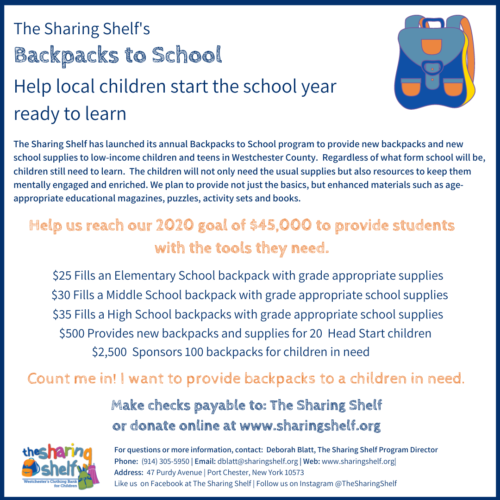
Even before the pandemic and economic downturn, Westchester County was a community with a mix of great wealth yet home to nearly 60,000 low-income children. In some of our communities, 8 in 10 public school students qualify for free or reduced lunch. We believe that number, given the current environment, is probably much higher. In April 2020, unemployment in Westchester county skyrocketed to over 14% from 4% in January 2020.  Meanwhile, the average family spends $122 on school supplies, a sum out of reach for families struggling financially.  

The Sharing Shelf plans to fill at least 1,500 backpacks and seeks to raise $45,000 for this project. Volunteers will help assemble the backpacks, using social distancing in a special area at The Sharing Shelf’s Port Chester warehouse during the month of August. The backpacks and supplies are critical to the academic success of low-income children and will allow them to return to school prepared, confident, and ready to learn.

To find out more about how to help or to donate, please contact The Sharing Shelf Program Director, Deborah Blatt at dblatt@sharingshelf.org or (914) 305-5950. You may also visit www.sharingshelf.org and click on Backpacks to School

About The Sharing Shelf

Founded in 2009, The Sharing Shelf is Westchester’s Clothing Bank for Children. The program collects new and gently used clothing for infants, children and teens. The clothing is distributed to local, low-income children through area social service agencies, schools, hospitals and other non-profits at no cost. The children receive a week’s worth of seasonally appropriate clothing matched to their sizing needs. Since 2011, The Sharing Shelf has been filling new backpacks with fresh supplies for back to school. For more information, visit www.sharingshelf.org

This story is courtesy of The Sharing Shelf.
Filed Under: Stay Connected Tagged With: Back to School, Backpacks, Learn, Resources, School Supplies, schools, The Sharing Shelf, Westchester

County Executive Attributes Reducing COVID 19 Cases to Increased Testing and Accompanying Quarantining

July 17, 2020 by Brian Zhang

The Chappaqua spike of COVID-19 cases linked to a high school graduation ceremony “has run its course,” according to Westchester County Executive George Latimer.

It has been over three weeks now since the recent outbreak of COVID-19 cases attached to the cluster event. The activities that provoked the spread had included Horace Greeley High School’s drive-in and “field event,” which both had limited social distancing and minimal mask protection. There have been 27 positive cases that were tied back to the incident which occurred on June 20. Of the 27 cases, 21 were reported in Chappaqua residents, three in Mount Kisco, two in Bedford, and one in Pleasantville.

During his weekly COVID-19 briefing on Monday afternoon, Latimer noted the spreading may be gone for good. Believed to have “run its course,” Latimer proclaimed that none of the 27 individuals have been hospitalized or become severely ill. With zero fatalities associated with  the outbreak, Latimer says he’s “appreciative” it turned out this way. However, he also said he is not surprised.

“The mechanism that’s in place today is much greater than the mechanism we had in place when we were surprised by the first case we had back in March,” he explained, “We did not have the ability as a local entity to test for COVID-19. Now we have this cluster, and we have easily available COVID-19 tests. Anybody that had contact with a person who was initially infected could be tested quickly, and then impose isolation on those individuals who test positive and reduce the spread.”

“Much Better Off”

More good news… According to Latimer, almost 1 out of every 3 people in the county have been tested since the outbreak began, and over 85% of those tests have come back negative. He also mentioned that in the past month, there have been more nights with no overnight COVID-19 fatalities than with at least one.

“If you track back to the peak weeks, we had nights of 35, 50, before spiking at 72 people dying overnight,” he said. “So when we have no overnight deaths, it’s an encouraging number. We’re much better off than we were over that period of time.”

Although the number of active COVID-19 cases in Westchester continues to oscillate slightly, he emphasized that things are steady in the right direction.

“Generally we continue a downward trend from where we were at our peak, but on any given day, depending on if we see a particular spike or unique situations, we could see a few more or less cases,” he said. “The vast majority of people have gone through the two-week incubation period, survived or did not get significantly sick, and obviously weren’t a fatality.”

“If we go up more than a few cases, then we know we’ve got to be able to address it,” he added. “The geographic distribution of the cases also matters. If we see an increased number of cases all over the county, that means we’re watching a broad-based trend, not just a spike.”

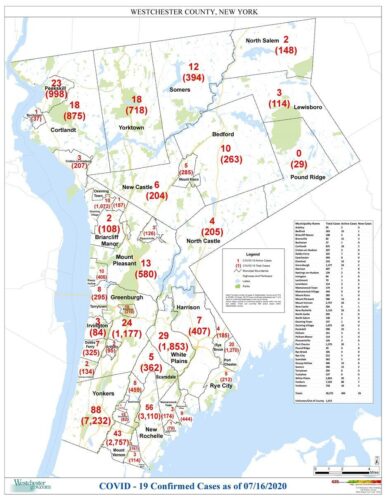
As of Monday, July 13, there have been 35,327 positive cases in Westchester since the pandemic hit in March–with 529 still active cases that have yet to be resolved.

As he concluded his rundown on COVID-19, the County Executive continued to bring positive news, conveying that Westchester is headed to a “new normal.” Over the last month and a half, two beaches have been opened, in Playland and Croton Point Park. There has also been the opening of four public pools, from White Plains to Mount Vernon. This past sunny weekend, around 7,200 people traveled to these cool waters of relief. He shared that it was done responsibly and in the safety of COVID-19 guidelines, sanitizing surfaces, encouraging social distancing, and requiring masks.

“We were able to provide things that were necessary and doable in order for people to start living their lives, and at the same time reduce the spread,” Latimer would explain.

Recently, there have been many other large gatherings further indicating that returning to regular everyday life is achievable–while still maintaining health and safety for the people. Latimer announced Bicycle Sunday has been reestablished in the last couple of months with over 1000 people attending. On the golf course, there were 8000 rounds of golf in the six public courses in Westchester County this weekend. Even camps at various nature centers have been sold out and operated smoothly, despite the heavy circumstances faced today.

“We have opened up some facilities in Westchester County and we’re getting good responses,” Latimer summarized, suggesting a bright future in reopening in the Westchester area lay ahead.

Intelligence & Diligence are Key

However, as the county continues to make great progress, the County Executive stressed that this is still not a time to be unmindful and relax. “We are not out of the woods. We’ve had success in New York State in general and Westchester County in specific, but this is an ongoing battle every single day. We are not in a position where we can be cocky or confident that tomorrow things won’t spike unless we continue to show intelligence and diligence.”

“The way to have the economy reopened is not just by a government reopening industries, but that people feel safe when they go back out into the public,” he concluded. “There is no other answer to it than self-discipline and making that sacrifice of wearing a mask. We’ve had some success here, and we hope we’ll continue to have that success given the numbers. That is the mission.”

Filed Under: Surviving COVID-19 Tagged With: COVID, Diligence, George Latimer, Progress, Westchester, Westchester County Executive

A Cautious Optimism Over ‘Diminished’ COVID-19 Cases Conveyed by Westchester County Executive George Latimer

July 8, 2020 by Inside Press

A close and unrushed ‘listen’ to George Latimer’s most recent update this week on coronavirus in Westchester offered several reasons to stay at least cautiously optimistic that infection from coronavirus is “diminishing” across the county, including in Chappaqua in the two days preceding the July 6 briefing. Chappaqua experienced a recent spike–27 cases, including 21 in Chappaqua, were tracked to the New Castle hamlet in the last two weeks–but the infection may be leveling off thanks to cautionary measures that have included a mandatory quarantine of persons impacted.


While conveying a message of hope and positivity, Latimer also issued clear warnings for continued vigilance and compliance with recommendations (social distancing/mask wear/hand washing) against the coronavirus to make sure it stays that way.

The continuous decline for two and a half months in active cases has likely been due to the act of compliance with masks in public, stressed Latimer, Westchester’s County Executive who has been providing near daily updates streamed live on Facebook and shared later in a You Tube link. The full press briefing may be viewed here https://youtu.be/ys1l09q1Uks

Coronavirus battling measures included asking business and store owners to wear masks, “influencing society. Now, it has become much more of the norm than it ever was,” he said.

On July 6, Latimer reported 527 active cases of CoronaVirus within the county.

Between March 1 (a period commonly designated as the ‘beginning of the pandemic’) and July 6,  35,084 people tested positive for Covid-19. “However, percentage-wise, there has been a little over 1% of positives as of the night on July 5. In one day, only 41 people were found to have the virus after testing almost 4000 people– indicating the spread is diminishing.”

Compared to March or April, he explained, “arguably the height of the pandemic across America, there was as much as 30% of all people tested coming in positive. But as more testing is being conducted, the percentage of those who have the coronavirus has been substantially lowering”.

More Positive Findings for Westchester

  1. Fewer hospitalizations. In addition: as of July 5 too, 29% of Westchester county residents have been tested for Covid-19, “which again, is a huge number and much higher than in other jurisdictions.” There have been fewer hospitalizations too, he shared, with 61 people having been hospitalized as of Saturday, dropping from the 70 individuals reported a week ago.
  2. Zero fatalities the night of July 5. “To top off the relatively good news, there were no fatalities on the night of July 5 and only three deaths in the recent week, ameliorating from the 30-50 deaths per day a couple of months ago in America.”

Staying cautiously optimistic, Latimer conveyed that “the past week has seen a rise and fall in cases, from the recent Chappaqua outbreak, dating back to over two weeks ago; the rise has increased to 27 positive cases that tie back to the set of activities… that include a graduation drive in ceremony and a ‘field night’ event following the graduation, both in rather large gatherings and minimal masks and social distancing.”

“Of the 27 positive cases, 21 tracked to Chappaqua, three of them tracked to Mount Kisco, two track to Bedford, and one track to Pleasantville. “As of now, there have been no new cases in the last two days that are trackable to the Chappaqua spike. If so, it is thought to be leveling off,” Latimer said. “Keep in mind, if they caught COVID that night, they would have gone through two weeks without having shown symptoms…  Of course, it’s possible that if somebody caught it, and then was further infected later, there are still some ways that the Chappaqua spread may linger on longer.”

“I think we’ve had a good response at this particular outbreak,” continued the executive. “Nothing is perfect, but we’ve gotten substantial compliance. 80-85% of the people have responded… We seem to be in a pretty good place for having understood and dealt with it.”

As for the opening of Phase 4 this week (on July 7) in response to the Covid-19 pandemic, major changes are set “for allowable activity.

For outdoor and indoor arts entertainment, low-risk areas have been set to a limit of up to 50 people. As Latimer would elaborate, this would include “the traditional summer band concert in Scarsdale at Chase Park or the theatrical and concert performances that go on in the gazebo in Armonk.” Anything along these lines, while fitting the specific guidelines, will do.

As the last revealed phase of reopening, the governor still has not reopened amusement parks, health clubs, and gyms. “These will not be things that are going to be lifted in future phases; instead, there would be executive orders by the governor on that specific action or function that may happen at any point in time.”

Latimer’s briefings will continue once a week every Monday at 2 pm EST, as opposed to the daily updates Monday through Thursday, he said. Despite a recent uptick in numbers, the steady decrease throughout would mean “we would not need to do this on a regular basis,” he stated from the County Executive’s White Plains conference room.

Editor’s Note: Brian Zhang, a rising junior at Byram Hills High School, assisted in preparing this update, as a first assignment as a summer intern for the Inside Press.


Filed Under: Surviving COVID-19 Tagged With: active cases, Chappaqua, COVID-19, fatalities, George Latimer, Hope, hospitalizations, optimism, Positive, Westchester, Westchester County Executive

Pollinator Pathway Gardens: Gaining Local Support

February 22, 2020 by The Inside Press

Pollinator pathway garden in downtown Chappaqua. Prior to this, the area was full of weeds.

Article and Photos by Missy Fabel

Just last year at a meeting of the Earthwatch Institute, a prominent environmental non-profit, scientists declared the bee to be the most important living being on the planet. This notion was shared by Albert Einstein more than a century ago who boldly stated that “if bees disappear, humans would have four years to live.” Yet bees are at risk of extinction. In fact, in some regions of the world, they have disappeared up to 90 percent.

While that news is sobering, local residents and county-wide initiatives are doing their part to keep bees and other pollinators happily buzzing in the communities of Northern Westchester.

Bees, butterflies, birds and even bats are all pollinators that play a vital role in the transfer of pollen from one plant to another, enabling fertilization and the production of fruit and seeds. More than 30% of our food grows as a result of pollinators. Yet, the habitat loss of native plants and widespread use of pesticides and herbicides are causing worldwide decline of pollinators.

The History Behind the First Pollinator Pathway

Sarah Bergman started the very first Pollinator Pathway in Seattle more than a decade ago as part of a social and ecological project to combat the decline in pollinators. In an effort to connect two green spaces more than a mile apart, Ms. Bergman went door to door to the homeowners in-between to create a mile long 12-foot-wide corridor of pollinator friendly gardens, a literal “pathway” to sustain pollinators with pesticide-free habitat and nutrition.

With increasing public awareness of the decline of pollinators, particularly native bees, Bergman’s idea caught on. In 2018, Norwalk, Wilton and Ridgefield together with Hudson to Housatonic Regional Conservation Partnership (H2H) set up the first Pollinator Pathways in Connecticut. Westchester followed their lead and New Castle Pollinator Pathway Coalition (NCPPC) is among the more than 16 municipalities, organizations and hundreds of individuals joining Pollinator Pathways in Westchester.

Pollinator Pathway sign on Route 120 

Pollinator Pathways in New Castle

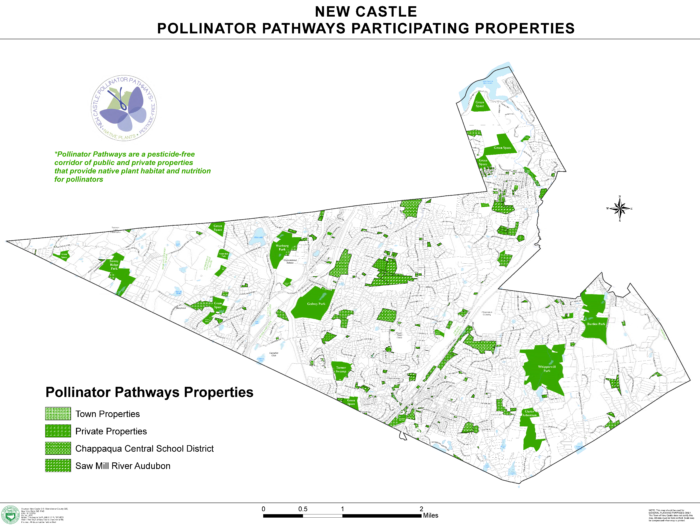
The New Castle Pollinator Pathway Coalition (NCPPC) is a volunteer effort consisting of individuals and organizations that support pollinators by connecting properties and green spaces to create a more hospitable environment for bees, butterflies, birds and other wildlife.

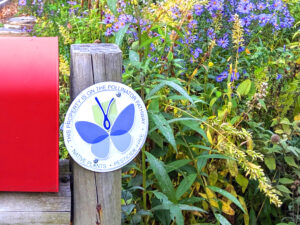
Pollinator Pathway signs have been popping up in New Castle on resident’s mailboxes and downtown near the train station in recent months. These signs mark just some of the properties that are part of the NCCPC.

According to New Castle resident Victoria Alzapiedi, founder of New Castle Healthy Yards and co-chair of NCCPC, more than 130 public and private properties are already on the Pathway and the list is growing. “I’m so excited that there are so many property owners in our community signing on to the New Castle Pollinator Pathway. Not using pesticides and other lawn chemicals and adding native plants–including specific host and nectar plants for each species of butterfly, moth, and bee–will attract these important insects to your yard and provide a haven for them to live and to thrive,” Alzapiedi explained.

Pollinator Friendly Gardens Gain Traction in Other Towns

Garden clubs and other organizations in Pleasantville, Bedford, North Castle and other towns in Westchester are also spreading the word, through education, outreach and the creation of pollinator friendly gardens.

“Our mission includes educating people about ways to help the planet,” says Phina Geiger, president of the Pleasantville Garden Club, whose members planted a demonstration garden next to a playground in Mt. Pleasant this past spring. “Many of the plants we used were ones from our yards, tried and true locally sourced native plants that people may not know about, but can come and see and be inspired to use in their own yards. The Pleasantville Garden club is also partnering with their Parks & Recreation department to promote Pollinator Pathways in other areas of town, she added.

Plans to add native and pollinator friendly plants are also in the works in Armonk. This spring, the North Castle Public Library is adding native trees, shrubs and perennials to its foundation planting as part of the New York Library Association (NYLA) state-wide Sustainable Library Certification Program. “We wanted to enhance the landscaping in front of our library,” says Edie Martimucci, Director of North Castle Public Library, “and using native plants just makes sense from an environmental and sustainability standpoint.”

Tips for Creating a Pollinator Friendly Garden

Whether you live in an apartment with a balcony, a typical suburban home, a large estate or are a commercial business in town, everyone can participate in Pollinator Pathway by avoiding the use of pesticides and choosing native plants. Nature preserves, such as Glazier Arboretum in New Castle, Eugene and Agnes Meyer Preserve in North Castle, town and county parks, schools, typical backyards and front yards, even window boxes can help support pollinators.

“It’s simple, really,” declares Filipine de Hoogland of Westchester Pollinators. “Many people already have native trees and shrubs in their yards with natural pesticide free areas. If we connect our pollinator friendly yards, we can construct pathways. Pathways create safe territory for our pollinators and other wildlife to survive.” She also suggests informing your landscaping company about the steps you are planning to take to create a pollinator friendly yard, so they can help you achieve your goals.

A bee on wild sweet William 

Year-Round Needs for Pollinators

Pollinators need nectar and pollen in all seasons. Native spring flowering trees and shrubs are an important nectar and pollen source early in the season as well as common native plants often considered “weeds,” such as the common violet. Violets provide nectar as well as leafy greens for the recently hatched butterfly larvae of the Great Spangled Fritillary. Consider leaving violets and other wildflowers in your lawn in spring.

Aster and goldenrod are vital sources of both nectar and pollen in the fall. White wood aster naturally colonizes the woodland edges common in suburban landscapes and can easily be encouraged to spread. Leaving some leaf litter in your garden or natural area also helps support pollinators by providing cover for overwintering insects.

Local Pollinator Events On the Horizon

Look for NCPPC and Westchester Pollinator events this spring and summer, including activities to celebrate the 50th anniversary of Earth Day as well as national Pollinator Week, June 22-28. In addition, mark your calendar for The Chappaqua Garden Club’s Mother’s Day weekend plant sale from May 7-10. The sale offers hundreds of native plants including specific pollinator friendly plant combination kits for sun, shade, wet and dry areas, according to Chappaqua Garden Club co-president Melanie Smith. For more information, visit chappaquagardenclub.com

Missy is a native plant landscape designer and consultant, teacher, writer and  naturalist in Chappaqua. She is a Steering Committee member of the Native Plant Center at Westchester Community College, a member of the Town of New Castle Conservation Board and co-chair of the NCPPC.

For more information on Pollinator Pathways and how to start one in your town, visit: https://www.pollinator-pathway.org

How to Join the Pollinator Pathway Initiative

  • Include native plants on your property for all seasons
  • Avoid using pesticides and herbicides
  • Consider leaving some bare ground for nesting native bees and leaving some autumn leaves for overwintering eggs and pupae of pollinating insects

If you reside in New Castle, register at: pollinator-pathway.org/new-castle


Why are Pollinators Under Threat?

  • Habitat loss due to urban development and agriculture
  • Widespread application of pesticides
  • Climate change

Filed Under: Cover Stories Tagged With: Bees, Butterfles, Downtown Chappaqua, Earthwatch Insititute, environment, Fertilization, garden, Habitat Loss, Hudson to Housatonic Regional Conservation Partnership, landscaping, Moths, Native Plants, NCPPC, New Castle, New Castle Healthy Yards, New Castle Pollinator Pathway Coalition, non-profit, North Castle Public Library, parks, Pesticide Dangers, Pleasantville Garden CLub, Pollinator Pathways, Pollinator Week, private properties, schools, Westchester

(914)Cares Inaugural Poverty Symposium Spotlights Those in Need

February 22, 2020 by The Inside Press

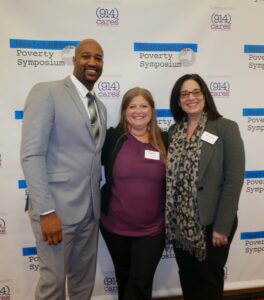
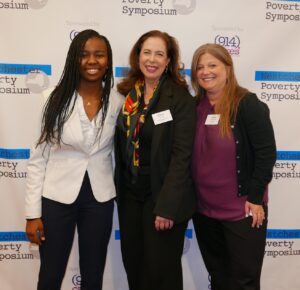
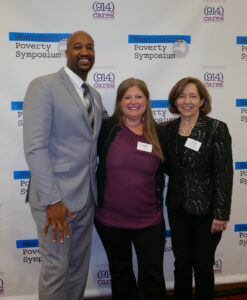
The Westchester Poverty Symposium was an opportunity for individuals to come together to learn about innovative, community-driven partnerships focused on helping those in need. Elected officials, non-profit organizations and several school districts attended the sold-out event and learned actionable items to help the estimated 10% of Westchester residents living in poverty.

Mayor Andre Rainey (Peekskill),
Chairwoman of (914) Cares Jessica Reinmann,
Mayor Gina Picinich (Mt. Kisco)
Marie (Boys and Girls Club Youth of the Year for NYS), Alyzza Ozer (CEO Boys and Girls Club Northern Westchester, Jessica Reinmann
Mayor Andre Rainey, Jessica Reinmann, Carola

Filed Under: Happenings Tagged With: 914 Cares, children in need, Critical Funds, Kids's Kloset Fashion, non-profit, poverty symposium, Westchester

  • « Go to Previous Page
  • Page 1
  • Page 2
  • Page 3
  • Page 4
  • Page 5
  • Interim pages omitted …
  • Page 18
  • Go to Next Page »

Primary Sidebar

Please Visit

White Plains Hospital
William Raveis – Armonk
William Raveis – Chappaqua
Northwell Hospital
Houlihan Lawrence – Chappaqua
Houlihan Lawrence – Armonk
Houlihan Lawrence – Briarcliff
NYOMIS – Dr. Andrew Horowitz
Compass: Natalia Wixom
Repose
Compass: Miller-Goldenberg Team
Lipari & Mangiameli Dentistry
Raveis: Lisa Koh and Allison Coviello
Eye Designs of Armonk
Maid Brigade
Kevin Roberts Painting & Design
Gold Coast Epoxy
Meagher & Meagher Attorneys at Law
Compass: Aurora Banaszek
SWEAT
Elliman: Pam Akin
World Cup Gymnastics
Play Nice Together
Houlihan Lawrence: Bruce Wenig
New Castle Physical Therapy
Fleetwood Pastry Shop
Wags & Whiskers Dog Grooming
Pinsky Studio

Follow our Social Media

The Inside Press

Our Latest Issues

For a full reading of our current edition, or to obtain a copy or subscription, please contact us.

Inside Pleasantville and Briarcliff Manor Inside Armonk Inside Chappaqua and Millwood

Join Our Mailing List


Search Inside Press

Links

  • Advertise
  • Contact Us
  • Digital Subscription
  • Print Subscription

Publisher’s Note Regarding Our Valued Sponsors

Inside Press is not responsible for and does not necessarily endorse or not endorse any advertisers, products or resources referenced in either sponsor-driven stories or in advertisements appearing in this publication. The Inside Press shall not be liable to any party as a result of any information, services or resources made available through this publication.The Inside Press is published in good faith and cannot be held responsible for any inaccuracies in advertising or sponsor driven stories that appear in this publication. The views of advertisers and contributors are not necessarily those of the publisher’s.

Opinions and information presented in all Inside Press articles, such as in the arena of health and medicine, strictly reflect the experiences, expertise and/or views of those interviewed, and are not necessarily recommended or endorsed by the Inside Press. Please consult your own doctor for diagnosis and/or treatment.

Footer

Support The Inside Press

Advertising

Print Subscription

Digital Subscription

Categories

Archives

Subscribe

Did you know you can subscribe anytime to our print editions?

Voluntary subscriptions are most welcome, if you've moved outside the area, or a subscription is a great present idea for an elderly parent, for a neighbor who is moving or for your graduating high school student or any college student who may enjoy keeping up with hometown stories.

Subscribe Today

Copyright © 2026 The Inside Press, Inc. · Log in